Author: chiefeditor

  • Israel/Palestine: Statement by the Spokesperson on the ceasefire in Gaza

    The EU condemns the refusal of Hamas to accept the extension of the first phase of the ceasefire agreement in Gaza. Israel’s subsequent decision to block the entry of all humanitarian aid into Gaza could potentially result in humanitarian consequences. 

    The EU calls for a rapid resumption of negotiations on the second phase of the ceasefire, and expresses its strong support to the mediators.

    A permanent ceasefire would contribute to the release of all remaining Israeli hostages while ensuring the necessary conditions for recovery and reconstruction in Gaza to begin. All parties have a political responsibility to make this a reality.

    The EU reiterates its calls for full, rapid, safe and unhindered access to humanitarian aid at scale for Palestinians in need and for allowing and facilitating humanitarian workers and international organisations to operate effectively and safely inside Gaza.

    The EU civilian Border Assistance Mission for the Rafah Crossing Point (EUBAM Rafah) is ready to continue its work if requested by the parties. Thanks to its presence, nearly 3,000 people have so far crossed the border into Egypt since 1 February.

  • Coast Guard Evolution: AI and Unmanned Systems Enhancing SAR Operations

    On 25–26 February 2025, the Italian Coast Guard, acting as Chair of the European Coast Guard Functions Forum (ECGFF), together with the European Border and Coast Guard Agency (Frontex) hosted an international workshop on AI and unmanned systems entitled “Coast Guard Evolution: Artificial Intelligence and Unmanned Systems Enhancing SAR Operations”. The event, held in Cagliari, Italy, brought together delegations from EU Member States and leading experts in AI and emerging technologies to discuss the future of maritime safety and the use of cutting-edge technology in optimising Search and Rescue (SAR) operations. 

    As the maritime domain faces increasingly complex challenges, close and effective cooperation between coast guard functions across the EU is now more important than ever. At the same time, if we want to considerably boost Europe’s collective capacity to safeguard its waters and protect lives at sea, prudent adoption of AI-driven technologies is the way to go. 

    In this context, the ECGFF and Frontex play a vital role in fostering cooperation and strengthening interoperability between Member States and EU coast guard agencies, ensuring that national coast guard authorities are equipped with the most effective tools and up-to-date knowledge to address any emerging issues.   

    With a blend of thematic presentations and panel discussions, the ECGFF-Frontex workshop was a platform for sharing knowledge on the latest advancements in SAR technologies and discussing how AI solutions can promote synergies and improve rescue operations.  

    With over 100 participants from 22 Member States, the EU Commission, European Defence Agency, Joint Research Center, and our sister EU agencies — EFCA and EMSA — this strong engagement reflects the growing interest in discussing this crucial topic. 

  • First EUDA work programme 2025–2027 published today

    Today, the European Union Drugs Agency (EUDA) has published its first three-year work programme (Single programming document 2025–2027), outlining strategic objectives and initiatives to strengthen the EU’s preparedness on drugs.

    Europe is facing new and serious drug challenges, and our mission is to boost the EU’s readiness to tackle them. The programme draws on the four strategic functions which guide our services: Anticipate, Alert, Respond and Learn.

    Anticipate

    Building on three decades of drug monitoring, the agency will enhance its situational analysis through new initiatives, including a redesigned annual report on the drug phenomenon and emerging trends. A geostrategic perspective will be integrated through in-depth analyses of the EU drug market and data from third countries. Additionally, increased investment in foresight capacity will enable scenario-building and prospective analyses.

    Alert

    The EU Early Warning System (EWS) on new psychoactive substances, operational since 1997, will continue its role in identifying new synthetic drugs appearing on the market. It will be complemented by two new capabilities: the European Drug Alert System (EDAS) and the European Threat Assessment System (ETAS), both set to become fully operational in 2025. These systems will enhance timely health and security risk communications, with several pilot threat assessment exercises planned for this year.

    Respond

    Based on the drug alerts and new threat assessments, the EUDA will support the EU Member States in assessing their readiness and optimising interventions through timely, accurate and evidence-based responses.

    Learn

    The fourth strategic dimension of our new service delivery model is learning. This spans capacity development activities, which will be diversified and made more accessible to frontline workers in the drug field through the EUDA training platform PLATO. Under the same service category, the agency will also support the design and evaluation of drug policies at both EU and national levels, particularly as the current EU drugs strategy and action plan on drugs (2021–2025) and the EU Security Union Strategy (2020–2025) reach their conclusion.

    Collaboration and transformation

    This year, the EUDA will introduce a new communication strategy designed to reflect the needs of our broader set of stakeholders, partners, networks and tasks. True to our core values, we are positioning ourselves as a trustworthy, modern and forward-looking agency. This will be facilitated via our largest business transformation programme to date, which will result in a more agile, adaptable, customer-centric, digitally-enabled and impactful EUDA.

    Successful delivery of EUDA services will depend on strong collaboration with networks and partners, in particular with the Reitox network of national focal points, and the newly established network of forensic and toxicological laboratories. The agency will also strengthen partnerships at international level, following a strategic approach under the new EUDA international cooperation framework, which will be adopted in 2025.

    To bring this vision to life, the EUDA will work closely with the European Commission, Parliament, and Council — its key institutional partners — to ensure its services meet their needs. Guidance from the new EUDA Management Board and Scientific Committee will help steer this transformation. Together with its partners, the EUDA is committed to strengthening EU preparedness on drugs and delivering real impact.

    Notes

    (1) EUDA Single Programming Document 2025–2027 (available in English). It contains the 2025 work programme.

  • Haiti: Massive surge in child armed group recruitment, warns UNICEF

    UNICEF’s representative in Haiti, Geetanjali Narayan, told journalists that just last month, armed groups destroyed 47 schools in Haiti’s capital Port-au-Prince, adding to the 284 schools destroyed in 2024.

    “The relentless attacks on education are accelerating, leaving hundreds of thousands of children without a place to learn,” she said.

    Speaking in Geneva, Ms. Narayan described reports of “yet another attack” on Thursday. “Videos capture piercing screams of children lying on the floor, motionless with fear,” she said, calling the scene a “chilling reminder that these attacks do damage far beyond the classroom walls”.

    “A child out of school is a child at risk,” she warned.

    UNICEF previously reported a 1,000 per cent increase in sexual violence involving children between 2023 and 2024 in the country. Children also comprise half of the record one million-plus displaced to date by the violence in Haiti.

    Eight-year-old recruits

    After sharing the latest displacement data, Ulrika Richardson, the UN’s top aid official in Haiti, insisted on Thursday that youngsters continue to bear the brunt of the crisis.

    UNICEF’s Ms. Narayan stressed that last year, child recruitment into armed groups “surged by 70 per cent”.

    Right now, we estimate that up to half of all armed group members are children, some as young as eight years old,” she said.

    The UNICEF representative described the different roles played by children within armed groups, depending on their age and gender. Eight to 10-year-olds are “used as messengers or informants” while younger girls are tasked with domestic chores.

    “As they get older, the children are playing more and more active roles in terms of participating in acts of violence,” Ms. Narayan said.

    Asked about the impact of being recruited into a gang at an early age, she spoke of “indescribable” damage.

    “At that age, the child’s brain is still forming. They haven’t developed their understanding of the world. And so, to be to be part of an armed group where you are surrounded by violence at all times and where you yourself may be forced to commit acts of violence, has a profound effect on the child,” she said.

    Ms. Narayan stressed that UNICEF is “working actively” to support the release, demobilization and reintegration of child armed group members.

    Saving young lives

    This includes a “handover protocol” signed in 2024 between the United Nations, including UNICEF, and the Government of Haiti, based on the following questions: “What do you do when you encounter a child coming out of the armed groups? What are the steps? Who is involved? What are the procedures that need to be in place to ensure that this child is treated first and foremost as a child and not as a criminal?”

    The initiative has proved successful, with more than 100 children demobilized and reintegrated last year and plans to continue the work in 2025, Ms. Narayan said.

    The UNICEF official highlighted the fact that Haiti’s children’s chances of a better future are restricted by the armed violence surrounding them and the lack of funding for stop-gap measures that would allow youngsters to continue their education “despite the crisis”.

    Funding freeze impacts

    Such measures include establishing temporary learning spaces in displacement sites, rehabilitating schools and providing children with the necessary school supplies. The UN agency needs $38 million for these “critical interventions” but funding is at just five per cent.

    Peace and stability are desperately needed in Haiti “but so are funds”, Ms. Narayan insisted. “More than half a million children are not getting the education support that they need and that UNICEF and our partners can provide, not only due to armed groups, but due to a lack of donor support.”

    Cuts in humanitarian assistance from the United States have already had a “devastating impact” on children in Haiti, Ms. Narayan said, with some of UNICEF’s services reduced.

    In 2024, the humanitarian community launched a $600 million plan for Haiti, receiving just over 40 per cent of the funding. Around 60 per cent came from the United States alone.

    US grants terminated

    UNICEF spokesperson James Elder added that on a global scale, following the US humanitarian aid freeze, the agency “received termination notices” for grants, affecting humanitarian and development programming.

    “We continue to assess the impact of those termination notices on our programmes for children. But we already know that the initial pause has impacted programming for millions of children in roughly half the countries that we work,” he said.

    For decades, UNICEF staff have witnessed how “those most at risk”, have found ways “to adapt, to rebuild, to push forward, despite unimaginable hardships”, Mr. Elder said.

    “But even the strongest can’t do it alone…Without urgent action, without funding, more children are going to suffer malnutrition, fewer will have access to education, and preventable illnesses will claim more lives.”

    Source link

  • European Union Calls for Restraint Amid Escalating Conflict in the West Bank

    Brussels — The European Union (EU) has voiced deep concern over the ongoing Israeli military operation in the northern West Bank, which has entered its 40th day. The prolonged campaign against armed militants in refugee camps has resulted in significant humanitarian consequences, including scores of casualties, the displacement of approximately 40,000 Palestinians, and widespread destruction of civilian infrastructure.

    In a statement, the EU emphasized Israel’s responsibility to adhere to international humanitarian law during military operations. It urged Israeli forces to prioritize the protection of civilians and facilitate the safe return of displaced persons to their homes. “We call on Israel to address its legitimate security concerns while ensuring compliance with its obligations under international law,” the statement read.

    Simultaneously, the EU highlighted the growing issue of extremist settler violence across the West Bank, including East Jerusalem. This violence, coupled with Israel’s continued expansion of settlements, exacerbates tensions in the region. The EU reiterated its condemnation of settlement policies, calling for an immediate halt to demolitions—particularly those targeting structures funded by the EU and its member states. “Holding perpetrators accountable is essential to restoring trust and stability,” the statement noted.

    The situation has been further complicated by increased restrictions on movement throughout the West Bank. With more checkpoints and tighter controls, economic activity and access to basic services have deteriorated, worsening the already fragile humanitarian conditions. As the holy month of Ramadan approaches, the EU appealed to all parties involved to exercise restraint, urging them to foster an environment conducive to peaceful celebrations.

    Despite these challenges, the EU reaffirmed its commitment to Israel’s security, condemning all acts of terrorism targeting Israeli citizens. At the same time, it stressed the importance of pursuing a just and lasting peace based on the two-state solution. “A comprehensive resolution requires both sides to work toward coexistence, where Israel and Palestine can live side by side in peace and security,” the statement concluded.

    As the crisis unfolds, the international community watches closely, hoping for meaningful steps toward de-escalation and dialogue. The EU’s appeal underscores the urgent need for action to mitigate suffering and pave the way for a brighter future in one of the world’s most enduring conflicts.

  • US aid cuts will make world ‘less healthy, less safe and less prosperous’: Guterres

    “These cuts impact a wide range of critical programmes,” he told reporters at the UN Headquarters in New York, highlighting the potential disruption to lifesaving humanitarian work, development projects, counterterrorism efforts and initiatives to combat drug trafficking.

    He expressed the UN’s gratitude “for the leading role” the US has played over decades providing overseas aid, highlighting that thanks to US taxpayers’ dollars and other donors, over 100 million people each year receive humanitarian support through UN programmes.

    However, the cuts come at a time when global crises are intensifying, leaving millions at risk of hunger, disease and displacement, he said.

    The consequences will be especially devastating for vulnerable people around the world,” Mr. Guterres said.

    Millions at risk

    In Afghanistan, more than nine million people could lose access to health and protection services, as hundreds of mobile health teams and other critical programmes face suspension. 

    In northeast Syria, where 2.5 million people require humanitarian assistance, the absence of US funding will have a major impact.

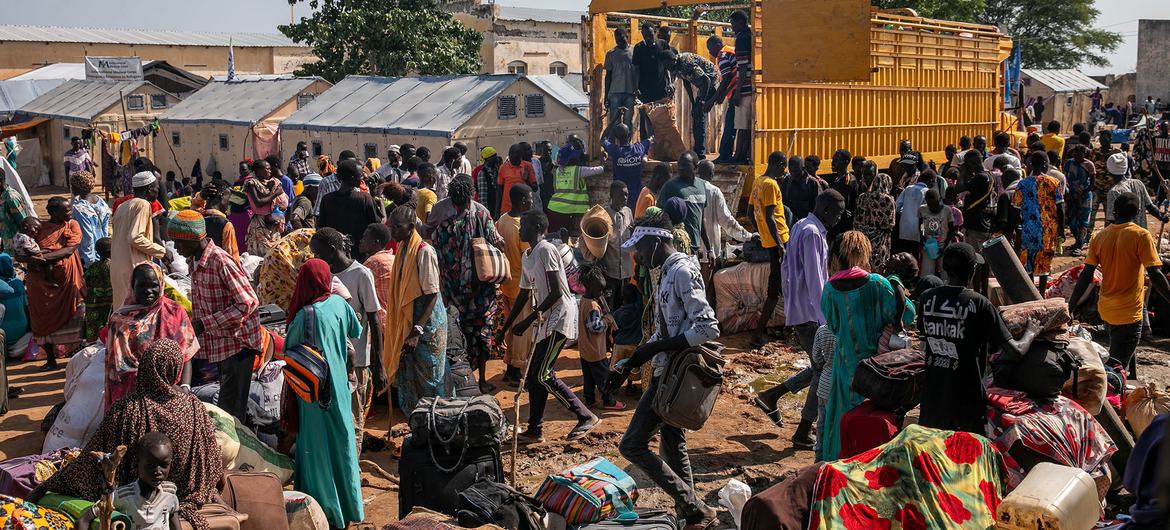
    The cuts have been felt already in Ukraine, where cash-based aid that supported one million people in 2024 has been suspended. In South Sudan, funding has run out for programmes assisting refugees fleeing conflict in neighbouring Sudan, creating overcrowded and unsanitary conditions at border areas.

    Beyond direct humanitarian relief, the cuts will also severely affect global health and security efforts.

    The UN Office on Drugs and Crime (UNODC) will be forced to halt many counter-narcotics operations, including those targeting the fentanyl crisis and dramatically scale back its activities against human trafficking.

    “And funding for many programmes combatting HIV/AIDS, tuberculosis, malaria and cholera have stopped,” Mr. Guterres said.

    A vital partnership

    Mr. Guterres emphasized that US support has long been central to global humanitarian efforts.

    The generosity and compassion of the American people have not only saved lives, built peace and improved the state of the world. They have contributed to the stability and prosperity that Americans depend on,” he added.

    Think again

    The Secretary-General urged the US Government to reconsider the funding cuts, warning that reducing America’s humanitarian role would have far-reaching consequences, not only for those in need but also for global stability.

    “Going through with these cuts will make the world less healthy, less safe, and less prosperous,” he said, stating that UN agencies stand ready to provide the necessary information and justification for its projects.

    We look forward to working with the United States in this regard,” he added.

    Mr. Guterres said the UN would continue to do everything possible to provide lifesaving assistance and diversify funding sources.

    “Our absolute priority remains clear. We will do everything we can to provide life-saving aid to those in urgent need,” he said.

    We remain committed to making the global humanitarian effort as efficient, accountable and innovative as possible while continuing to save lives.”

    Full audio of Secretary-General Guterres remarks to the press.

    Source link

  • Children already dying in Sudan’s stricken Zamzam camp: WFP

    The UN World Food Programme (WFP) confirmed that it has had to pause the distribution of life saving food and nutrition assistance, due to escalating violence.

    WFP spokesperson Leni Kinzli said the UN agency’s partners in the camp had no choice but to evacuate their staff to safety.

    “The recent violence in Zamzam has also left the central market destroyed…residents of the camp, which is around half a million people, are even further away from accessing food and essential food.

    Government troops have been battling their former allies turned adversaries, the Rapid Support Forces militia, for nearly two years. The RSF now controls virtually all of Darfur but has been laying siege to the city of El Fasher for months, close to ZamZam.

    RSF Militia stormed the camp on 11 February triggering several days of clashes with army troops and allied forces, according to news reports.

    Deadly consequences

    People, particularly children, are already dying of hunger in Zamzam. And the fact that we are forced to suspend operations will make that even worse,” she added.

    WFP and partners provided 60,000 people with food vouchers before heavy shelling forced the UN agency to pause aid operations in Zamzam.

    The food vouchers allow families to purchase essential food supplies such as cereals, pulses, oil and salt, directly from local markets which are stocked by the private sector.

    “As WFP, we’ve been trying every possible way to get vital aid into the hands of people whose lives hang in the balance,” Ms. Kinzli said. She explained that the UN agency is “continuously having to overcome barriers and obstacles” caused by the ongoing violence and insecurity.

    Illustrating the need to find alternative ways of providing support to communities who are cut off by conflict such as in Zamzam, WFP has launched an online self-registration aid platform which is now active and provides cash-based assistance in remote Sudanese locations.

    “We have done it in other parts of Sudan, like Khartoum, and we have received an overwhelming response from communities,” Ms. Kinzli said. “It does work well despite the patchy communications networks.”

    Once registered, recipients can expect to receive digital transfers via a mobile money app which provides them with critical assistance until conditions permit the safe passage of humanitarian personnel and convoys, the WFP officer explained.

    Aid delivery must resume

    “We must resume the delivery of life-saving aid in and around Zamzam safely, quickly and at scale,” she insisted. For that the fighting must stop, and humanitarian organizations must be granted security guarantees.”

    In 2024, two out of every three people in famine or risk of famine areas in Sudan received WFP assistance. But this is not enough, humanitarians warn.

    Regular, monthly deliveries to starving communities are the only way to push back the famine in Sudan,” WFP said, warning that access to famine and famine-risk areas is “sporadic and inconsistent”.

    Today, two million people in 27 locations across Sudan are now experiencing famine or on the brink of it.

    Source link

  • EU Calls for Ceasefire in Sudan as Ramadan Approaches

    Brussels, 28 February 2025 — As the Holy Month of Ramadan approaches, the European Union (EU) has renewed its urgent appeal for a ceasefire in Sudan. In a statement issued by the EEAS Press Team, the EU emphasized the need for an immediate halt to hostilities, urging all belligerent parties to prioritize the well-being of the Sudanese people.

    The conflict in Sudan, which began during Ramadan two years ago, has left the nation mired in violence and instability. The prolonged war has prevented the Sudanese people from experiencing peace, even during sacred times meant for reflection, unity, and family. “The people of Sudan deserve a respite from this cycle of violence,” the statement read. “They need a sign of hope—a tangible step toward lasting peace.”

    The EU stressed that a temporary ceasefire must serve as more than just a pause in fighting; it should pave the way for a comprehensive political process aimed at achieving enduring stability. Such a process would enable reconciliation and recovery, allowing the Sudanese people to rebuild their lives and communities.

    “Only through inclusive dialogue can Sudan find a sustainable path forward,” the statement noted. The EU underscored its commitment to supporting Sudan’s transition but emphasized that meaningful progress requires the cooperation of all stakeholders.

    In addition to calling for an end to hostilities, the EU highlighted the critical importance of ensuring safe, timely, and unhindered access for humanitarian operations. Despite ongoing efforts to deliver aid, the delivery of assistance remains severely constrained due to insecurity and logistical challenges. “Humanitarian access is not negotiable,” the statement declared. “It must be guaranteed at all times, regardless of whether a formal ceasefire is in place.”

    As the international community looks on with concern, the EU remains steadfast in its support for the people of Sudan. By advocating for a cessation of hostilities and emphasizing the necessity of political dialogue, the EU aims to foster an environment where peace and recovery can take root.

    With Ramadan approaching, the EU’s call resonates deeply, offering a reminder of the shared values of compassion, solidarity, and hope. For the people of Sudan, this moment presents an opportunity for reflection—and perhaps, finally, a chance for peace.

  • Digital sprint to disrupt sexual exploitation of Ukrainian nationals

    In a coordinated effort to combat human trafficking, Europol hosted an international operational action between 25 and 28 February 2025, bringing together analytical, OSINT and investigative experts from 12 countries, including Ukraine*. The action took place at Europol’s headquarters in The Hague, coinciding with the third anniversary of the start of the Russian war of aggression against Ukraine.The operational action…

    Source link

  • ‘A litany of human suffering’ in Myanmar, warns UN rights chief

    Addressing the Human Rights Council on Friday, he detailed the devastating toll of the ongoing conflict and economic collapse on civilians – many of whom have been displaced by the fighting.

    Earlier in the day the Council discussed the deteriorating situation in South Sudan, having heard a report from rights investigators serving on the Commission on Human Rights in the country.

    “Conflict, displacement and economic collapse have combined to cause pain and misery across Myanmar and civilians are paying a terrible price,” Mr. Türk said.

    The number killed in violence last year was the highest since the military coup in 2021. Over 1,800 civilians were killed in 2024, many in indiscriminate airstrikes and artillery shelling, with attacks on schools, places of worship and healthcare facilities having become routine.

    Mr. Türk condemned the military’s brutal tactics, including beheadings, burnings, mutilations, and the use of human shields. He also noted that nearly 2,000 people have died in custody since the coup, most due to summary executions and torture.

    Deepening humanitarian crisis

    Fighting between the junta forces and opposition armed groups has fuelled a humanitarian catastrophe, with more than 3.5 million people displaced and 15 million facing hunger – two million of whom are at risk of famine.

    In Rakhine state, clashes between the military and the Arakan Army have intensified, with thousands of civilians killed and Rohingya communities caught in the crossfire.  

    Tens of thousands of Rohingya fled to Bangladesh in 2024, despite border restrictions. More than 8,000 fled by sea – an 80 per cent increase over 2023 – but at least 650 people, nearly half of them children, perished on the dangerous journey.

    Economic collapse

    Myanmar’s economic collapse has fuelled corruption and crime, with one global tracker ranking it the world’s biggest nexus of organized crime. It remains the top producer of opium and a major manufacturer of synthetic drugs.

    Furthermore, scam centres in eastern Myanmar have become notorious for human trafficking, where victims are coerced into cybercrime and subjected to torture, sexual violence, and forced labour.

    Military conscription

    Mr. Türk also condemned the junta’s activation of military conscription laws, which have led to arbitrary arrests and forced recruitment, particularly targeting young men and women. Fear of conscription has driven many to flee the country, exposing them to trafficking and exploitation.

    “Given the humanitarian, political and economic impacts fuelling instability across the region, the international community must do more,” Mr. Türk underscored.

    He reiterated his call for an arms embargo, coupled with targeted sanctions – including on jet fuel and dual-use goods – to better protect the people of Myanmar.

    He also stressed the need for accountability, citing efforts at the International Criminal Court (ICC) and the International Court of Justice (ICJ) to hold Myanmar’s military leaders accountable for atrocities.

    Displaced South Sudanese people arrive at a camp in Upper Nile State. (file)

    Displaced South Sudanese people arrive at a camp in Upper Nile State. (file)

    South Sudan: Leaders failing their own people

    The UN Commission on Human Rights in South Sudan presented its latest report to the Human Rights Council earlier in Geneva, detailing widespread violations, including extrajudicial killings, forced recruitment of children and systematic sexual violence.

    Despite South Sudan winning independence over a decade ago and repeated commitments to peace during years of civil war, the Commission found that the same patterns of abuses persist, often implicating high-ranking officials.

    It is unconscionable that so many years after its independence, political leaders continue their violent contestations across the country and are abjectly failing the people of South Sudan,” said Yasmin Sooka, Chair of the Commission.

    Extreme ethnic violence

    The report described the situation in Tambura, where armed forces and militias inflicted extreme violence along ethnic lines in 2024, reigniting tensions from the 2021 conflict.

    Political elites at both local and national levels have actively fuelled this violence while remaining in power despite past crimes.

    The Commission also raised alarms over the “Green Book” law introduced in Warrap State in 2024, which authorizes extrajudicial executions for suspected cattle raiding and communal violence.

    Address corruption

    South Sudan’s leaders agreed in September 2024 to extend the transitional political arrangements by two years, citing funding constraints.

    The Commission’s report noted that the government generated $3.5 billion in revenue between September 2022 and August 2024, while essential institutions – such as courts, schools, and hospitals – remain underfunded and civil servants go unpaid.

    “Financing essential services and rule of law institutions requires an end to the corruption. The theft of national wealth robs citizens of justice, education, and healthcare,” said Commissioner Carlos Castresana Fernández.

    Without addressing this systemic looting, no peace agreement will ever translate into meaningful change,” he added.

    The Commission on Human Rights in South Sudan is an independent body mandated by the UN Human Rights Council. First established in March 2016, it has been renewed annually since. Its three Commissioners are not UN staff, they are not paid for their work and serve in an independent capacity.

    Source link