Author: chiefeditor

  • UN agencies condemn Thailand’s deportation of Uyghurs to China

    Volker Türk, UN High Commissioner for Human Rights said the forced return of the Uyghurs, who had been detained in Thailand for over 11 years, was deeply troubling.

    “This violates the principle of non-refoulement for which there is a complete prohibition in cases where there is a real risk of torture, ill-treatment, or other irreparable harm upon their return,” he said.

    Contained in Article 3 of the Convention against Torture, the principle prohibits returning individuals to a country where they face a risk of persecution, torture or ill-treatment. It is also referred to in Article 7 of the International Covenant on Civil and Political Rights, and Article 14 of the Universal Declaration of Human Rights.

    The right to seek asylum and of non-refoulement are also enshrined in Article 13 of Thailand’s Prevention and Suppression of Torture and Enforced Disappearance Act, and Article 16 of the ASEAN Human Rights Declaration.

    Detained since 2014

    The deported men were part of a larger group of Uyghurs who were detained in Thailand in March 2014, after leaving China, bound for Türkiye.

    For over a decade, they were held in immigration detention centres under poor conditions.

    According to OHCHR, five members of the group have died in custody, while eight others remain detained in Thailand.

    Halt further deportations

    The UN rights chief also urged the Thai Government to halt any further deportations and ensure the protection of the remaining Uyghurs in detention.

    The Thai authorities must ensure there are no further deportations and the remaining members of the group, including potential refugees and asylum-seekers, being held in Thailand are fully protected in accordance with their obligations under international law,” he added.

    UNHCR decries forced returns

    UNHCR also condemned the deportation, saying it had repeatedly sought access to the detained Uyghurs and assurances they would not be forcibly returned – a request that has so far been denied.

    Ruvendrini Menikdiwela, Assistant High Commissioner for Protection, reiterated that it is a “clear violation” of the non-refoulement principle and the Government’s obligations under international law.

    “UNHCR calls on the Royal Thai Government to put an end to the forced return of individuals from Thailand,” she said.

    Call for transparency

    High Commissioner Türk also urged the Chinese authorities to reveal the whereabouts of the deported Uyghurs.

    It is now important for the Chinese authorities to disclose their whereabouts, and to ensure that they are treated in accordance with international human rights standards,” he said.

    Source link

  • Human Rights Council: Türk calls out ‘dehumanizing’ narratives on Gaza

    Mr. Türk – making his closing remarks during the session reporting on the Occupied Palestinian Territory at the Human Rights Council – said he was deeply troubled by the “dangerous manipulation of language” and disinformation that surrounds discussions over the Palestine-Israel conflict.

    We need to make sure that we resist all efforts to spread fear or incite hatred, including abhorrent, dehumanizing narratives, whether they’re insidious or explicit,” he said.

    “My Office will continue to work for justice for every victim and survivor by establishing and documenting the facts and standing firmly for accountability and the rule of law without exception.”

    Eritrean troops continue grave violations in Ethiopia

    The rights body then turned its focus to Eritrea on Thursday, where despite some long-awaited progress in improving the lives of ordinary Eritreans, the country’s authorities remain responsible for widespread alleged serious crimes including inside neighbouring Ethiopia, the forum heard.

    Ilze Brands Kehris, UN Assistant Secretary-General for Human Rights, said that the Eritrean Defence Forces have continued to carry out grave crimes in Ethiopia’s Tigray region and elsewhere with total impunity.

    Our Office (OHCHR) has credible information that Eritrean Defence Forces remain in Tigray and are committing violations, including abductions, rape, property looting, and arbitrary arrests,” she told the Council, before calling for the immediate withdrawal of Eritrean soldiers.

    After a rapprochement between former enemies Eritrea and Ethiopia in 2018, Asmara sent troops to fight alongside Ethiopian federal troops against separatist rebels during the two-year conflict in Tigray, Amhara, Afar and Oromia.

    No justice in sight

    “In the current context, there is no likely prospect that the domestic judicial system will hold perpetrators accountable for the violations committed in the context of the Tigray conflict and in other cases,” the UN official told the Council, the world’s foremost human rights body.

    In a debate seeking to address the Council’s longstanding concerns about Eritrea’s human rights record, Ms. Brands Kehris acknowledged the efforts being made by the authorities in boosting essential health services to more than one million newborns, children and women last year with the help of the UN – and in ratifying the Convention on the Rights of Persons with Disabilities in December.

    Conscription abuses continue

    However, “serious concerns remain” about Eritrea’s system of indefinite forced military conscription, the UN official continued.

    The practice has long been linked to abusive labour, torture and sexual violence which continues to compel young people to escape from the country, Ms. Brands-Kehris insisted.

    Furthermore, “the punishment of families of draft deserters remains very common – an inhumane practice, against which no steps have been taken”, she said.

    Echoing previous disturbing reports requested by the Human Rights on Eritrea’s rights record, the UN official said that detention without trial “remains the norm” – with many politicians, journalists, religious believers and draft deserters held incommunicado.

    There is no evidence that impunity will be tackled for well-documented past human rights violations, the senior UN official said.

    In response for Eritrea, Habtom Zerai Ghirmai, Chargé d’affaires a.i. to the UN in Geneva, denied the accusations, calling them exaggerated and misleading.

    Sudan: We are looking into the abyss, Türk warns

    Next in the spotlight was the plight of Sudan’s war-ravaged people who have been subjected to appalling crimes by all parties to the conflict – some possibly constituting war crimes and other atrocity crimes.

    Today, more than 600,000 Sudanese “are on the brink of starvation”, said rights chief Volker Türk. “Famine is reported to have taken hold in five areas, including Zamzam displacement camp in North Darfur, where the World Food Programme has just been forced to suspend its lifesaving operations due to intense fighting.”

    Another five areas could face famine in the next three months and 17 more are at risk, he said, calling on all Member States to push urgently for a ceasefire and to ease the suffering of the Sudanese people.

    Presenting his Office’s annual report on the situation in Sudan, Mr. Türk noted that the armed conflict between rival militaries that erupted in April 2023 following the breakdown in a transfer to civilian rule had generated “the world’s largest humanitarian catastrophe”.

    The High Commissioner’s report details myriad violations and abuses committed in Sudan and underscores the need for accountability.

    ‘Utter impunity’

    “We are looking into the abyss. Humanitarian agencies warn that without action to end the war, deliver emergency aid, and get agriculture back on its feet, hundreds of thousands of people could die,” Mr. Türk insisted.

    He added that the spiralling situation in Sudan was “the result of grave and flagrant violations of international humanitarian and human rights law, and a culture of utter impunity”.

    “As the fighting has spread across the country, appalling levels of sexual violence have followed. More than half of reported rape incidents took the form of gang rape – an indication that sexual violence is being used as a weapon of war,” Mr. Türk explained.

    “Sudan is a powder keg, on the verge of a further explosion into chaos,” said the UN’s top human rights official.

    Responding on behalf of Sudan, Minister of Justice Moawia Osman Mohamed Khair Mohamed Ahmed, rejected allegations that the Sudanese Armed Forces (SAF) were responsible for any of the rights violations detailed in the High Commissioner’s report.

    Indifferent to suffering

    Sudanese civil society representative Hanaa Eltigani described multiple mass killings of civilians attributed to the Rapid Support Forces paramilitaries including in Geneina, their shelling of Zamzan displacement camp in North Darfur and other extreme rights abuses including gang rape and the forced recruitment of children, including South Sudanese refugees.

    In addition, the SAF “launched airstrikes and ground assaults, attacking Meneigo and Al-Igibesh villages in West Kordofan, bombing civilian areas in Nyala, South Darfur,” continued Ms Eltigani, Assistant Secretary-General of Youth Citizens Observers Network (YCON), insisting that while the suffering of her country’s people was “met with indifference, the flow of weapons [from abroad] continues unchecked”.

    The SAF also carried out executions in Al-Jazira, Ms. Eltigani maintained, “where victims were slaughtered or thrown alive into the Nile”.

    Taliban oppression deepens in Afghanistan

    Turning to Afghanistan, the Council then heard that the de facto authorities’ oppression and persecution of women, girls and minorities has worsened, with no signs of improvement. 

    “Some 23 million people, almost half the population, are in need of humanitarian assistance, a situation drastically worsened by the pauses and cuts to international aid,” said Special Rapporteur on Afghanistan Richard Bennett.

    The independent rights expert, who is not a UN staff member, warned that left unchecked, the Taliban was likely to “intensify, expand and further entrench its rights-violating measures on the people of Afghanistan, in particular women and girls and likely religious and ethnic minorities”.

    The lack of a strong, unified response from the international community has already emboldened the Taliban. We owe it to the people of Afghanistan to not embolden them still further through continued inaction.”

    The Taliban seized power in 2021 and since then have passed a raft of laws that have severely stifled the freedoms of women and girls.

    These include banning women and girls from most classrooms, singing or speaking outside their homes, as well as from travelling without a male guardian.

    Institutionalised oppression

    Women were also barred from studying medicine in December. Windows in residential buildings have also been banned on the grounds that women could be seen through them.

    Afghanistan is now the epicentre of an institutionalised system of gender-based discrimination, oppression, and domination which amounts to crimes against humanity, including the crime of gender persecution,” Mr. Bennett said, presenting his report. 

    Mr. Bennett urged States to ensure that any normalization of diplomatic ties with the Taliban should be dependent on demonstrated improvements in human rights.  

    “We must not allow history to repeat itself,” Mr. Bennett said. “Doing so will have catastrophic consequences in and beyond Afghanistan.”

    Independent rights experts are not UN staff, receive no salary for their work and are independent of any organisation or government.

    Source link

  • Somalia faces escalating crisis amid drought, conflict and price hikes

    New food security assessments indicate that 4.4 million people – nearly a quarter of the population – could face “crisis” levels of food insecurity (IPC Phase 3 or higher) between April and June 2025, marking a sharp increase from 3.4 million people currently experiencing acute hunger.

    Worsening drought, erratic rainfall and ongoing conflict are eroding livelihoods, pushing families deeper into crisis,” said Etienne Peterschmitt, head of the UN Food and Agriculture Organization (FAO) in Somalia.

    The hunger crisis is expected to be most severe among internally displaced persons (IDPs), pastoralists with limited livestock and farming households that have exhausted their food supplies.

    Consecutive climate shocks

    Somalia has suffered consecutive climate shocks, with below-average rainfall in late 2024 severely reducing crop yields, depleting water sources and leading to livestock losses. The effects of erratic rainfall and riverine flooding in key agricultural areas – such as Hiraan, Middle Shabelle and Middle Juba –further devastated crops.

    As a result, food prices remain high, worsening food insecurity for millions of Somalis already struggling with poverty and conflict-driven displacement.

    According to the latest report by the global food security tracker, IPC, 1.7 million children under five are expected to suffer from acute malnutrition in 2025, including 466,000 with severe acute malnutrition – an increase of 9 per cent compared to last year.

    Nearly two-thirds of these cases are concentrated in southern Somalia, where food insecurity is most extreme.

    Children most at risk

    “Past climate events demonstrate that children are the most affected, facing severe malnourishment and diseases that increase their risk of death and long-term developmental issues,” said Nisar Syed, Officer-in-Charge for the UN Children’s Fund (UNICEF) in Somalia.

    He underscored the need to urgently implement better prevention measures, emphasising a multi-sector approach.

    This must combine immediate humanitarian response with long-term investments in resilience and health systems, he added.

    Multiple pressures

    Somalia’s food crisis is driven by multiple, overlapping factors: the 2024 Deyr rainy season (October–December) brought below-average rainfall, impacting both agropastoral communities and urban dwellers reliant on local food markets.

    The upcoming Gu season (April–June) is also forecast to be drier than normal, raising fears of further crop failures.

    At the same time, conflict and insecurity continue to displace families and disrupt livelihoods. Fighting in central and southern Somalia has hindered access to markets and aid, making it harder for affected communities to access food and basic services.

    Recurrent climate shocks, protracted conflict, disease outbreaks and widespread poverty, among other factors, have aggravated the humanitarian crisis in Somalia,” said Crispen Rukasha, Head of the UN Office for the Coordination of Humanitarian Affairs (OCHA) in Somalia.

    “Aid agencies are doing their best to save lives, but they urgently need adequate funding to meet the most critical needs at this juncture in Somalia,” he stressed.

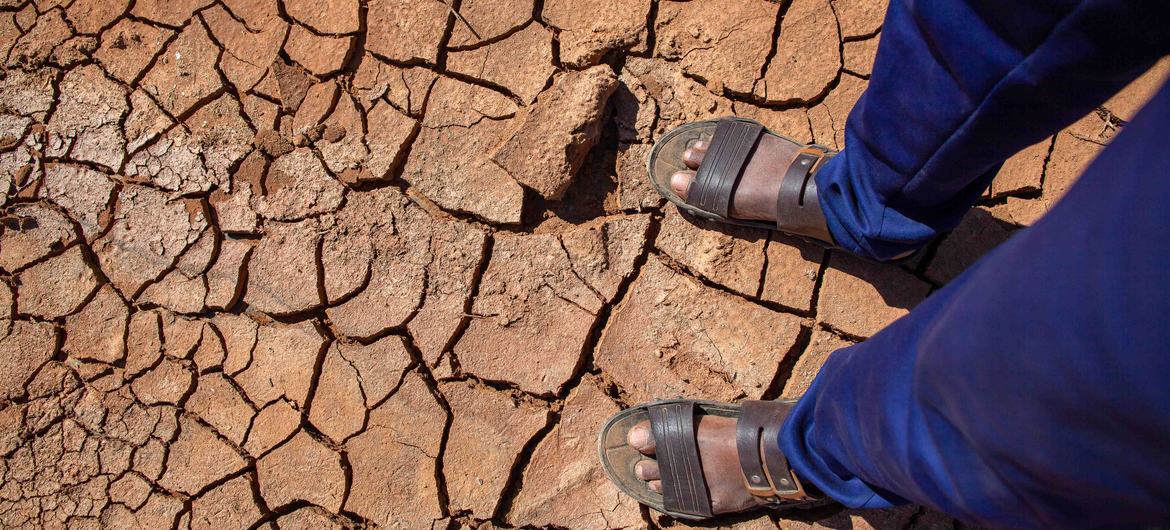
    Droughts are a constant threat in Somalia, in the horn of Africa.

    Droughts are a constant threat in Somalia, in the horn of Africa.

    Action stations

    The agencies warned that without swift intervention, the situation could deteriorate to catastrophic levels.

    Though they are working to scale up food assistance, nutrition and livelihood support, programmes could be forced to scale down or stop altogether amid “critically low” funding.

    The 2025 Somalia Humanitarian Needs and Response Plan, which requires $1.42 billion, is currently only 12.4 per cent funded.

    “Famine was narrowly avoided in 2022 due to large-scale humanitarian support, which is needed again to provide immediate assistance while implementing longer-term solutions,” said El-Khidir Daloum, UN World Food Programme (WFP) Country Director in Somalia.

    “However, funding shortfalls are forcing us to prioritize and reduce assistance at the worst possible time,” he added, urging greater international support.

    Source link

  • Norlase secures €20 million EIB venture debt to advance ophthalmic laser technology.

    EIB
    • Denmark’s med-tech sector receives a boost as Norlase strengthens its position in the global ophthalmic laser market with EIB venture debt financing.
    • Norlase will employ the funding for the further development and market access of its innovative portable ophthalmic laser technology.
    • The EIB’s financing is backed under the European Commission’s InvestEU initiative.

    Med-tech company Norlase, a spin-out of the Technical University of Denmark (DTU), has signed a €20 million venture debt financing with the European Investment Bank (EIB). The funding will support the expansion of Norlase’s innovative ophthalmic laser technology, reinforcing Denmark’s position as a hub for world-class med-tech innovation. Ensuring that European companies developing critical technology have the possibility and funding to grow in the EU, is an important building block in European strategic autonomy. The EIB financing is supported by the European Commission’s InvestEU programme.

    “Denmark’s efforts in building up its bio- and med-tech ecosystem are definitely paying dividends today. Like other Danish companies we recently financed, Norlase’s technology is top of its class and a real example of excellence in European innovation.” said EIB Vice-President Ioannis Tsakiris. “With the support of InvestEU, the EIB finances projects that advance state-of-the-art medical treatment, and this funding aims to enhance the position of Norlase as a European med-tech champion.”

    “As the patient burden continues to grow, the need to accelerate technological innovation in eye care has never been greater. With four product launches in just five years and rapid adoption by the ophthalmic community, Norlase is leading this transformation,” said Norlase CEO and Co-founder Oliver Hvidt. “This funding from the EIB allows us to scale our global presence and push even further beyond the limits of existing technology, solidifying Norlase’s role as a leader in the future of eye care. We’re just getting started.”

    The Head of the European Commission Representation to Denmark, Per Haugaard, added: “It’s crucial that European companies develop critical technology and that we secure investments in med-tech companies like Norlase across the continent.”

    On a technical level, the financing will support the development and market access of Norlase’s innovative portable ophthalmic lasers, designed to diagnose and treat causes of vision loss and blindness. The project focuses on advancing novel ophthalmic laser technologies and expanding production facilities to support increased demand. The company recently launched its fourth and most innovative device, LYNX, which can reduce treatment time by more than 50%, setting new standards for efficiency, accessibility, and precision in ophthalmic laser treatments.

    Background information

    The European Investment Bank is the long-term lending institution of the European Union, owned by its Member States. It finances investments that contribute to EU policy objectives. EIB projects bolster competitiveness, drive innovation, promote sustainable development, enhance social and territorial cohesion, contribute to peace and security, and support a just and swift transition to climate neutrality. The Group’s AAA rating allows it to borrow at favourable conditions on the global markets, benefiting its clients within the European Union and beyond. The Group has the highest ESG standards and a tier one capital ratio of 32%.

    High-quality, up-to-date photos of our headquarters for media use are available here.

    The InvestEU programme provides the European Union with crucial long-term funding by leveraging substantial private and public funds in support of a sustainable economy. It helps generate additional investments in line with EU policy priorities, such as the European Green Deal, the digital transition and support for small and medium-sized enterprises. InvestEU brings all EU financial instruments together under one roof, making funding for investment projects in Europe simpler, more efficient, and more flexible. The programme consists of three components: the InvestEU Fund, the InvestEU Advisory Hub, and the InvestEU Portal. The InvestEU Fund is implemented through financial partners who invest in projects using the EU budget guarantee of €26.2 billion. This guarantee increases their risk-bearing capacity, thus mobilising at least €372 billion in additional investment.

    Norlase was founded in Denmark to commercialize patented laser technology developed at the Technical University of Denmark (DTU) and its products are now in use in the top ophthalmic hospitals globally.

    Source link

  • Conflict has turned parts of Sudan ‘into a hellscape,’ Security Council hears

    Now more than ever, two years on, the people of Sudan need your action,” Edem Wosornu of the UN humanitarian affairs office, OCHA, said in a briefing to ambassadors on Wednesday.

    “Nearly two years of relentless conflict in Sudan have inflicted immense suffering and turned parts of the country into a hellscape,” she added, listing some of the impacts.

    Fighting between the Sudanese Armed Forces (SAF) and the paramilitary Rapid Support Forces (RSF) has left more than half the country, 24.6 million people, experiencing acute hunger.

    Additionally, more than 12 million are now displaced, including 3.4 million who have fled across the border. Health services have collapsed, millions of children are out of school and relentless patterns of sexual violence have occurred.

    Recent alarming developments

    Ms. Wosornu focused on the latest alarming developments in North Darfur state, including the Zamzam displacement camp, and in Khartoum as well as the south of the country.

    She said eight months after the Council adopted Resolution 2739 (2024), civilians in North Darfur remain under attack. The resolution demanded the RSF stop besieging the state capital, El Fasher.

    Meanwhile, violence in and around Zamzam camp has further intensified. It is estimated that hundreds of thousands of civilians are living there, where famine conditions have been confirmed. 

    She said satellite imagery confirms the use of heavy weaponry in and around Zamzam in recent weeks, and the destruction of the main market facilities there. 

    Terrified civilians, including humanitarian workers, were unable to leave the area when the fighting was most intense. Many were killed, including at least two humanitarian workers,” she added.

    The deteriorating security situation forced the medical humanitarian organization MSF – the main provider of health and nutrition services in Zamzam camp – to halt its operations there, while the World Food Programme (WFP) confirmed suspension of the voucher-based food assistance system.

    Famine conditions were confirmed in Zamzam last August and since then, WFP has managed to transport just one convoy of humanitarian supplies into the camp despite repeated attempts to deliver more.        

    The UN agency warned that without immediate assistance, thousands could starve in the coming weeks. 

    Fierce fighting elsewhere

    Civilians also continue to be directly impacted by ongoing fierce fighting in parts of Khartoum, where the UN human rights office, OHCHR, has verified reports of summary executions of civilians in areas that have changed hands.

    “We remain deeply concerned about the very serious risks faced by local responders and community volunteers, in Khartoum and elsewhere,” she said.

    Ms. Wosornu noted that in southern Sudan, there are reports of fighting spreading into new areas in North Kordofan and South Kordofan states, increasing risks for civilians and further complicating movements of humanitarian personnel and supplies.

    Shocking reports of further atrocities in White Nile state have also emerged, including a wave of attacks earlier this month reported to have killed scores of civilians.

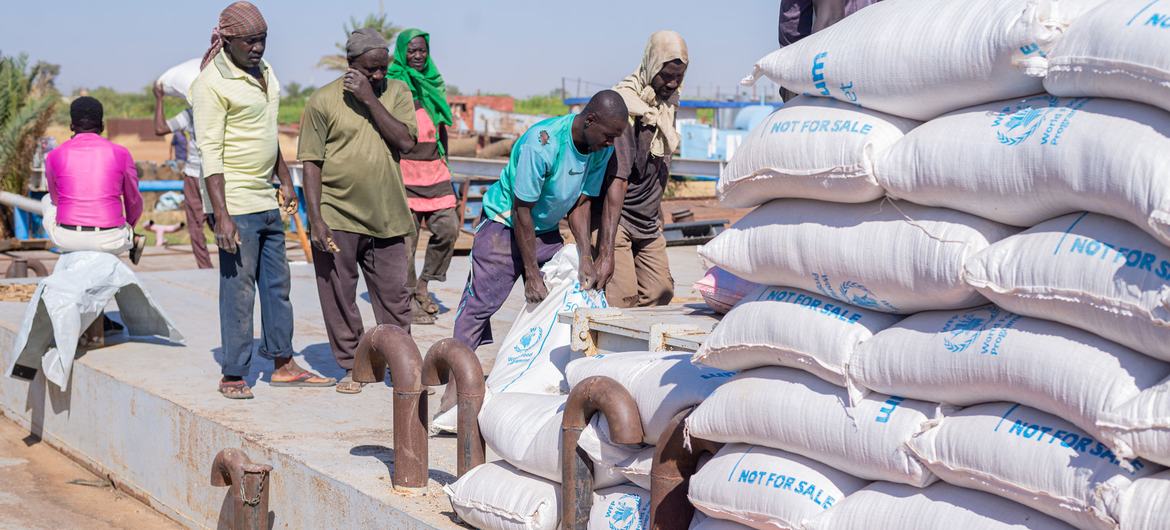
    Sudan. Offloading of barge transported food aid

    Sudan. Offloading of barge transported food aid

    Support humanitarian response

    She recalled that last week saw the launch of the 2025 humanitarian response plans for Sudan and the region. Together they call for $6 billion to support nearly 25 million people in Sudan and up to five million others, mainly refugees, in neighbouring countries.

    She said the international community, particularly Security Council members, must spare no effort to mitigate the crisis.

    Ms. Wosornu concluded her remarks by presenting three “key asks”. 

    “We call on the Security Council – and all Member States with influence – to take immediate action to ensure all actors comply with international humanitarian law and protect civilians and the infrastructure and services they rely on,” she said. 

    Her second request highlighted the importance of access, as “we need real implementation of the repeated commitments to facilitate and enable unhindered, unfettered humanitarian access to civilians in need.”

    Finally, she highlighted the funding shortfall. 

    “The scale of Sudan’s needs is unprecedented and requires an equally unprecedented mobilization of international support, including flexible funding,” she said. 

    Source link

  • World NGO Day: Statement by the EEAS Secretary General Belén Martínez Carbonell

    Civil society is the beating heart of democracy, its pulse sustaining freedom and amplifying the voices of citizens. Civil society organisations build bridges where divisions threaten to take hold, fostering trust within communities and between states. Across the world, they drive progress toward more just and inclusive societies, advancing peace, sustainable development and human rights.

    Yet today, this very foundation of democracy is at risk. Civil society workers and human rights defenders face online and offline attacks including surveillance, legal persecution and violent repression. Laws designed to silence dissent impose funding restrictions and bureaucratic hurdles, making it ever harder for civil society to operate. Peaceful protests are too often met with excessive force. Meanwhile, autocratic regimes increasingly expand their reach beyond borders, silencing dissenting voices through transnational repression. Time and again, civil society is unjustly labelled as foreign agents or enemies of the state as a deliberate tactic to erode trust in their work.

    The European Union stands firm in its commitment to protect and support civil society everywhere. We will continue to speak out against repressive measures and deploy all diplomatic and financial tools to protect the fundamental freedoms that enable civil society to thrive – the freedom to associate, assemble peacefully and express views freely.

    A resilient civil society is democracy’s strongest shield against authoritarianism. Their courage lights the way – our duty is to ensure that their voices are never silenced. On this day, we reaffirm our unwavering support for those who risk their safety to defend our rights.

    Background

    The EU adopted the Global Europe Civil Society Organisations (CSOs) programme worth €1.5 billion for the period 2021-2027 under NDICI-Global Europe. This initiative provides financial support to civil society organisations outside the EU.

    In 2024, the EU partnered with a consortium of nine CSOs to launch the EU System for an Enabling Environment for Civil Society (EU SEE). With a budget of €50 million, the initiative will monitor and support civil society across 86 countries by implementing an early warning system, which can trigger flexible financial assistance to enhance resilience and respond swiftly to changes in the civic space.

    The EU has also established nine framework partnerships to advance the freedoms of association, assembly and expression. Four projects for a total of €27 million are already underway, aiming to empower civil society to advance human rights and defend democracy, including through the protection of independent media.

    The Team Europe Democracy initiative, worth €19 million, brings together 14 Member States and the EU to foster a coordinated and strategic European response in support of democracy, in cooperation with civil society, think tanks and international organisations, with an important component on fostering civic and political participation.

    The EU also continues to support ProtectDefenders.eu, which has assisted over 80,000 at-risk human rights defenders and their families since its creation in 2015. This mechanism takes a comprehensive approach, offering direct assistance, temporary relocation, training, capacity development and advocacy. In 2024 alone, ProtectDefenders.eu provided support to more than 10,000 high-risk defenders, 56% of whom were women.

    Fostering an enabling environment for civil society is also a key component of enlargement policy. Through the Instrument for Pre-accession Assistance (IPA III), the EU has allocated over €350 million for civil society and media in the Western Balkans and Türkiye between 2021 and 2025. Additionally, under the NDICI Thematic Programmes for Human Rights and Democracy and Civil Society Organisations, the EU has committed €200 million to civil society actors in pre-accession countries and the Eastern Neighbourhood. Furthermore, through NDICI geographic actions supporting the Eastern Neighbourhood, the EU has dedicated €250 million over the same period to support civil society and independent media.

  • Ancient Biblical City in Jordan Holds King David’s Secret

    An Iron Age settlement known as Mahanaim was part of the Kingdom of Israel (late 10th to late 8th century BCE), and an archaeological team believes it has identified the city mentioned in the Bible, along with the remains of a building that may have been used by elites, possibly Israelite officials, National Geographic magazine reports.

    Today, the site thought to be Mahanaim is called Tall adh Dhahab al Gharbi, archaeologists Israel Finkelstein of Tel Aviv University and Talai Ornan of the Hebrew University of Jerusalem write in an article published in Tel Aviv magazine. They base their conclusions largely on archaeological remains found at the site and an analysis of biblical passages mentioning Mahanaim.

    The Bible states that Mahanaim was located next to another city called Penuel.

    A smaller archaeological site known as Tall adh Dhahab esh Sharqi, which may be Penuel, is located near Tall adh Dhahab al Gharbi, which may be Mahanaim, the study authors wrote. Biblical texts suggest that Penuel was the site of a temple, and the remains of a rectangular platform that may have been the foundation of the temple have been found at Tall adh Dhahab esh Sharqi.

    Tal adh Dhahab al Gharbi was excavated by a German archaeological team between 2005 and 2011, who discovered the remains of stone blocks containing various engraved images, including images of people playing the lyre; a lion; a date palm tree; and a man carrying a goat, possibly “intended as food for a feast.”

    The archaeologists also noted that the style of the engravings is similar to that of wall paintings from the 8th century BCE. at an archaeological site in the northeastern Sinai Desert of Egypt, excavations of which show that the site was controlled by the Kingdom of Israel in the 8th century BCE. This suggests that the blocks found at Tal adh Dahab al-Gharbi also date to the 8th century BCE and were the work of Israelite artists.

    In the study, Finkelstein and Ornan say that these blocks are likely the remains of a building used by Israelite caretakers. Finkelstein notes that the Bible also mentions that an Israelite king named Ishbosheth lived in Mahanaim during his short reign, and that David fled to Mahanaim when one of his sons, Absalom, rebelled against him.

    The researchers add that Mahanaim and Penuel were built by Jeroboam II, a king of Israel who ruled in the 8th century BCE.

    Illustration: Gad Territory on an 1852 map – Mahanaim can be seen in the northeast corner of the pink-shaded Gad area. This beautiful hand-colored map is an engraved steel plate of Israel/Palestine or the Holy Land. It depicts the region as it would have been during the period of the Twelve Tribes of Israel. There are numerous notes that refer to wells, caravan routes, and biblical locations. Dated “Liverpool, Published by George Philip and Sons 1852.”

  • Bulgaria hosts of the session of the UNESCO World Heritage Committee

    The Bulgarian government approved funding in the amount of up to 1,890,000 leva to ensure activities related to the organization of the 47th session of the UNESCO World Heritage Committee in the summer of this year. At a cabinet meeting, it was decided that the funds are earmarked for the Ministry of Culture, which will have to coordinate all actions related to the prestigious, but also difficult in terms of organization, event.

    We recall that by a decision taken on July 31, 2024, within the framework of the 46th session of UNESCO in Delhi (India), Sofia was chosen to host the 47th session of the organization from July 6 to 16, 2025, and Prof. Nikolay Nenkov was appointed as the Chairman of the World Heritage Committee. His mandate is until the end of the event in the capital of Bulgaria. His vice-chairmen are representatives of the countries of Belgium, Mexico, the Republic of Korea, Zambia and Qatar. Joel Busuana (Rwanda) was appointed rapporteur.

    The decision for Bulgaria to undertake this extremely serious commitment was made by the caretaker government of Dimitar Glavchev with a decision of 30 July 2024 and was supported by a declaration of all parliamentary groups in the National Assembly.

    Illustrative Photo by Gizem B: https://www.pexels.com/photo/church-of-christ-pantocrator-in-nesebar-bulgaria-16283124/

  • Syria: UN scales up aid deliveries as regional fighting continues

    UN Spokesperson Stéphane Dujarric told journalists at a regular news briefing in New York that aid trucks from Türkiye to Idlib via Bab Al-Hawa are continuing to get through with vital assistance to communities in need.

    “Yesterday, 43 trucks carrying more than 1,000 metric tonnes of food from the World Food Programme (WFP), as well as blankets, solar lamps and other items provided by the International Organization for Migration (IOM) crossed the border,” he said.

    Since the start of the year, nearly 400 trucks have crossed from Türkiye into Syria – five times the number recorded during the same period last year.

    Rehabilitation efforts underway

    Across Syria, humanitarian organizations are working to rebuild infrastructure and restore essential services.

    In northwest Syria, 350 homes have been rehabilitated since last month, while in Damascus and surrounding rural areas, more than 700 people have received support to repair their damaged homes.

    Over the past two weeks, three water stations in Latakia have been restored, providing much-needed access to clean water.

    “We and our partners continue to provide this assistance as security, logistical and funding conditions permit,” Mr. Dujarric added.

    Despite these efforts, “the toll of destruction remains overwhelming”, he added.

    In Aleppo, 34 facilities in former frontline areas have sustained severe damage or complete destruction, requiring urgent rehabilitation to restore healthcare, education, and other essential services.

    Hostilities continue

    While humanitarian assistance is reaching many communities, the fighting continues to take a toll on civilians and restrict aid access in various regions.

    “In eastern Aleppo – including in the vicinity of the Tishreen Dam and the Al-Khafsa water pumping station – and in the south of the country, hostilities have resulted in casualties, as well as restrictions in humanitarian access and movements of people,” Mr. Dujarric said.

    Returns top a million

    Meanwhile, more than one million displaced Syrians have returned home since the fall of the Assad regime in early December last year, according to a recent update from the Office of the UN High Commissioner for Refugees (UNHCR).

    The number includes approximately 292,150 Syrian refugees returning from neighbouring countries, including Türkiye, Lebanon, Jordan, Iraq and Egypt as of 20 February. An additional 829,490 internally displaced persons (IDPs) have also returned to their places of origin.

    UNHCR continues to monitor voluntary returns, offering legal counselling, as well as support with transportation, particularly in Jordan.

    Inside Syria, the agency is delivering protection and humanitarian assistance to refugees moving home and IDPs, including early recovery interventions.

    “In view of the cold winter months and continued electricity shortages, distributions of core relief items and warm winter clothing, as well as urgent shelter repairs, such as new windows and doors, continued to be priority interventions,” UNHCR said.

    Source link

  • Renovated hospital and preschool open in Lviv Oblast with EU bank support

    EIB
    • Lviv’s St Luke’s Hospital has been upgraded to provide better medical care and a more resilient environment for patients, visitors and healthcare workers amid wartime challenges.
    • Preschool No.7 in Truskavets has been renovated to improve energy efficiency to provide a stable learning space for children and educators, including those displaced by the war.
    • These projects are part of the Ukraine Early Recovery Programme, aimed at rebuilding essential social infrastructure in Ukrainian communities.

    As Ukraine marks three years of Russia’s full-scale war, the European Union continues to support the reconstruction of the country’s vital infrastructure. Two public buildings in Lviv Oblast – St Luke’s Hospital in Lviv and preschool No.7 “Dzvinochok” in Truskavets – have officially opened after renovations. Supported by the European Union and its financial arm, the European Investment Bank (EIB), these projects are part of the broader Ukraine Early Recovery Programme that funds the restoration of essential social infrastructure, including schools, hospitals, water and heating systems and social housing. As war-affected communities continue to face immense challenges, these investments help ensure access to critical services and create more resilient spaces.

    Lviv’s St Luke’s Hospital, a key emergency and specialised care centre, has undergone a €940 000 renovation to improve services for its 50 000 annual patients. Home to western Ukraine’s largest burn unit, it plays a crucial role in treating severe injuries. The upgrades, in particular facade insulation and energy efficiency improvements, enhance the hospital’s resilience while creating a more comfortable space for patients, including internally displaced persons.

    A €330 000 renovation of preschool No.7 “Dzvinochok” in Truskavets, Lviv Oblast, has created a more energy-efficient and welcoming learning space for pupils including for children displaced by the war and for staff. The project significantly increased the appeal of the building, while increasing its energy efficiency and reducing energy costs. With improved insulation the preschool is now more resilient and sustainable.

    In Lviv Oblast, two facilities have already been renovated and six are undergoing reconstruction under the EIB recovery programmes, with a total investment of over €15 million. This includes six educational institutions and two medical facilities, improving access to education and healthcare in the region. 

    EIB Vice-President Teresa Czerwińska, who is responsible for the Bank’s operations in Ukraine, said: “From day one of Russia’s full-scale war and throughout these three difficult years, the EIB has stood by Ukraine, providing vital support to help the country withstand, recover and rebuild. The reopening of renovated hospital and school in Lviv Oblast is a testament to this ongoing effort, bringing tangible improvements to people’s daily lives.”

    EU Ambassador to Ukraine Katarína Mathernová said: “Every rebuilt hospital, school, and kindergarten sends a clear message: the EU stands firmly with Ukraine. Together with the EIB, we are not only helping to repair what has been damaged but also laying the foundations for a stronger, safer Ukraine that is ready to thrive as part of the EU.”

    Deputy Prime Minister for Restoration of Ukraine – Minister for Development of Communities and Territories of Ukraine Oleksii Kuleba said: “Together with the EIB, EU Delegation and UNDP, we are modernising outdated and war-damaged infrastructure across Ukraine. Millions of Ukrainians already benefit from renovated schools, hospitals and kindergartens. We have recently launched the first phase of the Ukraine Recovery III programme, paving the way for additional impactful initiatives that will enhance communities and improve the lives of Ukrainians thanks to the EU support.”

    Minister of Finance of Ukraine Sergii Marchenko said: “Rebuilding Ukraine’s infrastructure is crucial for strengthening resilience and improving living conditions for our people. With the support of the EU, we are delivering critical projects that enhance healthcare, education and public services. The three EIB-backed recovery programmes, worth €640 million, play a key role in this effort, helping communities rebuild and move forward despite ongoing challenges.”

    Head of the Lviv Oblast Military Administration Maksym Kozytskyi said: “The EU bank’s investment in Lviv Oblast is strengthening our region’s infrastructure at a critical time. With many communities hosting large numbers of displaced people, improving healthcare, education and essential services is more important than ever. These projects help ensure that our cities and towns remain functional, resilient and able to meet the needs of all who live here.”

    Mayor of Lviv Andriy Sadovyi said: “Restoring and strengthening our city’s infrastructure is essential to supporting both our residents and those who have found refuge here due to the war. With the support of the EU, we are rebuilding vital facilities to ensure Lviv remains a city of resilience, opportunity and hope. Today, we inaugurated a renovated hospital, with many other projects underway to improve daily life and build a stronger future for our community.”

    Mayor of Truskavets Andriy Kulchynsky said: “We are grateful to the EU for this investment in our community. The renovation of Preschool No.7 creates a warm, modern and energy-efficient space where our children can learn and grow.”

    UNDP Resident Representative to Ukraine Jaco Cilliers said: “Behind every rebuilt hospital and renovated school, we see renewed hope for Ukrainian families and communities. UNDP’s partnership with local authorities isn’t just about infrastructure – it’s about restoring essential services that affect people’s daily lives. Working alongside the EU and EIB, we’re helping transform technical recovery projects into tangible improvements for children seeking education, patients needing care and citizens rebuilding their futures.”

    Background information

    EIB in Ukraine 

    The EIB Group has been supporting Ukraine’s resilience, economy and efforts to rebuild since the very first day of Russia’s full-scale invasion. In 2024, the Bank supported projects aimed at securing Ukraine’s energy supply, repairing critical infrastructure that has been damaged, and ensuring that essential services continue to be delivered across the country. This brings the total amount of aid the EIB has disbursed since the start of the war to over €2.2 billion.

    EIB recovery programmes in Ukraine

    Renovations of a hospital and kindergarten in Lviv Oblast were carried out under the Ukraine Early Recovery Programme (UERP), a €200 million multisectoral framework loan from the EIB. Overall, the Bank finances three recovery programmes, totalling €640 million, which are provided as framework loans to the government of Ukraine. Through these programmes, Ukrainian communities gain access to financial resources to restore essential social infrastructure, including schools, kindergartens, hospitals, housing, heating, and water systems. These EIB-backed programmes are further supported by €15 million in EU grants to facilitate implementation. The Ministry for Development of Communities and Territories of Ukraine, in cooperation with the Ministry of Finance, coordinates and oversees the programme implementation, while local authorities and self-governments are responsible for managing recovery sub-projects. The United Nations Development Programme (UNDP) in Ukraine provides technical assistance to local communities, supporting project implementation and ensuring independent monitoring for transparency and accountability. More information about the programmes is available here.

    Source link