Author: chiefeditor

  • Human Rights Council: Gaza ceasefire must hold, Türk insists

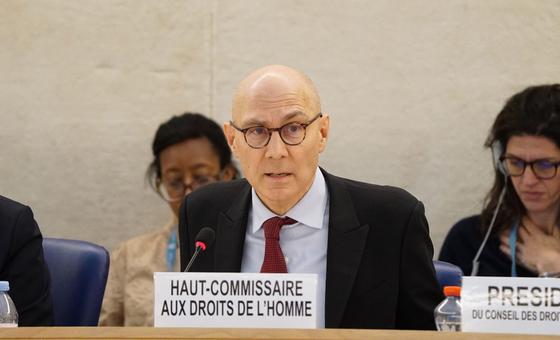
    Addressing the Human Rights Council in Geneva on conditions inside the Occupied Palestinian Territory, Mr. Türk condemned the Hamas-led terror attacks on Israel that sparked the war in October 2023.

    The UN High Commissioner for Human Rights also said there was no justification for Israel’s devastating military operations in Gaza, which have left more than 48,000 Palestinians dead, according to local authorities.

    Search for a better future

    “At this tenuous moment the world must ask itself how to resolve this decades old conflict and stop the cycle of violence,” he said.

    Any plans for a better future must deal with the past, so accountability and justice for violations are crucial.”

    The High Commissioner added that each phase of the ceasefire must be implemented “in good faith, and in full. All of us must do everything in our power to build on it.”

    He said it must be for the Palestinians themselves to determine their own future.

    According to news reports, the delayed release by Israel of Palestinian prisoners is expected to go ahead imminently, in exchange for the return of the bodies of four hostages.

    ‘Unprecedented disregard’

    Summing up the “raft of human rights violations” inside the Occupied Palestinian Territory and lack of accountability, he said there had been “an unprecedented disregard” for basic principles of international humanitarian law by both sides since the outbreak of hostilities in October 2023.

    Mr. Türk maintained there were serious doubts over Israel’s capacity and will to deliver full accountability, notably in relation to unlawful killings in Gaza and the West Bank.

    With Hamas and other Palestinian militants who have taken and tortured hostages, fired indiscriminate projectiles into Israel – amounting to war crimes – there are concerns that they may also have committed serious breaches “including the intentional co-location of military objectives and Palestinian civilians.”

    “Any attempts at shaping a peaceful future where such horrors do not recur must ensure that perpetrators are held to account,” said the High Commissioner. 

    Impunity when given free rein, harms not only those directly impacted but generations down the line, he contended.

    In an apparent response to the outlawing of the UN Palestine refugee relief agency, UNRWA, by Israel and the sanctions against the International Criminal Court by the US earlier this month, the UN rights chief said that “delegitimising and threatening international institutions that are there to serve people and uphold international law also harms us all.”

    He also said any attempt to annex Palestinian land or “forced transfer” of civilians must be resisted.

    “This is the moment for voices of reason to prevail; for solutions that will deliver justice and make space for compassion, healing and truth telling,” said Mr. Türk.

    ‘Systemic’ repression in Nicaragua

    Investigators tasked by the UN Human Rights Council to track alleged grave abuses of power by top Nicaraguan officials insisted on Wednesday that the International Court of Justice (ICJ) should prosecute what they called the systematic and systemic repression of the country’s people.

    The Group of Experts on Nicaragua – who act in an independent capacity and are not UN staff – have previously reported that the Government’s violations appear to constitute crimes against humanity of murder, imprisonment and torture – including rape.

    Their latest report will be presented later this week to the Council.

    The group maintains that President Daniel Ortega and his wife, Rosario Murillo, have created “an authoritarian State where no independent institutions remain, opposition voices are silenced and the population…faces persecution, forced exile, and economic retaliation”.

    Stifling dissent

    It was in response to grave concerns about the severe repression of civil rights in Nicaragua that the international community decided in 2018 to establish an investigative body to report back to the Council.

    “We call on States to hold Nicaragua accountable for its violations of the UN Convention on Torture and the UN Convention on Statelessness before the International Court of Justice…the international community cannot just bear witness. It needs to take concrete measures,” said Reed Brody, member of the Group of Experts.

    “No country in the world has used the arbitrary detention of nationality against political opponents at the same scale that Nicaragua has done; and this is a violation of its obligations under international law under the Convention on the Reduction of Statelessness,” Mr. Brody continued.

    ‘Machine of repression’

    According to the panel’s chair, Jan-Michael Simon, State machinery and the ruling Sandinista party “have virtually fused into a unified machine of repression with domestic and transnational impact.”

    This development – which has reduced the judicial, legislative and electoral powers “to mere bodies coordinated by the presidency” – has resulted in myriad deaths, “arbitrary detentions, enforced disappearances, torture, expulsion of nationals, arbitrary deprivation of nationality,” Mr. Simon insisted.


    Source link

  • Scientology Opens Ideal Center in Pilsen: A European Hub for Culture, Spiritual Growth and Community Help

    KINGNEWSWIREAGENCY – On February 22, 2025, the first Ideal Dianetics and Scientology Center in the Czech Republic opened in Pilsen. The event marked a milestone for local community projects and spiritual development. Guests, including local leaders, praised its role in social betterment, drug prevention, and disaster relief. The center offers spiritual counseling, life improvement courses, and volunteer initiatives. Director Petr Gono emphasized its mission to help individuals lead fulfilling lives. The facility embodies L. Ron Hubbard’s vision of uplifting society through personal and community growth.

    Brussels, Belgium, 26th Feb 2025 – Saturday, February 22, 2025, marked a significant milestone for Scientology and its long-standing community projects in the Czech Republic. In the historic city of Pilsen—famous for its industrial heritage and rich cultural life—the first Ideal Dianetics and Scientology Center in the Czech Republic was officially opened.

    Pilsen, home to nearly 200,000 residents, is a city where history meets modern life. It proudly holds the title of European Capital of Culture 2015, and it is now the site of a center dedicated to personal development, spiritual growth, and community support. The Ideal Center offers a full range of basic and introductory Scientology services, including spiritual counseling (auditing), and is designed to help individuals achieve spiritual freedom.

    A Celebration of Community Spirit and Help

    The grand opening was not only the inauguration of a new center but also a celebration of the fifth anniversary of the original Dianetics Center in Pilsen. Guests from across Czech Republic and the neighboring Slovakia gathered to commemorate this milestone and the progress made in community help and spiritual development.

    Several distinguished guests spoke during the ceremony, sharing their experiences with Scientology Know-how and Scientology-supported initiatives and studies emphasizing the importance of cooperation and helping others.

    The Mayor of Nerestce addressed the growing social challenges in his speech:

    “Over the years, I have witnessed the moral fabric of our society deteriorating. It seems that kindness and compassion are fading, while we face rising violence, drug abuse, and social problems. Organizations like yours are crucial – they educate young people and show them that running away from challenges is not the solution.”

    An international leader in Roma football and the founder of the Mongaguá project highlighted the power of unity:

    “I believe that if we stand together, we can positively impact countless children, their parents, and entire communities…. I trust that you will continue spreading values and respect.”

    The Mayor of Písečná delivered an emotional speech, expressing gratitude for the help provided by Scientology Volunteer Ministers after the devastating floods of 2024:

    “The most important thing, as you demonstrated when helping the people of Písečná, is HELP.”

    In fact, the Ideal Mission serves as the central hub for organizing and launching Scientology community projects. One of its main focuses is helping younger generations avoid drug abuse through weekly drug education programs, which have been running for over 20 years in the Czech Republic.

    To address the decline in moral values, The Way to Happiness book is regularly distributed throughout the community, encouraging positive change and ethical living.

    The Scientology Volunteer Ministers program operates under the motto, “Something can be done about it,” a principle actively demonstrated during last year’s devastating floods and through ongoing clean-up efforts in several areas of Plzeň. This initiative, which has been running for several months, continues to set a positive example for others. In times without natural disasters, one of the key activities involves removing discarded syringes to ensure a safer environment for everyone. Volunteer ministers are working on this for several months, every day.

    A Mission to Help and Inspire

    Petr Gono, Director of the new Ideal Scientology Center, outlined the organization’s mission in his address:

    “We are here to help restore the desire to live a fulfilling life—free from drugs, with harmonious relationships, where children can grow up in an environment full of love and care. We are here to help people overcome past failures and build a better future—not just for themselves, but for all of us. That is our mission.”

    “The local Ideal Dianetics and Scientology Center is an important place because it is open to everyone—whether they are Scientologists or not. All it takes is a good heart and a desire to improve oneself, one’s group, or to help the entire society. This is the place where we organize most of our community projects—whether it’s a simple clean-up, promoting moral values, or disaster relief. It is where we bring the vision of Mr. L. Ron Hubbard, the founder of Scientology, to life,” said the Director of Scientology Community Projects and Public Affairs, David Macoun.

    From Brussels, Ivan Arjona-Pelado, President of the European Office of the Church of Scientology for Public Affairs and Human Rights stated that “the people of the Czech Republic are setting an example as to what it means to help those in need, and keep showing it once and again, so I can only be happy that they have this ideal facilities from where they can further expand their help and open the doors to spiritual enlightenment to even more people”.

    Comprehensive Facilities for Personal Growth and Community Help

    As an Ideal Dianetics and Scientology Mission, the Plzeň facility is equipped with all the necessary resources to deliver a wide range of introductory Scientology services. These include:

    • Life Improvement Courses – offering practical solutions to everyday challenges, such as improving communication, raising children successfully, strengthening interpersonal relationships, and achieving personal goals.

    • Personal Efficiency Seminars – covering topics such as the human mind, effective communication, and stress management.

    • Spiritual Counseling (Auditing) – helping individuals overcome spiritual and emotional barriers and achieve personal freedom.

    This new center is not only a place for personal growth but also a hub for extensive Scientology community projects. The organization focuses on raising moral standards, drug prevention, disaster relief, and other initiatives aimed at creating a positive social impact.

    The new Ideal Scientology Center in Plzeň represents another step toward fulfilling the vision of L. Ron Hubbard, who believed that helping others and working together are the keys to building a better and more just society.

  • West Bank security situation remains alarming, warn UN aid agencies

    The violence has seen exchanges of fire between Israeli troops and Palestinian militants – and the use of bulldozers in refugee camps for the first time in 20 years which have destroyed public services, including vital electricity and water networks.

    Israel’s defence minister said on Sunday forces could remain in the camps for the “coming year”. 

    Philippe Lazzarini, head of the UN’s Palestine refugee agency, UNRWA, said that “fear, uncertainty, and grief once again prevail. Affected camps lie in ruins…Destruction of public infrastructure, bulldozing roads and access restrictions are common place.” 

    More than 50 people including children have been killed since Israeli military raids started five weeks ago, the UN agency said, warning that the West Bank “is becoming a battlefield” where ordinary Palestinians are the first and worst to suffer.

    Lethal force

    Meanwhile, UN aid coordinating office, OCHA, also condemned the “lethal, war-like tactics” being employed by the Israeli military against Palestinian communities in the occupied West Bank.

    OCHA confirmed further civilian casualties and mass displacement after a two-day Israeli military raid in the northern town of Qabatiya in Jenin governorate that ended on Monday.

    Palestinians were detained in the operation, OCHA noted, before reiterating deep concerns about the use of excessive force against civilians and the additional humanitarian needs among people left homeless.

    Responding to needs

    UN partners on the ground are doing their utmost to help people uprooted by the violence despite growing “physical and administrative” challenges, OCHA said.

    According to the UN World Food Programme (WFP), it reached 190,000 people in January with cash assistance and has provided one-off cash assistance to more than 5,000 displaced people from the Jenin refugee camp.

    Gaza cold kills six children

    In neighbouring Gaza, UN and its humanitarian partners have continued to scale up food security and livelihood support, while six children reportedly died from the cold.

    Needs remain enormous amid desperate humanitarian conditions caused by 15 months of constant Israeli bombardment sparked by Hamas-led terror attacks on Israel that left 1,200 dead and some 250 people captured as hostages.

    Citing the Gazan health authorities, OCHA said that six children from the Gaza Strip have died in recent days because to the severe cold, bringing to 15 the total number of youngsters killed by the winter conditions.

    Meanwhile, more than 800 trucks entered the Gaza Strip on Tuesday alone, OCHA said. Since the start of the ceasefire on 19 January, WFP has brought more than 30,000 tonnes of food into Gaza. More than 60 kitchens supported by the UN agency across the Strip have handed out nearly 10 million meals, including in North Gaza and Rafah in the south.

    The biggest aid provider in Gaza, UNRWA, has reached nearly 1.3 million people with flour and reached about two million people with food parcels since the start of the ceasefire.

    The UN Food and Agriculture Organization (FAO) also reported that it has delivered animal feed to northern Gaza for the first time since the escalation of hostilities.

    The aid delivery last week has helped 146 families with livestock in Gaza City alongside another 980 in Deir al Balah.

    Between the start of the ceasefire and 21 February, FAO distributed more than 570 metric tonnes of animal feed across the Gaza Strip to some 2,300 families with livestock.

    OCHA noted in addition that aid partners working in education have identified additional schools in Rafah, Khan Younis and Deir al Balah that were used as shelters for displaced people. “These schools will be assessed and repaired to prepare for their reopening,” it said. 

    Source link

  • New action plan to lower energy costs for European citizens and businesses

    The EU is at a crucial turning point for its competitiveness, decarbonisation and security, with a clear need to act. Structurally high energy costs are hurting our citizens and businesses. The challenges are clear, and so is the role of the European Union to address them. Today, the Commission is putting forward an Action Plan with short-term measures to lower energy costscomplete the Energy Unionattract investments and be better prepared for potential energy crises. As a key component of the Clean Industrial Deal, this Plan will not only bring relief to households facing high energy bills, but also to industries that struggle with high production costs, with  estimated overall savings of €45 billion in 2025, that will progressively increase until €130 billion in annual savings by 2030 and €260 billion by 2040. 

    The Action Plan will bring short-term relief to consumers and pave the way for the completion of the Energy Union by frontloading the benefits of more renewable energy, energy savings, deeper market integration and better interconnections. Crucially, it proposes actions to tackle the structural challenges that are driving up energy costs in the EU, notably Europe‘s reliance on imported fossil fuels and lack of full integration of the electricity system. The Plan builds on the recent reform of the Electricity Market Design, the REPowerEU Plan, sector-specific blueprints for wind, solar and grids and revised energy and climate legislation under the Fit for 55 package.

    By accelerating investments in clean energy and infrastructure, and by bringing transparency and fairness to gas markets, energy can be made more affordable. A further reduction of permitting times for renewables and energy infrastructure will also help lowering power production costs. Consumers already benefit from around €34 billion every year thanks to the EU‘s internal energy market. Further integration could raise such benefits up to 40-43 billion per year already by 2030.

    President Ursula von der Leyen said:” We’re driving energy prices down and competitiveness up. We have already significantly reduced energy prices in Europe by doubling down on renewables. Now, we are going a step further with the Affordable Energy Action Plan as part of our Clean Industrial Deal. With it, we will achieve more predictable prices, stronger connections across Europe, and increased energy offtake. We will systematically remove remaining obstacles so that we can build a true Energy Union.”

    Lowering energy costs to provide immediate relief to consumers while completing the Energy Union 

    To make electricity more affordable, the Commission will tackle all three components of energy bills, namely network and system costs, taxes and levies and supply costs. We will make recommendations to the Member States to lower national taxes on electricity and enable consumers to switch suppliers more easily towards cheaper energy offers, among others. Building on existing EU electricity legislation, the Commission will also further support the uptake of long-term supply contracts which ultimately help break the link between retail electricity bills and high and volatile gas prices. To lower the network charges part of the energy bill, it will propose a methodology to ensure network charges reflect the costs of the energy system, incentivising the most efficient use of the grid.

    Together with support to bring more and faster renewables, the Commission will also bring about significant benefits for consumers by supporting a broader uptake of energy efficiency solutions, which can lead to savings of up to €162 billion per year in 2030. An EU guarantee scheme to be developed in cooperation with the European Investment Bank will help de-risk investment in energy efficiency services and facilitate access to more efficient appliances and products with longer lifetimes.

    EU gas prices are too high and are affecting the competitiveness of the European industry. To ensure fair competition, the Commission will step up its scrutiny of the EU gas markets with the help of the Agency for the Cooperation of Energy Regulators (ACER), the European Securities and Markets Authority (ESMA) and national regulators. We will also engage with reliable LNG suppliers to identify additional cost-competitive imports and harness the Union’s purchasing power by aggregating demand from EU companies.

    Ultimately, deeper integrated, well-functioning and decarbonised energy markets are the best shield against price volatility. This is why the Commission will strive to complete the Energy Union, with more interconnectors, a stronger grid and cross-border trading, and will roll out a set of initiatives to boost electrification and the decarbonisation of the heating and cooling sectors, to mobilise private capital and further digitalise the energy system, among others. 

    Being better prepared for potential crises 

    Security of supply is key to ensure prices remain stable. The Commission will update the EU energy security framework to address emerging threats such as cyber-attacks, critical infrastructure sabotage and risks from reliance on imports. It will also step up preparedness for potential price crisis, among others, by issuing guidance to Member States on how to reward consumers to reduce consumption at peak times and keep energy bills in check.

    For more information

    Questions and Answers on the Action Plan for Affordable Energy

    Factsheet on the Action Plan for Affordable Energy

    Action Plan for Affordable Energy

    Press release on the Clean Industrial Deal

  • Commission presents plan for competitiveness and decarbonisation in the EU

    Today, the Commission presents the Clean Industrial Deal, a bold business plan to support the competitiveness and resilience of our industry. The Deal will accelerate decarbonisation, while securing the future of manufacturing in Europe.

    Faced with high energy costs and fierce and often unfair global competition, our industries need urgent support. This Deal positions decarbonisation as a powerful driver of growth for European industries. This framework can drive competitiveness as it gives certainty and predictability to companies and investors that Europe remains committed to become a decarbonised economy by 2050.

    President Ursula von der Leyen said: “Europe is not only a continent of industrial innovation, but also a continent of industrial production. However, the demand for clean products has slowed down, and some investments have moved to other regions. We know that too many obstacles still stand in the way of our European companies from high energy prices to excessive regulatory burden. The Clean Industrial Deal is to cut the ties that still hold our companies back and make a clear business case for Europe.

    The Commission is also taking actions to make our regulatory environment more efficient while reducing bureaucratic hurdles for businesses. Today’s measures are the results  of the active engagement with industry leaders, social partners and civil society in the context of the Antwerp Declaration for a European Industrial Deal and the European Commission’s Clean Transition Dialogues.

    A business plan to decarbonise, reindustrialise and innovate

    The Deal focuses mainly on two closely linked sectors: energy-intensive industries and clean tech.

    i) Energy-intensive industries as they require urgent support to decarbonise and electrify. The sector faces high energy costs, unfair global competition and complex regulations, harming its competitiveness. ii) Clean Tech is at the heart of future competitiveness and growth as well as crucial for industrial transformation. Circularity is also a central element of the Deal, as we need to maximise EU’s limited resources and reduce overdependencies on third country suppliers for raw materials.  

    The Deal presents measures strengthening the entire value chain. It serves as a framework to tailor action in specific sectors. The Commission will present an Action Plan for the automotive industry in March and an Action Plan on steel and metals in Spring. Other tailored actions are planned for the chemical and clean tech industry.

    Today’s Communication identifies business drivers for industry to succeed in the EU:

    • Lower energy costs

    Affordable energy is the foundation of competitiveness. The Commission therefore adopted today an Action Plan on Affordable Energy to lower energy bills for industries, businesses and households. The Act will speed up the roll-out of clean energy, accelerate electrification, complete our internal energy market with physical interconnections, and use energy more efficiently and cut dependence on imported fossil fuels.  

    • Boosting demand for clean products

    The Industrial Decarbonisation Accelerator Act will increase demand for EU-made clean products, by introducing sustainabilityresilience, and made in Europe criteria in public and private procurements. With the review of the Public Procurement Framework in 2026, the Commission will introduce sustainability, resilience and European preference criteria in public procurement for strategic sectors.

    The Industrial Decarbonisation Accelerator Act will also launch a voluntary carbon intensity label for industrial products, starting with steel in 2025, followed by cement. The Commission will simplify and harmonise carbon accounting methodologies. These labels will inform consumers and allow manufacturers to reap a premium on their decarbonisation efforts.

    • Financing the Clean Transition

    In the short-term, the Clean Industrial Deal will mobilise over €100 billion to support EU-made clean manufacturing. This amount includes an additional €1 billion guarantees under the current Multiannual Financial Framework.

    The Commission will:

    • Adopt a new Clean Industrial Deal State Aid Framework. It will allow for simplified and quicker approval of State aid measures for the roll-out of renewable energy, deploy industrial decarbonisation and ensure sufficient manufacturing capacity of clean tech.
    • Strengthen the Innovation Fund and propose an Industrial Decarbonisation Bank, aiming for €100 billion in funding, based on available funds in the Innovation Fund, additional revenues resulting from parts of the ETS as well as the revision of InvestEU.
    • Amend the InvestEU Regulation to increase InvestEU’s risk bearing capacity. This will mobilise up to €50 billion in additional private and public investment, including in clean tech, clean mobility and waste reduction.

    The European Investment Bank (EIB) Group will also launch a series of concrete new financing instruments to support the Clean Industrial Deal. The EIB will launch: i) a ‘Grids manufacturing package’ to provide counter-guarantees and other de-risking support to manufacturers of grid components; ii) a joint European Commission-EIB pilot programme of counter-guarantees for Power Purchase Agreements (PPAs) undertaken by SMEs and energy intensive industries; and iii) launch a CleanTech guarantee Facility under the Tech EU programme powered by InvestEU.

    • Circularity and access to materials

    Critical raw materials are key for our industry. The EU therefore has to secure access to such materials and reduce exposure to unreliable suppliers. At the same time, placing circularity at the core of our decarbonisation strategy helps maximising the EU’s limited resources. The Commission will therefore:

    • Set up a mechanism enabling European companies to come together and aggregate their demand for critical raw materials.
    • Create an EU Critical Raw Material Centre to jointly purchase raw materials on behalf of interested companies. Joint purchases create economies of scale and offer more leverage to negotiate better prices and conditions.
    • Adopt a Circular Economy Act in 2026 to accelerate the circular transition and ensure that scarce materials are used and reused efficiently, reduce our global dependencies and create high quality jobs. The aim is to have 24% of materials circular by 2030.
    • Acting on a global scale

    The EU needs reliable global partners more than ever. In addition to ongoing and new trade agreements, the Commission will soon launch the first Clean Trade and Investment Partnerships, which will diversify supply chains and forge mutually beneficial deals. At the same time, the Commission will act even more decisively to protect our industries from unfair global competition and overcapacities through a range of Trade Defence and other instruments. The Commission will also simplify and strengthen the Carbon Border Adjustment Mechanism (CBAM).

    • Ensuring access to a skilled workforce

    The transformation of our industry requires skilled people and top talents. The Commission will establish a Union of Skills that invests in workers, develops skills and creates quality jobs. With Up to €90 million from Erasmus+, the Deal will help reinforce sectoral skills for strategic industries linked to the Clean Industrial Deal. The Deal also supports quality jobs, promote social conditionalities and provide further support to workers in transitions.

    Background

    In her political guidelines (2024-2029), President von der Leyen announced to deliver the Clean Industrial Deal within the first 100 days of the Commission’s mandate as a priority to ensure competitiveness and prosperity in the EU.

    The Clean Industrial Deal builds further on the active engagement from industry leaders, social partners and civil society in the context of the Antwerp Declaration for a European Industrial Deal and the Clean Transition Dialogues.

    For More Information

    The Clean Industrial Deal: A joint roadmap for decarbonisation and competitiveness

    Questions & Answers on the Clean Industrial Deal

    Factsheet on the Clean Industrial Deal

    Press release on the Action Plan on Affordable Energy

    Competitiveness – European Commission

    Audiovisual Service

  • Poland in orbit: five EU-funded space research projects in the spotlight

    During the first half of 2025, Poland is holding the rotating presidency of the Council of the European Union for the second time. As president, Poland is steering work across all levels of the Council’s operations, aiming to foster collaboration and consensus among EU Member States.

    With the official motto “Security, Europe!”, the Polish presidency focuses on strengthening European security in seven security dimensions. In the area of space the presidency will focus on a number of topics, including the use of Earth observation (EO) data and AI for security and crisis management. It will also promote synergies of space technologies with other industries, including defence. Under the auspices of the Polish Presidency, the EU Space Days 2025 will be organised in Gdańsk (27-28 May). 

    Horizon Europe, the EU framework programme for research & innovation, is funding EU Space Research projects across various domains. These projects aim to develop cutting-edge space technologies, products and services, ensuring that the EU remains competitive in space and retains a high level of autonomy in accessing and utilising space.

    With Poland’s EU presidency now in full swing, we highlight five EU-funded research projects with significant contributions from Polish participants:

    EROSS SC – Revolutionising In-Space Operations and Services

    PL beneficiary: PIAP Space

    EROSS SC is enabling the maturation of robotic technologies needed for on-orbit servicing, a key element of In-Space Operations and Services. The ambitious project is integrating the different technologies into a single mission concept, covering various operations on orbiting satellites, including rendezvous, capturing and servicing. 

    LUWEX – Extracting water from Moon dust 

    PL beneficiaries: Scanway and Wrocław University of Science and Technology

    LUWEX aimed to develop novel technologies for extracting and purifying water from lunar regolith. The international team of researchers successfully demonstrated the extraction technologies in laboratory conditions, showing how ice could be extracted from simulated lunar regolith. The purified water holds significant potential for use as drinking water, oxygen production, or rocket propellant in space – a critical step in supporting sustainable space exploration missions. The project ended on 31 December 2024; this video showcases its achievements.

    ORCHIDE – Boosting on-board Earth observation applications

    PL beneficiary: KP Labs

    ORCHIDE focuses on optimising on-board data processing for Earth observation missions, addressing the challenge of handling large volumes of data generated by multiple instruments. The ability to process data on board allows for a more efficient use of available resources, thereby enhancing mission flexibility and reducing operational costs. The project seeks to facilitate the deployment and orchestration of image processing applications on board EO satellites, regardless of the hardware processing resources and the hosting software execution platform. 

    SALTO – Towards a European reusable launcher 

    PL beneficiary: SpaceForest

    SALTO aims to raise the maturity level of the first European reusable rocket technology and significantly reduce launch costs, while ensuring improvements in the environmental footprint and strengthening Europe’s competitiveness in strategic space missions. Complementary to and in coordination with the ESA European THEMIS demonstrator programme, SALTO will perform in the course of 2025, for the first time in Europe, fly/recover/re-fly cycles of a reusable rocket first-stage demonstrator.

    THEIA – Enhancing the Copernicus Security Service

    PL beneficiary: Creotech Instruments

    THEIA addresses the critical crisis management challenges posed by forced population displacements, which are caused by conflicts, climate change, extreme weather events and food shortage. The project is proposing the integration of Geospatial Artificial Intelligence (GeoAI) and Machine Learning with advanced data fusion and analysis techniques, combining space (Earth observation) and non-space data. The innovative crisis information tools created by the project will be tailored to user and policy needs, and will benefit a wide array of end-users including the Copernicus Security Services

    Background

    EU Space Research aims to foster a cost-effective, competitive, and innovative space industry and research community. Under Horizon Europe Cluster 4 – Space (Destination 5), HaDEA is funding projects that prepare future evolutions of the EU Space Programme components, foster the EU space sector’s competitiveness, reinforce its independent capacity to access space, and secure its autonomy of supply for critical technologies.

    Source link

  • Haiti: Gang violence displaces 6,000 people in one month

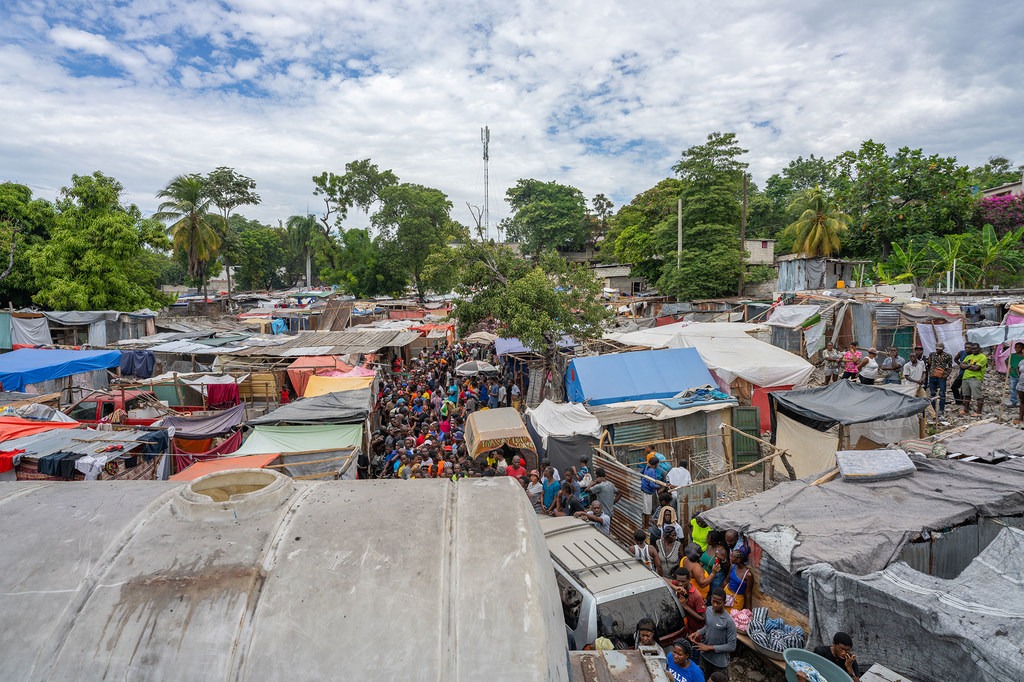
    Since the end of January, a wave of extreme brutality has led to widespread loss of life and the displacement of over 6,000 people in the capital, Port-au-Prince.

    “We are deeply alarmed and appalled by the unacceptable and inhumane intensity of violence in Haiti,” the Haiti Humanitarian Country Team, which is made up of UN agencies, national and international NGOs and donors, said in a statement.

    Entire families were killed in their homes, while others, including children and babies, were shot dead as they tried to escape.

    The killings follow a massacre last December, when an outbreak of violence in the commune of Cité Soleil in Port-au-Prince led to the execution of more than 200 people by the Wharf Jérémie gang.

    UN condemns attacks on civilian population

    According to the UN, the daily life of many Haitians is marked by violence, fear, exhaustion, hunger, disease and an uncertain future. Women, girls and children are increasingly at risk, particularly that of sexual violence.

    By the end of 2024, violence had claimed the lives of at least 5,600 Haitians and displaced more than a million.

    “We condemn in the strongest possible terms any attack against the civilian population and infrastructure, in this case the one that targeted the hospital of the State University of Haiti on February 13. These acts violate human rights and deprive the most vulnerable of essential vital services,” said Humanitarian Coordinator Ulrika Richardson.

    On the ground, the humanitarian community is showing its determination to continue providing life-saving assistance to millions of children, women and men in vulnerable situations.

    Beyond immediate humanitarian assistance, the agencies are also committed to coordinating efforts with development and peacebuilding actors, so that these collective efforts contribute to sustainable solutions that build community resilience.

    “The mobilization actions of the international community in favour of Haiti will continue in order to guarantee the necessary funding to meet urgent needs and restore the dignity of the affected people,” the Humanitarian Country Team stressed.

    The UN continues to support people who have been displaced by ongoing violence in Haiti.

    The UN continues to support people who have been displaced by ongoing violence in Haiti.

    Humanitarian response plan: Over $900 million to save Haitians on the brink

    An appeal for $908 million to help some 3.9 million Haitians facing food insecurity, in a country where basic services are nearing collapse, has been launched by the UN.

    The Office for the Coordination of Humanitarian Affairs (OCHAreleased the 2025 humanitarian response plan on 19 February, which focuses on addressing acute needs caused by recent events, including armed violence, forced displacement, epidemics, and the consequences of natural disasters.

    The funding is earmarked to tackle Haiti’s profound challenges, including mobile teams to help humanitarians deliver aid, protection against sexual exploitation and abuse, and programmes aimed at supporting the country’s long-term development.

    Source link

  • Success for polio campaign in Gaza while West Bank tensions continue

    The campaign has been extended until Wednesday to ensure full coverage, UN Spokesperson Stéphane Dujarric told journalists at the regular news briefing in New York, citing UN humanitarian coordinators.  

    As of Monday, the third day of the campaign, some 548,000 children had been inoculated, or 93 per cent of the target population.

    Aid efforts continue

    Humanitarian partners have been working to expand aid distribution since the fragile ceasefire began last month.  

    According to latest news reports, the Israeli Government is seeking to extend the first stage of the agreement, threatening to resume fighting without progress in talks this week on phase two.  

    The World Food Programme (WFP) has delivered over 30,000 metric tonnes of food, with more than 60 community kitchens across the Strip distributing nearly 10 million meals.

    Similarly, the UN relief agency for Palestine refugees (UNRWA) has provided food parcels to two million people and flour to 1.3 million.

    The UN Food and Agriculture Organization (FAO) also delivered animal feed in northern Gaza for the first time since the ceasefire, benefiting livestock-owning families in Gaza City and Deir al Balah.

    Efforts are also underway by partner organizations to repair and reopen schools that had been used as shelters for displaced families in Rafah, Khan Younis, and Deir al Balah.

    Biting cold claims lives

    Despite the steady flow of aid, children in Gaza continue to suffer.

    The head of Gaza’s Ministry of Health reported on Tuesday that six children died from the severe cold in recent days, bringing the total number of cold-related child deaths to 15, Mr. Dujarric said.

    Ongoing military operations in the West Bank

    In the West Bank the security situation remains volatile, with Israeli military operations in the north leading to further casualties, mass displacement and destruction of essential infrastructure.

    A two-day military operation in Qabatiya, Jenin governorate, ended Monday, Mr. Dujarric said.

    The operation involved bulldozers and exchanges of fire between Israeli forces and Palestinians, as well as detentions, disruption to electricity lines, water lines, and school closures.

    We once again warn that lethal, war-like tactics are being applied, raising concerns over use of force that exceeds law enforcement standards,” Mr. Dujarric emphasised.

    Source link

  • UN rights chief decries substantial rise in death penalty executions

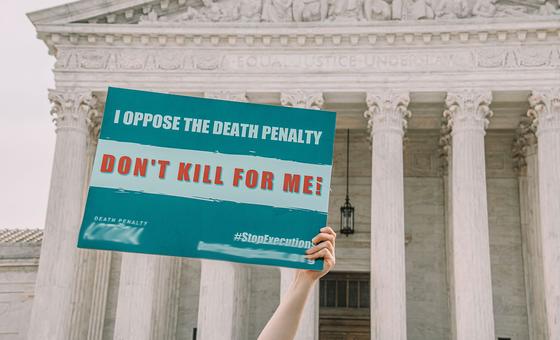
    While a number of countries argue that it lies within their national sovereignty, from my perspective, it is incompatible with human dignity and the right to life,” the High Commissioner told Member States, during a discussion about the contribution of judiciaries to advancing human rights over the issue.

    The punishment had “no place” in the 21st century, Mr. Turk, continued, noting that “the top executing countries over recent years” include Iran, Saudi Arabia, Somalia, and the United States.

    Clear evidence

    Latest UN data indicates that in 2023, 1,153 executions took place in 16 countries, representing a 31 per cent increase from 2022 and the highest number in the past eight years.

    “That followed a 53 per cent increase in executions between 2021 and 2022,” the High Commissioner said, adding that the figures do not take into account China, “where there is a lack of transparent information and statistics on the death penalty. I call on the Chinese authorities to change this policy and join the trend towards abolition.”

    Global South leading abolition

    Although drug-related offences do not meet the “most serious crimes” justification for executions under international human rights law, they account for more than 40 per cent of death penalty executions – the highest number since 2016.

    “This proportion has also risen sharply over the past two years, and almost all of these executions took place in the Islamic Republic of Iran,” Mr. Türk explained.

    In more positive developments and despite a global rise in executions, a growing number of countries are abolishing the practice – spurred by the Global South.

    Today, 113 countries have scrapped the death penalty completely. This includes Zimbabwe – where President Emmerson Mnangagwa approved a law ending executions at the end of 2024 – along with 26 other countries in Africa.

    Key to abolition are judicial reform and discretion in commuting executions to lesser punishments, the High Commissioner insisted. Malawi and Malaysia have implemented such reforms, leading to fewer death sentences, Mr. Türk continued, as he called for greater efforts globally to ensure fair trials and avoid wrongful convictions.

    He urged nations to move towards the complete abolition of the death penalty, advocate for moratoriums, and ensure that the death penalty is only used for the most serious crimes.

    Zimbabwe focus

    Also addressing the Council, Zimbabwe Attorney General Virginia Mabiza explained that the death penalty had been introduced by colonial rulers in the 18th century, enduring beyond the country’s independence in 1980.

    She said that more than 56 per cent of the population wanted the death penalty to remain in the statute books when asked in 1999, while between 1980 and 2005, 105 convicted offenders were executed.

    “Since then, no other executions have been carried out in Zimbabwe, and this can be attributed to policy decisions coupled with judicial discretion against capital punishment,” the Attorney General told the Council.

    Ms. Mabiza noted that a wide range of offences had been formerly punishable by the death penalty including conspiracy and attempted robbery, but by 2013, only a murder conviction could lead to death for the convicted offender, in compliance with the UN General Assembly resolution on reducing the number of offences that attract the death penalty.

    And pointing to several instances where the Supreme Court in Harare determined that the death penalty constituted a violation of a prisoner’s human rights, Ms. Mabiza said that sentences were “often commuted death sentences to life imprisonment”.

    Source link

  • Russian Church Transfers Karlovy Vary Church to Hungary to Secure Ownership

    The resort town of Karlovy Vary in the Czech Republic, traditionally popular with Russian tourists, is known for its thermal springs and colonnades. However, it has recently been receiving increasing attention from the Russian Orthodox Church as the Czech authorities continue to implement one of the strictest sanctions regimes against Russia in Europe, writes the British publication Church Times.

    The Orthodox Church of St. Peter and Paul, opened in 1898, has changed ownership and been transferred to the Hungarian diocese of the Russian Orthodox Church due to concerns that its property may be frozen. The church has the status of a sub-district of the Moscow Patriarchate.

    The property registers of Karlovy Vary make it clear that the transferred part of the “Russian Orthodox Church – the Courtyard of the Patriarch of Moscow and All Russia”, which represents the ROC in the Czech Republic, to the “Hungarian Diocese of the ROC” includes not only the church, but also the land around it, an adjoining house and a garage, not far from the church building.

    Patriarch Kirill’s diplomat Metropolitan Hilarion (Alfeev) was “retired” and sent to Karlovy Vary in December of this year due to “a lifestyle incompatible with monasticism”. Soon after the Russian invasion of Ukraine, he was appointed Metropolitan of Budapest and Hungary, when he also received Hungarian citizenship (and thus EU citizenship).

    The previous representative of the ROC in Karlovy Vary, Archpriest Nikolai Lischenyuk, a 51-year-old Russian citizen, was stripped of his honorary citizenship last month by the local council after he was expelled from the Czech Republic last year, citing security concerns.

    In response to the invasion of Ukraine, the Czech government imposed broad sanctions on Russia, which also targeted Patriarch Kirill. He was the first person to be added to the Sanctions Act, passed in 2023.

    The transfer of the property to the Hungarian diocese of the Russian Orthodox Church is an attempt by the Moscow Patriarchate to secure its property, relying on friendly relations between Hungarian Prime Minister Viktor Orbán and Putin. Hungary has consistently maintained its position regarding Patriarch Kirill. In In December, Hungarian Foreign Minister Péter Szijjártó called the EU’s latest proposal to impose sanctions on the patriarch a “crazy idea” and said that sanctioning church leaders was counterproductive and should be “avoided at all costs.” In 2022, Hungary pressured EU officials to remove Kirill from the list of Russians to be sanctioned, saying Hungary stood by “the fundamental principles of religious freedom.” The head of the Russian Orthodox Church thanked his main political ally in the EU by awarding Viktor Orbán the church’s Order of Glory and Honor, first class, in June 2023.