Author: chiefeditor

  • The HumanRights4Prosperity Program Acts Worldwide: A Success Model in Guinea-Bissau

    In Guinea-Bissau, in June 2019, a training session on understanding and applying the values promoted by Human Rights was provided to a hundred women. The main objective of this training was to educate women politically and mobilize them within an emerging democracy in Guinea-Bissau. This training aimed to raise awareness of Human Rights values and develop their skills as citizens. The goal of mobilizing women was fully achieved with the creation of an agricultural cooperative, whose logistical and production expansion over the following six years strengthened the empowerment of participants. 

    Report and Expertise by Murielle Gemis, Spokesperson for the HumanRights4Prosperity Program

    In a world where economic growth and the promotion of Human Rights (1948) are often perceived as distinct goals, the HumanRights4Prosperity program demonstrates that they can be effectively reconciled to generate lasting and meaningful impacts. A concrete example of this innovative approach is currently unfolding in Guinea-Bissau. 

    Thanks to a strategic partnership between ONAMA (the women’s group of the political party APU PDGB – Assembleia de Povos Unidos) and the AMD Quinara association, a transformative project was born. After a training session provided by HumanRights4Prosperity to the women of these two groups, an agricultural cooperative was created. During this training, 100 women participated, joined by 63 men, including members of the security forces. The very next day, these women, strengthened in their confidence and ability to act, took the initiative to build an autonomous project focused on a sustainable goal. 

    (c) HumanRights4Prosperity

    Today, this cooperative, led by local women, plays a key role in agricultural production to meet the food needs of surrounding communities. To date, it supplies nine villages on the outskirts of Bissau, the capital. Its production capacity has reached such a level that it is now able to serve the entire southern region of the capital. 

    This training not only strengthened community mobilization centered on women’s empowerment but also stimulated the local economy. This success demonstrates how implementing Human Rights principles can be a powerful lever for economic and social development. 

    A Transformation Model Based on Human Rights 

    “The success of the cooperative perfectly illustrates the transformative impact of understanding Human Rights on economic and social development. In this context, we started from scratch and, by investing in training as a social foundation, we enabled communities to take charge of their future,” said Murielle Gemis, spokesperson for HumanRights4Prosperity

    The HumanRights4Prosperity program is designed to implement the guiding principles related to businesses and Human Rights, following the framework of “protect, respect, and remedy” (NDUH, 2011), while adapting to the cultural and social specificities of each territory, company, or state. 

    By offering targeted training and emphasizing social inclusion, the program fosters cooperation and the creation of sustainable enterprises that combine economic prosperity with respect for Human Rights. However, building such initiatives does not come without challenges, especially when starting from scratch and integrating local realities. 

    This is precisely what HumanRights4Prosperity demonstrates: by adapting its actions to specific contexts, it is possible to create viable projects that place Human Rights at the heart of political and entrepreneurial strategies. Far from being a constraint, these principles prove to be a powerful driver of social and economic transformation. 

    Thus, integrating Human Rights is not merely an ethical approach; it is also a lever to stimulate sustainable economic development and concretely improve people’s living conditions. 

    A Model to Be Deployed on a Global Scale 

    Currently, this cooperative goes far beyond a simple agricultural project: it is the symbol of profound change, demonstrating how understanding Human Rights values can generate concrete and measurable transformations. This model, founded through cooperation, proves that ethical prosperity is not a utopia but a reality when individuals are placed at the heart of priorities. 

    (c) HumanRights4Prosperity

    The project in Guinea-Bissau is among the successes achieved through the HumanRights4Prosperity approach. As the organization continues to expand its efforts worldwide, this case demonstrates that sustainable development based on Human Rights is a promising path toward a fairer and more prosperous future. 

    *The tools were provided free of charge by the humanitarian campaign Youths For Human Rights.
  • Decisions taken by the Governing Council of the ECB (in addition to decisions setting interest rates)

    February 2025

    21 February 2025

    Market operations

    Extension of liquidity lines until January 2027

    On 23 January 2025 the Governing Council approved the extension of the ECB repo lines with eight non-euro area central banks (Magyar Nemzeti Bank, Banca Națională a României, Bank of Albania, Andorran Financial Authority, National Bank of the Republic of North Macedonia, Central Bank of the Republic of San Marino, Central Bank of Montenegro and Central Bank of the Republic of Kosovo) until 31 January 2027. The decision was taken pursuant to the new framework for euro liquidity lines, which was adopted in 2023.

    Eurosystem climate stress test report

    On 13 February 2025 the Governing Council took note of the main findings of the 2024 climate stress test on the Eurosystem’s balance sheet, which will feed into the Eurosystem’s climate-related financial disclosures.

    Market infrastructure and payments

    Inclusion of provisions on the TARGET Analytical Environment in the T2 Currency Participation Agreement

    On 13 February 2025 the Governing Council approved the amendments to the agreement on the use of T2 services (T2 Currency Participation Agreement) to include the TARGET Analytical Environment as a standard feature offered to both current and future signatories of the T2 Currency Participation Agreement.

    Advice on legislation

    ECB Opinion on flood insurance

    On 4 February 2025 the Governing Council adopted Opinion CON/2025/3 at the request of the Chair of the Oireachtas (Irish National Parliament) Joint Committee on Finance, Public Expenditure and Reform and Taoiseach (Irish Prime Minister).

    ECB Opinion on indirect participants in, and access to, payment systems, and a new exemption from the cash rule

    On 5 February 2025 the Governing Council adopted Opinion CON/2025/4 at the request of the Danish Financial Supervisory Authority.

    Corporate governance

    ECB’s Annual Accounts for 2024

    On 19 February 2025 the Governing Council approved the audited financial statements of the ECB for the financial year 2024. The annual accounts, together with a press release, are available on the ECB’s website.

    ECB Recommendation on the external auditors of the European Central Bank for the financial years 2025 to 2029

    On 12 February 2025 the Governing Council adopted Recommendation ECB/2025/6 to the Council of the European Union on the external auditors of the European Central Bank.

    Statistics

    Extension of the Integrated Reporting Framework and the Common Data Management investigation phases

    On 17 February 2025 the Governing Council approved the revised Quality Review Gate 1 documentation (including the Financial Envelopes and Project Charters), extending until the end of September 2025 the investigation phases of the ESCB and SSM Common Data Management and the ESCB Integrated Reporting Framework projects.

    Banknotes and coins

    Composition of the design contest jury for the new euro banknotes

    On 6 February 2025 the Governing Council took note of the composition of the design contest jury for the new euro banknotes. The jury will prepare a shortlist of designs to support the selection of the final design of the future euro banknotes by the Governing Council and is scheduled to start work in early 2025.

    ECB Banking Supervision

    Update of the 2025 Supervisory Examination Programme (SEP) for on-site inspections and internal model investigations at significant institutions

    On 30 January 2025 the Governing Council did not object to a proposal by the Supervisory Board for an update of the 2025 SEP for on-site inspections and internal model investigations at significant institutions and outsourcing service providers. The on-site SEP is based on SSM supervisory priorities for 2025-2027 published on the ECB’s banking supervision website.

    Source link

  • Ukraine three years on: Pain, loss, solidarity and hope for a better future

    “I’m trying not to cry, but I can’t help it. I’m glad I have tissues on hand,” admits Natalia Datchenko, a Ukrainian staff member of the UN children’s agency, UNICEF, struggling to hold back her tears as she recounts the explosions that awoke many Ukrainians three years ago, heralding the start of the conflict.

    Natalia Datchenko, employee of UNICEF-Ukraine

    Courtesy of Natalia Datchenko

    Natalia Datchenko, employee of UNICEF-Ukraine

    Alongside feelings of shock and anger, Ms. Datchenko also felt a surge of energy. “I knew, with absolute clarity, that I wanted to help others, to protect people. I knew I had to do something,” she recalls.

    UNICEF leadership instructed staff to prioritise their own safety and that of their families before resuming their work. Ms. Datchenko evacuated to Lviv, a city in the west of Ukraine, with her family.

    “There were 12 of us crammed into a small train compartment,” she says. “I held someone else’s child in my arms because there was no place for them to sit. The train moved slowly to avoid being targeted. When we finally arrived, we saw families with children sitting directly on the cold stone floor of the Lviv station. It was February, and it was freezing.”

    Life goes on

    Lyudmyla Kovalchuk, a staff member of the UN Women office in Ukraine, lived near Kyiv International Airport, one of the war’s first targets.

    “We woke up at five in the morning to the sound of explosions,” she explains. “It was shocking. Even though we had heard warnings of an impending invasion, we couldn’t believe it was actually happening.”

    Lyudmyla Kovalchuk, UN-Women Ukraine staff member

    Photo provided by Ludmila Kovalchuk

    Lyudmyla Kovalchuk, UN-Women Ukraine staff member

    After three years, exhaustion has set in but life and work continue. Women in Ukraine need the UN’s support – psychological, legal, logistical and financial. Many Ukrainian women are raising children alone, searching for jobs to support them and constantly moving to keep them safe from the war. Ms. Kovalchuk says that about 75,000 Ukrainian women are serving in the military and represent a group with unique needs that require specific support.

    “We have adapted to working under new conditions,” Ms. Kovalchuk says. “Whenever we arrange to meet somewhere, we check if there is a shelter nearby in case of an attack. We don’t plan long events as the risk of shelling increases the longer we stay in one place. During the pandemic, we learned to work in a hybrid format, and that experience has been invaluable.”

    ‘Hardest part was hearing their stories’

    Anastasia Kalashnyk, another UN Women staff member, used to live in Zaporizhzhia. Two years ago, she relocated to Kyiv with her family. “After 24 February 2022, my children stopped attending daycare and school, and my husband lost his job – the foreign company he worked for immediately shut down operations and left the country,” she says.

    However, Ms. Kalashnyk’s workload increased significantly. Since 2017, she has been responsible for emergency aid provided by UN Women in Ukraine, focusing on women in Luhansk and Donetsk regions. After 2022, many of these women were forced to flee their homes.

    In a town in Mykolaivska Oblast, a reconstructed kindergarten shelter now provides 200 children with a safe, fully equipped space for learning during frequent air alerts.

    © DRC Ukraine/Svitlana Koval

    In a town in Mykolaivska Oblast, a reconstructed kindergarten shelter now provides 200 children with a safe, fully equipped space for learning during frequent air alerts.

    “Looking back, the hardest part was hearing their stories – women I had known for years – about how they escaped occupied territories and what happened to their husbands who had gone to fight,” she says.

    For these and other Ukrainian women in need, UN Women, in collaboration with local non-governmental organizations (NGOs), established so-called “safe spaces”. These centres provide essential support, allowing women to connect, share experiences and heal.

    “I watched as Olga, one of the women who came to the centre, quite literally come back to life after experiencing trauma,” a UN worker recalls. “She started smiling again. Now, Olga is one of the centre’s activists, helping others.”

    The cost of war

    According to the UN Office for the Coordination of Humanitarian Affairs (OCHA), more than 12,600 civilians have been confirmed killed and over 29,000 injured over the last three years. At least 2,400 children are among the casualties.

    Millions live in constant fear, while those in occupied territories face severe restrictions and limited access to humanitarian aid. An entire generation of Ukrainians is growing up in wartime.

    Alina, 12, stands next to her damaged home in Kobzartsi, Mykolaiv region.

    © UNICEF/Oleksii Filippov

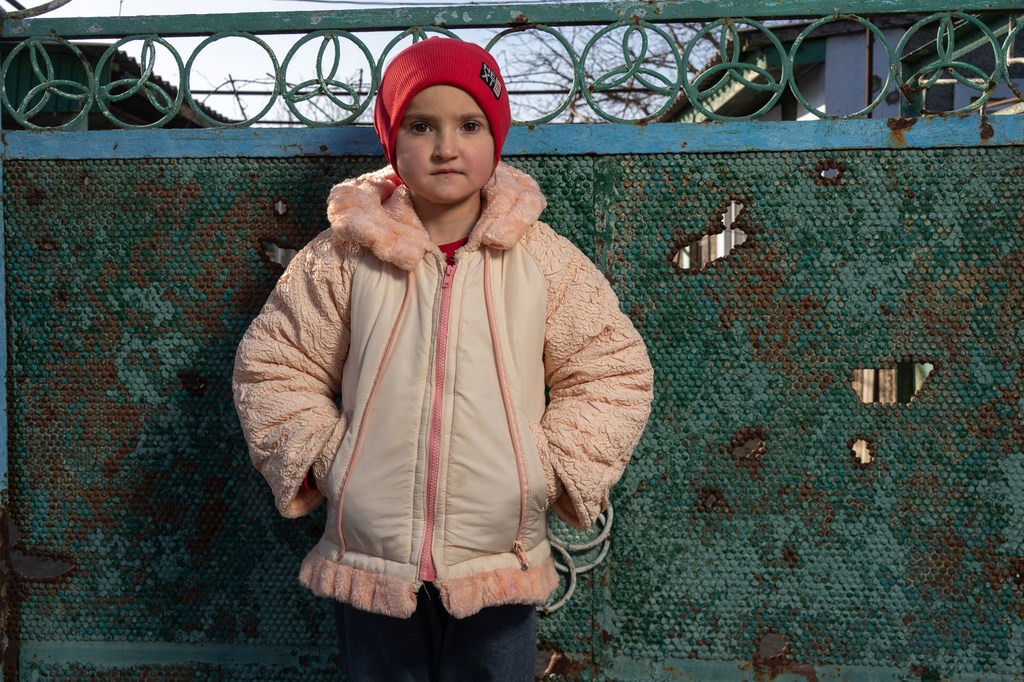
    Alina, 12, stands next to her damaged home in Kobzartsi, Mykolaiv region.

    Relentless attacks on infrastructure are deepening the crisis. Over 10 per cent of Ukraine’s housing stock has been damaged or destroyed, leaving at least two million families without adequate shelter. More than 3,600 schools and universities have been hit, forcing hundreds of thousands of children into remote learning.

    Repeated strikes on the energy system – three winters in a row – have left towns without electricity, heating and essential services in freezing conditions. A total of 12.7 million people require humanitarian aid.

    Hopes for the future

    “Of course, everything that has happened is exhausting,” Ms. Kalashnyk says. “But my children give me hope for a better future. What they are going through now is unfair. I have to be strong, not just for them but for all Ukrainian families.”

    She adds that she also finds hope in the solidarity shown by the UN and other organizations. “They didn’t abandon Ukraine,” she explains. “They stayed. They continue to help. They didn’t come just for a month or two. They’ve been here for years. And now, they’re talking about rebuilding. These discussions about the future give me confidence that we have one.”

    Ms. Datchenko from UNICEF also speaks of unity and solidarity. “At first, we were all united by anger,” she recalls. “We shared our burdens. We shared our pain. We were furious together. But anger is no longer the driving force. Now, we are united by the desire to rebuild what has been destroyed. We want to restore our communities, support families and rebuild our country, not as it was, but better, to leave behind the Soviet legacy and create a truly new nation, built on human rights.”

    Supplies are distributed by UNFPA at a centre for survivors of gender-based violence in Kherson, Ukraine.

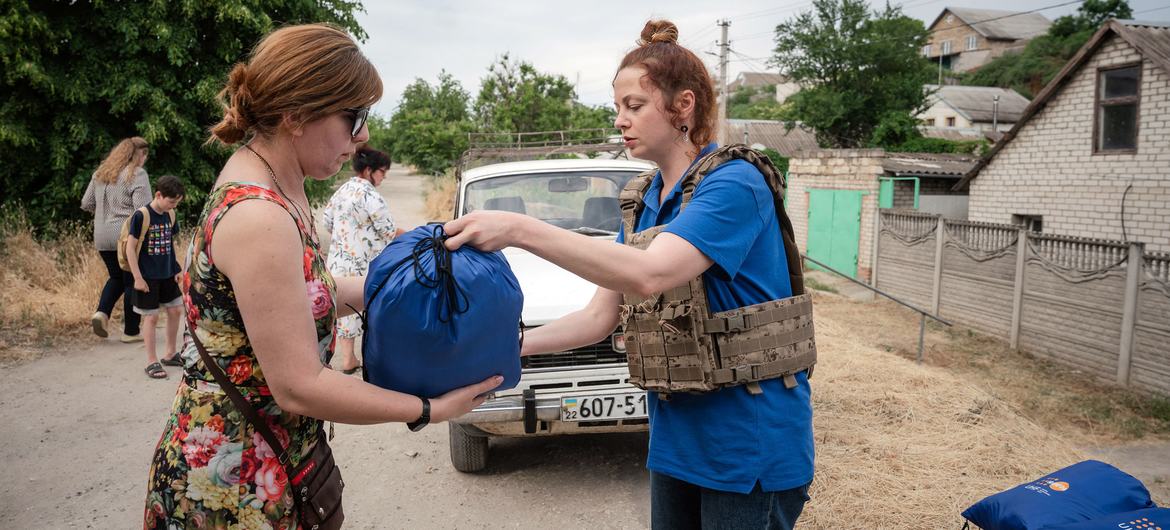
    Supplies are distributed by UNFPA at a centre for survivors of gender-based violence in Kherson, Ukraine.

    She says her work gives her hope. “I have a unique opportunity to reassess old programmes, create new ones, listen to the voices of the most vulnerable, direct resources where they are truly needed and bridge different sectors to bring together the best for those in need. I believe that working for UNICEF has helped me survive—it’s still my survival strategy.”

    ‘We have to become stronger’

    Ms. Datchenko also finds solace in culture. “I seek inspiration and motivation in the beauty that still exists in Ukraine. Our museums are open, concerts are happening, music is playing. For many, culture is a survival strategy.”

    Today, many Ukrainians are searching for their own survival strategies. “One of the biggest challenges we face in our work is the psychological toll, not only in supporting ourselves, but also our colleagues,” Ms. Kovalchuk says. “Recently, one of our colleague’s brothers went missing. Sometimes, it’s incredibly difficult to find the right words of comfort, yet we work with people – women and girls affected by war – who need our support.”

    “But, on the other hand, when you face one tragedy after another, one crisis after another, you start to feel stronger and more experienced. What doesn’t kill us makes us stronger.”

    Then, with a sad smile, she adds that “maybe it’s true, but I always say I wish I didn’t have the experience I have now. But I have no choice. This experience is mine to bear.”

    Source link

  • Media advisory – EU-Israel Association Council of 24 February 2025

    Main agenda items, approximate timing, public sessions and press opportunities.

    Source link

  • Media advisory – Foreign Affairs Council of 24 February 2025

    Main agenda items, approximate timing, public sessions and press opportunities.

    Source link

  • UN in Ukraine prepares for the worst, hopes for the best

    Ukrainians continue to face near daily attacks, with air strikes consistently targeting civilian infrastructure, leaving families without homes, security and electricity. More than 10 million people have been uprooted from their homes, making Ukraine the largest displacement crisis in Europe since the Second World War.

    Some 12,600 civilians have been killed and more than 29,000 injured. Thousands of attacks on health facilities have left doctors working under near impossible conditions. Throughout the fighting, the UN has remained an ever-present support, helping to deliver aid, providing emergency healthcare and reconnecting damaged power supplies.

    The future for Ukraine remains unclear but, as Matthias Schmale, the UN Resident and Humanitarian coordinator for the country, told UN News, the United Nations has been planning for a range of post-conflict scenarios.

    This interview has been edited for clarity and length

    The general sense within the diplomatic community is that we are closing in on a ceasefire, and that this may happen sooner rather than later. That’s one scenario that we are preparing for by intensifying our ongoing recovery and development efforts.

    The UN is already doing incredible work helping to restore energy facilities that have been hit, and without that work the people of this country would be much worse off, especially in these cold conditions.

    The World Health Organization (WHO) has reopened or rebuilt primary healthcare facilities along the frontline that were at one point closed or destroyed. If the guns stay silent, we can obviously do much more to help.

    A heavy toll on mental health

    Our partners, which include governments, appreciate that the UN is all about leaving no one behind, so we are looking at the groups that are likely to be vulnerable once the war ends.

    Seven-year-old Milana and her family fled Myrnohrad in Ukraine’s Donetsk region.

    © UNICEF/Oleksii Filippov

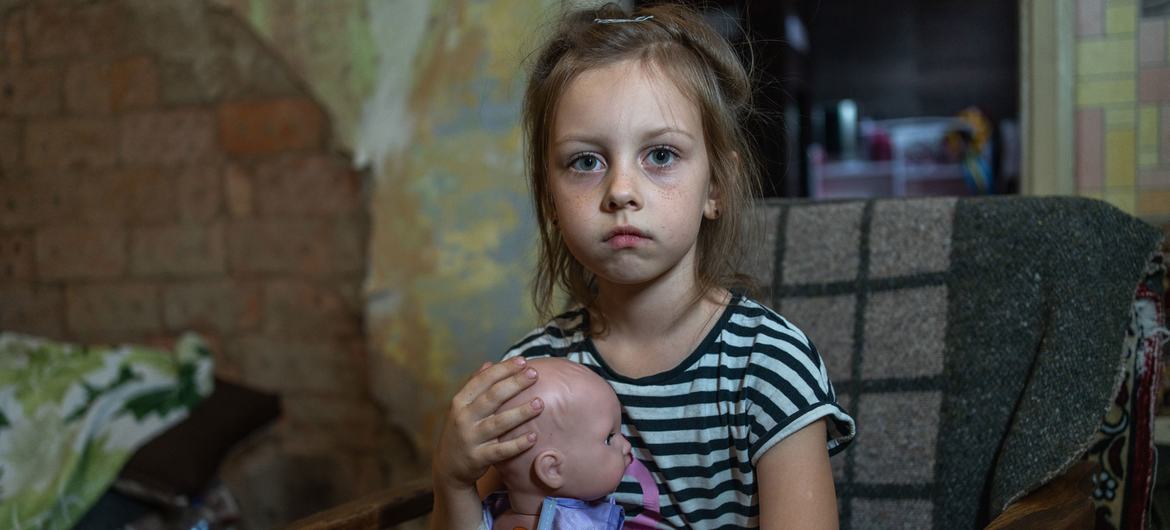
    Seven-year-old Milana and her family fled Myrnohrad in Ukraine’s Donetsk region.

    War veterans are one such group. I have been frequently told that around a million people are involved in the fighting, many of them heavily armed. Hundreds of thousands of people will return traumatised from the frontline, after some two to three years away from their families. This could cause tension, including an increase in gender-based violence.

    The country will continue to suffer from the impacts of this horrible war for some time, particularly in terms of mental health issues.

    Again, the UN System is providing support. For example, the UN Development Programme has helped to develop a digital app specially aimed at veterans, to help them to access the services they might need, and we are running over 80 “safe spaces” where vulnerable people, such as survivors of gender-based violence and children of those internally displaced, can talk about their experiences and receive counselling.

    There’s also a lot of speculation that refugees will start to come back, and a few months ago our colleagues in the UN refugee agency (UNHCR), in collaboration with the government, launched a website that gives refugees abroad information about what services they can access when they return, to help them find housing or jobs. We’re trying to be ready to significantly scale up this work.

    UNICEF supplies arrive in Shevchenkove village, Kharkiv region, Ukraine (January 2025)

    UNICEF supplies arrive in Shevchenkove village, Kharkiv region, Ukraine (January 2025)

    Ready to deal with any scenario

    The big open question is what the ceasefire deal will look like, in particular with regard to the occupied territories in eastern and southern Ukraine. Around a million Ukrainians are living in these regions, and we don’t know what will happen to them. Will there be a demilitarised zone? Will an international peacekeeping force maintain the ceasefire deal? And what are the opportunities for the provision of humanitarian aid?

    On the other hand, whilst everyone hopes the guns will be silenced, the opposite could happen. There are several nuclear power plants in Ukraine, and if one of them takes a direct hit, we could all of a sudden be facing a major nuclear catastrophe. Government officials are extremely concerned about this [on 15 February, the UN atomic energy agency, IAEAreported that a drone strike had pierced a hole in the structure built to prevent radioactive material leaking from the damaged Chernobyl reactor. Despite significant damage, the IAEA recorded no change in radiation levels at the site].

    Whatever happens, we are trying to ensure that the UN is as agile and as mentally prepared as possible for any scenario.”

    Source link

  • First-of-its-kind conference on ‘Fundamental Rights at the Heart of Policing’

    On 20 and 21 February 2025, experts from law enforcement authorities, academia and non-governmental organisations gathered at Europol headquarters for the first ‘Fundamental Rights at the Heart of Policing’ conference, organised by Europol’s Fundamental Rights Officer.

    Over 130 participants from 25 EU Member States and 11 non-EU countries joined the event, as well as representatives from the EU Fundamental Rights Agency (FRA), the EU Border and Coast Guard (Frontex) and the EU Agency for Law Enforcement Training (CEPOL) who contributed to the exchange. Participants discussed and shared experiences and perspectives on respecting fundamental rights in policing, and finding collaborative ways to ensure these are embedded in law enforcement standards and practices.

    Opening the conference, Europol’s Executive Director, Catherine De Bolle, said: 

    Fundamental rights are the bedrock of effective law enforcement. Trust is its cornerstone – yet it is fragile. Protecting fundamental rights, including data protection, is at the heart of Europol’s mission. Together with national authorities, we must ensure transparency, fairness and accountability – to safeguard the integrity of law enforcement in Europe, and to preserve the trust between police forces and the communities we serve.

    During the two-day conference, experts discussed ongoing developments and current challenges in the area of fundamental rights. They focused on the causes and catalysts of possible fundamental rights violations, and how to fight racism and overcome cultural divides and social fragmentation through the effective promotion and upholding of fundamental rights in policing, as well as through continuous training, stakeholder engagement and improved processes.

    The EU Fundamental Rights Agency’s Director Sirpa Rautio highlighted in her keynote speech: 

    Putting fundamental rights at the heart of policing will serve to achieve a just society for all. Delivering on the EU’s commitment to a safer and more secure Europe for all is only possible if fundamental rights remain at the centre of our actions.

    Respect for fundamental rights is central to all law enforcement activities; it ensures compliance with the rule of law, gives accountability to public actors and provides a framework of ethical standards. Safeguarding privacy and data protection through proportionate, transparent and lawful practices is the duty of law enforcement, especially in the context of current rapid technological changes that require continuous evolution of methods, tools and policies.

    Opening the second day, Frontex’s Director, Hans Leijtens, said: 

    The promise to serve and protect is only as strong as its foundation. Security and dignity are two sides of the same coin – without both, trust is lost. As leaders, we set the standard. Rules and regulations alone are not enough; culture begins at the top. Integrity in action is the key to earning and maintaining public trust. In law enforcement, tough decisions define us, and fundamental rights guide us. By upholding these principles, we don’t just safeguard borders – we uphold the dignity and rights of those who cross them.

    The conference was concluded by Europol’s Fundamental Rights Officer, Dirk Allaerts, appointed in 2024 to support the Agency in safeguarding the respect of fundamental rights in all its mandated activities, with a focus on assessing the development and use of new technologies and their impact on fundamental rights. 

    Source link

  • Urgent appeal launched as DR Congo crisis fuels mass displacement to Burundi

    As fighting escalates in eastern DRC, more than 40,000 Congolese refugees – primarily women and children – have crossed into Burundi since February, with over 9,000 arrivals recorded in a single day this week.

    Many are using makeshift boats to traverse the Rusizi River, a perilous crossing at the border shared by Burundi, DRC and Rwanda.

    “The escalating security situation in the DR Congo has been having a serious impact on the Burundi side. Over the past few weeks, we have observed a large number of Congolese who have been crossing into Burundi,” said Brigitte Mukanga-Eno, UNHCR’s Representative in Burundi, at a press briefing in Geneva. 

    The situation is set to worsen as hostilities move closer to Uvira, a key town near Burundi’s main official border crossing.

    A surge in displacement 

    UNHCR has welcomed the Burundian government’s decision to grant prima facie refugee status to those fleeing the conflict, ensuring immediate protection. However, the unprecedented influx is straining local resources. 

    “This is the very first time that Burundi is receiving this large number of people in a matter of a few days”, Ms. Mukanga-Eno noted. “The last one was in the early 2000s, so everyone is overwhelmed: the government, but also the humanitarian actors in the country.”

    While around 6,000 refugees have entered through Bujumbura’s official border post, the vast majority – more than 36,000 – have arrived via the Rusizi River, often in critical condition after long journeys on foot.  

    Some have walked for days. “The other day, we had a case of a woman who was transporting her children and not knowing that they were already dead”, Ms. Mukanga-Eno shared.  

    Dire conditions at reception sites 

    The government has permitted refugees to shelter temporarily at the Rugombo Stadium in open-air conditions, as well as in schools and churches. However, these sites are overcrowded and dangerously close to the border.

    “Unfortunately, the conditions for receptions are very limited,” Ms. Mukanga-Eno said. The government has allocated land to create a more sustainable settlement, but for now, people are still in schools and stadiums without adequate shelter, she explained.

    UNHCR teams on the ground report severe shortages of food, water and sanitation facilities. Cases of measles have already been detected, prompting an emergency vaccination campaign targeting children under 15. 

    She said the UN Children’s Fund (UNICEF) has put water tanks in place, while the World Food Programme (WFP) “has also been able to deploy some food for us to make sure that we can provide hot meals to the people who are coming.”  

    Medical services are also stretched, with Médecins Sans Frontières (MSF) running a mobile clinic to treat refugees suffering from malnutrition, disease and trauma.

    Many people have endured extreme violence before reaching Burundi, with psychosocial support urgently needed.

    Regional displacement  

    Beyond Burundi, smaller but significant numbers of displaced people have reached other neighbouring countries.

    Since January, Uganda has registered over 13,000 arrivals, mostly through the Nyakabande transit centre. 

    In Tanzania, 53 Congolese refugees sought asylum in Kigoma on 19 February, marking the highest daily arrival figure this year. 

    UNHCR’s $40.4 million appeal aims to provide life-saving assistance to 275,000 internally displaced people in the DR Congo, as well as support a projected influx of 258,000 refugees and returnees across Burundi, Rwanda, Tanzania, Uganda, and Zambia.

    “We were targeting about 58,000 people. We have already received more than 40,000,” Ms. Mukanga-Eno said, calling for urgent support from donors to prevent further suffering. 

    Source link

  • Nearly 148,000 in Gaza receive cash aid

    Since the ceasefire on 19 January, some 138,000 Palestinians have benefited from cash assistance, including people with disabilities and pregnant and breastfeeding women.

    The UN Children’s Fund (UNICEF) reported that market conditions across Gaza have improved since the ceasefire took effect. Goods are reportedly less expensive, and more commodities are available. 

    Diet diversity improving

    Furthermore, for the first time since July, children under age five and pregnant and breastfeeding women have a more diverse diet. They are consuming more fruit, vegetables, eggs and dairy products.                                                                    

    Humanitarians also continue to provide shelter support to people in Gaza, with the UN Palestine refugee agency, UNRWA, distributing tents, tarpaulins, blankets, mattresses, clothes and kitchen items to thousands of families hosted in 120 shelters. 

    West Bank hostilities

    Meanwhile, OCHA remains concerned by Israeli forces’ ongoing operations in the northern part of the West Bank which began on 21 January, the longest there since the early 2000s. 

    OCHA warned that settler violence also continues. Between 11 and 17 February, the agency documented 34 incidents – an average of almost five per day – involving settlers and resulting in casualties or property damage. 

    In one incident, Israeli settlers severed agricultural water pipes in the Tulkarm governorate, affecting the livelihoods of a dozen Palestinian farmers. 

    During the same period, nearly 40 Palestinians were displaced near Al Maniya village in Bethlehem following recurrent attacks from Israeli settlers over the past year.   

    Access restrictions imposed by Israeli authorities continue to hinder Palestinians’ movement, affecting access to markets, workplaces, emergency services and health and educational facilities.

    OCHA has documented the displacement of almost 2,300 Palestinians, including 1,100 children, across the West Bank since the start of 2023 due to heightened settler violence and access restrictions by Israeli authorities. 

    In other developments:

    Ensure return of human remains

    UN Spokesperson Stéphane Dujarric said the Secretary-General is deeply concerned by reports that the remains of an Israeli hostage in Gaza, Shiri Bibas, which were due to be returned on Thursday alongside her children’s remains, are still missing.

    The Secretary-General “stresses the imperative to respect the dignity of the deceased and to ensure their remains are returned to their families in accordance with international humanitarian law and human rights law,” he said.

    He underlined that every release must be carried out with the utmost dignity and in line with humanitarian principles.

    The Secretary-General renewed his appeal to the parties to abide by all their commitments and continue the full implementation of the ceasefire and hostage release deal.

    Source link

  • EU Foreign Affairs Council, 24 February 2025

    On February 24, 2025, the Foreign Affairs Council will convene in Brussels at 8:00 AM, chaired by Kaja Kallas, the EU High Representative for Foreign Affairs and Security Policy. This meeting marks a significant moment as it coincides with the third anniversary of Russia’s full-scale invasion of Ukraine, a topic that will be at the forefront of discussions among EU Foreign Affairs Ministers.

    In a bid to address the ongoing crisis, the Council will engage in an informal exchange of views with Ukraine’s Minister of Foreign Affairs, Andrii Sybiha, via videoconference. The discussions will center on the EU’s response to Russian aggression and explore strategies to support Ukraine amid the ongoing conflict.

    Another critical area of focus will be the situation in the Middle East, particularly regarding Syria, Lebanon, and the United Nations Relief and Works Agency for Palestine Refugees in the Near East (UNRWA). The Council plans to review the latest developments in this tumultuous region, emphasizing the humanitarian support provided by the EU to Palestinians.

    The meeting will also address the escalating conflict in the eastern Democratic Republic of the Congo, where ongoing violence has significant implications for both the country and the broader region. In addition, the Council will dedicate time to discuss Iran over a working lunch, considering the implications of sanctions and regional security.

    On the eve of the Foreign Affairs Council, Kaja Kallas will host a dinner attended by notable figures such as Philippe Lazzarini, the Commissioner-General of UNRWA, and Sigrid Kaag, the United Nations Special Coordinator for the Middle East Peace Process ad interim. Kaag will participate via videoconference, highlighting the collaborative efforts between the EU and UN agencies in addressing humanitarian crises.

    Following the Foreign Affairs Council, the agenda will continue with the EU-Israel Association Council, further underscoring the EU’s commitment to engaging with key partners on pressing global issues. As the Council prepares for these discussions, the international community watches closely, anticipating the EU’s stance on these critical matters.