
Author: chiefeditor

  • A Word about Cain and the Murder of Abel

    A Word about Cain and the Murder of Abel

    A Word about Cain and the Murder of Abel

    By St. Ephrem the Syrian

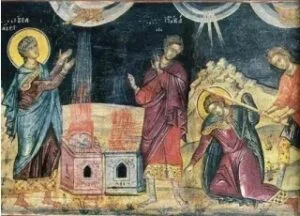
    When I set out to draw with accuracy from the divine narrative, that is, from a pure source, spiritual teachings from deeds and words, I gave myself up to prayer, that I might understand them well. And as soon as my mind caught them, I immediately turned my gaze to the depth of the narrative and, behold, I saw in the plain two young men of strong build, very handsome, and of gentle gait; and when they reached a place, one rushed upon the other to kill him (Gen. 4:8).

    When I saw this, I, wretched and unhappy, was dizzy with the terrible and unjust murder; and since I wanted to understand for what reason one killed the other with an unshaken hand, I tried for a moment to rise above, in order to learn the truth through the meaning of the word. For the slain lay like a lamb in the field, and the murderer stood without fear and went away indifferent.

    Therefore, brothers, I resorted to the Scriptures, wanting to know the truth, what both were. And the divine narrative generously watered me with its waters, that I might understand what pertained to them, and to present figuratively a few abstract thoughts concerning the sight of the slain and the murderer. Only I beg you, brothers, receive these words in a spiritual way and open your ears to listen to what will be said. For as the shepherd leads his sheep to a place where they may graze by life-giving waters, that his flocks may be fed, so he who speaks words of grace does so for the benefit of men.

    Here, then, are Cain and Abel, children of Adam and Eve, born after the crime (Gen. 4:1–2). The firstborn[1], from the very beginning, had self-willed thoughts, although he constantly heard from his parents about their expulsion from paradise (Gen. 3:23–24) and often saw them shed tears, complaining that they had proved unworthy of such grace. Hearing this from them, he took care to become pleasing.

    And from their labors both brought gifts and sacrifices to God, desiring that they themselves might become worthy of the enjoyment of paradise. Cain brought gifts from the ground (Gen. 4:3), but not from the first fruits, but from the latter, because he considered himself more worthy than the One who had given them to him. And his brother Abel also brought to God all the choicest sheep (Gen. 4:4) from his flock.

    But the all-seeing God understood the thoughts of both, and Abel’s gift proved acceptable and pure in comparison with that of Cain. So, God accepted Abel’s sacrifice (Gen. 4:4) because of the purity of his heart; but He did not look upon Cain’s sacrifice (Gen. 4:5), because He wanted to lead him to repentance and show him that He knew his greedy heart. For the Lord does not require from us mere gifts, but pure hearts. When Cain saw, therefore, that his brother Abel’s gift had been accepted, he was greatly troubled and would not bow down and pray to God, but was even more inflamed with anger and wrath. But the merciful God, being long-suffering and wanting to bring him back to the right path, to teach him that if he repented, he would accept his gifts, said to him: “Why are you angry? This sin is on you, Cain” (cf. Gen. 4:6–7).

    However, Cain, not wanting to turn his heart to mercy, left the presence of God in anger and spoke these words: “I will ascend to the mountains, I will open the heavens and there I will speak to God Most High, because He grieved me and honored Abel more than me, the firstborn, and accepted his sacrifice favorably and loved him more than me.”

    And then God, who looks down on the mountains from above, when Cain boldly approached the gates of heaven, was angry with him. And the mountains, seeing his great foolishness, as soon as he tried to climb one of their peaks, immediately turned into plains. When Cain saw this, how the mountains merged with the earth and rose again, he was afraid, lost the strength of his body, so that he did not dare to approach them and climb them anymore. For whatever mountain he wanted to climb, it was lowered, because everything was created by the will of God, so that creatures easily obey their Creator.

    Having lost his strength, he sat down in a place and said to himself:

    “What shall I do, since I cannot reach the heavens? I see that even the mountains are at war with me. Behold, I see a high mountain and the sky above it; if I wish to climb it, it overtakes me and becomes a plain. What then shall I do? He sits in the heavens, and I am in trouble. All things are subject to Him. He sits in the heavens and sees all things on earth, and has power over all; and darkness cannot approach His light, for He treads on the winged winds” (cf. Ps. 17:11).

    “And how can I grieve Him, as He grieved me for my offerings, which He did not accept? If I set fire to the mountains and the forests, they will spring up twice as much; if I kill the beasts and the cattle, they will increase and multiply my grief. But I see Abel, before he even approaches the Most High, his offering is accepted; for when we both stood holding our offerings, fire came down and consumed only his offering, leaving me to hold the offering in my hands. Therefore I will grieve him, as he grieved me. For I cannot ascend to heaven to express the dispositions of hearts “Behold, I have found a way to grieve Him: I will kill His beloved Abel, and sorrow will overtake Him, as it is with me.”

    Reflecting thus, Cain was moved to fratricide and said to himself: “I will go to my parents, hiding this thought, and with flattering words I will deceive my brother, in order to find a convenient moment to take him away from our parents and take him to the mountains, so that they will not mourn him when they see him die. On the contrary, I will approach with feigned joy, in order to take him away without arousing suspicion, and I will slaughter him in the field like a lamb, and I will get rid of sorrow. For we two alone offer sacrifice to the Most High – of fruits and of animals. And behold, I am abhorrent on the earth, as are my sacrifices, and my brother is accepted with his offerings. But if he is killed, there will be no one left to offer offerings to the Most High, and my sorrow will turn into joy.”

    And so, while Cain was pondering all this within himself, he arose and went to his parents, bearing a hidden malice. And when he arrived at them, he said: “Now I have clearly understood about my brother Abel that he is loved by the Most High, because he loved God. Let him then hasten to appease God for me also. For what is more worthy than for a man to love God and serve his parents? And because I did not do this, therefore He did not accept my gift as He did Abel. Only he remains to pray with me to God, that he may also accept my gifts.”

    And when he had said this, he approached with deceit and kissed his brother in the presence of their parents, in order to tear him away from them. And Abel, the innocent and true servant of God, gladly listened and even encouraged Cain to climb the mountain and offer worship to God, saying: “And you yourself know, brother, that if you incline your ear to listen, God does not say that he is dead, as you think, about the one who angers God, because you do not place your hopes in the one Creator God. Do you not see the tears of Adam and Eve, our parents, how they grieve because they have grieved Him, because they have transgressed the commandment of the Creator, and they cannot be consoled at all; and since they transgressed the commandment of God, by their own choice they acquired the experience of exile and therefore have been weeping forever since then? But I advise you to draw near to God, praying to Him without hesitation, so that you too may not live your days in sorrow, as our parents did. See, brother, here I have told you everything.”

    And Cain, answering, said: “I know these things also, for I have sinned, in that I have offended God; but come with me as a brother, for I know that you are a friend of God. Pray therefore for me, and come with me without laziness into the field, that we may offer a sacrifice to God; for it is good to appease God.” And he spoke other peaceful words, to flatter his brother: “Behold, my brother, I have told you that which is profitable; do not turn away through laziness, but come with me, that we may offer a sacrifice to God.” And Abel answered: “On the contrary, it is better that you go all alone and say: ‘Have mercy on me, O God.’ Come with humility and say: ‘Have mercy on me, O Master; I have sinned as an earthly man, I have committed a sin as a man, I have erred as a weak one.’ Let your tears be shed; let your cry reach the gates of heaven. Cast aside all your malice and say: “Here I will die, Master, before Your mercies, until You forgive me.” Thus show your repentance before the Lover of Mankind and you will receive forgiveness, for such is our God, long-suffering and full of mercy, and He accepts those who return to Him. Therefore, I also rejoice at your return.”

    For the blameless and unmalicious Abel knew the malice of Cain. And although he had advised him so much, he did not soften his hard heart, but he with even greater zeal sought murder and spoke such words to Abel: “Have mercy on me, my brother, and come with me into the field, and kneel before God for me, that He may be reconciled to me.”

    When Abel heard this from Cain, he took pity on him and said, “So am I the reason for your good reconciliation with God? Come then, let us go quickly.”

    And Eve, when she heard their long conversation and when Abel prepared to depart, her heart was wounded, and she said to them: “My dear children, this is not the hour for sacrifices; indeed, my children, my heart is greatly troubled and burns, seeing this meeting and anxiety. What is this haste and anxiety of yours? And where are you leading Abel, Cain? What has happened to you? Has the Serpent, who deceived us, done this again out of envy, to deceive you and make you offer sacrifice before the time? For this is not the time for sacrifice.”

    And Adam, seeing the calmness of Abel and the anxiety of Cain, said with sadness: “Go, my children, and after you have offered sacrifice, return to us.”

    Eve also said to Cain: “Behold, my children, I am the mother of both of you, and I will also have this care until you return to me.”

    But when they both went up, walking calmly and thinking only about how to offer a sacrifice to God, and they arrived at one place, Cain began to be angry with Abel. He even changed his mood and hardened his words against Abel, accusing him with an unjust accusation and saying to him such things: “Come, tell me: for what reason and in what is my fault that I was hated by God, and you, on the contrary, were loved? Answer me quickly, are we not both children of Adam? And how is it that your gift was accepted, and mine was not? And is that why you imagine, saying: “Because God loved me more than my brother, therefore he gave me all creation to enjoy it as I wish”? But I will not only make you not enjoy it, but I will also soon deprive you of your life, because you have become a thorn in my side and have wanted to inherit everything, driven by greed.”

    And he rushed upon him like a wild beast, gnashing his teeth to kill him. And the blameless Abel, when he saw that Cain was so angry with him, was utterly astonished, and began to fall at his feet, beseeching him with pitiful words, desiring to appease him and make him compassionate. But seeing that he was so cruel and in a hurry to kill him, he said to him:

    “Are these your words, my brother Cain, which you spoke before our parents? Did you not beg me with tears, saying: ‘I want to pray to God with reverence, but I do not dare; therefore I want to take with me Abel, my brother and friend of God, and I want him to come with me as a loving brother and fall on his knees before the Most High, that He may be reconciled to me.’ Truly, brother, you have deceived me with flattering words, just as the deceitful serpent deceived our parents (Gen. 3:1–6).

    You have become to me, my brother, a terrible serpent that sits on the path and secretly pours out its poison; you have become to me, my brother, a wicked farmer who, seeing a fruitful tree, out of envy, destroyed it and uprooted it; you have become to me, my brother, like an inexperienced shepherd who, seeing a good ram, envied it and slaughtered it. What is my fault, tell me? Did you ever hear me say of the earth or of its world that I would inherit them? Behold, now I tell you, my brother: everything is yours.

    Keep this, I pray you; only grant me one thing – to see our parents. But know that I have never been an obstacle to your sacrifice. Have I told the Most High not to accept your gifts, and therefore are you angry with me? God knows the thoughts of everyone from the beginning and knows well your heart before he created you, what you will do. But be soft, my brother, and receive my tears, and let me kiss the gray hairs of Adam and the face of Eve. For, behold, their eyes are fixed upon the doors, and they watch continually when they shall see us return to them. What profit will it be to you now to shed my blood?”

    “Do not, my brother, I beg you; for this will not be good for your soul. You will be judged, and then what defense will you find for this before God? Or do you think you will deceive Him? Everything will be revealed to Him, for He who searches the hearts sees even here. Therefore, I beg you, be satisfied with the thought you had against me, and have pity on the gray hairs of our parents. Have pity on me, your brother, who falls at your feet; come, let us fall on our knees before the Lover of Man, and let it not be found that you have added sorrow to sorrow and grief to grief. Do not darken the eyes of our father Adam, and do not injure the sight of our mother Eve; for if you do this, where will you go and where will you hide from the face of God? And with what eyes will you look at our parents? And what will you say to them when they ask you about humble Abel? How will you move your tongue to justify yourself in this sad matter? How will you “Can your ears bear it? And how can your mind bear the inconsolable weeping of both, when they will say to you: ‘Where is Abel, your brother?’ Do not force, my brother, Adam to come here, seeking where my body lies.”

    “And then, when he finds me, how will he stoop over me, seeing me lying like a slaughtered lamb in the field? Do not wish that Eve should come, weeping and anointing her gray hair with the blood of her child. Understand, brother, what you are about to do, and when you realize it, shed tears before God and do not do this. On the contrary, I tell you: the earth with the whole world is before you, enjoy it; it is enough for me to see your angelic face. I, therefore, shed tears and pray, and you, possessed by anger, do not pay attention. How did you close your eyes, how did your ears close, how did your heart become insensitive, so that you do not hear my words and rise up to kill me unjustly? I beg you, brother, tell Adam and Eve to come and see this unseen spectacle and my sad slaughter; and as they accepted the pleasure in paradise and through their disobedience to God became naked, so here they may see my sad slaughter and mourn; as they mourned when they were driven from paradise, so let them mourn for the recently slain dead. Let Adam kiss my humble body with a sad and last kiss.

    Receive, earth, my blood and cry out loudly to God, that justice may be given me soon; and cover, earth, my body from beasts and birds, that they may not tear it apart, for there is no Adam here to bury me. Hear, heavens, my pitiful cries, for me, who am unjustly slain, and do not be silent. Weep for me, all the joys of the earth. Let the sheep that I have fed in the fields and on the mountains mourn for me. Let the streams of water mourn for me, for I shall no longer see them, leading the flocks. Let the grass of the field mourn with its flowers, for I shall no longer see them.”

    Although Abel spoke these words, which could have softened even a heart of stone, the pitiless and cruel Cain stood like a poisonous snake that stops its ears (cf. Ps. 57:5), and raged like a beast against the righteous, plotting how to commit murder. And lifting up his hand on high, the pitiless one immediately slew his brother; and the wretched man said to himself with joy:

    “What profit did you have, Abel, although your sacrifices were accepted? See what has happened to you and where you lie, the zealous offerer; I am now alive, and you, on the contrary, are dead. But what is left for me to do for myself, I, the wretched man? From now on I must think what I will answer Adam and Eve about Abel, the offerer. For I know that both of them are standing at the doors waiting for us, and when they see me returning alone, since they do not know what has happened, they will ask me about Abel what has happened. And if they begin to question me: “Why did I return alone?” I will answer them with a harsh voice: “Why do you ask me about my brother? Has he not the right to go wherever he wishes? Or am I his keeper?”

    And so, speaking to them in this strict manner, they will be afraid to ask me more about him; and if they are troubled and angry because of him, they will not be able to kill me. Since, moreover, they are alone on earth, there will be no other man on earth to denounce me. The angels did not see me, and I will not be afraid of this, but on the contrary, from now on I will walk proudly.”

    But while the wretched man was considering telling this lie to his parents, the righteous judgment of God was moved to do justice to Abel. And when the divine voice was fearfully rebuking him, just when he was thinking of lying to his parents, he answered the terrible Judge and God: “Am I my brother’s keeper?” (Gen. 4:9).

    And again the divine voice said to him: “Cain, why did you kill your brother, by covering his blood carelessly, while it cries out to Me from the ground? (Gen. 4:10). Why did you do this? What injustice did he do to you by offering his gift with complete sincerity? And you were envious and malicious from the beginning. Therefore, accept the condemnation according to the value of your offering, for which you worked with envy, murder and deceit: you will wander the earth, groaning and trembling (Gen. 4:12), so that everyone will know that you have shed innocent blood.” And their mother was worried because they were delaying the sacrifice. And running into the field, she saw Abel lying in the field like a slaughtered lamb, and Cain groaning and trembling like a leaf in the wind. Then Eve stood by them and could not explain this unprecedented spectacle – her child lay dead; but she did not know what death meant, and so she called her child, saying:

    “Abel, Abel, my child, what has happened to you? You lie as if asleep and do not answer your mother. I truly see a strange dream in you, for your face and countenance have turned white, your eyes do not rest in their sockets, your feet have contracted. Tell me, are you Abel, born of my womb, or have you changed? Why then are you so silent and do not speak to your mother? If nothing else, at least have mercy on the springs of my tears and on the breasts from which you sucked, and answer me. What is this strange and unbearable sight? You, Abel, are silent and do not speak to your mother, and I will return to Adam with tears. From now on I will weep and lament for you, my child, because you were snatched from my embrace so suddenly, like a sparrow.”

    Then, turning to Cain, he said: “Why do you groan and tremble, and are you shaken like a leaf in the wind? Why do you not stand firmly on your feet and why are your clothes red? Why is blood dripping from your hand? God, what is this unseen spectacle!”

    And again to Cain he spoke: “Has the Devil deceived you also and led you to brotherly murder, as he deceived me? Has he seen you also and made you the murderer of Abel?”

    “Woe to me, I am perished! With what eyes shall I look upon old Adam, and what words shall I speak to him? If I tell what has happened, I shall neither help Abel, nor avoid accusing Cain. And how shall I become an accuser of my own offspring? For one I pity life, and another I lament death; one stands, groaning and trembling, and another lies silent, but his blood cries out; and the mother is no longer a mother, and she who rejoiced in her children now mourns. What shall I do and what shall I say? Shall I pity Adam, who, digging the ground with the hoe and toiling, will eat his bread in the sweat of his face? (cf. Gen. 3:19).

    Rather, I will lament myself, for the child whom I bore in pain has fallen, as unripe fruit falls before the wind; and as we have partaken of the fruit of the tree of deceit (Gen. 3:6), so he was deceived by the tree of deceit, because he killed him too, and deprived himself of life; because he was the first to show death and the first to interpret God’s threat (cf. Gen. 2:17). Since I gave birth to him because of the crime, he showed envy towards Abel.

    Woe to me, my son Abel, you will no longer come to your father carrying a lamb; you will no longer sing that field song; you will no longer stay awake at night, guarding your flocks; you will not stand on the mountain tops to admire the games of the lambs; you will not milk the udders of the sheep to get milk!

    The cause of this sorrow of mine was not the serpent (cf. Gen. 3:13), nor the tree (cf. Gen. 3:6), but the hostile attitude towards the law of God; I reaped, therefore, enmity, I also reaped death. I mourn my offspring, because I lost my son “by nature.” Because I denied my Father “by grace,” I lost paradise and found death. From paradise I took the fruit and ate it, and from death I gained sorrow. Paradise expelled me, and death received me. Because I ate the fruit of the tree (Gen. 3:12), I reaped death.”

    But as we stop speaking here, beloved, let us give glory to the Father and to the Son and to the Holy Spirit, now and ever and unto the ages of ages. Amen.

    [1] Cain is the firstborn (Gen. 4:1).

    Source: Οσίου Εφραίμ του Σύρου. Εργα. τ. Ζ΄. μετ. Κωνσταντίνου Γ. Φραντζολά. εκδ. Το Περιβόλι της Παναγίας, εκδ. Α΄ 1998. The text is from manuscript No. 99 of the Pantokrator Monastery on Mount Athos, 16th century, l. 375r–396r. A similar text is also contained in manuscript No. 80 from Jerusalem, 13th century, l. 83–92 (see A. Papadopoulou-Kerameos, Jerusalem Library II, p. 144).

  • Yellow Tent in Milan as Volunteer Ministers Mark 50 Years Worldwide, 20+ in Italy

    Yellow Tent in Milan as Volunteer Ministers Mark 50 Years Worldwide, 20+ in Italy

    Yellow Tent in Milan as Volunteer Ministers Mark 50 Years Worldwide, 20+ in Italy

    KINGNEWSWIRE // Press Release // Scientology Volunteer Ministers Bring the Yellow Tent to Milan, Highlighting Practical Help and More Than Two Decades of Italian Relief Work

    Pop-up “Yellow Tent” initiative expands community support in Lombardy while celebrating nearly five decades of international outreach since the programme’s creation in the mid‑1970s.

    MILAN, Italy — 22 January 2026 — Scientology Volunteer Ministers have brought their distinctive Yellow Tent to Milan as a public point of practical support—offering listening, proven problem-solving tools and guidance for everyday challenges, from communication difficulties to conflict resolution and personal emergencies, as reported by Gazzetta della Lombardia. Deployed internationally in major cities and in the aftermath of crises, the Yellow Tent provides an approachable space where residents speak directly with trained volunteers and learn simple, structured methods that work immediately in daily life.

    Training with Proven “Tools for Life”

    Volunteer Ministers receive training through “Tools for Life” modules drawn from The Scientology Handbook, covering communication, study methods, assisting those in stress or trauma, and practical steps for resolving disputes and organizing effectively. These tools provide volunteers with a clear pathway for helping both neighbors and disaster survivors through the global Volunteer Ministers disaster response network.

    The Church of Scientology created the Volunteer Ministers programme as a religious social service in the mid‑1970s. Since then, Volunteer Ministers have brought practical help to hundreds of disaster sites worldwide, working alongside government agencies, NGOs and community partners.

    More Than Two Decades Serving Italy

    As evidenced in many media reports and their own websited, Scientology Volunteer Ministers have served Italy for more than two decades through major emergencies and community recovery—working alongside civil-protection teams and municipal services. Our Italian Volunteer Ministers formed Pro.Civi.Co.S (Civil Protection Volunteers of the Scientology Community) after 9/11 as the programme expanded internationally, entering Italy’s National Civil Protection registry very shortly after.

    Ivan Arjona-Pelado, Scientology’s representative to the EU and UN explained that “Italian Volunteer Ministers also joined international relief for the 2004 South Asian tsunami, demonstrating our established capacity well before 2006. This strong foundation continues through our earthquake, flood and recovery efforts across Italy”:

    • Abruzzo (L’Aquila), 2009 earthquake: Extended support after the 6 April 2009 earthquake, assisting displaced residents alongside other relief groups during this major national emergency.
    • Emilia-Romagna, 2012 earthquakes: Operations in affected areas like Medolla during the May 2012 sequence, providing shelter assistance, logistics and aid distribution.
    • Sardinia, 2013 floods (Cyclone Cleopatra): Coordinated relief through our Churches and Missions after the severe November 2013 flooding.
    • Central Italy, 2016 earthquake: Rapid response teams from Pro.Civi.Co.S after the 24 August 2016 earthquake.
    • COVID-19 civic support (2020 onward): Sanitisation, local assistance and our multi-year blood donation partnership with AVIS, featured alongside WHO’s Italian blood donor stories.
    • Marche, 2022 floods: Support for communities hit by the September 2022 Marche floods.
    • Emilia-Romagna, 2023 floods: Deployments clearing mud and debris after the May 2023 Emilia-Romagna disaster.
    • Tuscany, 2023 (Campi Bisenzio): Responding at civil-protection request, removing debris and helping residents salvage belongings, earning thanks from the mayor.

    Milan: Emergency Readiness Meets Neighborhood Support

    In Milan, Volunteer Ministers combine emergency readiness with regular community service—from pandemic assistance to weekly clean-ups and neighborhood improvements. Our northern Italy teams, including those honored in Verona (“Scientology Volunteer Ministers of Verona Honored”), maintain these ongoing public service efforts.

    Sandro Oneda, president of our Italian Volunteer Ministers coordinating association, emphasizes: helping through regular blood donation is “a civic duty that aligns perfectly with our mission“.

    Strengthening Europe Through Practical Help

    Ivan Arjona, Scientology’s representative to the European Union, OSCE, Council of Europe and United Nations, explains the Milan Yellow Tent’s importance:

    “Across Europe, social cohesion grows when citizens deliver practical help—especially where institutions face pressure and daily problems feel overwhelming. Volunteer Ministers embody this: community resilience builds when people have tools to help each other with competence, respect and human dignity.”

    The Volunteer Ministers Mission

    L. Ron Hubbard created the Volunteer Ministers programme in the mid-1970s with a clear purpose: practical assistance and the conviction that “Something can be done about it.” Today we serve hundreds of nations, delivering help at hundreds of disaster sites alongside government agencies, civil protection and NGOs through Scientology.org and VolunteerMinisters.org.

    The Milan Yellow Tent continues this mission—celebrating over five decades worldwide and more than two decades strengthening Italian communities through emergency response and everyday support.

    The Church of Scientology, its churches, missions, groups and members are present across the European continent. Scientology Europe reports a continent-wide presence through more than 140 churches, missions and affiliated groups in at least 27 European nations, alongside thousands of community-based social betterment and reform initiatives focused on education, prevention and neighbourhood-level support, inspired by the work of Scientology founder L. Ron Hubbard.

    Within Europe’s diverse national frameworks for religion, the Church’s recognitions continue to expand, with administrative and judicial authorities in Spain, Portugal, Sweden, the Netherlands, Italy, Germany Slovakia and others, as well as the European Court of Human Rights, having addressed and acknowledged Scientology communities as protected by the national and international provisions of Freedom of Religion or belief.

  • How Retail Investors Are Building Wealth Through Fractional Real Estate Tokenization

    [ad_1]

    The real estate market has traditionally been the domain of wealthy investors and institutional players, with high entry

    [ad_2]

    Source link

  • Cold kills another infant in Gaza as West Bank displacement intensifies

    Cold kills another infant in Gaza as West Bank displacement intensifies

    Cold kills another infant in Gaza as West Bank displacement intensifies

    The baby girl – just three months old – was found frozen to death on Tuesday morning at her home in Gaza City, according to media reports. 

    This brings the total number of cold weather deaths this season to nine, UN Deputy Spokesperson Farhan Haq told journalists in New York. 

    In response, the UN aid coordination office OCHA, again called for urgent solutions “including allowing the entry of batteries, solar panels and other energy sources that are needed to set up communal heating spaces.”  

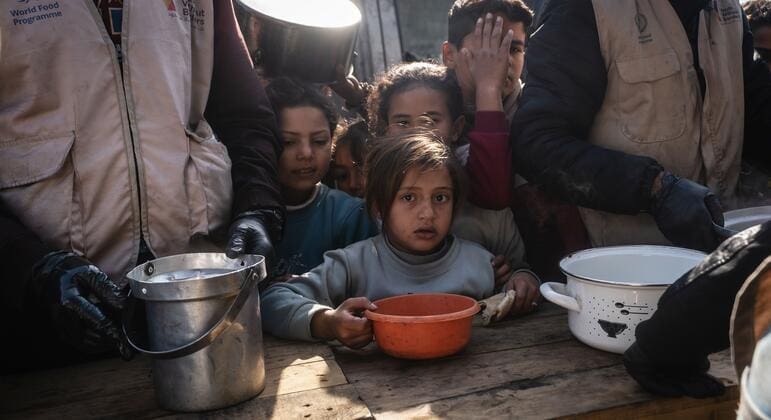
    Thousands receive food aid 

    Humanitarians continue to support Gaza’s population more than three months into the ceasefire and amid ongoing aid restrictions. 

    Since the start of the year, more than 860,000 people have received food packages distributed through 50 distribution points, said Mr. Haq. 

    We also continue to provide some 1.6 million hot meals every day to people in need,” he added. 

    Vaccines, medical evacuations 

    UN partners working in the health sector have vaccinated 3,000 children under three in the first two days of a 10-day routine immunization campaign that began on Sunday.  

    The aim is to further protect young lives from vaccine-preventable diseases.   

    The World Health Organization (WHO) also facilitated another medical evacuation on Monday, transporting 21 patients and their companions to Jordan.  

    However, more than 18,000 patients, including 4,000 children, are still waiting to be evacuated to receive medical care that is not available in Gaza.  

    WHO called for more UN Member States to accept these patients and for the re-opening of the medical evacuation route to the West Bank, including East Jerusalem.    

    West Bank update  

    In other developments: 

    OCHA published its latest West Bank monthly update, which showed that 14 Palestinians were killed and 231 injured there in December. 

    Israeli settlers also carried out 132 attacks during this period that resulted in casualties or property damage, while 246 Palestinians were displaced. 

    Seven Israelis were wounded in the territory, though no fatalities were recorded.   

    The report further documented record-high displacement and settler attacks in 2025. 

    Ammunition, airstrikes and attacks 

    There were 240 Palestinian fatalities, including 55 children, in the West Bank last year. Most deaths, 225, were at the hands of Israeli forces, and nine by settlers.  The remainder were by either of these groups. 

    Three quarters of all fatalities (181) were caused by live ammunition and 17 per cent (41) occurred in air strikes.  Use of other weapons accounted for 18 deaths, or eight per cent. 

    Last year, 3,982 Palestinians were injured, including nearly 700 children, and 37,135 were displaced.  Attacks by Israeli settlers numbered 1,828 resulting in casualties and/or property damage. 

    During the same period, 17 Israelis were killed, including a child and six force members. Another 101 Israelis suffered injuries, with five children and 32 soldiers among them. 

    Palestinian neighborhoods ‘systematically emptied’ 

    Separately, the UN human rights office, OHCHR, warned that the pace of forced displacement of Palestinians in East Jerusalem is accelerating and historic neighbourhoods are being “systematically emptied”. 

    Ajith Sunghay, head of OHCHR’s office in the Occupied Palestinian Territory (OPT), highlighted demolitions and evictions in Silwan neighbourhood south of the Old City. 

    Settlements have also expanded unlawfully in the heart of three of the most significant Palestinian urban centres: East Jerusalem, Ramallah and Bethlehem. 

    Homes taken over 

    Evictions typically result in the transfer of Palestinian homes to Israeli settlers, further eroding Palestinian presence immediately adjacent to the Old City,” he told UN News

    “Some homes are taken over by Israeli authorities to make way for settlement projects which currently include a tourist park with a cable car line that would connect West Jerusalem to the Old City.” 

    A ruling by the International Court of Justice (ICJ) in July 2024 found that Israel’s forced evictions and extensive house demolitions ran contrary to the prohibition of forcible transfer under the Fourth Geneva Convention

    The ICJ – the UN’s principal judicial body – called on Israel to bring to an end its unlawful presence in the Occupied Palestinian Territory. 

    Source link

  • The world is entering the era of “global water bankruptcy”

    The world is entering the era of “global water bankruptcy”

    The world is entering the era of “global water bankruptcy”

    The world is entering the era of “global water bankruptcy”For decades, scientists, policymakers and the media have warned of a “global water crisis,” implying a temporary shock – followed by a recovery. However, what is emerging in many areas today is a persistent shortage that means water supply systems can no longer, […]

    Originally published at Almouwatin.com

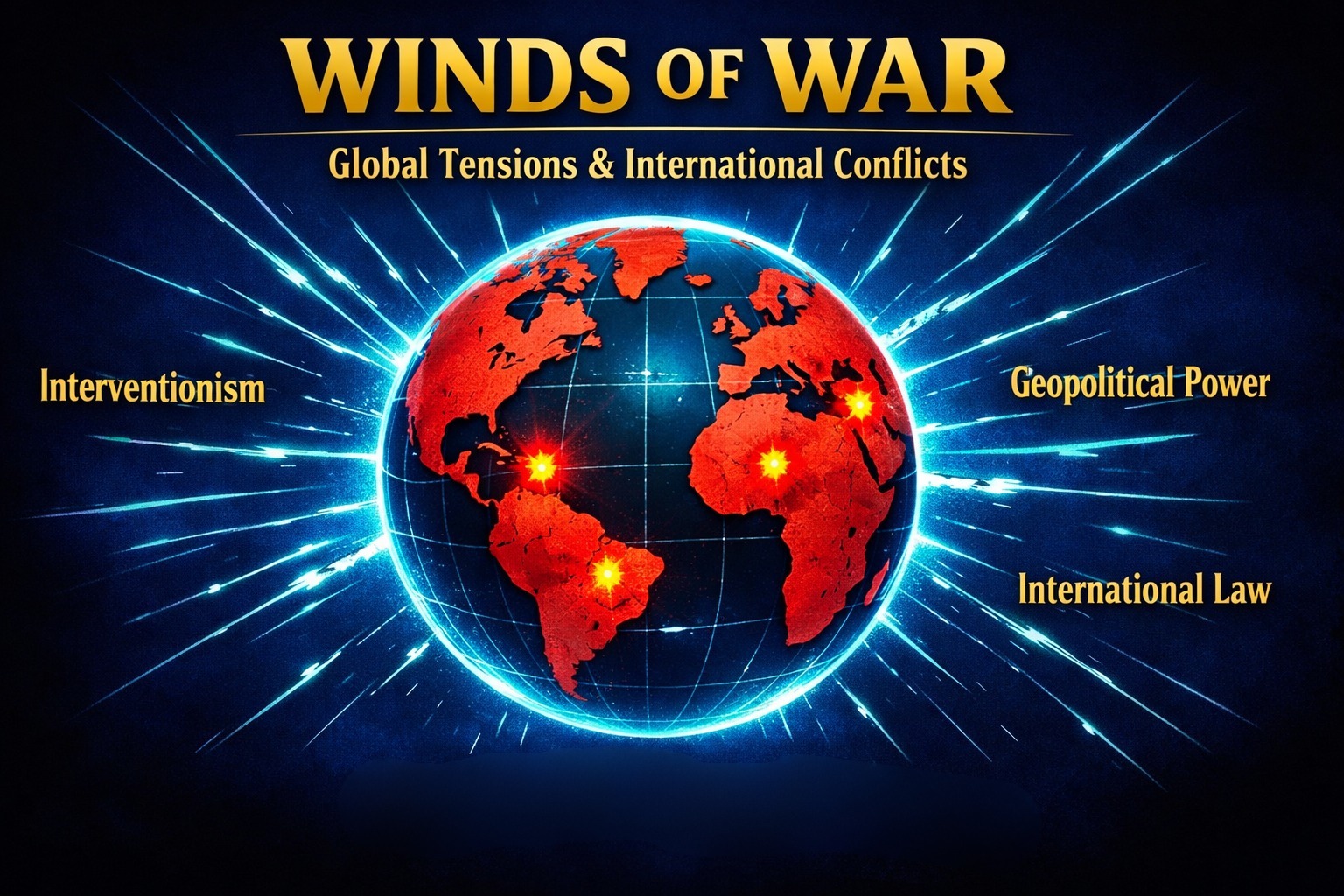
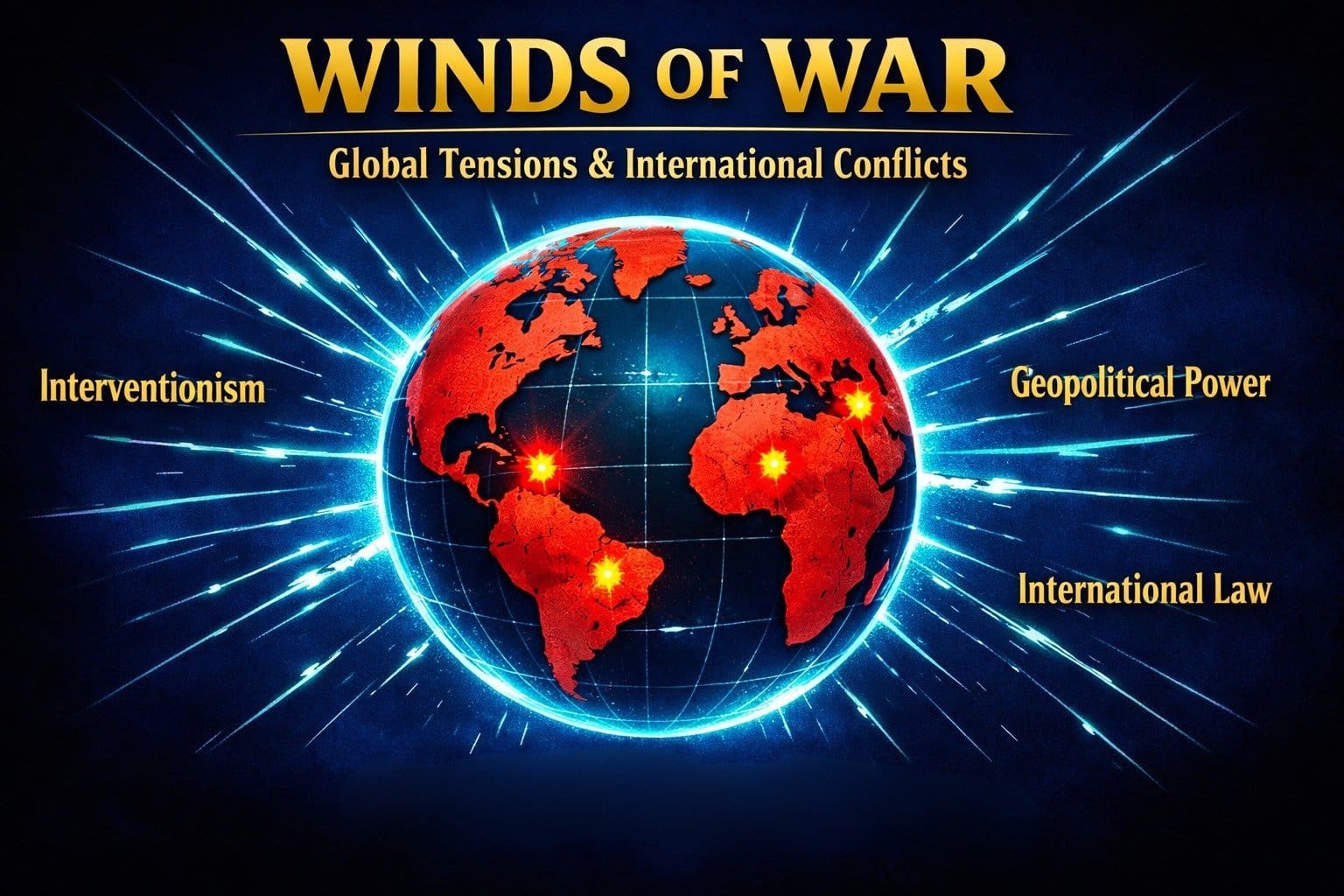
  • Winds of War

    Winds of War

    Winds of War

    By Dr. Stephen Eric Bronner 

    In Charlie Chaplin’s masterpiece “The Great Dictator” (1940), there is a scene in which his character “Adenoid Hynkel,” ruler of the anti-Semitic and fascistic nation named “Tomania,”  dreamily juggles a huge balloon painted as a globe – until it bursts. Should our balloon burst, and the possibility is becoming ever greater, the consequences will dwarf anything that Charlie might have imagined.

    Since the start of Donald Trump’s second term in 2024,  his cult of the personality picked up steam. The Kennedy Memorial Center for the Performing Arts has been renamed the Kennedy-Trump Center. The president’s name also graces the new $300 million ballroom at the White House and various other Washington buildings. In this vein, he has also called for the construction of a new “Arc de Trump,” and —significantly – plastered his moniker on a new class of Navy battleships.

    On the campaign trail, Trump had promised there would be no new wars and that the United States would no longer serve as the “world’s policeman.”  But we should have seen what was coming. Glimpses of the future were already apparent  when the president changed the “Gulf of Mexico” into the “Gulf of America,” demanded that Denmark surrender Greenland to the United States, and called upon Canada to become our 51st state. Nor was that all. Trump renamed the Department of Defense the Department of War and, despite the cost cutting frenzy led by Elon Musk’s DOGE, he successfully pressured Congress into passing the first $1 trillion military budget in American history.

    Trump’s crass public campaign for the Nobel Prize failed. An Israeli Peace Prize and another from soccer’s FIFA governing body, both hastily created for Trump, proved merely embarrassing substitutes. His attempts to coerce peace in the Russia-Ukraine War had been unsuccessful. The Gaza cease-fire was appearing increasingly fragile, and it was clear that the president had stoked international tensions with his strangely miscalculated tariff policy.

    Trump claims that he has ended more than eight wars all over the globe. But the statement is thin on evidence whereas it is abundantly clear that the United States was involved in 622 air and drone strike across seven countries in 2025: Afghanistan,, Iran, Iraq, Nigeria, Somalia, Syria, Venezuela, and Yemen. The president has never been a staunch advocate of international law or human rights. To the contrary: Trump stated quite openly that he recognized no constraint on his international decision-making authority other than his own “morality” should have surprised no one.

    As 2026 begins, the president has taken over Venezuela, kidnapped its noxious president, Nicolas Maduro and his wife and charged them with “narco-terrorism.”  To achieve these ends, the United States launched 22 strikes that killed 110 people, murdered sailors seeking to surrender, and shelled vessels without first determining whether they were actually carrying drugs. Nor did Congress approve Trump’s act of war; it was not even briefed. The enterprise was instead prepared by Trump and a few close advisors in consultation with oil company executives; indeed, this was a war waiting for an excuse to wage it.

    Why did Trump do it? The president needed something dramatic in the face of slipping poll numbers, mumblings of discontent among a few supporters, the mess surrounding the Epstein files, the anger resulting from an economic “affordability” crisis,  changes in healthcare that put millions at risk, and the growing repulsion against the storm-trooper tactics of ICE against immigrants.  In 2024, moreover, Trump had demanded that oil companies and the energy sector donate $1 billion to his camapign. They gave him $75 million. Coporations always expect something for their money and perhaps providing them with a profitable suruprise would make them more generous the next time around.

    Given Trump’s desire to recreate a past golden age, it made sense for him to justify his Venezuelan policy by invoking the Monroe Doctrine of 1823. This seminal document of American diplomatic history warned foreign powers against interfering in the Western hemisphere, and contributed to the belief that Central and South America constituted the United States’ sphere of influence. However, Trump gave it a radical twist by declaring that the United States would “run” Venezuela until an “acceptable” sovereign is installed and for now, under his stewardship, the United States would “indefinitely” control sales of its oil and minerals on the open market.

    This he calls the “Donroe” Doctrine. Justififications are of secondary importance. Insisting that the Maduro regime was an agent of “narco-terrorism,”  which dominated fentanyl smuggling operations, it turnd out that  Venezuela was responsible for only about 5% of the fentanyl entering the United States. Trump then changed the narrative by claiming that Maduro was the master-mind behind the cocaine plague and when that accusation fell flat, he shifted it again by condemning him as a war criminal for possessing weapons of mass destruction.

    Americans cheer interventions when they begin, but quickly grow weary when the price comes due. And invading Venezuela might prove to be a high price to pay. There are strking similarities with the plans laid bare in Venezuela and the American invasion of Iraq in 2003. In both cases, there was the lure of oil, a murderous dictator to overthrow, an exaggerated “existential” threat, an arrogant conviction the citizenry of another country would welcome American “liberators” with open arms,, and disregard for the chaos that reckless regime-change would generate.

    Maduro’s regime was authoritarian, brutal, corrupt and incompetent. But Trump’s actions normalize contempt for international law, rights of national self-determination, and sovereignty. Indeed, calling his overthrow an international police action agaist narco-terrorism doesn’t change that reality. Arbitrarily snatching world leaders creates widespread fear and distruction and contributes to creating a politics based on the “war of each against all’ that Thomas Hobbes feared above all else, if only because it heightens instability

    As became clear in Afghanistan, Iraq, and Libya, to leave a nation without a sovereign is to condemn it to violent rivalry between paramilitary groups. Vice-President Delcy Rodriquez was installed by the Venezuelan Supreme Court as “interim” president for up to 90 days though that can be extended by legal means, and an election awaits the future. And she is in an impossible situation. Ms. Rodriquez must navigate between independence and submission. She must either stand on her own and risk regime change or serve as a shadow sovereign lacking legitimacy and power.

    Trump is satisfied with what has transpired, and he feels emboldened. He is already saber-rattling while making similar charges of drug-running against Columbia, Mexico, and Cuba. Trump has also grown more bellicose in insisting that Denmark prioritize American “national security” interests, and either sell or prepare to lose its autonomous territory of Greenland. Whether discord among members of NATO will strengthen its enemies is far less important than Trump’s ability to exercise power in an unimpeded manner

    Besides, these policies can change in the blink of an eye should Trump find that alternative approaches better serve his purposes. He has stated openly that his vaunted unpredictability is a tactic to keep his enemies off guard. He neglected to mention, of course, that his erratic behavior gets in the way of planning, heightens distrust, and serves as an incentive for other nations to spend more on defense. He wishes only to be able to do what he wants, when he wants, and wherever he wants. This spirit is infusing his foreign policy and contributing to a spreading existential fear of military conflict.

    Nation-wide protests have rocked Iran in response to the Islamic Republic’s repression of all democratic tendencies, its incompetence in dealing with questions of infrasstructure and water, the corruption of the mullahs, and the complete collapse of the currency. These are brave people risking their lives in the streets, but Trump feels it his duty to take center stage. He has warned that he will intervene should the government wind up killing protestors. It sounds heroic, but such warnings only put protestors at greater risk because the leadership can now claim that they are traitors and agents of “The Great Satan” –and that is precisely what the Supreme Leader has done.

    Trump was not thinking about the negative consequences his words might have for those Iranians fighting for freedom. But that is the point: he never thinks about others, only about himself. More likely Trump is thinking about sabotaging further negotiations on a nuclear deal, undermining a regional rival, and making himself appear once again, as with the Maduro affair, as the champion of democracy and peace. Even if the rest of the world disagrees, indeed, that is how he can view himself—and that is what counts.

    *Stephen Eric Bronner is Board of Governors Distinguished Professor Emeritus of Political Science at Rutgers University and Executive Director of the “Independent Experts’ Peace Initiatives.”

    Source : https://www.rsn.org/001/winds-of-war-.html

    Dr. Stephen Eric Bronner is Director of the International Council for Diplomacy and Dialogue,  Executive Director of the Independent Experts Peace Initiatives, and Board of Governors Distinguished Professor Emeritus of Political Science at Rutgers University.

  • Winds of war – news

    Winds of war – news

    Winds of war – news

    Winds of war – newsBy Dr. Stephen Eric Bronner In Charlie Chaplin’s masterpiece “The Great Dictator” (1940), there is a scene in which his character “Adenoid Hynkel”, leader of an anti-Semitic and fascist nation named “Tomania”, dreamily juggles a huge balloon painted like a globe – until it bursts. If […]

    Originally published at Almouwatin.com

  • Mozambique floods heighten disease, malnutrition risks – UN agencies

    Mozambique floods heighten disease, malnutrition risks – UN agencies

    Mozambique floods heighten disease, malnutrition risks – UN agencies

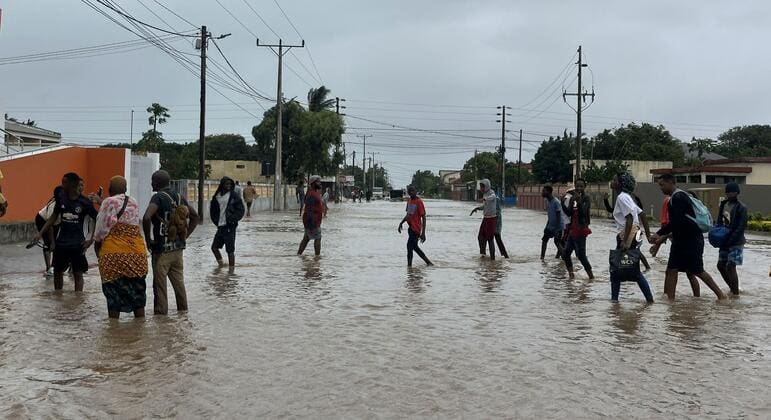
    The head of aid coordination office, OCHA, in the country, Paola Emerson, told reporters in Geneva that more than half a million people have been impacted by the floods, triggered by heavy rains in the first weeks of the new year.

    “The numbers keep rising as extensive flooding continues and dams keep releasing water to avoid bursting,” she said.

    Mozambique’s Gaza province is most affected along with Maputo and Sofala provinces.

    ‘Melting’ houses

    Speaking from Xai-Xai, Gaza’s capital city, Ms. Emerson stressed that 90 per cent of the country’s people live in adobe houses, which are earth-based structures “that basically melt after a few days’ rains”.

    Health facilities, roads and critical infrastructure are also heavily impacted. Ms. Emerson said that some 5,000 kilometres of roads have been damaged across nine provinces, including the main road linking the capital Maputo to the rest of the country, which is currently inaccessible, resulting in major supply chain disruptions.

    Meanwhile, dams continue to release water even as heavy rains subside.

    “From just one dam, up to 10,000 cubic metres-worth of water were being discharged. That is approximately 25 times the amount of water that could be held in the press briefing room you are in today, every second,” Ms. Emerson told journalists, seated in a room with capacity for more than 100 people.

    You cannot imagine the strength of this water and the impact it has on people and the infrastructure.

    National emergency

    The Government of Mozambique has declared a national emergency and has established an emergency operations centre in Gaza province. Xai-Xai, which is near the Limpopo River, has been inundated, prompting evacuations. Ms. Emerson said that authorities have issued alerts for downtown Xai-Xai, “including warnings of crocodile risks in flooded areas”.

    “River levels are rising and are reaching urban areas or heavily populated areas,” she said. “The crocodiles that are in the Limpopo River…are able to get into urban or populated areas that are now submerged underwater.

    Also speaking from Xai-Xai, the UN Children’s Fund (UNICEF)’s Chief of Communication in Mozambique, Guy Taylor, warned that flooding is “turning unsafe water, disease outbreaks and malnutrition into a deadly threat for children”.

    Lethal combination

    The combination of waterborne diseases and malnutrition “can often prove lethal,” he said, stressing that even before the floods, four out of every 10 children in Mozambique experienced chronic malnutrition.

    “This renewed disruption to food supplies, to health services and to care practices threatens to push the most vulnerable children into a dangerous spiral,” he insisted.

    Mr. Taylor added that Mozambique is now entering into its annual cyclone season, creating the risk of a double crisis. “We can prevent disease, deaths and irreversible losses to children, but we need to act fast,” he said.

    The UNICEF spokesperson described Mozambique as “a country of children and young people”, with an average age of 17.

    “When floods and cyclones strike, as they have repeatedly and with increasing frequency over recent years, it’s the youngest and children who are hit hardest,” he concluded.

    Source link

  • Human trafficking depends on corruption at every step

    Human trafficking depends on corruption at every step

    Human trafficking depends on corruption at every step

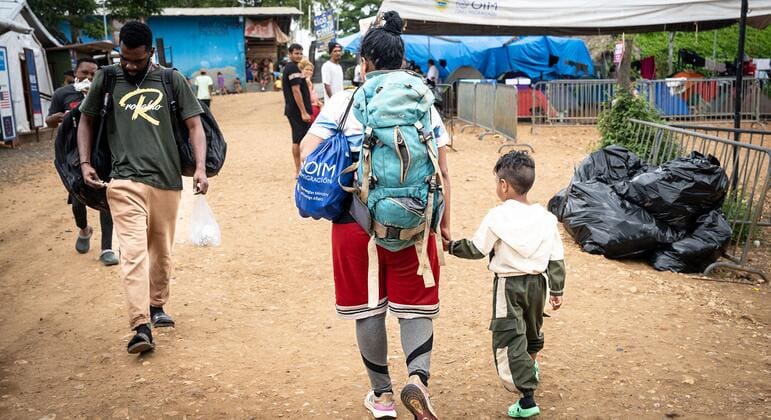
    Human trafficking depends on corruption at every stepA Chilean police officer stationed at the border collaborated in this project, thus enabling the crime. If it weren’t for border guards, public officials and other entities who look the other way in exchange for money or sexual favors – or who are extorted themselves – human trafficking would not be possible. […]
    Originally published at Almouwatin.com

  • Rising hunger and displacement pose growing economic risk, UN tells Davos

    Rising hunger and displacement pose growing economic risk, UN tells Davos

    Rising hunger and displacement pose growing economic risk, UN tells Davos

    The UN World Food Programme (WFP) has reported that an estimated 318 million people worldwide now face crisis levels of hunger or worse, with hundreds of thousands already experiencing famine-like conditions.

    It cautioned that deep funding shortfalls are forcing it to cut rations and scale back assistance at a time of surging needs.

    Current forecasts put WFP’s funding at just under half of its required $13 billion budget for 2026, leaving the agency able to reach about 110 million people – a third of those in need.

    Combatting hunger yields dividends

    “Hunger drives displacement, conflict, and instability and these not only threaten lives, but disrupt the very markets that businesses depend on,” said Rania Dagash-Kamara, WFP Assistant Executive Director for Partnerships and Innovation.

    “The world cannot build stable markets on a foundation of 318 million hungry people.”

    Ms. Dagash-Kamara, who is attending the forum, said the private sector has a direct stake in addressing food insecurity, calling on companies to invest in supply chains, technology and innovation that can help stabilize fragile markets and protect workforces.

    WFP is urging business leaders in Davos to keep hunger and food security among their top priorities, invest in supply chain systems that strengthen fragile markets, and support food-related technologies that improve efficiency and resilience.

    A woman in Sange, Uvira Territory, Democratic Republic of the Congo, carries a box of WFP's High Energy Biscuits on her head after receiving emergency food aid for displaced families.

    Displaced families in South Kivu, Democratic Republic of the Congo, receive food aid. (file photo)

    Migration powers growth and development

    The UN International Organization for Migration (IOM) is also taking its case to the annual forum in Switzerland, calling on political and business leaders to rethink migration as a driver of growth rather than a burden.

    Migration is one of the most powerful drivers of development when managed responsibly,said IOM Director General Amy Pope.

    “Mobility can unlock economic potential, help communities thrive independently, and provide lasting solutions to displacement, while respecting national sovereignty and human rights.”

    Partnerships and innovation

    IOM said partnerships with private companies and foundations are already helping realise that approach.  

    This includes using artificial intelligence to improve health screening and labour market policies, and programmes that support vocational training, entrepreneurship and durable solutions for displaced people.

    At Davos, the agency is also highlighting the role of diaspora communities as investors and innovators.

    “By using remittances and diaspora capital to support business creation and digital financial access, IOM aims to open new markets and create jobs, while helping communities become more self-reliant,” the agency said.

    Other senior UN officials attending the forum include President of the General Assembly Annalena Baerbock; WHO chief Tedros Adhanom Ghebreyesus; Alexander De Croo, Administrator of the UN Development Programme; UN High Commissioner for Refugees Barham Salih; and Rafael Mariano Grossi, Director-General of the International Atomic Energy Agency.

    Source link