Author: chiefeditor

  • Iran today and the permanent violation of human rights.

    Iran today and the permanent violation of human rights.

    Iran today and the permanent violation of human rights.

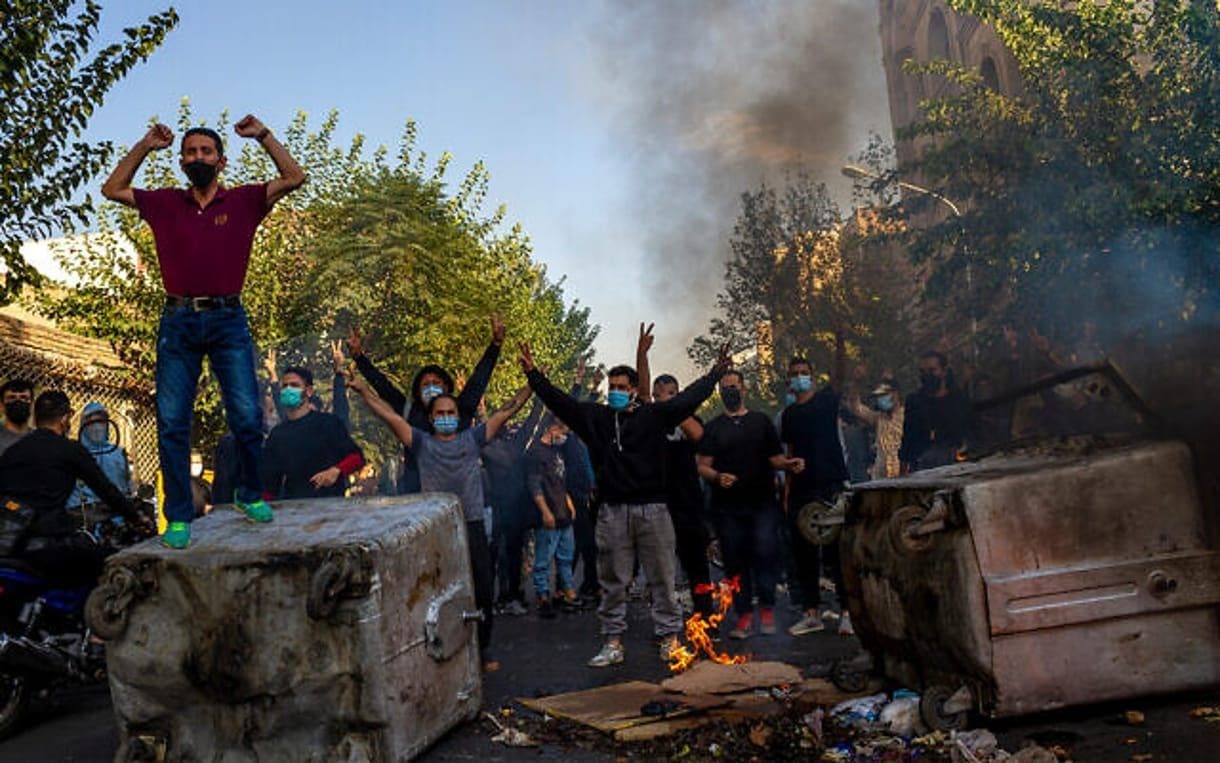
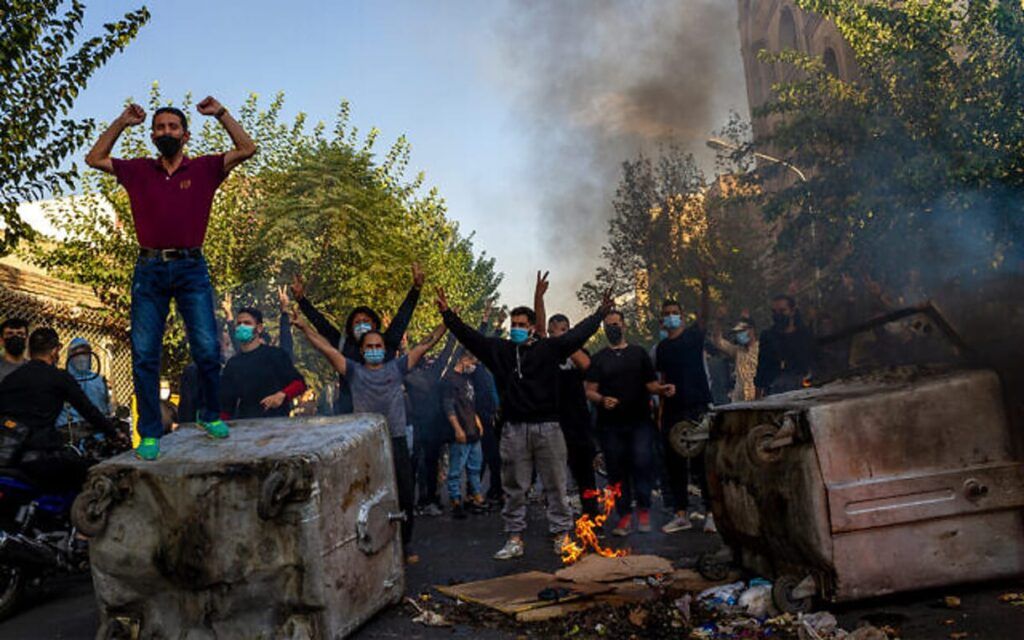
    While Europe looks the other way (perhaps lack of interest), the revolts in Iran, especially among young people due to the permanent depreciation of the economy and, I would dare to say, of human life, are already, according to several sources consulted, over 36 dead, murdered, among them several children, and more than 2 thousand detained (2,000). Taking into account that being detained in Iran, or in Russia, or in North Korea, or in China, or in Cuba, or in Nicaragua, among some other countries, is not the same as being detained in democratic societies that try to give an appearance of respect for the human rights of said detainees, it is very possible that quite a few of those two thousand people will end up disappearing permanently.

    On Apnwes.com, in The Guardian, in the FBS, and in hundreds of other networks and media, you can find images of the brutal repressions that are currently taking place in the country.

    What are the causes?

    The excuse for the outbreak of revolts throughout Iran initially was, without a doubt, the fall in the value of the currency and strong inflation. All of this soon erupted into anti-government protests, with demands against the current political system. Let us remember that Iran is controlled by a religious caste opposed to granting the most basic norms of freedom and respect for human rights. These protests have spread to more than 100 cities and several provinces, including urban and rural areas. Strikes and business closures are taking place in places as emblematic as the Grand Bazaar of Tehran, which makes us reflect on the great influence of a movement that has been organizing itself.

    One of the rights curtailed by any dictatorship that governs a country, whether political or religious, is the right to truthful and free information. In Iran, the government has imposed a total internet blackout and strict restrictions on communications and journalists not sympathetic to the regime.

    As if that were not enough, as often happens in other places, those who speak out against the established regime are usually accused of being mercenaries, “fachosphere” or being influenced by foreign powers. Very common tics in banana republics, including Iran.

    Organizations such as Amnesty International and Human Rights Watch have documented strong, violent and systematic repressions. There will be no trials for those detained and many of them will end up disappearing, dying in Iranian prisons, with no chance of getting out alive. The security forces, as well as the different radical groups at the service of power, have used lethal force and non-lethal, but high-impact weapons, indiscriminately against peaceful protesters. The death toll continues to rise, including children and civilians, but since the media is controlled by the state, it is not known today what the real figures of the repression may be. Yes, torture and ill-treatment in prisons are already known, something common in other moments in the history of Iran, whose conflicts are resolved with repression and death sentences for the insurgents. All of this demonstrates a persistent pattern of violation of the right to free expression and peaceful assembly, as well as the sacrosanct right to life.

    It should be confirmed that this state of violence is not an isolated phenomenon of the radical religious regime that is ravaging Iran in 2026.

    Over the years, Iran has faced a long human rights crisis that has marked the pace of the loss of freedoms for the Iranian people. Perhaps the most notorious case that is still remembered and cited is that of Mahsa Amini in 2022. The murder of this young woman was a key event that triggered one of the largest protests in Iran in decades. Mahsa (Jina) Amini was a young Iranian Kurdish woman who was 22 years old.

    On September 13, 2022, she was arrested in Tehran by the all-powerful Moral Police, allegedly for wearing the hijab more. A few days later, specifically on September 16, 2022, he died in police custody after remaining in a coma, practically from the first day of his arrest. Iranian authorities said he died due to a sudden, unspecified health problem. They did not even falsify a medical document that justified said death (murder). The regime was denounced internationally by (hidden) witnesses of what happened, relatives and international human rights organizations, but nothing happened.

    Amini suffered severe head trauma, compatible with excessive violence on the part of the Moral Police. Even internationally there was talk of state assassination or death caused by police repression. The Iranian population has been suffering, since the beginning of the regime, an enormous crisis of lack of human rights, especially when the murders of civilians, be they men, women or children, are listed.

    Currently the repression is permanent. There are frequent executions, religious minorities are repressed, be they Christians (their development is impossible in that country) or Baha’is, among others, preventing their development with sentences ranging from life imprisonment to death sentences. Likewise, despite the alleged openness that they exploit in front of the international gallery, there are strict internal rules that oblige and subject women to the control of men and religious power, whether in their clothing or their actions.

    Given all of the above, we miss greater denunciation of all of the above by human rights organizations, vis-à-vis international organizations. The lukewarmness with which states try to solve this type of conflict by telling the Iranian religious dictatorship to act in the right direction, to stop repressing, not to subject women to a state of brutal emotional and civil repression, not to murder, etc., can provoke deep disgust in sensitive stomachs like mine.

    Nothing you say to a dictatorship is going to work. Perhaps, unlike Trump, Europe is not prepared to act by force in certain countries, but at least they should seriously consider stating that the issue does not interest them. The statements are of no use, neither are the back and forth from internet platforms. Today’s non-action is simply the food for tomorrow’s dead. The Iranian hierarchy is not going to change its attitude or its actions. I imagine that with the passage of time the only way for the people to obtain some benefit in the field of freedoms will be through civil war, a bloodbath that will once again show the true mask of the European countries. Right now, Europe is the shame of the world and as the years go by, if this does not change moderately, it will get worse.

    Originally published at LaDamadeElche.com
  • Aid continues despite winter hardship in Gaza and West Bank, UN says

    Aid continues despite winter hardship in Gaza and West Bank, UN says

    Aid continues despite winter hardship in Gaza and West Bank, UN says

    That’s according to UN Spokesperson Stéphane Dujarric, briefing journalists in New York on Thursday.

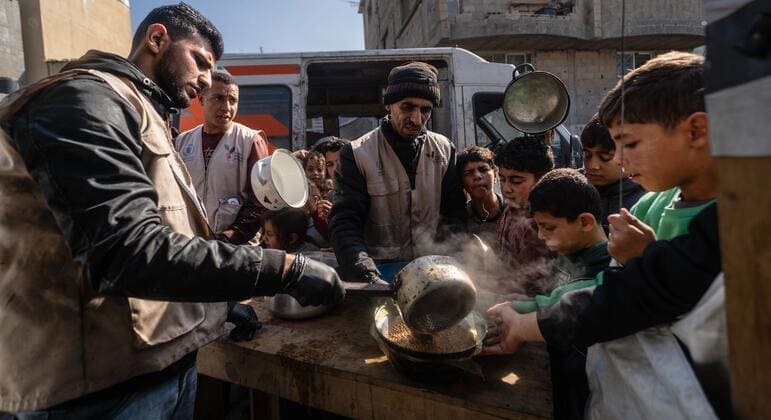
    Citing the UN aid coordination office, OCHA, Mr. Dujarric said humanitarian teams are continuing to support the most vulnerable families in Gaza “despite impediments” and the cumulative impact of two years of conflict between Israeli forces and Hamas militants.

    “Over the past days, one of our partners distributed 7,000 dignity kits, more than 5,600 dignified family hygiene kits and 1.3 million bars of soap to some 200,000 people,” he said, stressing that assistance is reaching communities in both the north and south of the devastated Strip.

    Just trying to survive

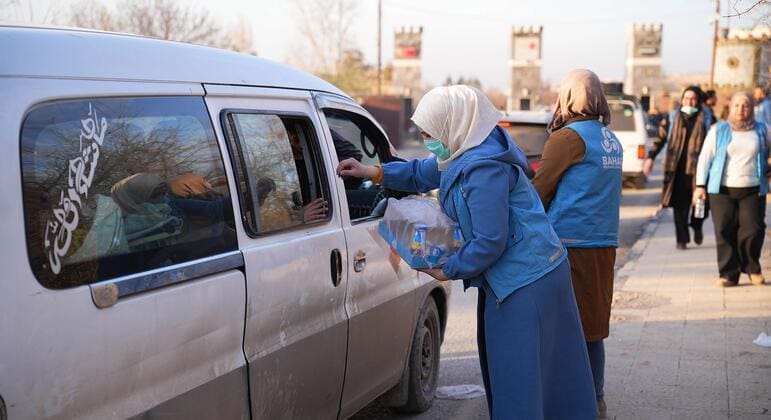
    Emergency shelter support remains a priority as temperatures drop.

    Humanitarian partners have reached more than 16,000 households across Gaza with tents, tarpaulins and other essential materials, including kits to weatherproof and reinforce makeshift shelters. “These are people trying to survive winter in extremely fragile conditions,” Mr. Dujarric noted.

    Winterisation assistance has also included the distribution of thousands of blankets, mattresses and bedding kits to improve sleeping conditions, alongside kitchen sets and clothing assistance for hundreds of households. 

    At the same time, water trucking operations are continuing across the territory. “Thirty-six partners are distributing more than 21,500 cubic metres of fresh water every day to over 2,300 collection points,” he said.

    Education efforts, while constrained, are also progressing. More than 420 temporary learning spaces are now operating across Gaza, serving over 230,000 students with the support of some 5,500 teachers. 

    Critical to scale up

    Mr. Dujarric underscored that scaling up remains “a critical priority” but depends on the entry of essential supplies that are still being denied. Even so, renovation work in public schools continues, with new classrooms in Gaza City now allowing more than 1,800 children to return to learning.

    On health, Mr. Dujarric said the World Health Organization (WHO) recently facilitated the evacuation of 18 patients and 36 companions for medical treatment outside Gaza. “These medical evacuations remain absolutely essential,” he added.

    West Bank demolitions continue

    Turning to the West Bank, OCHA reports that severe winter weather has damaged or destroyed dozens of tents and makeshift shelters in Bedouin and herding communities. 

    The UN is also warning of continued demolitions of Palestinian-owned structures by Israeli authorities for lack of permits, with 50 structures demolished over the past two weeks.

    “Our message is simple,” Mr. Dujarric said. “Across Gaza and the West Bank, the UN and its partners are doing everything possible to keep assistance going for people in need, despite extremely difficult conditions.”

    Source link

  • World News in Brief: Fighting intensifies in Syria’s Aleppo and South Sudan’s Jonglei state, acute hunger in Niger

    World News in Brief: Fighting intensifies in Syria’s Aleppo and South Sudan’s Jonglei state, acute hunger in Niger

    World News in Brief: Fighting intensifies in Syria’s Aleppo and South Sudan’s Jonglei state, acute hunger in Niger

    Clashes between government troops and Kurdish forces have intensified in recent days and tens of thousands of people have been displaced. 

    Representatives of the Office of the Secretary-General’s Special Envoy for Syria continue to be in contact with all concerned parties, UN Spokesperson Stéphane Dujarric told journalists in New York. 

    Civilians killed, health facilities shuttered 

    The UN aid coordination office (OCHA) reported that as of Wednesday, at least five civilians – including two women and a child – were reportedly killed and dozens more injured, according to local authorities. 

    Several health facilities have also been impacted, including three hospitals, with some reportedly ceasing operations due to damage and attacks.  Movement restrictions have also been imposed on key roads. 

    “Since yesterday morning, thousands of families have fled their homes, with many seeking shelter with host communities in Aleppo city and the various districts of Afrin,” said Mr. Dujarric. 

    Authorities have announced the opening of two humanitarian corridors for civilians to evacuate.  

    Humanitarians are mobilizing resources to respond to the growing displacement, he said. A UN team in Aleppo has carried out an assessment mission to Yad Al Aoun camp in Afrin to evaluate immediate needs and the capacity to respond. 

    South Sudan: Violence in Jonglei state sparks displacement, disrupts aid operations  

    A surge in conflict and airstrikes in Jonglei state, South Sudan, has forced people to flee their homes and disrupted humanitarian operations, OCHA said in its latest update. 

    Since 29 December, renewed fighting between the army and opposition has displaced some 100,000 people, mainly women, children and older persons, local authorities report.  

    Most are now sheltering in remote areas, while others have fled to neighbouring states, with authorities in Lakes state registering more than 11,000 arrivals. 

    Aid efforts affected 

    Meanwhile, several humanitarian organizations in northern Jonglei state have relocated their staff due to the insecurity and instructions by parties to evacuate the area.  

    Those organizations that continue to operate with local staff, report growing challenges including in restocking health facilities and sustaining other essential activities.  

    “The situation is further compounded by reports from several humanitarian organizations that their facilities and assets have been looted or confiscated by both parties,” OCHA said. 

    This is disrupting provision of essential health services for thousands at a time when South Sudan continues to grapple with food insecurity, disease outbreaks and the impact of flooding last year. 

    OCHA continues to engage with all parties to ensure that aid can reach people safely. 

    Food security experts warn of acute hunger and disease in Niger 

    More than 1.6 million young children in Niger are suffering from acute malnutrition – with many more at risk, UN-backed food insecurity experts said on Thursday. 

    The warning comes in an assessment from the international food security monitoring platform, or IPC, which noted that at least 306,000 pregnant and breastfeeding women are also in danger. 

    The security situation in Niger remains volatile following a military coup in July 2023, with jihadist insurgents still active. 

    Although nutrition levels have improved since the last UN-backed assessment, there are still concerns for refugees living in Agadez, Diffa and Maradi regions. 

    The worst conditions were reported in Diffa region that borders Chad and in Maradi region close to Nigeria, between August and November last year. 

    While the situation is expected to improve between now and April – marked by fewer cases of diarrhoea, malaria and better food availability – conditions are expected to deteriorate again with the onset of the lean and rainy season in May. 

    Source link

  • Scientology’s New Year 2026 Celebration Reviews Global Expansion and Social Programmes at Los Angeles’ Shrine Auditorium

    Scientology’s New Year 2026 Celebration Reviews Global Expansion and Social Programmes at Los Angeles’ Shrine Auditorium

    Scientology’s New Year 2026 Celebration Reviews Global Expansion and Social Programmes at Los Angeles’ Shrine Auditorium

    KINGNEWSWIRE // PRESS RELEASE // More than 6,500 guests attended the year-end event, which highlighted organisational developments, heritage restorations and the reach of education, prevention and volunteer programmes followed internationally—including by Scientology communities across Europe.

    LOS ANGELES / BRUSSELS — 31 December 2025 — The Church of Scientology held its New Year’s Celebration 2026 at the Shrine Auditorium in Los Angeles, bringing together more than 6,500 attendees for an evening that combined a concert programme with a year-in-review presentation on developments across the Church’s international network during 2025.

    The programme opened with live performances by international artists, then shifted to a review led by Scientology’s ecclesiastical leader Mr David Miscavige. In remarks quoted from the stage, Mr Miscavige framed the evening as a moment to measure results before turning the calendar, stating: “So while the rest of the planet may still be winding down its clocks—we’re here for something else entirely: to see what happens when a full year of Scientology accomplishments is unleashed all at once.”

    The year-end review focused on several themes that the Church presented as defining the past year: growth in digital access and online learning; expansion and planning of new facilities; preservation of sites associated with Scientology founder L. Ron Hubbard; and a selection of social programmes applying Mr Hubbard’s methodologies to issues such as drug prevention, literacy and values education.

    scientology new years event 2026 david miscavige 01s1153

    Digital access and online learning

    A significant portion of the presentation centred on the Church’s digital platforms and learning tools. The event highlighted Scientology Network, stating that viewership has grown to 11 times its level since the network’s launch and noting more than 170 awards for creative and technical excellence. The presentation showed that over one million students have enrolled in online courses, presenting those figures as part of a wider effort to make introductory materials available across languages and time zones.

    For European audiences, these digital metrics are often viewed as a practical indicator of how international religious movements are adapting to changing media habits—expanding beyond in-person events to formats that can be accessed from any location, including across the continent.

    Facilities and heritage: “Ideal Org” development and landmark restorations

    The review also returned to the Church’s ongoing programme of facility development—often referred to as “Ideal Orgs”—highlighting openings and planned projects presented as strengthening local capacity for religious services and community engagement. One of the featured openings was the Grand Opening of the Church of Scientology in South Africa’s Eastern Cape, a 10-storey church serving Nelson Mandela Bay.

    Scientology Puerto Rico

    The programme also included an announcement regarding a forthcoming Ideal Church in San Juan, Puerto Rico, the first of its kind in the Caribbean and expected to open in the coming months.

    Alongside these developments, the International Hubbard Ecclesiastical League of Pastors (I HELP) and Scientology Missions International (SMI) continued to expand Dianetics and Scientology introductory services through a growing network of Missions. In Valencia, Spain, the city’s Ideal Scientology Mission sustained delivery of religious services while supporting community initiatives through nearly 200 volunteers involved in United for Human Rights, The Way to Happiness and Drug-Free World. The Mission’s Volunteer Minister response was also highlighted for its role during Spain’s deadliest floods of the century, with Valencia’s Civil Guard recognising the Mission for strengthening the city’s social foundation.

    The year also included a sequence of ribbon-cutting ceremonies reflecting broader Mission growth, with new European Ideal Missions opening in Plzeň (Czech Republic) and Budapest (Hungary), as well as additional openings in the United States, including Montrose (north of Los Angeles), San Jose and Riverpark near Sacramento—followed by Lakeway, Texas, which closed out the year’s schedule of openings.

    Alongside new facilities, the presentation underscored a parallel emphasis on preservation—particularly sites tied to key moments in the development of Dianetics and Scientology. The Church highlighted the opening of three new L. Ron Hubbard Landmark Sites during 2025, presented as restored locations with historical significance to the movement:

    These restorations are more than symbolic markers they are public-facing heritage sites—part of a broader effort to preserve buildings associated with major milestones, while making them accessible to visitors and members.

    Social programmes featured in the year-in-review

    Beyond organisational and heritage developments, the year-end review placed substantial emphasis on social initiatives associated with the Association for Better Living and Education (ABLE) and on professional networks described as applying Hubbard’s administrative methods in civic and commercial contexts.

    Among the examples highlighted was a youth-focused Narconon facility in Sonora, Mexico, referred to as “Narconon Jóvenes”, presented as addressing addiction among teenagers. The programme also cited an example from Kenya connected to The Way to Happiness, with reductions in school drug use and lower reoffending rates in a community initiative led by former inmates.

    Another case study spotlighted a Sri Lankan educator adopting Applied Scholastics study methods, with classroom gains, teacher training and subsequent discussions aimed at broader adoption across the country’s schools, as presented in the Church’s New Year 2026 year-end event.

    The review additionally referenced examples linked to the World Institute of Scientology Enterprises (WISE), including European-based business and professional training stories presented as applications of administrative and organisational methods in everyday settings.

    European context: visibility in Brussels and across the continent

    Although the New Year event took place in the United States, the Church’s year-end review is followed by Scientology communities internationally, including across Europe. Scientology’s footprint in the continent scores more than 140 churches and missions (plus thousands of local communities and social betterment groups in at least 27 European nations. Worldwide, Scientology operates through more than 11,000 churches, missions, related organisations and affiliated groups in over 165 countries.

    In Brussels, the Churches of Scientology for Europe place of worship and community building sits at Boulevard de Waterloo 103, 1000 Brussels, a European hub for religious services, information and engagement with visitors from across the continent.

    Commenting on the value of year-end reflection in a European civic context, Ivan Arjona-Pelado—Representative of the Church of Scientology to the EU, OSCE, Council of Europe and the UN—said:

    “At the start of a new year, Europeans traditionally look to what strengthens social cohesion—education, prevention and respect for human dignity. What matters most is sustained civic responsibility: people choosing, day after day, to help their neighbours and uphold fundamental rights in everyday life without having to ask the other if he/she is from a religion or another or from none.”

    As presented during the evening, the New Year 2026 celebration was framed as both a cultural event and a structured review of priorities for 2026, with the Church pointing to continued development in digital access, facilities, heritage preservation and the community programmes highlighted in the year-in-review.

    The Church of Scientology is a contemporary world religion founded by L. Ron Hubbard in the early 1950s. In Europe, Scientology churches, missions, groups and members are present across the continent and support community initiatives focused on education, prevention and community betterment, alongside religious services for Scientologists. The Church recognition as a charitable and bona fide religion continues to grow in a number of jurisdictions, reflecting ongoing engagement with civic life, humanitarian programmes and education initiatives.

  • Brigitte Bardot, Film Icon and Activist, Dies at 91

    Brigitte Bardot, Film Icon and Activist, Dies at 91

    Brigitte Bardot, Film Icon and Activist, Dies at 91

    Brigitte Bardot—the French screen legend whose early stardom helped define a new era of European cinema, and whose later life became inseparable from animal-rights campaigning—has died aged 91. She passed away on 28 December 2025 at her home, La Madrague, in Saint-Tropez, according to reporting by Le Monde and Euronews. A funeral service in the town on 7 January 2026 drew mourners and renewed debate about a legacy that mixed cultural liberation, fierce advocacy, and lasting controversy, as described by Euronews and Le Monde.

    From post-war France to a global symbol

    Bardot rose to international fame in the 1950s, becoming one of France’s most recognisable exports at a moment when European culture was breaking with old codes. On screen, she embodied a new frankness—youthful, modern, and unafraid of scandal—that many admirers saw as part of a wider shift in attitudes to women, desire, and celebrity.

    Saint-Tropez, long intertwined with her public image, was not just a backdrop to that mythology but also her chosen refuge. The same Mediterranean light that drew photographers and filmmakers eventually became the private horizon of her later years—far from film sets, but never far from headlines. (For a lighter internal reference to the region’s enduring pull, see: European Beach Escapes: the best coastal destinations.)

    The activist years: a life re-anchored around animals

    In 1973, Bardot stepped away from acting. What followed was not a quiet retirement but a second public life built around animal welfare. Over decades, she became one of Europe’s most high-profile advocates, using her fame to pressure governments, mobilise donors, and keep issues such as cruelty, hunting, and industrial practices in the public conversation.

    Her flagship vehicle became the Fondation Brigitte Bardot, which campaigns and funds animal protection work in France and internationally. The foundation is also listed among the members of Eurogroup for Animals, the Brussels-based umbrella network advocating for animal welfare at EU level.

    Supporters say her campaigning helped normalise animal protection as a mainstream political concern rather than a niche cause. Critics argue her methods could be confrontational, and that her celebrity sometimes overshadowed the wider movement. Yet even opponents have acknowledged the force of her visibility: when Bardot spoke about animals, France listened—sometimes with admiration, sometimes with fatigue, often with argument.

    A complicated public voice

    Any account of Bardot’s life must also confront the disputes that followed her beyond cinema. In later decades, her political positions—and repeated legal convictions in France related to discriminatory or hateful statements—deeply polarised public opinion, a complexity noted in major retrospectives including Le Monde and funeral coverage such as Euronews.

    This tension—between the causes she championed and the rhetoric that drew condemnation—has shaped the way France marks her death: with recognition of cultural impact and campaigning, alongside a refusal by many to separate legacy from accountability.

    Saint-Tropez says goodbye

    On 7 January, Saint-Tropez gathered for her funeral service at the Notre-Dame-de-l’Assomption church, before her burial locally, according to Euronews. The ceremony, reported as private in tone but closely watched, brought together those who knew her personally, figures from French public life, and residents who remembered how deeply her name became woven into the town’s modern identity.

    In the end, Bardot’s story remains distinctly European: a post-war rise to stardom, an enduring conversation about women and fame, and a civic landscape where cultural icons are remembered not only for what they created, but also for what they defended—and what they damaged.

  • Drones, fear and exhaustion: The daily reality of providing aid to Ukraine

    Drones, fear and exhaustion: The daily reality of providing aid to Ukraine

    Drones, fear and exhaustion: The daily reality of providing aid to Ukraine

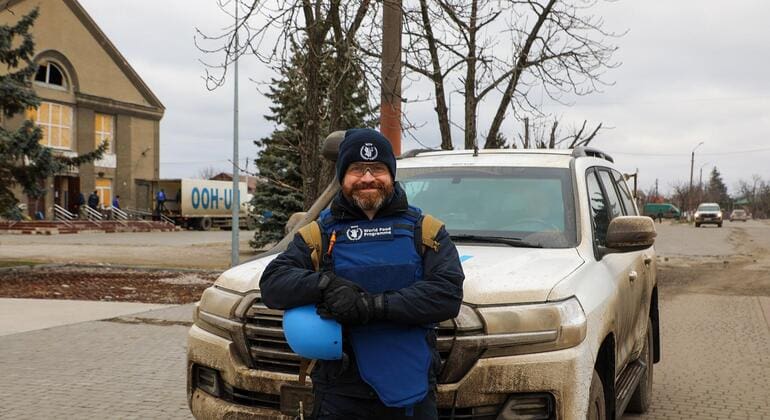
    For frontline workers like Oleg Kemin from the UN World Food Programme (WFP), this involves travelling deep into disputed territory along the 1,000-kilometre contact line separating Ukraine from Russia, where attack drones are a deadly menace.

    In an exclusive interview with UN News, Oleg describes his work as a security officer and the challenges he faces, trying to deliver food aid to vulnerable communities. 

    There’s little respite even away from the front, he notes, with cities including the capital Kyiv shelled repeatedly and pitched into darkness – as was the case just before we spoke to him.

    His conversation with Daniel Johnson has been edited for length and clarity:

    Oleg Kemin: “Every night like this, with the shelling attacks, it’s quite difficult for us; the energy infrastructure of Ukraine is under fire, so each such attack can mean new blackouts all across the country. Also, there are new victims which creates additional tensions.

    Let’s say that people who are spending sleepless nights in the shelters cannot be as productive as usual. As a Security Operations Officer for the UN, my job is to track those constant air raid alerts, trying to keep our staff safe and warning them about the alerts.

    UN News: How do you cope with the constant threat of attack?

    Oleg Kemin: Next month it will be four years since the war started. I still remember the first attacks, I still remember the first air raid alert and it was very scary. It’s impossible to get used to it, especially when you can see the damage and destruction, but people are somehow getting used to everything. 

    But from time to time, when you’ve been at work and you are tired, you do not hear the air raid alert on your phone app, or the air raid siren in the street. Other times you’re waking up with the first explosion and it’s impossible to move to the shelter, because there is already an attack happening. 

    You create mechanisms – not to cope – but to understand the situation more clearly, and you follow emergency procedures. For example, if the attack is over, should we start the headcount and assess needs? 

    All across the country, people who are working in the energy companies and the water companies are doing their best to maintain normal life as much as possible, to restore electricity. In the capital, we have more opportunities to make repairs very quickly, but in some cities – even the left bank of Kyiv – was without electricity for quite a long time.

    UN News: Where are needs greatest in Ukraine today?

    Oleg Kemin: Some of the most vulnerable communities are in Pokrovsk, Kupyansk, Konstantynivka and Dobropillya – they’re all in the news today. We used to send aid convoys to these locations. It’s really sad to see with the gradual moving of the frontline, how life starts to escape from these cities. 

    On your first trip it’s a normal city, but then the shops start to close, more building become damaged and there are fewer people on the streets. On the final mission, you see only an empty and closed city and people who have no place else to go.

    UN News: How are aid teams protecting themselves from drone attacks?

    Oleg Kemin: At the moment in frontline areas, there is a high presence of first-person view (remote-controlled) drones. They are relatively small and usually each of them is directed by an operator. When any of our humanitarian convoys are moving toward such a zone, we inform both sides to the conflict of their GPS coordinates using the standard Humanitarian Notification Systems (HNS), so they can safely reach their destination.

    Here is the tomb of my husband, of my kids, I have nowhere else to go; the only thing I can do is to look after their tombs

    But that only applies to UN vehicles; the rest of the civilian and military vehicles in the convoy can be vulnerable, so to deter drones, the Ukrainian armed forces build corridors of nets mounted on pylons either side of the road for 10 to 15 kilometres. 

    The small drones don’t have enough velocity to penetrate through the netting, so they get stuck in it, and that can offer some protection. Let’s say it’s the very, very last hope, but at least it exists. In such a corridor, you feel safer, because there is at least some layer of protection around your vehicle.

    Of course, wars are constantly developing and there are already ways of penetrating these nets, or drones look for gaps in the netting, especially in the autumn and winter when strong winds can rip the canopy. This is a double risk because if the net wraps around a wheel, it will stop the vehicle and incapacitate it.

    A white SUV drives along a rural road in Ukraine, passing under a large agricultural net supported by poles. The scene suggests humanitarian or emergency response operations by WFP.

    A WFP vehicle passes under drone-protection nets in Kherson, Ukraine

    UN News: What can you tell us about the people who need WFP’s help? 

    Oleg Kemin: Last summer, we went on missions to remote communities in Kharkiv region (in northeast Ukraine, close to the Russian border). There are villages we assessed which are impossible to reach now, because it’s a very active combat zone, but people are still living there.

    In one of those villages, when I had the opportunity to ask one of inhabitants, an elderly  woman, why she was not leaving the village and she said, ‘Here is the tomb of my husband, of my kids, I have nowhere else to go; the only thing I can do is to look after their tombs.’

    It’s our land, it’s the house in which I grew up, it’s a house which was built by my great-grandparents, it’s my land and I don’t want to leave

    People are still living in these communities, and to get to them it was impossible by truck, so we removed the back seats from our armoured vehicles, filled them to the very top with food kits, and we literally drove through the mud. 

    Our partners’ vehicles got stuck, so we had to pull them out. People were living so close to the fighting – they were just 4.5 kilometres from the Russian border and drone activity from both sides was very high over there – so, sometimes with such communities, we bring them double the amount of food kits, because we never know if we will be able to reach them in the coming months.

    UN News: What more can you tell us about the Ukrainian communities you’ve reached?

    Oleg Kemin: It’s elderly people, pensioners especially. A few times people who are living there have been telling us, ‘It’s our land, it’s the house in which I grew up, it’s a house which was built by my great-grandparents, it’s my land and I don’t want to leave!’ 

    Other times, we’ve met people who’ve been telling us that they had tried to go to European countries or western Ukraine, but because of their age, they were not able to find a job to make enough income to rent a house, so they had to return home to their war-contested communities. Also, for people with disabilities and their relatives, it’s not so easy for them to move from those communities. 

    The State offers evacuation and assistance, but still a lot of people are planning to stay there. And they’re among those we are helping in the communities closest to the frontline where shops are closed and no one is bringing food. Further away, if markets are open, our donors provide a little cash-based help so people can choose what to add to their food basket.

    A white car drives down a damaged street in Ukraine, flanked by heavily bombed apartment buildings with broken windows and charred facades.

    A UN vehicle passes through a destroyed town in Ukraine.

    UN News: Another key part of WFP’s mission is making farmland safe again so that Ukrainians can work their land. What more can you tell us?

    Oleg Kemin: Yes, we are involved in mine-clearing work. Ukraine is a huge agricultural country and a huge amount of land – up to 25 to 30 per cent – is polluted with the unexploded ordnance and explosive remnants of war. 

    So, WFP works in demining to make land available for agricultural works again. As you know, grain from Ukraine helps to feed countries in Africa and almost all over the world, so one of the goals for us is to participate in that activity to make it possible to fight hunger, not only in Ukraine, but using, let’s say, Ukrainian grain also all around the globe.”

    Source link

  • Syria: Aleppo fighting leaves civilians dead, displaces thousands

    Syria: Aleppo fighting leaves civilians dead, displaces thousands

    Syria: Aleppo fighting leaves civilians dead, displaces thousands

    Clashes resumed on Tuesday between General Security Forces of the transition Government and the mainly Kurdish Syrian Democratic Forces (SDF), following a brief pause after the ceasefire announced in late December 2025.

    Initial fighting near the Alleramoon roundabout – on the historic city’s western outskirts – spread to the predominantly Kurdish neighbourhoods of Ash-Sheikh Maqsoud and Ashrafiyeh, with shelling also affecting surrounding government-controlled areas.

    Significant damage has been reported to homes and public infrastructure, including healthcare. At least three major hospitals have ceased operations, while flights in and out of Aleppo International Airport have also been suspended since Tuesday.

    Protect civilians, de-escalate now

    The Secretary-General is alarmed by reports of civilian deaths and injuries after hostilities re-escalated earlier this week in the city’s northeastern neighbourhoods, UN Spokesperson Stéphane Dujarric told reporters in New York on Wednesday.

    The United Nations reiterates that all parties have a clear obligation, under international humanitarian law, to protect civilians and civilian infrastructure,” he said, urging all actors to “immediately de-escalate, exercise maximum restraint, and take all measures to prevent further harm to civilians.”

    The UN Office for the Coordination of Humanitarian Affairs (OCHA) estimates that approximately 30,000 people have been displaced, with more than 2,000 families relocating to Afrin district and around 1,100 people sheltering in nine collective centres inside Aleppo.

    Thousands more fled Ashrafiyeh and Ash-Sheikh Maqsoud on Wednesday, seeking refuge with host communities.

    Local authorities have designated some places of worship as temporary shelters, opened humanitarian corridors to allow civilians to evacuate, and mobilized public buses to transport displaced families.

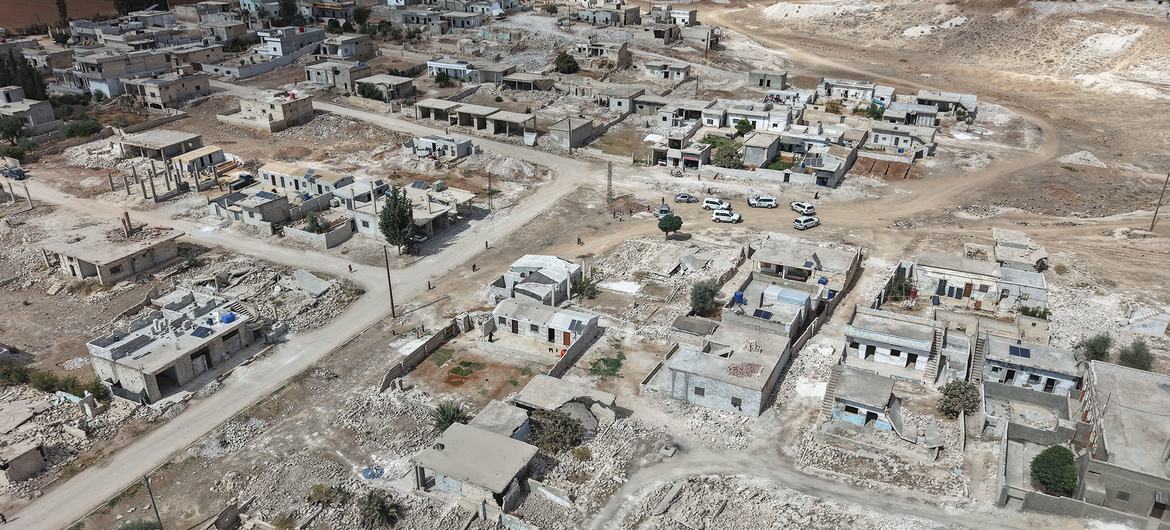
    Drone footage of the town of Latamneh in Hama, which was completely destroyed during the conflict. Mines and unexploded ordnance continue to litter the area, posing deadly risk for civilians, especially children.

    Drone footage of the town of Latamneh in Hama, which was completely destroyed during the conflict. Mines and unexploded ordnance continue to litter the area, posing deadly risk for civilians, especially children.

    Push to revive March agreement

    The Secretary-General called on all parties to demonstrate flexibility and goodwill on both the military and political tracks and to resume negotiations to fully implement the 10 March agreement between the two sides.

    Asked what concrete steps were needed, Mr. Dujarric said an agreement between the Government and the SDF on placing security forces under a unified national command would be a key measure, stressing the need for a state in which “all Syrians…would feel safe and protected.”

    The latest violence comes amid an uneasy transition following the fall of the Assad Government in December 2024.

    Since then, flare-ups of violence in several parts of the country – including renewed sectarian attacks targeting predominantly Alawite coastal areas and Druze communities in Sweida and other governorates – have triggered new displacement and deepened fears among Syrians still recovering from nearly 14 years of war.

    Worsening humanitarian conditions

    Millions of Syrians remain dependent on aid, with many forced to spend another winter in tents or damaged homes.

    According to OCHA, heavy snowstorms that hit northern Syria at the end of December affected around 158,000 internally displaced people across Aleppo, Idleb and Al-Hasakeh governorates.

    Two infants died from extreme cold in displacement camps in northern Idlib, while thousands of shelters were damaged, leaving families exposed to freezing temperatures.

    OCHA cautioned that without rapid scale-up, health risks – particularly for children, older people and those with chronic illnesses – will continue to rise, even as insecurity further constrains access and aid delivery.

    Source link

  • From a peace-making president to dictatorial ruler of USA

    From a peace-making president to dictatorial ruler of USA

    From a peace-making president to dictatorial ruler of USA

    By :

    Bashy Quraishy :Secretary General – EMISCO -European Muslim Initiative for Social Cohesion – Strasbourg

    Thierry Valle :Coordination des Associations et des Particuliers pour la Liberté de Conscience 

    Trump’s intervention in Venezuela and his provocative statements of invasions of Greenland, Iran Cuba and Colombia deserve to be highlighted and condemned strongly by European leaders and decision makers

    On 3 January 2026, the United States military carried out strikes on Venezuela, including in Caracas, against military and other infrastructure. During the operation, U.S. forces captured Venezuelan President Nicolás Maduro and his wife Cilia Flores. The couple was flown to the United States and taken into federal custody; Maduro was arraigned and pleaded not guilty to U.S. criminal charges. U.S. President Trump publicly stated that the U.S. would “run Venezuela” temporarily and oversee a transition, including tapping its oil infrastructure.

    The Trump administration has offered multiple reasons for the action, For example, he has labeled Maduro and his network as a narco-terrorist organization responsible for drugs entering the United States. Trump also framed Maduro’s rule as authoritarian and claimed intervention was in the interest of Venezuelan people. Trump suggested Venezuela’s instability was contributing to illegal immigration to the U.S. border.

    But it is widely believed that the whole scheme was to have control over oil resources.  Though officials downplay this, analysts and critics point that an underlying factor is that Venezuela has world’s largest oil reserves.

    Was this a compulsive action or planned for a while?

    Starting in late 2025, the U.S. dramatically increased military and covert operations, including warships and marine units near Venezuelan waters. USA conducted airstrikes on boats alleged to be drug traffickers, killing dozens. Prior to the invasion USA navy seized Venezuelan oil tankers and put in place the blockade of the Venezuelan oil exports.

    Add to that the fact that Trump authorized CIA covert operations inside Venezuela months before the invasion. These moves indicate a rising pressure campaign leading up to the January action.

    All these signs tell us that it was a planned invasion. The sequence of events suggests long-term preparation, not a sudden, reactive decision.

    But Why Now?

    Few concrete public explanations exist for why the invasion happened at precisely this moment, but the biggest factor appears to be Venezuela’s oil and minerals, and its orientation toward Russia/China, may have been catalysts for timing.

    Historically, U.S. interventions in Latin America have invoked, The Monroe Doctrin, counter-communism / pro-democracy rhetoric and counter-narcotics enforcement, limited mostly to law enforcement cooperation. But direct invasion and capture of a sovereign leader goes far beyond recent U.S. interventions. Experts say this is unprecedented since Panama in 1989, when the U.S. removed Manuel Noriega, another leader accused of drug crimes.

    This raises the main question; Is it legal under U.S./International doctrine?

    Most analysts and international law experts view the invasion as illegal. Under the UN Charter, military force is only lawful with Security Council approval or in response to an imminent military attack — neither condition clearly applies in Venezuela’s case. Even the U.S. use of force against alleged drug traffickers prior to the invasion lacks established legal justification under international law.

    This means the action breaks from both international norms and recent U.S. practice, not fitting neatly into accepted doctrines like humanitarian intervention, self-defense, or multilateral peacekeeping. Some observers say that Trump’s actions reflect a new, more assertive ideology of “America First” intervention. Trump reportedly referenced a modified Monroe Doctrine asserting U.S. geopolitical control in the hemisphere. The framing mixes security, resource access, and hegemony in ways older doctrines did not openly articulate.

    The immediate and future consequences of the invasion

    Inside Venezuela, Maduro’s removal has left a power vacuum. Vice President Delcy Rodríguez was sworn in as acting president, though the legal and constitutional situation is highly contested. Strikes caused casualties, including military personnel and civilians, which human rights groups have criticized. Venezuelan military and state infrastructure were damaged or disabled. Violence and uncertainty will likely drive additional migration and displacemen and Venezuelan oil production and state services likely disrupted, deepening already severe humanitarian issues.

    In U.S some political actors praised decisive action; others warned it risks broader conflict. Retaliation or escalation from aligned states and non-state actors is a heightened possibility.UN Secretary-General António Guterres warned the operation sets a dangerous precedent and called for diplomacy. Russia and China strongly condemned the move as a violation of sovereignty. Russia’s UN ambassador accused the U.S. of acting as “a supreme judge” above international norms. China’s envoy argued the U.S. “trampled upon Venezuela’s sovereignty and Beijing may increase diplomatic support for Caracas or use this to criticize U.S. unilateralism.

    Some EU member states condemned the use of force and stressed respect for international law; others focused on concerns about Venezuela’s governance while still not endorsing military action. Figures like Brazil’s president denounced the strikes as violating international law and several African and Asian governments and movements condemned the invasion and kidnapping of a sovereign leader.

    Under international law, the U.S. operation raises serious questions. Article 2(4) of the UN Charter prohibits military force against another state’s sovereignty except in limited exceptions (self-defence or Security Council authorization). There is no UN Security Council authorization for the strikes or capture. Forcible removal of a head of state and unilateral interference in another government’s political process are generally prohibited without Security Council mandate. Chatham House and other legal experts describe the operation as a significant violation of Venezuelan sovereignty and international legal norms.

    U.S. officials have argued this was a law enforcement mission and referenced self-defense claims regarding narcotics threats, but such reasoning is not recognized under international law as a lawful basis for military intervention.

    The reaction of American public, politicians, and Trump’s further threats to other nations

    According to an Associated Press analysis of recent polling, most Americans wanted the U.S. government to focus in 2026 on domestic issues, such as health care and high costs, rather than foreign policy issues. Meanwhile, polling conducted in the immediate aftermath of the military operation that captured Venezuelan President Nicolás Maduro suggested that many Americans are unconvinced that the U.S. should step in to take control of the country.

    Since taking over presidency,Trump boasted to be a peace-making president and claimed to have stopped many international conflicts, like India-Pakistan clash of 2025. It could be a tricky position for a president who ran on a promise of putting “America first” and ending the country’s involvement in “forever wars.” About 7 in 10 voters who backed Trump in the 2024 presidential election said that they wanted the U.S. to take a “less active” role in solving the world’s problem.

    Trump’s public statements about taking over Greenland and Mexico, invading  Colombia, Cuba and Iran have sent shock waves throughout the world.

    Europeans, especially Denmark, where, one of us lives are very angry on Trump’s threats to take over Greenland. He has said that repeatedly that Greenland is strategically important to USA. He is not wrong that Greenland is strategically important, but his method and language are the problem, not the underlying fact. USA already enjoys extensive military access under agreements with Denmark and faces no military exclusion from Greenland today. So the strategic need already exists and is already met.

    Then why the threats?

    Trump does not think in terms of alliances, shared sovereignty and mutual trust.

    He thinks in terms of ownership, control, leverage and transactions. In his worldview: “If something is important, you should own it,  not share it.” This is 19th-century thinking. But an attempt to seize Greenland would be an act of war against Denmark, trigger a NATO existential crisis, testroy USA – European relations, collapse the Western alliance structure and isolate the U.S. globally.

    It seems that Trump’s threats are meant to pressure Denmark into concessions, signal dominance to domestic audiences, normalize the idea that sovereignty is negotiable and test how far Europe will push back verbally and politically. Trump is a master in coercive intimidation.

    But Denmark’s reaction is completely understandable and justified. Trump’s repeated statements about Greenland are not just abstract rhetoric, they touch sovereignty, dignity, and security of a partner country. We believe that Denmark is doing right by firmly rejecting any transfer of sovereignty, emphasizing Greenlandic self-determination, strengthening Arctic defence cooperation, increasing presence and investment in Greenland and keeping the issue international, not bilateral.

    What Europe should do collectively?

    It should make sovereignty non-negotiable and state clearly and repeatedly that allied territory is not subject to coercion, purchase, or threat. Europe should tell USA this, without ambiguity, jokes or misunderstandings. Europe should also engage American institutions, not Trump personally, anchor its responses in NATO, EU, and international institutions and avoid escalation via insults. Trump thrives on that.

    What Europe realistically can do?

    Since Europe cannot stand up to the USA militarily, and say enough is enough, it can do that structurally and economically. For that Europe must reduce defence dependency, build independent command capacity, and coordinate intelligence outside U.S. control. On top of that the EU still has real power when it comes to trade regulation, sanctions frameworks, market access and tech and finance rules. It means that Europe can impose conditionality, use lawfare, not force and coordinate with non-aligned BRICS states.

    Europe also needs alliance diversification by improving its ties with China, Russia, Africa, ASEAN and Latin America. This will reduce vulnerability to U.S. unilateralism.

    In short, Europe’s strength is not tanks but in its market size, norm-setting, regulatory power, and coalition-building. All the decision makers in Europe need is to stand on its two feet and let USA know, what its people are thinking and demanding. 

    The danger is not confrontation. The danger is passive alignment with actions Europe privately rejects.

  • 10 Best Compliance Tools Teams Rely On During SOC 2 Audits in 2026

    [ad_1]

    I’ve watched too many growing tech companies stumble through SOC 2 audits the hard way. Teams cobble together

    [ad_2]

    Source link

  • Answer the Question

    Answer the Question

    Answer the Question

    For the third time Irish MEP Cynthia Ní Mhurchú presses the Commission for answers on its conduct and closure of the long-running Lettori case. 

    As a practicing barrister before her election to the European Parliament in 2024, Cynthia Ní Mhurchú would have been familiar with court procedure when witnesses under cross-examination hesitate to or decline to answer pertinent questions.  

    Answer the question, the words of the presiding judge to the reluctant witness, are familiar also to TV audiences with a liking for courtroom drama series. In both the real-life and dramatized settings, the judge’s intervention is taken to mean that the witness is uncomfortable with the question and that information of importance to the just resolution of a case is being withheld. 

    Legal Background  

    MEP Cynthia Ní Mhurchú’s pursuit of the European Commission for answers on its conduct and closure of the Lettori case, the longest-running case of discrimination in the history of the EU, has been extensively covered in European Times. In defiance of four clear-cut rulings of the Court of Justice of the European Union(CJEU), the first of which dates back to 1989, Italy has refused to grant the Lettori, non-national university teaching staff, their Treaty rights to parity of treatment with Italian workers. 

    An unprecedented third infringement case against Italy for its persisting breach of the parity of treatment provision of the Treaty was opened by then Commissioner for Social Rights Nicolas Schmit in September 2021 and referred to the CJEU in July 2023. In May 2023 Italy had introduced legislation to pre-empt referral of the case to the CJEU.  

    Assessing this legislation in the context of a reply to a parliamentary question, Commissioner Schmit explained that the Commission had decided to refer the case to the Court because the legislation had not “addressed the main grievance of the case, i.e. the payment of the due arrears to the Lettori”. These “due arrears” equate to compensatory settlements for discriminatory working conditions from the date of first employment. A Census jointly conducted by Lettori union Asso.CEL.L and Italy’s largest trade union FLC CGIL, the results of which were sent to the Commission in March 2025, showed that in the majority of Italian universities the payments due had not been made. 

    MEP Ní Mhurchú questions 

    1.Conflict of evidence in the EU’s longest-running discrimination case covers  MEP Cynthia Ní Mhurchú’s first question to the Commission. It focuses on a provision of Italy’s law of May 2023 which limits the number of years to which the Lettori are entitled to backdated settlements for withheld parity of treatment. Such a provision is tantamount to a position that the Treaty rights of non-nationals are not open-ended and can be prescribed by domestic legislation. Scrutiny of the Commission’s reply shows that it did not address the point of whether such a prescription is compatible with EU law. 

    The reply on behalf of the Commission was given by Executive Vice-President Mînzatu on 10.6.2025. A detail in the reply which might have seemed incidental at the time was later to assume a greater importance. This was the information that the infringement case against Italy, Case C-519/23, “is currently pending at the Court of Justice”. Over a month later, and without giving the advance notice representative Lettori unions Asso. CEL.L and FLC CGIL would have expected in accordance with infringement case procedures, the Commission dropped the case on 17.07.2025.  

    2.Troubling questions on a treaty injustice which will not go away covers Ní Mhurchú’s second and follow-up question to the Commission. The question, a priority question, was co-signed by 12 other MEPs. Ní Mhurchú and the12 co-signatories request an explanation of what happened in the interval between 10.06.2025 and 17.07.2025 to cause the Commission to close the case. Ní Mhurchú also notes the failure of the Commission to answer her question on whether the prescription condition in Italy’s May 2023 legislation is compatible with Community law and asks for an answer on this point again.  

    In her answer to the priority question Executive Vice-President Mînzatu once more refuses to be drawn on the compatibility of the prescription provision with EU law. As it is settled case law of the CJEU that that “a Member State cannot plead provisions, practices or situations prevailing in its domestic legal order to justify failure to observe obligations arising under Community law”, it follows that the domestic prescription condition would have been ruled contrary to EU law had the case gone to the Court. The Asso.CEL.L -FLC CGIL Census contains instances of Lettori with over 30 years of service whose settlements for the discrimination they had suffered over their careers were limited to 5 years under the prescription condition. 

    In the context of Treaty justice, the Commission’s explanation of what caused it to withdraw the case from the Court is very concerning. Despite the fact that the Court has on four occasions found Italy guilty of discrimination against the Lettori, despite the fact that Italy misled the Court to avoid fines in the second of the infringement cases and thus induced the Commission to take a third case, the Commission nonetheless gave total credence to its claims in correspondence of October 2024 that it had made the settlements due to Lettori under EU law. 

    The explanation to Ní Mhurchú and her 12 co-signatories is also misleading. It could be read to mean that the Commission evaluated the Census evidence from the Lettori which refutes Italy’s claims before deciding to close the case. In fact, in a letter to the unions the Commission expressly refused to consider the Census data. Instead, it passed the Lettori evidence to Italy for examination, thus effectively allowing the defendant to rule on the case against it. The Commission’s refusal to consider Lettori evidence of the violation of their Treaty rights is the subject of a pending Asso.CEL.L –FLC CGIL complaint to the European Ombudsman.  

    3. “Yes” or “No”. Parliamentary question E-005032/2025 

     Rule 144 of the Rules of Procedure of the European Parliament obliges the Commission to answer questions from MEPs. In practice, as in the case of the Ní Mhurchú Lettori questions, the replies are often evasive, vague, even misleading, causing the MEPs to either write follow-up questions or resign themselves to the Commission’s reluctance to give direct answers. 

    MEP Ní Mhurchú words her third question to reduce the scope for an incomplete and evasive reply. She asks for a simple “yes” or “no” answer to the question of whether the May 2023 Italian legislation is compatible with EU law. She asks the Commission “to explain why it did not examine the Lettori census data but instead closed case C-519/23 based exclusively on evidence from Italy, the defendant in the case.” It is a style of questioning which the judges of the Court might well have employed in their interrogation of the parties had Case C-519/23 – Commission of the European Communities v Italian Republic not been removed from the Court register. 

    Implications 

     In signing the Treaty of Accession to join the EU Member States ceded sovereignty for a supposedly greater good. Much of that good is undone if the Commission, as Guardian of the Treaties, refuses to accept evidence from EU citiz ens of the violation of their Treaty rights. It is further undone if the Commission refuses to answer questions placed on behalf of these citizens by their elected representatives in the European Parliament. The Lettori parity of treatment case raises serious questions about the Commission’s conduct of infringement proceedings for breaches of the Treaties. 

    In accordance with the Rules of Procedure, the Commission now has 6 weeks to answer Ní Mhurchú’s question. It remains to be seen whether she will be given the answers she has been seeking at the third time of asking.