Category: America

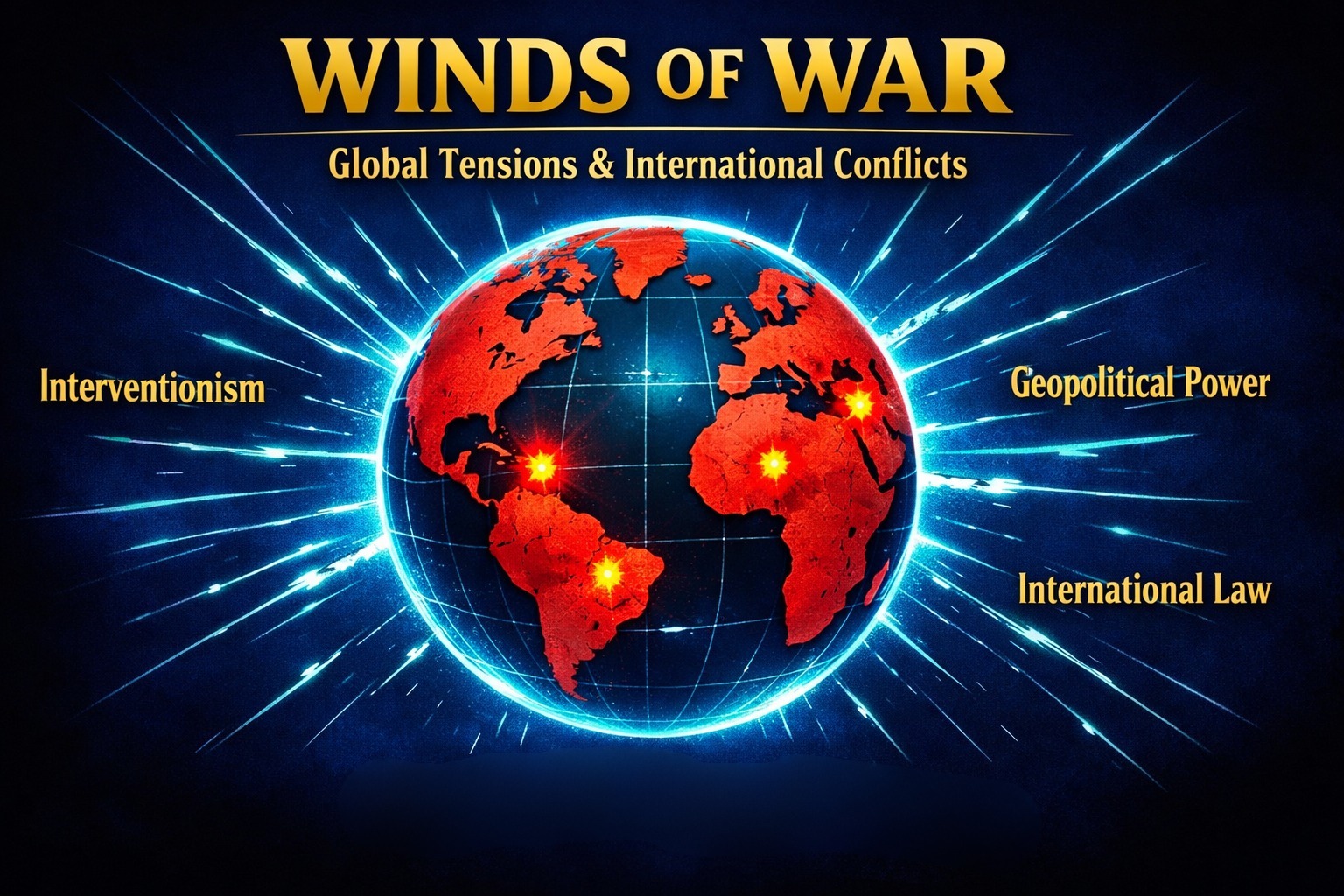
  • Winds of War

    Winds of War

    Winds of War

    By Dr. Stephen Eric Bronner 

    In Charlie Chaplin’s masterpiece “The Great Dictator” (1940), there is a scene in which his character “Adenoid Hynkel,” ruler of the anti-Semitic and fascistic nation named “Tomania,”  dreamily juggles a huge balloon painted as a globe – until it bursts. Should our balloon burst, and the possibility is becoming ever greater, the consequences will dwarf anything that Charlie might have imagined.

    Since the start of Donald Trump’s second term in 2024,  his cult of the personality picked up steam. The Kennedy Memorial Center for the Performing Arts has been renamed the Kennedy-Trump Center. The president’s name also graces the new $300 million ballroom at the White House and various other Washington buildings. In this vein, he has also called for the construction of a new “Arc de Trump,” and —significantly – plastered his moniker on a new class of Navy battleships.

    On the campaign trail, Trump had promised there would be no new wars and that the United States would no longer serve as the “world’s policeman.”  But we should have seen what was coming. Glimpses of the future were already apparent  when the president changed the “Gulf of Mexico” into the “Gulf of America,” demanded that Denmark surrender Greenland to the United States, and called upon Canada to become our 51st state. Nor was that all. Trump renamed the Department of Defense the Department of War and, despite the cost cutting frenzy led by Elon Musk’s DOGE, he successfully pressured Congress into passing the first $1 trillion military budget in American history.

    Trump’s crass public campaign for the Nobel Prize failed. An Israeli Peace Prize and another from soccer’s FIFA governing body, both hastily created for Trump, proved merely embarrassing substitutes. His attempts to coerce peace in the Russia-Ukraine War had been unsuccessful. The Gaza cease-fire was appearing increasingly fragile, and it was clear that the president had stoked international tensions with his strangely miscalculated tariff policy.

    Trump claims that he has ended more than eight wars all over the globe. But the statement is thin on evidence whereas it is abundantly clear that the United States was involved in 622 air and drone strike across seven countries in 2025: Afghanistan,, Iran, Iraq, Nigeria, Somalia, Syria, Venezuela, and Yemen. The president has never been a staunch advocate of international law or human rights. To the contrary: Trump stated quite openly that he recognized no constraint on his international decision-making authority other than his own “morality” should have surprised no one.

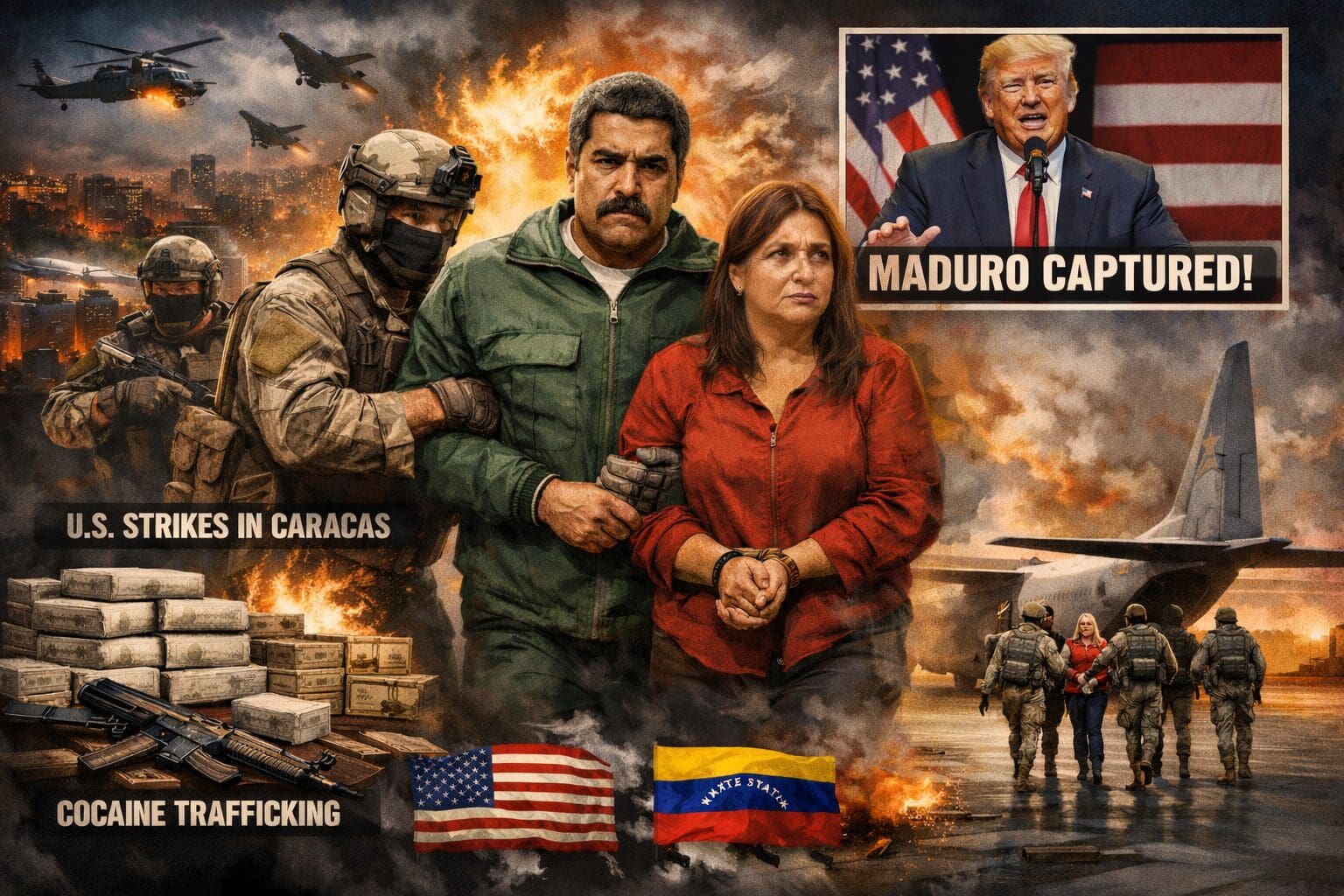
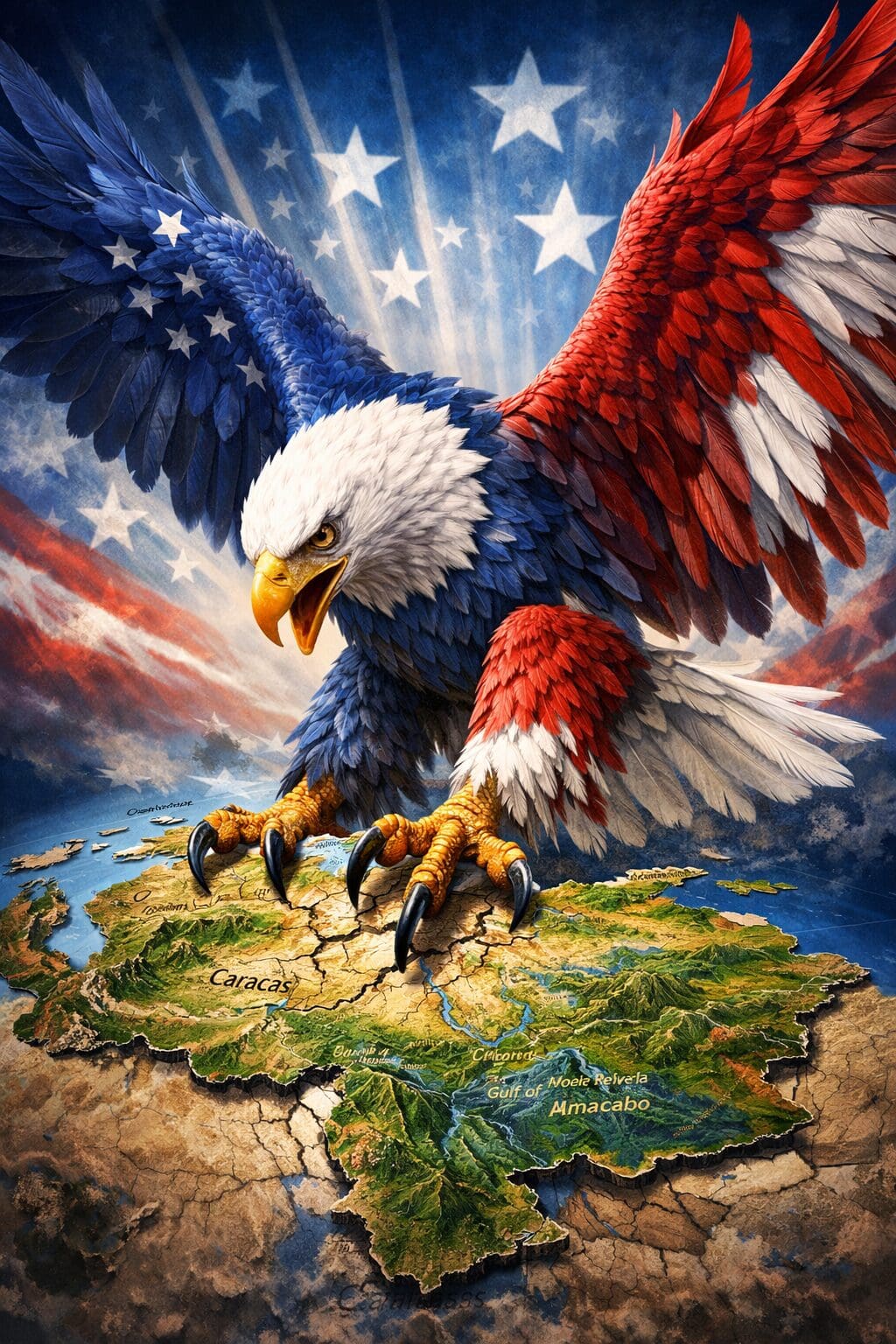
    As 2026 begins, the president has taken over Venezuela, kidnapped its noxious president, Nicolas Maduro and his wife and charged them with “narco-terrorism.”  To achieve these ends, the United States launched 22 strikes that killed 110 people, murdered sailors seeking to surrender, and shelled vessels without first determining whether they were actually carrying drugs. Nor did Congress approve Trump’s act of war; it was not even briefed. The enterprise was instead prepared by Trump and a few close advisors in consultation with oil company executives; indeed, this was a war waiting for an excuse to wage it.

    Why did Trump do it? The president needed something dramatic in the face of slipping poll numbers, mumblings of discontent among a few supporters, the mess surrounding the Epstein files, the anger resulting from an economic “affordability” crisis,  changes in healthcare that put millions at risk, and the growing repulsion against the storm-trooper tactics of ICE against immigrants.  In 2024, moreover, Trump had demanded that oil companies and the energy sector donate $1 billion to his camapign. They gave him $75 million. Coporations always expect something for their money and perhaps providing them with a profitable suruprise would make them more generous the next time around.

    Given Trump’s desire to recreate a past golden age, it made sense for him to justify his Venezuelan policy by invoking the Monroe Doctrine of 1823. This seminal document of American diplomatic history warned foreign powers against interfering in the Western hemisphere, and contributed to the belief that Central and South America constituted the United States’ sphere of influence. However, Trump gave it a radical twist by declaring that the United States would “run” Venezuela until an “acceptable” sovereign is installed and for now, under his stewardship, the United States would “indefinitely” control sales of its oil and minerals on the open market.

    This he calls the “Donroe” Doctrine. Justififications are of secondary importance. Insisting that the Maduro regime was an agent of “narco-terrorism,”  which dominated fentanyl smuggling operations, it turnd out that  Venezuela was responsible for only about 5% of the fentanyl entering the United States. Trump then changed the narrative by claiming that Maduro was the master-mind behind the cocaine plague and when that accusation fell flat, he shifted it again by condemning him as a war criminal for possessing weapons of mass destruction.

    Americans cheer interventions when they begin, but quickly grow weary when the price comes due. And invading Venezuela might prove to be a high price to pay. There are strking similarities with the plans laid bare in Venezuela and the American invasion of Iraq in 2003. In both cases, there was the lure of oil, a murderous dictator to overthrow, an exaggerated “existential” threat, an arrogant conviction the citizenry of another country would welcome American “liberators” with open arms,, and disregard for the chaos that reckless regime-change would generate.

    Maduro’s regime was authoritarian, brutal, corrupt and incompetent. But Trump’s actions normalize contempt for international law, rights of national self-determination, and sovereignty. Indeed, calling his overthrow an international police action agaist narco-terrorism doesn’t change that reality. Arbitrarily snatching world leaders creates widespread fear and distruction and contributes to creating a politics based on the “war of each against all’ that Thomas Hobbes feared above all else, if only because it heightens instability

    As became clear in Afghanistan, Iraq, and Libya, to leave a nation without a sovereign is to condemn it to violent rivalry between paramilitary groups. Vice-President Delcy Rodriquez was installed by the Venezuelan Supreme Court as “interim” president for up to 90 days though that can be extended by legal means, and an election awaits the future. And she is in an impossible situation. Ms. Rodriquez must navigate between independence and submission. She must either stand on her own and risk regime change or serve as a shadow sovereign lacking legitimacy and power.

    Trump is satisfied with what has transpired, and he feels emboldened. He is already saber-rattling while making similar charges of drug-running against Columbia, Mexico, and Cuba. Trump has also grown more bellicose in insisting that Denmark prioritize American “national security” interests, and either sell or prepare to lose its autonomous territory of Greenland. Whether discord among members of NATO will strengthen its enemies is far less important than Trump’s ability to exercise power in an unimpeded manner

    Besides, these policies can change in the blink of an eye should Trump find that alternative approaches better serve his purposes. He has stated openly that his vaunted unpredictability is a tactic to keep his enemies off guard. He neglected to mention, of course, that his erratic behavior gets in the way of planning, heightens distrust, and serves as an incentive for other nations to spend more on defense. He wishes only to be able to do what he wants, when he wants, and wherever he wants. This spirit is infusing his foreign policy and contributing to a spreading existential fear of military conflict.

    Nation-wide protests have rocked Iran in response to the Islamic Republic’s repression of all democratic tendencies, its incompetence in dealing with questions of infrasstructure and water, the corruption of the mullahs, and the complete collapse of the currency. These are brave people risking their lives in the streets, but Trump feels it his duty to take center stage. He has warned that he will intervene should the government wind up killing protestors. It sounds heroic, but such warnings only put protestors at greater risk because the leadership can now claim that they are traitors and agents of “The Great Satan” –and that is precisely what the Supreme Leader has done.

    Trump was not thinking about the negative consequences his words might have for those Iranians fighting for freedom. But that is the point: he never thinks about others, only about himself. More likely Trump is thinking about sabotaging further negotiations on a nuclear deal, undermining a regional rival, and making himself appear once again, as with the Maduro affair, as the champion of democracy and peace. Even if the rest of the world disagrees, indeed, that is how he can view himself—and that is what counts.

    *Stephen Eric Bronner is Board of Governors Distinguished Professor Emeritus of Political Science at Rutgers University and Executive Director of the “Independent Experts’ Peace Initiatives.”

    Source : https://www.rsn.org/001/winds-of-war-.html

    Dr. Stephen Eric Bronner is Director of the International Council for Diplomacy and Dialogue,  Executive Director of the Independent Experts Peace Initiatives, and Board of Governors Distinguished Professor Emeritus of Political Science at Rutgers University.
  • US Withdrawal from 66 International Organizations Threatens Civil Society and United Nations Operations

    US Withdrawal from 66 International Organizations Threatens Civil Society and United Nations Operations

    US Withdrawal from 66 International Organizations Threatens Civil Society and United Nations Operations

    By :

    Bashy Quraishy :Secretary General – EMISCO -European Muslim Initiative for Social Cohesion – Strasbourg

    Thierry Valle :Coordination des Associations et des Particuliers pour la Liberté de Conscience 

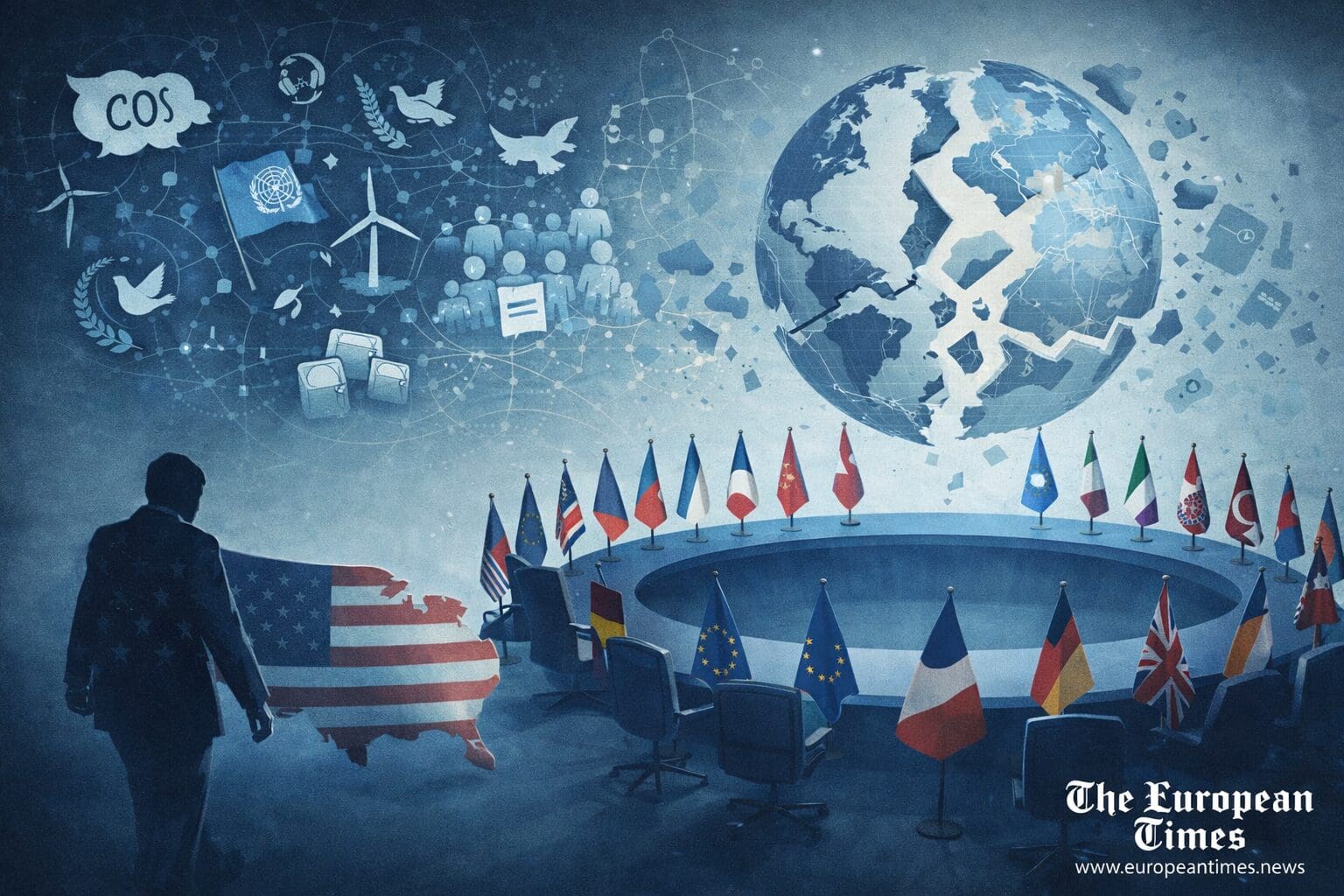
    On January 7, 2026, US President Donald Trump signed a presidential memorandum directing the immediate withdrawal of the United States from 66 international organizations, including 31 United Nations entities and 35 non-UN organizations. This decision represents one of the largest rollbacks of US participation in multilateral institutions in modern history, raising concerns about the future of international cooperation at a time when global stability faces unprecedented threats.

    The Scope of American Disengagement

    According to the White House memorandum titled “Withdrawing the United States from International Organizations, Conventions, and Treaties that Are Contrary to the Interests of the United States,” the withdrawal encompasses organizations that the administration deems “contrary to the interests of the United States.” The directive orders all executive departments and agencies to “take immediate steps to effectuate the withdrawal” as soon as possible. For United Nations entities, this means ceasing both participation and funding to the extent permitted by law.

    The 31 UN entities targeted for withdrawal include critical operational bodies such as the UN Population Fund, UN Entity for Gender Equality, and the Empowerment of Women (UN Women), the Office of the Special Representative of the Secretary-General for Children in Armed Conflict, the Peacebuilding Commission, and the UN Framework Convention on Climate Change. The list also encompasses five regional economic commissions under the Economic and Social Council, covering Africa, Latin America and the Caribbean, Asia and the Pacific, and Western Asia.

    Among the 35 non-UN organizations, the withdrawal affects the Intergovernmental Panel on Climate Change, the International Renewable Energy Agency, the International Solar Alliance, the Global Counterterrorism Forum, the Science and Technology Center in Ukraine, and the International Institute for Democracy and Electoral Assistance. These organizations address issues ranging from climate change and renewable energy to counterterrorism, democracy promotion, and scientific cooperation.

    United Nations Response: Legal Obligations Remain Binding

    In response to the White House announcement, UN Secretary-General António Guterres issued a statement on January 8, 2026, expressing regret over the decision. UN Spokesman Stéphane Dujarric conveyed the Secretary-General’s position during the daily press briefing, emphasizing that “assessed contributions to the United Nations regular budget and the peacekeeping budget, as approved by the General Assembly, are a legal obligation under the UN Charter for all Member States, including the United States.”

    The UN’s response underscored a fundamental legal principle: treaty obligations cannot be unilaterally discarded. Dujarric clearly stated that “contributions to the budget, the regular budget, and the peacekeeping budget are treaty obligations.

    The operative word being obligations; it’s in the Charter. So, Member States who signed, who’ve joined this club have to pay the dues.”

    The United Nations confirmed that the US did not pay its assessed contributions throughout 2025, creating significant financial strain on the organization. Despite this, Dujarric emphasized that “all United Nations entities will go on with the implementation of their mandates as given to us by Member States” and that “the United Nations has a responsibility to deliver for all those who depend on us, and we will continue to carry out our mandates with determination.”

    When pressed about the implications of a permanent Security Council member disregarding legal obligations, Dujarric noted that UN Article 19 stipulates that those countries failing to pay dues for a certain period may lose voting rights in the General Assembly, though this provision does not extend to Security Council participation.

    Financial and Operational Implications

    The withdrawal creates immediate financial pressure on organizations that depend on US contributions. The UN Spokesman acknowledged that the organization has been managing under financial pressure for some time, noting that “the US didn’t pay last year. Other Member States paid later than they had we had expected.” He described the Secretary-General’s financial management responsibilities as requiring him to “juggle financial cash flow, that I think would make the head spin of any CEO or Head of Government.”

    Beyond immediate funding concerns, the withdrawal threatens the operational capacity of entities focused on peacebuilding, humanitarian assistance, gender equality, and protection of vulnerable populations. The Peacebuilding Commission and Peacebuilding Fund, both on the withdrawal list, play essential roles in post-conflict recovery efforts. The Office of the Special Representative of the Secretary-General for Children in Armed Conflict and the Office of the Special Representative on Sexual Violence in Conflict address protection needs in war zones, including current conflicts in Ukraine, Gaza, and Syria.

    The withdrawal from climate-related entities is particularly significant, given the global nature of climate change. The decision affects not only the Paris Agreement—from which the US previously withdrew and rejoined—but the foundational 1992 UN Framework Convention on Climate Change itself. By targeting this Senate-ratified treaty, the administration’s move is expected to face legal challenges regarding the president’s authority to unilaterally withdraw from such agreements.

    Dangers to Peace in an Unstable World

    The timing of this withdrawal raises acute concerns about international stability. The current global landscape is marked by active conflicts in Ukraine and Gaza, tensions surrounding Taiwan, ongoing instability in Syria, humanitarian crises in South Sudan and Yemen, and escalating climate emergencies. In this context, withdrawing from organizations designed to facilitate cooperation, prevent conflicts, and coordinate humanitarian responses potentially undermines the fragile balance that international institutions help maintain.

    The Science and Technology Center in Ukraine appears on the withdrawal list at a moment when Ukraine faces continued attacks on its energy infrastructure. According to UN reports from January 8, 2026, recent strikes across Ukraine left nearly 2 million people without electricity in temperatures near freezing, with attacks described by Dnipro’s mayor as “among the largest combined attacks since the start of the full-scale war.” The center, which facilitates scientific cooperation related to non-proliferation and security, was established specifically to redirect former Soviet weapons scientists toward civilian research.

    Similarly, the withdrawal from peacebuilding mechanisms occurs as the UN documents escalating conflicts. In South Sudan, renewed fighting since December 29, 2025, has displaced approximately 100,000 people, mostly women, children, and elderly individuals. In Syria, the UN Secretary-General expressed grave alarm about escalating hostilities in Aleppo, with tens of thousands displaced and mounting civilian casualties. These situations exemplify the contexts where UN peacebuilding entities work to prevent conflict escalation and support stabilization efforts.

    The UN Democracy Fund and the International Institute for Democracy and Electoral Assistance, both targeted for withdrawal, support democratic institutions and electoral processes globally. Their absence from US support may weaken democratic resilience in countries facing authoritarian pressures or attempting post-conflict transitions.

    International Reactions and Broader Context

    International media coverage has highlighted the unprecedented scale of the withdrawal. Al Jazeera reported that many of the targeted organizations focus on climate, labor, migration, and other issues, the Trump administration has categorized as catering to diversity and “woke” initiatives. The Bulletin of the Atomic Scientists characterized the decision as turning “his back on science, facts, reason,” noting that the administration is moving beyond individual agreements to exit “the entire international framework for climate negotiations.”

    The Press Pad analysis emphasized that the significant changes would lead the US to withdraw from key forums focused on climate change, peace, and democracy. Le Monde covered the decision as part of a broader pattern of American disengagement from multilateral frameworks, placing it in the context of previous withdrawals from the Paris Agreement, the Iran nuclear deal, and the World Health Organization.

    During the UN press briefing, journalists questioned, whether this decision signals the death of multilateralism. Secretary-General Guterres, through his spokesperson refused to write such an obituary, stating that “António Guterres will not write it.” Instead, the UN emphasized that the Secretary-General “strongly believes that the challenges that we face today can only be solved through international cooperation.”

    When asked whether the UN itself has become “à la carte,” Dujarric responded that “the UN is an organization of 193 Member States and two observer States. It is in the interest of all these Member States and the two observers to defend the principles that they themselves have created.”

    Civil Society Under Pressure

    The withdrawal directly impacts civil society organizations that partner with or receive support through UN entities. UN Women, which appears on the withdrawal list, coordinates with thousands of civil society organizations globally to advance gender equality and women’s empowerment. The UN Population Fund works with civil society partners on reproductive health, maternal health, and population data collection. The UN Democracy Fund provides direct grants to civil society organizations working on democratic governance, human rights, and civic participation.

    The Office of the Special Representative on Violence Against Children collaborates with civil society networks to document abuse, advocate for protective policies, and support rehabilitation programs. Its removal from US support may reduce capacity to address child protection in conflict zones and humanitarian emergencies.

    Environmental civil society organizations similarly face challenges with the US withdrawal from entities such as the Intergovernmental Science-Policy Platform on Biodiversity and Ecosystem Services, the International Union for Conservation of Nature, and the UN Collaborative Program on Reducing Emissions from Deforestation. These organizations facilitate scientific research, advocacy, and community-based conservation efforts that depend on international coordination and funding.

    The Role of International Law and Treaty Obligations

    A fundamental question raised by the withdrawal concerns the relationship between national sovereignty and international legal obligations. The UN Charter, which the United States signed and ratified in 1945, establishes specific financial obligations for member states. Article 19 of the Charter states that members in arrears may lose voting privileges in the General Assembly if arrears equal or exceed contributions due for the preceding two full years, unless the failure to pay is due to conditions beyond the member’s control.

    The UN’s legal position is unambiguous: assessed contributions are not voluntary donations but legally binding obligations. The Secretary-General, as the chief administrative officer, lacks authority to waive these obligations or negotiate their reduction. Only the General Assembly, acting collectively, can modify the assessment scale or address non-payment issues.

    The withdrawal from the UN Framework Convention on Climate Change presents additional legal complexity because it is a Senate-ratified treaty. Constitutional questions arise regarding whether the executive branch can unilaterally withdraw from treaties that received Senate advice and consent. Legal scholars note that while some treaties contain explicit withdrawal provisions, the constitutional distribution of treaty-making powers between the executive and legislative branches remains contested.

    Implications for Global Governance

    The withdrawal challenges the post-1945 international order built on multilateral institutions and shared governance frameworks. The United Nations system was designed to prevent the kind of unilateral action that led to World War II, creating mechanisms for collective decision-making, dispute resolution, and coordinated responses to transnational challenges.

    By withdrawing from 31 UN entities, the United States signals a preference for bilateral relationships and ad hoc coalitions over standing multilateral institutions. This approach may offer flexibility but risks fragmenting global responses to problems that transcend national borders, including pandemics, climate change, nuclear proliferation, terrorism, and mass migration.

    The withdrawal from regional economic commissions under ECOSOC affects technical cooperation on trade, infrastructure, and sustainable development. These commissions facilitate regional integration and coordinate development strategies among neighboring countries. The Economic and Social Commission for Western Asia, for instance, addresses reconstruction and development challenges in a region experiencing multiple conflicts and humanitarian crises.

    The International Trade Centre, jointly operated with the World Trade Organization, supports developing countries’ integration into the global trading system. Its presence on the withdrawal list may reduce capacity-building assistance to small and medium enterprises in developing economies, potentially affecting trade diversification and economic resilience.

    Alternative Paths and Future Scenarios

    The UN has emphasized that its work will continue despite the US withdrawal. Secretary-General Guterres, according to his spokesman, “is determined as ever to continue his work and continuing to defend the Charter and continuing to defend this international institution.” The organization is exploring mechanisms to offset funding shortfalls, including increased contributions from other member states, expanded private sector partnerships, and efficiency improvements.

    Several countries have indicated willingness to increase their support for affected UN entities. The European Union, China, and other major economies may expand their financial commitments to maintain operational capacity of programs deemed essential to international stability. However, the scale of US contributions means that full replacement would require substantial collective effort.

    Civil society organizations are mobilizing to defend multilateral institutions and advocate for sustained funding. Amnesty International characterized the withdrawals as “a vindictive effort to tear apart global cooperation,” calling on other countries to strengthen their commitments to international organizations. Networks of environmental, human rights, and development organizations are working to maintain programmatic continuity through alternative funding sources and partnerships.

    The withdrawal also creates opportunities for other countries to assume leadership roles in areas where the US has stepped back. India and France, as co-leaders of the International Solar Alliance, may deepen their engagement to sustain momentum on renewable energy deployment. Regional organizations may expand their mandates to address gaps left by reduced US participation in UN entities.

    Conclusion: A Precarious Balance at Risk

    The decision to withdraw from 66 international organizations represents a fundamental shift in US engagement with multilateral institutions at a moment of acute global instability. With active conflicts in Ukraine, Gaza, and multiple other regions, climate emergencies intensifying, and democratic institutions under pressure worldwide, the reduction of US support for coordinating mechanisms threatens to weaken international capacity to prevent conflicts, respond to humanitarian crises, and address transnational challenges.

    The United Nations’ response—emphasizing legal obligations and determination to continue its mandates—reflects institutional resilience but also highlights the vulnerability of international cooperation to unilateral action by major powers. The organization’s ability to maintain operations depends on other member states fulfilling their commitments and, potentially, expanding their support to compensate for US withdrawal.

    For civil society organizations worldwide, the withdrawal creates immediate challenges in funding, coordination, and political support. Organizations working on gender equality, child protection, peacebuilding, democratic governance, and environmental conservation face reduced resources and diminished international backing for their efforts.

    The coming months will test whether the international community can maintain effective cooperation in the absence of full US participation, whether alternative leadership arrangements can emerge, and whether the multilateral system created after World War II can adapt to a more fragmented global landscape. What remains clear is that the challenges facing humanity—from climate change to armed conflict to humanitarian emergencies—require coordinated responses that transcend national borders and partisan politics. The withdrawal from 66 organizations makes such coordination more difficult precisely when it is most needed.


    Sources

    White House. (2026, January 7). Withdrawing the United States from International Organizations, Conventions, and Treaties that Are Contrary to the Interests of the United States. Presidential Memorandum. https://www.whitehouse.gov/presidential-actions/2026/01/withdrawing-the-united-states-from-international-organizations-conventions-and-treaties-that-are-contrary-to-the-interests-of-the-united-states/

    United Nations. (2026, January 8). Daily Press Briefing by the Office of the Spokesperson for the Secretary-General. https://press.un.org/en/2026/db260108.doc.htm

    Al Jazeera. (2026, January 8). Which are the 66 global organisations the US is leaving under Trump? https://www.aljazeera.com/news/2026/1/8/which-are-the-66-global-organisations-the-us-is-leaving-under-trump

    The Press Pad. (2026, January 8). Why Has the US Withdrawn from 66 International Organisations? https://www.thepresspad.com/post/why-has-the-us-withdrawn-from-66-international-organisations

  • From a peace-making president to dictatorial ruler of USA

    From a peace-making president to dictatorial ruler of USA

    From a peace-making president to dictatorial ruler of USA

    By :

    Bashy Quraishy :Secretary General – EMISCO -European Muslim Initiative for Social Cohesion – Strasbourg

    Thierry Valle :Coordination des Associations et des Particuliers pour la Liberté de Conscience 

    Trump’s intervention in Venezuela and his provocative statements of invasions of Greenland, Iran Cuba and Colombia deserve to be highlighted and condemned strongly by European leaders and decision makers

    On 3 January 2026, the United States military carried out strikes on Venezuela, including in Caracas, against military and other infrastructure. During the operation, U.S. forces captured Venezuelan President Nicolás Maduro and his wife Cilia Flores. The couple was flown to the United States and taken into federal custody; Maduro was arraigned and pleaded not guilty to U.S. criminal charges. U.S. President Trump publicly stated that the U.S. would “run Venezuela” temporarily and oversee a transition, including tapping its oil infrastructure.

    The Trump administration has offered multiple reasons for the action, For example, he has labeled Maduro and his network as a narco-terrorist organization responsible for drugs entering the United States. Trump also framed Maduro’s rule as authoritarian and claimed intervention was in the interest of Venezuelan people. Trump suggested Venezuela’s instability was contributing to illegal immigration to the U.S. border.

    But it is widely believed that the whole scheme was to have control over oil resources.  Though officials downplay this, analysts and critics point that an underlying factor is that Venezuela has world’s largest oil reserves.

    Was this a compulsive action or planned for a while?

    Starting in late 2025, the U.S. dramatically increased military and covert operations, including warships and marine units near Venezuelan waters. USA conducted airstrikes on boats alleged to be drug traffickers, killing dozens. Prior to the invasion USA navy seized Venezuelan oil tankers and put in place the blockade of the Venezuelan oil exports.

    Add to that the fact that Trump authorized CIA covert operations inside Venezuela months before the invasion. These moves indicate a rising pressure campaign leading up to the January action.

    All these signs tell us that it was a planned invasion. The sequence of events suggests long-term preparation, not a sudden, reactive decision.

    But Why Now?

    Few concrete public explanations exist for why the invasion happened at precisely this moment, but the biggest factor appears to be Venezuela’s oil and minerals, and its orientation toward Russia/China, may have been catalysts for timing.

    Historically, U.S. interventions in Latin America have invoked, The Monroe Doctrin, counter-communism / pro-democracy rhetoric and counter-narcotics enforcement, limited mostly to law enforcement cooperation. But direct invasion and capture of a sovereign leader goes far beyond recent U.S. interventions. Experts say this is unprecedented since Panama in 1989, when the U.S. removed Manuel Noriega, another leader accused of drug crimes.

    This raises the main question; Is it legal under U.S./International doctrine?

    Most analysts and international law experts view the invasion as illegal. Under the UN Charter, military force is only lawful with Security Council approval or in response to an imminent military attack — neither condition clearly applies in Venezuela’s case. Even the U.S. use of force against alleged drug traffickers prior to the invasion lacks established legal justification under international law.

    This means the action breaks from both international norms and recent U.S. practice, not fitting neatly into accepted doctrines like humanitarian intervention, self-defense, or multilateral peacekeeping. Some observers say that Trump’s actions reflect a new, more assertive ideology of “America First” intervention. Trump reportedly referenced a modified Monroe Doctrine asserting U.S. geopolitical control in the hemisphere. The framing mixes security, resource access, and hegemony in ways older doctrines did not openly articulate.

    The immediate and future consequences of the invasion

    Inside Venezuela, Maduro’s removal has left a power vacuum. Vice President Delcy Rodríguez was sworn in as acting president, though the legal and constitutional situation is highly contested. Strikes caused casualties, including military personnel and civilians, which human rights groups have criticized. Venezuelan military and state infrastructure were damaged or disabled. Violence and uncertainty will likely drive additional migration and displacemen and Venezuelan oil production and state services likely disrupted, deepening already severe humanitarian issues.

    In U.S some political actors praised decisive action; others warned it risks broader conflict. Retaliation or escalation from aligned states and non-state actors is a heightened possibility.UN Secretary-General António Guterres warned the operation sets a dangerous precedent and called for diplomacy. Russia and China strongly condemned the move as a violation of sovereignty. Russia’s UN ambassador accused the U.S. of acting as “a supreme judge” above international norms. China’s envoy argued the U.S. “trampled upon Venezuela’s sovereignty and Beijing may increase diplomatic support for Caracas or use this to criticize U.S. unilateralism.

    Some EU member states condemned the use of force and stressed respect for international law; others focused on concerns about Venezuela’s governance while still not endorsing military action. Figures like Brazil’s president denounced the strikes as violating international law and several African and Asian governments and movements condemned the invasion and kidnapping of a sovereign leader.

    Under international law, the U.S. operation raises serious questions. Article 2(4) of the UN Charter prohibits military force against another state’s sovereignty except in limited exceptions (self-defence or Security Council authorization). There is no UN Security Council authorization for the strikes or capture. Forcible removal of a head of state and unilateral interference in another government’s political process are generally prohibited without Security Council mandate. Chatham House and other legal experts describe the operation as a significant violation of Venezuelan sovereignty and international legal norms.

    U.S. officials have argued this was a law enforcement mission and referenced self-defense claims regarding narcotics threats, but such reasoning is not recognized under international law as a lawful basis for military intervention.

    The reaction of American public, politicians, and Trump’s further threats to other nations

    According to an Associated Press analysis of recent polling, most Americans wanted the U.S. government to focus in 2026 on domestic issues, such as health care and high costs, rather than foreign policy issues. Meanwhile, polling conducted in the immediate aftermath of the military operation that captured Venezuelan President Nicolás Maduro suggested that many Americans are unconvinced that the U.S. should step in to take control of the country.

    Since taking over presidency,Trump boasted to be a peace-making president and claimed to have stopped many international conflicts, like India-Pakistan clash of 2025. It could be a tricky position for a president who ran on a promise of putting “America first” and ending the country’s involvement in “forever wars.” About 7 in 10 voters who backed Trump in the 2024 presidential election said that they wanted the U.S. to take a “less active” role in solving the world’s problem.

    Trump’s public statements about taking over Greenland and Mexico, invading  Colombia, Cuba and Iran have sent shock waves throughout the world.

    Europeans, especially Denmark, where, one of us lives are very angry on Trump’s threats to take over Greenland. He has said that repeatedly that Greenland is strategically important to USA. He is not wrong that Greenland is strategically important, but his method and language are the problem, not the underlying fact. USA already enjoys extensive military access under agreements with Denmark and faces no military exclusion from Greenland today. So the strategic need already exists and is already met.

    Then why the threats?

    Trump does not think in terms of alliances, shared sovereignty and mutual trust.

    He thinks in terms of ownership, control, leverage and transactions. In his worldview: “If something is important, you should own it,  not share it.” This is 19th-century thinking. But an attempt to seize Greenland would be an act of war against Denmark, trigger a NATO existential crisis, testroy USA – European relations, collapse the Western alliance structure and isolate the U.S. globally.

    It seems that Trump’s threats are meant to pressure Denmark into concessions, signal dominance to domestic audiences, normalize the idea that sovereignty is negotiable and test how far Europe will push back verbally and politically. Trump is a master in coercive intimidation.

    But Denmark’s reaction is completely understandable and justified. Trump’s repeated statements about Greenland are not just abstract rhetoric, they touch sovereignty, dignity, and security of a partner country. We believe that Denmark is doing right by firmly rejecting any transfer of sovereignty, emphasizing Greenlandic self-determination, strengthening Arctic defence cooperation, increasing presence and investment in Greenland and keeping the issue international, not bilateral.

    What Europe should do collectively?

    It should make sovereignty non-negotiable and state clearly and repeatedly that allied territory is not subject to coercion, purchase, or threat. Europe should tell USA this, without ambiguity, jokes or misunderstandings. Europe should also engage American institutions, not Trump personally, anchor its responses in NATO, EU, and international institutions and avoid escalation via insults. Trump thrives on that.

    What Europe realistically can do?

    Since Europe cannot stand up to the USA militarily, and say enough is enough, it can do that structurally and economically. For that Europe must reduce defence dependency, build independent command capacity, and coordinate intelligence outside U.S. control. On top of that the EU still has real power when it comes to trade regulation, sanctions frameworks, market access and tech and finance rules. It means that Europe can impose conditionality, use lawfare, not force and coordinate with non-aligned BRICS states.

    Europe also needs alliance diversification by improving its ties with China, Russia, Africa, ASEAN and Latin America. This will reduce vulnerability to U.S. unilateralism.

    In short, Europe’s strength is not tanks but in its market size, norm-setting, regulatory power, and coalition-building. All the decision makers in Europe need is to stand on its two feet and let USA know, what its people are thinking and demanding. 

    The danger is not confrontation. The danger is passive alignment with actions Europe privately rejects.

  • Maduro’s Arrest: Inside the US Operation & Europe’s Sovereignty Concerns

    Maduro’s Arrest: Inside the US Operation & Europe’s Sovereignty Concerns

    Maduro’s Arrest: Inside the US Operation & Europe’s Sovereignty Concerns

    The United States launched a large-scale military strike against Venezuela early Saturday morning, resulting in the capture of President Nicolás Maduro and his wife, Cilia Flores, according to an announcement by President Donald Trump.

    The operation, executed by Delta Force special operations troops, marks the first direct military intervention by the United States to capture and remove a sitting head of state since the 1989 invasion of Panama. The Trump administration has accused Maduro of running a narco-terrorist state, a characterization reflected in a 2020 narco-terrorism indictment filed in the Southern District of New York.

    “The United States of America has successfully carried out a large scale strike against Venezuela and its leader, President Nicolas Maduro, who has been, along with his wife, captured and flown out of the country,” Trump announced on Truth Social at approximately 5:21 a.m. Venezuelan time Saturday morning.

    OPERATION DETAILS REMAIN LIMITED

    At approximately 2 a.m. Venezuelan Eastern Time, residents across Caracas reported at least seven major explosions followed by observations of low-flying military aircraft. Strikes targeted military installations including La Carlota airfield and Fuerte Tiuna military headquarters, traditionally believed to be a residence and operational center for the president.

    The strikes lasted less than thirty minutes, with the southern sector of Caracas losing electrical power following the operation. Trump scheduled a press conference for later Saturday at his Mar-a-Lago residence in Florida.

    Venezuelan Vice President Delcy Rodríguez responded to Trump’s announcement by stating: “We do not know the whereabouts of President Nicolás Maduro and First Lady Cilia Flores. We demand proof of life.”

    THE CHARGES: NARCO-TERRORISM INDICTMENT

    Maduro was formally indicted in March 2020 in the U.S. District Court for the Southern District of New York on charges of narco-terrorism conspiracy, conspiracy to import cocaine, and possession of machine guns and destructive devices.

    According to prosecutors, Maduro allegedly “flooded the United States with cocaine in order to undermine the health and wellbeing” of the nation and worked with Colombian rebel groups in drug production and trafficking.

    In August 2025, Attorney General Pam Bondi announced a $50 million reward for information leading to Maduro’s capture, double the previous $25 million bounty. Bondi alleged that Maduro worked with the Sinaloa Cartel and Tren de Aragua gang and cited the seizure of 30 tons of cocaine linked to Maduro and his associates.

    Maduro has consistently denied all allegations regarding drug trafficking.

    EU RESPONSE: INTERNATIONAL LAW EMPHASIS

    The European Union issued a carefully measured response emphasizing legal principles while acknowledging Maduro’s lack of democratic legitimacy.

    EU foreign policy chief Kaja Kallas stated that she had “spoken with Secretary of State Marco Rubio and our Ambassador in Caracas and confirmed the EU was “closely monitoring the situation in Venezuela.”

    Kallas emphasized that “the EU has repeatedly stated that Mr Maduro lacks legitimacy and has defended a peaceful transition” but added a critical qualifier: “Under all circumstances, the principles of international law and the UN Charter must be respected. We call for restraint.”

    This formulation—emphasizing international law “under all circumstances”—functioned as an implicit critique of the operation without explicitly condemning it.

    Spain, as the EU member state with the largest Venezuelan diaspora, offered to mediate in the crisis, calling for a “peaceful, negotiated solution.”

    GLOBAL REACTIONS DIVIDE SHARPLY

    Russia condemned the operation as “an act of armed aggression” and called for an emergency UN Security Council meeting. Cuba characterized the strikes as “a criminal attack”.

    Argentina, under right-wing President Javier Milei, endorsed the operation with his characteristic political slogan, while Chile under left-leaning President Gabriel Boric expressed concern about the military operation.

    Colombia, despite traditionally being aligned with Washington, expressed significant concern about humanitarian consequences and regional destabilization.

    Legal experts immediately raised concerns about the operation’s legal basis. Senator Mike Lee (R-Utah) initially sought clarification on the constitutional justification, but after speaking with Secretary of State Marco Rubio, stated that Maduro “has been arrested by U.S. personnel to stand trial on criminal charges in the United States.

    However, the New York Times reported that legal experts questioned the legality of the strikes, noting that Congress had not authorized the operation nor declared war on Venezuela.

    Venezuela’s government requested an urgent UN Security Council meeting, accusing the U.S. of violating the UN Charter and seeking international condemnation.

    THE EVIDENCE QUESTION

    While the indictment against Maduro exists as a matter of public record, the specific evidence supporting the narco-terrorism charges remains classified. US intelligence agencies have indicated that there is no evidence connecting Maduro to Tren de Aragua, according to reporting from Al Jazeera.

    The distinction is legally significant: a grand jury indictment establishes probable cause, but does not constitute proof of guilt. Maduro has not been tried, and defense counsel has not had the opportunity to challenge the government’s case in court.

    STRATEGIC CONTEXT

    The operation followed months of escalating US military pressure on Venezuela, including a major military buildup in the Caribbean featuring the deployment of the USS Gerald Ford, the world’s largest aircraft carrier, and repeated strikes on vessels allegedly involved in drug trafficking.

    The operation has significant geopolitical implications for Europe, raising questions about international law, sovereignty, and the precedent it establishes for unilateral military action by powerful states.


    This article draws on reporting from Reuters, BBC, Al Jazeera, NBC News, PBS NewsHour, ABC News, CNN, the New York Times, the Associated Press, Fortune, and official statements from the U.S. Justice Department and European Union.

  • How New U.S. Trump Tariffs Could Affect European Businesses and American Consumers

    In a move that could significantly alter transatlantic trade dynamics, former President Donald Trump has announced intentions to impose tariffs on European imports, citing concerns over trade imbalances and the European Union’s (EU) trade practices. He described the EU’s actions as “way out of line” as reported by the BBC, and suggested that Europe could be the next target for U.S. tariffs.

    Impact on European Exporters

    European companies are expressing apprehension regarding the financial implications of the proposed U.S. tariffs. The uncertainty surrounding U.S. trade policy is prompting some businesses to reconsider investments, particularly in sectors like wind and solar energy that rely on imported components. Industries such as automotive and luxury goods are also preparing for possible tariffs, with some companies considering increasing production within the U.S. to mitigate potential costs.

    The European automotive sector, in particular, faces significant challenges. Shares of major European carmakers have experienced declines following the tariff announcements. Companies like Stellantis and Volkswagen, which have substantial operations in Mexico, saw their shares fall by 6.8% and 5.6%, respectively. Volvo Cars, Mercedes-Benz, BMW, and Porsche also reported decreases ranging from 3.6% to 6.5%. Analysts estimate that the tariffs could significantly affect the operating incomes of these manufacturers in 2025.

    Potential Effects on U.S. Consumer Prices

    For American consumers, the imposition of tariffs on European goods could lead to increased prices for imported products. Tariffs function as a tax on imports, and businesses often pass these additional costs onto consumers. This means that goods such as European automobiles, wines, and luxury items may become more expensive in the U.S. market.

    The broader economic implications are also noteworthy. Economists warn that extensive tariffs and potential retaliatory measures could exacerbate existing inflationary pressures in the U.S. The Federal Reserve’s efforts to stabilize inflation at 2% may be challenged by rising costs associated with imported goods. Recent data indicates that consumer sentiment has declined, and inflation expectations have risen, partly due to concerns over tariffs.

    Industry Responses and Strategic Adjustments

    In anticipation of the tariffs, some U.S. importers are taking proactive measures. For instance, American importers have been stockpiling Italian Prosecco to hedge against potential price increases resulting from the tariffs. U.S. imports of Italian sparkling wine, predominantly Prosecco, surged by 41% in November following Trump’s election, as importers prepared for future sales amidst tariff concerns.

    Similarly, British fashion retailers are grappling with the new tariffs imposed on Chinese-made goods. Companies like Next are exploring the possibility of establishing U.S. corporate entities to manage tariffs more effectively, while others, such as Superdry, have suspended direct shipments of China-made goods to avoid the new tariffs. These developments highlight the widespread uncertainty and operational challenges businesses face in the current trade environment as reported by the Financial Times.

    As the situation evolves, both European exporters and American consumers are bracing for the potential impacts of the proposed tariffs. While European companies assess strategies to mitigate financial losses, U.S. consumers may need to prepare for higher prices on a range of imported goods. The full extent of these effects will depend on the final implementation of the tariffs and any subsequent retaliatory measures by the EU.

  • From the Ashes of the Palisades and Eaton Fires, Treasured Mementos Restore Hope

    KINGNEWSWIRE // In the wake of the devastating Palisades and Eaton fires, communities across Los Angeles, California, are grappling with immense loss. But amidst the rubble, small yet powerful moments of recovery are offering survivors a glimmer of hope.

    “The streets of Pacific Palisades, Altadena, and Malibu are like a wave of destruction I’ve never experienced before,” says James, a Scientology Volunteer Minister. “There are so many heartbroken people, people in despair, people in need of help.”

    James is among the many Volunteer Ministers who sprang into action as soon as the fires erupted. Alongside their partners, the renowned Los Topos search and rescue organization, these dedicated volunteers have been working tirelessly to help families salvage prized personal possessions from the charred remains of their homes.

    Finding Meaning in the Ashes

    Entire neighborhoods once bustling with life now resemble war zones, reduced to smoldering remnants of what once was. Yet, for many survivors, the recovery of a single treasured item—a wedding ring, a childhood memento, a box of family photographs—represents an invaluable source of comfort and closure.

    Among the recovered treasures was a wedding ring that belonged to a 90-year-old grandmother who had safely evacuated but passed away shortly after. For her family, this heirloom became a cherished symbol of continuity and resilience. Another mother expressed her gratitude after volunteers unearthed a piece of pottery her son had crafted when he was just 13 years old. And for one young woman, a collection of hand-crafted figurines offered a tangible link to her past amid the heartbreak of losing her home.

    An Unwavering Commitment to Support

    Since the fires began, the Volunteer Ministers have been stationed at the Church of Scientology of Los Angeles, organizing the distribution of food, water, and essential supplies to evacuation centers, churches, and affected households. Their efforts go beyond immediate relief, focusing also on emotional and psychological support to help families rebuild their lives.

    The Volunteer Ministers program, founded more than three decades ago by L. Ron Hubbard, operates under the belief that individuals can bring about meaningful change in their communities. From 9/11 to the Southeast Asian tsunami and the 2010 Haiti earthquake, the group has played an active role in global relief efforts, consistently demonstrating their motto: “Something can be done about it.”

    Volunteer Ministers have responded to disasters worldwide, including in Europe. In Spain, they provided critical relief following flooding in Valencia. In Italy, they assisted communities devastated by earthquakes, offering both material aid and emotional support. In the Czech Republic, they played a crucial role in helping residents recover from destructive flooding. These efforts echo the work being done in Los Angeles, showcasing a global commitment to humanitarian aid and disaster relief.

    Rebuilding and Moving Forward

    With the fires claiming at least 29 lives—12 from the Palisades Fire and 17 from the Eaton Fire—and consuming over 40,000 acres of homes, businesses, and cultural landmarks, the road to recovery will be long and arduous. According to ABC News, both fires have been fully contained after burning for 24 days. The Guardian further reports that over 16,000 structures have been destroyed, and insured losses are estimated between $28 billion and $75 billion. Vox warns that total economic damage could reach $275 billion, potentially making this the most costly natural disaster in U.S. history.

    However, the resilience of Los Angeles communities, bolstered by the dedication of humanitarian organizations like the Volunteer Ministers, offers a beacon of hope.

    As the city begins to heal, these volunteers remain steadfast in their mission to support those in need, proving that even in the face of devastation, the human spirit endures. Those interesting in helping are finding more information or assistance when visiting the Volunteer Ministers Los Angeles Fires Resource Center at the Church of Scientology Los Angeles.

  • Warren Upton, the Oldest Pearl Harbor Survivor, Dies at 105: A Life Marked by Resilience and Loss

    Warren Upton, the oldest known survivor of the attack on Pearl Harbor and the last living crew member of the USS Utah, passed away at the age of 105. Upton, who endured the horrors of December 7, 1941, and lived to bear witness to the sacrifices of his generation, succumbed to pneumonia on Wednesday in a hospital in Los Gatos, California, according to Kathleen Farley, president of the California chapter of Sons and Daughters of Pearl Harbor Survivors.

    The passing of Upton marks a solemn moment in history. Of the estimated 87,000 military personnel stationed on Oahu during the attack that propelled the United States into World War II, only 15 survivors remain.

    A Day of Infamy: The Attack That Changed Everything

    The USS Utah, a battleship moored in Pearl Harbor, was among the first vessels struck during the Japanese surprise attack. Upton, then a 22-year-old sailor, was preparing to shave when he felt the ship shudder violently under the impact of a torpedo.

    “At first, none of us knew what had hit the ship,” Upton recalled in a 2020 interview. A second torpedo struck soon after, causing the battleship to list and capsize. As chaos engulfed the harbor, Upton swam to Ford Island under a hail of enemy fire. He sought refuge in a trench for 30 harrowing minutes before being rescued by a truck that carried him to safety.

    Despite the trauma of that day, Upton rarely dwelled on the attack itself. What haunted him more, he said, was the steady loss of his shipmates and fellow survivors over the decades. By 2020, only three crew members of the Utah were still alive, including Upton.

    A Legacy of Courage and Reflection

    The attack on Pearl Harbor remains one of the most pivotal moments in American history. That morning, Japanese forces launched an aerial assault that destroyed or damaged nearly 20 U.S. naval vessels and over 300 aircraft. More than 2,400 Americans lost their lives, and another 1,000 were wounded. For many, including Upton, it marked the beginning of a lifetime defined by resilience.

    Despite the devastation, Upton lived a long and remarkable life, carrying the memories of his shipmates and the lessons of Pearl Harbor with him. His story served as a reminder of the courage and sacrifice of the Greatest Generation.

    J. Michael Wenger, a military historian, estimates that of the thousands who bore witness to the “day of infamy,” only 15 survivors now remain. Their voices grow quieter, but their stories endure.

    Honoring a US Hero

    As the commander of the Pearl Harbor Veterans Association bid farewell to Upton during a recent ceremony, the weight of history was palpable. His handshake with Upton symbolized a bridge between the past and present, a gesture of gratitude for a life lived with courage and dignity.

    The death of Warren Upton underscores the urgency of preserving the stories of those who witnessed and survived Pearl Harbor. For as their numbers dwindle, so too does the firsthand connection to a chapter of history that shaped the modern world.

    Upton’s legacy will live on in the memories of his family, the reverence of historians, and the gratitude of a nation. He was a survivor, a storyteller, and above all, a testament to the enduring human spirit.

  • Parliament honours Edmundo González Urrutia and María Corina Machado with Sharakov Prize 2024

    President Metsola presented the Sakharov Prize 2024 to Venezuela’s Edmundo González Urrutia and María Corina Machado at a ceremony on Tuesday in Strasbourg.

    Edmundo González Urrutia, a diplomat and politician who succeeded Machado as the main opposition candidate after her disqualification, denounced the failure to publish the official results of the July 2024 presidential elections and contested Nicolás Maduro’s declared victory. He left Venezuela in September 2024, following the issuing of an arrest warrant against him, and was given refuge in Spain.

    Speaking to MEPs, Mr González Urrutia said: “sooner rather than later, our country will take a turn in a direction determined by our people. The abuse and violence of these days is just a clumsy attempt to postpone what is unavoidable.”

    “No government based on violence is stable,” Mr González Urrutia said, underlining the fact that Venezuelans, including partisans and former partisans of the regime, “want to advance on the path of freedom, democracy and understanding among us all.”

    Venezuela’s president-elect said the Sakharov award strengthens his commitment to dialogue and symbolises the unity of democrats across the world who “today, more than ever, need each other”. He concluded that “Venezuela’s fight for freedom and democracy is the fight for these values in the whole world.”

    In her intervention made remotely, María Corina Machado denounced the fact that “for a quarter of a century they have attempted to divide, weaken and subdue us (…). Preaching hate, they tried to pit us against each other, people against people; divide us between rich and poor, left and right, white and black, those who leave and those who stay, and also for our religious beliefs.”

    “They also pursued the destruction of all democratic institutions, from an independent judiciary to the popular vote. A corrupt and criminal regime has suffocated the economy, prompting the worst levels of hyperinflation in history and turning millions into dependents of public aid conditioned to political loyalty, without dignity nor future,” she added. “But Venezuela has reacted,” Ms Machado said, highlighting that the 28 July presidential elections marked the start of an unstoppable genuine change which transcends the current time and Venezuela’s borders. “We know we will succeed (…); Venezuela’s victory will be the victory of all humankind,” she concluded, thanking the European Parliament “for proving we are not alone”.

    In a resolution adopted on 19 September 2024, the European Parliament recognised Mr González Urrutia as the legitimate and democratically elected President of Venezuela and María Corina Machado as leader of the country’s democratic forces. MEPs also said international election observation mission reports made it clear that the Venezuelan presidential election did not comply with international standards of electoral integrity.

    Earlier in February 2024, the European Parliament had urged the member states to maintain the sanctions imposed on the Maduro regime, and to step them up until there is a clear and permanent commitment by the regime, in line with the Barbados Agreement, to uphold basic democratic standards, the rule of law and human rights.

    In July 2023, the European Parliament strongly condemned the Venezuelan regime’s arbitrary and unconstitutional decision to prevent prominent political opposition figures such as María Corina Machado, Leopoldo López, Henrique Capriles and Freddy Superlano from running in the 2024 elections.

    You can watch the recording of the ceremony.

    Background

    Named after Soviet physicist and political dissident Andrei Sakharov, the Sakharov Prize for Freedom of Thought is the EU’s highest human rights award.

    Created in 1988, it has been awarded by Parliament to individuals or organisations every year since 1988, in recognition of their work in one of the following areas: the defence of human rights and fundamental rights, in particular freedom of expression, the safeguarding of minority rights, respect for international law, the development of democracy and the defence of the rule of law.

  • ARGENTINA Javier Milei’s First Year in Office: A Bold Vision or Polarizing Gamble?

    In a much-awaited speech marking one year since his inauguration, Argentina’s President Javier Milei presented a comprehensive and impassioned address, celebrating what he described as a transformative year for the nation. The speech, titled “The Most Important Announcement,” aimed to highlight the government’s achievements, justify the challenges faced by citizens, and outline a vision for Argentina’s future. While supporters praised his radical reforms, critics remained uncertain about the long-term viability of his policies.

    A Year of Sacrifice and Hardship

    “Dear Argentines, I want to begin by thanking you all,” Milei opened, expressing gratitude for the perseverance shown by ordinary citizens. Referring to the so-called “model of the caste” that he blamed for decades of mismanagement, he declared: “The sacrifice you’ve made is moving. I assure you, it will not be in vain.”

    Milei acknowledged that his first year in office involved what he described as a “trial by fire,” citing measures that caused short-term pain but aimed at long-term gain. “When I took office, inflation was running at an annualized rate of 17,000%,” he stated, referring to hyperinflationary pressures that had gripped the economy. According to Milei, through aggressive fiscal measures, inflation is now under control, with the wholesale index showing just 1.2% for October.

    Economic Overhaul

    Central to Milei’s address was a detailed breakdown of his economic reforms. He highlighted the elimination of Argentina’s staggering fiscal deficit, turning it into a sustained surplus for the first time in over a century. “This was achieved through the largest adjustment in the history of humanity,” he said, emphasizing the controversial decision to halt monetary emissions. By cutting public spending and slashing government subsidies, Milei claims to have stabilized the economy and opened the doors to foreign investment.

    On international debt, Milei painted a stark contrast between the state of affairs a year ago and today: “The debt with importers, which stood at $42.6 billion, is now cleared. Our trade surplus is growing, and reserves are being rebuilt.”

    The Motosierra Plan in Action

    A hallmark of Milei’s campaign was his pledge to wield a figurative “chainsaw” (motosierra) against public spending and government bloat. In his speech, he proclaimed significant progress in streamlining the state apparatus. “We’ve reduced ministries from 18 to 8 and eliminated nearly 100 redundant agencies. Public sector employees must now pass competency exams to keep their jobs.”

    Milei’s critics argue that his drastic cuts to government services risk creating gaps in vital sectors. Nonetheless, he reiterated his belief that “a smaller state means greater liberty” and promised even more aggressive reforms in the coming year.

    Social Policies and Public Order

    The President also tackled the hot-button issue of public security. He touted a 63% reduction in homicides in Rosario, the epicenter of Argentina’s drug violence, attributing the success to his “Plan Bandera” and a tough-on-crime approach. “The streets are no longer dominated by fear and lawlessness,” he declared, adding that offenders are now compelled to work to repay their debt to society.

    On social welfare, Milei emphasized that direct transfers to citizens, bypassing intermediaries, had restored dignity to the vulnerable. “A year ago, the Universal Child Allowance covered just 60% of the basic food basket. Today, it fully covers 100%,” he claimed.

    Towards a Free-Market Future

    Milei’s vision for Argentina’s economic future hinges on radical free-market principles. He announced the introduction of a monetary competition system, allowing Argentines to transact in any currency, including U.S. dollars. “We are laying the groundwork to eliminate the Central Bank entirely,” he said, framing this as a solution to Argentina’s chronic inflation.

    His administration has also prioritized deregulation. “Over 800 regulations have been scrapped,” Milei boasted, citing industries from pharmaceuticals to e-commerce as beneficiaries. He also called for Argentina to embrace free trade, pushing for a historic agreement with the United States.

    An Optimistic Outlook

    Milei ended his speech on an optimistic note, promising that 2024 would mark a year of “high growth and low inflation.” He attributed this to structural reforms and the government’s ability to attract significant foreign investment. Highlighting Argentina’s potential to become a global hub for artificial intelligence and clean energy, he asserted, “We have the resources, talent, and freedom to lead in the technologies of tomorrow.”

    Despite the ambitious rhetoric, the challenges ahead are immense. Social unrest, unemployment, and the erosion of public trust in institutions remain hurdles. Milei’s speech did not delve into these complexities, focusing instead on the positive outcomes of his administration.

    Polarized Reactions

    For supporters, Milei’s reforms represent a long-overdue reckoning with a bloated state and a corrupt political class. His aggressive deregulation and fiscal discipline have earned him comparisons to historical reformers.

    However, critics argue that the speed and scale of his reforms risk destabilizing the economy and exacerbating inequality. Labor unions and opposition parties accuse him of prioritizing foreign investors over domestic welfare. Some fear that deregulation may erode labor protections and environmental safeguards.

    Looking Ahead

    Milei’s first year has been nothing short of transformative, characterized by bold policies and polarizing rhetoric. While his supporters see the makings of an “Argentine miracle,” skeptics remain unconvinced. As Argentina braces for another electoral year, Milei’s agenda will undoubtedly be a defining factor in the nation’s political and economic future.

  • Final In-Person IRF Roundtable of 2024 Honors IRF Ambassador, Rashad Hussain on Capitol Hill

    Washington, D.C., Dec 13 – Final In-person IRF Roundtable of 2024 Honors IRF Ambassador, Rashad Hussain on Capitol Hill

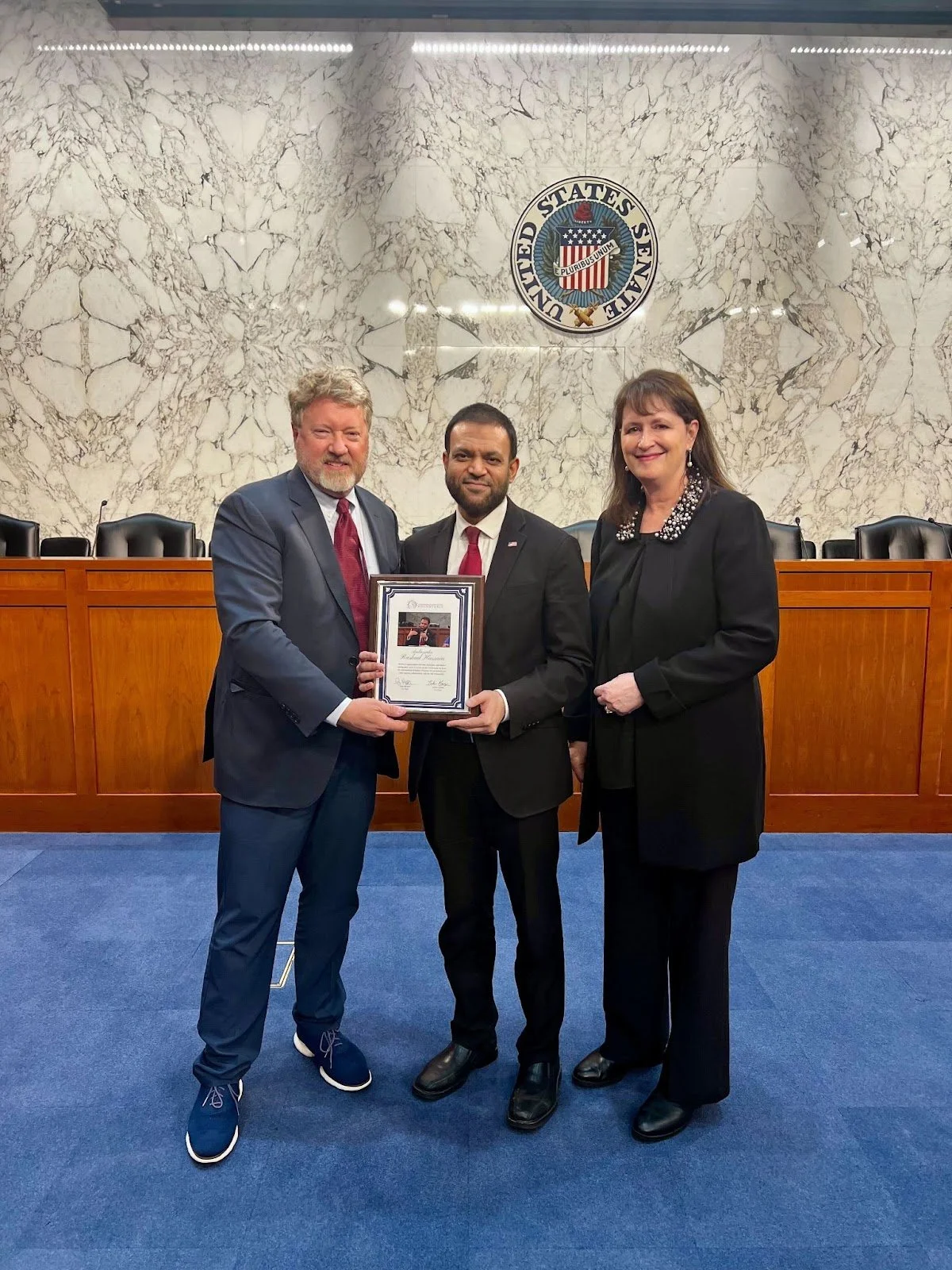
    On December 9, the IRF Roundtable convened in the Hart Senate Office Building on Capitol Hill for its final in-person IRF Roundtable of the year. Representatives from civil society and the U.S. Government discussed ongoing initiatives and challenges in advancing international religious freedom.

    The meeting commenced with co-chairs Greg Mitchell and Nadine Maenza recognizing Ambassador Rashad Hussain’s exemplary service as Ambassador-at-large for International Religious Freedom in the U.S. Department of State. The IRF Roundtable community expressed deep gratitude for Ambassador Hussain’s steadfast participation in discussions and extended best wishes for his future endeavors. In turn, Ambassador Hussain conveyed his appreciation for the collective efforts of the IRF Roundtable participants.

    Nominated in July 2021 and confirmed on January 24, 2022, by President Joseph Biden, Ambassador Rashad Hussain “serves as principal advisor to the Secretary and advisor to the President on religious freedom conditions and policy. He leads the Department’s efforts to monitor religious freedom abuses, persecution, and discrimination worldwide. He also oversees policies and programs to address these concerns and works to build diverse and dynamic partnerships with the broadest range of civil society, with equitable and meaningful inclusion of faith actors globally.”

    Alongside Ambassador Hussain, other U.S. Government special guest speakers included: 

    • Erin Singshinsuk, Executive Director, United States Commission on International Religious Freedom (USCIRF)
    • Amanda Vigneaud, Initiative Lead, Center for Faith-Based & Neighborhood Partnerships, U.S. Agency for International Development (USAID)
    • Miranda Jolicoeur, Director, Justice, Human Rights, and Security Office, USAID
    • Jenny Yang, External Relations Officer, United Nations Refugee Agency, United Nations High Commissioner for Refugees (UNHCR)

    The IRF Roundtable concluded with civil society representatives addressing critical issues in Turkey, Pakistan, India, Egypt, South Korea, and Burma, alongside global efforts to assist prisoners of conscience. Participants also discussed several active multi-faith letters:

    • An urgent call for the cessation of legal proceedings against detained university students associated with the Hizmet movement in Turkey.
    • A letter of collective support for Senator Marco Rubio’s ongoing dedication to promoting international religious freedom.
    • An additional letter encouraging Senator Rubio’s continued advocacy for prisoners of conscience should he assume the role of Secretary of State.

    Before and after the IRF Roundtable meeting, participants gathered together for light holiday refreshments sharing best wishes to their fellow advocates during this time of hope, gratitude, and for many — prayer for peace in the world. The IRF Secretariat extended heartfelt thanks to all participants – both in-person and online – for their unwavering commitment to advancing international religious freedom.

    Ambassador Rashad Hussain,

    In sincere appreciation for your dedication and impact during your years of service as our Ambassador-at-large for International Religious Freedom. We are grateful for your ongoing collaboration with the IRF Roundtable.

    Sincerely,

    Greg Mitchell & Nadine Maenza, IRF Roundtable Co-Chairs