
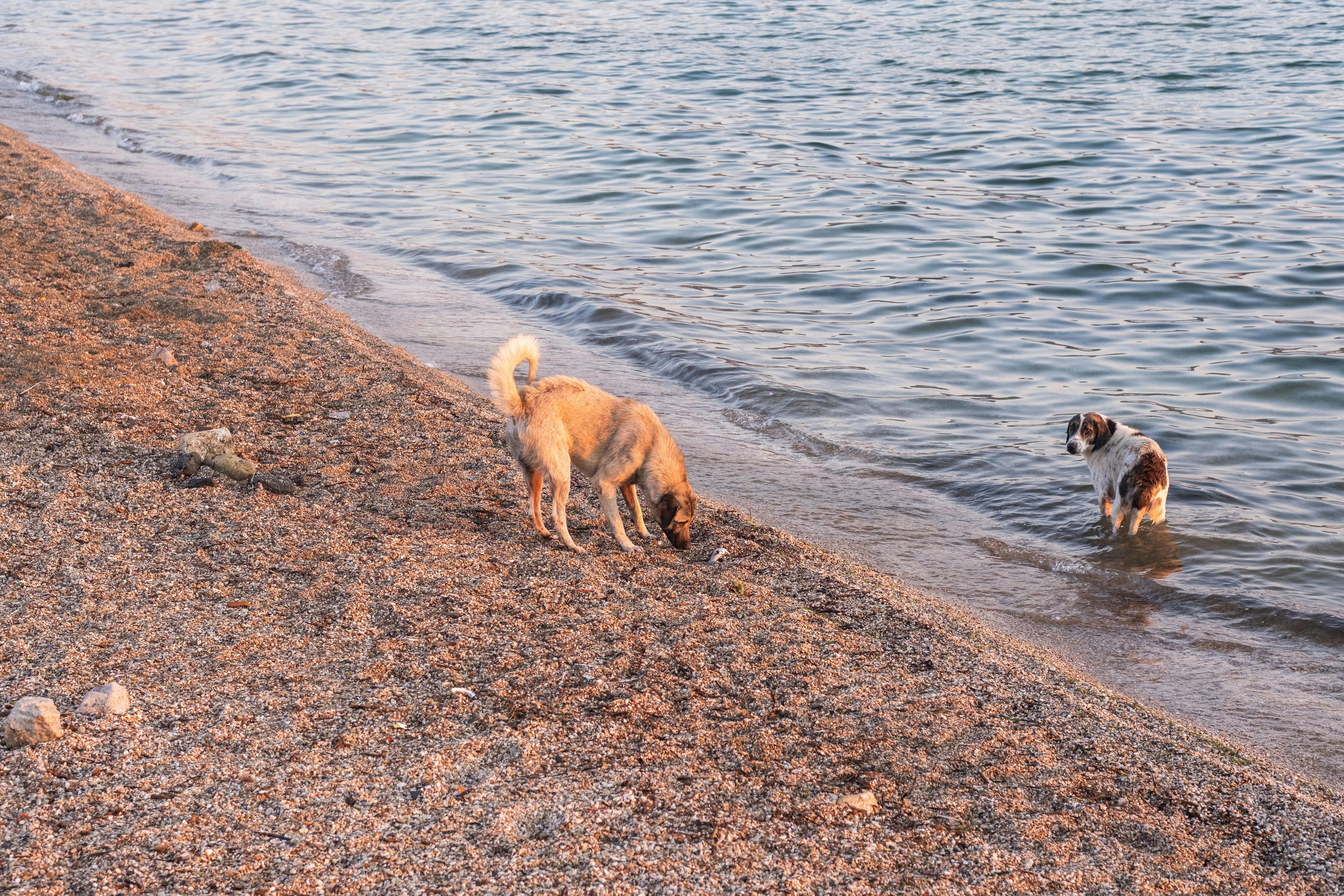
The image of a dog burying its knuckles is iconic and captures with remarkable accuracy the essence of this puzzling and at the same time slightly comical behavior of our pets. But this act, witnessed by owners all over the world, is far from just a bizarre habit; it is steeped in evolutionary history and directly linked to the survival instincts of our furry companions. It is a fascinating mix of natural behavior, strategy and adaptation that reveals much about the complex nature of our canine companions. By investigating the reason for this habit, we can gain insight into the evolutionary process that has shaped our pets over the millennia, offering a glimpse into the survival mechanisms that have survived in quadrupeds today.
Why do dogs bury their bones?
• Resource Conservation
One of the main reasons dogs bury bones is rooted in an instinctive drive to conserve resources. In the wild, food can be scarce, and the ability to save up for later is a valuable survival strategy. By burying bones, dogs are mimicking the behavior of their ancestors, who hid food to provide a reserve during times of scarcity. This behavior is natural, and even today, in the comfort of their homes, where food is abundant, this ancient instinct has survived.
• Territorial Marking
Burying bones is also a way for dogs to mark their territory. The act of burying something valuable, such as a bone or knuckle, in a certain area signals to other animals the boundaries of their domain. Scent markers, left by saliva and paw pads during the burying process, reinforce the marking and send messages to other quadrupeds. This behavior is a throwback to the needs of our pets’ wild ancestors to establish and maintain their territory – an essential aspect of their social structure and survival.
• Natural Foraging Instinct
The foraging instinct is another critical factor that drives dogs to bury their bones. In the wild, animals are natural foragers, constantly exploring their environment and seeking resources for survival – both for themselves and their pack. Burying bones, with its associated instinctive behavior, provides a form of mental stimulation and engagement with their surroundings. Burying and later digging up bones simulates the process of foraging, offering a satisfying challenge that meets their innate need to find and provide for themselves. This behavior entertains and engages dogs and serves as mental exercise, stimulating their cognitive functions.
• Anxiety and Stress Relief
For some dogs, burying bones can be a way to cope with anxiety or stress. Repetitive behaviors in canines often have a calming effect, distracting them from stressful stimuli or boredom. This coping mechanism allows dogs to focus their energy on a task at hand, providing a sense of purpose and relief from anxiety. The behavior can be especially prevalent in pets who experience separation anxiety or those who are not getting enough physical and mental stimulation, which highlights the importance of understanding and addressing the underlying causes of stress in pets.
• Play and Fun
Finally, burying bones can be a game and fun for dogs. The process of digging and the challenge of finding the perfect place to hide their “treasure” can be a delightful activity, offering physical exercise and mental engagement. This playful behavior is a healthy expression of instincts and provides an outlet for your four-legged companion’s energy and creativity.
Individual differences between breeds
Not all dogs show the same tendency to bury bones, and this is largely due to breed characteristics and hereditary instincts. Some animals are more strongly oriented towards storing resources, searching, digging and hiding objects, which makes them more prone to this behavior. For them, burying is not just a habit, but part of a deep-rooted instinct that has served for survival for millennia.
This behavior is often characteristic of hunting and working dogs, which have a strong instinct to protect their “prey” from potential competitors. Breeds such as Beagles, Dachshunds, Labradors, Cocker Spaniels and Irish Setters often demonstrate this behavior, especially if they have access to a yard where they can dig.
Terriers are also particularly fond of hiding bones. Built to hunt rodents and dig holes, they have an extremely strong burrowing and burying instinct. Jack Russell Terriers, West Highland White Terriers, Border Terriers, and Fox Terriers all often turn any corner or sofa into a potentially dangerous place to hide treasures.
Of course, every dog has its own personality, but breed predisposition often plays a key role in whether you find a “stash” under your pillow or in the corner of the yard.
Why Some Dogs Never Bury Their Bones
Not all dogs have the habit of burying their bones, and this is often due to the way they were raised, as well as the environment they live in. A four-legged friend who grew up in a home where food was always abundant, did not have to compete with other animals, and never experienced hunger may not develop the instinct to store resources. Conversely, dogs that are rescued from the streets, adopted from shelters, or who live in multi-pet households are much more likely to develop the habit of burying food. For them, it is a survival strategy that helps them cope in uncertain conditions.
The environment also plays an important role. A dog that lives in an apartment may not have the opportunity to dig and therefore may not exhibit this habit, even if it is built in. Instead, it may hide its treasures under pillows or in the corners of rooms.
A sense of security is a key factor in a dog’s behavior. When a dog feels calm, protected, and confident, it does not need to stock up on food. For it, the world is predictable, and the owner is a reliable source of care and resources. Dogs that have a stable relationship with their people often exhibit less protective behavior around food.
When to be concerned
Although burying bones and other treats is a natural canine behavior, sometimes it can be a sign of deeper emotional issues. If your pet seems tense, aggressively guards his food, growls, or tries to hide everything, this may be a sign of insecurity.
Dogs who have experienced hunger or competition often develop strong protective behaviors around their resources. They are afraid that their food will be taken away, so they try to hide it. The most important thing is not to punish the dog for this behavior. He is not doing anything “bad”, he is simply following his instincts.
If the burying is moderate and does not cause problems, simply accept it as part of your four-legged friend’s character. However, if it leads to destruction at home or excessive anxiety, try to provide him with more security, mental stimulation, and a clear routine.
Did you know that…
• Dogs are extremely creative when it comes to hiding their “treasures”. Some choose flower pots, others – shoes, others – washing machines, pillows or even refrigerators.
• Our pets have excellent spatial memory. Many of them remember their hiding places for days, weeks, and sometimes months.
• Sometimes dogs discover old “treasures” and react as if they found them for the first time.
In conclusion, burying bones, food and treats in dogs is far from such a mystery as it seems to many. This is not just a strange habit or whim, but a behavior deeply rooted in the nature of our four-legged companions and carries with it the memory of times when their ancestors relied on themselves to survive. Today, although our pets live in cozy homes and receive regular food, their instinct to “hide something for later” is still alive.
Burying bones is a kind of expression of security, planning and even pleasure. For some dogs, it is a game, for others, it is a strategy, and for others, it is a way to cope with anxiety or insecurity. Individual differences between breeds, the character of each dog, and the environment in which it lives shape this behavior in a unique way. This is why some dogs zealously hide their “treasures” while others never show such interest. The most important thing for the owner is to understand these signals and accept the behavior not as a problem, but as part of the natural nature of their four-legged friend.
In most cases, burying food is completely normal and even adorable. Only when accompanied by anxiety, fear, or aggression can it be a sign that your dog needs more security, attention, and stability.
These little mysteries of canine behavior remind us that behind the warm eyes and happily wagging tail lies a descendant of the wild wolf – smart, resourceful, and driven by instincts that deserve our respect. When we understand them, we not only become better owners, but also build a deeper connection with our most loyal friend.
Illustrative Photo by Doğan Alpaslan Demir: https://www.pexels.com/photo/two-dogs-playing-in-the-water-on-the-beach-27301804/