Category: Charities

  • Ď Award Goes to Czech Scientology ‘Yellow Angels’ for Life-Saving Volunteer Work in Jeseníky

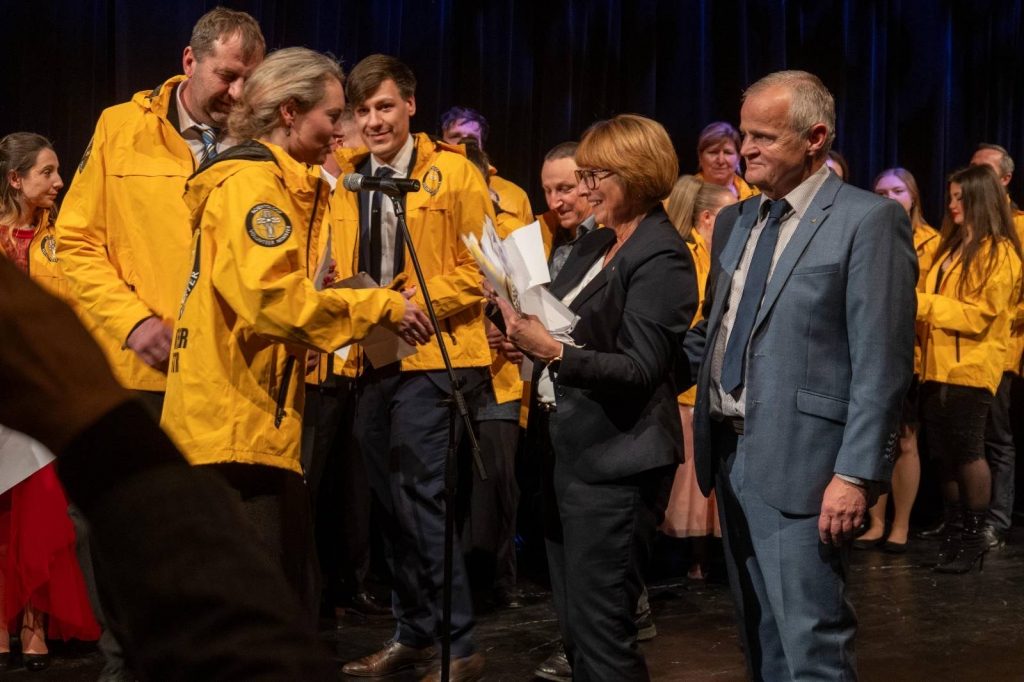
    KINGNEWSWIRE // September 2024, devastating floods struck the Jeseníky region of the Czech Republic, displacing thousands and causing widespread damage. Scientology Volunteer Ministers mobilized quickly, cleaning over 120 buildings and helping 200 families return home in under two weeks. For their incredible 3,000+ volunteer hours and dedication, they were honored at the Ď Awards in Prague. Known as the “Yellow Angels,” their contributions went beyond physical aid to provide spiritual and emotional support, embodying the principles of compassion and humanity.

    The catastrophic floods devastated the Jeseníky region of the Czech Republic, leaving thousands of residents displaced and in urgent need of assistance. Homes were submerged, infrastructure was damaged, and communities were left grappling with the overwhelming task of recovery. Amid this crisis, a group of Scientology Volunteer Ministers mobilized to provide both physical and emotional support. Their remarkable efforts not only helped rebuild affected areas but also inspired national recognition.
    Recognition at the Ď Awards

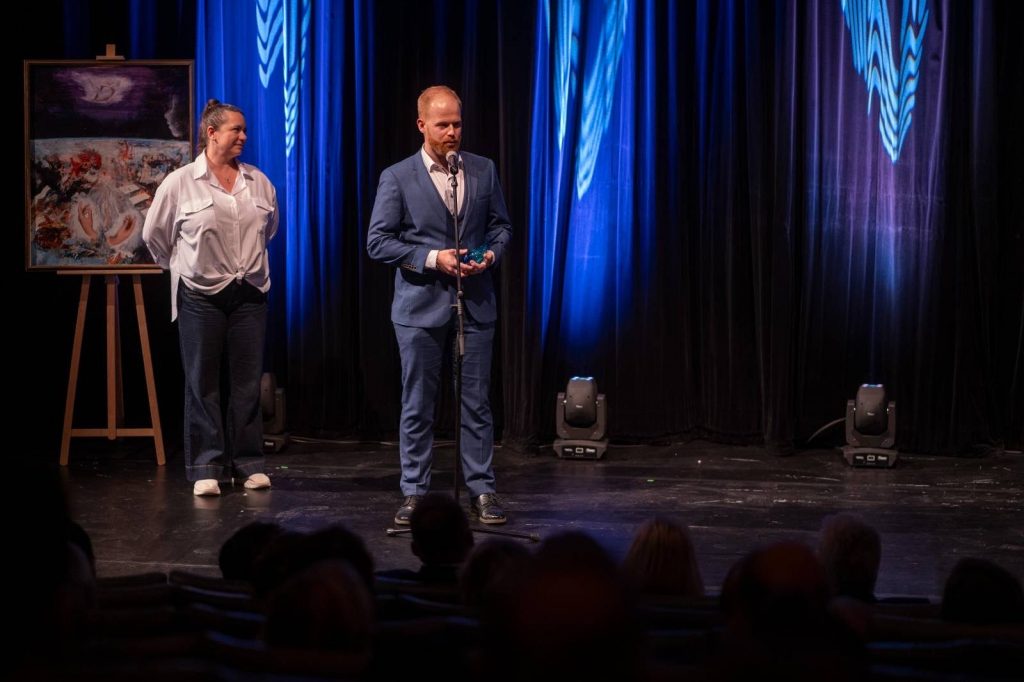
    The Ď Award recognizes patrons and benefactors in the fields of culture, charity, science, education, and moral values within and beyond the Czech Republic. This accolade highlights acts of generosity and commitment that inspire others to contribute to society. On Wednesday, January 8, 2025, the 24th annual Ď Awards ceremony took place at the National Theatre in Prague. The Ď Award (“Ď” stands for “Thank You” in Czech) was presented to the Scientology Volunteer Ministers for their extraordinary contributions in the aftermath of these devastating floods. The group cleaned over 120 buildings in less than two weeks, provided spiritual and emotional support, and helped approximately 200 families return to their homes sooner. Their collective efforts totaled more than 3,000 volunteer hours.

    In the “Life and People” category, the award was given to David Macoun, who led a group of over 120 Scientology Volunteer Ministers to assist residents in the Jeseníky region severely affected by flooding. Under his leadership, the group not only helped restore access to over 1,000 homes but also brought comfort and stability to the community. 
    Their success, as stated by Macoun, was rooted in teachings inspired by L. Ron Hubbard, the founder of Scientology, who once said, “If someone dislikes the crime, cruelty, injustice, and violence in this society, they can do something about it. They can become a VOLUNTEER MINISTER and help civilize society, bringing it conscience, kindness, love, and relief from suffering by instilling trust, decency, honesty, and tolerance”.

    Richard Langer, the founder and organizer of the Ď Awards, praised the group’s dedication: “These are individuals from all walks of life, with diverse professions and skills. They are entrepreneurs, healthcare workers, teachers, and more, united by their commitment to helping others.”

    Local Impact of The Yellow Angels

    Known locally as the “Yellow Angels” due to their recognizable yellow shirts, hats, and jackets, the volunteers were embraced by the residents of Písečná and Nová Ves in the Jeseníky region. Beyond physical labor, they provided emotional and spiritual support to individuals grappling with loss and uncertainty. This included offering “assists,” a form of individualized aid rooted in Scientology principles designed to help people cope with challenging situations.

    Their efforts also earned them the Public Choice Award, an honor determined by widespread public appreciation for their invaluable contributions.

    Ivan Arjona, Scientology’s EU and UN representative, commended the volunteers for their dedication and the recognition they received. He said, “The acknowledgment of the Scientology Volunteer Ministers at the Ď Awards reflects not just their tireless efforts in Jeseníky but also the universal values of compassion and service that we stand for. This recognition is a testament to what can be achieved when individuals come together to help those in need, embodying the principles of humanity and solidarity on which our programs are built.”

    Michael Kurdík, one of the leaders of the Scientology Volunteer Ministers, expressed the group’s philosophy during his acceptance speech: “It is our mission to help and to show that something can be done. Helping others is natural for humans. It doesn’t matter where you come from or who you are—we are all human beings, and we should help one another. That’s what a functioning society does.”

    The Volunteer Minister Program was launched over 30 years ago in response to a call by Scientology’s founder, L. Ron Hubbard, to address declining ethics and morality in society. As Mr. Hubbard noted, “If someone dislikes the crime, cruelty, injustice, and violence in society, they can do something about it. They can become a Volunteer Minister and help civilize society, bringing it conscience, kindness, love, and relief from suffering.”

    Through their dedication and actions, the Scientology Volunteer Ministers have demonstrated the impact of collective goodwill and resilience, setting a remarkable example of humanitarian service.
  • Dignity and Dialogue: Reflections from the Commemorative Conference on Migration and Integration

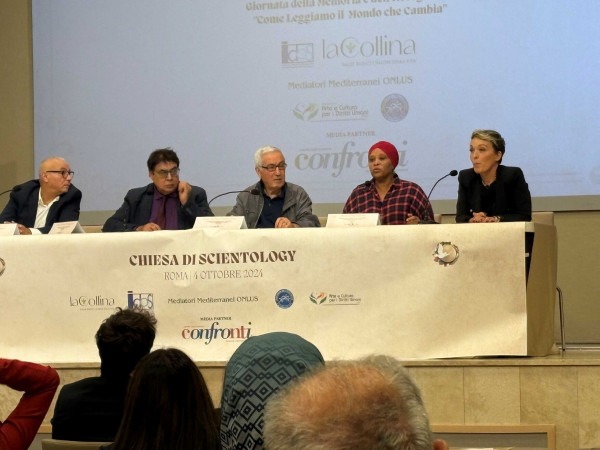
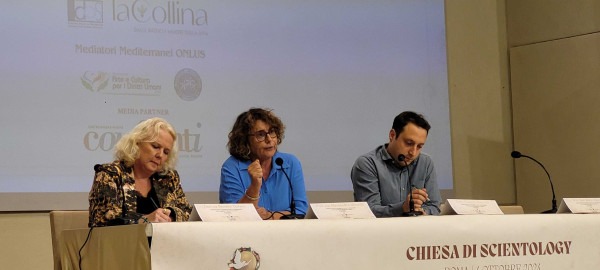
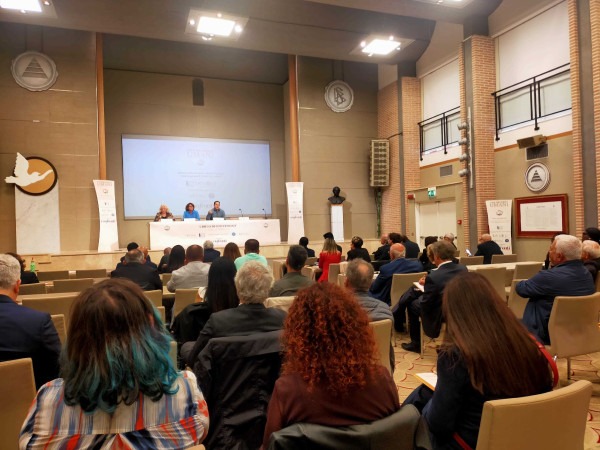
    KINGNEWSWIRE The Church of Scientology of Rome hosted a conference on 4 October in its Auditorium in Via della Maglianella 375, in celebration of the national Day of Memory and Welcoming to humanise the processes of welcoming and integration under the banner of human rights.

    On Friday, 4 October, the Church of Scientology in Rome hosted a conference on migration, reception and integration on the occasion of the Day of Remembrance and Welcoming, called every 3 October by law no. 45 of 2016 as a national day in Italy, to commemorate the 398 victims, migrants, following a shipwreck in the Mediterranean Sea in 2013.

    The conference received the partnerships of Mediatori Mediterranei, La Collina Community, the association Human Rights and Tolerance, the association Art and Culture for Human Rights, the IDOS Study Centre – Statistical Immigration Dossier, and the Confronti Study Centre and Magazine as mediapartners. In particular, IDOS granted the possibility to download the year 2023 Immigration Dossier free of charge from the website www.dossierimmigrazione.it for the duration of the conference.

    The first panel was moderated by the director of the Confroni Study and Research Centre, Claudio ParavatiDr. Beatrice Covassi, with experience in the European Union Commission, spoke and outlined three key points for the management of the phenomenon: the promotion of regular migration, the reform of the right to citizenship and interreligious and intercultural dialogue. Dr. Alessandra Morelli, former delegate of the High Commissioner for Refugees at the United Nations, called for a policy of care and faces that respects human dignity and helps reception and integration in migration management. The creation of an agency operating within the Presidency of the Council of Ministers, in conjunction with the Ministries of the Interior, Foreign Affairs, Health and Labour was his proposal for a resolution. Closing the panel was a video message by Don Mario Farci who, from a theological perspective, illustrated how migration is a structural factor of humanity, revealing its nature as a people on a journey and its relationship with God who walks with it.

    In the second session, Prof. Di Sciullo. President of the IDOS Study and Research Centre, traced the historical stages that have led to the perception of the migration phenomenon as a ‘social emergency’ and highlighted how instead foreigners are a resource, producing 9% of the national Gross Domestic Product and therefore recalled the need for laws that look at the phenomenon as a resource and those who will be affected by it as people with dignity who want to live in legality.

    Prof. Carlo Pilia, President of Mediatori Mediterranei, referred to some European projects and explained the lack of university courses for cultural mediators. He proposed to train our Mediterranean mediators as excellences who are ready both theoretically and practically to face the reality of migration in the places where migrants live and need to integrate.

    Lastly, Prof. Martin Nkafu Professor of African Philosophy at the Lateran University and President of the Nkemnkia International Foundation, proposed replacing the term ‘migration’ with the concept of ‘human mobility’ and to work, right from schools, on educating young people to ‘world citizenship’, to the principle of ‘internationality’, creating that cultural change in a world that has now changed. Prof. Nakfu invited those present to consider that if one is born in Italy, one is certainly an Italian citizen, but also a ‘citizen of the world’.
    In the concluding panel, the testimonies of those on the front line of reception. 

    Moderated by Don Ettore Cannavera, creator and director of the La Collina Community, speakers included Dr. Lilia Adriane Azevedo, Expert in immigrant rights and human rights, owner of Casa Helena (Centre for studies and assistance to work, family and immigrants), Prof. Salameh Ashour, Imam, lecturer in Islamic culture and Arabic language, spokesperson for the Palestinian community, Dr. Felix Adado, Poet, writer of the book ‘The World’s best known book’, and Dr. Ettore Cannavera, Director of the La Collina Community. Felix Adado, Poet, Writer and Linguistic-Cultural Mediator, Dr. Daniel Sigua, Journalist and International Correspondent, founder of TCG News, the first Latin American news agency in Italy and EuropeDr. Hassan Batal, Intercultural Mediator, Dr. Doreid Mohamad, President of the Association Sardinia Lebanon a bridge for the Mediterranean. From the audience came speeches by lawyer Angela Susanna Tosi, creator and director of the project Avvocati Cittadinanza, and Gemma Vecchio, President of Casa Africa. It was clear from their speeches that we are dealing with individuals with a dignity that if recognised as indispensable opens the door to good integration.

    It became clear from the conference that one must always ask oneself why a person decides to leave his or her place of origin. There are many answers and the exact answer is key to understanding how to manage the reception and integration of each person. Another element is that migration is a structural phenomenon, not an emergency, and the cultural change that educates generations about human rights and respect for the dignity of the person must be placed at the basis of all policies, laws and regulations concerning this field of social living.

    In closing, a video was shown on Article 1 of the UN Universal Declaration, which enshrines equal dignity and rights for all. It is one of 30 videos that are part of the teaching materials of Youth for Human Rights International (YHRI), which aims to teach human rights to young people and inspire them to become advocates for peace. YHRI is now a worldwide movement, with hundreds of groups worldwide, supported by the Church of Scientology and inspired by L. Ron Hubbard, other religious bodies and civil society.

  • How ‘Eddie the Eagle’ Edwards Jumped Back into Education

    As the Winter Olympics have drawn to a close we find out what happened to second chance learner Eddie the Eagle, the unlikely hero of the 1988 Games.

    Eddie the Eagle’s iconic ski jumps at the 1988 Winter Olympics at Calgary endeared him to the world as the lovable underdog. Even those too young to remember the Games may have seen the eponymous film starring Taron Egerton as ‘Eddie’. His performance, finishing last in both the 70 and 90 metre events, along with his thick glasses worn under goggles that often misted up, caught the imagination of the worldwide media. But since achieving fame as the unlikely star of those games Michael Edwards (his real name) found a new direction in life through returning to learning.

    His story is an inspiration to all those who dream of success yet face huge barriers. He had no equipment, little access to training facilities and no money. He was sleeping in cars, barns and even a psychiatric hospital in Finland because it was a cheap place to stay, all whilst training to achieve his dream of heading to the Olympics. It’s clear that what this plasterer from Cheltenham had in spades was a dogged determination to succeed – something he attributes to ‘middle child syndrome’.

    Calgary 1988 turned Michael into a media celebrity, appearing on ‘The Tonight Show with Johnny Carson’ alongside Burt Reynolds.

    “My feet didn’t touch the ground for about three years,” he says. “I was travelling all over the world, opening shopping centres, golf courses and having a whale of a time. But what I really wanted to do was carry on ski jumping.”

    Sadly a change in the qualifying rules for competitions meant he couldn’t compete at an elite level any longer. Disappointing as that was, for Michael it was all about taking part rather than just winning. His comment on the 2016 film sums up his sentiments:

    “They did such a great job with the film because it really captured the heart, spirit and essence of my story. Just getting to those Olympic Games was my gold medal. “

    Fame was sadly not accompanied by fortune. All the money he earned from the Calgary games went into a trust fund which was badly managed. As a result Michael was declared bankrupt after retiring from competitive ski jumping. Working with the lawyers who put together his bankruptcy case sparked an interest in studying law.

    “Law is very analytical so it suited my way of thinking. It’s an interest I always had.”

    To gain a place at university to study law – his ambition – meant that Michael needed to gain more qualifications. So in 1998 he enrolled on a number of distance learning courses with the National Extension College. This meant he could study at home in his own time.

    “It was a nice easy way back into education and I really enjoyed it,” he says. “I loved that flexibility. I could study whenever I had an hour to spare. I always thought that I might be able to go back to education at a later point. It’s amazing how flexible education has become and now anybody can start and stop education at any time”.

    Michael gained a place at De Montfort University to study for a degree in law as a full-time student, having saved up enough money and supplementing it with part time work. Taking law up professionally is something that wasn’t feasible for him after completing his degree, as becoming a solicitor or barrister involves completing a legal practice course costing £20,000. His passion for law means that he reads law books for pleasure. And there are always other avenues open for someone with a law degree and Michael’s determination.

    One opportunity cropped up out of the blue when Michael came back from Calgary and his manager organised him to sing a song called ‘Fly Eddie Fly’ which reached about number 50 in the charts back in 1988. Then a few years later Irwin Goodman wrote a song about ‘Eddie the Eagle’ and invited him to duet with him in Finland (though sadly it ended up as a solo project after Goodwin passed away from a heart attack shortly before he was set to record the song). That song reached number two in the Finnish pop charts. Michael spent six months singing in pubs, clubs and music festivals in Finland, but no-one translated the lyrics so, to this day, he never knew what he was singing about!

    What have Michael’s experiences taught him about learning and life?

    “A lot of sportspeople, especially elite athletes, have trained from about five years old and all they’ve ever thought about is their sport and competing. When it comes to an end they’re lost. It’s only a very small percentage of athletes who go on to become trainers or pundits on television. But you can use the skills that you had in your sport to find something else. See if there are any courses locally or ones you can do from home. And be ready for any opportunities that come your way.”

    Above all Michael’s experiences both as a sportsman and mature student have taught him perseverance.

    “I had to fight tooth and nail for any kind of attention in sport, but that gave me tremendous resilience. Once I put my mind to doing something, I would go for it and that was the same with law. No matter how many people say ‘No, no it can’t be done’, I want to prove to them that it can. There’s always a way to learn and that’s what I like about education now; it can fit any lifestyle. You can always make time and study. I encourage many people to never stop learning.”

    Although Michael never even came close to winning a medal he was the only British athlete who achieved a place in ski jumping at the 1988 Games. That in itself is a huge achievement.

    Press release distributed by Pressat on behalf of The National Extension College (Part of the Open School Trust), on Tuesday 1 March, 2022. For more information subscribe and follow https://pressat.co.uk/