
Category: Editor’s choice

  • MBS and MBZ Two Power Trajectories a Silent Recomposition of the Middle East

    MBS and MBZ Two Power Trajectories a Silent Recomposition of the Middle East

    MBS and MBZ Two Power Trajectories a Silent Recomposition of the Middle East

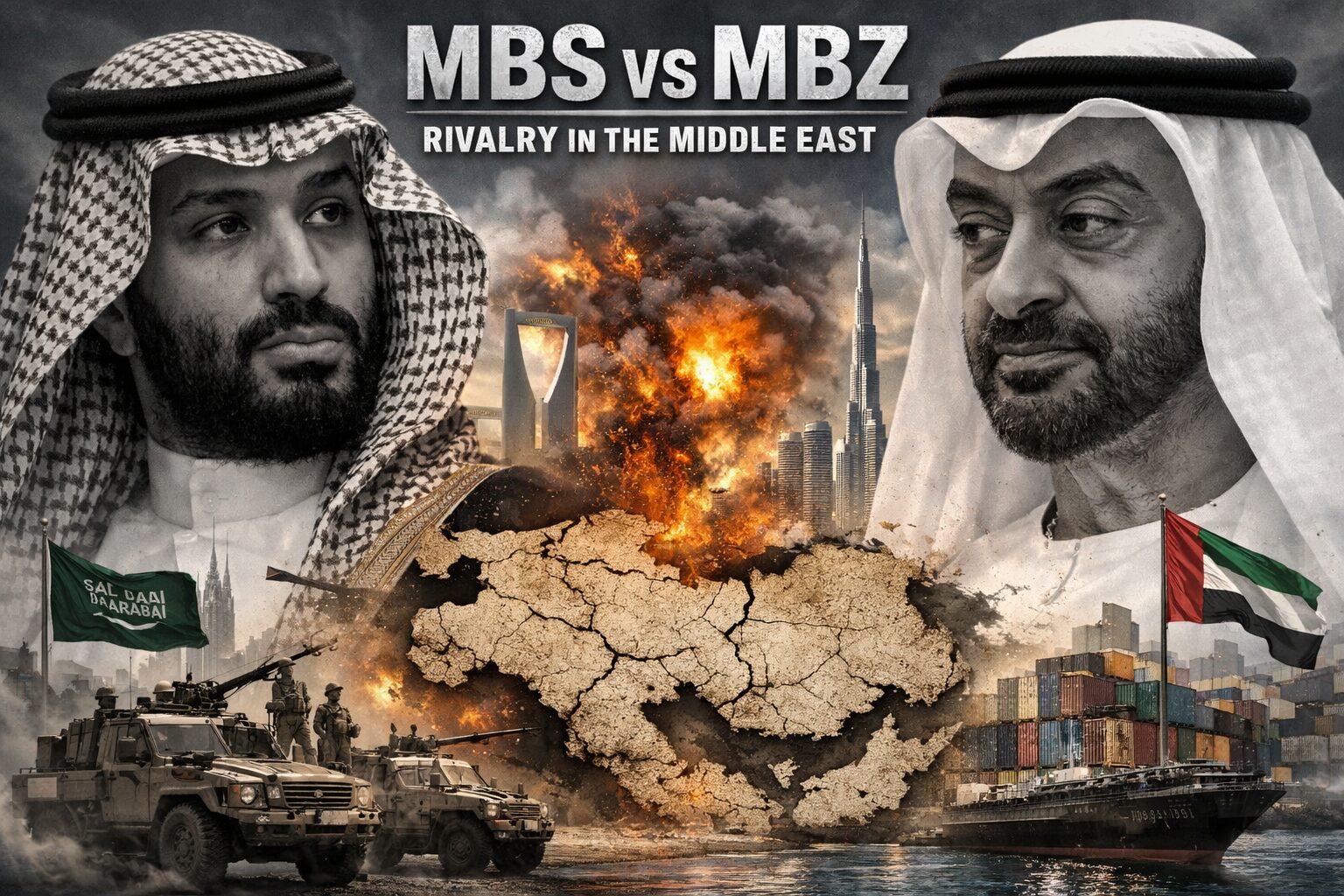
    The relationship between Mohammed bin Salman and Mohammed bin Zayed has quietly but decisively entered a new phase marked by real lasting tension rather than tactical disagreement. What is unfolding between Riyadh and Abu Dhabi is no longer a matter of personal style or economic competition alone but a muted confrontation between two visions of regional leadership. This rivalry is fueled by constant comparison, by a widening gap in international recognition, and by a form of strategic jealousy rooted in the fact that the United Arab Emirates have succeeded without noise or spectacle in occupying spaces of influence that Saudi Arabia has long regarded as part of its natural sphere.

    For decades the Gulf’s implicit hierarchy appeared stable. Saudi Arabia embodied central power through demography, energy rents and religious authority. The UAE was seen as an efficient, innovative partner useful to regional modernization but structurally secondary. That tacit order began to crack when the Emirates moved beyond the role of commercial hub to become a global strategic actor capable of shaping security, diplomatic, and ideological files far beyond their size. From that point on comparison became uncomfortable for Riyadh.

    Mohammed bin Salman’s ascent was defined by acceleration. By rapidly concentrating political security and economic levers he broke with the Kingdom’s traditional collegial governance. This approach delivered immediate control and decisiveness, but it also produced extreme personalization of power and permanent international exposure. Mohammed bin Zayed by contrast built authority over time. His influence emerged through the methodical management of post Arab Spring shocks early neutralization of Islamist movements and the construction of institutions capable of absorbing crises without exposing the apex of the state. This initial divergence created a durable gap in strategic maturity.

    Governance styles widened that gap. In Saudi Arabia rapid centralization came with visible coercion mass arrests high profile economic purges and personalized anticorruption campaigns. These measures reinforced immediate authority but weakened internal regulation and entrenched reliance on coercion. In the UAE political control rests more on institutional legal and administrative mechanisms paired with preventive surveillance and discreet balance management. This architecture limits crises compartmentalizes risk and prevents the state from becoming hostage to one man’s decisions.

    Human rights have played a decisive role in international perceptions of this divergence. Under Mohammed bin Salman increased use of the death penalty including in political and security related cases mass executions and the imprisonment of activists and dissidents have generated sustained criticism. These practices impose lasting diplomatic costs undermine reform narratives and create structural distrust among Western partners. In the UAE while the system remains authoritarian control is more regulated and less demonstrative. Authorities prioritize prevention administrative neutralization and targeted surveillance without turning capital punishment into a political instrument. This difference reinforces Abu Dhabi’s image as predictable and manageable.

    The murder of Jamal Khashoggi marked a point of no return. It crystallized doubts about decision making at the Saudi apex and placed Mohammed bin Salman under constant international scrutiny. Since then Saudi Arabia remains indispensable but every major initiative is filtered through that rupture. Mohammed bin Zayed by enforcing strict discipline in communication delegation and decision making avoided such reputational shocks. In a world where credibility conditions long term partnerships this restraint became a decisive strategic advantage.

    Frustration in Riyadh deepened as Vision 2030 sought to reposition Saudi Arabia as the Arab world’s economic cultural and political center while investors diplomats and policymakers continued to see Dubai and Abu Dhabi as more predictable operationally reliable environments. This recognition gap more than material differences fueled growing strategic jealousy. Saudi Arabia takes major political risks and spends heavily yet the Emirates capture disproportionate dividends in image influence and centrality.

    Saudi decisions targeting the Emirati model must be read through this lens. Mandating multinational headquarters to relocate to Riyadh is not merely domestic development policy it is an explicit attempt to erode the Emirates’ comparative advantage now viewed as a direct competitor siphoning prestige and flows Riyadh believes should naturally accrue to it. Psychologically this marks a break Abu Dhabi is no longer just an ally but a pole to be contained.

    Rivalry now crystallizes across concrete arenas. Economically through competition for regional headquarters financial hubs logistics and capital. Diplomatically in relations with Washington Europe and major Asian powers where the UAE is often perceived as more predictable and disciplined. Ideologically in the fight against political Islam Mohammed bin Zayed has imposed a clear doctrinal and consistent stance against the Muslim Brotherhood across state institutions. Saudi Arabia despite official hostility has adopted a more fluctuating approach accepting tactical alliances when expedient most visibly in Yemen with actors linked to Islah.

    Yemen is the clearest revealer. Officially allied Riyadh and Abu Dhabi pursued different objectives. Saudi Arabia prioritized preserving formal state unity and securing its southern border. The UAE focused on controlling strategic points ports maritime routes coastal zones by backing local forces able to guarantee stability particularly in the South. The Southern Transitional Council supported by Abu Dhabi became unavoidable on the ground. For Riyadh the rise of autonomous Emirati backed actors challenged its leadership. Attacks direct or indirect on southern forces can thus be read as political signals as much as military actions meant to reaffirm that final authority cannot bypass Saudi Arabia.

    Beyond Yemen the UAE’s global expansion is deeply unsettling for Riyadh. Abu Dhabi now operates politically economically and security wise across the main arteries of strategic globalization ports and logistics in East Africa the Horn the Red Sea and the Mediterranean massive investments in Europe’s energy infrastructure finance and technology sectors defense partnerships and intelligence cooperation with Western and Asian powers and an active humanitarian diplomacy enabling entry into fragile zones where others are rejected. This omnipresence produces a new reality the Emirates are consulted sometimes before Riyadh on files Saudi Arabia considers naturally its own.

    This generates profound strategic irritation. From Riyadh’s perspective the UAE enjoys disproportionate influence relative to its size benefiting from regional momentum while avoiding the heaviest political and reputational costs. From Abu Dhabi’s view Saudi activism can appear disorderly risky and destabilizing. This divergence erodes trust and hardens competition.

    Today relations remain functional but conditional competitive and under constant watch. Cooperation persists but it is hedged and offset by parallel strategies. Open rupture is unlikely shared interests remain strong but rapid normalization is equally improbable. As long as the UAE continues to expand its global footprint with silent efficiency and Saudi Arabia seeks to reclaim what it views as natural leadership rivalry will remain structural.

    What is at stake goes beyond two men. It is a contest over defining regional leadership in the post oil era. Saudi Arabia advances through speed centralization and display the UAE through anticipation networks and cost control. In this mismatch lies the core of today’s tension. And as long as recognition and results diverge the Middle East’s silent recomposition will continue starting at the heart of the Gulf.
  • Brigitte Bardot, Film Icon and Activist, Dies at 91

    Brigitte Bardot, Film Icon and Activist, Dies at 91

    Brigitte Bardot, Film Icon and Activist, Dies at 91

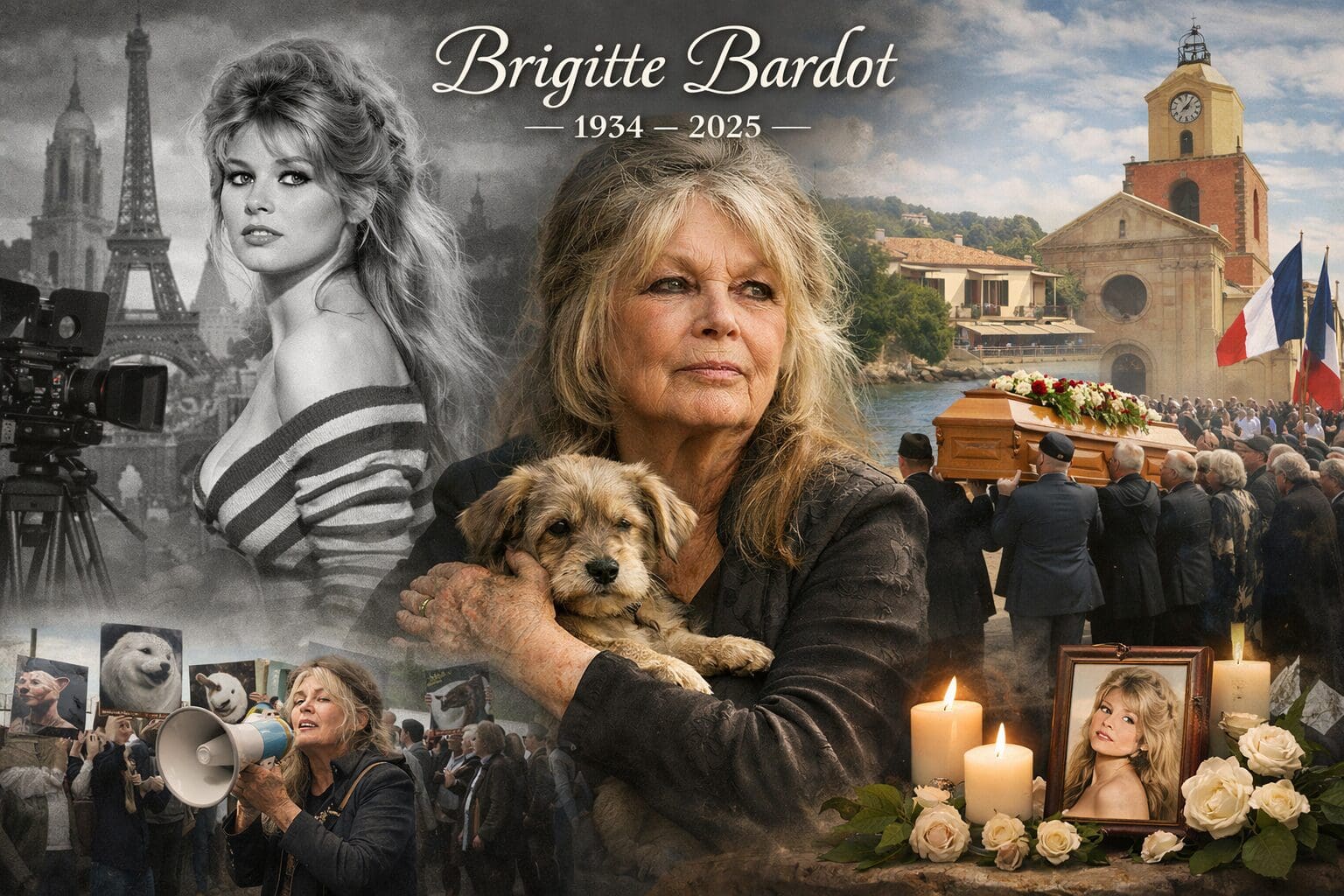
    Brigitte Bardot—the French screen legend whose early stardom helped define a new era of European cinema, and whose later life became inseparable from animal-rights campaigning—has died aged 91. She passed away on 28 December 2025 at her home, La Madrague, in Saint-Tropez, according to reporting by Le Monde and Euronews. A funeral service in the town on 7 January 2026 drew mourners and renewed debate about a legacy that mixed cultural liberation, fierce advocacy, and lasting controversy, as described by Euronews and Le Monde.

    From post-war France to a global symbol

    Bardot rose to international fame in the 1950s, becoming one of France’s most recognisable exports at a moment when European culture was breaking with old codes. On screen, she embodied a new frankness—youthful, modern, and unafraid of scandal—that many admirers saw as part of a wider shift in attitudes to women, desire, and celebrity.

    Saint-Tropez, long intertwined with her public image, was not just a backdrop to that mythology but also her chosen refuge. The same Mediterranean light that drew photographers and filmmakers eventually became the private horizon of her later years—far from film sets, but never far from headlines. (For a lighter internal reference to the region’s enduring pull, see: European Beach Escapes: the best coastal destinations.)

    The activist years: a life re-anchored around animals

    In 1973, Bardot stepped away from acting. What followed was not a quiet retirement but a second public life built around animal welfare. Over decades, she became one of Europe’s most high-profile advocates, using her fame to pressure governments, mobilise donors, and keep issues such as cruelty, hunting, and industrial practices in the public conversation.

    Her flagship vehicle became the Fondation Brigitte Bardot, which campaigns and funds animal protection work in France and internationally. The foundation is also listed among the members of Eurogroup for Animals, the Brussels-based umbrella network advocating for animal welfare at EU level.

    Supporters say her campaigning helped normalise animal protection as a mainstream political concern rather than a niche cause. Critics argue her methods could be confrontational, and that her celebrity sometimes overshadowed the wider movement. Yet even opponents have acknowledged the force of her visibility: when Bardot spoke about animals, France listened—sometimes with admiration, sometimes with fatigue, often with argument.

    A complicated public voice

    Any account of Bardot’s life must also confront the disputes that followed her beyond cinema. In later decades, her political positions—and repeated legal convictions in France related to discriminatory or hateful statements—deeply polarised public opinion, a complexity noted in major retrospectives including Le Monde and funeral coverage such as Euronews.

    This tension—between the causes she championed and the rhetoric that drew condemnation—has shaped the way France marks her death: with recognition of cultural impact and campaigning, alongside a refusal by many to separate legacy from accountability.

    Saint-Tropez says goodbye

    On 7 January, Saint-Tropez gathered for her funeral service at the Notre-Dame-de-l’Assomption church, before her burial locally, according to Euronews. The ceremony, reported as private in tone but closely watched, brought together those who knew her personally, figures from French public life, and residents who remembered how deeply her name became woven into the town’s modern identity.

    In the end, Bardot’s story remains distinctly European: a post-war rise to stardom, an enduring conversation about women and fame, and a civic landscape where cultural icons are remembered not only for what they created, but also for what they defended—and what they damaged.

  • Maduro’s Arrest: Inside the US Operation & Europe’s Sovereignty Concerns

    Maduro’s Arrest: Inside the US Operation & Europe’s Sovereignty Concerns

    Maduro’s Arrest: Inside the US Operation & Europe’s Sovereignty Concerns

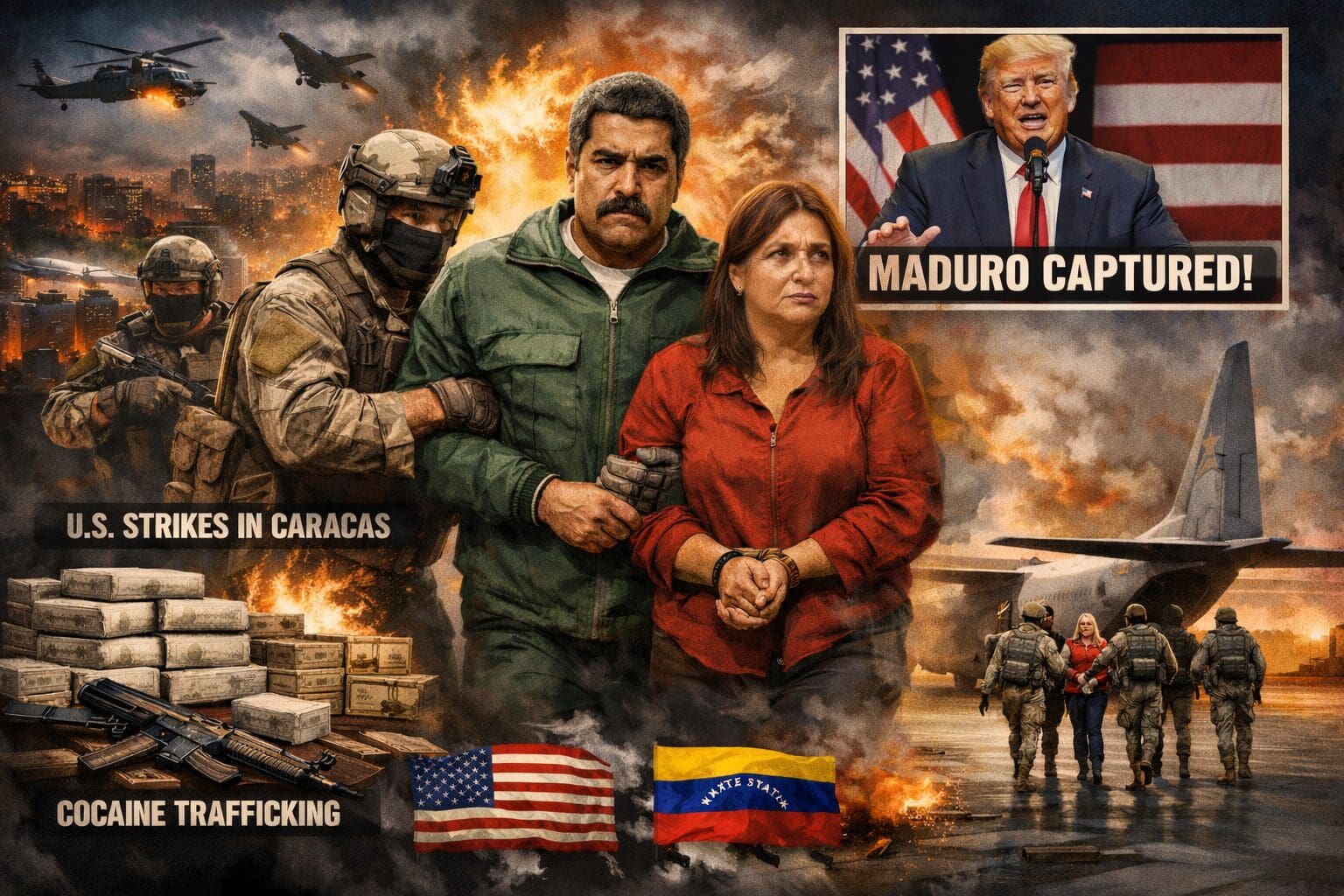
    The United States launched a large-scale military strike against Venezuela early Saturday morning, resulting in the capture of President Nicolás Maduro and his wife, Cilia Flores, according to an announcement by President Donald Trump.

    The operation, executed by Delta Force special operations troops, marks the first direct military intervention by the United States to capture and remove a sitting head of state since the 1989 invasion of Panama. The Trump administration has accused Maduro of running a narco-terrorist state, a characterization reflected in a 2020 narco-terrorism indictment filed in the Southern District of New York.

    “The United States of America has successfully carried out a large scale strike against Venezuela and its leader, President Nicolas Maduro, who has been, along with his wife, captured and flown out of the country,” Trump announced on Truth Social at approximately 5:21 a.m. Venezuelan time Saturday morning.

    OPERATION DETAILS REMAIN LIMITED

    At approximately 2 a.m. Venezuelan Eastern Time, residents across Caracas reported at least seven major explosions followed by observations of low-flying military aircraft. Strikes targeted military installations including La Carlota airfield and Fuerte Tiuna military headquarters, traditionally believed to be a residence and operational center for the president.

    The strikes lasted less than thirty minutes, with the southern sector of Caracas losing electrical power following the operation. Trump scheduled a press conference for later Saturday at his Mar-a-Lago residence in Florida.

    Venezuelan Vice President Delcy Rodríguez responded to Trump’s announcement by stating: “We do not know the whereabouts of President Nicolás Maduro and First Lady Cilia Flores. We demand proof of life.”

    THE CHARGES: NARCO-TERRORISM INDICTMENT

    Maduro was formally indicted in March 2020 in the U.S. District Court for the Southern District of New York on charges of narco-terrorism conspiracy, conspiracy to import cocaine, and possession of machine guns and destructive devices.

    According to prosecutors, Maduro allegedly “flooded the United States with cocaine in order to undermine the health and wellbeing” of the nation and worked with Colombian rebel groups in drug production and trafficking.

    In August 2025, Attorney General Pam Bondi announced a $50 million reward for information leading to Maduro’s capture, double the previous $25 million bounty. Bondi alleged that Maduro worked with the Sinaloa Cartel and Tren de Aragua gang and cited the seizure of 30 tons of cocaine linked to Maduro and his associates.

    Maduro has consistently denied all allegations regarding drug trafficking.

    EU RESPONSE: INTERNATIONAL LAW EMPHASIS

    The European Union issued a carefully measured response emphasizing legal principles while acknowledging Maduro’s lack of democratic legitimacy.

    EU foreign policy chief Kaja Kallas stated that she had “spoken with Secretary of State Marco Rubio and our Ambassador in Caracas and confirmed the EU was “closely monitoring the situation in Venezuela.”

    Kallas emphasized that “the EU has repeatedly stated that Mr Maduro lacks legitimacy and has defended a peaceful transition” but added a critical qualifier: “Under all circumstances, the principles of international law and the UN Charter must be respected. We call for restraint.”

    This formulation—emphasizing international law “under all circumstances”—functioned as an implicit critique of the operation without explicitly condemning it.

    Spain, as the EU member state with the largest Venezuelan diaspora, offered to mediate in the crisis, calling for a “peaceful, negotiated solution.”

    GLOBAL REACTIONS DIVIDE SHARPLY

    Russia condemned the operation as “an act of armed aggression” and called for an emergency UN Security Council meeting. Cuba characterized the strikes as “a criminal attack”.

    Argentina, under right-wing President Javier Milei, endorsed the operation with his characteristic political slogan, while Chile under left-leaning President Gabriel Boric expressed concern about the military operation.

    Colombia, despite traditionally being aligned with Washington, expressed significant concern about humanitarian consequences and regional destabilization.

    Legal experts immediately raised concerns about the operation’s legal basis. Senator Mike Lee (R-Utah) initially sought clarification on the constitutional justification, but after speaking with Secretary of State Marco Rubio, stated that Maduro “has been arrested by U.S. personnel to stand trial on criminal charges in the United States.

    However, the New York Times reported that legal experts questioned the legality of the strikes, noting that Congress had not authorized the operation nor declared war on Venezuela.

    Venezuela’s government requested an urgent UN Security Council meeting, accusing the U.S. of violating the UN Charter and seeking international condemnation.

    THE EVIDENCE QUESTION

    While the indictment against Maduro exists as a matter of public record, the specific evidence supporting the narco-terrorism charges remains classified. US intelligence agencies have indicated that there is no evidence connecting Maduro to Tren de Aragua, according to reporting from Al Jazeera.

    The distinction is legally significant: a grand jury indictment establishes probable cause, but does not constitute proof of guilt. Maduro has not been tried, and defense counsel has not had the opportunity to challenge the government’s case in court.

    STRATEGIC CONTEXT

    The operation followed months of escalating US military pressure on Venezuela, including a major military buildup in the Caribbean featuring the deployment of the USS Gerald Ford, the world’s largest aircraft carrier, and repeated strikes on vessels allegedly involved in drug trafficking.

    The operation has significant geopolitical implications for Europe, raising questions about international law, sovereignty, and the precedent it establishes for unilateral military action by powerful states.


    This article draws on reporting from Reuters, BBC, Al Jazeera, NBC News, PBS NewsHour, ABC News, CNN, the New York Times, the Associated Press, Fortune, and official statements from the U.S. Justice Department and European Union.

  • The Hidden Trap: How Instagram and TikTok Are Wasting Your Time and Warping Your Perception of Reality

    In today’s world, social media is more than just entertainment—it’s a part of our daily routine. Platforms like Instagram and TikTok promise connection, inspiration, and even opportunities. But beneath the surface, they create a cycle of distraction, wasted time, and misinformation that keeps people engaged for all the wrong reasons.

    The Endless Scroll: How You’re Losing Hours Without Realizing It

    Have you ever opened Instagram or TikTok for a quick check, only to look up and realize an hour has disappeared? You’re not alone. These platforms are designed to keep you engaged with an infinite stream of content, making it difficult to pull away. The issue isn’t just the time lost but what that time could have been spent on—personal growth, meaningful conversations, learning new skills, or simply enjoying the real world.

    Social media’s greatest trick is convincing users that they are engaging in something valuable when, in reality, much of the content is repetitive, shallow, and offers little substance. What starts as a harmless way to unwind quickly turns into an empty routine of watching video after video, without any real benefit.

    The Illusion of Productivity and Connection

    Instagram and TikTok claim to connect people, but do they really? While it may feel like you’re staying in touch with friends or keeping up with trends, most interactions on these platforms are surface-level. A like, a comment, or a quick message does not replace real conversations, deep friendships, or meaningful social interactions.

    Many users also fall into the trap of believing they are being productive—watching videos about success, fitness, or business. But without action, consuming motivational content becomes a passive activity. Watching someone else achieve their goals does not bring you any closer to your own.

    The Spread of Misinformation: Believing What Isn’t True

    Beyond wasting time, these platforms have a serious issue with spreading false or misleading information. From financial scams to fake health advice and dangerous challenges, misinformation is everywhere. Influencers and viral trends often share misleading claims without fact-checking, and before long, millions of people accept these falsehoods as truth.

    Take, for example, the rise of investment “gurus” on Instagram or TikTok who promise quick wealth through secret strategies. Many users have lost money following unverified advice from unqualified individuals who care more about views than providing accurate information. The same happens in beauty, fitness, and even historical discussions—where exaggerated or entirely false claims spread simply because they are entertaining or shocking.

    The Social Consequences: Damaging Self-Worth and Encouraging Comparison

    Perhaps the most overlooked danger of social media is its effect on self-perception. Instagram, in particular, is notorious for promoting unrealistic lifestyles. Carefully edited photos, staged moments, and exaggerated success stories create a distorted sense of reality. Users compare their everyday lives to someone else’s highlight reel, leading to unnecessary stress and dissatisfaction.

    TikTok, with its fast-paced viral trends, also pushes unrealistic expectations. People feel pressured to participate in challenges, look a certain way, or fit into whatever is currently popular. This constant exposure to curated perfection makes people feel like they are not doing enough, not achieving enough, or not good enough—when in reality, they are comparing themselves to something that isn’t real.

    Taking Back Control: How to Break Free from the Trap

    So, what can be done? The first step is awareness. Recognize how much time you are actually spending on these platforms and question whether it is adding real value to your life. Are you learning? Growing? Making meaningful connections? If the answer is no, it’s time to set boundaries.

    • Limit Your Time – Set specific time limits for social media use. Many phones now have built-in tracking features to help you monitor your usage.
    • Be Intentional – Instead of mindlessly scrolling, decide what you want to do before opening the app. Are you checking in on a friend? Looking for specific news? Once you complete that task, log off.
    • Verify Information – Don’t believe everything you see. If something sounds too good to be true, it probably is. Take the time to fact-check before sharing or acting on information.
    • Engage More in the Real World – Prioritize face-to-face interactions, hobbies, and activities that bring genuine joy and fulfillment.

    Social media is not inherently bad, but when used without intention, it quickly becomes a trap—one that wastes time, distorts reality, and diminishes real-world experiences. The choice is yours: will you continue to be controlled by an endless scroll, or will you reclaim your time and focus on what truly matters?

  • Is Junaid Hafeez Condemned Forever?

    Junaid Hafeez, a former professor of English Literature at Bahauddin Zakariya University (BZU), has spent more than a decade in solitary confinement, trapped in a legal limbo that epitomizes Pakistan’s intolerance, judicial inefficiency, and state apathy. His case—initiated in 2013 on controversial blasphemy charges—has become a glaring example of how Pakistan’s blasphemy laws are weaponized, often leading to severe miscarriages of justice.

    For Usama Asghar, the writer and analyst who has followed Hafeez’s case closely, this issue is deeply personal. Recalling his early teenage years, Asghar remembers how his father, a police officer, warned him about the dangers of expressing opinions freely on the internet. “He often backed his advice up with examples, frequently citing a case involving a young professor who was arrested by the police on blasphemy charges in the town of Rajanpur,” Asghar shares. Years later, he would realize that this very case was that of Junaid Hafeez.

    Hafeez’s ordeal began when students accused him of making blasphemous remarks and sharing controversial content online. The situation quickly escalated, culminating in his arrest on March 13, 2013. His trial, marred by irregularities, saw key evidence mishandled and his defense lawyer, Rashid Rehman, gunned down after receiving open threats in court. In 2019, Hafeez was sentenced to death under Section 295-C of the Pakistan Penal Code, with additional life imprisonment under Section 295-B and a further ten years of rigorous imprisonment under Section 295-A.

    The handling of his case has been a travesty of justice, highlighting the dangerous climate of religious extremism in Pakistan. “Junaid Hafeez is not only suffering for the intolerance in the country that put false blasphemy charges on him but also for the ineffectiveness and selfishness of our justice system,” Asghar asserts. The trial’s prolonged nature has left Hafeez in solitary confinement, his mental and physical well-being deteriorating, while the state remains an apathetic bystander.

    Pakistan’s blasphemy laws, particularly Section 295-C, have long been criticized for their vagueness and potential for abuse. Even unverified allegations can lead to deadly consequences, as seen in the recent lynching of a local tourist in Swat. The unchecked power of radical elements has instilled fear in lawmakers and judges alike, making fair trials nearly impossible in blasphemy cases.

    Asghar paints a bleak picture of the country’s trajectory. “Over time, this country has made it evident that it is not for people like Junaid Hafeez, who stand for knowledge and tolerance, but for blood-seeking, ruthless mobs to dominate and do whatever they will,” he laments. His hope is for a Pakistan where freedom of thought and religious plurality are respected, but the reality of Hafeez’s case fills him with despair.

    The call for reform is urgent. “If there is an ounce of shame and humanity left in our lawmakers, they should abolish the cruel blasphemy laws,” Asghar urges. However, in a country where mob justice often prevails over legal processes, Hafeez’s future remains uncertain. His name, honored at Jackson State University in the USA, starkly contrasts with his fate in Pakistan—a scholar silenced in solitary confinement, waiting for justice in a system that has failed him.

    The question remains: Is Junaid Hafeez condemned forever? Until Pakistan confronts its intolerance and reforms its blasphemy laws, the answer appears tragically clear.

  • The 21 film, A Testament to Faith and Sacrifice

    “The 21” is not just a film; it is an unflinching testament to the resilience of the human spirit, the power of faith in the face of unimaginable suffering, and the enduring legacy of courage. This harrowing yet profoundly moving account of the 21 Christian migrant workers murdered by ISIS on a Libyan beach in 2015 serves as both a historical record and a deeply personal tribute to those who gave their lives for their beliefs.

    The Brutality of Extremism

    In the early 21st century, ISIS embarked on a campaign of terror across North Africa, seeking to eliminate anyone they deemed unworthy of existence—particularly Christians. Among their most vulnerable targets were Egyptian Coptic Christians, many of whom had fled economic hardship in Egypt only to encounter unspeakable violence abroad. In December 2014, seven Coptic Egyptians were captured while attempting to return home. Just days later, another 13 were seized during a raid on their housing complex.

    Alongside them was Matthew, a Ghanaian Christian whose inclusion among the captives would become one of the story’s defining moments. When offered release due to his nationality, Matthew refused, declaring that he shared the same God as the others. His decision elevated the group from 20 to 21—a symbolic number imbued with spiritual significance.

    Torture and Triumph

    For weeks, the captors subjected these men to psychological and physical torment, hoping to break their resolve. They were forced into grueling labor, pulling heavy bags of wet sand under scorching suns, beaten when they faltered, and deprived of sleep. Yet, despite the brutality, their faith only deepened. One night, as they prayed together in unison—”Lord, have mercy”—an extraordinary event occurred: the ground shook violently, striking fear into the hearts of their captors. Whether this seismic tremor was divine intervention or mere coincidence remains open to interpretation, but its impact was undeniable—it underscored the steadfastness of the prisoners’ convictions.

    Even more chilling were reports of strange apparitions witnessed by ISIS fighters along the beach where the executions were filmed. Figures cloaked in black, wielding swords, seemed to walk among the condemned. Others rode horses, evoking imagery reminiscent of biblical prophecy. These phenomena unsettled the executioners, accelerating their plans to carry out the murders before something far worse befell them.

    Final Moments of Courage

    On February 15, 2015, ISIS released a five-minute video showing the brutal beheading of the 21 Christians. Each man faced death with quiet dignity, uttering prayers to God until their final breath. Their killers hoped to instill terror, but instead, they created martyrs whose names now echo through history. None of the victims wavered, even when given opportunities to renounce their faith in exchange for freedom. Their refusal stands as a powerful rebuke to extremism, a reminder that true strength lies not in violence but in conviction.

    Recognition on the Global Stage

    It is worth noting that The 21 , in its animated form, has been recognized for its artistic and emotional depth. The film was shortlisted for the Animated Short Film category at the 97th Academy Awards , standing alongside some of the world’s most exceptional works in animation. This acknowledgment highlights not only the film‘s technical excellence but also its ability to convey profound themes of faith, sacrifice, and humanity in a way that resonates universally.

    Lessons Learned

    “The 21” challenges us to reflect on what it means to stand firm in our values, even when doing so comes at great personal cost. It forces us to confront the darkest aspects of humanity while simultaneously illuminating the light that persists within even the bleakest circumstances. At its core, this story is about unity—not just among the 21 men themselves, but also among all people who reject division and embrace compassion.

    Matthew’s choice to join the Coptic Christians exemplifies this theme of solidarity. By declaring himself one of them, he transcended national boundaries and demonstrated that faith can unite individuals across cultures and backgrounds. His act of selflessness reminds us that we are all connected, bound by shared hopes, fears, and aspirations.

    “The 21” is a haunting yet hopeful narrative that demands our attention. Through its raw depiction of suffering and sacrifice, it invites viewers to grapple with questions of identity, morality, and purpose. While the events depicted are undeniably tragic, they also serve as a call to action—a reminder that the fight against intolerance requires vigilance, empathy, and courage. As we remember the 21 men who perished on that fateful day, let us honor their memory by striving to create a world where such atrocities never occur again. Their deaths may have been senseless, but their legacy endures as a beacon of hope and resilience in an often-dark world.

  • Brussels’ Drugs Crisis: Between Law Enforcement and Long-Term Solutions

    The Growing Drug Problem in Brussels

    Brussels is facing a deepening crisis related to drug trafficking, consumption, and associated violence. With €1.2 billion spent on illegal drugs in Belgium in 2023 (according to the National Bank of Belgium, consumption levels are nearly double previous estimates. Wastewater analyses have placed Brussels among the highest-ranking cities in Europe for cocaine use as reported by the Brussels Times, with an increasing epidemic of crack cocaine affecting marginalized populations.

    The situation has become more dangerous and visible, with incidents such as shootings in metro stations involving assault rifles, reinforcing public fears and concerns about law enforcement’s ability to handle the crisis. Despite federal efforts to strengthen police forces and unify Brussels’ fragmented security zones, the regional response has been perceived as inadequate and reactive, leaving both citizens and policymakers frustrated.

    Law Enforcement’s Struggles and the Need for Reform

    The Regional Security Council (RSC) recently met to discuss the escalation of drug-related violence, but the outcome left much to be desired. Rather than announcing decisive new strategies, the Brussels leadership merely extended the hotspot strategy, a plan implemented after a similar wave of shootings in 2024. This plan involves increased police presence, targeted legal actions, identity checks, and neighborhood improvement projects.

    However, this approach has shown limited success. Anderlecht’s mayor, Fabrice Cumps, admitted that police harassment of drug dealers serves little more than a symbolic purpose. Meanwhile, Brussels’ Minister-President Rudi Vervoort’s comment that residents will “just have to live with it” reflects an alarming lack of urgency.

    While law enforcement remains crucial in tackling organized crime, it is not enough on its own. The lack of coordination among the six separate police zones, along with political disagreements between francophone and Flemish nationalist parties, has further hindered effective policing and security policy in Brussels.

    The Case for an Integrated Approach: Suppressing Supply While Reducing Demand

    To address this crisis effectively, a dual approach is needed:

    1. Enhanced Law Enforcement Measures to target the supply side of drug trafficking.
    2. Long-Term Public Health and Prevention Strategies to reduce demand for drugs.

    1. Strengthening Law Enforcement

    The Belgian federal government has already proposed key reforms to law enforcement, including:

    • Merging the six Brussels police zones into one to ensure a more unified and effective security policy.
    • Implementing a zero-tolerance policy for drugs in and around metro stations and public areas.
    • Expanding the “Very Irritating Police” (VIP) approach to disrupt drug markets by making targeted areas less attractive to dealers.
    • Strengthening the Federal Canal Plan to combat organized crime hubs.

    These measures are necessary but need to be executed effectively, with improved coordination between regional and federal authorities. Additionally, police officers should receive specialized training to deal with drug-related crimes and addiction-related offenses in a way that combines security with education. There are many examples worldwide where police officers have been giving drug prevention information lectures, which helps give the youth the information from authoritative sources they trust..

    2. Investing in Prevention: Reducing Demand for Drugs

    While robust law enforcement may disrupt drug networks in the short term (and it should be done), it does not address why people use drugs in the first place. The current focus on crack cocaine and middle-class cocaine use as well as the “normalized” use of marijuana, cannabis, and the likes, suggests deep societal issues—ranging from economic hardship to social isolation and life struggles coming from lack of tools and strategies to deal with day to day problems.

    To reduce drug demand, the government could use the following strategies:

    • Strengthen School and Community-Based Prevention Programs: Targeted education in schools, community centers, and workplaces can delay or prevent drug experimentation among youth.
    • Erradicate Harm Reduction Strategies: Supervised consumption rooms, while intended to reduce harm, often lead to unintended consequences. These facilities can normalize drug use, attract criminal activity, and become hotspots for dealers preying on vulnerable individuals. Rather than offering a pathway to rehabilitation, they risk perpetuating addiction by providing a space for continued substance use without addressing the underlying causes. Redirecting resources towards comprehensive rehabilitation programs and education initiatives would provide a more sustainable solution to breaking the cycle of addiction.
    • Expand Public Awareness Campaigns: Programs like “The Truth About Drugs” led in Belgium by Julie Delvaux, and other educational initiatives should receive increased support. These campaigns inform young people and at-risk populations about the dangers of drug use, using real-life testimonies and factual information.

    Overcoming Political and Structural Barriers

    A major obstacle to implementing these solutions is the political deadlock in Brussels. Disagreements between francophone and Flemish nationalist parties have left Brussels without a regional government, preventing crucial reforms from being enacted. Additionally, funding constraints and bureaucratic inefficiencies slow down progress.

    To break through these barriers, the following steps should be prioritized:

    • Fast-tracking police zone unification to eliminate coordination issues.
    • Establishing a Brussels-wide Drug Policy Task Force that includes experts from law enforcement, education, health, and social services to ensure a comprehensive response.
    • Lobbying for increased EU support for drug education campaigns and law enforcement cooperation, especially given Belgium’s role as a hub for drug trafficking into Europe.

    A Call to Action: Beyond Short-Term Measures

    The current situation in Brussels is unsustainable. While police crackdowns may bring temporary relief, they do not solve the deeper societal problems driving drug abuse and violence. A comprehensive supply-and-demand approach—combining strong law enforcement with effective prevention, education, and drug rehab efforts (not substitution drugs)—is essential for long-term success.

    The time for half-measures is over. Brussels must act decisively to ensure that future generations do not grow up in a city where drug-related violence is just “something they have to live with.”

  • Infomaniak inaugurates a revolutionary data center that recovers 100% of its energy to heat buildings

    On January 28th in Geneva, Infomaniak officially inaugurated a new data center in the presence of the public authorities and key project stakeholders. Its peculiarity? It recovers 100% of the electricity used in order to heat 6,000 homes a year, has no impact on the landscape and is built in the basement of a participatory and eco-responsible cooperative. A major innovation that should inspire the cloud industry and policy makers to raise construction standards.

    When you store your files in the Infomaniak cloud or send files with SwissTransfer.com, you heat homes.

    In the real world, data centers convert electricity into heat. When you store your files in kDrive or send files with SwissTransfer, you heat homes ♻️

    A data center that doesn’t waste anything

    Since 2013, Infomaniak has been cooling its data centers with filtered outdoor air, without resorting to air conditioning. Regularly rewarded for their exemplary energy efficiency, our other data centers nevertheless waste their heat by releasing it into the atmosphere. This new generation of data centers goes one step further and addresses several major challenges in the cloud industry:

    • 100% of the electricity used by this new data center is reused to heat households via a district heating network.
    • The facility does not require additional water or air conditioning to be cooled.
    • It is built on an underground site in a residential area.
    • It has no impact on the landscape.

    Today, the PUE[1], which measures the energy efficiency of data centers, is no longer sufficient in the face of the climate emergency. We also need to take ERE[2] into account, which evaluates the energy actually consumed compared to the energy reused, as well as the ERF[3], which measures the proportion of the data center’s total energy that is reused for other purposes, such as district heating.

    Boris Siegenthaler, Infomaniak’s founder and Head of Strategy.

    6,000 homes heated and 3,600 tCO₂eq avoided each year

    This data center uses twice as much electricity as it consumes: firstly to store data and make calculations, and secondly to heat homes thanks to its connection to a district heating network.

    This data center of Infomaniak uses twice the total electricity it consumes: once to store data and make calculations, and again to heat homes thanks to its connection to a district heating network ⚡️

    Since 2 p.m. on 11 November 2024, all the electricity consumed by this new data center has been reinjected as heat into the district heating network of the Canton of Geneva in Switzerland. This project marks a key step in the energy transition of a fast-growing sector by transforming an energy-intensive plant into an active player in energy recovery.

    Currently operating at 25% of its potential capacity, Infomaniak’s data center will gradually increase its output to reach full capacity by 2028, guaranteeing a sustainable contribution to society for at least 20 years. At full capacity, the new data center will house some 10,000 servers in an underground area measuring 1,800 m2. It will provide the heating network with 1.7 MW, equivalent to the energy needed to heat 6,000 Minergie-A households per year or to allow 20,000 people to take a 5-minute shower every day.

    Geneva will avoid having to burn 3,600 tCO2e of natural gas per year or the equivalent of 5,500 tCO2e of pellets per year while at the same time eliminating the need for 211 lorries per year transporting 13 tonnes of material and the microparticles associated with pellet transport and combustion.

    How does it work?

    Unlike other projects that only recover a fraction of their heat, Infomaniak reuses 100% of the energy consumed.

    1. All the electricity used (servers, inverters, fans, etc.) is converted into heat at 40—45 °C.
    2. This heat is transferred to an air / water exchanger to heat a hot water circuit.
    3. Heat pumps increase the temperature of the water to transfer the unavoidable heat from the data center to the heating network.
    4. As it expands, the gas from the pumps decreases the water temperature from 45 °C to 28 °C. This cooled water makes it possible to regulate the temperature of the servers, eliminating the need for traditional air conditioning.

    Good for Europe’s technological sovereignty

    All essential data center components are manufactured in Europe (Trane heat pumps, ABB inverters, Ebmpapst fans, etc.). Here, Siemens switchboards, made in Germany.

    The essential components for the data center are manufactured in Europe (Trane heat pumps, ABB inverters, Ebmpapst fans, etc.). Here, Siemens switchboards, made in Germany.

    This data center strengthens Europe’s technological sovereignty and creates value for many local companies by relying on equipment manufactured exclusively in Europe, with the exception of security cameras. The local economy will also benefit directly from the impact of this project.

    An open source model for a global impact

    This model works, demonstrating to the cloud industry and policy-makers that it is possible to use the energy from data centers twice. It also shows that digital technology should no longer be seen as an end consumer of electricity, but as a driver of energy transition.

    The data center has been documented by UNIL, IMD and EPFL as part of the e4s.center programme to demonstrate its energy efficiency in real time and make it easier to reproduce. This work is freely available at d4project.org and incorporates:

    • real-time monitoring of performance to demonstrate system effectiveness
    • technical guide to help others replicate this approach
    • folder for policy-makers in order to adapt industry standards

    And what now?

    Infomaniak is looking for new heating networks for its future data centers.

    We already have 1.1 MW ready to be injected and by 2028, a 3.3 MW data center will be needed to meet demand.

    Boris Siegenthaler, Infomaniak’s founder and Head of Strategy.

    More

    ***

    [1] Power Usage Effectiveness: the PUE compares the total energy consumed by the data center to that actually used by the servers.

    [2] Energy Reuse Effectiveness: ERE measures the energy efficiency of a data center by taking into account the dissipated thermal energy that is reused.

    [3] Energy Reuse Factor: the ERF measures the proportion of total energy consumed by a data center that is effectively reused outside the center (e.g. to heat buildings).

  • Nationwide Strike Grounds Brussels Airport: No Departures on Thursday Amid Mass Protests

    Brussels, 12 February 2025 — In anticipation of a massive national protest against the new federal government’s policy reforms, Brussels Airport has confirmed that no passenger flights will depart on Thursday, 13 February. The decision comes as trade unions across Belgium prepare for what is expected to be one of the largest demonstrations in recent years, with tens of thousands of citizens set to take to the streets in opposition to controversial measures such as stricter unemployment policies, cuts to public services, and pension reforms.

    Air Travel Disruptions

    Brussels Airport announced on Monday that all departing flights would be canceled due to a significant number of ground handling and security staff joining the nationwide strike. This includes baggage handlers, air traffic controllers, and other essential personnel whose absence will render normal airport operations impossible. Airlines are contacting affected passengers directly, while the airport strongly advises travelers not to head to Zaventem on Thursday.

    In addition to outgoing flights, several inbound passenger flights are also expected to be canceled. Passengers scheduled to arrive at Brussels Airport on Thursday should check with their airlines or consult the Brussels Airport website for updates.

    Charleroi Airport, another major hub in Belgium, has similarly canceled three-quarters of its outbound flights, leaving only incoming flights from Schengen area destinations operational. Charleroi officials have urged impacted passengers to contact their respective carriers for rebooking options or refunds.

    The strike by air traffic controllers further compounds the chaos, effectively halting nearly all arriving flights at Belgian airports. Controllers will stage an extended work stoppage from 06:45 to 22:15 on Thursday, rendering it impossible for most aircraft to land during this period. While some early morning and late evening arrivals might still occur, these decisions will depend on individual airline assessments.

    Impact on Travelers

    Approximately 430 passenger flights—impacting around 60,000 travelers—were initially planned for Thursday. With cancellations mounting, many passengers face uncertainty about their travel plans. Airlines have been tasked with managing rebookings and providing alternative arrangements where feasible. However, given the scale of disruptions, delays and logistical challenges are inevitable.

    Brussels Airport warns that the situation could evolve further over the coming days, urging passengers to remain vigilant and monitor official announcements closely.

    Massive Turnout Expected for National Demonstration

    Trade unions anticipate a record turnout for the demonstration, which is scheduled to begin at 10:30 AM on Thursday. Following the traditional route from Brussels North to Brussels South, organizers expect double the number of participants compared to last month’s rally, where approximately 30,000 demonstrators gathered.

    The protest targets several contentious government proposals, including:

    • Stricter unemployment policies
    • Abolition of the “prosperity envelope” for social benefits
    • Increased flexibility demands on workers
    • Deep cuts to public services
    • Pension reforms

    These measures have sparked widespread dissatisfaction among labor groups, who argue they disproportionately affect vulnerable populations and erode worker protections.

    Wider Economic Impact

    Beyond aviation, the strike is expected to disrupt multiple sectors, including public transportation, postal services, and potentially private-sector businesses. De Lijn and MIVB (public transport operators) may experience service interruptions, while bpost, the national postal service, has warned customers of potential delays.

    Belgian rail operator SNCB has not received formal notice of industrial action but cautions passengers about possible congestion due to anticipated high ridership. Travelers are advised to plan journeys using the SNCB app or website for real-time updates.

    Looking Ahead

    As tensions mount ahead of Thursday’s demonstration, authorities and stakeholders brace for significant disruptions across the country. For now, the focus remains on ensuring passenger safety and minimizing inconvenience for those caught in the crossfire of political dissent.

    Passengers planning travel through Belgium this week are urged to exercise patience and flexibility, keeping a close eye on communications from their airlines and relevant authorities. Meanwhile, the nation awaits the outcome of what promises to be a pivotal day in Belgium’s ongoing labor disputes.

  • COMECE Appeals to EU for Immediate Intervention in Goma, DRC Conflict

    As the European Parliament prepares to vote on a resolution regarding the Democratic Republic of the Congo (DRC) later this week, His Eminence Mgr. Mariano Crociata, President of the Commission of the Bishops’ Conferences of the European Union (COMECE), has issued an urgent appeal to the European Union and the international community regarding the escalating humanitarian, security, and political crisis in the Democratic Republic of the Congo (DRC). This plea comes amidst mounting evidence of widespread suffering in Goma and surrounding areas, where conflict and exploitation have left millions displaced, vulnerable, and desperate for aid.

    A Catastrophic Situation in Goma

    The city of Goma, a critical hub for humanitarian assistance, trade, and transportation in eastern DRC, finds itself at the epicenter of chaos following its seizure by the M23 rebel group and its allies. According to recent United Nations figures, nearly 3,000 people have lost their lives, while over one million have been forcibly displaced within weeks. Thousands more are seeking refuge in overcrowded churches, schools, and makeshift camps, struggling to access basic necessities such as food, water, and medical care.

    Church-run institutions, which often serve as lifelines in crises, have not been spared. Reports indicate that hospitals, including the Charité Maternelle General Hospital, have come under attack, resulting in the tragic deaths of newborn babies and severe injuries to civilians. Sexual violence against women and girls is rampant, exacerbating the already dire conditions. Catholic agencies on the ground describe scenes of desperation, with healthcare facilities overwhelmed and resources stretched to breaking point.

    EU Response and Calls for Greater Action

    While acknowledging the European Union’s recent allocation of €60 million in humanitarian aid, COMECE calls for enhanced efforts to ensure that this support reaches those most in need. Ensuring unrestricted humanitarian access to conflict zones and safeguarding civilians—particularly women and children—from violence and exploitation must remain top priorities. Furthermore, partnerships with local church networks, which continue to provide essential services like education, health, and shelter, should be strengthened.

    Mgr. Crociata underscores the importance of addressing the root causes of the crisis, which include decades of resource exploitation, foreign interference, and cyclical violence. To achieve lasting peace, he advocates for political courage and diplomatic dialogue, welcoming initiatives such as the “Social Pact for Peace and Coexistence in the Democratic Republic of the Congo (DRC) and the Great Lakes Region.” Proposed by Catholic and Protestant Churches, this roadmap seeks to end violence and foster peaceful coexistence and social cohesion.

    Foreign Interference and Regional Stability

    The involvement of foreign armies and militias, notably Rwanda’s alleged backing of the M23 rebels, represents a grave violation of international law. The M23’s declared intention to expand the conflict toward the DRC capital raises alarming concerns about regional stability. In response, COMECE urges the EU and the international community to exert pressure on these actors to cease hostilities, negotiate in good faith, and respect the territorial integrity and sovereignty of the DRC.

    Moreover, the looting of natural resources, including cobalt, coltan, and gold, fuels the conflict and perpetuates cycles of violence. To combat this, COMECE calls for greater transparency in mining practices and the enforcement of due diligence frameworks along supply chains linked to Congolese minerals. Economic considerations must not undermine the EU’s commitment to upholding core values and principles.

    Targeted Sanctions and Reassessing Economic Cooperation

    COMECE encourages the European Parliament to endorse appeals for targeted sanctions against individuals and entities responsible for human rights abuses and violations of international law. Additionally, the terms of economic cooperation agreements, such as the ‘Memorandum of Understanding on Sustainable Raw Materials Value Chains,’ should be reassessed to ensure alignment with ethical standards and accountability mechanisms.

    COMECE’s Appeal for Solidarity and Justice

    In solidarity with the suffering population of the DRC, COMECE pledges to closely monitor developments on the ground and facilitate communication between the local Church and EU institutions. Through prayer and advocacy, the organization remains steadfast in its commitment to promoting justice, dignity, and lasting peace.

    As Pope Francis recently urged, resolving the conflict through peaceful means requires the collective effort of both local authorities and the international community. The EU, as a global leader in humanitarian action and human rights advocacy, bears a unique responsibility to act decisively and effectively. By prioritizing diplomacy, accountability, and collaboration, it can help transform the current tragedy into an opportunity for reconciliation and renewal in the heart of Africa.