
Category: Editor’s choice

  • Georgia Police violence in Tbilisi while President Zurabishvili calls for quick EU actions

    Police violence // According to the Public Defender of Georgia (Ombudsperson’s Office) that I visited while in Tbilisi, 225 out of 327 detainees interviewed by their representatives claimed to have been victims of ill-treatment and 157 of them had visible physical injuries.

    Whatsapp Image 2024 12 19 At 13.38.36 7ad7a190

    Some statistics about police violence

    Along with the beatings, the special forces robbed the detainees, took away their clothes, shoes, mobile phones, bags, wallets, glasses, crosses and other personal belongings – they forced them to say derogatory phrases about themselves or to praise head of the Special Tasks Department, Zviad Kharazishvili (“Khareba”). In some cases, Kharazishvili personally recorded videos of the beaten detainees, the heads of several civil society organizations said in a joint statement.

    To crack down on tens of thousands of peaceful demonstrators, the Ministry of Internal Affairs used special equipment, including unknown substances diluted in water jets, pepper spray, tear gas of an unknown substance, and others.

    In some cases, before the crackdown began, a special water jet vehicle approached the demonstrators, and a special warning/call to disperse was heard. In some cases, the crackdown on demonstrations began with direct pursuit and arrests of demonstrators, and a warning signal and other means of crackdown were used later.

    After using the water jets, the special forces fired a large number of tear gas capsules at tens of thousands of peaceful demonstrators, which made breathing and vision impossible, caused panic, and created a real threat of stampede and chaos.

    In a number of cases, peaceful demonstrators who obeyed the call to disperse were ambushed, surrounded, and detained by special forces.

    Special forces physically abused detainees, and after they were brought into the special forces cordon, law enforcement officers continued to physically abuse them.

    Georgian President Salome Zurabishvili at the European Parliament

    aerial view photography of room
    Photo by Frederic Köberl on Unsplash

    On 18 December, Georgian President Salome Zurabishvili delivered a speech to the European Parliament in which she called for active steps to be taken by the EU. About the recent rigged parliamentary election, she compared the current events in Georgia to the Soviet occupation of 1921 and was quoted as saying:

    “This also concerns the credibility of Europe. Europe cannot allow a country that has just received candidate status to violate all democratic norms and its fundamental principles. It is also a matter of Europe’s strategic interests. Georgia was, is and I am sure will be a bulwark for the West and Europe in the region. Russia is also trying to take it over, because Russia remembers the saying of its imperial generals that whoever owns Tbilisi owns the Caucasus. This has not changed for Russia.

    Zurabishvili also stressed in her address to the Parliament that Georgians are not going to accept the Russification of their country and will not stop until they receive new free and fair elections, but for this, they need Western help.

    Speaking about the 21 days of protests in Georgia, she said that the protest movement has now encompassed the entire society. She also noted that the protests began earlier, after the adoption of Russian-type laws, and said

    The only time when people in Georgia take to the streets is when they feel that an existential issue is at stake. This is a very peaceful, civil disobedience movement that demands two things: give us back the votes taken away due to the stolen elections and give us back our European future. This is not a revolutionary movement, this is a demand for new elections.

    She also stressed that the attempted construction of a Russian-type state in Georgia is something that is happening gradually and that a large part of the Georgian democratic institutions is already under control of a single-party or one-man rule.  Only the opposition media and human rights NGOs are still out of their hand, but for how long.

    Georgians are still waiting for tough measures from Brussels and Washington. And I hope we will not have to wait for a deeper crisis for Europe to act. What can Europe do? First of all, political support. We need constant political attention from the highest levels, because Georgians need to know that they are not alone and that we have your back,” she said.

    While the European Parliament called for new elections in Georgia, the EU Member States could only propose a suspension of visa-free travel for Georgian holders of diplomatic and service passports. Tougher sanctions could not be adopted because of the veto of Hungary and Slovakia.

    Willy In Georgia 2024 12 16 At 17.38.49 95da810d

    Being asked by some people at the European Parliament who declared to be ready to help her in case she would go into exile, she answered, like President Zelensky in Ukraine in 2022, that she would stay in Georgia to fight alongside the Georgian population and the main support she needed was from the EU. Up to now, Europe has been “slow to wake up and slow to react,” she said, while the Georgians need the EU to act quickly and to avoid a ‘business as usual’ policy.

    Over 800 businesses, among them MagtiCom, PSP Pharma, Daily, McDonald’s, SPAR, Veli Store, Magniti, Toyota Center Tbilisi, Alta, PwC Georgia, and Gvirila, this week signed a statement calling for quick actions and new elections, saying “they take responsibility for the fate of the country and its irreversible progress.”
  • Belgium Archbishop Luc Terlinden, A Christmas Message of Hope and Transformation

    As Christmas 2024 approaches, Archbishop Luc Terlinden embodies a spirit of hope and renewal that resonates deeply with Belgium’s Catholic community. With a background rooted in humility and action, Terlinden’s reflections and leadership signal a transformative vision for the Church, steeped in mercy, inclusivity, and faith.

    A Leader of Renewal

    Appointed Archbishop of Mechelen-Brussels in 2023, Luc Terlinden was an unexpected yet welcomed choice, rising from a simple priesthood to the helm of Belgium’s Catholic Church. Guided by his motto, Fratelli tutti (“All brothers”), his ministry has focused on fostering fraternity, modernizing Church practices, and addressing societal challenges head-on.

    In his Christmas reflections, Terlinden draws inspiration from the birth of Jesus in humble surroundings, emphasizing that Christ’s incarnation represents God’s enduring presence amid humanity’s struggles. For the archbishop, Christmas is a profound reminder that faith and hope transcend adversity, just as Easter follows the crucifixion.

    Addressing Challenges with Compassion

    In a recent interview, Terlinden highlighted the Church’s ongoing mission to support the marginalized, particularly victims of abuse. Building on two decades of reform within the Belgian Church, he has championed further dialogue and concrete actions, acknowledging the pain of the past while striving for accountability and healing. His commitment to zero tolerance for abuse underscores a broader vision of justice and reconciliation.

    A Vision of Inclusion and Dialogue

    Terlinden also advocates for a more inclusive Church, emphasizing the essential role of women in leadership. He envisions a Church modeled on family dynamics—less hierarchical, more participatory, and attentive to all voices. His push for interfaith dialogue, especially amid global conflicts, has positioned him as a bridge-builder. Notably, he has proposed joint peace initiatives with leaders of other faiths, such as a pilgrimage to Jerusalem, symbolizing unity across religious divides.

    Christmas as a Call to Action

    The archbishop’s Christmas message extends beyond spiritual reflection to encourage active engagement. He urges believers to be witnesses of God’s love by addressing modern societal challenges such as poverty, climate change, and political polarization. Drawing from his personal encounters, such as the vibrant Hope Happening youth festival, he highlights the power of collective action to foster solidarity and renewal within the Church and society.

    A Symbol of Hope

    In harmony with Pope Francis’ global message of hope and the opening of the Jubilee Holy Doors this Christmas Eve, Archbishop Terlinden’s leadership exemplifies a Church in transformation. His call to celebrate Christ’s birth as a source of hope and his commitment to a synodal, inclusive, and mission-oriented Church inspire believers to look forward with renewed faith.

    As Belgium and the world prepare to mark Christmas 2024, Terlinden’s vision invites all to embrace the season not only as a time of celebration but as a catalyst for compassion, unity, and change.

  • European Parliament Approves New Committees to Address Key Issues Facing Citizens

    Brussels — The European Parliament has taken the initiative to approve new committees with the intention of addressing key issues facing citizens. In a constructive move, leaders of political groups have announced the establishment of two new standing committees and two special committees, reflecting the European Parliament’s (EP) commitment to addressing pressing citizen concerns. This decision, made during a crucial meeting on Friday, is intended to enhance the EP’s ability to address contemporary challenges in security, health, democracy, and housing.

    It is worth noting that the subcommittee on Security and Defence has been upgraded to a full standing committee. In light of the growing number of global security threats and the intensifying debates over defense strategies, this committee will undoubtedly play a pivotal role in shaping Europe‘s strategic responses. Similarly, the transformation of the Public Health subcommittee into a standing committee is a timely move, given the need for robust and ongoing legislative oversight in the face of health crises, such as pandemics and public health emergencies.

    Furthermore, the establishment of two special committees demonstrates the EP’s proactive approach to addressing urgent matters. The Special Committee on European Democracy Shield will endeavor to protect democratic values and institutions throughout the EU, a welcome response to mounting concerns over electoral integrity and citizen engagement. Meanwhile, the Special Committee on the Housing Crisis is seeking to address the growing challenges many Europeans face in securing affordable housing, which has become a pressing issue in numerous member states.

    The full House is scheduled to vote on these proposals on Wednesday, December 18, at noon, at which time the details regarding the committees’ mandates, membership, and terms of office are expected to be finalized. Following this vote, we will proceed to announce the lists of appointed members in a subsequent plenary session.

    In light of this growing public interest in the workings of the EU and its institutions, it seems appropriate to consider these developments. It would seem that there is a growing need for effective governance that resonates with the electorate. The Conference of Presidents, which made this decision, highlighted the value of aligning the European Parliament’s Rules of Procedure with these changes, ensuring that the updated standing committees reflect citizens’ expectations and the EP’s strategic objectives.

    As Europe faces a range of complex challenges, from security threats to health emergencies and housing shortages, the establishment of these new committees is an encouraging sign of a commitment to responsive and responsible leadership. The vote on December 18th will be watched with interest, with many hoping that these committees will bring about positive change and renewed hope for European citizens confronting these pressing issues.

  • OSCE says Worsening War Crimes and Humanitarian Law Violations in Ukraine

    Human rights situation in Ukraine deteriorates as attacks intensify amid ongoing persecution in Russian-occupied territories: OSCE human rights office

    OSCE // WARSAW, 13 December 2024 – The human rights situation in Ukraine has continued to worsen amid increased aerial attacks that include systematic strikes on the country’s energy infrastructure, as well as intensified hostilities on the front line, leading to a surge in civilian casualties. Meanwhile, arbitrary detention, torture and coercion continued in areas of the country under Russian occupation, the OSCE Office for Democratic Institutions and Human Rights (ODIHR) said in its latest report on violations of international law in Ukraine.

    ODIHR has been monitoring human rights in the context of the war in Ukraine since February 2022, and today’s report on violations of international humanitarian law and international human rights law builds on the Office’s previous findings. The report is based on interviews with 94 survivors and witnesses interviewed by ODIHR in the second half of 2024, in addition to remote monitoring and information supplied by the Russian Federation and Ukraine as well as civil society organizations. Overall, ODIHR has carried out almost 500 interviews since its monitoring began in 2022.

    The long-term detention of large numbers of Ukrainian civilians by the Russian authorities is of grave concern, with several thousand people missing and believed to be arbitrarily detained both in occupied areas of Ukraine and in the Russian Federation. Widespread reports of torture and inhuman conditions in detention facilities operated by the Russian authorities in occupied territories of Ukraine and in the Russian Federation have fuelled additional fears for the safety of detainees.

    All the Ukrainian former prisoners of war interviewed by ODIHR reported severe and routine torture during their internment, supporting ODIHR’s analysis that the torture of both prisoners of war and civilians by the Russian Federation is both widespread and systematic. The proliferation of material disseminated online depicting the torture or execution of Ukrainian POWs suggests this practice may have increased further. ODIHR also found further evidence of ongoing conflict-related sexual violence carried out by the Russian authorities.

    ODIHR emphasises that these acts are grave violations of the laws of war and international human rights law, and may constitute war crimes and crimes against humanity. All parties to an armed conflict must act in line with international humanitarian and human rights law, which explicitly ban indiscriminate attacks against civilians and protect the civilian population against violence and inhumane treatment. The violations that have characterised the war in Ukraine are irreconcilable with the OSCE’s founding principle of respect for human rights as a precondition for the security of the entire region.  

  • European Parliament Re-establishes Intergroup on Freedom of Religion or Belief

    Brussels – In a decisive move to enhance the protection of religious freedom across Europe and beyond, the European Parliament has re-established the Intergroup on Freedom of Religion or Belief. This initiative, confirmed during the conference of parliamentary leaders on December 11, 2024, aims to address the urgent need for safeguarding the rights of individuals facing persecution due to their faith.

    Co-chaired by Bert-Jan Ruissen (SGP, ECR) and Miriam Lexmann (EPP), the intergroup seeks to raise awareness about the plight of those persecuted for their beliefs. Ruissen expressed his optimism about the intergroup’s revival, stating, “This intergroup provides us with an important platform in the European Parliament to advocate for the persecuted church. I see that this work is desperately needed, as many remain unaware of the severity of the situation.” Lexmann added, “From China to Belarus, the freedom of religion or belief continues to decline. It is crucial that the European Union, and particularly the Parliament, pays special attention to monitoring and actively supporting this fundamental freedom globally.

    The establishment of this intergroup comes at a critical time when violations of religious freedom are on the rise. A recent letter from various civil society organizations and religious groups highlighted the alarming increase in attacks against individuals based on their religion or belief. The letter calls for the continuation and strengthening of the intergroup, emphasizing that the right to freedom of religion or belief is a cornerstone of democratic societies, as enshrined in Article 10 of the Charter of Fundamental Rights of the European Union.

    The letter outlined specific instances of persecution, including the use of blasphemy laws in northern Nigeria, the killing of Christians in Manipur, India, the closure of churches in Algeria, and attacks on Ahmadiyya communities in Pakistan. It also notes the plight of Yazidis in Iraq, Baha’is in Iran, and the discrimination faced by atheists and humanists in Nigeria and Pakistan due to apostasy laws. These examples underscore the urgent need for robust responses from the European Parliament and its members. While the letter did not mention violations within Europe, it goes without saying that Europe must focus on practising what we preach, and the better we do inside the more leverage the EuParl will have when condemning situations outside Europe.

    The intergroup, which has been active since 2004, comprises members from various political factions, reflecting a broad commitment to the cause. Following each election, the intergroup must be re-established with support from at least three different factions. Ruissen noted the collaborative effort that led to the intergroup’s revival, stating, “We have come together with colleagues from diverse factions and successfully garnered support from my own faction (the ECR), as well as the liberals (Renew) and the Christian Democrats (EPP).”

    One of the intergroup’s key initiatives will be to appoint a new EU envoy for religious freedom, as the mandate of the voluntary without salary and without team current envoy, Frans van Daele, expired at the end of November. The group will also maintain communication with the EU‘s diplomatic services to prioritize religious persecution in global diplomatic discussions.

    The letter from civil society organizations emphasizes that the continuation of the intergroup is essential for empowering MEPs to protect the right to freedom of religion or belief through their “on-the-ground” work in affected countries and faith communities. It calls for a united front among religious and belief groups, urging them to sign a letter addressed to the political groups in the European Parliament to highlight the persecution they face globally and the necessity of such a platform.

    As the intergroup embarks on its mission, it faces the challenge of ensuring that the voices, also of minority religions, within Europe are heard and that their rights are protected. The commitment of MEPs from various political backgrounds to this cause is a hopeful sign that the European Parliament is ready to take a stand for diversity and inclusion.

    In a world where freedom of religion or belief is increasingly under threat, the re-establishment of the Intergroup on Freedom of Religion or Belief is a crucial step toward safeguarding the rights of all individuals, regardless of their faith. The European Parliament must continue to champion this cause, ensuring that the principles of diversity and protection for minority religions are upheld not just in rhetoric, but in action.

  • “Human Rights Are about Building the Future — Right Now” Says Secretary-General, Marking International Day

    “Human Rights Are about Building the Future — Right Now” Says Secretary-General, Marking International Day

    “Human Rights Are about Building the Future — Right Now” Says Secretary-General, Marking International Day

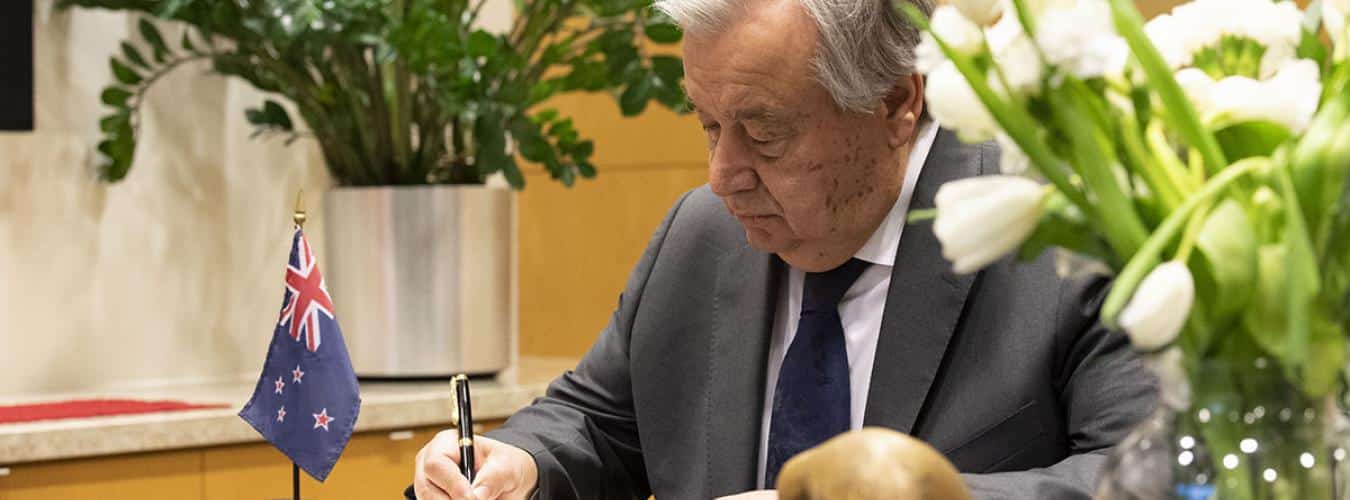
    Following is UN Secretary-General António Guterres’ message for Human Rights Day, observed on 10 December:

    On Human Rights Day, we face a harsh truth.  Human rights are under assault.  Tens of millions of people are mired in poverty, hunger, poor health and education systems that have not yet fully recovered from the COVID‑19 pandemic.  Global inequalities are running rampant.  Conflicts are intensifying.  International law is wilfully ignored.  Authoritarianism is on the march while civic space is shrinking.  Hateful rhetoric is fuelling discrimination, division and outright violence.  And women’s rights continue to be rolled back in law and practice.

    This year’s theme reminds us that human rights are about building the future — right now.  All human rights are indivisible.  Whether economic, social, civic, cultural or political, when one right is undermined, all rights are undermined.

    We must stand up for all rights — always.  Healing divisions and building peace.  Tackling the scourges of poverty and hunger.  Ensuring healthcare and education for all.  Advancing justice and equality for women, girls and minorities.  Standing up for democracy, press freedoms and workers’ rights.  Promoting the right to a safe, clean, healthy and sustainable environment.  And defending human rights defenders as they carry out their vital work.

    The recently adopted Pact for the Future reinforced the world’s commitment to the Universal Declaration of Human Rights.

    On this important day, let’s protect, defend and uphold all human rights for all people.

  • European Courts’ Landmark Micula Ruling Sends Shockwaves Through Investor Protections

    BRUSSELS — Few investment disputes have garnered as much global attention as the case of the Micula brothers, two Romanian  investors based in Sweden, who embarked on a decades-long legal battle against Romania. What began as an effort to enforce their rights under a bilateral treaty has spiralled into a legal odyssey, raising profound questions about the European Union’s handling of international arbitration and its respect for investor protections.

    The dispute, formally known as Micula and Others v. Romania, traces back to 1998, when Ioan and Viorel Micula invested in Romania under the Sweden-Romania Bilateral Investment Treaty (BIT). The treaty was designed to promote economic development in rural areas, offering incentives to foreign investors. But in 2004, as Romania prepared to join the European Union, it abruptly terminated these incentives to comply with EU state aid rules. This decision not only breached the BIT but also left the Miculas facing significant financial losses.

    What followed was a 20-year battle for restitution that would pit the principles of international law against the European Union’s increasingly assertive stance on its jurisdiction over investor-state disputes.

    A Battle Between International and European Law

    In 2013, an arbitration tribunal under the World Bank’s ICSID Convention ruled in favor of the Miculas, awarding them significant damages for Romania’s treaty violations. Yet the European Commission intervened, declaring the compensation unlawful under EU state aid rules.

    Despite the Commission’s objections, courts in the United Kingdom sided with the Miculas, affirming their right to the compensation in 2020. This ruling triggered further tensions between the EU and the UK, with the Commission suing Britain in 2024 for allegedly breaching the Brexit Withdrawal Agreement by allowing the compensation to proceed. How Britain will respond remains an open question, especially amid its fraught political relationship with the European Court of Justice.

    A Controversial Turn: The General Court’s 2024 Ruling

    On October 2, 2024, the EU General Court escalated the stakes by ordering the Micula brothers to repay the €400 million awarded to them. In a striking and controversial move, the court also declared the brothers personally liable for recovering the funds.

    This decision represents uncharted legal territory. By retroactively applying EU state aid rules to an international arbitration award, the European Commission sought to reinterpret the ICSID Tribunal’s findings. In doing so, it expanded the notion of “state aid” to hold not only the Miculas but also five affiliated companies—none of which received the disputed compensation—liable for repayment.

    Perhaps most alarming, the ruling opens the door for Romania to seize the personal assets of the Micula brothers, including property and pensions. Critics have labeled this as an unprecedented breach of legal norms, effectively “piercing the corporate veil” that shields individuals from liabilities incurred by their businesses.

    Limited Liability Under Threat

    The implications of the ruling extend far beyond the Miculas. Under Romanian law, as defined by Law No. 31/1990, corporate entities and their shareholders enjoy clear protections under the principle of limited liability. This legal framework, common across EU member states, ensures that shareholders are not personally responsible for corporate debts except under extraordinary and narrowly defined circumstances.

    The European Commission’s decision, however, circumvents these protections. By retroactively assigning personal liability to the Miculas, the ruling undermines established principles of corporate law and raises questions about the consistency of EU legal standards.

    “This decision sets a dangerous precedent,” said one legal expert familiar with the case. “If the European Commission can hold individuals personally liable in this way, it creates a chilling effect on foreign investment across the EU.”

    A Chilling Message to Investors

    At its core, the Micula case highlights the tension between the EU’s internal legal order and the broader framework of international arbitration. By disregarding the ICSID Tribunal’s clear legal basis for the damages award, critics argue, the EU is penalizing investors for exercising their right to seek legal recourse.

    The implications are profound. For decades, international arbitration mechanisms have provided investors with a sense of security, offering an impartial forum for resolving disputes with states. But the EU’s handling of the Micula case has cast doubt on the reliability of these protections within its borders.

    “This decision erodes trust in the EU as a safe destination for foreign investment,” said an analyst from a leading global law firm. “It signals to investors that their rights can be retroactively invalidated in pursuit of political objectives.”

    Awaiting the Next Chapter

    The Micula brothers are not backing down. They will file to appeal the ruling, however a judgment could take at least a year. This case is likely to remain a touchstone for debates about the intersection of EU law and international arbitration for some time to come, and its outcome will reverberate far beyond the Miculas, shaping the future of investor protections in Europe and beyond.

  • TikTok Under Scrutiny by EU During Romanian Elections

    EU Commission Intensifies Monitoring of TikTok During Romanian Elections Amidst Concerns of Foreign Interference

    As the Romanian elections unfold, the European Commission has ramped up its scrutiny of TikTok, invoking the Digital Services Act (DSA) to address potential threats to electoral integrity. This initiative is part of a broader strategy to ensure that social media platforms uphold their responsibilities in safeguarding democratic processes.

    The Commission has issued a retention order to TikTok, mandating the platform to freeze and preserve data related to systemic risks that its services may pose to electoral processes and civic discourse within the European Union. This order is specifically aimed at preserving critical information and evidence for any future investigations into TikTok’s compliance with the DSA.

    TikTok is required to maintain internal documents concerning the design and functioning of its recommender systems. This includes measures taken to counteract intentional manipulation, such as the coordinated use of inauthentic accounts. The retention order is particularly relevant for national elections in the EU scheduled between November 24, 2024, and March 31, 2025.

    The urgency of this order follows recent intelligence that suggests potential foreign interference in the Romanian elections, particularly from Russian sources. However, the Commission has clarified that it is currently monitoring compliance and has not yet taken a position on whether TikTok has violated any obligations under the DSA.

    To further bolster its efforts, the Commission has convened a meeting of the European Board for Digital Services Coordinators on December 6. This meeting aims to discuss steps taken thus far and respond to emerging evidence, including reports of accounts targeting the Romanian diaspora from other EU member states.

    In addition, the Commission is enhancing its collaboration with the Cyber Crisis Task Force, which includes various EU agencies and Romanian cybersecurity authorities. This task force is vital for sharing information and coordinating responses to digital threats.

    Henna Virkkunen, Executive Vice-President for Tech Sovereignty, Security and Democracy, emphasized the importance of this initiative, stating, “We ordered TikTok today to freeze and preserve all data and evidence linked to the Romanian elections, but also for upcoming elections in the EU. This preservation order is a key step in helping investigators establish the facts and adds to our formal requests for information which seek information following the declassification of secret documents yesterday. We are also intensifying contacts with digital and cyber regulators across Europe in light of emerging evidence of systematic inauthentic activity. I am committed to diligent and robust enforcement of the Digital Services Act.”

    The Commission’s proactive approach also includes activating the Rapid Response System (RRS) under the Code of Practice on Disinformation. This system facilitates swift cooperation among civil society organizations, fact-checkers, and online platforms during electoral periods, providing a mechanism for addressing time-sensitive threats to electoral integrity.

    The Romanian-Bulgarian hub of the European Digital Media Observatory is also participating in the RRS, monitoring the online landscape for disinformation tactics, including violations of electoral law and unmarked political content disseminated through influencers.

    As the Commission continues to engage with TikTok and other major platforms, the focus remains on ensuring transparency and accountability in the digital sphere, particularly as the Romanian elections approach. The actions taken now could set a precedent for how digital platforms are regulated during future electoral processes across the EU.

  • The New von der Leyen Commission Set to Begin Work on December 1

    The European Union is poised for a fresh chapter as the new von der Leyen Commission, led by President Ursula von der Leyen, prepares to take office on December 1. Following a vote in Strasbourg, Members of the European Parliament (MEPs) gave their confidence to the new College of Commissioners, marking the start of an ambitious five-year term.

    In her address to the European Parliament, President von der Leyen presented her vision for Europe, emphasizing freedom as the core principle of the European Union. “Because fighting for freedom connects us as Europeans. Our past and our present. Our nations and our generations. For me, this is the raison d’être of our Union and it remains its driving force more than ever today,” she declared.

    Von der Leyen underscored the importance of safeguarding and nurturing freedom, a task she linked to the Commission’s upcoming initiatives. The first major step will be the launch of the Competitiveness Compass, a strategic plan aimed at bolstering Europe‘s economic position globally. The Compass will focus on three key areas: closing the innovation gap with the United States and China, advancing decarbonization while maintaining competitiveness, and strengthening security by reducing dependencies.

    “The Compass will be built on the three pillars of the Draghi report,” von der Leyen explained, outlining the roadmap for Europe’s economic resilience.

    A Diverse and Experienced Team

    Highlighting the diversity and expertise of the new College of Commissioners, von der Leyen expressed confidence in her team’s ability to hit the ground running. The group includes former prime ministers, ministers, mayors, CEOs, business owners, journalists, and representatives from both rural and urban backgrounds. Spanning multiple generations, the team reflects Europe’s rich diversity and experience.

    In a press conference following the parliamentary vote, von der Leyen thanked MEPs for their trust and emphasized the importance of collaboration between EU institutions. “Over the next five years, European unity will be absolutely critical. I cannot stress this enough (…) This is why we need the tightest cooperation between the Commission, the Parliament and the Council. It is the partnership that Europe needs—and deserves. My team and I are fully committed to this,” she stated.

    Ambitious Goals for the First 100 Days

    The Commission’s agenda for the first 100 days is packed with initiatives addressing some of Europe’s most pressing challenges. Among the seven flagship projects are a Clean Industrial Deal, a White Paper on European Defence, an AI Factories initiative, and a Cybersecurity Action Plan for Health Infrastructure. Additionally, the Commission will present a vision for agriculture and food, review the EU’s enlargement policy, and launch Youth Policy Dialogues to amplify the voices of Europe’s younger generation.

    These initiatives reflect von der Leyen’s commitment to tackling issues ranging from climate change to technological innovation and security. The President also stressed the importance of giving Europe’s youth a platform, signaling a forward-looking approach to governance.

    A Call for Unity

    As the new Commission prepares to take office, von der Leyen reiterated the need for cooperation across EU institutions. “European unity will be absolutely critical,” she said, emphasizing the importance of a strong partnership between the Commission, Parliament, and Council.

    With a clear vision and an experienced team, the von der Leyen Commission is ready to address the challenges and opportunities of the next five years, setting the stage for a stronger, more united Europe.

  • 2023 among the five worst years for wildfires in Europe, but 2024 provides some relief

    The 2023 wildfire season ranks among the EU’s worst in over two decades, fuelled by climate change. Fires devastated vast areas, threatening ecosystems and lives. As fire risks rise, Europe must prevent and prepare for intensifying wildfire seasons.

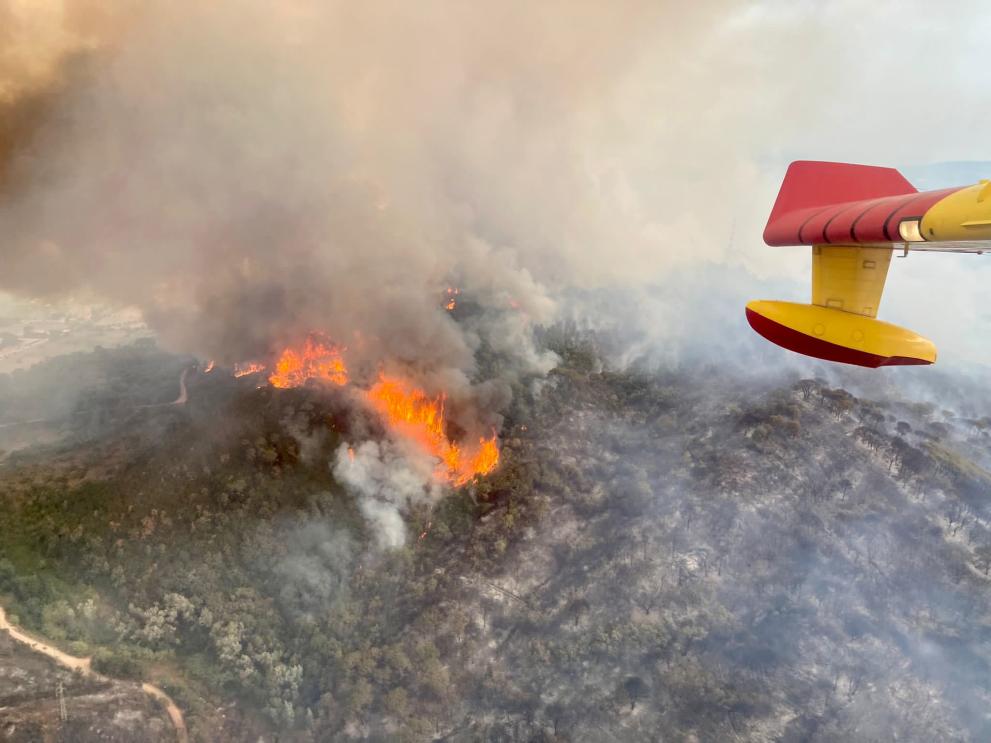
    The RescEU fleet provided assistance to fight wildfires in Portugal in July 2022.© Italian Civil Protection, 2022

    The latest JRC report on Forest Fires in Europe, Middle East and North Africa 2023 shows that last year was one of the worst five years for wildfires in EMEA since 2000. Wildfires affected over 500 000 hectares of natural lands, roughly half the size of the island of Cyprus.

    In recent years, catastrophic wildfires have been common in the European Union and neighbouring countries. 2023 was no exception: the region experienced wildfires that were impossible to bring under control by traditional firefighting means – the so-called ‘megafires’ – including a fire near the city of Alexandroupolis in the Greek region of East Macedonia and Thrace. This was the largest single wildfire recorded in the EU since the European Forest Fire Information System (EFFIS) started tracking them in 2000.

    This year was also critical in terms of damage to human lives and assets: at least 41 deaths were reported due to wildfires. 

    Climate change was a key driver for the increased severity of wildfires in recent years

    The unprecedented wildfires sweeping Europe over the last four years show the undeniable effects of climate change on wildfire regimes. Climate change is not only increasing the size of the areas affected by wildfires, but also making individual fires more intense, prolonging the fire season beyond the traditional summer period, and causing fires to happen in areas that were not usually affected by them.

    The high frequency and intensity of wildfires during prolonged fire seasons pose a new challenge to firefighting services across Europe and globally, as aerial firefighting becomes more arduous, and ground operations become more difficult or even impossible.

    So far, the 2024 wildfire season has been less severe in the EU

    As summer has ended, we can also make a preliminary assessment of the 2024 wildfire season in the EU. Until mid-September, the area burnt by fires in the EU was below the average of the last two decades. This is mainly due to the intermittent rainfall that affected much of the EU territory throughout spring and summer.

    In September, multiple wildfires broke out simultaneously in Portugal. This brought the 2024 wildfire damage above the EU average of the last decades. Regardless, 2024 can be considered a less severe wildfire season as it marks a downturn in damage after three consecutive years of devastating fires.

    The European Commission and the EU Member States are improving their prevention, preparedness and firefighting capabilities, which might have contributed to containing damage across the EU this year.

    Tackling the root cause of wildfires and raising awareness about the changing climate

    To tackle wildfires in Europe and globally, it is necessary to minimise the number of wildfire ignitions and manage the landscape in vulnerable regions to prevent the accumulation of high-risk fuel types and their spatial continuity. 

    Roughly 96% of wildfires in the EU are caused by human actions, meaning that education and awareness-raising campaigns are an essential part of the solution. As the climate crisis worsens, it is crucial that Europe’s population prepares for more frequent and intense wildfires. Prevention measures must target all sectors of the population, including rural communities in direct contact with natural areas, as well as the particularly vulnerable population that lives in the ‘wildland urban interface’.

    Background

    The European Forest Fire Information System (EFFIS) is a network of 43 countries that exchange harmonised information on forest fires and assess their effects in Europe. It is also a platform for exchange of good practices on fire prevention, firefighting, restoration, and other fire management activities.

    Since 2015, EFFIS is one of the components of the Emergency Management Services of Copernicus, the EU Earth observation programme which provides information on the planet and its environment from both satellite monitoring and in situ data.