Category: Human Rights

  • Jehovah’s Witnesses, the most persecuted religious minority in Putin’s country

    Jehovah’s Witnesses, the most persecuted religious minority in Putin’s country

    Jehovah’s Witnesses, the most persecuted religious minority in Putin’s country

    Since 2017, over 900 criminal prosecutions, resulting in over 1,000 years of prison sentences on bogus charges of extremism

    Apart from several religious minorities in China, Jehovah’s Witnesses in Russia are the faith community that is most persecuted by the state in the world but most human rights or religious freedom organizations fail to report about this severe repression.

    Jarrod Lopes, a spokesman for Jehovah’s Witnesses, recently stated in a press release: “Local Russian authorities with religious animus for non-Orthodox believers continue to unjustly target Jehovah’s Witnesses. Since 2017, there have been more than 900 criminal prosecutions, resulting in over 1,000 years of prison sentences on bogus charges of extremism. Authorities have unconscionably tortured innocent men, imprisoned the elderly and disabled, and deployed Soviet-era tactics of infiltration and surveillance. By attacking Jehovah’s Witnesses for peacefully practicing their Christian beliefs, Russian authorities have become what they claim to be fighting—extremists.”

    Despite 2024 giving signs the crackdown was subsiding, 2025 saw an increase in home raids, prosecutions, and prison sentences over the previous year.

    The Human Toll

    Valeriy Baylo died in custody in 2025 due to not receiving proper medical care. (link)

    Aleksey Lelikov, 64, a disabled piano teacher who reached the finals of Krasnodar’s “Teacher of the Year” competition in 1994, was sentenced in February to 6.5 years in prison. He had no criminal record. (link)

    Anatoliy Marunov, 72, is serving 6.5 years despite having a stroke and a prostate tumor. When he needed life-saving surgery, courts refused to reduce his sentence. In a cruel irony, Moscow’s mayor recently sent the separated couple a congratulatory letter on their 50th wedding anniversary, praising them as “an example for young people” and wishing them “many happy years together in a loving family home.”

    2025 By the Numbers
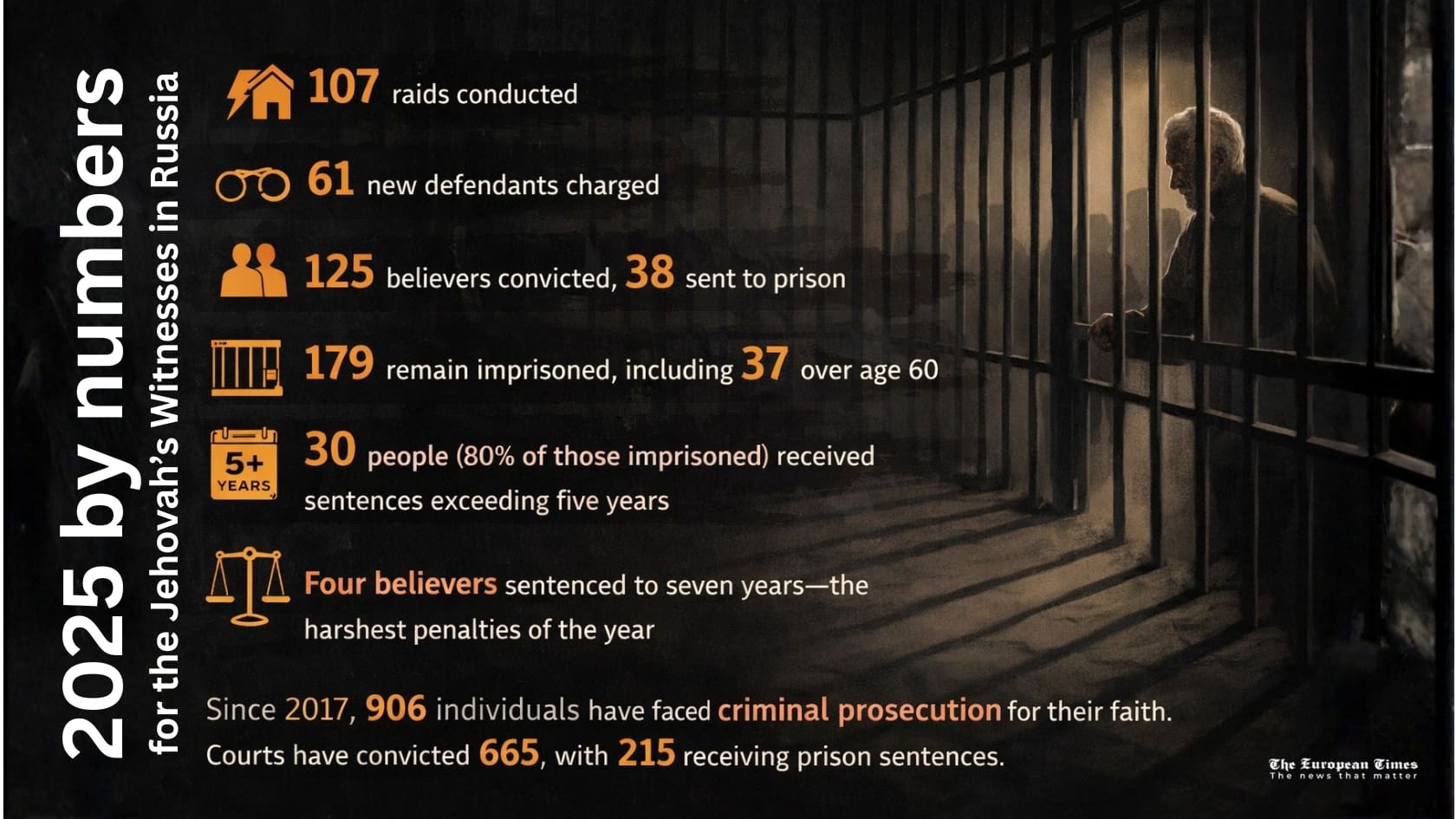
    • 107 raids conducted
    • 61 new defendants charged
    • 125 believers convicted, 38 sent to prison
    • 179 remain imprisoned, including 37 over age 60
    • 30 people (80% of those imprisoned) received sentences exceeding five years
    • Four believers sentenced to seven years—the harshest penalties of the year

    Since 2017, 906 individuals have faced criminal prosecution for their faith. Courts have convicted 665, with 215 receiving prison sentences.

    Systematic Abuses

    Torture and violence: At least eight cases of unprovoked violence and cruel treatment occurred in 2025, bringing the total to over 70 victims across eight years. No perpetrator has faced justice.

    Targeting the vulnerable: Nearly one-third of defendants (266 people) are over 60. At least 81 have serious health conditions; 34 are officially disabled. Currently, 36 seriously ill believers languish in colonies and detention centers where proper medical care is often impossible.

    Family persecution: At least 172 prosecuted believers have relatives facing similar charges. In 2025 alone, authorities opened cases against four married couples. “It’s become a gold mine for law enforcement,” one defense lawyer observed. “Why go after real criminals? That’s dangerous. It’s much easier to target relatives of Jehovah’s Witnesses already under investigation.”

    Secret informants: At least 30 criminal cases rely on testimony from undercover agents who infiltrated congregations, some for years, posing as Bible students. Agent Yekaterina Petrova’s surveillance of 17 believers—including elderly individuals—led to prison sentences up to eight years. Yet even these spies can only confirm believers discuss the Bible and pray.

    Citizenship revocation: In 2025—at least 12 convicted believers had their acquired Russian citizenship annulled, facing deportation and indefinite family separation. Mikhail Moysh hasn’t seen his two young sons since October 2021; deportation could extend that separation indefinitely. (link)

    Jehovah’s Witnesses banned in Russia in 2017: Some International Criticism

    Since the 2017 decision by Russia’s Supreme Court (upheld on appeal) that liquidated the Jehovah’s Witnesses’ legal entities and effectively banned their activity in Russia, several international courts and bodies have formally criticized or condemned Russia’s actions as persecution or violations of human rights, including religious freedom.  

    European Court of Human Rights (ECHR)

    Key judgments:

    On June 7, 2022, the ECHR ruled that Russia’s 2017 ban on Jehovah’s Witnesses was unlawful and in violation of the European Convention on Human Rights. It ordered Russia to end criminal prosecutions, release imprisoned Jehovah’s Witnesses, and return confiscated property or pay compensation.

    Subsequent ECHR rulings (e.g., March 6, 2025, in Loginov and Others v. Russia) also found violations related to detention and mistreatment of Jehovah’s Witnesses.

    The ECHR has repeatedly found that Russia’s actions violated freedom of religion and association protections under the Convention.

    United Nations Human Rights Committee (CCPR)

    The CCPR (which monitors compliance with the International Covenant on Civil and Political Rights) has issued Views concluding that Russia violated Jehovah’s Witnesses’ rights under Article 18 (freedom of religion) and Article 22 (freedom of association) in specific cases involving liquidations of local religious organizations. It ordered Russia to take corrective measures, though implementation has been lacking.

    Organization for Security and Co-operation in Europe (OSCE)

    The OSCE Permanent Council (including statements from the EU and participating states such as Australia, Canada, and Norway) publicly condemned Russia’s ban and called on Russia to respect freedom of assembly and religion, emphasizing Russia’s international human rights commitments.

    European Union (EU) and European Institutions

    The European Union, often speaking through the OSCE framework or its own foreign policy statements, has criticized the ban and persecution as incompatible with international human rights standards and Russia’s obligations.

    Amnesty International

    Amnesty International publicly denounced the 2017 ban as “an assault on freedom of assembly and conscience,” framing it as a serious regression in religious freedom protections.

    U.S. Commission on International Religious Freedom (USCIRF)

    The USCIRF, an independent U.S. federal body focused on global religious freedom, condemned the Supreme Court ban and subsequent decisions, and welcomed the ECHR’s ruling against Russia’s actions. It has urged Russia to respect religious freedom and cease persecution.
  • At a time of war, nations must stop global order from crumbling: UN rights chief

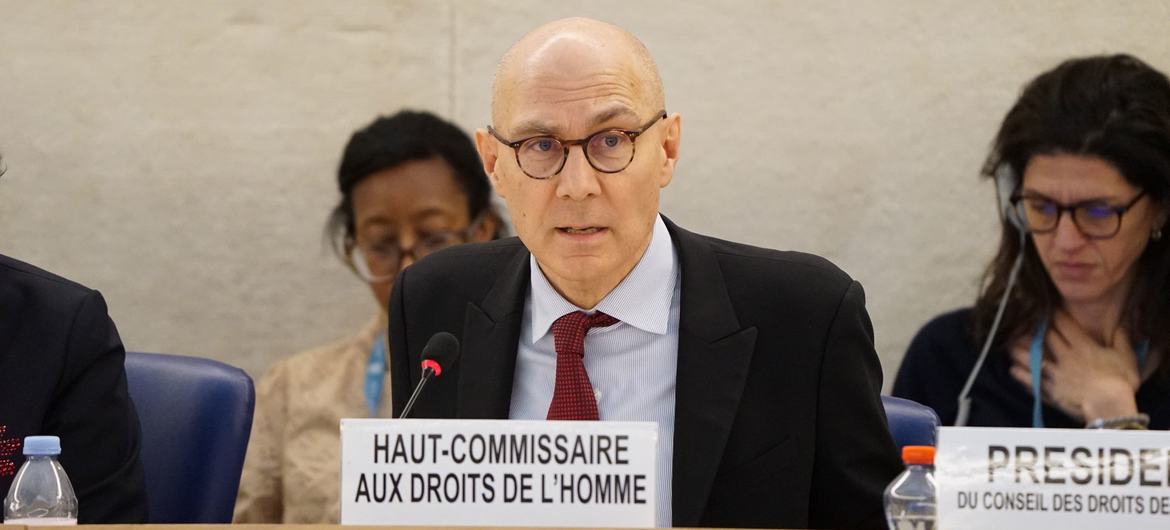
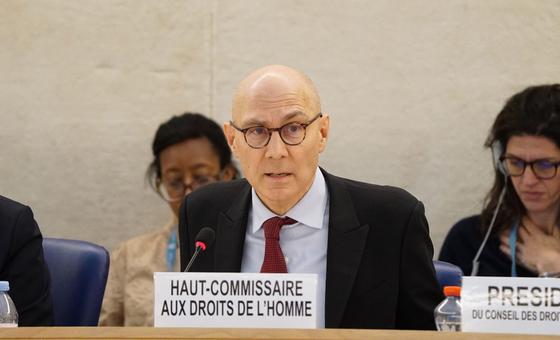
    “Our world is going through a period of turbulence and unpredictability, reflected in growing conflict and divided societies,” Türk told the Human Rights Council.

    “We cannot allow the fundamental global consensus around international norms and institutions, built painstakingly over decades, to crumble before our eyes.”

    The weapons of war

    Presenting his global update covering more than 30 countries, the High Commissioner described as “outrageous” the fact that legal safeguards for non-combatants were being repeatedly ignored.

    “Civilians are deliberately attacked. Sexual violence and famine are used as weapons of war,” Mr. Türk said. “Humanitarian access is denied, while weapons flow across borders and circumvent international sanctions. And humanitarian workers are targeted. In 2024, a record 356 humanitarian workers were killed while providing aid to people in some of the world’s most appalling crises.”

    Unbearable price

    In Sudan, the High Commissioner once again condemned devastating bomb attacks launched in heavily built-up areas with total impunity, by the parties to the conflict.

    All the while, the world’s worst humanitarian catastrophe deepens, threatening regional stability, he maintained: “Civilians are paying an unbearable price, in a naked struggle for power and resources. All countries must use their influence to apply pressure on the parties and their allies, to stop the war, embark on an inclusive dialogue, and transition to a civilian-led Government.”

    Ukraine’s people need peace

    Turning to Ukraine, whose future material support from the United States appeared unclear following televised disagreements between Presidents Trump and Zelensky at a White House meeting on Friday, Mr. Türk opposed any peace deal that excluded Ukraine.

    “Three years since the full-scale Russian invasion, people continue to suffer appallingly…Any discussions about ending the war must include Ukrainians and fully respect their human rights. Sustainable peace must be based on the United Nations Charter and international law.”

    Civilian casualties in Ukraine rose by 30 per cent between 2023 and 2024, the High Commissioner continued, as he accused Russia’s armed forces of systematically targeting Ukraine’s energy infrastructure with coordinated strikes, causing widespread disruptions to essential services.

    “Relentless attacks with aerial glide bombs, long-range missiles and drones have placed civilians in a state of constant insecurity and fear,” Mr. Türk noted.

    Ukrainian prisoners also continue to face summary executions and “widespread and systematic torture” by Russian forces, he continued.

    Gaza ceasefire focus

    In the Occupied Palestinian Territory, the UN rights chief insisted that the fragile ceasefire holds in Gaza “and becomes the basis for peace”.

    He also insisted that aid deliveries into Gaza should resume immediately, just as Israel announced a halt to aid flowing into the shattered enclave, having proposed extending the first phase of the ceasefire which ended at the weekend and which would allow Israeli troops to stay in Gaza.

    UN aid chief Tom Fletcher responded with alarm to the Israeli decision, insisting that the ceasefire “must hold”.

    In an online appeal, he added: “International humanitarian law is clear: We must be allowed access to deliver vital lifesaving aid. We can’t roll back the progress of the past 42 days. We need to get aid in and the hostages out.”

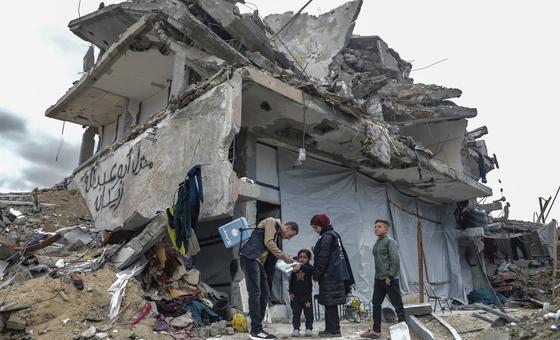
    Back in the Council, Mr. Türk explained that the Gaza had been “razed” by constant Israeli bombardment in response to the “horrific” Hamas-led attacks on Israel that sparked the war in October 2023. “Any solution to the cycles of violence must be rooted in human rights, including the right to self-determination, the rule of law and accountability. All hostages must be freed; all those detained arbitrarily must be released; and humanitarian aid into Gaza must resume immediately.”

    West Bank alert

    Reflecting deep concerns by humanitarians and the human rights community about Israeli military raids on Palestinian settlements in the West Bank, the UN High Commissioner insisted that Israel’s “unilateral actions and threats of annexation in the West Bank, in violation of international law, must stop”.

    Mr. Türk also condemned the use of “military weapons and tactics, including tanks and airstrikes, against Palestinians”. Equally worrying was “the destruction and emptying of refugee camps, the expansion of illegal settlements, the severe restrictions on movement and the displacement of tens of thousands of people”.

    DR Congo devastation

    Turning to the conflict in eastern Democratic Republic of the Congo, the High Commissioner underscored that entire communities in North and South Kivu had been devastated.

    “In the past five weeks, thousands of people have reportedly been killed during attacks by the M23 armed group, backed by the Rwandan Armed Forces, in intense fighting against the Armed Forces of the DRC and their allies,” the UN rights chief said, pointing to reports of rape, sexual slavery and summary executions.

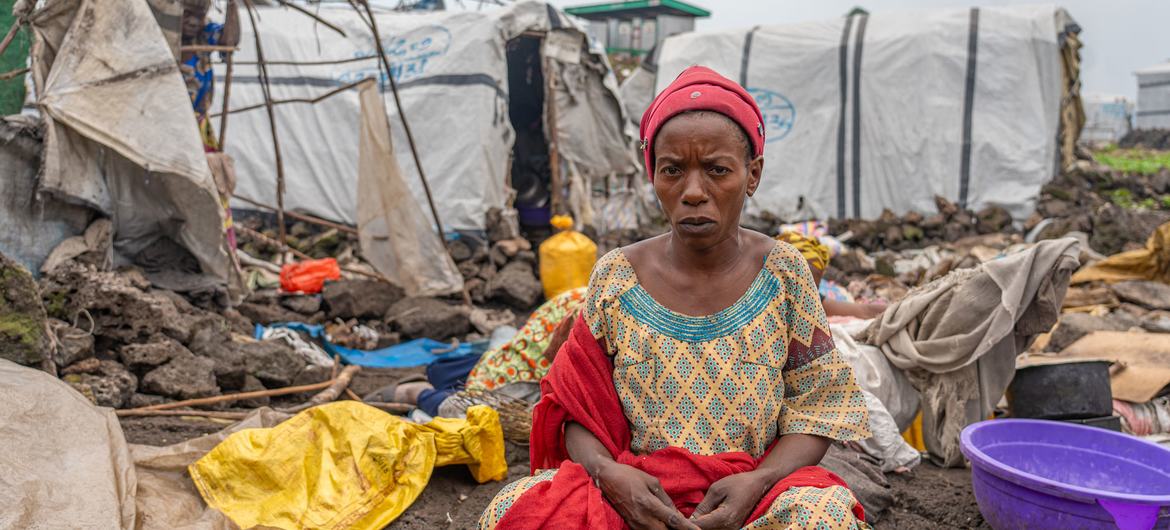
    “More than half a million people have been forced to flee this year, adding to almost 7.8 million people already displaced in the country,” Mr. Türk said. “The violence must stop, violations by all parties must be investigated, and dialogue must resume.”

    More than half a million people have been forced to flee DR Congo this year.

    More than half a million people have been forced to flee DR Congo this year.

    Deadliest year in Myanmar

    Moving on to the ongoing escalation of violence in Myanmar sparked by the military coup on 1 February 2021, the UN rights chief noted that 2024 was the deadliest year for civilians since the junta takeover.

    “The military ramped up brutal attacks on civilians as their grip on power eroded, with retaliatory airstrikes and artillery shelling of villages and urban areas…and the forcible conscription of thousands of young people,” he said, before calling for the supply of arms and finance to the country’s military’s to be “cut decisively”.

    Haiti spiral

    The UN rights chief also expressed deep concerns about chronic lawlessness and heavily armed clashes in Haiti involving gangs that humanitarians warned last week recruit children as young as eight. More than 5,600 people were killed last year and thousands more were injured or kidnapped, Mr. Türk told the Human Rights Council.

    “Full implementation of the Security Council‘s arms embargo and support to the Multinational Security Support Mission are crucial to resolving this crisis,” he insisted.

    Yemen

    On Yemen, the High Commissioner noted that amid ongoing hostilities, nearly 20 million Yemenis need humanitarian support. Mr. Türk also expressed his outrage at the death of a UN World Food Programme colleague in detention earlier this month. “All 23 UN staff – including eight colleagues from my own Office – who are arbitrarily detained by the Houthis must be released immediately.”

    In a half-hour address to the Council that traditionally highlights the most worrying emergencies in the world and the need to tackle their root causes, the UN rights chief issued a call for greater global solidarity and accountability for crimes as a way to push back against those who would violate fundamental freedoms.

    “We all have a responsibility to act – through our consumption habits, our social media use, and our political and social engagement,” he told the Council’s 47 Member States.

    “We can trace a clear line between the lack of accountability for airstrikes on hospitals in Syria in the 2010s, attacks on healthcare facilities in Yemen, and the destruction of health systems in Gaza and Sudan,” he continued.

    Toys of tech oligarchs

    Equally alarming is the rise of unelected and unregulated “tech oligarchs” who reflect the new global power dynamic, Mr. Türk warned, before urging governments to fulfil their primary purpose of protecting their people from unchecked power.

    Today’s tech oligarchs “have our data: they know where we live, what we do, our genes and our health conditions, our thoughts, our habits, our desires and our fears…And they know how to manipulate us,” the High Commissioner insisted.

    Electioneering tactics

    “I have followed recent election campaigns in Europe, North America and beyond with increasing trepidation. Single-issue soundbites devoid of substance oversimplify complex issues and are often based on scapegoating, disinformation, and dehumanization,” he continued.

    “Dehumanization is a well-worn step towards treating an entire group as outsiders, unworthy of the basic rights we all enjoy. It is a dangerous precursor to hate and violence and must be called out whenever it occurs.”

    Volker Türk, UN High Commissioner for Human Rights, presents his latest report on the obligation to ensure accountability and justice in the Occupied Palestinian Territory.

    UN Human Rights Council/Marie Bambi

    Volker Türk, UN High Commissioner for Human Rights, presents his latest report on the obligation to ensure accountability and justice in the Occupied Palestinian Territory.

    Toxic influence on gender equality

    The High Commissioner also voiced his concern about the resurgence of toxic ideas about masculinity and efforts to glorify gender stereotypes, especially among young men.

    To blame for this are “misogynistic influencers” with millions of followers on social media who “are hailed as heroes”, Mr. Türk said.

    Online and offline, their ideas push back against gender equality and result in “violence and hateful rhetoric against women, women’s rights defenders, and women politicians”, the High Commissioner continued. 

    In a message of solidarity with people who have been left “feeling alienated and abandoned” by such malign influences, Mr. Türk insisted that the United Nations was by their side. “Your concerns are our concerns, because they are about human rights: to education, to health, to housing, to free speech, and access to justice. Human rights are about people’s daily concerns for their families and their future. We must cherish the values of respect, unity and solidarity; and work together for a safer, more just, more sustainable world. We can and will persevere,” he concluded.

    Source link

  • ‘A litany of human suffering’ in Myanmar, warns UN rights chief

    Addressing the Human Rights Council on Friday, he detailed the devastating toll of the ongoing conflict and economic collapse on civilians – many of whom have been displaced by the fighting.

    Earlier in the day the Council discussed the deteriorating situation in South Sudan, having heard a report from rights investigators serving on the Commission on Human Rights in the country.

    “Conflict, displacement and economic collapse have combined to cause pain and misery across Myanmar and civilians are paying a terrible price,” Mr. Türk said.

    The number killed in violence last year was the highest since the military coup in 2021. Over 1,800 civilians were killed in 2024, many in indiscriminate airstrikes and artillery shelling, with attacks on schools, places of worship and healthcare facilities having become routine.

    Mr. Türk condemned the military’s brutal tactics, including beheadings, burnings, mutilations, and the use of human shields. He also noted that nearly 2,000 people have died in custody since the coup, most due to summary executions and torture.

    Deepening humanitarian crisis

    Fighting between the junta forces and opposition armed groups has fuelled a humanitarian catastrophe, with more than 3.5 million people displaced and 15 million facing hunger – two million of whom are at risk of famine.

    In Rakhine state, clashes between the military and the Arakan Army have intensified, with thousands of civilians killed and Rohingya communities caught in the crossfire.  

    Tens of thousands of Rohingya fled to Bangladesh in 2024, despite border restrictions. More than 8,000 fled by sea – an 80 per cent increase over 2023 – but at least 650 people, nearly half of them children, perished on the dangerous journey.

    Economic collapse

    Myanmar’s economic collapse has fuelled corruption and crime, with one global tracker ranking it the world’s biggest nexus of organized crime. It remains the top producer of opium and a major manufacturer of synthetic drugs.

    Furthermore, scam centres in eastern Myanmar have become notorious for human trafficking, where victims are coerced into cybercrime and subjected to torture, sexual violence, and forced labour.

    Military conscription

    Mr. Türk also condemned the junta’s activation of military conscription laws, which have led to arbitrary arrests and forced recruitment, particularly targeting young men and women. Fear of conscription has driven many to flee the country, exposing them to trafficking and exploitation.

    “Given the humanitarian, political and economic impacts fuelling instability across the region, the international community must do more,” Mr. Türk underscored.

    He reiterated his call for an arms embargo, coupled with targeted sanctions – including on jet fuel and dual-use goods – to better protect the people of Myanmar.

    He also stressed the need for accountability, citing efforts at the International Criminal Court (ICC) and the International Court of Justice (ICJ) to hold Myanmar’s military leaders accountable for atrocities.

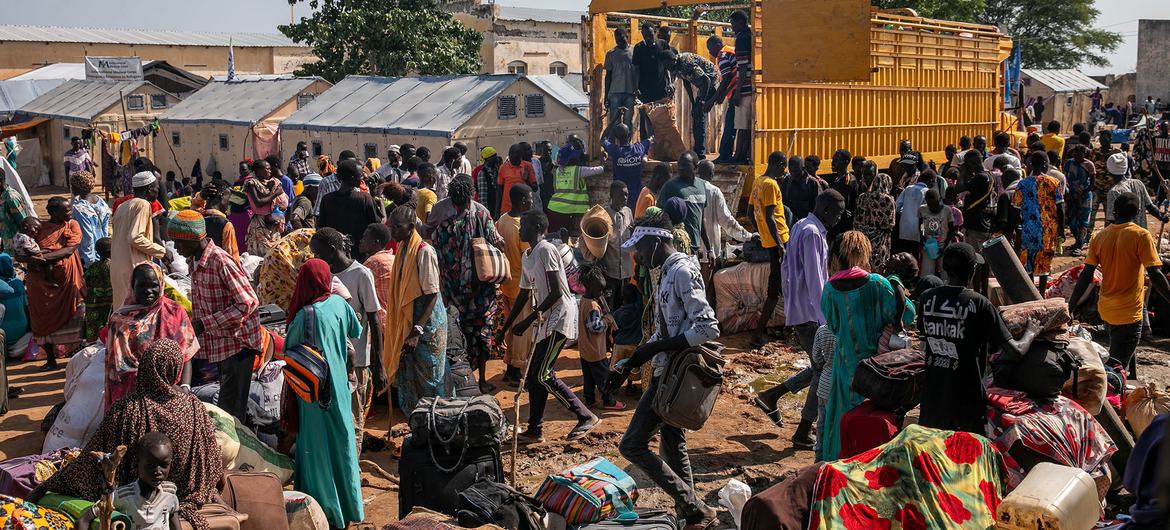
    Displaced South Sudanese people arrive at a camp in Upper Nile State. (file)

    Displaced South Sudanese people arrive at a camp in Upper Nile State. (file)

    South Sudan: Leaders failing their own people

    The UN Commission on Human Rights in South Sudan presented its latest report to the Human Rights Council earlier in Geneva, detailing widespread violations, including extrajudicial killings, forced recruitment of children and systematic sexual violence.

    Despite South Sudan winning independence over a decade ago and repeated commitments to peace during years of civil war, the Commission found that the same patterns of abuses persist, often implicating high-ranking officials.

    It is unconscionable that so many years after its independence, political leaders continue their violent contestations across the country and are abjectly failing the people of South Sudan,” said Yasmin Sooka, Chair of the Commission.

    Extreme ethnic violence

    The report described the situation in Tambura, where armed forces and militias inflicted extreme violence along ethnic lines in 2024, reigniting tensions from the 2021 conflict.

    Political elites at both local and national levels have actively fuelled this violence while remaining in power despite past crimes.

    The Commission also raised alarms over the “Green Book” law introduced in Warrap State in 2024, which authorizes extrajudicial executions for suspected cattle raiding and communal violence.

    Address corruption

    South Sudan’s leaders agreed in September 2024 to extend the transitional political arrangements by two years, citing funding constraints.

    The Commission’s report noted that the government generated $3.5 billion in revenue between September 2022 and August 2024, while essential institutions – such as courts, schools, and hospitals – remain underfunded and civil servants go unpaid.

    “Financing essential services and rule of law institutions requires an end to the corruption. The theft of national wealth robs citizens of justice, education, and healthcare,” said Commissioner Carlos Castresana Fernández.

    Without addressing this systemic looting, no peace agreement will ever translate into meaningful change,” he added.

    The Commission on Human Rights in South Sudan is an independent body mandated by the UN Human Rights Council. First established in March 2016, it has been renewed annually since. Its three Commissioners are not UN staff, they are not paid for their work and serve in an independent capacity.

    Source link

  • UN agencies condemn Thailand’s deportation of Uyghurs to China

    Volker Türk, UN High Commissioner for Human Rights said the forced return of the Uyghurs, who had been detained in Thailand for over 11 years, was deeply troubling.

    “This violates the principle of non-refoulement for which there is a complete prohibition in cases where there is a real risk of torture, ill-treatment, or other irreparable harm upon their return,” he said.

    Contained in Article 3 of the Convention against Torture, the principle prohibits returning individuals to a country where they face a risk of persecution, torture or ill-treatment. It is also referred to in Article 7 of the International Covenant on Civil and Political Rights, and Article 14 of the Universal Declaration of Human Rights.

    The right to seek asylum and of non-refoulement are also enshrined in Article 13 of Thailand’s Prevention and Suppression of Torture and Enforced Disappearance Act, and Article 16 of the ASEAN Human Rights Declaration.

    Detained since 2014

    The deported men were part of a larger group of Uyghurs who were detained in Thailand in March 2014, after leaving China, bound for Türkiye.

    For over a decade, they were held in immigration detention centres under poor conditions.

    According to OHCHR, five members of the group have died in custody, while eight others remain detained in Thailand.

    Halt further deportations

    The UN rights chief also urged the Thai Government to halt any further deportations and ensure the protection of the remaining Uyghurs in detention.

    The Thai authorities must ensure there are no further deportations and the remaining members of the group, including potential refugees and asylum-seekers, being held in Thailand are fully protected in accordance with their obligations under international law,” he added.

    UNHCR decries forced returns

    UNHCR also condemned the deportation, saying it had repeatedly sought access to the detained Uyghurs and assurances they would not be forcibly returned – a request that has so far been denied.

    Ruvendrini Menikdiwela, Assistant High Commissioner for Protection, reiterated that it is a “clear violation” of the non-refoulement principle and the Government’s obligations under international law.

    “UNHCR calls on the Royal Thai Government to put an end to the forced return of individuals from Thailand,” she said.

    Call for transparency

    High Commissioner Türk also urged the Chinese authorities to reveal the whereabouts of the deported Uyghurs.

    It is now important for the Chinese authorities to disclose their whereabouts, and to ensure that they are treated in accordance with international human rights standards,” he said.

    Source link

  • Human Rights Council: Türk calls out ‘dehumanizing’ narratives on Gaza

    Mr. Türk – making his closing remarks during the session reporting on the Occupied Palestinian Territory at the Human Rights Council – said he was deeply troubled by the “dangerous manipulation of language” and disinformation that surrounds discussions over the Palestine-Israel conflict.

    We need to make sure that we resist all efforts to spread fear or incite hatred, including abhorrent, dehumanizing narratives, whether they’re insidious or explicit,” he said.

    “My Office will continue to work for justice for every victim and survivor by establishing and documenting the facts and standing firmly for accountability and the rule of law without exception.”

    Eritrean troops continue grave violations in Ethiopia

    The rights body then turned its focus to Eritrea on Thursday, where despite some long-awaited progress in improving the lives of ordinary Eritreans, the country’s authorities remain responsible for widespread alleged serious crimes including inside neighbouring Ethiopia, the forum heard.

    Ilze Brands Kehris, UN Assistant Secretary-General for Human Rights, said that the Eritrean Defence Forces have continued to carry out grave crimes in Ethiopia’s Tigray region and elsewhere with total impunity.

    Our Office (OHCHR) has credible information that Eritrean Defence Forces remain in Tigray and are committing violations, including abductions, rape, property looting, and arbitrary arrests,” she told the Council, before calling for the immediate withdrawal of Eritrean soldiers.

    After a rapprochement between former enemies Eritrea and Ethiopia in 2018, Asmara sent troops to fight alongside Ethiopian federal troops against separatist rebels during the two-year conflict in Tigray, Amhara, Afar and Oromia.

    No justice in sight

    “In the current context, there is no likely prospect that the domestic judicial system will hold perpetrators accountable for the violations committed in the context of the Tigray conflict and in other cases,” the UN official told the Council, the world’s foremost human rights body.

    In a debate seeking to address the Council’s longstanding concerns about Eritrea’s human rights record, Ms. Brands Kehris acknowledged the efforts being made by the authorities in boosting essential health services to more than one million newborns, children and women last year with the help of the UN – and in ratifying the Convention on the Rights of Persons with Disabilities in December.

    Conscription abuses continue

    However, “serious concerns remain” about Eritrea’s system of indefinite forced military conscription, the UN official continued.

    The practice has long been linked to abusive labour, torture and sexual violence which continues to compel young people to escape from the country, Ms. Brands-Kehris insisted.

    Furthermore, “the punishment of families of draft deserters remains very common – an inhumane practice, against which no steps have been taken”, she said.

    Echoing previous disturbing reports requested by the Human Rights on Eritrea’s rights record, the UN official said that detention without trial “remains the norm” – with many politicians, journalists, religious believers and draft deserters held incommunicado.

    There is no evidence that impunity will be tackled for well-documented past human rights violations, the senior UN official said.

    In response for Eritrea, Habtom Zerai Ghirmai, Chargé d’affaires a.i. to the UN in Geneva, denied the accusations, calling them exaggerated and misleading.

    Sudan: We are looking into the abyss, Türk warns

    Next in the spotlight was the plight of Sudan’s war-ravaged people who have been subjected to appalling crimes by all parties to the conflict – some possibly constituting war crimes and other atrocity crimes.

    Today, more than 600,000 Sudanese “are on the brink of starvation”, said rights chief Volker Türk. “Famine is reported to have taken hold in five areas, including Zamzam displacement camp in North Darfur, where the World Food Programme has just been forced to suspend its lifesaving operations due to intense fighting.”

    Another five areas could face famine in the next three months and 17 more are at risk, he said, calling on all Member States to push urgently for a ceasefire and to ease the suffering of the Sudanese people.

    Presenting his Office’s annual report on the situation in Sudan, Mr. Türk noted that the armed conflict between rival militaries that erupted in April 2023 following the breakdown in a transfer to civilian rule had generated “the world’s largest humanitarian catastrophe”.

    The High Commissioner’s report details myriad violations and abuses committed in Sudan and underscores the need for accountability.

    ‘Utter impunity’

    “We are looking into the abyss. Humanitarian agencies warn that without action to end the war, deliver emergency aid, and get agriculture back on its feet, hundreds of thousands of people could die,” Mr. Türk insisted.

    He added that the spiralling situation in Sudan was “the result of grave and flagrant violations of international humanitarian and human rights law, and a culture of utter impunity”.

    “As the fighting has spread across the country, appalling levels of sexual violence have followed. More than half of reported rape incidents took the form of gang rape – an indication that sexual violence is being used as a weapon of war,” Mr. Türk explained.

    “Sudan is a powder keg, on the verge of a further explosion into chaos,” said the UN’s top human rights official.

    Responding on behalf of Sudan, Minister of Justice Moawia Osman Mohamed Khair Mohamed Ahmed, rejected allegations that the Sudanese Armed Forces (SAF) were responsible for any of the rights violations detailed in the High Commissioner’s report.

    Indifferent to suffering

    Sudanese civil society representative Hanaa Eltigani described multiple mass killings of civilians attributed to the Rapid Support Forces paramilitaries including in Geneina, their shelling of Zamzan displacement camp in North Darfur and other extreme rights abuses including gang rape and the forced recruitment of children, including South Sudanese refugees.

    In addition, the SAF “launched airstrikes and ground assaults, attacking Meneigo and Al-Igibesh villages in West Kordofan, bombing civilian areas in Nyala, South Darfur,” continued Ms Eltigani, Assistant Secretary-General of Youth Citizens Observers Network (YCON), insisting that while the suffering of her country’s people was “met with indifference, the flow of weapons [from abroad] continues unchecked”.

    The SAF also carried out executions in Al-Jazira, Ms. Eltigani maintained, “where victims were slaughtered or thrown alive into the Nile”.

    Taliban oppression deepens in Afghanistan

    Turning to Afghanistan, the Council then heard that the de facto authorities’ oppression and persecution of women, girls and minorities has worsened, with no signs of improvement. 

    “Some 23 million people, almost half the population, are in need of humanitarian assistance, a situation drastically worsened by the pauses and cuts to international aid,” said Special Rapporteur on Afghanistan Richard Bennett.

    The independent rights expert, who is not a UN staff member, warned that left unchecked, the Taliban was likely to “intensify, expand and further entrench its rights-violating measures on the people of Afghanistan, in particular women and girls and likely religious and ethnic minorities”.

    The lack of a strong, unified response from the international community has already emboldened the Taliban. We owe it to the people of Afghanistan to not embolden them still further through continued inaction.”

    The Taliban seized power in 2021 and since then have passed a raft of laws that have severely stifled the freedoms of women and girls.

    These include banning women and girls from most classrooms, singing or speaking outside their homes, as well as from travelling without a male guardian.

    Institutionalised oppression

    Women were also barred from studying medicine in December. Windows in residential buildings have also been banned on the grounds that women could be seen through them.

    Afghanistan is now the epicentre of an institutionalised system of gender-based discrimination, oppression, and domination which amounts to crimes against humanity, including the crime of gender persecution,” Mr. Bennett said, presenting his report. 

    Mr. Bennett urged States to ensure that any normalization of diplomatic ties with the Taliban should be dependent on demonstrated improvements in human rights.  

    “We must not allow history to repeat itself,” Mr. Bennett said. “Doing so will have catastrophic consequences in and beyond Afghanistan.”

    Independent rights experts are not UN staff, receive no salary for their work and are independent of any organisation or government.

    Source link

  • Human Rights Council: Gaza ceasefire must hold, Türk insists

    Addressing the Human Rights Council in Geneva on conditions inside the Occupied Palestinian Territory, Mr. Türk condemned the Hamas-led terror attacks on Israel that sparked the war in October 2023.

    The UN High Commissioner for Human Rights also said there was no justification for Israel’s devastating military operations in Gaza, which have left more than 48,000 Palestinians dead, according to local authorities.

    Search for a better future

    “At this tenuous moment the world must ask itself how to resolve this decades old conflict and stop the cycle of violence,” he said.

    Any plans for a better future must deal with the past, so accountability and justice for violations are crucial.”

    The High Commissioner added that each phase of the ceasefire must be implemented “in good faith, and in full. All of us must do everything in our power to build on it.”

    He said it must be for the Palestinians themselves to determine their own future.

    According to news reports, the delayed release by Israel of Palestinian prisoners is expected to go ahead imminently, in exchange for the return of the bodies of four hostages.

    ‘Unprecedented disregard’

    Summing up the “raft of human rights violations” inside the Occupied Palestinian Territory and lack of accountability, he said there had been “an unprecedented disregard” for basic principles of international humanitarian law by both sides since the outbreak of hostilities in October 2023.

    Mr. Türk maintained there were serious doubts over Israel’s capacity and will to deliver full accountability, notably in relation to unlawful killings in Gaza and the West Bank.

    With Hamas and other Palestinian militants who have taken and tortured hostages, fired indiscriminate projectiles into Israel – amounting to war crimes – there are concerns that they may also have committed serious breaches “including the intentional co-location of military objectives and Palestinian civilians.”

    “Any attempts at shaping a peaceful future where such horrors do not recur must ensure that perpetrators are held to account,” said the High Commissioner. 

    Impunity when given free rein, harms not only those directly impacted but generations down the line, he contended.

    In an apparent response to the outlawing of the UN Palestine refugee relief agency, UNRWA, by Israel and the sanctions against the International Criminal Court by the US earlier this month, the UN rights chief said that “delegitimising and threatening international institutions that are there to serve people and uphold international law also harms us all.”

    He also said any attempt to annex Palestinian land or “forced transfer” of civilians must be resisted.

    “This is the moment for voices of reason to prevail; for solutions that will deliver justice and make space for compassion, healing and truth telling,” said Mr. Türk.

    ‘Systemic’ repression in Nicaragua

    Investigators tasked by the UN Human Rights Council to track alleged grave abuses of power by top Nicaraguan officials insisted on Wednesday that the International Court of Justice (ICJ) should prosecute what they called the systematic and systemic repression of the country’s people.

    The Group of Experts on Nicaragua – who act in an independent capacity and are not UN staff – have previously reported that the Government’s violations appear to constitute crimes against humanity of murder, imprisonment and torture – including rape.

    Their latest report will be presented later this week to the Council.

    The group maintains that President Daniel Ortega and his wife, Rosario Murillo, have created “an authoritarian State where no independent institutions remain, opposition voices are silenced and the population…faces persecution, forced exile, and economic retaliation”.

    Stifling dissent

    It was in response to grave concerns about the severe repression of civil rights in Nicaragua that the international community decided in 2018 to establish an investigative body to report back to the Council.

    “We call on States to hold Nicaragua accountable for its violations of the UN Convention on Torture and the UN Convention on Statelessness before the International Court of Justice…the international community cannot just bear witness. It needs to take concrete measures,” said Reed Brody, member of the Group of Experts.

    “No country in the world has used the arbitrary detention of nationality against political opponents at the same scale that Nicaragua has done; and this is a violation of its obligations under international law under the Convention on the Reduction of Statelessness,” Mr. Brody continued.

    ‘Machine of repression’

    According to the panel’s chair, Jan-Michael Simon, State machinery and the ruling Sandinista party “have virtually fused into a unified machine of repression with domestic and transnational impact.”

    This development – which has reduced the judicial, legislative and electoral powers “to mere bodies coordinated by the presidency” – has resulted in myriad deaths, “arbitrary detentions, enforced disappearances, torture, expulsion of nationals, arbitrary deprivation of nationality,” Mr. Simon insisted.

    Source link

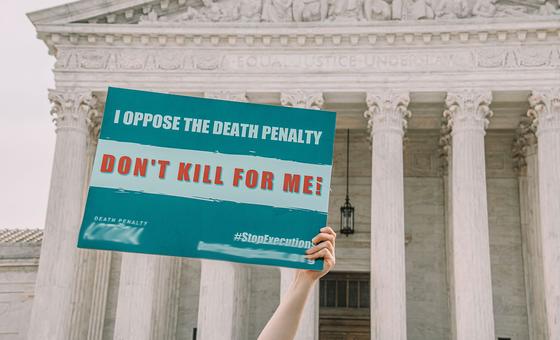
  • UN rights chief decries substantial rise in death penalty executions

    While a number of countries argue that it lies within their national sovereignty, from my perspective, it is incompatible with human dignity and the right to life,” the High Commissioner told Member States, during a discussion about the contribution of judiciaries to advancing human rights over the issue.

    The punishment had “no place” in the 21st century, Mr. Turk, continued, noting that “the top executing countries over recent years” include Iran, Saudi Arabia, Somalia, and the United States.

    Clear evidence

    Latest UN data indicates that in 2023, 1,153 executions took place in 16 countries, representing a 31 per cent increase from 2022 and the highest number in the past eight years.

    “That followed a 53 per cent increase in executions between 2021 and 2022,” the High Commissioner said, adding that the figures do not take into account China, “where there is a lack of transparent information and statistics on the death penalty. I call on the Chinese authorities to change this policy and join the trend towards abolition.”

    Global South leading abolition

    Although drug-related offences do not meet the “most serious crimes” justification for executions under international human rights law, they account for more than 40 per cent of death penalty executions – the highest number since 2016.

    “This proportion has also risen sharply over the past two years, and almost all of these executions took place in the Islamic Republic of Iran,” Mr. Türk explained.

    In more positive developments and despite a global rise in executions, a growing number of countries are abolishing the practice – spurred by the Global South.

    Today, 113 countries have scrapped the death penalty completely. This includes Zimbabwe – where President Emmerson Mnangagwa approved a law ending executions at the end of 2024 – along with 26 other countries in Africa.

    Key to abolition are judicial reform and discretion in commuting executions to lesser punishments, the High Commissioner insisted. Malawi and Malaysia have implemented such reforms, leading to fewer death sentences, Mr. Türk continued, as he called for greater efforts globally to ensure fair trials and avoid wrongful convictions.

    He urged nations to move towards the complete abolition of the death penalty, advocate for moratoriums, and ensure that the death penalty is only used for the most serious crimes.

    Zimbabwe focus

    Also addressing the Council, Zimbabwe Attorney General Virginia Mabiza explained that the death penalty had been introduced by colonial rulers in the 18th century, enduring beyond the country’s independence in 1980.

    She said that more than 56 per cent of the population wanted the death penalty to remain in the statute books when asked in 1999, while between 1980 and 2005, 105 convicted offenders were executed.

    “Since then, no other executions have been carried out in Zimbabwe, and this can be attributed to policy decisions coupled with judicial discretion against capital punishment,” the Attorney General told the Council.

    Ms. Mabiza noted that a wide range of offences had been formerly punishable by the death penalty including conspiracy and attempted robbery, but by 2013, only a murder conviction could lead to death for the convicted offender, in compliance with the UN General Assembly resolution on reducing the number of offences that attract the death penalty.

    And pointing to several instances where the Supreme Court in Harare determined that the death penalty constituted a violation of a prisoner’s human rights, Ms. Mabiza said that sentences were “often commuted death sentences to life imprisonment”.

    Source link

  • World’s ‘warmongers’ must end disdain for global order, UN chief insists

    On the opening day of the Human Rights Council in Geneva, the Secretary-General rounded on “warmongers who thumb their nose at international law, international humanitarian law and the UN Charter”.

    To date, Ukraine has seen more than 12,600 civilians killed, many more injured and entire communities reduced to rubble, Mr. Guterres told the UN’s top human rights body. “We must spare no effort to bring an end to this conflict, and achieve a just and lasting peace in line with the UN Charter, international law and General Assembly resolutions, he insisted.

    “One by one, human rights are being suffocated,” Mr. Guterres continued, singling out the “autocrats crushing opposition because they fear what a truly empowered people would do”, amid “wars and violence that strip populations of their right to food, water and education”.

    Turning to the “precarious” ceasefire in Gaza, the UN chief insisted that a resumption of hostilities must be avoided at all costs for the sake of the enclave’s people who have endured 15 months of constant Israeli bombardment. Mr. Guterres also expresseddeep concern about rising violence in the occupied West Bank by Israeli settlers – “and other violations, as well as calls for annexation”.

    “It’s time for a permanent ceasefire, the dignified release of all remaining hostages, irreversible progress towards a two-State solution, an end to the occupation, and the establishment of an independent Palestinian State, with Gaza as an integral part.”

    Voices of anger

    And amid growing intolerance towards many of society’s most vulnerable and marginalized people – from indigenous peoples, to migrants, refugees, the LGBTQI+ community and persons with disabilities – the UN Secretary-General also criticized the voices of “division and anger” for whom human rights threaten their quest for “power, profit and control.”

    Echoing the UN chief’s concerns that human rights are “being pummelled hard”  today, putting at risk 80 years of multilateral cooperation embodied by Organizations, UN human rights chief Volker Türk warned that the international system “is going through a tectonic shift, and the human rights edifice we have built up so painstakingly over decades has never been under so much strain”.

    Beyond Ukraine, where Russian attacks have created “wanton destruction”, Mr. Türk told the Council’s Member States that the suffering borne by Gazans and Israelis since the Hamas-led attacks that sparked the war in October 2023 had been “unbearable”.

    The UN rights chief also repeated his call for an independent probe into grave violations of international law “committed by Israel in the course of its attacks across Gaza, and by Hamas and other Palestinian armed groups”.

    Mr. Türk also condemned as “completely unacceptable” any suggestion that people can be forced from their land – amid proposals floated by the United States that Gazans should be resettled outside the devastated Strip.

    His comments came on the opening day of the Human Rights Council in Geneva which meets in three scheduled sessions throughout the year. March is traditionally the “high-level” session where top national representatives rub shoulders at the Palace of Nations in Geneva.

    Nigh-on six weeks of debates are slated to discuss emergencies in around 40 countries – from Belarus to DR Congo, DPRK/North Korea, Haiti, Sudan, Ukraine and more – along with thematic issues and some 80 reports from top independent rights experts and the UN human rights office, OHCHR – on disability rights, genocide, children in armed conflict and torture, among others – until the 58th session ends on Friday 4 April.    

    The Human Rights Council is the world’s principal body for discussions and action on human rights. It was founded in 2006 and has 47 Member States, although all 193 countries belonging the UN can take part as observers.

    Source link

  • The HumanRights4Prosperity Program Acts Worldwide: A Success Model in Guinea-Bissau

    In Guinea-Bissau, in June 2019, a training session on understanding and applying the values promoted by Human Rights was provided to a hundred women. The main objective of this training was to educate women politically and mobilize them within an emerging democracy in Guinea-Bissau. This training aimed to raise awareness of Human Rights values and develop their skills as citizens. The goal of mobilizing women was fully achieved with the creation of an agricultural cooperative, whose logistical and production expansion over the following six years strengthened the empowerment of participants. 

    Report and Expertise by Murielle Gemis, Spokesperson for the HumanRights4Prosperity Program

    In a world where economic growth and the promotion of Human Rights (1948) are often perceived as distinct goals, the HumanRights4Prosperity program demonstrates that they can be effectively reconciled to generate lasting and meaningful impacts. A concrete example of this innovative approach is currently unfolding in Guinea-Bissau. 

    Thanks to a strategic partnership between ONAMA (the women’s group of the political party APU PDGB – Assembleia de Povos Unidos) and the AMD Quinara association, a transformative project was born. After a training session provided by HumanRights4Prosperity to the women of these two groups, an agricultural cooperative was created. During this training, 100 women participated, joined by 63 men, including members of the security forces. The very next day, these women, strengthened in their confidence and ability to act, took the initiative to build an autonomous project focused on a sustainable goal. 

    (c) HumanRights4Prosperity

    Today, this cooperative, led by local women, plays a key role in agricultural production to meet the food needs of surrounding communities. To date, it supplies nine villages on the outskirts of Bissau, the capital. Its production capacity has reached such a level that it is now able to serve the entire southern region of the capital. 

    This training not only strengthened community mobilization centered on women’s empowerment but also stimulated the local economy. This success demonstrates how implementing Human Rights principles can be a powerful lever for economic and social development. 

    A Transformation Model Based on Human Rights 

    “The success of the cooperative perfectly illustrates the transformative impact of understanding Human Rights on economic and social development. In this context, we started from scratch and, by investing in training as a social foundation, we enabled communities to take charge of their future,” said Murielle Gemis, spokesperson for HumanRights4Prosperity

    The HumanRights4Prosperity program is designed to implement the guiding principles related to businesses and Human Rights, following the framework of “protect, respect, and remedy” (NDUH, 2011), while adapting to the cultural and social specificities of each territory, company, or state. 

    By offering targeted training and emphasizing social inclusion, the program fosters cooperation and the creation of sustainable enterprises that combine economic prosperity with respect for Human Rights. However, building such initiatives does not come without challenges, especially when starting from scratch and integrating local realities. 

    This is precisely what HumanRights4Prosperity demonstrates: by adapting its actions to specific contexts, it is possible to create viable projects that place Human Rights at the heart of political and entrepreneurial strategies. Far from being a constraint, these principles prove to be a powerful driver of social and economic transformation. 

    Thus, integrating Human Rights is not merely an ethical approach; it is also a lever to stimulate sustainable economic development and concretely improve people’s living conditions. 

    A Model to Be Deployed on a Global Scale 

    Currently, this cooperative goes far beyond a simple agricultural project: it is the symbol of profound change, demonstrating how understanding Human Rights values can generate concrete and measurable transformations. This model, founded through cooperation, proves that ethical prosperity is not a utopia but a reality when individuals are placed at the heart of priorities. 

    (c) HumanRights4Prosperity

    The project in Guinea-Bissau is among the successes achieved through the HumanRights4Prosperity approach. As the organization continues to expand its efforts worldwide, this case demonstrates that sustainable development based on Human Rights is a promising path toward a fairer and more prosperous future. 

    *The tools were provided free of charge by the humanitarian campaign Youths For Human Rights.

  • From suits to social justice: World’s top human rights forum turns stage over

    Trading suits, ties and debates for DJ turntables, bright traditional Indigenous garb and ancient instruments, three performers – an anthropologist, an R&B singer and a genre-defying artist – showcased their music and messages at the Stand Up for Social Justice event to celebrate the World Day of Social Justice, marked annually on 20 February.

    It took place in front of hundreds of people in the emblematic Human Rights and Alliance of Civilizations Room, where high-stakes diplomacy happens throughout the year.

    The world needs more diverse platforms like the UN “so that transculturality can exist”, said Brisa Flow, a Chilean-born Mapuche artist who got her first break in rap battles in Brazil, following her intense musical performance.

    “We need more empathy and to listen more to Indigenous Peoples in order to better understand how to take care of our territories that need care, not just in terms of water, food and land, but also our children and our elders,” said the São Paulo-based singer, rocking a green marble-printed manicure.

    “We need to be in spaces where everything we speak about is not just a utopia, where hope, which exists, can be heard and considered.”

    Calls for change around the world

    Ms. Flow joined French-speaking Geneva-born R&B revelation Ocevne (pronounced Océane) and anthropologist-cum-poet Idjahure Terena in delivering powerful music and personal messages inspired by social justice while helping to link local realities to issues of a global scale.

    Echoing the Day’s 2025 theme Strengthening a Just Transition for a Sustainable Future, the event was co-organised by UNRISD, an independent UN research institute focusing on development issues, and Antigel, a Geneva-based music festival designed to make culture more accessible.

    The messages from the young people on stage did just that, with electrifying performances and calls for change around the world.

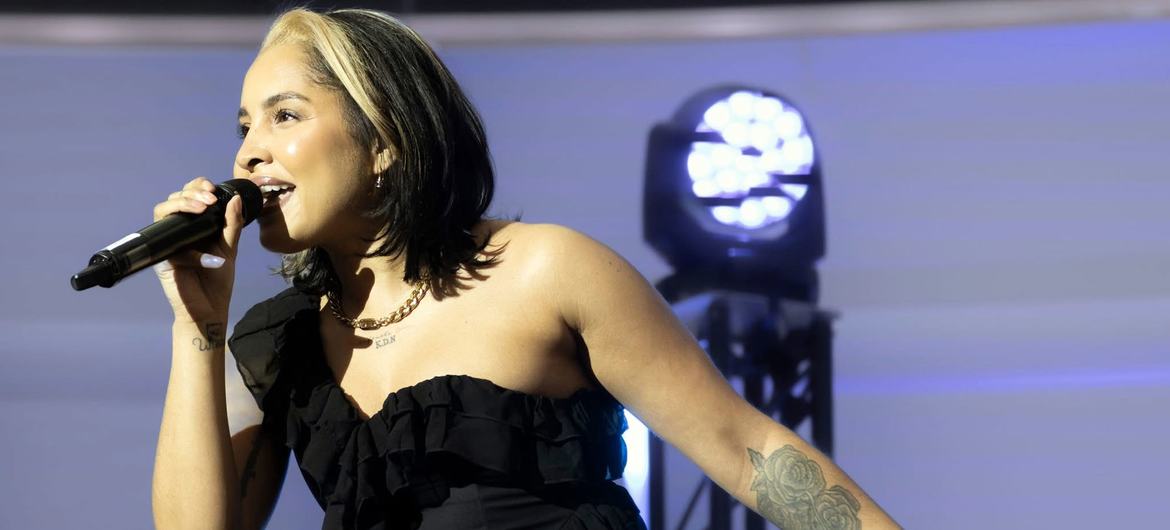
    For Ocevne, 28, the message was about equality.

    “The simplest way I could define it is simply the right to equal opportunities,” she said. “No matter your background, where you come from, who you are, your gender, everything, we all have the right to that opportunity.”

    Ocevne warming up the room at the Stand Up for Social Justice event.

    © City of Geneva/ANTIGEL/Giona

    Ocevne warming up the room at the Stand Up for Social Justice event.

    ‘No climate justice without social justice’

    Climate justice was another recurring theme throughout the event, an issue highlighted by Mr. Terena, a doctoral student in social anthropology at the University of São Paulo and poet who spends much of his time defending the rights of his community and others.

    “There is no climate justice without social justice,” he told the audience. “We know that standing forests are the simplest and most efficient solution for fighting global warming.”

    The young researcher slammed the impact of mining companies and agribusinesses on his ancestral land that belongs to the Terena people of Brazil in the Pantanal region of Mato Grosso do Sul.

    “This is not just a territorial issue, but a matter of physical and cultural survival for our peoples and for humanity as indigenous lands represent the most important areas of biodiversity,” he said, inviting the audience to fight for a “common, diverse living world”.

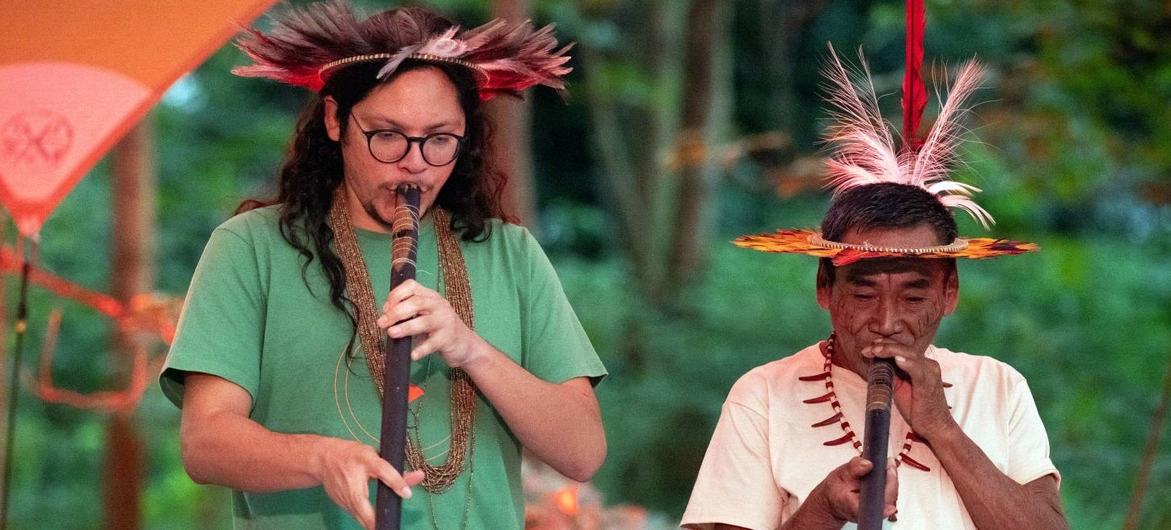
    Idjahure Terena playing the japurutu flute with his father-in-law Francisco Baniwa in Brazil.

    © Courtesy of Idjahure Terena

    Idjahure Terena playing the japurutu flute with his father-in-law Francisco Baniwa in Brazil.

    ‘The future is going to be very hot’

    Indeed, “the future is going to be very hot,” said Ms. Flow, adding that “it is already very hot in Brazil, and this is urgent for us because without water, we cannot live, and without food, [we cannot] either.”

    Advocating for issues affecting indigenous communities, including the burning impacts of climate change on the natural resources of her home country, she said collectively not enough is getting done.

    “We need more communication and more exchanges. By exchanges, I mean listening, speaking, listening, speaking and thinking about new ways of living well so that we can keep heading into the future.”

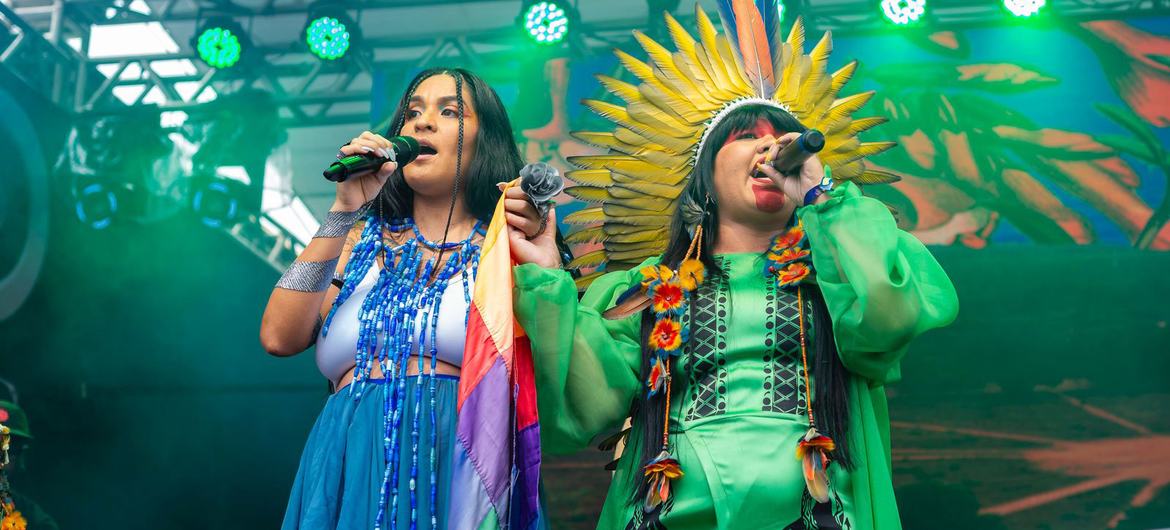
    Brazilian federal deputy Célia Xakriabá (right) performs with artist Brisa Flow at the Stand Up for Social Justice concert.

    Brazilian federal deputy Célia Xakriabá (right) performs with artist Brisa Flow at the Stand Up for Social Justice concert.

    Amplifying marginalised voices

    The event is the brainchild of UNRISD communications chief Karima Cherif, who wanted to bridge art and research through the initiative.

    She says her institute works with scholars from the global South to ensure that the voices and expertise of minorities are heard.

    “We’re giving voices to the marginalised and the youth,” explained Ms. Cherif, who sees art as a way to “translate what we do in a language that can touch hearts”.

    ‘Never give up’

    Thuy-San Dinh, who heads Antigel, echoed her vision and encouraged the young audience to pursue their goals, recalling when she co-created the annual event 15 years ago.

    “You have to believe in your ideas and never give up,” Ms. Dinh said.

    Melanie Rouquier, who created SHAP SHAP, a non-profit that fights global inequality and discrimination through cultural projects, told several activists in the room that each of their actions showed citizen engagement was not a lost cause.

    “To resist, we have to get together,” she said.

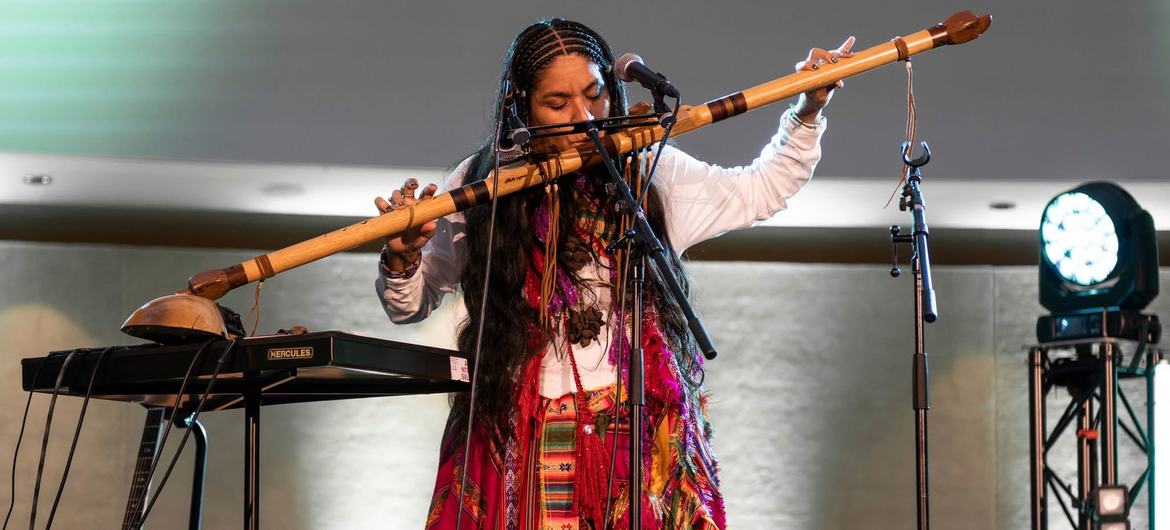
    Brisa Flow playing a traditional instrument at the Stand Up for Social Justice concert in Geneva in February 2025.

    © City of Geneva/ANTIGEL/Giona

    Brisa Flow playing a traditional instrument at the Stand Up for Social Justice concert in Geneva in February 2025.

    Connecting generations

    For Aryan Yasin, a designer from Geneva who founded a cultural non-profit supporting disadvantaged youth, the show was an opportunity for cross-pollination and broadening his network by connecting with UN staff.

    The exceptional venue “is not a place where you would necessarily see young people”, he said. “But, that actually allows us to create an intergenerational connection, with people who are more experienced, more established,” he added.

    After the show, management student Ludivine said she was mesmerised by the experience. Putting on a concert with one of her favourite artists there to denounce inequalities “makes sense… because at the UN, people get together to talk about inequalities around the world.”

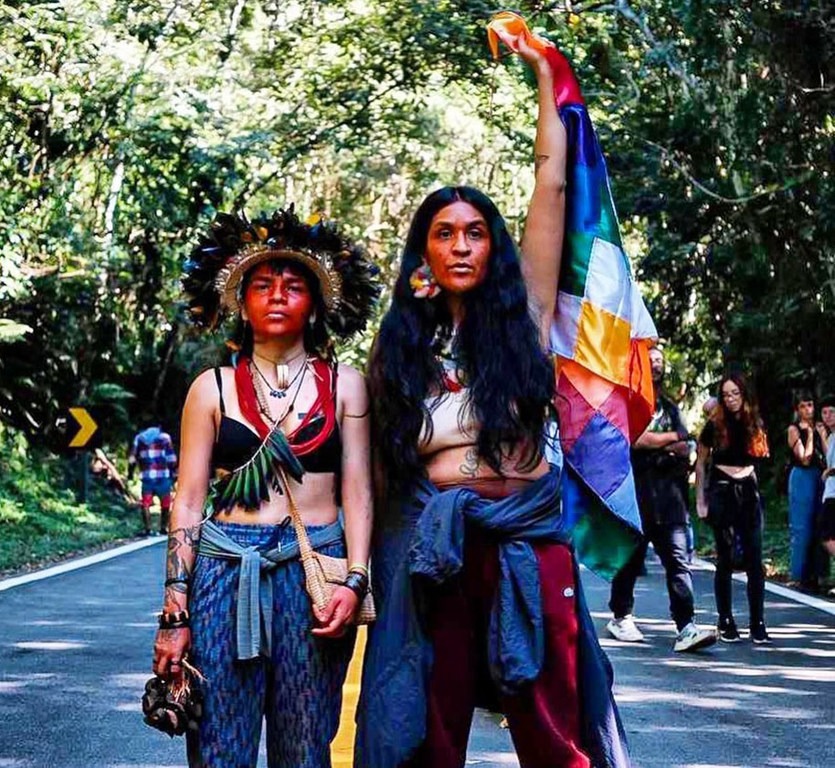
    Ms. Flow (right) at a protest by the Guarani people of Brazil.

    © Courtesy of Brisa Flow

    Ms. Flow (right) at a protest by the Guarani people of Brazil.

    What is social justice?

    After the event ended, doctoral students Beatrice and Thomas shared what the concept of social justice, which can seem quite abstract, meant to them.

    “It’s about recognising and taking differences into account while ensuring that everyone has the same access” to the same opportunities, said Beatrice, from Italy, who studies at École Polytechnique Fédérale de Lausanne.

    “That may mean that some people will need more support, while others may not need as much, but have different needs.”

    Thomas offered a more societal vision of the idea.

    “For me, it’s something that is both individual and collective – something that must be built as a society. It is entirely dependent on the structures we have put in place, but it also relies on everything that is local.”

    Read our social justice explainer here.

    ‘We need to be united’

    Ahead of the concert, Tatiana Valovaya, Director-General of the UN Office at Geneva set the tone in her opening remarks in the Human Rights and Alliance of Civilizations Room.

    “This room sees a lot of very important and challenging negotiations,” she told the audience. “But, today we open this room to everyone.”

    Geneva Mayor Christina Kitsos, whose term is guided by the motto “what connects us”, reminded the youthful audience of the UN’s fundamental role despite the worrying rise of “desire to undermine all the work [that has been done] around humanitarian aid and human rights”.

    “We need to be united, strong and truly hopeful and courageous to ensure that we stay the course, that we remain a beacon in this world in turmoil,” she said.

    Source link