Category: Human Rights

  • Mohamad Alkayali, a Syrian refugee victim of the weaponization of INTERPOL by Saudi Arabia

    A Syrian Refugee Trapped by a Politically Motivated Red Notice

    In the early hours of December 28, 2024, Mohamad Alkayali, a Syrian refugee who has lived legally in Turkiye since 2014, was arrested by Turkish authorities based on an INTERPOL Red Notice issued by Saudi Arabia in January 2016.

    Today, Alkayali faces imminent deportation to Saudi Arabia, a country he has not set foot in for over 12 years—a deportation that could put his life and freedom at grave risk.

    The notice, allegedly tied to an offense that lacks critical details such as time, place, or any evidence, raises significant concerns over the weaponization of INTERPOL’s system to silence political dissenters.

    Alkayali’s case is not unique. It is yet another example of how authoritarian regimes exploit INTERPOL to pursue opponents, dissidents, and refugees.

    The Story of Alkayali: A Life of Exile and Harassment

    Alkayali spent several years working in Saudi Arabia as an IT consultant. However, when the Syrian revolution began in 2011, he became a vocal critic of the Assad regime and an advocate for Syrian refugees, particularly those facing difficult conditions in Saudi Arabia due to restrictive policies. He spoke out against Saudi Arabia’s refusal to grant Syrian refugees asylum and its imposition of monthly fees under the “visitor” status, which placed additional hardships on those fleeing war. His outspoken views and activism on social media led to increasing harassment. Fearing for his safety and freedom, Alkayali left Saudi Arabia in early 2013 and sought refuge in Turkiye in 2014. Since then, he has never left the country and has never violated Turkish laws.

    Alkayali believed that leaving Saudi Arabia would grant him safety and the freedom to express his opinions and he became more vocal in his criticism of the Saudi government. He openly challenged its human rights record and regional policies, using his newfound platform to advocate for change. This heightened activism drew even greater scrutiny from Saudi authorities, escalating their hostility towards him and making him an even more prominent target of political repression.

    The Instrumentalization of INTERPOL by Saudi Arabia

    Not too long ago, Alkayali discovered that an INTERPOL Red Notice had been issued against him. The request was made by Saudi authorities in January 2016—four years after he had left the country—accusing him of an offense punishable by a maximum of three years in prison under Saudi law. The timing of the notice and its vague nature strongly suggest political motivation rather than legitimate criminal prosecution.

    Recognizing the unjust nature of the notice, Alkayali formally challenged it with INTERPOL, making it clear that the charges were politically motivated. He is still awaiting a response, yet his arrest in Turkiye—despite this pending challenge—raises serious concerns about the misuse of INTERPOL’s system. His detention also comes at a time of geopolitical shifts in the region, particularly the fall of the Assad regime to radical Islamist groups, further complicating the fate of displaced Syrians like Alkayali, who now find themselves in even greater uncertainty.

    Additionally, it has been revealed that Saudi authorities requested INTERPOL to keep the Red Notice confidential, ensuring that it would not appear on INTERPOL’s public webpage. This lack of transparency conceals the true intent behind the notice and prevents independent scrutiny. Normally, Red Notices that are not published involve cases related to terrorism or organized crime, yet Alkayali’s alleged offense is neither, further reinforcing suspicions that the case is politically motivated rather than a genuine criminal matter.

    Legal Flaws and Human Rights Violations

    Alkayali’s arrest is based on an INTERPOL Red Notice that fails to meet basic legal requirements. The notice violates INTERPOL’s own rules, particularly:

    • Article 3 of INTERPOL’s Constitution – which strictly prohibits the organization from intervening in matters of a political, military, religious, or racial nature. Given Alkayali’s history of political activism, it is evident that this notice is being used as a tool of transnational repression.
    • Article 83 of INTERPOL’s Rules on the Processing of Data – which mandates that Red Notices must contain sufficient judicial data, including the time and place of the alleged crime. The Saudi request fails to specify these essential details, making it legally invalid under INTERPOL’s own guidelines.
    • Penalty Threshold Violation – According to INTERPOL rules, an offense must carry a minimum two-year sentence for a Red Notice to be issued. The Saudi law in question allows for a punishment of either a fine or a prison sentence, meaning Alkayali could have legally been punished with only a fine—making the issuance of a Red Notice a misuse of INTERPOL’s system.

    Beyond these legal flaws, Alkayali’s detention and potential deportation also violate international human rights principles, including his right to seek asylum and protection from persecution. If sent to Saudi Arabia, he could face imprisonment, mistreatment, or worse due to his political views.

    The Weaponization of INTERPOL: A Growing Global Problem

    Alkayali’s case is not an isolated incident. INTERPOL’s Red Notice system has been systematically abused by authoritarian governments to harass dissidents, refugees, and human rights activists. Organizations like Fair Trials and the European Parliament have repeatedly warned that INTERPOL lacks effective safeguards against politically motivated notices.

    In 2019, the European Parliament published a study highlighting that INTERPOL’s vetting process remains inconsistent and that refugees and political dissidents continue to appear in Red Notice databases despite clear evidence of abuse. Alkayali’s case is yet another example of this failure of due process, leaving him vulnerable to extradition and persecution.

    A Plea for Urgent Legal Assistance in Turkiye

    Alkayali’s family are seeking help from Turkish lawyers, human rights organizations, and the international legal community to:

    • Challenge the legality of his detention under Turkish law, given the procedural flaws in the Red Notice.
    • Prevent his deportation to Saudi Arabia, ensuring that he is protected under international human rights treaties.
    • Raise his case with the Turkish judiciary and human rights bodies, advocating for his immediate release.
    • Engage the Turkish media to bring public awareness to his case, increasing pressure on authorities to uphold justice.

    Justice Must Prevail

    Alkayali is not a criminal—he is a refugee and political dissident whose only “crime” is opposing tyranny and advocating for human rights. His case is a stark reminder of how authoritarian states manipulate international legal mechanisms to silence their critics beyond their borders.

    If INTERPOL’s credibility is to be preserved, urgent reforms are needed to prevent further abuses of its Red Notice system. But for now, Alkayali’s life hangs in the balance. His wife urges Turkish legal professionals, human rights defenders, and the international community to stand up against this miscarriage of justice and demand his immediate release.

    Justice delayed is justice denied. It is time for action.

  • Two mass graves of migrants uncovered in Libya

    Nineteen bodies were discovered in Jakharrah, around 400 km south of the coastal city of Benghazi, while at least 30 more were found in a mass grave in the Alkufra desert in the southeast. It is believed the second grave may contain as many as 70 bodies.

    It is not yet known how the people died nor their nationalities, although IOM confirmed that some had been found with gunshot wounds.

    “The loss of these lives is yet another tragic reminder of the dangers faced by migrants embarking on perilous journeys,” said Nicoletta Giordano, IOM Libya Chief of Mission.

    “Far too many migrants along these journeys endure severe exploitation, violence and abuse, underscoring the need to prioritize human rights and protect those at risk.”

    The graves were both discovered following a police raid reportedly on a human trafficking site, during which hundreds of migrants were rescued from traffickers.

    The route across the Libyan desert to the shores of the Mediterranean is often used by traffickers to smuggle people to Europe.

    A boat transporting migrants 34 nautic miles far from Libyan coasts. (file).

    © SOS Mediterranee/ Anthony Jean

    A boat transporting migrants 34 nautic miles far from Libyan coasts. (file).

    Libyan security forces continue operations to capture the people responsible for the deaths of the migrants and according to news reports one Libyan and two foreign nationals have been arrested.

    IOM urged the Libyan authorities “to ensure a dignified recovery, identification, and transfer of the remains of the deceased migrants, while notifying and assisting their families”.

    It is not the first time a mass grave has been uncovered in Libya.  In March 2024, the bodies of 65 migrants were found in the southwest of the country.

    According to IOM’s Missing Migrants Project, out of the 965 recorded deaths and disappearances in Libya in 2024, more than 22 per cent occurred on land routes.

    IOM said: “This highlights the often-overlooked risks migrants face on land routes, where fatalities frequently go underreported,” adding that “strengthening data collection, search and rescue efforts, and migrant protection mechanisms along these routes is crucial to preventing further loss of life”.

    The migration agency has urged all governments and authorities along migrant smuggling routes to strengthen regional collaboration to safeguard and protect migrants, irrespective of their status.

    Source link

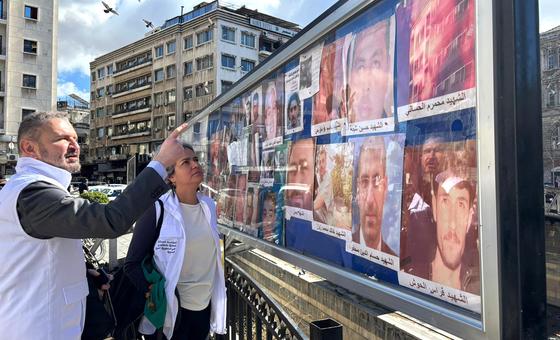
  • ‘We all have someone missing’: Families of the thousands of Syrians ‘disappeared’ by Assad regime share stories of loss

    It has been two months since Bashar al-Assad, the former president of Syria, was forced to flee the country, as rebel forces – now installed as the interim government – advanced on Damascus, putting an end to 50 years of autocratic rule and nearly14 years of civil war. The country’s de facto rulers face monumental political and economic challenges, as well as a chronic humanitarian crisis (see below), and a legacy of human rights abuses committed by the former regime.

    Acknowledging the atrocities, identifying the missing and finding justice for those affected has been identified as an important element in Syria’s recovery, and preventing a return to war. On 10 February, a team from the Independent Institution on Missing Persons in Syria (IIMP), a body set up by the UN, completed its first visit to the country, in cooperation with the de facto rulers.

    As well as meeting representatives of the authorities and partner groups, including NGOs, the team spoke to dozens of families in Derayya and Tadamon, places marked by devastation, destruction, and profound suffering, as well as the infamous Sednaya prison, and heard about their struggles to find their loved ones. Throughout the visit, the team was repeatedly told: “Everyone in Syria knows someone who is missing. We all have someone missing.”

    In the coming weeks, the IIMP will present a project to the authorities for discussion with both officials and families, to help in the collective efforts to discover the fate and whereabouts of the missing and to help open a path to truth.

    Millions of Syrians remain reliant on aid

    Before the fall of Assad, the UN estimated that over 16 million Syrians needed humanitarian aid, citing “rapid economic deterioration” and a lack of livelihood. On Monday, the UN Office for the Coordination of Humanitarian Affairs (OCHA) said that, during the previous week, 19 trucks crossed into northwest Syria carrying nearly 300 tonnes of food for 90,000 people, as well as medical supplies and education kits to reach 450,000 people.

    The UN children’s agency, UNICEF has been drawing attention to the effect that conflict, displacement and economic instability continue to have on many families in Syria, as well as the harsh winter conditions. The agency is active in the country and is currently distributing winter clothing to children in rural areas.

    Source link

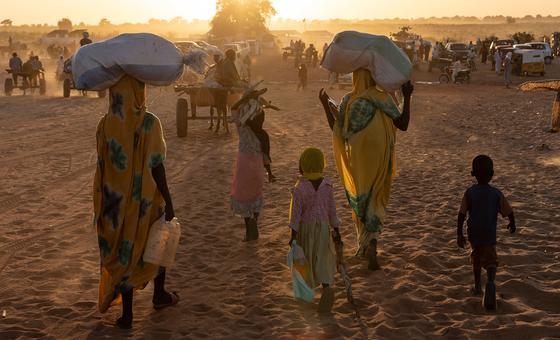
  • Sudan: Civilian death toll triples in one week amid escalating hostilities

    This figure represents a threefold increase from the previous week, when at least 89 civilians lost their lives amid the ongoing hostilities.The crisis is compounded by intensifying violence in South Kordofan and Blue Nile states, where a humanitarian catastrophe looms, according to the UN Humanitarian Coordinator for Sudan, Clementine Nkweta-Salami.

    Escalation of violence

    This week, the conflict has intensified as artillery shelling, airstrikes and aerial drone attacks continue to devastate populated areas, including Khartoum, North and South Darfur as well as North and South Kordofan.

    South Kordofan’s capital, Kadugli, has seen at least 80 civilian casualties with reports of women and children being used as human shields.

    Meanwhile, the threat of further violence in Blue Nile is growing, with reports of mass mobilisation for conflict.

    “The sharp increase in civilian deaths underscores the dire risks civilians face amid the continued failure by the parties to the conflict and their allies to protect civilians,” OHCHR spokesperson Seif Magango said in a statement.

    Humanitarians under threat

    Beyond the rising death toll, humanitarian volunteers are also under threat.

    Local partners report that some aid workers have been erroneously accused of collaborating with the Rapid Support Forces (RSF), making them targets of intimidation and violence.

    One individual has already received a death threat and since the conflict erupted in April 2023, at least 57 members of a local volunteer network have been killed.

    The situation is further worsened by critical shortages of medical supplies and growing food insecurity, particularly in South Kordofan, where malnutrition rates are spiking.

    Urgent call for protection

    OHCHR has urged all parties involved in the conflict to end indiscriminate attacks and targeted violence against civilians.

    “The Sudanese Armed Forces and the Rapid Support Forces – and their allied movements and militias – must respect their international law obligations and take concrete steps to protect civilians from harm, including humanitarian workers and human rights defenders,” Mr. Magango emphasised.

    Source link

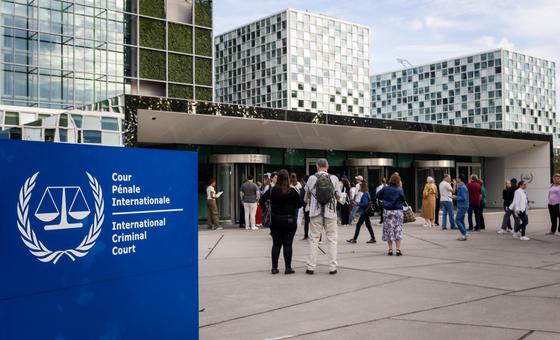
  • International Criminal Court condemns US sanctions move

    The court was established by the Rome Statute, negotiated within the UN – but it is a fully independent court set up to try the gravest crimes, including crimes against humanity. Read our explainer here.

    Thursday’s executive order said the US government would “impose tangible and significant consequences” on ICC officials who work on investigations that threaten national security of the US and allies – including Israel.

    Arrest warrants

    The directive follows the decision by ICC judges to issue arrest warrants in November for Israeli Prime Minister Benjamin Netanyahu and former defence minister Yoav Gallant, which accuses them of alleged war crimes in relation to the conduct of the war with Hamas on Gaza.

    The ICC also issued a warrant for a former Hamas commander, Mohammed Deif.

    Neither the US nor Israel recognise the ICC’s jurisdiction; there are 125 states parties to the Rome Statute, which came into effect in 2002.

    The US executive order says that the ICC actions against Israel and preliminary investigations against the US “set a dangerous precedent, directly endangering current and former” personnel.

    The order details possible sanctions including the blocking of property and assets of ICC officials and barring them and their families from entering the US.

    A bid to impose sanctions on the ICC by the US Congress in January prior to the change in administration, failed to garner enough support in the Senate.

    ICC ‘stands firmly by its personnel’

    “The ICC condemns the issuance by the US of an Executive Order seeking to impose sanctions on its officials and harm its independent and impartial judicial work,” said the court in a press release.

    “The Court stands firmly by its personnel and pledges to continue providing justice and hope to millions of innocent victims of atrocities across the world, in all Situations before it.”

    The court also called on all parties to the ICC together with civil society and other nations to “stand united for justice and fundamental human rights.”

    Source link

  • DR Congo: Rights chief warns crisis could worsen, without international action

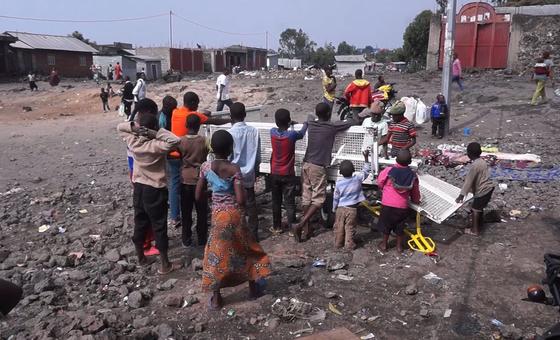
    Since 26 January, nearly 3,000 people have been killed and 2,880 injured in attacks by the M23 and their allies “with heavy weapons used in populated areas, and intense fighting against the armed forces of the DRC and their allies”, the High Commissioner said, as UN Member States weighed setting up a fact-finding mission to investigate extreme rights violations still being committed in the DRC provinces of North Kivu and South Kivu.

    Hostilities have continued unabated in this mineral-rich region that has been unstable for decades amid a proliferation of armed groups, forcing hundreds of thousands to flee their homes. Fighting escalated in late January when majority-Tutsi M23 fighters seized control of parts of North Kivu, including areas near Goma, and advanced towards South Kivu and the eastern DRC’s second city of Bukavu.

    A draft resolution circulated before the Special Session – the 37th since the Council was created in 2006 – also condemned Rwanda’s military support of the M23 armed group and called for both Rwanda and M23 to halt their advance and to allow lifesaving humanitarian access immediately.

    Hospitals targeted

    Addressing the emergency session, Mr. Türk noted that two hospitals in Goma had been bombed on 27 January, killing and injuring multiple patients, including women and children.

    In a mass prison break at Muzenze Prison in Goma on the same day, at least 165 female inmates were reportedly raped and most were later killed in a fire under suspicious circumstances, he said, citing the authorities.

    “I am horrified by the spread of sexual violence, which has been an appalling feature of this conflict for a long time. This is likely to worsen in the current circumstances,” the UN rights chief continued, adding that UN staff were now verifying multiple allegations of rape, gang rape and sexual slavery in eastern DRC’s conflict zones.

    MONUSCO role

    Echoing those concerns, Bintou Keita, Special Representative of the Secretary-General in the DRC and chief of UN peacekeeping mission (MONUSCO) told the Council that dead bodies still lie in the streets of Goma, which M23 fighters now control. The situation is “catastrophic”, she continued.

    While I am speaking, youth are being subjected to forced recruitments and human rights defenders, civil society actors and journalists have also become a major population at risk. MONUSCO continues to receive requests for individual protection from them as well as from judicial authorities under threat and at risk of reprisals from M23 in areas under its control.”

    She issued a stark warning on the health risks linked to ongoing fighting, “especially the resurgence of cholera and the high risk of mpox, the sudden interruption of children’s schooling, and the rise of conflict-related sexual violence and gender-based violence”.

    According to latest reports, medical personnel face electricity cuts and lack fuel for their generators for basic services, including morgues, Ms. Keita continued. “I again call on international community to advocate for humanitarian assistance to reach Goma immediately.”

    Countries respond

    In response to the ongoing crisis, DRC’s Minister of Communications and Media, Patrick Muyaya Katembwe, spoke out against the continued logistical, military and financial support of countries including Rwanda “to armed groups operating on our territory”.

    The minister maintained that Rwanda’s support for the M23 had fuelled the violence in eastern DRC “for more than 30 years, exacerbating the war for reasons linked to the exploitation of the strategic mining resources of the Democratic Republic of Congo”.

    Dismissing that claim, Ambassador James Ngango of Rwanda to the UN in Geneva, insisted that a large-scale attack against Rwanda was “imminent”.

    He accused the “Kinshasa-backed coalition” of stockpiling a large number of weapons and military equipment near Rwanda’s border, mostly in or around Goma airport.

    “These weapons include rockets, kamikaze drones, heavy artillery guns capable of shooting precisely within the Rwandan territory. The weapons were not turned at the theatre of operations against the M23, rather they were pointed directly at Rwanda,” he said.

    ‘We are all implicated’

    Highlighting the need for international efforts to end the long-running conflict, Mr. Türk called for greater understanding of the political and economic background.

    The population in the eastern DRC is suffering terribly, while many of the products we consume or use, such as mobile phones, are created using minerals from the east of the country. We are all implicated.”

    In response to the ongoing emergency, the Human Rights Council’s 47 Members  adopted a resolution establishing a fact-finding mission into abuses – staffed by the UN human rights office, OHCHR – to start work as quickly as possible. A commission of inquiry will take over the fact-finding mission’s work once its commissioners are appointed, OHCHR said at the outcome of the Special Session.

    Source link

  • Council of Europe in a divided position on human rights

    The permanent representatives in the Committee of Ministers of the Council of Europe Wednesday decided to move ahead on a review process collecting another opinion of a controversial draft text for a new additional protocol regulating the use of coercion in psychiatry. The permanent representatives prior to this had been notified of UN and civil society concern that this draft text violates international human rights law.

    The work on this possible new additional protocol has a long history, starting back in 2011. It has received strong and persistent criticism since before the first drafts were formulated.

    The drafted possible new legal instrument of the Council of Europe is stated to have an intend of protecting victims subjected to coercive measures in psychiatry which are known to be degrading and potentially amount to torture. The approach is through regulating the use of and preventing as much as possible such harmful practices. The critics which include the United Nations Human Rights mechanism, the Council of Europe’s own Commissioner on Human Rights, the Council’s own Parliamentary Assembly and numerous other experts, groups and bodies point out that allowing such practices under regulation is in opposition to the requirements of modern human rights, that simply ban them.

    In June 2022 the permanent representatives, sitting in the Council of Europe’s decision-making body, the Committee of Ministers, in consequence of the persistent high level criticism of this work decided it needed further information and suspended the work on the draft protocol. They requested information on the use of voluntary measures to be able to finalize their stand on the drafted text on coercion in psychiatry. These deliverables were recently provided to the permanent representatives by its subordinary body, the Steering Committee for Human Rights in the fields of Biomedicine and Health (CDBIO).

    Following this very important partners and authorities issued concerns on the seeming continuation of the process of the draft additional protocol. The United Nations Committee on the Rights of Persons with Disabilities (CRPD Committee) reissued a statement to the Council of Europe, with further clarifications, on its concern of this Council of Europe draft additional protocol. The UN CRPD Committee reiterated the need for moving towards the end of the use of any form of coercion in the provision of mental health policies and services for persons with disabilities. And that the UN Convention on the Rights of Persons with Disabilities (CRPD), ratified by everyone of the 47 member States of the Council of Europe, outlaws forced and involuntary institutionalization and any form of deprivation of liberty based on impairment, including in situations of persons with disabilities experiencing individual crisis.

    The Secretariat of the Committee of Ministers decided to not issue the UN CRPD Committee’s statement to the permanent representatives “since it was already publicly available.” The Secretariat informed the European Times that this was explained to the sender with a suggestion “to circulate it themselves.” The Secretariat however did inform the delegations of the permanent representatives about it during an information meeting prior to the Wednesday meeting. The preparatory meeting took place 23 January and was attended only by a smaller number of members of the Committee of Ministers.

    At its Wednesday meeting the Committee then decided to transmit to the Parliamentary Assembly the draft Additional Protocol to the Convention on Human Rights and Biomedicine (ETS No. 164) concerning the protection of the human rights and dignity of persons with regard to involuntary placement and involuntary treatment within mental healthcare services and its draft Explanatory Report and invited the Parliamentary Assembly to give an opinion on the draft Additional Protocol as soon as possible.

    Whether the fact that the permanent representatives, as announced in their June 2022 decision, with which they suspended the work to collect further data for a proper review, now resumed the work on the additional protocol after having received the requested information will in fact listen to the UN and the broad representation of civil society and its own Parliamentary Assembly and Human Rights Commissioner is to be seen.

    The Parliamentary Assembly is now to review this extensive work and will most likely discuss it during the Spring session in April.

  • ‘She had a syringe, razor blade, and bandages’: Surviving genital mutilation

    Zeinaba Mahr Aouad, a 24-year-old woman from Djibouti, remembers the day when, as a ten-year-old, an unexpected visitor came to her house: “She had a syringe, a razor blade and bandages.”

    The woman was there to carry out a brutal, unnecessary and – since 1995 in the Horn of Africa country – illegal operation known as female genital mutilation, which involves sewing up a girl’s vagina and cutting out her clitoris.

    Even as Zeinaba’s traumatic experience has clouded her memories of that day, she still remembers the sensation of intense pain once the effects of the anaesthetic had worn off.

    Difficult to walk

    “I had trouble walking and when I urinated, it burned,” she said.

    Her mother told her it was nothing to worry about and spoke of the degrading procedure in terms of the importance of tradition.

    Like many victims of FGM, Zeinaba came from a vulnerable and poor background, living in a single room with her mother and two sisters in a rundown neighbourhood of Djibouti City.

    “There was just a TV, suitcases where we stored our clothes and mattresses on which we slept,” she remembered.

    Her mother sold flatbread to passersby, while Zeinaba played with a skipping rope with friends. “We also just played in the dirt.”

    230 million mutilations

    Zeinaba Mahr Aouad, 24, a resident of Djibouti, survied female genital mutilation when she was 10. Now a volunteer for the “Elle & Elles” network, with the support of UNFPA, she canvasses her neighborhood and others to convince residents to end the pract…

    © Neuvième-UNFPA Djibouti

    Zeinaba Mahr Aouad, 24, a resident of Djibouti, survied female genital mutilation when she was 10. Now a volunteer for the “Elle & Elles” network, with the support of UNFPA, she canvasses her neighborhood and others to convince residents to end the practice.

    Some 230 million women and girls worldwide have undergone mutilations according to data released by the UN’s sexual and reproductive health agency, UNFPA, and it is on the increase as ever younger children, sometimes below five years old, go under the knife.

    “A baby doesn’t talk,” explained Dr. Wisal Ahmed, an FGM specialist at UNFPA.

    It’s often thought of as a one-time procedure, but in reality, it involves a lifetime of painful procedures that continue into adulthood.

    “The woman is cut again to have sex, then sewn back together, then reopened for childbirth and closed again to narrow the orifice once more,” said Dr. Ahmed.

    Tackling harmful traditions

    UNFPA and its international partners have worked to put a definitive end to FGM and although these efforts have contributed to a steady decline in the rates at which the procedure is performed over the past 30 years, the global increase in population means the number of women affected is actually growing.

    UNFPA continues to work with communities that still engage in the practice about the short and long-term effects.

    The agency’s work has been supported across the world over a number of years by the US Government, which has recognized FGM as a human rights violation. 

    It is not a problem which affects just developing countries. According to US State Department figures, in the US itself, approximately 513,000 women and girls have undergone or are at risk of FGM.

    Support from men

    In Djibouti, in 2023, the US provided around $44 million in foreign assistance.

    UNFPA confirmed that FGM programmes supported by the United States have not yet been impacted by the current stop work orders, adding that “US support to UNFPA over the last four years resulted in an estimated 80,000 girls avoiding female genital mutilation.”

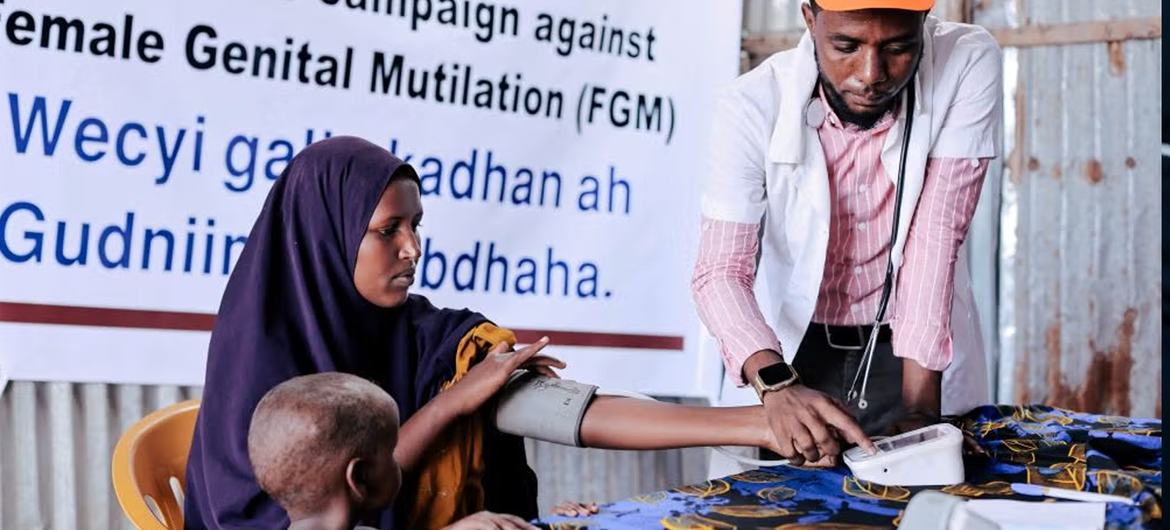
    UNFPA supports awareness raising campaigns about FGM in Africa, including in Somalia (pictured).

    © UNFPA/ROAS/Aisha Zubair

    UNFPA supports awareness raising campaigns about FGM in Africa, including in Somalia (pictured).

    Local networks

    Zeinaba Mahr Aouad now works as a volunteer for a local network launched by UNFPA in 2021, which numbers over 60 women and provides support to local women’s health and rights activists.

    She also visits underprivileged areas of Djibouti to raise awareness among young people and future parents, both women and men, of the harmful effects of FGM.

    “Because it’s not just the woman who participates in these practices: without the agreement of the man by her side, it couldn’t be done”, she said.

    Source link

  • Syria: Assad’s armed forces must face accountability, says rights probe

    The Independent International Commission of Inquiry on Syria’s latest report follows the lightning operation led by mainly Hayat-Tahrir al-Sham fighters that toppled President Bashar al-Assad last December, ending the 13-year war that decimated the country and destabilised the entire region.

    The violence is believed to have killed hundreds of thousands of Syrians and uprooted 15 million, the report’s authors said.

    They noted that various armed groups – including former government troops and opposition fighters – carried out widescale damage to and pillaged Syrian property, particularly in areas that changed hands repeatedly during the fighting.

    The Assad regime’s security forces targeted those perceived as political opponents, including demonstrators, activists, deserters and defectors, their families and communities, the report’s authors continued.

    Persistent and repeated crimes

    Vast areas of land where refugees and internally displaced people had relocated to were also pillaged and ransacked to the point of rendering entire neighbourhoods uninhabitable.

    Forces stole household items, furniture and valuables, which they would sometimes sell at markets including some created specifically for this purpose.

    They also dismantled roofs, doors, windows, iron rods, electrical wires and plumbing fixtures.

    ‘Systematic pillage’

    “Systematic pillage was coordinated by members of the former Syrian army, such as the Fourth Division, and affiliated security forces and militias, who concluded business agreements with private contractors or merchants interested in acquiring looted items, including raw materials,” the Commissioners explained.

    The wrongdoings could “amount to war crimes” if “carried out for private or personal gain”, they added.

    Near-total impunity

    To date, accountability for these crimes has not happened and the overwhelming majority of perpetrators have escaped any accountability. “The impunity for the war crime of pillage has been near total in Syria” except for a few convictions in areas held by the Turkey-backed Syrian National Army (SNA).

    The only known convictions that relate to pillage or property offenses concern female former members of ISIL [or Da’esh, the terrorist group]”, the report said, adding that none of the forces perpetrating pillage on a massive scale had been prosecuted.

    Accountability and reform

    Among their recommendations, the Commissioners urged renewed efforts to protect housing, land and property rights as paramount to the country’s efforts to rebuild after a decade of crippling conflict.

    If the violations remain unaddressed, grievances and social tensions will be exacerbated, fuelling cycles of violence and displacement, the commission warned.

    The investigators write that following the fall of the regime, on 8 December, the “devastating patterns” of pillage “must not be repeated”.

    The report urges all military commanders and newly empowered leaders to prevent and punish any instances where property is stolen that was left behind by those newly displaced.

    Independent experts

    The Commissioners representing the top rights panel are appointed and mandated by the Geneva-based Human Rights Council. They are not UN staff, do not draw a salary, and serve in their individual capacity, independent of the UN Secretariat.

    Source link

  • Human rights situation in Haiti remains ‘very alarming’, UN report finds

    Released on Tuesday, the new report highlights that at least 5,626 people have been killed and more than 2,213 injured in the past year, due to the armed gangs who control much of the capital and the country at large.

    These figures reflect a sharp increase of over 1,000 fatalities compared to 2023underscoring the unrelenting brutality gripping the nation.

    UN Spokesperson Stéphane Dujarric highlighted the findings in Tuesday’s press briefing in New York, pointing to a severe deterioration in Haiti’s security landscape.

    Harrowing mass killings

    According to BINUH, the last quarter of 2024 saw an alarming rise in deadly gang-related attacks.

    At least 1,732 people were killed and 411 injured due to violence by armed groups, self-defence units and law enforcement operations.

    The report highlights three large-scale massacres that resulted in over 300 deaths, with the most severe attack occurring in the Wharf Jérémie neighbourhood of Port-au-Prince.

    Between 6 and 11 December, at least 207 people were slaughtered by a gang led by Monel Felix, known as “Micanor,” who accused the mainly elderly victims of practicing voodoo and being responsible for the death of his child.

    The armed gang executed people in their homes and a local place of worship before burning or dismembering bodies to conceal evidence. No law enforcement intervention was reported during the five-day attack.

    Similar atrocities took place in Pont Sondé and Petite Rivière de l’Artibonite, where coordinated gang offensives left at least 170 people dead in early December.

    The murders sparked reprisals by self-defence groups, further intensifying the violence

    State-sanctioned executions

    Haiti’s security forces have also been implicated in grave human rights violations.

    The report documents more than 250 executions carried out by police in 2024, with two children among the victims.

    Many individuals were executed after being detained, while others – including street vendors and motorcycle taxi drivers – were shot for failing to provide identification.

    The Public Prosecutor of Miragoâne was also cited for six extrajudicial executions, bringing the total killings by prosecutors to 42 in 2024.

    Despite calls for accountability, investigations into police abuses remain largely stalled. 
    BINUH noted that no officers have undergone vetting since June 2023, reflecting a deep-seated lack of supervision.

    Child exploitation

    Haiti has also experienced a 150 per cent surge in kidnappings with gangs increasingly targeting children.

    The report raised alarm over widespread sexual violence, with at least 94 cases of rape and sexual exploitation documented in the last quarter alone.

    Women and girls remain particularly vulnerable in gang-controlled areas, where they are subjected to systemic abuse.

    Additionally, child trafficking and forced recruitment by armed groups continue to rise.

    UNICEF has warned of a 70 per cent increase in child soldiers, with boys as young as 12 being used for kidnappings, armed confrontations and extortion.

    Judicial failures

    Despite the scale of the crisis, Haiti’s judicial system remains paralysed.

    While some efforts were made in late 2024 – including appointments to key judicial posts – progress on high-profile massacres and corruption cases remains slow.

    Prime Minister Alix Didier Fils-Aimé ordered investigations into the Pont Sondé and Wharf Jérémie massacres, yet no arrests or judicial actions had been taken by the end of the year.

    International response

    The High Commissioner for Human Rights Volker Türk emphasised the critical need to restore the rule of law and called on the international community to ensure the full deployment of the Multinational Security Support mission (MSS).

    The UN has also urged regional governments to intensify inspections of arms shipments destined for Haiti, in line with Security Council resolutions.

    With over one million people displaced and a humanitarian catastrophe continue to unfold, urgent international intervention is seen as vital to stabilising the country. 

    Source link