Category: Human Rights

  • Stories from the UN Archive: Marian Anderson broke barriers with music and diplomacy

    Battling extensive racial prejudice, she broke many barriers, including as the first African American to perform with the Metropolitan Opera.

    UN Secretary-General Dag Hammarskjöld hailed her contributions to art and diplomacy, which live on in her legacy as an inspiration for generations to come.

    Watch UN Video’s latest Stories from the UN Archive episode below:

    Operatic hommage to human rights

    A distinguished alto, Ms. Andersen was a major presence on the diplomatic scene, including the 1950 commemoration held at New York’s Metropolitan Opera House for the second anniversary of the landmark UN Universal Declaration of Human Rights.

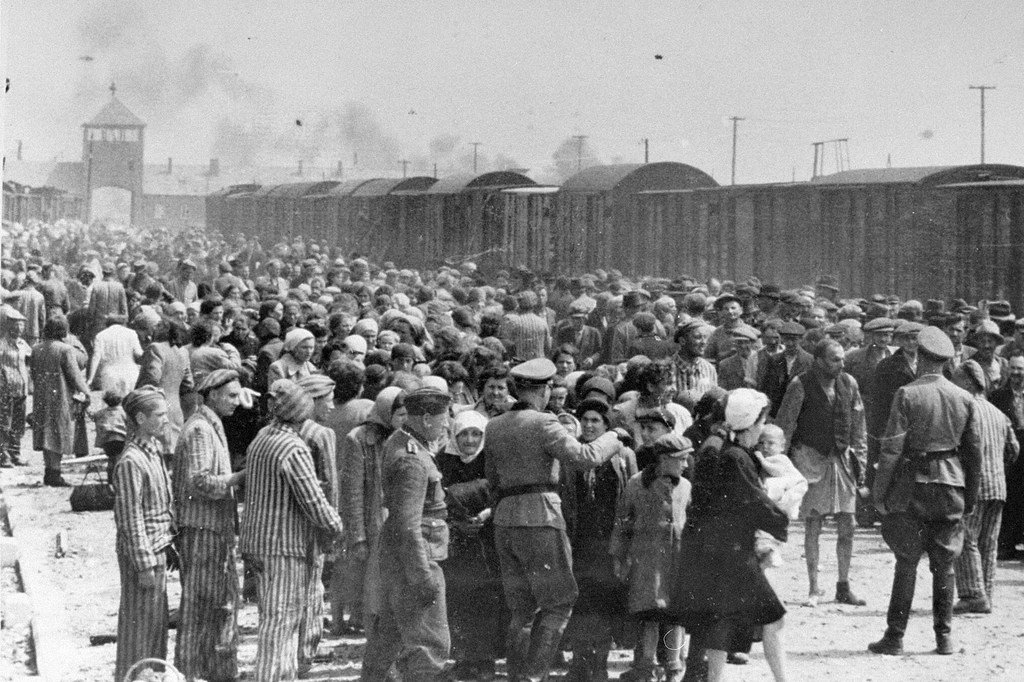
    Following her epic performance, she shared an A-list table, as shown in the archive photo below, with (from right to left) head of International Business Machines (IBM) Thomas Watson, former UN first lady and chair of the UN Commission on Human Rights Eleanor Roosevelt, General Assembly President Nasrollah Entezam, UN Secretary-General Trygve Lie and Jeannette Kittredge Watson.

    Marian Anderson (far right) at an intermission on Human Rights Day at New York's Metropolitan Opera House in 1950. (file)

    Marian Anderson (far right) at an intermission on Human Rights Day at New York’s Metropolitan Opera House in 1950. (file)

    Cold war collaboration

    A staple in the UN conference rooms and at commemorations, Ms. Anderson joined Ezio Pinza, Danny Kaye and other stars in 1953 during UN Day celebrations. Watch that performance here.

    Again in 1976, the US ambassador took the stage in the iconic General Assembly Hall at the UN’s 31st birthday celebration, appearing alongside the National Symphony Orchestra of Washington DC, under the direction of Antal Dorati.

    Ms. Anderson was one of two soloists. She was the narrator in Aaron Copland’s composition Lincoln Portrait, and Lazar Berman, the Soviet pianist, performed Tchaikovsky’s First Piano Concerto.

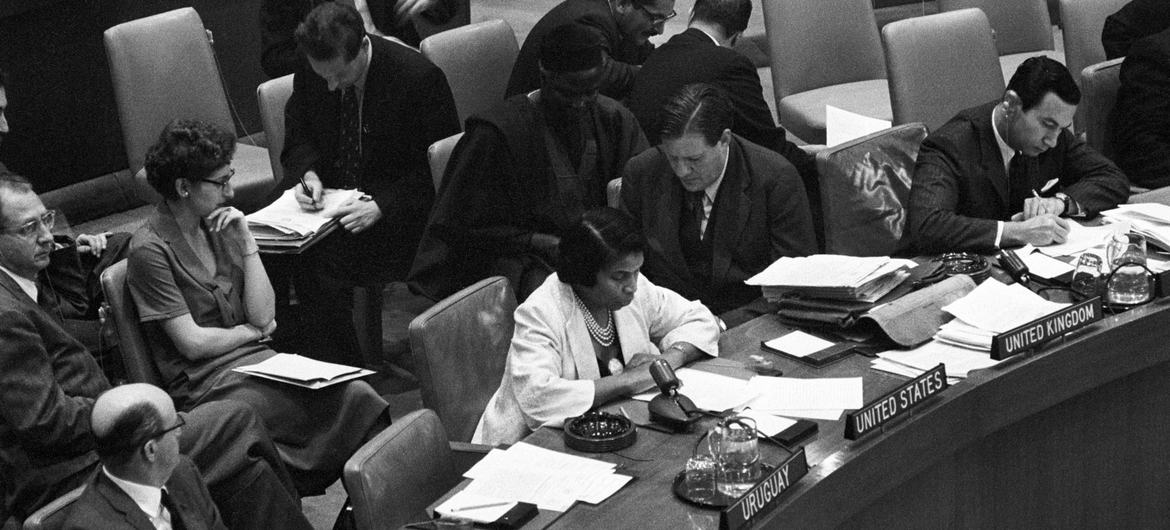
    US Ambassador Marian Anderson addresses the Fourth Committee during a discussion in on the Cameroons in 1958. (file)

    US Ambassador Marian Anderson addresses the Fourth Committee during a discussion in on the Cameroons in 1958. (file)

    Stories from the UN Archive

    UN News is showcasing epic moments across UN history, cultivated from the UN Audiovisual Library’s 49,400 hours of video and 18,000 hours of audio recordings.

    Catch up on UN Video’s Stories from the UN Archive playlist here and our accompanying series here.

    Source link

  • Haiti: ‘I was deported to a country I never lived in’

    Mireille

    Pregnant and exhausted and clutching a small bag with all that was left of her belongings, Mireille* stood under the relentless Haitian sun, not sure what to do next.

    She had just been deported from the Dominican Republic, a country she had called home since she was eight years old.

    Over the years she has seen Haiti, the land of her birth, overcome by gang violence as well as humanitarian, political and economic crises.

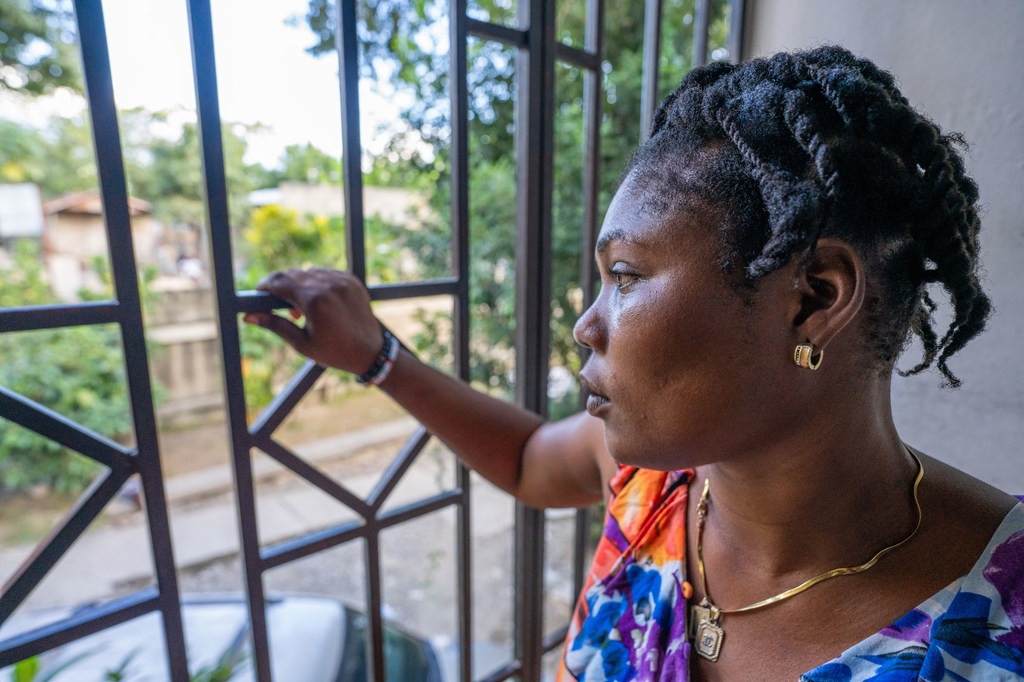
    Mireille gazes through the protective bars at the GARR facility, reflecting on her journey back to Haiti.

    Mireille gazes through the protective bars at the GARR facility, reflecting on her journey back to Haiti.

    “I was deported to a country I never lived in,” she said, filled with a mix of anger and despair.

    The Dominican Republic had been her home for nearly three decades. It was where she built her life, forged relationships and created memories. But overnight, she became an outsider, stripped of her dignity and forced to return to a country she didn’t know.

    Mireille’s ordeal began in the early hours of the morning, five days before she crossed the border into Haiti when she was taken to a crowded and uncomfortable detention center, where she stayed for several days before being transported to the border.

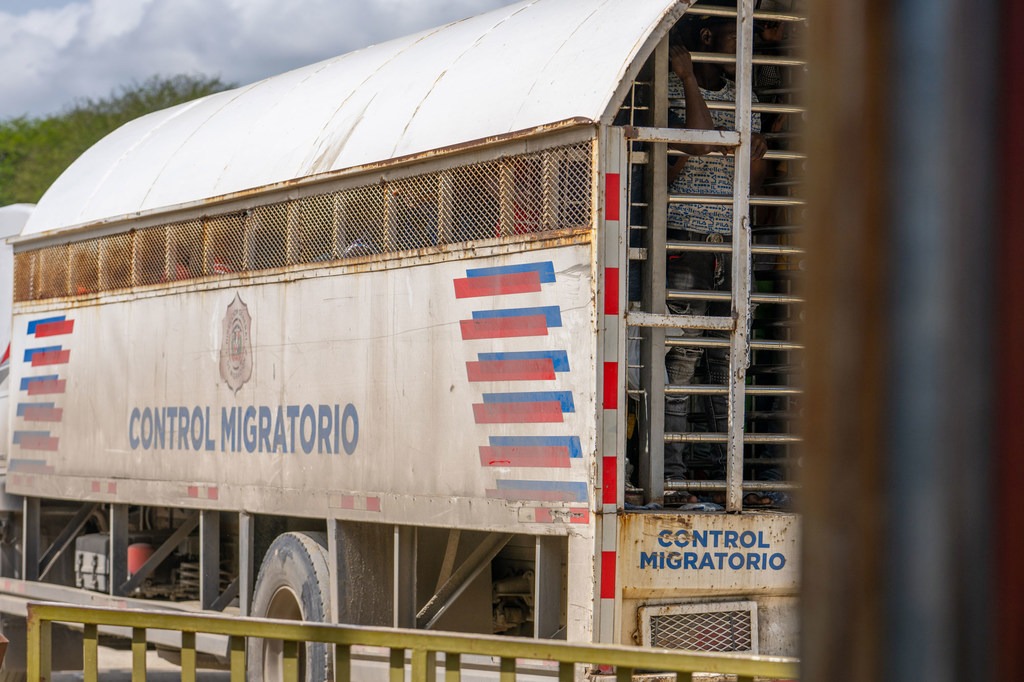
    A deportation truck arrives at the Belladère border crossing between the Dominican Republic and Haiti.

    A deportation truck arrives at the Belladère border crossing between the Dominican Republic and Haiti.

    “I arrived in Haiti feeling scared and unsure of what to do,” Mireille said. “I barely know this country, and I’m struggling to figure out where to start. It’s disorienting and difficult.”

    Guerson and Roselène

    Guerson and Roselène* had spent over a decade in the Dominican Republic, building their lives in Loma de Cabrera, not far from the border with Haiti.

    Guerson worked as a mechanic at a small garage fixing cars, motorbikes, and agricultural equipment. His hands, often smeared with grease, were a source of pride. “People trusted me with their vehicles,” he said. “It was hard work, but I could provide for my family.”

    Roselène, meanwhile, managed their modest home. She prepared meals and supplemented the family income by selling patés and fried plantains to neighbours.

    A simple life

    Their daily life was simple but stable. Their son Kenson attended a local preschool, and Roselène spoke of her pride seeing him learn to write his name.

    Then the Dominican authorities arrived. “My children didn’t understand,” said Guerson. “Kenson asked if we were going on a trip. I didn’t know how to answer him.”

    The family was herded onto a truck “I held my baby so tightly. I was afraid we wouldn’t survive the journey,” Guerson recalled.

    Crossing the border into Haiti felt like stepping into chaos.

    The town of Ouanaminthe, already struggling with a sharp increase in deportations, lacked the capacity to respond to the growing crisis.

    Families stood on dusty roads, clutching bags and children, unsure of where to go.

    “We stood there for hours, lost,” Roselène said. “The children were hungry. I didn’t know how to comfort them because I had nothing left to give.”

    Crisis country

    Mireille, Guerson and Roselène are just three of the more than 200,000 Haitians who were forcibly repatriated to their homeland in 2024, some 97 per cent of them from the Dominican Republic.

    Nearly 15,000 people were returned from across the border in the first two weeks of January alone.

    They returned to a country in crisis.

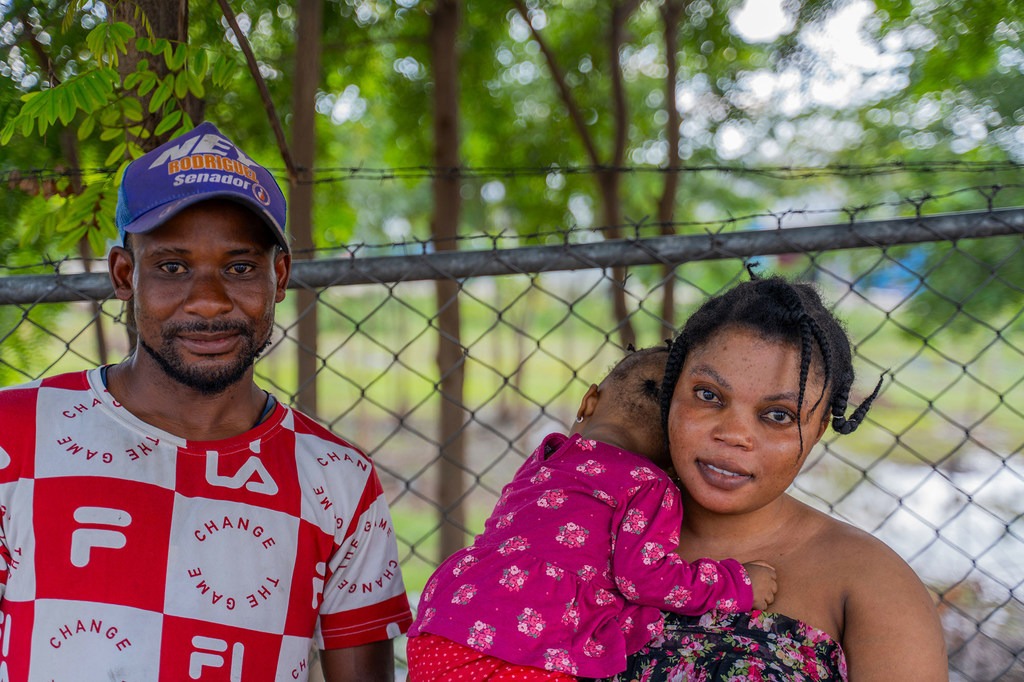
    Guerson (left) and Roselène are beginning a new life in Haiti.

    Guerson (left) and Roselène are beginning a new life in Haiti.

    Armed groups now control large parts of the country, including key roads in and out of the capital, Port-au-Prince.

    The years of violence have displaced over 700,000 people, forcing families into precarious shelters including abandoned schools and churches. In these places, access to food, water and healthcare is limited, leaving many extremely vulnerable.

    Nearly 5.5 million people, half of Haiti’s population, require humanitarian aid to survive.

    Safety net across the border

    Fortunately, when migrants cross over the border into Haiti, they are not alone.

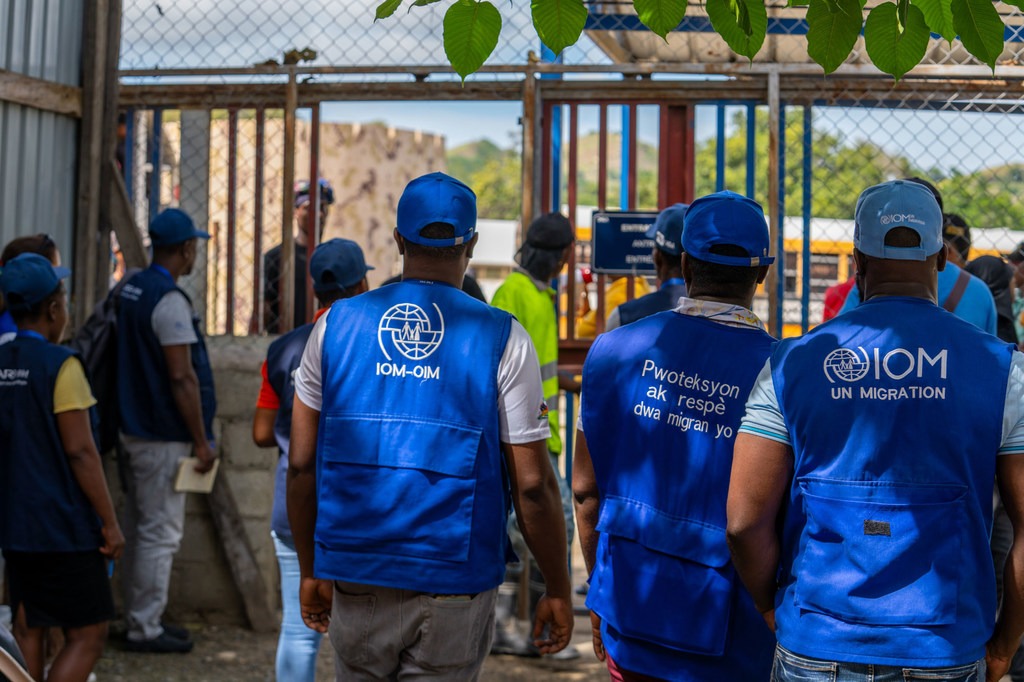
    The UN’s International Organization for Migration (IOM) works with the Support Group for the Repatriated and Refugees (Groupe d’Appui aux Rapatriés et Réfugiés, GARR) to ensure the returnees have access to a range of services to meet their immediate needs, including psychosocial support, health referrals, for example pre-natal care, and the distribution of basic items such as clothing, hygiene products, and toiletries.

    Temporary accommodation is also available for the most vulnerable, so they can rest and take stock before moving forward with their lives.

    IOM staff prepare to assist deported Haitians as they re-enter their home country.

    IOM staff prepare to assist deported Haitians as they re-enter their home country.

    For unaccompanied children, family reunifications are organised and in cases of gender-based violence, survivors are provided with specialised care.

    IOM also works with the Office National de la Migration (ONM), Haiti’s government agency for migration.

    ONM leads the registration process, ensuring that each individual is accounted for and works with IOM to assess vulnerabilities and provide individual assistance.

    The future remains unclear for many returnees in a country where the vast majority of people struggle to get by on a daily basis.

    Guerson and Roselène remain somewhat hopeful that they will return to the Dominican Republic someday. “In the meantime, I will find a way to work,” Guerson said softly, his words conveying uncertainty. “I do this for my children.”

    *Names have been changed for their safety

    Fact box:

    The work of IOM as well as GARR and ONM is supported by international donors, including the European Union’s Civil Protection and Humanitarian Aid Operations (ECHO), Global Affairs Canada (GAC), and the Korea International Cooperation Agency (KOICA).

    Source link

  • Peaceful Iranians arrested in Turkey for publicly manifesting their religious beliefs

    On 5 January 2025, police officers in Karaman (Turkey) raided the home of an Iranian couple looking for an opportunity to apply for asylum in an EU country and belonging to the Ahmadi Religion of Peace and Light in Iran, a Shia-derivative new religious movement founded in 1999.

    As Pooria Lotfiillanou, the head of the family, was then absent, they only found his wife Ebtighaa and their six-month-old child. They arrested both and took them to the local police station, leaving them in detention under harsh conditions.

    Later on, the authorities called Pooria to the police station, threatening the continued detention of his wife and child to pressure his compliance. Pooria was subsequently forced to sign a pledge prohibiting any further religious activities, effectively stripping him of his rights to freedom of religion and expression as guaranteed under international human rights law.

    The reason of their arrest was that they had publicly distributed posters about their religion.

    Authorities charged the couple under Article 216/3 of the Turkish Penal Code, accusing them of “Incitement to Hatred and Hostility (Insulting Religious Values Adopted by a Segment of the Public)” for peacefully distributing religious posters.

    Authorities also cited Law No. 6458 on Foreigners and International Protection, claiming that Pooria and Ebtighaa pose a “Threat to Public Order and Security.” Using this as justification, officials began detention and deportation proceedings against the family.

    The Directorate of Migration Management instructed that the couple and their baby be transferred to the Niğde Removal Center on 7 January 2025. These actions were taken without regard for the family’s vulnerable status.

    Under threat of deportation to Iran

    Their deportation would expose Pooria, Ebtighaa, and their infant to grave risks in Iran, where Pooria had already faced severe persecution, including physical assault, threats, and involuntary detention in a psychiatric hospital.

    This is not the first time Turkish authorities have targeted members of the Ahmadi Religion of Peace and Light. Pooria was among 104 individuals arbitrarily detained in 2023 and held for five months without due process. Their release came only after significant international pressure, including intervention by the United Nations and various prominent human rights organizations.

    The Ahmadi Religion of Peace and Light has called for immediate international action to secure the family’s release and halt the deportation orders. Repatriating the Lotfiillanou family in Iran, where they face life-threatening risks, would violate Turkey’s obligations under international law, including the principle of non-refoulement. Without decisive intervention, this family’s plight risks becoming yet another tragic chapter in the ongoing persecution of their religious community.

    Persecution of the Ahmadi Religion of Peace and Light in Iran

    On 15 December 2022, 15 Iranian Ahmadis were arrested and taken to the notorious Evin Prison because of their religious beliefs.

    During their detention, they were pressured to sign papers by which they would recant their faith and defame their religion.

    Human Rights without Frontiers then campaigned for the release of the 15 members of this religious group labelled “heretics” and “infidels” in Iran.

  • World News in Brief: Deadly virus outbreak in Uganda, $500 million human rights appeal, Thailand’s lèse-majesté laws in spotlight

    Health authorities in Kampala confirmed that one patient has died – a nurse who had sought treatment at various other medical facilities after developing fever-like symptoms.

    In response to the outbreak of the often deadly and infectious haemorrhagic fever which is transmitted through contact with bodily fluids and tissue, WHO is mobilising efforts to support national health authorities in swiftly containing and ending the outbreak.

    Senior public health experts and staff from WHO’s country office are being deployed to support key outbreak response measures.

    Additionally, WHO has allocated $1 million from its Contingency Fund for Emergencies to accelerate early action. Medical supplies, including personal protective equipment, are being readied for delivery from WHO’s Emergency Response Hub in Nairobi.

    Race to develop a vaccine

    Although there are no licensed vaccines for Sudan virus disease, WHO is coordinating with developers to deploy candidate vaccines once all necessary approvals are obtained.

    Regarding the deceased man, no other health workers or patients have shown symptoms, said WHO.

    A total of 45 contacts, including health workers and family members are under close monitoring. The identification of the case in a densely populated urban area necessitates a rapid and intense response, the agency stressed.

    Dr Matshidiso Moeti, WHO Regional Director for Africa, welcomed the prompt outbreak declaration saying the agency was supporting the Government and partners “to scale up measures to quickly identify cases, isolate and provide care, curb the spread of the virus, and protect the population.

    “Uganda’s robust expertise in responding to public health emergencies will be crucial in ending this outbreak effectively.”

    There have been eight previous outbreaks of Sudan Ebola Virus Disease, with five in Uganda and three in Sudan. Uganda last reported an outbreak in 2022.

    UN rights chief launches $500 million global appeal

    The UN human rights chief on Thursday launched a $500 million funding appeal for 2025 to address a multitude of crises threatening to reverse decades of progress.

    The appeal aims to support critical human rights efforts, including rights mainstreaming, advisory services and technical cooperation, alongside field offices of the UN human rights office, OHCHR.

    It will also boost special trust funds, such as those supporting victims of torture, Indigenous Peoples, or those impacted by slavery.

    Launching the appeal in Geneva, UN rights chief Volker Türk, reiterated the importance of these efforts: “During conflicts and in peacetime; in developing countries and advanced economies; from historic grievances to emerging risks – my Office is holding the line for humanity.

    Low cost, high impact

    “Human rights are a low-cost, high-impact investment to mobilize people for peace, security, and sustainable development; and to build social cohesion based on the contributions of every individual,” he added.

    The appeal is in addition to the OHCHR’s regular budget of $238.5 million as part of UN’s overall budget that was approved in late December 2024. That amount is not sufficient to cover all of its mandated work and the requests for assistance it receives.

    Mr. Türk underscored the need to ensure OHCHR has sufficient resources to carry out its vital work.

    “I am very concerned that if we do not reach our funding targets in 2025, people who should otherwise be free, may remain in prison,” he said.

    “Women and girls may lose out on opportunities, ignored by the world. Violations and abuses may go undocumented, leading to a lack of accountability and increased impunity. And human rights defenders may lose the little protection they have,” he warned.

    Independent rights experts urge Thailand to end lèse-majesté prosecutions

    A group of independent UN human rights experts condemned Thailand’s continued use of lèse-majesté laws to imprison activists and human rights defenders, calling for the repeal or significant revision of the country’s criminal code.

    In a news release on Thursday, the experts – who are mandated and appointed by the Geneva-based Human Rights Council – warned that Article 112 of Thailand’s Criminal Code, which punishes criticism of the monarchy with up to 15 years in prison, violates international human rights standards.

    Free speech rules

    “Under international law, individuals have the right to criticise public officials, including a King, and to advocate peacefully for the reform of any public institution, including the monarchy,” the experts said.

    They described the law as “harsh and vague”, highlighting that it grants excessive discretion to authorities and courts, leading to widespread misuse.

    Since 2020, more than 270 people have been prosecuted under Article 112, many receiving lengthy consecutive sentences.

    “Lèse-majesté laws have no place in a democratic country,” the experts said, warning that their use stifles political expression and silences activists, journalists, and opposition members.

    They urged the Thai Government to amend the country’s criminal code to align with international human rights laws and called for an immediate moratorium on prosecutions and imprisonments under lèse-majesté laws.

    Source link

  • Sudan: UN rights chief ‘alarmed’ by summary executions, attacks on civilians

    Government forces and a rival military – the Rapid Support Forces (RSF) – have been battling for control of the country since April 2023 in what Mr. Türk called a “senseless war”, which has recently taken an “even more dangerous turn for civilians” as reports of people brutally killed in ethnically targeted attacks mount.

    In a statement released on Friday, the High Commissioner reported that at least 18 civilians, including one woman, were killed in seven separate incidents after SAF forces regained control of the area around Khartoum North – Sudan’s third largest city – on 25 January, according to verified information from the rights chief’s office (OHCHR).

    Many of the victims were originally from the Darfur and Kordofan regions, raising concerns about targeted violence.

    “These reports of summary executions, following similar incidents earlier this month in Al Jazirah State, are deeply disturbing,” said Mr. Türk.

    “Such killings must not become normalised. Deliberately taking the life of a civilian or anyone not or no longer directly taking part in hostilities is a war crime,” he emphasised.

    Disturbing threats circulate online

    OHCHR is also investigating disturbing video footage that surfaced on 30 January, in which men in SAF uniforms and members of the Al Baraa Bin Malik Brigade in Khartoum North appear to read out a list of alleged RSF collaborators, saying “Zaili,” which is Arabic for “killed”, after each name.

    Meanwhile, further threats of violence have emerged, with a video showing a member of the same brigade threatening to slaughter residents of El Hadj Yusif in East Nile, another area of Khartoum North mainly inhabited by people from Darfur and Kordofan.

    Mr. Türk urged all parties to the conflict to protect civilians and respect international humanitarian and human rights law.

    “Independent investigations must be held into these incidents in line with relevant international standards,” he underscored.

    Civilians under fire

    Meanwhile, attacks on civilians by the RSF continue across Sudan.

    In El Fasher, North Darfur, the Abu Shouk camp for internally displaced people (IDPs) was shelled again on 29 January, killing nine civilians, including two women and a child, and injuring at least 12 others.

    Hospitals have also been targeted. On 24 January, a drone attack attributed to the RSF killed at least 67 people and injured 19 at Al-Saudi Maternity Hospital in El Fasher. The attack severely damaged the emergency unit, rendering it inoperable.

    The hospital – the only facility providing specialised maternal care in the area – has now been struck twice this month and was shelled at least 13 times in 2024.

    “Deliberate attacks on civilians and civilian objects are abhorrent,” Mr. Türk stated. “They must end immediately and so must incitement to violence against civilians,” he emphasised.

    As violence escalates, Mr. Türk reiterated the urgent need for all parties to uphold their legal obligations and ensure the protection of civilians. 

    Source link

  • UN and Civil Society Warn the Council of Europe


    Both the United Nations and a coalition of Civil Society organizations and human rights bodies have issued Open letters to the Council of Europe prior to the Committee of Ministers meeting on the 5th of February. The Committee of Ministers at the meeting will be resuming work on a controversial draft text on regulations of use of coercion in psychiatry. This follows that the Committee had received the data it had asked for in June 2022 for it to be able to consider the matter appropriately and the possible need for these regulations in a broader perspective.

    The UN Committee on the Rights of Persons with Disabilities with its Open letter restated a concern that the Council of Europe with the continued work on the draft additional protocol to the Biomedical Convention is not moving towards the end of the use of any form of coercion in the provision of mental health policies and services for persons with disabilities. The UN Committee strongly recommends the Council to withdraw the draft Additional Protocol.

    At the same time a coalition of civil society organisations and human rights bodies submitted an open letter to the Council of Europe reiterating a profound concerns and request to withdraw the draft Additional Protocol to the Biomedical Convention. The organisations representing the concern in society at large urge the Council of Europe to focus on promoting voluntary, rights-based mental healthcare and to abandon the draft additional protocol. They request that the Council of Europe is aligning its regulative work on mental health practices with modern human rights standards.

    The International Human Rights standards in mental health

    The UN Committee on the Rights of Persons with Disabilities (CRPD Committee) in clear words noted that all Member States of the Council of Europe, which are as well States parties to the UN Convention on the Rights of Persons with Disabilities, are bound by the UN Convention. It is an international legally binding treaty, ratified by 192 States, and it as the Committee noted “outlaws forced and involuntary institutionalization and any form of deprivation of liberty based on impairment, including in situation of persons with disabilities experiencing individual crisis.”

    The UN Committee further stated that the Convention, likewise, “outlaws the use of coercion in the provision of mental health services, which should be available in the community and not in institutionalized settings and shall be provided upon the free and informed consent of persons with disabilities themselves and not through third parties.”

    The protection of persons with disabilities and their rights, the UN Committee pointed out, “shall never be achieved through involuntary or forced institutionalization and any other form of deprivation of liberty based on impairment or using coercion in mental health, but by embracing and implementing their right to live independently and being included in the community, access to community-based support services, including mental health services, and the restoration of their legal capacity.”

    The UN Committee stressed that “Respect for autonomy rights is central to the contemporary approach taken by the CRPD. This requires respect for one’s own choices shaped by individual will and preferences, and the promotion of personal autonomy through supported decision-making. It requires new models of mental health policy and practice that embrace non-coercion, personal choice, community living and peer engagement.”

    In extension of this the civil society organisations stressed that forced treatment and forced placement of persons on the basis of their disabilities, including persons with psychosocial disabilities and persons with mental health problems, even if regulated by law, breach the rights of non-discrimination, legal capacity, liberty and security, physical and mental integrity, and health enshrined in the UN CRPD.

    Several other bodies and mandate holders of the United Nations hold a similar position against involuntary treatment and placement, even when States try to justify these practices on the basis of a “medical necessity” or for the alleged security of the person or others. Instead, they have stressed that coercive practices amount to torture, calling for a paradigm shift to rights-based approaches through the involvement of persons with psychosocial disabilities and mental health issues, and through respect for their will and preferences.

    Opposition from civil society and users of mental health services

    The Civil society organisations in their Open letter noted that users of mental health services and survivors of psychiatry have strongly opposed the draft additional protocol since 2014.

    “While we understand the goals of the draft Additional Protocol, the draft Recommendation on respecting autonomy in mental healthcare achieves these objectives more effectively while avoiding unnecessary harm. The Additional Protocol risks entrenching coercion and institutionalization, worsening human rights abuses for people with psychosocial disabilities, and creating legal conflicts between Council of Europe obligations and the CRPD,” the coalition stated.

    A growing consensus against coercion within the provider community

    An increasing number of medical and scientific professionals are questioning coercive measures in mental healthcare, with some deeming them incompatible with human rights-based care, the civil society coalition noted. They highlight a lack of evidence supporting the generalisability or sustainability of such practices, while pointing to clear harm to physical and mental health, poorer outcomes, and significantly reduced life expectancy for those subjected to them. Researchers are also challenging the validity of justifications like dangerousness and proportionality, noting these assumptions are often unjustified and biased by factors such as race, gender, and disability.

    Human rights-based solutions are feasible and effective

    Since the suspension of work on the draft Additional Protocol in 2022, the World Health Organization (WHO) has launched the QualityRights initiative. The programme, based on the CRPD, has helped hospitals, regions, and countries evaluate their mental health systems and implement trainings for providers to address stigma and the use of coercion, as well as structural changes that improve service user satisfaction and treatment adherence by decreasing the use of coercion.

    The Civil Society coalition pointed out that programmes early successes across diverse countries demonstrate the feasibility and positive impacts, for persons and for health systems, of eliminating coercion in mental healthcare.

    The Civil Society coalition concluded that “Collectively, these references speak to the need for more investment and research as well as the feasibility and success of alternative practices in diverse settings and with diverse populations.”

  • ‘We have a duty to stand against intolerance’: UN human rights chief

    Marking Holocaust Remembrance Day on Monday, UN High Commissioner for Human Rights, Volker Türk, said the essence of commemorations was to acknowledge the past but they “must also examine the present and look to the future”.

    ‘Hateful rhetoric’ reverberating

    Underlying the rise of hateful rhetoric, with rising antisemitism on the streets and online, the UN rights chief said that “discrimination and dehumanisation are winning out over solidarity and compassion; diversity is viewed as a threat rather than something to be treasured; and many leaders are undermining and weakening the rule of law”.

    Reminding us that everyone has a “duty to stand against intolerance”, Mr. Türk shared his fear the world is “sleepwalking into a grim future where human rights and dignity are denied, stripped away or forgotten”.

    Listen back to the story of Eva Lavi, the youngest survivor to be saved from the Nazis by the German industrialist Oskar Schindler: 

    Call to condemn antisemitism

    In a powerful video-message, Mr. Türk urged the global community to remain vigilant in the face of rising intolerance and discrimination. The call comes as a reminder of the horrors of the Holocaust and the lessons it teaches.

    Echoing the words of Holocaust survivor Elie Wiesel, who famously said, “silence encourages the tormentor,” he emphasized the importance of speaking out against all forms of hatred, particularly antisemitism.

    We must condemn it in all its forms, alongside bigotry, intolerance, and hatred,” Mr. Türk advocated, urging people to take action.

    Education is key

    The central theme of this year’s Holocaust Remembrance is the ongoing battle for dignity and human rights.

    In a call to expose disinformation and resist efforts to foster division, hatred and fear, Mr. Türk said that diversity must be celebrated, and Holocaust stories must be retold as a crucial safeguard against prejudice and racism.

    Holocaust education remains one of the best vaccines against dehumanization,” he added, calling for a just and dignified future for all.

    Ceremony at UN Headquarters

    On Monday, the UN Secretary-General, António Guterres, is due to deliver remarks to the General Assembly, at the annual ceremony of remembrance at UN Headquarters.

    The ceremony is scheduled to start at 11 AM New York time and will honour the victims, also paying tribute to the dwindling band of survivors, some of whom will share their testimonies along with invited speakers.

    You can follow live here

    Source link

  • ‘Hold fast to our common humanity’: UN marks 80 years since death camps were liberated

    More than 15 months on from the 7 October terror attacks by Hamas in Israel, António Guterres said the UN will continue doing its “utmost to ensure it leads to the release of all hostages – since the beginning we have asked for the unconditional and immediate release of all hostages – and to a permanent ceasefire in Gaza”.

    Every year on the day the concentration camps were liberated in 1945, the world unites to honor the memory of the six million Jews who perished at the hands of the Nazis and their collaborators, a commemoration that also extends to the Roma and Sinti communities, people with disabilities, LGBTIQ+ individuals, and all others who suffered from the systemic violence, torture, and genocide of the Nazi regime.

    Lessons must never be forgotten

    In the presence of Israel’s President Isaac Herzog in the General Assembly Hall, the Secretary-General underscored the need for remembrance and emphasized that the lessons of the Holocaust must never be forgotten.

    This year’s commemoration marks a milestone: 80 years since the Holocaust’s end, and 80 years of efforts to preserve the memory of its victims.

    Underlying the courage of survivors in sharing their stories to ensuring that the horrors of Auschwitz-Birkenau and other concentration camps are never erased from history, Mr. Guterres added that the responsibility to ensure this history is never forgotten “belongs to every one of us”. “Remembrance is not only a moral act – remembrance is a call to action”, he said.

    Combat hatred

    As part of the United Nations’ ongoing efforts to combat hate speech, the commemoration highlighted the importance of educating future generations about the atrocities committed during the Holocaust.

    Highlighting the acclaimed writer Primo Levi’s words – an Auschwitz survivor, who urged humanity to “carve the knowledge into our hearts” – Mr. Guterres called on everyone to “speak-up against hate”, stand-up for the human rights of all, and “make those rights a reality”.

    Defend human rights

    The UN is committed to the Universal Declaration of Human Rights, which was established in the wake of the Holocaust. In 1948, nations around the world united to affirm the inherent dignity and equality of all people, a direct response to the horrors of Nazi ideology.

    Reminding that the document is a “pure expression of our shared humanity”, the UN chief said that “in dark times it remains a shining light”.

    “Today, our world is fractured and dangerous”, Mr. Guterres warned once more – “80 years since the Holocaust’s end, antisemitism is still with us – fuelled by the same lies and loathing that made the Nazi genocide possible. And it is rising.”

    Efforts to combat the growing tide of Holocaust denial, discrimination, and hate are also central to the United Nations, which has recently launched an Action Plan on Antisemitism to enhance its efforts to educate, promote truth, and resist efforts to distort historical facts.

    Calling for widespread condemnation of antisemitism “wherever and whenever it appears”, Mr. Guterres said that promoting education, combating lies and speaking the truth are key – and that in days of division, all must “hold fast to our common humanity”.

    We will never forget. And we will never waver in that fight”, the UN chief concluded, leaving the podium to the survivors who were there to share their memories.

    Prayer for peace

    Israel’s President Isaac Herzog told the commemoration that “it is time to acknowledge challenging our right to exist is not diplomacy, it is plain antisemitism.”

    He said 80 years after the Holocaust, he stood in the General Assembly “with deep faith and hope. Our nation rose from the flames of the crematorium not to live forever by the sword, but to build, to repair, to add light, to heal.”

    He added that he hoped peace agreements could be reached between Israel and its neighbours across the region “with all peoples of the Middle East, Israelis, Palestinians and all others”, living peacefully side by side.

    On this historic day, we must commit to joining hands to defeat darkness and hatred and work together to ensure building of a shared future. This is the vow we must share. All of us. The family of nations – that what happened once will never happen again.”

    Roma survivor

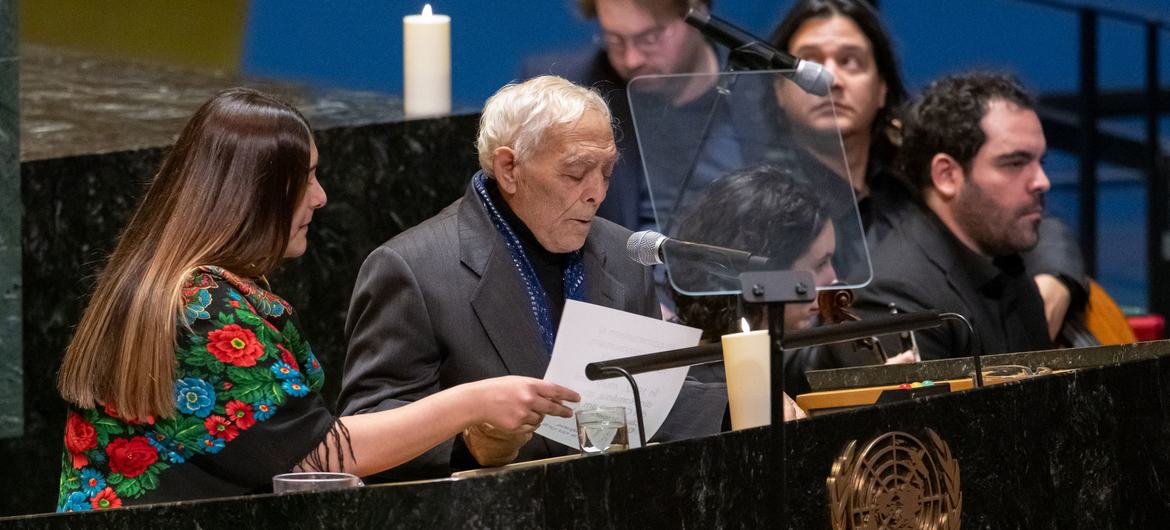
    Dumitru Miclescu, Roma survivor of the Holocaust, flew from Budapest to participate at the ceremony in General Assembly Hall on Monday.

    Dumitru Miclescu addresses the Holocaust Remembrance for Dignity and Human Rights ceremony in observance of the International Day of Commemoration in memory of the victims of the Holocaust.

    Dumitru Miclescu addresses the Holocaust Remembrance for Dignity and Human Rights ceremony in observance of the International Day of Commemoration in memory of the victims of the Holocaust.

    Supported by his niece Izabela Tiberiade, he told his story: “I am here not just for myself, but for all the Roma who suffered during the Holocaust and did not have the chance to be heard.”

    A survivor of the terror camps in Transnistria, he was forced into trains and deported when he was just an eight-year-old boy in Romania, along with his family.

    Building a world without racism

    I will never forget those moments when we were gathered into the trains. Many people died on the trains before we even arrived. Those who reached the concentration camps suffered even more: forced labor, starvation, disease, and constant terror. Death was a daily presence,” he said.

    Acknowledging the lack of support for the few Roma who survived and returned home, Mr. Miclescu said that being at the UN was “an important step toward recognizing history” but there was still much to be done.

    “Allow me to say to all the young people listening to my story: I ask you to learn about your history. I hope you will build a world without racism,” he concluded.

    Never forget

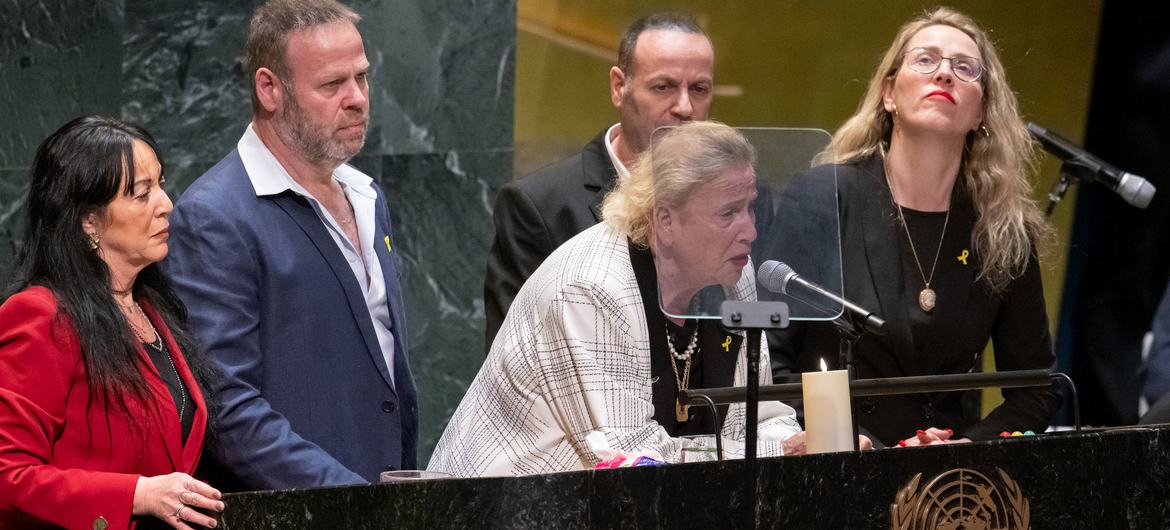
    Marianne Muller who was just a baby during the Holocaust, also took the podium to share her family’s story. Accompanied by her four children and grandchildren, she said: “they are my personal answer to Hitler”.

    Stressing that antisemitism is rising all over the world, Ms. Muller called on the world to remember that the Holocaust and its horrors “all happened only 80 years ago.”

    Marianne Muller addresses the Holocaust Remembrance for Dignity and Human Rights ceremony in observance of the International Day of Commemoration in memory of the victims of the Holocaust.

    Marianne Muller addresses the Holocaust Remembrance for Dignity and Human Rights ceremony in observance of the International Day of Commemoration in memory of the victims of the Holocaust.

    ‘Don’t be neutral towards human suffering’

    At a ceremony in Geneva, Nazi death camp survivor Ivan Lefkovits shared harrowing testimony of his experiences on Monday to mark Holocaust Remembrance Day, with a timeless message for present and future generations: “Don’t be neutral, especially not towards human suffering.

    Recalling the murder of his father and brother, both victims of Hitler’s mission to wipe out Jews, 88-year-old Mr. Lefkovits noted that many European countries subscribed to the Nazi leader’s views.

    Mr. Lefkovits was seven years old when he was sent to Ravensbruck concentration camp in November 1944; he spent the last months of the war in Bergen-Belsen camp, where he almost died from starvation and thirst.

    Today he urges younger generations to study history “not necessarily to learn, but to understand” why the Holocaust happened.

    Source link

  • Syria: Rights probe reveals systematic torture and detention of Assad regime

    The findings from the Independent International Commission of Inquiry on Syria detail crimes against humanity and war crimes that left a legacy of trauma for countless Syrians, representing some of the worst violations of international law committed during more than a decade of brutal conflict.

    We stand at a critical juncture. The caretaker government and future Syrian authorities can now ensure these crimes are never repeated,” said Paulo Sérgio Pinheiro, Chair of the Commission.

    We hope our findings from almost 14 years of investigations will help end impunity for these patterns of abuse.”

    The report, titled Web of Agony: Arbitrary Detention, Torture and Ill-Treatment in the Syrian Arab Republic, draws on over 2,000 testimonies, including accounts from more than 550 survivors of torture.

    Torture chambers, mass graves

    The fall of the Assad regime last month and subsequent release of prisoners have been pivotal for many Syrians, but for tens of thousands of families, the agony persists. The discovery of mass graves has deepened fears for those whose loved ones remain missing.

    In December and January, Commission teams visited several grave sites and former detention facilities, including Sednaya Military Prison and branches of the former intelligence services in Damascus.

    While significant amounts of evidence and documentation had been destroyed, some materials were preserved, offering a glimmer of hope for families seeking answers.

    For Syrians who did not find their loved ones among the freed, this evidence, alongside testimonies of freed detainees, may be their best hope to uncover the truth about missing relatives,” said Commissioner Lynn Welchman.

    We commend the new authorities for their commitment to protecting mass graves and evidence and encourage further efforts, with the support of relevant Syrian civil society and international actors.”

    The report outlines harrowing accounts of abuse, including severe beatings, electric shocks, rape, mutilation and prolonged psychological and physical torture.

    Survivors and witnesses described dire prison conditions including malnutrition, disease and injuries left untreated. Some detainees were executed, while others succumbed to their injuries in overcrowded, unsanitary cells.

    A path to justice

    Having gained access to Syria for the first time since 2011, the Commission plans to expand its investigations with unprecedented access to sites and survivors who no longer fear reprisals.

    The report emphasises the importance of safeguarding evidence and archives, calling for coordinated efforts with Syrian civil society and international actors.

    “Cases brought before national courts outside Syria, relying on the principle of universal jurisdiction, have led to important convictions of mid- and lower-level perpetrators of war crimes and crimes against humanity,” said Commissioner Hanny Megally.

    We now hope to see credible national justice initiatives, in which survivors and families can play a central role. We stand ready to assist alongside Syrian human rights and family associations and our UN partners.”

    Independent investigators

    The Independent International Commission of Inquiry on the Syrian Arab Republic was established in August 2011 by the UN Human Rights Council, with a mandate to investigate all alleged violations of international human rights law since March 2011.

    The Council also tasked the Commission with establishing the facts and circumstances surrounding alleged crimes and identifying those responsible, in an effort to hold them accountable.

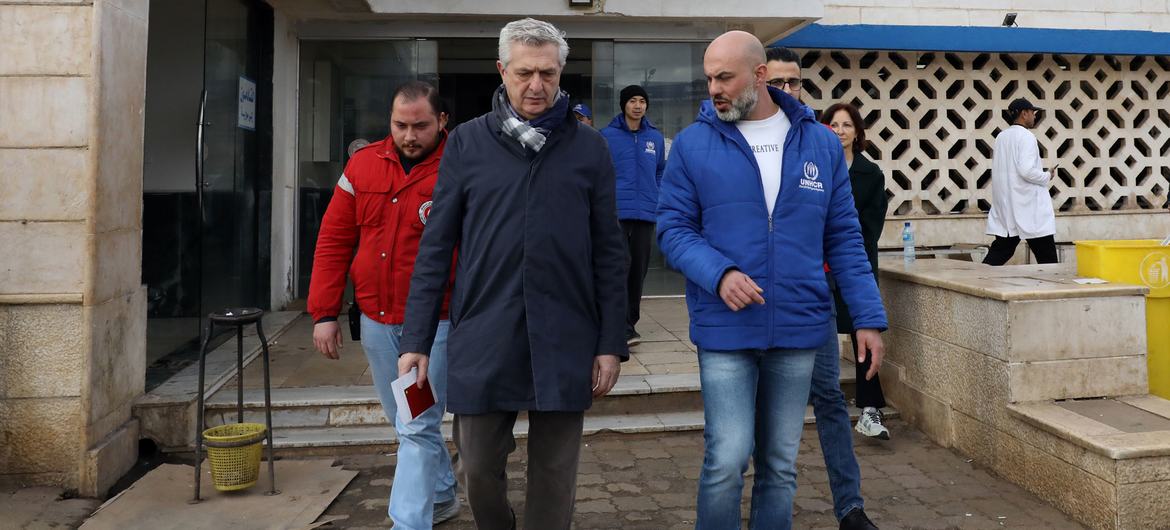
    UN High Commissioner for Refugees Filippo Grandi (left) visits the Immigration and Passports Office at Jdaidet Yabous border crossing between Lebanon and Syria.

    UN High Commissioner for Refugees Filippo Grandi (left) visits the Immigration and Passports Office at Jdaidet Yabous border crossing between Lebanon and Syria.

    Global action for returnees

    The UN High Commissioner for Refugees Filippo Grandi concluded a visit to Syria on Monday, calling for urgent international support to aid those returning home.

    Since September, over 500,000 refugees have made the journey, but they face overwhelming challenges: destroyed homes, shattered infrastructure and widespread poverty, according to the UN refugee agency, UNHCR.

    The agency is working with Syrian caretaker authorities and neighbouring countries to support returns, provide legal aid, transportation and cash assistance.

    Families returning to cities like Aleppo described harsh realities, such as limited access to electricity and water, emphasising the urgent need for investment in healthcare, education and employment.

    Act now

    This is a pivotal moment,” Mr. Grandi said.

    The world must act now to support Syria’s recovery. Cooperation between neighbouring countries, donors and the Syrian caretaker authorities is essential to bring much-needed peace and stability to Syria and the entire region.”

    UNHCR estimates that 27 per cent of Syrian refugees in neighbouring countries, including Lebanon, Jordan and Iraq, plan to return home within the next year – an increase from less than two per cent before the collapse of the regime.

    Source link

  • Saints and liars: The story of American aid workers who helped Jewish refugees escape the Holocaust

    A new book on their work underlines the chaos of the time, and the difficult decisions they had to make, knowing that for every person they saved, many more would be killed.

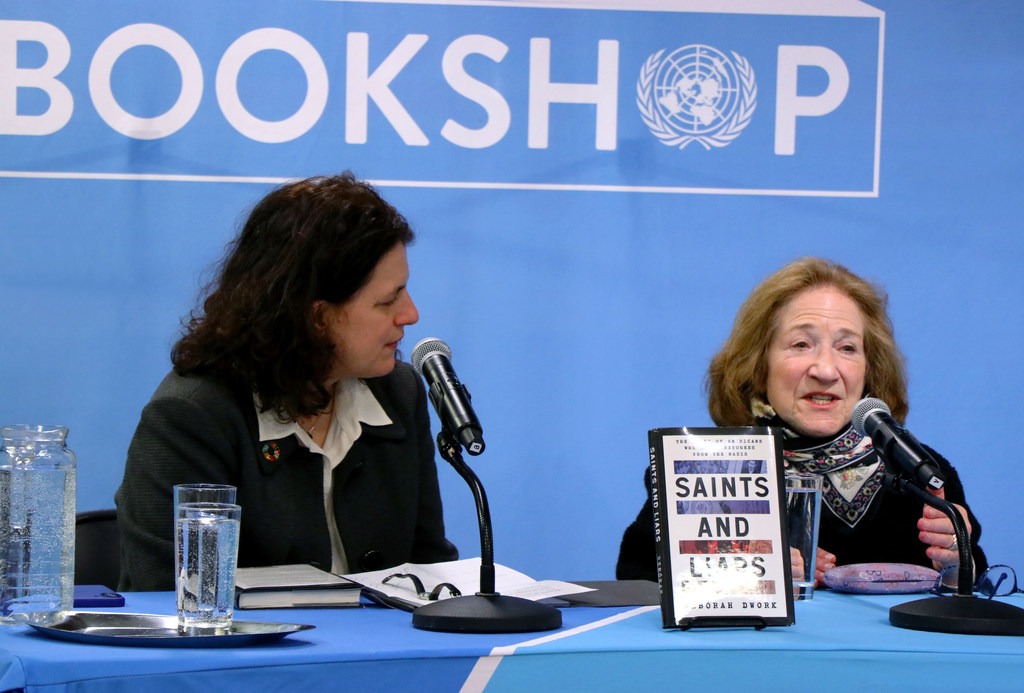
    Saints and Liars, by Debórah Dwork, the Director of the Center for the Study of the Holocaust, Genocide, and Crimes Against Humanity at the City University of New York Graduate Center, tells the stories of rescue workers in five key cities as the situation on the ground grew increasingly dire.

    At the launch ahead of the  International Day of Commemoration in memory of the victims of the Holocaust marked annually on 27 January, Tracey Petersen, the manager of the UN Holocaust Education Outreach Programme, interviewed Debórah Dwork at UN Headquarters, and began by asking her about the book’s title.

    This interview has been edited for clarity and length

    Debórah Dwork: I called it Saints and Liars because that’s what these people were. They did amazing things, in a non-religious sense. They did miraculous things. They saved people either by helping them to move on, get to sea, find a safe harbour, or by feeding, clothing and sheltering them.

    And at the same time, nearly all of them lied. They broke rules and played fast and loose with the truth in order to accomplish their goals.

    Tracey Petersen: Why did you write this book?

    Debórah Dwork (r) author of Saints and Liars.

    UN Publications/Steven Bornholtz

    Debórah Dwork (r) author of Saints and Liars.

    Debórah Dwork: I wanted to tell the story of Americans who went to Europe when everyone who was worried about danger was trying to go in the opposite direction. Their first idea was relief activities, but their mandate morphed to trying to effect rescue. I wanted to know who they were and what prompted them.

    We start in Prague, 1939, before the war was declared and well before the United States entered the war. What prompted Waitstill and Martha Sharp? They were a pair of married Unitarians sent to Czechoslovakia by their church.

    The situation grew worse and worse for political opponents of the Nazi regime and for Jews. And yet the Sharps stayed on to help and began to engage in illegal activities in the hope of saving lives.

    Tracey Petersen: Did the outside world in general know what was happening in Czechoslovakia at that time?

    Debórah Dwork: The loss of the Sudetenland region was part of the Munich Pact, an agreement signed by the major leaders of Europe, who gave away a whole chunk of Czechoslovakia without a single shot being fired.

    As you can imagine, this was the stuff of headlines, and it was the Munich Pact which first galvanized the Unitarian leadership in Boston to say “we’ve got to do something: the Germans have taken Sudetenland. Refugees are fleeing into Prague. They need help. They need clothing. They need shelter. They need medical care. They need food”.

    Tracey Petersen: How dangerous was the work of these American aid workers?

    Debórah Dwork: Waitstill Sharp said that Yankees like to skate on thin ice. Just one of the ways in which his work endangered him was that he did illegal currency transactions, because raising money to pay for the rescue activities was very difficult. But if the regime had learned about this he would have been at least imprisoned and probably tortured.

    Tracey Petersen: Why did refugees go to Shanghai and where were they coming from?

    Debórah Dwork: Even before the war, Jews and political dissidents in Germany and Nazi-occupied Austria and Czechoslovakia sought desperately to leave Europe and to get to some place of safety.

    As it happened, Shanghai was just such a place because no visa was required for them to land there. So, by the time war did break out in January, in September 1939, some 20,000 refugees had collected in Shanghai, which had been under Japanese rule since 1937.

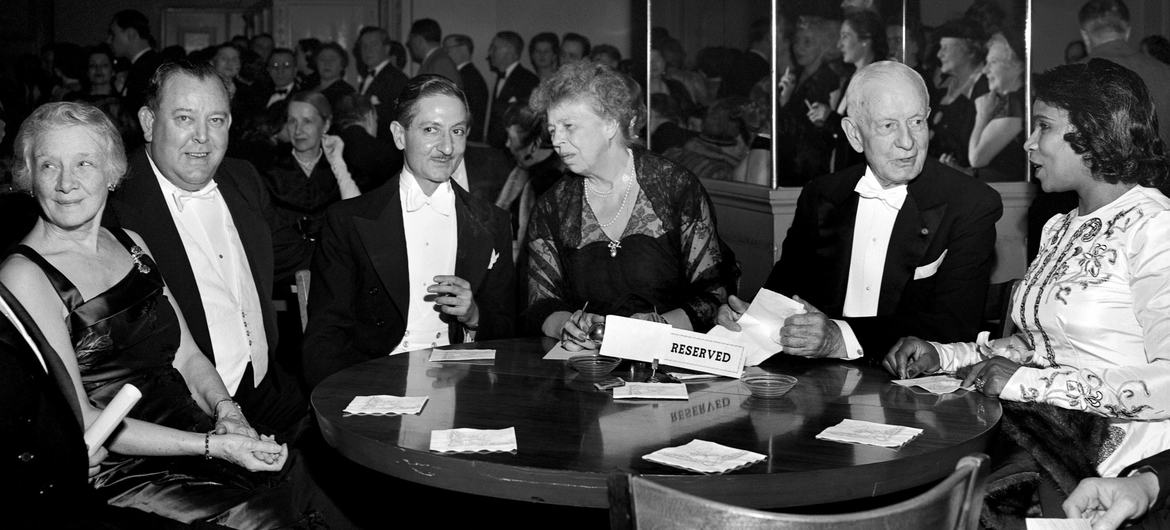
    Jews from Subcarpathian Rus are subjected to a selection process on a ramp at Auschwitz-Birkenau, Poland.

    US Holocaust Memorial Museum/Yad Vashem

    Jews from Subcarpathian Rus are subjected to a selection process on a ramp at Auschwitz-Birkenau, Poland.

    The US State Department and American Jewish Joint Distribution Committee (JDC) sent Laura Margolis to Shanghai to help them move on to their next destination, but the war intervened, and she ended up staying in a city under occupation with very few resources to help them meet their needs. They needed medical care, food and shelter. The children needed education. Somehow, she had to try to meet the needs of this community that was cut off from the rest of the world

    Tracey Petersen: The numbers are staggering. You had women, children, refugees, incredible terror, anxiety, being turned down for visas… did the aid workers reflect on whether they were possibly being swayed by their emotions and maybe helping some people when they should have been helping others? Is there any sense of their turmoil?

    Debórah Dwork: Definitely. There were thousands upon thousands of people who needed help. When you wake up in the morning, whose case are you going to attend to? What were the criteria?

    The Unitarians did have specific criteria: they wanted to rescue people who would help to reestablish democratic governments after the war was over. Of course, they were mostly male, mostly middle class or upper middle class. Mostly well-educated. That was the idea. But life on the ground had its own dynamic. And in Prague Martha and Waitstill ended up helping all manner of people.

    The Quakers, by contrast, had no such calculus. Their goal was to help everyone who required help. This was a sharp and distinct difference between the Unitarians agenda and the Quakers agenda. In fact, they annoyed each other with the Unitarians saying the Quakers had no principles, and the Quakers saying the Unitarians had no principles.

    Tracey Petersen: In many ways these stories reveal that a successful rescue is sometimes just a question of luck and timing.

    Debórah Dwork: We all know the degree to which the unpredictable and the irrational affect our lives. Luck, timing, fortuitous circumstances, passion, sympathies, antipathies. But when we think about the past, we strip those factors away. We think things happened for a reason. Sometimes they did happen for a reason, but sometimes they happened by accident.

    Let’s hope that we can learn from these events and say action is possible, activities are possible, initiative is possible. 

    Source link