Category: Human Rights

  • Surviving Hell: The Story of Shaul Spielmann, a Holocaust Survivor Who Defied Death at Auschwitz

    As the world marks the 80th anniversary of the liberation of Auschwitz, survivors like Shaul Spielmann, now 94, share their harrowing tales of resilience and survival. His story is a stark reminder of the horrors of the Holocaust and the enduring fight against antisemitism.

    ASCALÓN, ISRAEL – Shaul Spielmann’s life has been a testament to the fragility of human existence and the strength of the human spirit. Sitting in his home in Ascalón, a city recently calm after a ceasefire with Hamas, Spielmann recounts his survival of the Holocaust with vivid clarity. His story, filled with moments of despair, luck, and unimaginable courage, serves as a powerful reminder of the atrocities committed during World War II.

    Spielmann’s first encounter with death came in May 1944, during a selection by Josef Mengele, the infamous Nazi doctor known as the “Angel of Death.” Among 1,500 children and adolescents, only 67 were chosen for labor camps. The rest, including Spielmann, were condemned to the gas chambers. But fate intervened. His father, who worked in the Auschwitz registry, secretly moved his son’s name from the death list to the work list. “That’s how he saved my life,” Spielmann recalls.

    Born in Vienna, Spielmann’s promising future was shattered in March 1938 when Nazi Germany annexed Austria. The day after the Anschluss, he was expelled from school under the Nuremberg Laws. His father, an engineer, was also dismissed from his job. “Very bad times are coming,” his father warned. Soon after, the Gestapo seized their family store and home, forcing them into cramped quarters with other Jewish families.

    In September 1942, the Spielmanns were rounded up and sent to Theresienstadt, a transit camp in Czechoslovakia. A year later, they were transported to Auschwitz. “We didn’t know what Auschwitz was,” Spielmann says. “But when we arrived at Birkenau, I saw hell.” The chaos of searchlights, SS shouts, and the elderly being shoved off trains marked the beginning of his nightmare.

    At Auschwitz, Spielmann endured the dehumanizing process of being tattooed with the number 170775. He witnessed the murder of his mother, whose body was thrown onto a cart headed for the crematorium. His father was sent to a labor camp in Germany, and their final goodbye was a fleeting, silent glance.

    Spielmann faced another selection by Mengele, where 150 out of 800 children were sent to the gas chambers. Miraculously, an internal dispute among the Nazis spared his life. “We cried, knowing we were about to die, but after half an hour, nothing happened,” he recalls.

    As the Soviet army approached Auschwitz in January 1945, Spielmann was forced on a death march. “Each day, we saw more corpses. By the fourth day, we were exhausted, wondering when we’d be shot,” he says. He survived Mauthausen and Gunskirchen, where a Nazi guard nearly killed him with a blow to the head. Liberation came in May 1945, when American troops arrived.

    Spielmann’s story is now part of a photographic exhibition by Erez Kaganovitz, displayed at the National WWII Museum in New Orleans and the German Federal Ministry of Justice in Berlin. The project, Humans of the Holocaust, aims to preserve the testimonies of survivors as antisemitism rises globally. According to Jewish organizations, antisemitic incidents have surged by nearly 100% compared to 2023 and 340% since 2022.

    Kaganovitz, the grandson of Holocaust survivors, emphasizes the importance of education. “It’s imperative to fight antisemitism by informing and educating people about its dangers,” he says. Spielmann echoes this sentiment, hoping his story will inspire future generations to remember the Holocaust’s lessons.

    As the world commemorates International Holocaust Remembrance Day, Spielmann’s resilience stands as a beacon of hope. His life, marked by unimaginable suffering and survival, is a powerful call to action against hatred and bigotry. “We must never forget,” he says, “because forgetting is the first step toward repeating history.”

    This article is based on an interview published in El Mundo and is part of a series honoring Holocaust survivors and their enduring legacy.
  • Human rights expert welcomes clemency for Indigenous activist Leonard Peltier

    The Executive Grant of Clemency, signed on Sunday just hours before Mr. Biden left office, commutes Mr. Peltier’s life sentences to home confinement, allowing him to receive proper medical care and reconnect with his community, the Special Rapporteur said in a statement.

    The Human Rights Council-appointed expert Albert Barume praised the decision, describing it as “an important gesture by the United States toward the country’s Indigenous Peoples”.

    Decades of advocacy

    Mr. Peltier is a member of the Chippewa and Lakota Nations, who was convicted of murder in 1977, in connection with the deaths of two FBI agents during a confrontation with Indigenous activists at Pine Ridge reservation. He received two life sentences following his trial after being extradited to the US from Canada in December 1976.

    “Over the years, Mr. Peltier has maintained his innocence, and concerns have been raised about the fairness of his trial and about his legal representation,” the Special Rapporteur said.

    His trial raised serious concerns about due process, with international human rights bodies, including the UN Working Group on Arbitrary Detention, calling for his release.

    In its 2022 findings, the UN Working Group determined that Mr. Peltier’s detention constituted arbitrary imprisonment.

    Previous UN Special Rapporteurs, including a 2012 report on Indigenous rights in the US, had called for clemency for Mr. Peltier, framing his case as emblematic of the systemic injustices faced by Native Americans.

    “Mr. Peltier has also suffered from serious health conditions, which prison authorities have been unable to properly address,” Mr. Barume noted.

    Step toward reconciliation

    “Although this clemency cannot restore the decades of life he has lost, it provides an opportunity for him to receive proper medical care and reconnect with his People,” said the independent expert.

    Mr. Barume underscored that while the clemency decision does not absolve Mr. Peltier’s conviction, it represents a critical acknowledgment of past wrongs.

    “States have a duty to ensure due process for all defendants at every stage of criminal proceedings, including parole hearings, as required by international law”, he said.

    The decision also aligns with broader calls for reconciliation with Indigenous Peoples in the US, including addressing historical injustices such as forced removals, cultural erasure and disproportionate incarceration rates.

    Mr. Peltier’s early life reflects this history: forcibly removed from his family at age nine and placed in a government-run boarding school, he endured the systemic severance of Indigenous children from their culture.

    His case has since become a symbol of the need for justice and reconciliation.

    Looking ahead

    While Mr. Peltier’s clemency has been celebrated by advocates, it also underscores the need for continued reforms to ensure fairness and equity in the US justice system.

    The decision “highlights the importance of addressing systemic issues within the criminal justice system, ensuring that all individuals, regardless of their background, are afforded their fundamental rights”, Mr. Barume affirmed.

    As Mr. Peltier transitions to home confinement, the Special Rapporteur called for the clemency decision to be a turning point in efforts to address historical and ongoing injustices.

    Special Rapporteurs and other independent rights experts are not UN staff, receive no salary and are independent of any government or organization.

    Source link

  • DR Congo emergency: Fears that regional capital Goma faces attack

    “We are deeply alarmed at the heightened risk of an attack by the M23 armed group on Goma, the capital of North Kivu, in the eastern Democratic Republic of Congo…Any such attack on Goma risks catastrophic impacts on hundreds of thousands of civilians, putting them at heightened exposure to human rights violations and abuses,” said Ravina Shamdasani, spokesperson for the UN human rights office, OHCHR.

    “The High Commissioner has flagged many times that sexual violence is a key component – a very horrific component – of this conflict,” Ms. Shamdasani added. “Armed groups abduct, hold captive and subject women and girls to sexual slavery and many of them have been killed after being raped.”

    Since the UN peacekeeping Mission, MONUSCO, withdrew from South Kivu in June 2024, peacekeepers have defended key positions in North Kivu, including Goma and Sake, where clashes between the M23, the Congolese Armed Forces and many other armed groups have continued.

    Hundreds of thousands newly displaced

    Some 400,000 people have been displaced in North and South Kivu since the beginning of this year alone, according to the UN refugee agency, UNHCR.

    Highlighting the humanitarian crisis that continues to unfold largely unseen by the outside world, UNHCR spokesperson Matt Saltmarsh reported that “bombs have fallen” on camps for people uprooted by the violence in South and North Kivu.

    These attacks include one on 20 January, when explosions at Kitalaga site in South Kivu killed two children. 

    On 21 January, five makeshift shelters were destroyed in Nzuolo, near Goma, while on Wednesday, Bushagara site – also near Goma – was “heavily impacted, causing panic and new waves of forced displacement”, Mr. Saltmarsh told journalists in Geneva.

    He noted that heavy bombardments from clashes involving the M23 rebels forced families to flee various displacement sites on the periphery of Goma and try to seek safety within Goma: “UNHCR staff remain on the ground in Goma, assisting the displaced civilians wherever they can and wherever they get access,” he said. 

    “But as you can understand, the access at the moment is extremely challenging.”

    Guterres warning

    The development came as the UN Secretary-General on Thursday expressed alarm over a renewed offensive by M23 rebels in eastern DRC and the “devastating toll” on civilians.

    In a statement issued by his Spokesperson, António Guterres noted the Rwandan-backed rebels’ reported seizure of Sake, in South Kivu, “which increases the threat” to the regional capital Goma – all of which is “heightening the threat of a regional war”. Rwanda denies any direct involvement with M23 fighters.

    “The Secretary-General calls on the M23 to immediately cease its offensive, withdraw from all occupied areas and abide by the 31 July 2024 ceasefire agreement,” the UN chief’s statement continued.

    Echoing the Secretary-General’s concerns, OHCHR spokesperson Ms. Shamdasani reiterated UN chief Volker Türk’s appeal “to all States with influence on the parties to impress on them the urgent need for an immediate cessation of hostilities”. 

    M23 is well funded and “as the High Commissioner has said previously, any role played by Rwanda in supporting the M23 in North Kivu – and by any other country supporting armed groups active in the DRC – must end,” she insisted. “The people in the DRC are exhausted by violence, exhausted by conflict, exhausted by the horrors of their daily life. And this must not be allowed to worsen further.”

    Stark options 

    Asked to explain the dangers faced by those sheltering in camps, UNHCR’s Mr. Saltmarsh replied that their “options are stark and extremely limited…What you will receive in terms of aid is extremely limited – that depends very much on whether agencies like UNHCR and our partners in the UN and NGOs are able to access those sites. 

    “If they are, we can bring in a minimum of assistance, otherwise, civilians will be in areas that are now occupied by the armed groups. We don’t have access to those areas, so it’s very difficult to for us to say what conditions are like there.”

    South and North Kivu Provinces already host 4.6 million internally displaced people. UNHCR has warned that human rights violations, including looting, injuries, murders, kidnappings and arbitrary arrests of displaced people mistaken for rebels have escalated.

    “Hospitals are nearing capacity with injured civilians,” Mr. Saltmarsh said. “Vulnerable women, children, and the elderly are living in overcrowded and precarious conditions with limited access to food, water, and essential services.”

    Source link

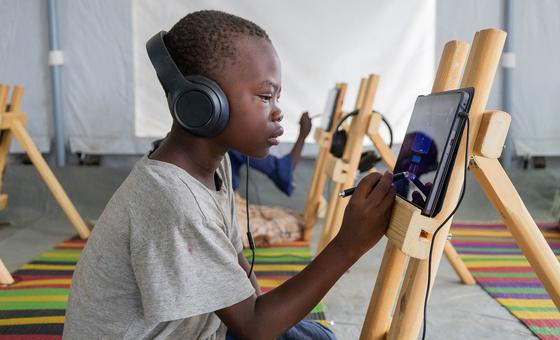
  • Global education must integrate AI, centred on humanity

    His message highlighted the dual nature of technological advances such as Artificial Intelligence (AI), which offer immense potential – but also pose considerable risks.

    Education is an essential building block for every person to reach their full potential, and for societies and economies to grow and flourish”, Mr. Guterres said.

    AI promise and risks

    The UN chief stressed that AI and other tech innovations can significantly aid students and teachers by providing wider access to information and advanced learning tools.

    “But the tremendous rewards are matched by some daunting risks. As AI-driven systems become more powerful, human intention and machine-driven impacts can easily misalign”, he added.

    This year, the UN education and culture agency, UNESCO, is dedicating the Day to the opportunities and challenges of AI. 

    Director-General Audrey Azoulay called for more investment in training both teachers and students so it can be used responsibly.

    “AI offers major opportunities, provided that its deployment in schools is guided by clear ethical principles. To reach its full potential, this technology must complement the human and social dimensions of learning, rather than replace them.”, Mr. Azoulay said.

    Human rights at the heart of AI

    Stressing that this year’s day reminds us that unlocking the AI’s potential “depends on keeping human agency – and human rights – at the heart of this rapidly evolving technology”, the UN Secretary-General called for guarantees that all users have the right tools and knowledge to “use this technology smartly, safely and ethically”.

    UNESCO’s Competency Frameworks to support learners and teachers as they incorporate AI into their learning, and the recently adopted Global Digital Compact, are expected to help ensure humanity retains control over the development and governance of AI.

    Concluding his message, Mr. Guterres called for a commitment to “keeping humanity at the centre of education systems, everywhere”.

    Divisions over AI

    As AI becomes more integrated into education, countries remain divided on its use. According to UNESCO’s latest data, in high-income nations, over two-thirds of secondary school students are already leveraging generative AI tools to support their schoolwork.

    However, a significant challenge remains with education professionals still lacking clear guidelines.

    A UNESCO survey conducted in May 2023, covering 450 educational institutions, revealed that only 10 per cent of schools and universities have an official framework for AI use.

    Simultaneously, an increasing number of countries are imposing restrictions on new technologies in the classroom. New data from UNESCO indicates that nearly 40 per cent of nations now have laws or policies banning mobile phones in schools, a notable rise from 24 per cent in July 2023.

    For more insights, listen to the UN Special Rapporteur on the Right to Education, Farida Shaheed, who recently discussed the role of AI in schools and the challenges it brings in an interview with UN News.

    Access to education

    The International Day reminds us that access to high-quality education is a human right that not only greatly benefits individuals but also uplifts entire communities.

    Millions of children, however, remain out of school due to a variety of factors including gender, location, social background or conflict.

    Despite decades of educational progress and international commitments, according to UNESCO’s latest data, 251 million children and youth remain out of school worldwide.

    Safe and inclusive

    In a recent study, UNESCO reported that almost one in three learners has been physically attacked at least once during the school year and one in ten experiences cyberbullying.

    With too many children across the world experiencing violence in and around schools, the impacts can be devastating – affecting the well-being, education outcomes and quality of life of students.

    Watch youngsters here explain what they need to make schools safer.

    Source link

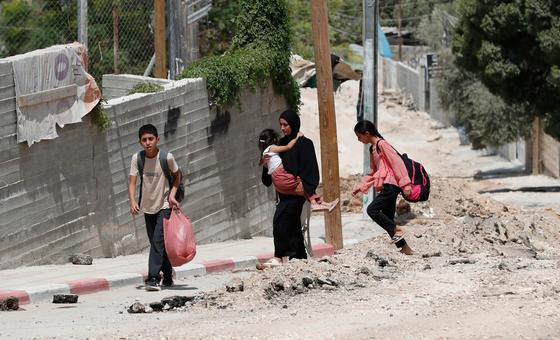
  • UN rights office raises alarm over escalating violence in occupied West Bank

    OHCHR spokesperson Thameen Al-Kheetan added that the Israeli military operation in and around the Jenin refugee camp had involved “disproportionate” use of force, including airstrikes and shootings that reportedly targeted unarmed residents.

    “The deadly Israeli operations in recent days raise serious concerns about unnecessary or disproportionate use of force, including methods and means developed for war fighting, in violation of international human rights law, norms and standards applicable to law enforcement operations.”

    OHCHR verified that at least 12 Palestinians – most reportedly unarmed – have been killed since Tuesday and a further 40 injured. Those injured include a doctor and two nurses, according to the Palestinian Red Crescent.

    Obligation to protect civilians

    Mr. Al-Kheetan reiterated that Israel, as the occupying power, has a responsibility under international law to protect civilians living under occupation.

    He stressed the need for investigations into alleged unlawful killings, warning that a lack of accountability risks perpetuating violence.

    “All killings in a law enforcement context must be thoroughly and independently investigated and those responsible for unlawful killings must be held to account,” he said.

    “By persistently failing, over the years, to hold accountable members of its security forces responsible for unlawful killings, Israel is not only violating its obligations under international law, but risks encouraging the recurrence of such killings,” he warned.

    Impact on communities

    The ongoing violence has displaced over 3,000 families in Jenin, and essential services such as water and electricity have been severely disrupted for weeks.

    The Israeli military has closed off major entrances to Palestinian cities, including Hebron, restricting movement, and paralyzing daily life. Thirteen new iron gates have reportedly been installed at other towns’ entrances across the West Bank.

    Briefing the Security Council on Thursday, UN Emergency Relief Coordinator Tom Fletcher also warned of record-high levels of casualties, displacement and access restrictions, since October 2023.

    Settler violence and settlement expansion

    Beyond military operations, there has been an uptick in settler attacks on Palestinian villages and the stoning of vehicles, in which several Palestinians have been injured.

    Houses and vehicles have been set on fire, according to the OHCHR spokesperson.

    He also voiced concern over some Israeli officials’ repeated comments about plans for further settlement expansion – in breach of international law.

    “We call for an immediate end to the violence in the West Bank. We also call on all parties, including third States with influence, to do everything in their power to ensure peace is achieved in the region,” Mr. Al-Kheetan stated.

    He reiterated High Commissioner Volker Türk’s call for Israel to halt settlement expansion and evacuate all settlements as required by international law.

    We call on all parties, including third States with influence, to do everything in their power to ensure peace is achieved in the region,” Mr. Al-Kheetan urged.

    Relief efforts continue in Gaza

    Meanwhile, in Gaza, the UN alongside humanitarian partners continues to support communities in need across the Gaza Strip.

    On Thursday, 339 trucks carrying vital aid entered the enclave, according to aid coordination office, OCHA, with assistance focused on food, water and hygiene supplies.

    Since the ceasefire took effect six days ago, more than 200,000 food parcels have been distributed to 130 sites, with aid reaching families in areas like Jabalya, in North Gaza governorate, that had been besieged for months.

    The UN Children’s Fund (UNICEF) has also provided water trucking and hygiene kits to 5,000 people in Jabalya.

    Gaza humanitarian update from Roos Bollen, UNICEF Communication Specialist, in Al Mawasi:

    Returns to North Gaza

    Humanitarian partners further reported that hundreds of displaced residents sheltering in Gaza City have begun returning to North Gaza governorate, while others in Deir al Balah and Khan Younis remain in makeshift displacement sites, with plans to move north.

    A rapid assessment conducted by the UN and partners at 13 sites in central and southern Gaza found that while displaced families had received some assistance – including food, water, and sanitation services – they still face critical shortages of drinking water, hygiene kits, blankets and clothing.

    Starting next week, humanitarian partners expect significant population movements between southern and northern Gaza and are preparing to address the urgent needs of displaced families try to return to mostly shattered homes.  

    OCHA emphasised that while aid efforts are expanding, more resources are urgently needed.

    Situation in southern Lebanon

    In the wider Middle East region, the United Nations urged Israel and Lebanon to fulfil their commitments to the cessation of hostilities’ agreement of last November, amid reports that Israeli troops will remain in Lebanon past Sunday.

    [We urge both parties to] avoid further action that could raise tensions and further delay the return of residents on both sides to their towns and villages,” UN Deputy Spokesperson Farhan Haq told journalists at the regular press briefing in New York.

    As per the agreement, Israel is required to withdraw from southern Lebanon once Hezbollah has withdrawn its armed presence there, within 60 days.

    We continue to call for the full implementation of Security Council resolution 1701 [which ended the 2006 war between Israel and Hezbollah] as a comprehensive path towards longer term peace, security, and stability on both sides of the Blue Line,” Mr. Haq said.

    He added that the UN, including the UN Special Coordinator for Lebanon and the UN Interim Force in Lebanon (UNIFIL), remains “absolutely committed” to supporting the parties to uphold the cessation of hostilities and their obligations under resolution 1701.

    Source link

  • UN chief hails ‘peacemaker, human rights champion’, former President Jimmy Carter

    The Democratic Party icon lived longer than any president in US history, serving one term between 1977 and 1981, going on burnish his reputation on the international stage by being awarded the Nobel Peace Prize, and establishing a major hub for diplomacy and conflict resolution in the form of the Carter Center – which advocates for democracy and human rights around the world.

    After suffering an undisclosed illness, he elected to stop medical treatment last year, choosing instead to receive hospice care at home. President Joe Biden and First Lady Jill Biden led the tributes, saying that the world had “lost an extraordinary leader, statesman and humanitarian.”

    In his statement Mr. Guterres highlighted President Carter’s leadership while in office and overall contributions to international peace and security, “including the landmark Camp David Accords” – the 1978 peace treaty between Egypt and Israel which remains in force.

    The Secretary-General also noted the gains made through the Strategic Arms Limitation Talks which led to the 1979 SALT II Treaty between the US and the Soviet Union – limiting nuclear proliferation – together with the Panama Canal Treaties which enabled ownership of the key waterway linking the Pacific and Atlantic to return to Panama in 1999.

    After leaving office, President Carter turned his attention to addressing global challenges of inequality, human rights, inadequate housing and other social justice issues.

    President Carter’s commitment to international peace and human rights also found full expression after he left the presidency,” said the UN chief.

    He played a key role in conflict mediation, election monitoring, the promotion of democracy, and disease prevention and eradication,” Mr. Guterres added.

    A friend of the UN

    “These and other efforts earned him the Nobel Peace Prize in 2002 and helped advance the work of the United Nations.”

    President Carter, together with former South African President Nelson Mandela, founded The Elders group, to advance the human rights and peace agenda.

    Mr. Guterres said President Carter would be remembered “for his solidarity with the vulnerable, his abiding grace, and his unrelenting faith in the common good and our common humanity.”

    He extended his deepest condolences to the Carter family and all citizens of the United States.

    He concluded by saying the former president’s “legacy as a peacemaker, human rights champion and humanitarian will endure.”

    President Carter is survived by his four children, 11 grandchildren and 14 great-grandchildren. He lost his wife of 77 years, Rosalynn, in November last year.

    Source link

  • Afghanistan: ICC seeks arrest warrants for Taliban leaders over gender-based persecution

    On Thursday, ICC Prosecutor Karim Khan applied for arrest warrants for two senior Taliban officials: Supreme Leader Haibatullah Akhundzada and Supreme Court Chief Justice Abdul Hakim Haqqani.

    They are accused of crimes against humanity on the grounds of gender-based persecution under the Rome Statute of the court, which sets out the duty of every State signatory to exercise its criminal jurisdiction over those responsible for international crimes.

    These applications recognise that Afghan women and girls as well as the LGBTQI+ community are facing an unprecedented, unconscionable and ongoing persecution by the Taliban,” Mr. Khan said in a statement.

    Since reclaiming power in Afghanistan in 2021, the Taliban have implemented a series of oppressive measures that have systematically stripped women of their rights, including barring them from employment, public spaces and education beyond the age of 12.

    The ICC Prosecutor emphasised that these acts constitute severe deprivations of fundamental rights, including physical autonomy, freedom of expression and access to education – rights protected under international law.

    Landmark decision against impunity

    This marks the first time the ICC has issued arrest warrant applications concerning Afghan.

    Mr. Khan said the filings are supported by diverse evidence, including expert testimony, forensic reports and numerous decrees issued by the de facto authorities.

    The ICC’s Afghanistan team, under the supervision of Deputy Prosecutor Nazhat Shameem Khan and Special Adviser on Gender and Discriminatory Crimes Lisa Davis, has played a critical role in investigating these allegations, the prosecutor continued.

    These severe deprivations of fundamental rights were committed in connection with other Rome Statute crimes, Mr. Khan explained.

    “Perceived resistance or opposition to the Taliban was, and is, brutally repressed through the commission of crimes including murder, imprisonment, torture, rape and other forms of sexual violence, enforced disappearance, and other inhumane acts,” he said.

    He underscored that the Taliban’s interpretation of Sharia – the Islamic legal system derived from the Quran – cannot be used to justify such violations of fundamental human rights.

    Victims’ resilience

    “In making these applications, I wish to acknowledge the remarkable courage and resilience of Afghan victims and witnesses who cooperated with my Office’s investigations,” Mr. Khan noted.

    “We remain unwavering in our commitment to ensure that they are not forgotten, and to demonstrate through our work, through the effective and impartial application of international law,” he affirmed, underscoring that “all lives have equal value.”

    The Prosecutor also expressed gratitude to Afghan civil society and international partners for their support.

    Next steps

    The ICC’s Pre-Trial Chamber will now determine whether these applications for arrest warrants establish reasonable grounds to believe that the named individuals committed the alleged crimes.

    If the judges issue the warrants, my Office will work closely with the Registrar in all efforts to arrest the individuals,” said Mr. Khan, also announcing that further applications against other senior Taliban leaders are forthcoming.

    “Afghan victims and survivors have suffered injustice for too long,” he stressed. 

    Source link

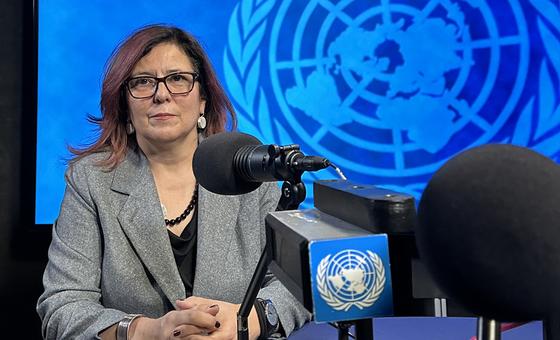
  • UN rights expert calls for end to Russia’s crackdown on lawyers

    Mariana Katzarova, Special Rapporteur on the situation of human rights in the Russian Federation, urged Russian authorities to release lawyers Vadim Kobzev, Alexei Liptser and Igor Sergunin, who were sentenced on 17 January to prison terms on “extremism” charges.

    Their trial, held in the Petushki district court of the Vladimir region, was criticized as a sham.

    “This week, when we mark the International Day of the Endangered Lawyer, the Russian Government continues reprisals against lawyers for carrying out their professional duties,” Ms. Katzarova said.

    She called for the immediate release of three lawyers, and for the verdict against them to be annulled.

    Chilling effect

    The sentencing of Mr. Kobzev, Mr. Liptser and Mr. Sergunin serves as a “chilling warning” to lawyers considering politically sensitive cases in Russia, Ms. Katzarova said, describing the charges as baseless under international law.

    “The term ‘extremism’ has no foundation in international law and constitutes a violation of human rights when used to trigger criminal liability,” she said.

    The trial took place behind closed doors, although around 50 people were allowed into the courtroom as the verdict was handed down, including journalists and lawyers, according to a news release issued by the Special Rapporteur.

    Five others, four of them journalists, were arbitrarily detained, apparently to prevent them from attending the hearing. They were later released.

    The persecution of lawyers and journalists is part of an alarming pattern of targeted repression and State control that is silencing independent media and the legal profession throughout Russia,” Ms. Katzarova added.

    Escalating repressions

    The Special Rapporteur’s 2024 report to the UN Human Rights Council documented continuing attacks on the legal profession in Russia.

    “Lawyers have been imprisoned, prosecuted, disbarred and intimidated simply for carrying out their professional duties,” Ms. Katzarova said.

    She noted “widespread use” of vague legal definitions and unpredictable, often abusive, interpretations, as well as closed trials which have allowed Russian authorities to misuse and instrumentalise counter-extremism, counter-terrorism and national security legislation to stifle critics, ban anti-war speech, imprison legitimate political opponents and punish and endanger their defence lawyers.

    “This practice must end,” she added.

    Independent expert

    The mandate of the Special Rapporteur was established by the Human Rights Council in October 2022, and subsequently extended.

    Ms. Katzarova was appointed as the Special Rapporteur by the Council in April 2023 and assumed her function on 1 May 2023. She is not a UN staff member, does not draw a salary, and serves in her individual capacity, independent of the UN Secretariat.

    Source link

  • Report details bleak human rights situation in Ukraine nearly three years into Russian invasion

    Covering the period of September to November 2024, the report describes intensified Russian attacks on populated areas, deliberate strikes on energy infrastructure, and efforts to restrict fundamental rights.

    “Behind each of the facts and figures in this report are stories of loss and human suffering, showing the devastating impact of the war across Ukraine,” said Danielle Bell, Head of the HRMMU. 

    “September marked the highest monthly toll since July 2022, with my team documenting 574 civilian deaths and 3,032 injured over the three months,” she gravely noted.

    Rising civilian casualties and suffering 

    93 per cent of the casualties recorded occurred in Government-controlled areas, particularly in Donetsk, Kharkiv, and Kherson, where military activity remains intense. 

    Modified aerial bombs, which can now glide tens of kilometres into large cities like Kharkiv and Sumy before exploding, have exacerbated the devastation.  

    The bombardment of Zaporizhzhia on 7 November alone killed nine civilians and injured 42, while short-range drones killed 67 and injured 528.

    Russian forces have also resumed large-scale aerial attacks on Ukraine’s critical energy infrastructure.

    On 17 and 28 November, strikes further diminished Ukraine‘s energy capacity as winter approached, disrupting electricity, water, heating, and transportation systems in multiple regions. 

    Continued ill-treatment of POWS

    The report details continued executions, torture, and ill-treatment of POWs.

    Since August 2024, there has been a notable increase in credible allegations of executions of Ukrainian POWs, with at least 62 victims in 19 incidents.  

    Independent verification of these killings has confirmed the deaths of 15 Ukrainian POWs. 

    Interviews with 42 recently released POWs, including 11 women, revealed that all of them had experienced torture, including beatings, being subjected to electric shock, and prolonged solitary confinement.  

    Sexual violence, against both women and men, was also prevalent.

    On the other hand, while the report acknowledges mistreatment of Russian POWs, particularly during their initial detention by Ukrainian authorities, it is noted that these instances appeared more isolated compared to the widespread torture of Ukrainian prisoners. 

    Russia’s strengthened control over occupied territories 

    Furthermore, Russia has imposed its laws over occupied regions, in violation of its obligations under international humanitarian law, including the requirement for residents to obtain Russian citizenship to keep their property rights.

    Homes that were forcibly abandoned have been confiscated, making it nearly impossible for displaced residents to return.

    The Russian authorities have also introduced a new cultural policy aimed at “integrating” children from occupied territories into Russian society.

    This policy includes mandatory military training for children, including lessons on grenades, small arms, and anti-tank grenade launchers.

    Religious freedom has also been restricted by both governments.

    In Crimea, Jehovah’s Witnesses face persecution under Russia’s anti-extremism laws, while a Muslim group has been disbanded for alleged “extremist” activities. 

    On the other hand, new legal provisions regarding religious organizations entered into force in territory controlled by the Government of Ukraine, limiting freedom of belief and religious expression.

    The path forward

    As the war continues to devastate Ukraine, the report calls for the critical upholding of international humanitarian and human rights law. 

    “The armed attack on Ukraine has continued unabated for almost three years. Amidst so much suffering, it is imperative to intensify efforts to uphold international humanitarian and human rights law,” said Ms. Bell.  

    As winter sets in and the war shows no end in sight, the urgency of these efforts becomes even greater.  

    Source link

  • Stories from the UN Archive: Roots of ‘no justice, no peace’

    Read our story here:

    When Dr. Martin Luther King Jr. and his wife, Coretta Scott King, visited UN Headquarters in the 1960s to protest the Viet Nam conflict, the civil rights leader likened the anti-war movement to the struggle for equality for Black people in the US, declaring then what has today become a rallying cry in the continuing battle against racism.

    On 15 April 1967, a delegation led by Dr. King held a meeting with the legendary Ralph Bunche and other top UN officials. Mr. Bunche was the first African American to receive the Nobel Peace Prize, and Dr. King was the second.

    Watch our report from the archives about UN legend Mr. Bunche, here.

    During the meeting, Dr. King presented a petition, calling for an immediate and peaceful solution to the Vietnam conflict (1961-1975). Earlier that day, he had marched alongside 125,000 protesters in what was the first of many mass marches in opposition to the war.

    Watch UN Video’s Stories from the UN Archive episode on the world-renowned civil rights advocate below:

    ‘No justice without peace, no peace without justice’

    Outside UN Headquarters in the spring of 1967, Dr. King read aloud the petition, which even today, echoes calls for peace in ongoing wars around the world.

    “From towns and villages, cities, campuses and farms, we have come in tens of thousands to march and rally at the United Nations in New York and at the birthplace of the world organization in San Francisco on the 15th day of April 1967,” he said. “We the participants in today’s unprecedented national peace demonstration, although of many national origins, faiths and shades of political opinion, are united in our conviction of the imperative need for an immediate, peaceful solution to an illegal and unjustifiable war.”

    “We are determined that the killing be stopped and that a nuclear holocaust be avoided,” he said. “We rally at the United Nations in order to reaffirm our support of the principles of peace, universality, equal rights and self-determination of peoples embodied in the Charter and acclaimed by mankind, but violated by the United States.”

    In terms of the priority of the peace movement and the civil rights movement, Dr. King said “from a content point of view, the issues are inextricably tied together”.

    “In the final analysis, there can be no peace without justice, and there can be no justice without peace,” he said.

    Dr. King speaks to the press at UN Headquarters in New York in 1967. (file)

    Dr. King speaks to the press at UN Headquarters in New York in 1967. (file)

    Inspiring future generations

    The civil rights leader continued to advocate for peace throughout the last year of his life before he was assassinated in 1968, exactly one year after he visited UN Headquarters. His anti-war activism reinforced the connection between the conflict abroad and injustice at home in the US.

    Dr. King’s lifetime efforts, from the March to Montgomery to his iconic I Have a Dream speech in Washington, have inspired future generations, including his own granddaughter. Earlier this year, 15-year-old activist Yolanda Renee King addressed an audience in the General Assembly Hall at a special commemoration of the International Day of Remembrance of Victims of Slavery and the Transatlantic Slave Trade, marked annually on 25 March.

    “I stand before you today as a proud descendant of enslaved people who resisted slavery and racism like my grandparents, Dr. Martin Luther King Jr. and Coretta Scott King,” she said from the green marbled podium in the Assembly Hall.

    “My parents, Martin Luther King III and Arndrea Waters King, have also dedicated their lives to putting an end to racism and all forms of bigotry and discrimination,” said the author of the children’s book We Dream a World, which pays tribute to her celebrated grandparents.

    “Like them, I am committed to the fight against racial injustice and to carrying on the legacy of my grandparents who championed social justice and equality,” Ms. King said, calling on young people around the world to take action.

    “We must connect via the internet and organise across national boundaries around the world. This will open up new possibilities for global campaigns to advance human rights and social justice in all nations. I hope that my family’s legacy of social justice advocacy will inspire my generation to action and to confront issues affecting our world.”

    Watch her full statement below:

    Stories from the UN Archive

    UN News is showcasing epic moments across UN history, cultivated from the UN Audiovisual Library’s 49,400 hours of video and 18,000 hours of audio recordings.

    Catch up on UN Video’s Stories from the UN Archive playlist here and our accompanying series here.

    Source link