Category: Human Rights

  • Who is Mihai Stoian, the Romanian yoga teacher arrested in Georgia and wanted by French justice?

    On 20 and 26 December 2024, the City Court of Tbilisi held hearings to decide whether Georgia should extradite Mihai Stoian and his wife Adina arrested in August 2024 on the Turkish-Georgian border on the basis of an Interpol arrest warrant issued on France’s request.

    A few days after mid-December, I happened to be in Tbilisi for The European Times to cover the unstable political situation and the demonstrations in the country following the contested results of the parliamentary elections and the subsequent election of a new contested pro-Kremlin president by the new parliament. On this occasion, I published two articles titled “GEORGIA: Election of an ex-footballer as the new president booed by demonstrators” and “GEORGIA: Police violence in Tbilisi while President Zurabishvili calls for quick EU actions”. I also used the opportunity of being in Tbilisi to meet state and non-state actors as well as lawyers involved in the case of the Stoians and to collect some unpublished information about the couple. A member of their family was also in Tbilisi.

    At the end of the second hearing taking place after my departure from Georgia, the court found that a third hearing was necessary to try to solve a crucial issue: the interpretation of the debates and the translation of printed or written court documents in Romanian, as strongly required by Mihai, his wife and their lawyers instead of the English language imposed until then by the judicial authorities.

    The court considered that Mihai and his wife were sufficiently fluent in English due to their international activities but their counter-argument was that the legal and judicial language used during the proceedings and interpreted in English was foreign to him and was putting them at risk of failing to understand the implications of what they might have to accept and to sign.

    The double translation of complex issues, first by the interpreter Georgian-English and second by themselves in their own language (Romanian) was de facto opening the door to inaccuracies and misunderstandings at both levels of understanding and could lead to a miscarriage of justice they would be the victims of, they argued.

    The context of the arrest of Mihai Stoian and his wife

    On 28 November 2023, a SWAT team of around 175 policemen wearing black masks, helmets, and bullet proof vests, simultaneously descended at 6am on eight separate houses and apartments in and around Paris but also in Nice where Romanian yoga practitioners had decided to go into spiritual retreat. The police forces were then brandishing semi-automatic rifles, shouting, making very loud noises, crashing doors and putting everything upside down.

    Most of those Romanian yoga practitioners who were there had chosen to combine the pleasant with the useful in France: yoga and meditation in villas or apartments kindly and freely put at their disposal by their owners or tenants who were also mainly yoga practitioners of Romanian origin and at the same time to enjoy picturesque natural or other environments.

    They were IT experts, engineers, designers, artists, medical doctors, psychologists, teachers, university and high school students, and so on.

    Around 50 yoga practitioners of all ages were taken to police stations for interrogation, most of them being kept in custody for two days and sometimes more. In November 2024, I published in The European Times an article titled “Police raids on Romanian yoga centers in France, one year later”.

    The November 2023 raids were not an operation against a terrorist or armed group or a drug cartel. They were raids targeting eight private places mainly used by peaceful Romanian yoga practitioners but the police suspected these places to be used under cover for illegal activities: trafficking in human beings, sexual exploitation and forcible confinement.This was the official charge against Gregorian Bivolaru, the founder of the Romanian MISA yoga group, and some others who were put in pretrial detention in France in the aftermath of the raids.

    The arrest warrant against the Stoians channeled from Paris to Tbilisi through Interpol included the same charges although they were not in France at the time of the police raids or before and had never had any yoga activity in France. In the French media, they were repeatedly painted as a criminal, without any evidence, but who is Mihai Stoian?

    Family and social background

    Mihai Stoian was born on 27 January 1969 in Bucharest in an atheistic society. It was then under the rule of Ceaucescu, the Communist President of Romania to be toppled 20 years later.

    His mother, G. Stoian, was an accountant. His father, Zaharia Stoian, was born in 1938 in a peasants’ family of 11 children in the village of Comosteni, Dolj county. His father attended the Faculty of Mathematics in Bucharest in 1962 and was admitted for his doctoral thesis in 1966. Later on, he taught as a professor of mathematics at the same university as well as at the Bucharest Polytechnic University between 1962 and 2009. Due to his experience, he was proposed to teach at the Faculty of Electronics in Kinshasa (Zaire), where he stayed for two years (1974-1976).

    In the 90s, after the collapse of Ceaucescu’s regime, he started practicing yoga together with his two sons, Mihai and Jan, and participated in the courses of the MISA Yoga School. At some time, he was a Hatha Yoga instructor in Ploiesti. After 14 years of practice he got retired as he had done from his teaching career in his capacity of Professor of Mathematics in various universities. 

    Studies and professional activity of Mihai Stoian

    In his early life Mihai Stoian studied at the Polytechnic University of Bucharest, founded in 1818 and affiliated with the European Association for International Education (EAIE). He graduated in 1993 with a degree in nuclear physics and nuclear technology. 

    For several years he worked as a scientific researcher at the Research Institute for Artificial Intelligence “Mihai Draganescu”, created in 1994 in the Romanian Academy of Sciences (*) founded in 1866 under the name of the Romanian Literary Society. 

    Mihai Stoian received the Romanian Academy Award for his scientific activity in 2001, which included the publication of eight papers in the field of formal languages and optimization methods for interactive algorithms.

    While working as a researcher he also taught “Microprocessor Fundamentals” at the Faculty of Electronics and Telecommunications of the Polytechnic University of Bucharest (1999-2002).

    Mihai Stoian’s involvement in yoga

    In 1989 he heard about the MISA yoga movement (Movement for Spiritual Integration into the Absolute) and met later on Gregorian ,, the spiritual leader of MISA, who officially founded it in 1990. Before the COVID, about 30,000 practitioners were following his teachings throughout the world.

    After his university graduation in 1993, he co-founded and ran Soteria Didact, a non-profit organization specialized in the production of yoga teaching material (1994-1996). After that, he co-founded and ran the Ganesha Publishing House, for the printing of alternative works on personal development (1996-2001).

    In 2001 he got married in an Orthodox church with Adina, another yoga practitioner in MISA. Together, they created a counseling program and service for couples and individuals in matters related to love and intimacy.

    In 2002, Mihai Stoian and his wife moved to Denmark and from 2003 he became the senior teacher of the Natha Yoga Center, a non-profit organization dedicated to personal development.

    In 2006, the teaching methods of Mihai Stoian attracted the attention of ATMAN, the International Federation for Yoga and Meditation, he collaborated with from time to time. ATMAN Federation was officially registered in 2004 in the UK by teachers of yoga and personal development.

    From 2009 until his arrest in Georgia in August 2024 Mihai Stoian participated in the Yoga and Personal Development Program of ATMAN Federation, providing consultation and teaching materials.

    Besides yoga courses, he provided series of lectures on topics such as Science of Success, Stress Mastery, Quantum Science, Keys for Couple Relationship and Nature of Consciousness.

    Mihai Stoian and his wife are opposed to their extradition to France, saying they were not involved in any yoga activity there and in any illegal activity as mentioned in the Interpol arrest warrant, had nothing to do with the massive police raids on yoga centers on 28 November 2023 which led to several arrests and pretrial detention cases, and no yoga practitioner had filed a complaint against him or his wife.

  • ‘Absolutely the wrong path,’ TĂŒrk warns against Afghanistan’s ban on women in NGOs

    The measure, issued by the de facto Ministry of Economy on 26 December, enforces a two-year-old decree prohibiting women from working with both national and international NGOs. 

    In his statement, Mr. TĂŒrk emphasised the devastating impact on the delivery of critical humanitarian aid in Afghanistan the decree will have, where more than half the population lives in poverty.

    NGOs, he noted, are essential to the survival of millions of Afghans, offering life-saving support to women, men and children alike.

    “This is absolutely the wrong path,” Mr. TĂŒrk said, urging the de facto authorities to reconsider what he described as a “deeply discriminatory decree.”

    Women’s rights under siege 

    Since coming to power, Afghanistan’s de facto authorities have restricted the rights of women and girls, barring them from education, work, healthcare, and movement.

    These measures, including the latest crackdown on NGO employment, effectively erase women from public life, undermining Afghanistan’s prospects for progress. 

    Mr. TĂŒrk emphasised that “no country can progress – politically, economically or socially – while excluding half of its population from public life.”

    A plea to rethink the path forward 

    The High Commissioner called on Afghanistan’s leaders to rethink their course, not just for the sake of women and girls but for the future of the nation as a whole.  

    He also highlighted the broader implications of these policies for the global community, noting that restricting women’s participation in public life exacerbates poverty and hampers efforts to build a stable and resilient society. 

    “For the future of Afghanistan, the de facto authorities must change course,” Mr. TĂŒrk concluded. 

    Source link

  • Major step forward for child protection in Colombia, as politicians ban underage marriage

    In November, following several failed attempts, politicians of all stripes approved a bill to overhaul legislation that has been in effect since 1887, reflecting a deep-rooted practice that violates the rights of children and adolescents: according to the United Nations Children’s Fund (UNICEF). one in five girls aged between 14 and 18 is in a union.

    “This approval has been possible because we have gathered the consensus of all political parties, highlights Senator Clara López. “It not only implies prohibition but also a robust public policy that reflects changing customs and raises awareness among the population about the great harm done to children and adolescents with marriages and unions”.

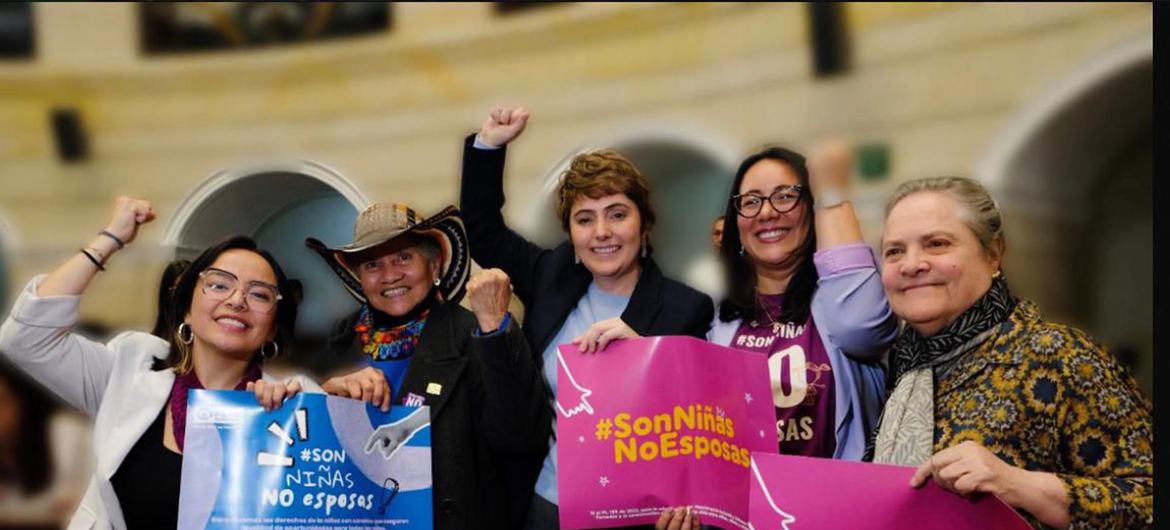
    Activists celebrate the elimination of child marriage in the Colombian Parliament.

    Courtesy Leonardo Vargas/Press Senate of Colombia

    Activists celebrate the elimination of child marriage in the Colombian Parliament.

    Advancing children’s rights

    “We want to congratulate Colombia on the magnificent news,” says Bibiana Aido Almagro, the head of UN Women in Colombia.

    “These practices severely affect the rights to life, health, education, and integrity of women and girls and negatively impact their development.”

    Andrea Tague Montaña, gender and development officer at UNICEF in Colombia, agrees that the decision is a positive move.

    “Child marriages and early unions are understood as harmful practices that not only lead to gender violence but also cause the victims, especially girls, to fall into poverty,” she warns. “They reinforce discrimination and the idea that the best thing that can happen to them is to marry and have children”.

    By entering into an unequal power relationship with older partners, explains Ms. Montaña, girls have few opportunities to decide if they want to have sexual relations, how many children they want to have, or what kind of life they want to lead.

    “They enter scenarios where, in many cases, they start fulfilling adult women’s roles. Child labour, domestic work, and caregiving become their almost daily tasks,” adds the UNICEF official.

    “These are girls who stop studying, who lose their rights by entering an early union. It is important to call on society to stop normalizing early unions; this is a violation of rights. Girls do not stop being girls because they are living with a man”.

    The bill also establishes actions to strengthen national public policy on childhood and adolescence, including measures to restore the rights of children and adolescents affected by underage marriages and unions, with a special emphasis on remote rural areas – ensuring that indigenous peoples and other vulnerable communities can take part.

    The new law comes into effect once it is signed by President Gustavo Petro. 

    Source link

  • World News in Brief: Deaths on the Mediterranean, rights in Venezuela, new Security Council members take their seats

    Regina De Dominicis – who also heads the agency’s Europe and Central Asia Regional Office – issued her plea for action after another small boat sank off the coast of the southern Italian island of Lampedusa on New Year’s Eve.

    “Among the seven survivors is an eight-year-old child whose mother is among those unaccounted for. The boat reportedly sank as it approached the shore,” she said.

    The deaths follow another deadly incident off the island earlier in December which left an 11-year-old girl as the sole survivor.

    2,200 deaths in the Mediterranean

    “The death toll and number of missing persons in the Mediterranean in 2024 have now surpassed 2,200, with nearly 1,700 lives lost on the central Mediterranean route alone,” said Ms. De Dominicis.

    “This includes hundreds of children, who make up one in five of all people migrating through the Mediterranean. The majority are fleeing violent conflict and poverty.”

    The UN children’s agency is calling on all governments to use the Migration and Asylum Pact to prioritise safeguarding children, which includes ensuring safe, legal pathways for protection and family reunification.

    The Pact also demands the establishing of coordinated search and rescue operations, safe disembarkation, community-based reception, and access to asylum services.

    “We also urge increased investment in essential services for children and families arriving via dangerous migration routes, including psychosocial support, legal aid, healthcare, and education,” she continued.

    “Governments must address the root causes of migration and support the integration of families into host communities, ensuring children’s rights are protected at every stage of their journey.”

    Just days ahead of the inauguration of Venezuela President Nicolas Maduro, top independent rights investigators have urged the country’s authorities to allow peaceful protests to go ahead “without fear of reprisal”.

    The appeal from the Fact-Finding Mission on Venezuela, which reports to the Human Rights Council in Geneva, follows the violent repression of demonstrators after last July’s Presidential elections that returned Mr. Maduro to power.

    “We remind security forces responsible for maintaining public order that they should adhere to the strictest international standards on the use of force,” said Marta Valiñas, Chair of the Fact-Finding Mission.

    Echoing her statement, fellow human rights expert Francisco Cox warned that Venezuela’s “repressive apparatus remains fully operational”.

    Mr. Cox said that in the five months to last December, the authorities had detained at least 56 political opposition activists, 10 journalists and one human rights defender.

    ‘Criminal responsibility’

    “Those who order arbitrary detentions and the imposition of torture or other ill-treatment, as well as those who carry them out, bear individual criminal responsibility,” he said.

    According to the Venezuela Public Prosecutor’s Office, around 1,300 of the more than 2,500 individuals detained during the post-electoral security round-up were released – although the Fact-Finding Mission noted that these figures could not be corroborated.

    The Mission’s experts said that according to the non-governmental organization Foro Penal, “1,849 people remain in detention for political reasons, facing multiple irregularities and restrictions affecting their rights to food, health, and access to essential legal guarantees in ongoing legal processes”.

    New Security Council members take their seats

    Five elected members of the Security Council officially began two-year terms on Thursday, with five others leaving the world’s premier body for peace and security.

    The incoming members are Denmark, Greece, Pakistan, Panama and Somalia, selected to serve by the UN General Assembly last June.

    The outgoing members are Ecuador, Japan, Malta, Mozambique and Switzerland. There are 10 elected members of the Council who serve alongside the five permanent members – China, France, Russia, the United Kingdom and the United States.

    The flags of the countries who will serve during 2025 and 2026 were installed during a special ceremony outside the chamber.

    The Security Council president for the month of January, Algeria’s Ambassador Amar Bendjama, thanked the outgoing members and warmly welcomed the newcomers, describing it as an “immense privilege” to serve as well as “a huge responsibility”.

    “The world is facing many challenges that are threatening international peace and security. The situation in the Middle East is highly concerning,” he said.

    He urged all Council members to work tirelessly and effectively “and to uphold the values of multilateralism”.

    UN Assistant Secretary-General Khaled Khiari from the UN political and peacebuilding affairs department said membership of the Council was a “solemn responsibility” and reflected the trust placed on them by the larger membership and organisation.

    He praised the increasingly prominent role being played by elected members to reshape the working methods of the Council.

    Source link

  • Gaza: ‘Every day without a ceasefire will bring more tragedy’

    Commissioner-General Philippe Lazzarini stressed that no place and no one in Gaza has been safe since the war began in October 2023.

    “As the year begins, we got reports of yet another attack on Al Mawasi with dozens of people killed and injured,” he said, calling this “another reminder that there is no humanitarian zone let alone a ‘safe zone’”.

    He warned that “every day without a ceasefire will bring more tragedy.”

    Media under attack

    Separately, UNRWA recalled that the Israeli authorities continue to prevent international media from operating and reporting inside Gaza. 

    “Access to international journalists to report freely from Gaza must be granted,” the agency said.

    Relatedly, the UN human rights office, OHCHR, said it is deeply concerned by the Palestinian Authority’s (PA) suspension of the operations of the Al Jazeera news network in the occupied West Bank.

    The Qatar-based channel was accused of broadcasting “inciting materials” that were “deceiving and stirring strife”, according to international media reports which cited the official Palestinian news agency Wafa.

    The development comes amid the “troubling trend” of suppressing freedom of opinion and expression in the Occupied Palestinian Territory, OHCHR said, urging the PA “to reverse course and respect its international law obligations.”

    Rights experts deplore ‘blatant disregard’ for health 

    Meanwhile, two independent experts appointed by the UN Human Rights Council appealled for an end to what they called “the blatant disregard of the right to health in Gaza” following the raid last week on Kamal Adwan Hospital in the north and the arbitrary arrest and detention of its director.

    Dr. Tlaleng Mofokeng, Special Rapporteur on the right to physical and mental health, and Francesca Albanese, Special Rapporteur on the human rights situation in the Occupied Palestinian Territory, voiced their concerns in a statement issued on Thursday.

    “For well over a year into the genocide, Israel’s blatant assault on the right to health in Gaza and the rest of the occupied Palestinian territory is plumbing new depths of impunity,” they said.

    Healthcare under fire

    The experts were “horrified and concerned” by reports from North Gaza, “especially the attack on health workers including the last remaining of 22 now destroyed hospitals: Kamal Adwan Hospital.”

    They expressed grave concern over the fate of the hospital’s director, Dr. Hussam Abu Safiya, describing him as “yet another doctor to be harassed, kidnapped and arbitrarily detained by the occupation forces, in his case for defying evacuation orders to leave his patients and colleagues behind.”

    They said such action “is part of a pattern by Israel to continuously bombard, destroy and fully annihilate the realisation of the right to health in Gaza.”

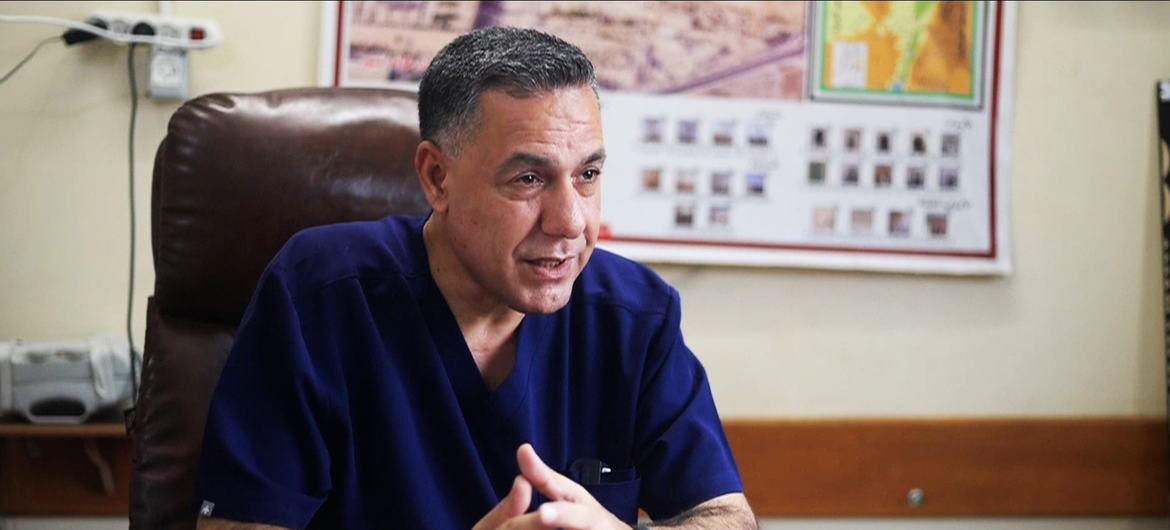
    Dr Hossam Abu Safiya, Director of Kamal Adwan Hospital.

    Dr Hossam Abu Safiya, Director of Kamal Adwan Hospital.

    Concern for hospital director

    The experts noted that before Dr. Abu Safiya was kidnapped, his son was killed in front of him.  

    Furthermore, the doctor “was recently injured while on duty as a result of Israel’s genocidal acts,” yet “continued to provide care while the hospital was under continuous bombardment and threat.”    

    “More disturbing reports indicate that Israeli forces allegedly conducted extrajudicial executions of some people in the vicinity of the hospital, including a Palestinian man who was reportedly holding a white flag,” they added.

    Not a target

    More than 1,057 Palestinian health and medical professionals have been killed so far and many have been arbitrarily arrested, according to the independent experts.

    “The heroic actions of Palestinian medical colleagues in Gaza, teach us what it means to have taken the medical oath. They are also a clear signal of a depraved humanity that has allowed a genocide to continue for well over a year,” they said.

    Stressing that medical personnel enjoy special protections under international humanitarian law, the rights experts said “they are not legitimate targets for attack, nor can they legitimately be detained for exercising their profession.”

    End assaults and arbitrary arrests

    The experts called on Israel, as the occupying power, to respect and protect the right to life and to health in Gaza and the whole Occupied Palestinian Territory.

    “They must also ensure the immediate release of Dr Hussam Abu Safiya, and all other arbitrarily detained healthcare workers. May they be the last arbitrarily arrested Palestinians, and may the new year begin under different auspices.” 

    About UN rapporteurs

    Special Rapporteurs are appointed by the UN Human Rights Council, which is based in Geneva. They are mandated to monitor and report on specific country situations or thematic issues.

    These experts are not UN staff, do not receive a salary, and serve in their individual capacity, independent of the UN Secretariat. 

    Source link

  • Haiti gangs crisis: Top rights expert decries attacks on hospitals

    William O’Neill, who reports to the UN High Commissioner for Human Rights, highlighted an attack on the Bernard Mevs Hospital in Port-au-Prince on 17 December and the killing of several journalists and a police officer at the General Hospital on 24 December.

    The victims were attending the hospital’s official reopening.

    “Criminal gangs have murdered and kidnapped physicians, nurses and healthcare workers, including humanitarian workers,” Mr. O’Neill said in a statement, adding that gangs had “burned, ransacked and destroyed many hospitals and clinics, forcing many to close or suspend their operations”.

    According to the rights expert, only 37 per cent of health facilities in Port-au-Prince are fully functional.

    ‘Precarious conditions’

    They remain difficult to access because of unchecked gangland violence in the capital that has put millions of Haitians at risk, Mr. O’Neill stressed.

    He underscored “repeated threats to attack health premises” and cited reports that police officers were also allegedly involved.

    “The Haitian people – including hundreds of thousands of children living in very precarious conditions – are once again paying the high price of this violence with their right to health severely hindered,” he lamented, expressing concern over the spread of diseases such as cholera and tuberculosis.

    Journalists under attack

    The attacks on 24 December also underscore the dangers faced by journalists in Haiti, with many being killed or fleeing the country due to death threats.

    Mr. O’Neill called on the international community to support Haitian authorities in combating insecurity and ensuring the right to health.

    “I urge the international community to do everything it can to help Haitian authorities to combat rampant insecurity and ensure the realization of the right to health, including unhindered access to health facilities, goods, and services,” he said.

    He also stressed the need for the State to investigate and bring those responsible for the attacks to justice.

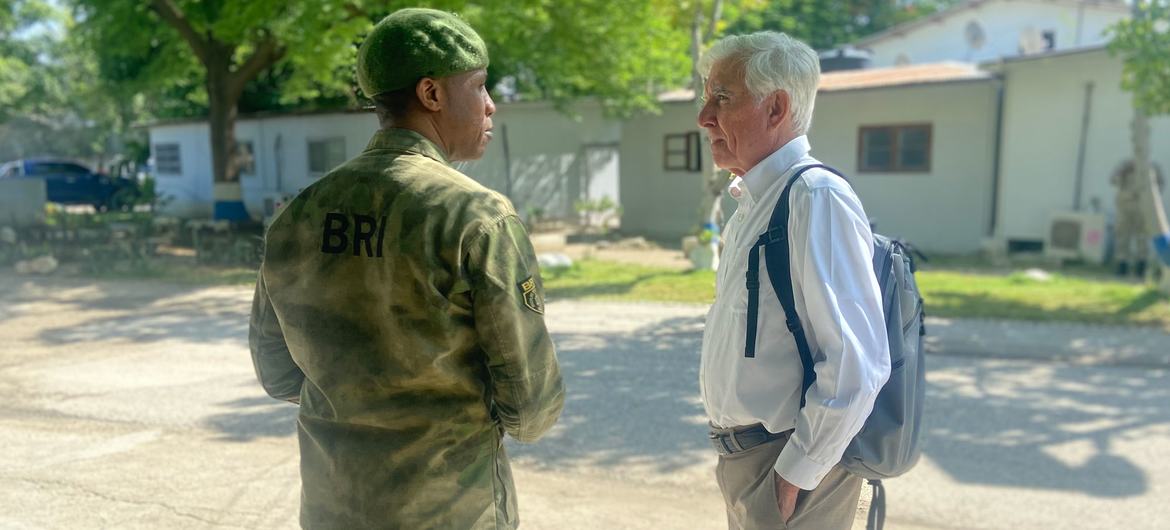
    William O’Neill (right), talks to a Haitian police officer in Port-au-Prince during a visit to the country in October 2023.

    William O’Neill (right), talks to a Haitian police officer in Port-au-Prince during a visit to the country in October 2023.

    Source link

  • Who is Adina Stoian, the female yoga teacher arrested in Georgia and wanted by French justice?

    On 20 and 26 December 2024, Tbilisi City Court held hearings to decide whether Georgia should extradite Adina Stoian and her husband Mihai arrested in August 2024 on the Turkish-Georgian border on the basis of an Interpol arrest warrant issued on France’s request.

    A few days after mid-December, I happened to be in Tbilisi for The European Times to cover the unstable political situation and the demonstrations in the country following the contested results of the parliamentary elections and the subsequent election of a new contested pro-Kremlin president by the new parliament. On this occasion, I published two articles titled “GEORGIA: Election of an ex-footballer as the new president booed by demonstrators” and “GEORGIA: Police violence in Tbilisi while President Zurabishvili calls for quick EU actions”. I also used the opportunity of being in Tbilisi to meet state and non-state actors as well as lawyers involved in the case of the Stoians and to collect some unpublished information about the couple. A member of their family was also in Tbilisi.

    At the end of the second hearing taking place after my departure from Georgia, the court found that a third hearing was necessary to try to solve a crucial issue: the interpretation of the debates and the translation of printed or written court documents in Romanian, as strongly required by Adina and Mihai Stoian and their lawyers instead of the English language imposed until then by the judicial authorities.

    The court considered that Mihai and Adina Stoian were sufficiently fluent in English due to their international activities but their counter-argument was that the legal and judicial language used during the proceedings and interpreted in English was foreign to them and was putting them at risk of failing to understand the implications of what they might have to accept and to sign.

    The double translation of complex issues first by the interpreter Georgian-English and second by themselves in their own language (Romanian) was de facto opening the door to inaccuracies and misunderstandings at both levels and could lead to a miscarriage of justice they would be the victims of, they argued.

    The context of the arrest of Adina and Mihai Stoian

    On 28 November 2023, a SWAT team of around 175 policemen wearing black masks, helmets, and bullet proof vests, simultaneously descended at 6am on eight separate houses and apartments in and around Paris but also in Nice where Romanian yoga practitioners had decided to go into spiritual retreat. The police forces were then brandishing semi-automatic rifles, shouting, making very loud noises, crashing doors and putting everything upside down.

    Most of those Romanian yoga practitioners who were there had chosen to combine the pleasant with the useful in France: yoga and meditation in villas or apartments kindly and freely put at their disposal by their owners or tenants who were also mainly yoga practitioners of Romanian origin and at the same time to enjoy picturesque natural or other environments.

    They were IT experts, engineers, designers, artists, medical doctors, psychologists, teachers, university and high school students, and so on.

    Around 50 yoga practitioners of all ages were taken to police stations for interrogation, most of them being kept in custody for two days and sometimes more. In November 2024, I published in The European Times an article about the case titled “Police raids on Romanian yoga centers in France, one year later”.

    The 28 November 2023 raids were not an operation against a terrorist or armed group or a drug cartel. They were raids targeting eight private places mainly used by peaceful Romanian yoga practitioners but the police suspected these places to be used under cover for illegal activities: trafficking in human beings, sexual exploitation and forcible confinement.This was the official charge against Gregorian Bivolaru and some others who were put in pretrial detention in France in the aftermath of the raids.

    The arrest warrant against the Stoians channeled from Paris to Tbilisi through Interpol included the same charges although they were not in France at the time of the police raids or before, had never had any yoga activity in France and no yoga practitioner had filed a complaint against them. In the French media, they were repeatedly painted as criminals, without any evidence that journalists could have gathered by themselves, but who is Adina Stoian?

    Family and social background of Adina Stoian

    Adina Stoian was born on 12 June 1968 in Sibiu (Romania).

    She grew up in Bucharest under the Communist rule of Ceaucescu but was baptized in the Orthodox Church.

    Her mother was an accountant at the Ministry of Transport. Her father studied at the Bucharest Polytechnic University and made a military career.

    In her studies, Adina followed in her father’s footsteps. In 1991 she graduated from the Polytechnic University with a degree in Transport Engineering. Afterwards, she worked for about two years in the Computer Centre of the Ministry of Transport in Romania before dedicating herself exclusively to spirituality, teaching yoga and trantra classes. She has a sister, Corina, who graduated in mathematics from the Bucharest University. Corina taught mathematics for some time and later on she started working in other fields while teaching yoga in her free time for the last ten years.

    In 1990 Adina started attending classes and other events on spirituality and yoga, including lectures given by Gregorian Bivolaru, the founder and spiritual master of MISA  (Movement for Spiritual Integration into the Absolute). She was impressed by his teachings.

    For over 30 years, she was a yoga practitioner and also a teacher. She shared her knowledge about yoga and personal development through articles and books, courses, workshops, seminars, conferences and camps, both in Romania and elsewhere in Europe, as well as in Asia and South America. 

    Adina and Mihai Stoian got married in a Romanian Orthodox Church in 2001 and moved to Denmark a year later. As yoga teachers, they worked for the Danish Yoga Natha Centre.

    They both co-authored yoga and personal development programs based on the teachings of the traditional tantra yoga. The course is currently taught in many countries in the schools affiliated with Atman, the International Federation for Yoga and Meditation, officially registered in 2004 in the UK. Noteworthy is that Adina Stoian has never been part of the board of the Atman Federation. They also wrote together several books about the Mahavidya, a group of ten Hindu goddesses.

    Adina Stoian also gave lectures on topics such as hormones, pre-menstrual syndrom, esoteric astrology, specifically for women.

    She is opposed to her extradition to France, saying she was not involved in any yoga activity there and in any illegal activity as mentioned in the Interpol arrest warrant, had nothing to do with the massive police raids on yoga centers on 28 November 2023 which led to several arrests and pretrial detention cases, and no yoga practitioner had filed a complaint against her or her husband.

  • World News in Brief: Deadly China quake, Killings of Alawites in Syria, executions in Iran, CAR rights defenders, finance and food crises

    At least 126 people were killed and 188 injured in the 7.1-magnitude quake in Dingri county, a remote region near Mount Everest, according to media reports.  Tremors were reportedly felt in Nepal, Bhutan and parts of northern India.

    UN Spokesperson Stéphane Dujarric said the Secretary-General wishes a speedy recovery to those injured and expresses his sincere condolences to the families of the victims.

     The UN is closely monitoring the situation and stands ready to provide support if requested.

    UN rights office urges restraint amid reported Alawite killings in Syria

    The UN human rights office, OHCHR, has urged restraint in Syria, amid reports that some individuals from the country’s Alawite community and other minority groups have been targeted and killed.  

    Speaking in Geneva, OHCHR spokesperson Liz Throssell said that the Office was aware of reports and videos allegedly showing the killing of Alawite men in Homs and other Syrian cities since the overthrow of the Assad regime, which had a decades-long affiliation with Alawism – a branch of Shia Islam:

    “We are aware of the reports and obviously our colleagues are working to corroborate. We know that the authorities have issued a statement calling on all to avoid retaliation,” Ms. Throssell added.

    International legal obligations

    “I think what it is really important is that all parties abide by their obligations under international humanitarian law and international human rights law, and that includes the respect and protection of minorities.”

    Taking questions from reporters, Ms. Throssell said that a small UN human rights office team has been deployed to Damascus which had established “initial contacts with the caretaker authorities” headed by Hayat Tahrir Al-Sham leader Ahmed al-Sharaa. 

    His forces were principally responsible for the lightning assault that toppled former President Assad on 8 December.

    Asked to respond to unconfirmed reports that women were being assaulted because they had been talking to or walking in the street with men who were not relatives, Ms. Throssell insisted that it was “important that the caretaker authorities must act to ensure that security is restored.

    She said it was vital “that those accused of committing crimes are held accountable and that women, children and diverse ethnic and religious communities can fully exercise their rights.”

    Iran in international spotlight amid sharp rise in executions: OHCHR 

    The number of people executed last year in Iran was “alarmingly shocking and high”, the UN human rights office, OHCHR, said on Tuesday.

    At least 901 people were reportedly executed there in 2024, including 40 in one week alone in December. More than 853 people were executed in 2023.

    Condemning the executions, the UN High Commissioner for Human Rights, Volker TĂŒrk, said that he was deeply troubled by this marked increase in use of the death penalty and urged a halt to the practice.

    ‘Unacceptable risk’

    “We oppose the death penalty under all circumstances…It is incompatible with the fundamental right to life and raises the unacceptable risk of executing innocent people,” he added. 

    Most of the executions last year were for drug-related offences, but dissidents and people connected to the 2022 protests after the death in police custody of Mahsa Amini, were also put to death. 

    The UN rights office said that at least 31 women were reportedly executed in 2024; the majority of these cases involved murder and a significant number of the women sentenced to death were victims of domestic violence, child marriage or forced marriage, with “a number of them 
convicted of murdering their husbands”, OHCHR said.

    Although data is not provided by the Iranian authorities on executions, the UN rights office cited reliable sources indicating that Iran executed at least 972 people in 2015 – the highest number in recent decades.

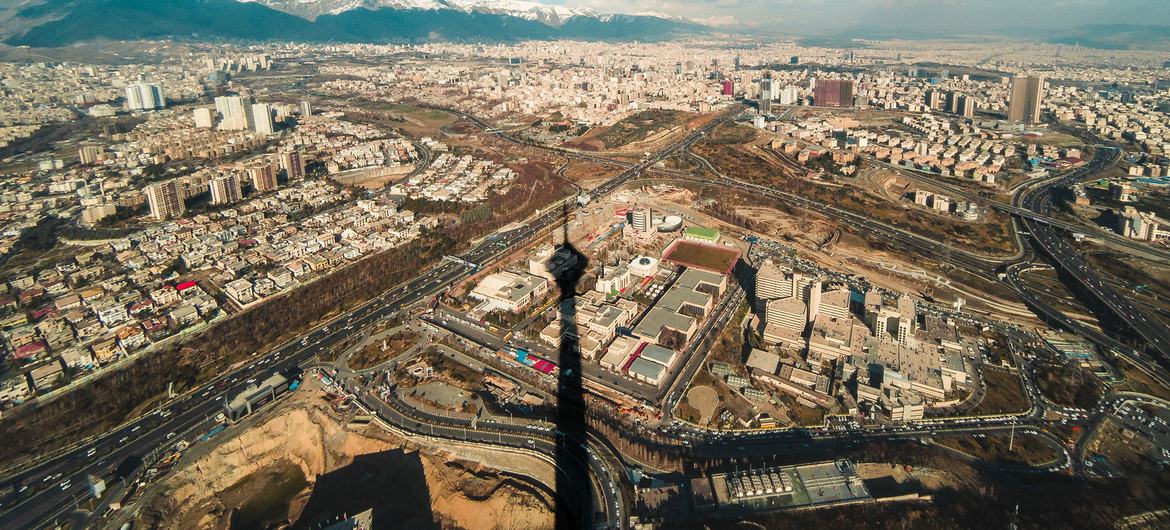
    An aerial view of Tehran, Iran's capital city.

    © Unsplash/Mahyar Motebassem

    An aerial view of Tehran, Iran’s capital city.

    Central African Republic: ‘Historic legislation’ to protect rights defenders

    The recent adoption of a law increasing protections for human rights defenders in the Central African Republic (CAR) has been welcomed by an independent expert on the human rights situation in the country. 

    “This historic legislation marks a crucial stage in the recognition and protection of organisations and individuals who devote their lives to the defence of fundamental rights and the preservation of their operating space,” Yao Agbetse said in a statement on Tuesday.

    The law was adopted by the National Assembly on 27 December, and it is believed to mark a significant development in the democratic evolution of the CAR, advancing the promotion, protection and implementation of human rights in the country. 

    ‘A step in the right direction’

    Highlighting that the legislation is “a step in the right direction”, Mr. Agbetse added that it will safeguard freedom of expression, association, assembly and peaceful demonstration, and protect civic space.  

    “It also recognises the contribution of civil society organisations to the country’s development and to the peace process”, the expert said.

    The law provides for enhanced protection measures for human rights defenders, including security mechanisms, legal support and guarantees against reprisals. 

    These provisions are key to ensure that defenders can continue their vital work without fear of persecution or violence, the independent expert explained. 

    Mr. Agbetse said the law was a victory for all those who fight for justice and equality and are committed to a dynamic and participatory democracy.

    Special Rapporteurs are not UN staff, do not receive a salary, and serve in their individual capacity, independent of the UN Secretariat or any other organisation.

    Yao Agbetse, Independent Expert on the Central African Republic.

    UN Photo/Jean Marc Ferré

    Yao Agbetse, Independent Expert on the Central African Republic.

    2024 financing report: Critical gaps exposed in food crisis funding 

    The 2024 Financing Flows and Food Crises report from the Global Network Against Food Crises – which includes the UN Food and Agriculture Organization (FAO) – reveals a troubling disconnection between financial flows and the escalating severity of global hunger.  

    While 281 million people experienced acute food insecurity in 2023, humanitarian aid to food sectors declined by 30 per cent compared to 2022. That is despite a long-term trend in assistance which showed a 56 per cent increase since 2016. 

    This funding gap is further pronounced in active crises, where humanitarian aid still overpowers development investments. 

    Neglected food needs  

    While 33 percent of global humanitarian funding targeted food sectors, only three per cent of development assistance was allocated to food-related needs. 

    Regions like East Africa bore the brunt of funding reductions, with expenditure dropping by nearly $1.4 billion in 2023. The Middle East and North Africa region also experienced a sharp funding shortfall, with a $1 billion drop below its historical average.  

    The report underscores the need for integrated interventions that address both immediate hunger and underlying weaknesses. Investments in agriculture, which supports sustainable livelihoods and resilience were highlighted as key.  

    While agriculture has absorbed over 50 per cent of development funding since 2016, structural gaps persist, particularly in rural development and forestry initiatives. Strengthening data systems and improving donor coordination are highlighted as critical to bridging these funding gaps in the future.  

    Source link

  • First Person: Syrian refugee shipwreck survivor vows to help reconstruct shattered country

    After the Syrian civil war broke out in 2011, Ms. Al Zamel and her family relocated to Egypt. She stayed there with her family for three years but the situation for refugees deteriorated and, in 2014, she and her Syrian fiancé paid smugglers to take them to Europe.

    During the journey their boat was rammed by traffickers, causing 500 people to drown, including her fiancé. After four days at sea, she was saved by a merchant vessel, along with two small children she had been holding the whole time (one of them, a nine-month old called Malak, died five hours after they were rescued).

    Many migrants lose their lives crossing the Mediterranean sea in unseaworthy boats (file)

    UNICEF/Ashley Gilbertson VII

    Many migrants lose their lives crossing the Mediterranean sea in unseaworthy boats (file)

    Speaking to UN News, Ms. Al Zamel, currently based in Sweden, recounts the perilous journey from Egypt to Europe and reflects on the ongoing struggle for peace, safety and a better future for Syria, post-Assad.

    ‘How can they kill 500 people?’

    “We made three attempts to leave Egypt by sea. The first two times we failed and, each time, we were imprisoned for 10 days. On the third try, we left from the coast of Alexandria.

    The last boat we boarded was in very bad conditions [the migrants were transferred several times to different boats during the journey]. Another ship arrived, with people who looked like pirates, cursing and insulting us. They sank our boat and fled laughing.

    To this day, the sound of their laughter is still in my ears, and I can’t forget it. Most of those on board drowned. How could they kill 500 people, including children, women, families and young people?

    I had a small flotation device around my waist, and I was afraid because I couldn’t swim. I carried two small girls on my chest for four days. Their family members gave them to me before they drowned. I had to stay awake, without food or water. It was cold and dead bodies were around me. The only light I could see was the stars in the sky. Pain and death surrounded me everywhere.

    A lack of options

    After I was saved and taken to Europe, I heard that many people, including some who were close to me, wanted to make the same trip. I didn’t agree with this, but I understood their reasons. They are forced to do so because there are no other options.

    I had to go through this dangerous journey for my family. I wanted them to live in better and safer conditions. I wanted my younger siblings to study and live safely away from the difficult conditions we experienced in Egypt, where life was difficult, and we did not have many opportunities.

    A family gathers at a reception centre in Ar-Raqqa city, Syria.

    © UNICEF/Muhannad Aldhaher

    A family gathers at a reception centre in Ar-Raqqa city, Syria.

    We were able to learn Swedish and I am now studying English. I worked as a teacher’s assistant for six years and my little brother is now about to start his university studies. I have had some very good experiences and worked with good people who love Syrians.

    Currently, I participate in conferences with several organizations affiliated with universities, schools or volunteer agencies. I talk about self-motivation and how one must overcome difficulties after going through a difficult ordeal. I talk about Syrian refugees and refugees’ rights.

    ‘Syrians deserve to live in safety and achieve their dreams’

    When I heard the news [of Assad’s fall] it was like a dream for me and the many Syrians who have suffered. I cried my heart out. It was an indescribable feeling, something like a dream.

    More than a decade of war has led to widespread destruction across Syria.

    © UNOCHA/Ali Haj Suleiman

    More than a decade of war has led to widespread destruction across Syria.

    I want to speak out about the pain and voices of mothers who lost their children because of Bashar al-Assad’s tyranny. After the liberation, it is necessary to imagine a future full of opportunities, positive changes, peace and security because all Syrians deserve to live in freedom.

    Syria needs a lot of help to rebuild and erase the destruction. Whether I remain here, in Sweden, or return, I want to contribute to its reconstruction so that we can all have peace and security.

    Syrians deserve to live in safety and achieve their dreams. We all can contribute in some way, to support the community, participate in development projects and raise awareness.”

    Source link

  • Al Jazeera ban must be lifted, rights experts urge Palestinian Authority

    The development comes one week after a court in Ramallah in the occupied West Bank ordered the closure of several Al Jazeera websites. A Palestinian Authority ministerial committee had earlier justified the enforced closure of the media company’s office in the West Bank, accusing it of broadcasting “inciting” material, “misinformation, sedition and interference in Palestinian internal affairs”.

    “To shut down a prominent international media outlet and one of the biggest in the region is a disproportionate, unnecessary and severe restriction of freedom of expression and obstructs the right to information of the Palestinian people and regional and global audiences,” the experts said in a statement.

    “We are deeply alarmed by this attack on freedom of expression by the Palestinian Authority,” they insisted.

    Websites ordered to close

    On 1 January 2025, the Palestinian Attorney-General ordered the suspension of Al Jazeera in the Occupied Palestinian territory. The decision prohibits Al Jazeera’s broadcasts and operations including the work of its affiliate journalists, employees and crews.

    The suspension followed a letter from the Palestinian Minister of Culture, based on a decision issued by the Tripartite Committee – a specialized ministerial committee that includes the ministries of culture, interior and communications – responsible for licensing ground and satellite radio and television stations.

    On 5 January the Magistrate Court of Ramallah ordered the closure of several Al Jazeera websites for four months, including aljazeera.net, aljazeera.net/live, aljazeera360.com and global.ajplus.net on grounds that their published material “threaten national security and incite the commission of crimes”.

    “We note with serious concern that the decision by the Palestinian Authority to ban Al Jazeera came after the outlet’s critical reporting on the violent crackdown by Palestinian security forces since 5 December 2024 in the Jenin Refugee Camp and across the occupied West Bank. At least eight Palestinians were killed in the violence, including a young female journalist,” the experts said. 

    “The decision to ban Al Jazeera on the basis of vague and unsubstantiated allegations amidst escalating violence and human rights violations suggests that the real objective of the Palestinian Authority is to block international scrutiny and silence uncomfortable criticism,” they maintained.

    Free and independent

    “Free and independent media, including the presence of international media, is of vital importance to ensure transparency and accountability for war crimes and crimes against humanity in the Occupied Palestinian Territory.”

    In Gaza, Israel has banned all international journalists from reporting inside the enclave since the outbreak of the war in October 2023. Dozens of Palestinian journalists have been killed by Israeli forces while covering the conflict, according to international media organisations, including UN culture agency, UNESCO.

    The experts – who are not UN staff and not paid for their work, urged the Palestinian Authority not to follow the example of the Israeli authorities which banned Al Jazeera in Israel and the Occupied [Palestinian] Territory and closed its office in Ramallah last year.

    “Without independent reporting, potential human rights abuses and violations of international law may go unreported, creating an environment where impunity thrives,” the experts said.

    The experts have raised their concerns about restrictions on freedom of expression and on journalists with the Israeli and Palestinian authorities.            

    Source link