Category: Human Rights

  • Sudan war becomes more deadly as ethnically motivated attacks rise

    His warning comes in the wake of reports that dozens were brutally killed in ethnically targeted attacks in Al Jazirah state in the southeast, and amid reports of an imminent battle for control of the country’s capital, Khartoum.

    The Sudanese Armed Forces (SAF) and a rival military, the Rapid Support Forces (RSF) have been fighting since April 2023 in what Mr. Türk called a “senseless war”.

    Desperate situation worsens

    As they “battle for control at all costs…direct and ethnically motivated attacks on civilians are becoming increasingly common,” he noted.

    “The situation for civilians in Sudan is already desperate, and there is evidence of the commission of war crimes and other atrocity crimes. I fear the situation is now taking a further, even more dangerous turn,” he said.

    Attacks on camps

    In the last week alone, his office, OHCHR, documented at least 21 deaths in just two attacks on camps in Al Jazirah, located some 40 kilometres from the state capital, Wad Madani.  

    However, the actual number of attacks directed at civilians, and of civilians killed, are likely to be higher. 

    On 10 January, at least eight civilians were killed in an attack on Taiba Camp, and at least 13 women and one man were abducted. Houses were burnt and livestock, crops and other property looted, while dozens of families were displaced. 

    The next day, at least 13 civilians were killed, including two boys, in an assault on Khamsa Camp. 

    Authorities promise investigation

    The attacks came in the context of the recapture of Wad Madani by the SAF. Reports suggest they were carried out by the Sudan Shield Forces led by Abu Aqla Keikal, a former RSF commander who defected to the other side last October. 

    The attacks reportedly targeted the Kanabi, a historically marginalised group comprised mainly of Nuba and other African tribes.

    Mr. Türk noted the Sudanese authorities’ assurance that the attacks would be fully investigated and those responsible brought to justice, and that an investigation committee has been established.

    “Retaliatory attacks – of shocking brutality – on entire communities based on real or perceived ethnic identity are on the rise, as is hate speech and incitement to violence. This must, urgently, be brought to an end,” he said.

    Violence captured on video

    OHCHR received three videos that document scenes of violence, including unlawful killings. They were reportedly filmed in Wad Madani, with men in SAF uniforms visibly present.

    In the videos, victims were dehumanised and denigrated as “Wassekh” (dirt), “Afan” (mould), “Beheema” (animal) and “Abnaa E-dheif” (bastards), and summary executions were hailed by perpetrators as “Nadhafa” (a cleaning operation). 

    Concern for North Darfur

    Serious concerns also persist for civilians in North Darfur, where ethnically motivated attacks by the RSF and its allied Arab militias against African ethnic groups, particularly the Zaghawa and the Fur, continue to exact a horrific toll. 

    Separately, some 120 civilians were reportedly killed and more than 150 injured in drone attacks in the city of Omdurman, on 13 January, allegedly launched by the SAF on a market in the Ombada Dar es Salam square, an RSF-controlled area.

    End the fighting

    Mr. Türk reiterated his call for the fighting to end, and for the warring sides to uphold their obligations under international humanitarian law and international human rights law. 

    He also warned the proliferation of militia recruitment and mobilization of fighters – largely along ethnic lines – risks unleashing a broader civil war and inter-communal violence.

    Appeal to warring sides

    The SAF and the RSF are responsible for the actions of groups and individuals fighting on their behalf,” he said. 

    He urged them to “take immediate measures to ensure the protection of all civilians, including by taking all feasible measures to avoid or at the very least minimise harm to civilians in the conduct of hostilities.”

    Prompt, independent, impartial and transparent investigations into all reports of violations and abuses are crucial, he added. 

    Source link

  • US: UN rights expert welcomes court ruling reaffirming sex-based protections in education

    Independent rights expert Reem Alsalem hailed the landmark 9 January decision by the Kentucky court declaring the US Department of Education’s regulations implementing the Title IX legislation as unlawful. The ruling extends nationwide. 

    Title IX is a 1972 law to combat sex discrimination in education programmes or activities that receive federal funding. 

    Last April, the Department of Education announced revisions that expand protection to include transgender and non-binary students, among others, on the basis of gender identity and sexual orientation.

    ‘A pivotal moment”

    In the judgement, the court found that the regulations, which redefined the scope of sex discrimination under Title IX to include gender identity, exceeded its statutory authority and violated constitutional protections, Ms. Alsalem noted.

     “This is a pivotal moment in safeguarding the rights of women and girls to non-discrimination based on their sex and reasserting the obligations of the United States to protect this fundamental human right,” she said

     She further noted that the ruling clarified that “when Title IX is viewed in its entirety, it is abundantly clear that discrimination on the basis of sex means discrimination on the basis of being male and female.”

    Safeguarding girls’ right to education

    Ms. Alsalem said that Title IX has historically been the cornerstone for advancing gender equality in the US education system. 

    She wrote to the Government last December, raising concerns about the human rights implications of the Department of Education’s then-proposed changes.

     “By preserving the original intent of Title IX, the Court has restored factual clarity and common sense to the design of policies that affect women and girls, reasserting their rights to access education under conditions of dignity, equality, and safety,” she said. 

     She urged the US Government to take careful note of the decision and reaffirm its commitment to protecting the rights of women and girls.

    Special Rapporteurs are appointed by the UN Human Rights Council to monitor and report on specific country situations or thematic issues.

    These experts are not UN staff and are independent of any government or organization. They serve in their individual capacity and do not receive payment for their work. 

    Source link

  • UN human rights chief hails ‘signs of new beginnings’ in Lebanon and Syria

    “I arrived, I have to say, with a heavy heart, given the compounded traumas over decades in both countries, but I see signs of new beginnings,” said Volker Türk – speaking in the Lebanese capital, Beirut.

    On Wednesday, he was in Damascus for his first ever visit to Syria where he called for “urgent reconsideration” of sanctions following a constructive meeting with the head of the transitional authorities.

    Hopes run high

    Despite the immense challenges, he noted a sense of hope for Lebanon’s future. He highlighted the importance of the ongoing ceasefire between Lebanon and Israel, which continues to hold.

    “The critically important ceasefire between Lebanon and Israel continues broadly to hold, albeit with worrying reports of continued demolitions by Israeli forces in towns and villages in southern Lebanon,” he remarked.

    The recent election of a new President and Prime Minister in Lebanon has ended a two-year political stalemate, opening the door for much-needed reforms.

    Time for reform and renewal

    “With the election of this new leadership, there is momentum for political stability, economic recovery, and long-overdue implementation of critical reforms to address the multiple socio-economic crises and gaping inequalities facing Lebanon,” the High Commissioner emphasized.

    Lebanon’s active civil society has underscored the need for full respect for freedom of expression and association, combating discrimination, improving participation and representation of women, guaranteeing full gender equality, recognizing and including people with disabilities, and ensuring human rights protections for the most marginalized and at risk.

    “Respect for human rights requires specific and continuing investment in the rule of law,” he noted.

    Reckoning with the past

    The High Commissioner also called for a resumption of the independent investigation into the Beirut port explosion in August 2020, which killed over 218 people and rendered hundreds of thousands homeless.

    “I repeat that those responsible for that tragedy must be held to account and offer the support of my office in this regard,” he stated.

    Lebanon is currently experiencing one of the worst economic declines in modern history, with severe currency devaluation and triple-digit inflation affecting basic necessities.

    According to the World Bank, 44 percent of the population lives below the poverty line, with 2.5 million people in need of food assistance. “There is a need for a renewal of the social contract that rebuilds the social fabric, that restores confidence in the institutions of the State,” the High Commissioner urged.

    The recent months of fighting between Israeli forces and Hezbollah militants in the shadow of the Gaza war, have resulted in significant loss of life and displacement. More than 4,000 lives were reportedly lost, including over 1,100 women and children, and over 200 healthcare workers and journalists.

    The ceasefire, which began in late November 2024, remains fragile but is holding despite violations.

    “My office stands ready to strengthen our human rights work and to accompany the country as it moves forward,” the High Commissioner concluded, emphasizing the need for a durable peace and the safe return of civilians.

    Source link

  • UN rights chief in historic meeting in Syria’s with caretaker authority in Damascus

    Speaking from Damascus after meeting the leader of the caretaker authorities, Ahmad Al-Sharaa, Mr. Türk said that he had been “assured…of the importance of respect for human rights for all Syrians and all different components of Syrian society”.

    Syria’s de facto leader – who spearheaded the lightning overthrow of Bashar Al Assad on 8 December at the head of opposition fighters Hayat Tahrir Al Sham (HTS) –  also underscored “the pursuit of healing, trust building and social cohesion, and the reform of institutions”, the High Commissioner said

    Staggering needs 

    But the challenges are immense,” he continued, pointing to the “hundreds of thousands of lives” lost, the fact that much of the country lies in ruins”.

    Today, nine in 10 Syrians are “mired in poverty, the health system is on its knees and many schools are closed,” Mr. Türk said. “Millions are still displaced both inside and outside the country. The rights to food, health, education and housing are fundamental human rights, and there must be prompt, collective and concerted efforts to guarantee them.”

    Calling for “an urgent reconsideration” of ongoing sanctions on Syria “with a view to lifting them”, the UN rights chief said that considering their impact on the lives of the Syrian people was key. 

    Sednaya horrors

    Mr. Türk – whose visit to Syria is a first for any UN High Commissioner for Human Rights – said that he had heard harrowing testimony from numerous victims of torture. 

    They included some jailed at the notorious Sednaya prison outside Damascus, where his Office documented violations “for years”.

    The UN rights chief described prisoners telling him that “early in the morning, as they heard the guards at their door, trembling in fear, they retreated to the rear of the cell, fearing they would be hauled out again to be tortured, or even executed.”

    Thousands died in prisons throughout Syria, the High Commissioner explained, as he went on to condemn the “apocalyptic wasteland” of the bombed-out residential neighbourhood of Jobar, in Damascus, which he visited.

    Mass killing, destruction

    “Not a single building in the area was spared bombardment in wave after wave of attacks,” Mr. Türk said, adding that it was “inconceivable that such mass killings and destruction” had happened. 

    It was equally difficult to believe “that banned chemical weapons were used against civilians elsewhere in the country and not just once”, the UN rights chief said – a likely reference to several deadly chlorine gas attacks, including on two residential buldings in Douma in northeast Damascus by the Syrian air force on 7 April 2018.

    It “says a lot about the extreme brutality of the tactics used by the former regime”, whose acts “constitute some of the most serious crimes under international humanitarian law.”

    ‘Real threats’ to Syria remain

    Away from the immediate destruction and grief of war, the High Commissioner highlighted that the people of Syria “need every ounce of help they can get to rebuild a country that works for all Syrians”. 

    The UN human rights office, OHCHR – which has had a dedicated Syria monitoring team since 2013 – “will continue to support inclusive, nationally owned and driven processes”, Mr. Türk said.

    He warned of “very real threats” to Syria’s territorial integrity and independence. The country’s sovereignty “must be fully respected and rigorously upheld. The ongoing conflicts and hostilities must end,” the High Commissioner insisted, adding: “This is really a seminal moment for Syria after decades of repression. 

    “My most fervent hope is for all Syrians to be able to thrive together, regardless of gender, religion or ethnicity and to build a common future.”  

    Source link

  • Iran: UN experts alarmed as Supreme Court upholds death sentence of Kurdish woman activist

    “The charges against Ms. Pakhshan Azizi do not meet the threshold of ‘most serious crimes’ required by international law for the death penalty,” the Human Rights Council-appointed experts stated. “Her death sentence constitutes a serious violation of international human rights law.”

    Solitary confinement

    Ms. Azizi was arrested in Tehran on 4 August 2023, by Iranian intelligence services and held in solitary confinement in the notorious Evin Prison for five months.

    On 23 July 2024, the Tehran Revolutionary Court sentenced her to death for “armed rebellion against the state” and “membership of opposition groups,” along with a four-year prison term for alleged membership of in the Kurdistan Free Life Party (PJAK).

    The Supreme Court upheld the death sentence last week.

    “Ms. Azizi’s arrest and sentencing appear to be solely related to her legitimate work as a social worker, including her support for refugees in Iraq and Syria,” the independent experts noted.

    Reports indicate that Ms. Azizi was subjected to severe psychological and physical torture in solitary confinement to extract a confession. She was also denied access to family visits and legal representation of her choice.

    Family members detained

    Several members of Azizi’s family were temporarily detained and have faced national security charges, presumably to pressure her to confess, the experts noted.

    “The use of torture to extract confessions and the denial of fair trial rights render the death sentence against Ms. Azizi arbitrary in nature,” the experts said.

    The experts highlighted that the number of executions in Iran surpassed 900 in 2024, with an increase in the number of women put to death.

    They have called for Iran to stop executions that violate international law and fundamental human rights.

    End targeting of Kurdish women activists

    “We are deeply concerned by the specific targeting of Kurdish women activists with politically motivated charges,” they said.

    “Ms. Azizi’s prosecution reflects the heightened persecution that minority women activists face in Iran and the continued intention to punish and silence them by creating a climate of fear.”

    The experts urged Iranian authorities to revoke Ms. Azizi’s death sentence, investigate allegations of torture and denial of fair trial rights, and end the harassment and targeting of women activists in Iran.

    Special Rapporteurs and Working Groups who report on and monitor allegations of rights abuses are not UN staff and are independent of any government or organization. They serve in their individual capacity and receive no salary.

    Source link

  • ‘Human rights defenders are key to conflict resolution,’ says Türk

    For many workers, defending human rights is not just a job, but a calling. As he noted, many “work out of a deep sense of service to others, and a desire to make a meaningful impact.”

    From conflict zones to post-war societies, they provide crucial support to detainees and victims of torture, deliver emergency relief, document violations and expose the root causes of conflict. 

    “Human rights defenders are key to conflict resolution. They are the messengers of dignity, justice and peace,” said Mr. Türk.

    However, despite their invaluable work, human rights defenders face “unacceptably high” threats, with some attacks amounting to war crimes.

    Mounting risks

    For journalists and humanitarian workers, being killed, kidnapped, harassed or detained has become an increasingly likely reality.

    Women are particularly vulnerable, often targeted by sexual violence, online threats and risks to their family.

    Mr. Türk stressed the importance of ensuring defenders’ safety, arguing that it is both a legal imperative and a vital step toward achieving justice and peace.

    A global pushback

    Mr. Türk cited the criminalisation of dissent, the forceful suppression of peaceful protests and restrictions on non-governmental organisations as alarming developments. 

    These events often force human rights defenders to operate in exile, exposing them to new forms of persecution and repression, including online surveillance.

    “The full impact of digital technologies on the work and safety of human rights defenders is not yet known,” he warned, underlining the urgency of addressing these modern threats.

    Concrete action needed

    Mr. Türk urged governments to take decisive action, including establishing well-resourced national protection systems and supporting civil society networks that provide cross-border protection. He also noted the importance of reacting swiftly to emerging threats.

    “The risks of this work must not be shouldered by the defenders alone,” he said, emphasising the need to support NGOs at risk and to push back against the labelling of defenders as terrorists, foreign agents or traitors.

    “We must do everything we can to make sure [defenders] can operate safely wherever they are,” he concluded.  

    Source link

  • New era of crisis for children, as global conflicts intensify and inequality worsens

    At the beginning of each year, UNICEF looks ahead to the risks that children are likely to face and suggests ways to reduce the potential harm. The latest report, Prospects for Children 2025: Building Resilient Systems for Children’s Futures, demands strengthening national systems that are designed to mitigate the impacts of crises on children and ensure they have access to the support they need.

    Here is a breakdown of the main trends to look out for in 2025.

    A doubling of children living in conflict zones

    Intensifying armed conflict will continue to pose serious risks to children in 2025. Conflicts are also increasing in intensity and violence.

    Over 473 million children — more than one in six globally — now live in areas affected by conflict, with the world experiencing the highest number of conflicts since World War II. And the percentage of the world’s children living in conflict zones has doubled — from around 10 per cent in the 1990s to almost 19 per cent today.

    Amid growing geopolitical rivalries and the paralysis of multilateral institutions, both state and non-state actors appear increasingly willing to flout international laws designed to protect civilian populations, with attacks on civilian infrastructure like schools and hospitals becoming ever more common.

    This unravelling of decades of efforts to safeguard civilians is taking a heavy toll on children. As well as the risks to their lives, children face displacement and the threat of starvation and disease. There are also substantial risks to their psychological wellbeing.

    The multilateral system has struggled to respond effectively. A concerted and sustained effort is needed to reverse the losses of recent years.

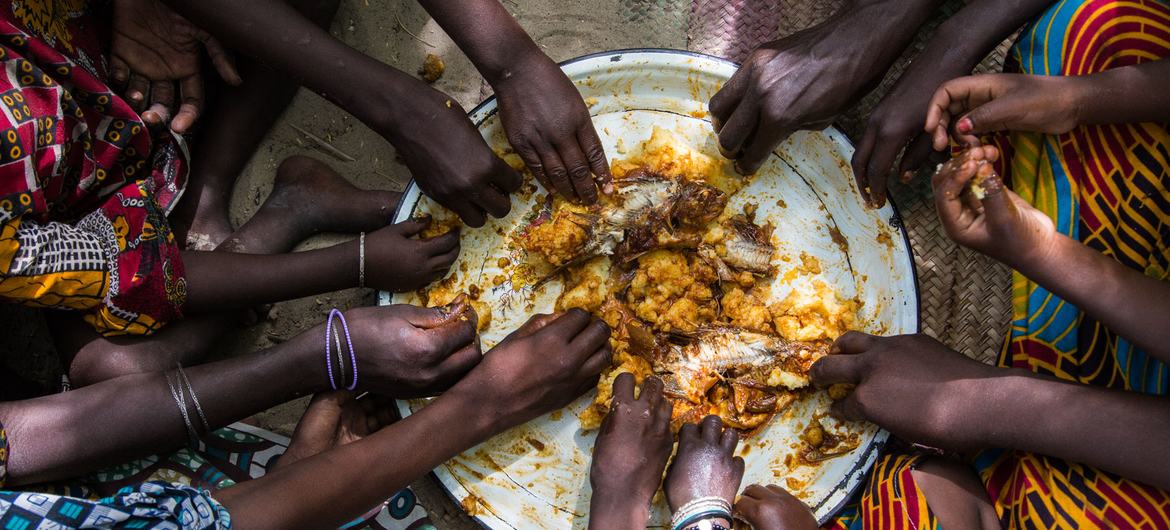
    Children eat lunch in a village in Tagal, Chad.

    © UNICEF/Vincent Tremeau

    Children eat lunch in a village in Tagal, Chad.

    The financial system isn’t working

    Governments of developing countries are finding it increasingly difficult to fund key investments in children, thanks to slow growth, rising debt and inadequate tax revenues and development assistance.

    Another important factor is the growing burden of sovereign debt. Nearly 400 million children live in countries in debt distress, and without major reforms this figure is set to rise. The cost of servicing this debt is squeezing out essential investments for children.

    In 2025, we face crucial decisions about reforms to the framework of institutions, policies, rules and practices that govern the global financial system.

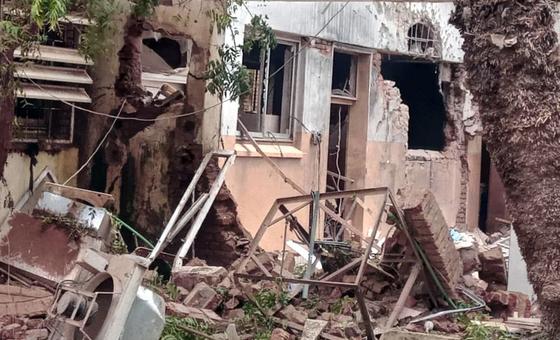
    In Tabatinga -Amazonan State- in Brazil on October 2024.

    In Tabatinga -Amazonan State- in Brazil on October 2024.

    The irreversible consequences of the climate crisis

    Children are disproportionately impacted by climate change and the effects on their development, health, education and well-being can be lifelong and irreversible.

    2025 presents crucial opportunities to make progress towards global climate goals. This means comprehensive and robust policymaking, adequate and equitable financing and investments, strong regulatory and accountability frameworks, and effective monitoring systems.

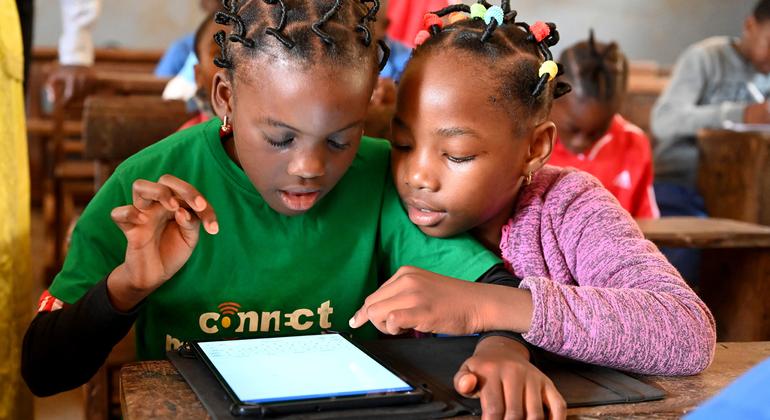
    Children learn with tablets in the Public Melen School of Yaoundé, Cameroon.

    Improved access to digital services

    Several digital trends are poised to shape our future in 2025 and beyond. Rapid advancements in emerging technologies will continue to shape all spheres of children’s lives from education to communication to participation in digital economy.

    One key trend is the emergence of digital public infrastructure (DPI). DPI is a set of shared digital systems that can provide equitable access to public and private services. It allows large-scale delivery of digital public services, including for children, and is now being rapidly adopted around the world.

    DPI has the potential to fundamentally shift how governments serve and engage with their citizens, including children. It can also be central to promoting rules driving development, inclusion, trust, innovation, and respect for human rights.

    But persistent inequalities in digital access, particularly in least-developed countries, are a major barrier to ensuring DPI serves every child. There are issues, too, with ensuring data harmonization across systems and with guaranteeing adequate data protection and security.   

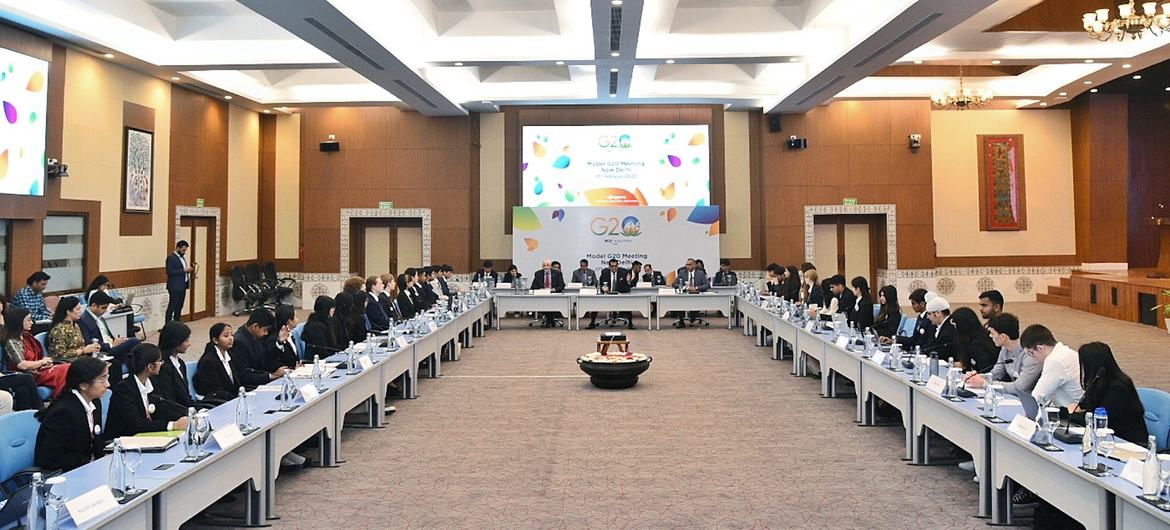
    Youth advocates at the 2023 G20 meeting (file)

    Youth advocates at the 2023 G20 meeting (file)

    Global governance under pressure

    New and ongoing crises will continue to challenge the future of global governance.

    In 2025, nations and institutions must address the critical question of whether the global multilateral framework will unify to form a cohesive response to our shared challenges or fragment further, risking a loss of collective action.

    The direction we take will deeply impact efforts to protect children’s rights and well-being across the world.

    Rights of children must remain at the forefront

    The conclusion drawn by the report’s authors is the critical importance of adopting and promoting systems to improve the lives and prospects of children.

    These systems must embody principles of inclusion, equity, and accountability, ensuring that the rights and needs of children remain at the forefront. And, just as importantly, they must not only address current global challenges but also anticipate and prepare for what lies ahead.

    Source link

  • Alaska Educator Forcibly Committed to Psych drugs for Expressing Her Faith

    Alaska Educator Sues Psychiatric Facility After Being Forcibly Committed for Expressing Her Faith

    Mary Fulp, a respected educator and the 2022 Alaska Principal of the Year, never expected that her heartfelt expression of faith would lead to a harrowing ordeal. In January 2023, Fulp was forcibly removed from her home, involuntarily committed to a psychiatric facility, and injected with psychotropic drugs—all because she shared her love for Jesus Christ in a video posted online. Now, Fulp is fighting back, filing a lawsuit against the Mat-Su Regional Medical Center and others involved in what she calls a blatant violation of her civil and religious rights.

    As reported by John Blosser in Freedom magazine, Fulp’s case sparked a national conversation about the intersection of religious freedom, mental health, and civil liberties.

    “This traumatic experience is a free citizen’s worst nightmare,” Fulp said. “It’s about abuse of power, disregard for the law, and violations of basic human and constitutional rights.”

    A Testimony of Faith Leads to Unthinkable Consequences

    Fulp’s ordeal began on January 15, 2023, when she posted a video online sharing a deeply personal religious experience. In the video, she spoke about her love for Jesus and described receiving the spiritual gift of “speaking in tongues,” a practice common among charismatic and Pentecostal Christians. While her testimony was a sincere expression of her faith, it alarmed some members of her family, who believed she might be experiencing a mental health crisis.

    When Fulp’s family visited her home to express their concerns, she asked them to leave. Instead, they contacted the police. A female officer responded and, after speaking with Fulp, determined that she was of “sound mind and body” and posed no threat to herself or others. The officer left without taking further action.

    However, as detailed in John Blosser’s original reporting for Freedom magazine, Fulp’s family persisted. They later contacted the police again, presenting what they claimed was a court order mandating a psychiatric evaluation. Relying on this document, officers returned to Fulp’s home, handcuffed her, and transported her to the Mat-Su Regional Medical Center.

    “I’m actually being taken away because I love Jesus,” Fulp recalled thinking at the time. “I’m in the back of a cop car for my testimony. And so here I am getting a psych eval because I love Jesus.”

    A Forged Document and a System’s Failure

    Two days after Fulp’s involuntary commitment, authorities discovered that the court order her family had presented was a forgery. By then, the damage had already been done. Fulp had been strapped to a gurney, forcibly injected with psychotropic drugs, and held in a cold, dark hospital room for three days. During her confinement, staff allegedly violated her HIPAA rights by discussing her case with unauthorized individuals.

    “It appears that we made a mistake by transporting the adult female for an evaluation,” Alaska Department of Public Safety Commissioner James Cockrell admitted in a statement. “Our staff should have taken additional steps to verify the information presented by the complainant and the validity of the court order. We take full responsibility for this and want to assure the public that we are taking necessary steps to ensure that incidents like this never happen again.”

    But for Fulp, the apology rings hollow. “My faith is not a disorder—it is my strength,” she said. “Instead of respecting my right to freely express my religion, the defendants dismissed my beliefs, labeling them as ‘delusions’ and ‘religiously preoccupied.’ This discriminatory mindset shaped their reckless decisions, leading to the physical, emotional, and spiritual harm I endured.”

    A Broader Issue of Human Rights

    Fulp’s case, as highlighted in John Blosser’s reporting for Freedom magazine, has sparked outrage among civil rights advocates and religious freedom organizations. The Citizens Commission on Human Rights International (CCHR) has condemned the use of involuntary psychiatric commitment, calling it a violation of human rights.

    “Involuntary detention and forced treatment policies in the U.S. are unworkable and harmful,” the CCHR stated. “Involuntary commitment is a fate that can be worse than criminal incarceration—though in the case of a mental health commitment, the person has not committed a crime.”

    Jan Eastgate, president of CCHR International, echoed these sentiments, describing the psychiatric system as one that “exemplifies human rights abuse and denies individuals their inherent rights.”

    Fighting for Justice and Reform

    Fulp’s lawsuit against the Mat-Su Regional Medical Center seeks not only accountability for the harm she endured but also systemic reforms to prevent similar incidents in the future. Her legal team is calling for behavioral health centers to adopt policies that respect patients’ legal and constitutional rights, including their right to religious freedom.

    “The people who are defending me are looking at every violation that has happened to me,” Fulp said. “We’re going to right these wrongs in a very public, powerful way.”

    Fulp’s case serves as a stark reminder of the fragility of civil liberties and the potential for abuse within systems designed to protect public health. Her courage in speaking out has already inspired others to question the ethics of involuntary psychiatric treatment and to advocate for greater protections for religious expression.

    As Fulp continues her fight for justice, one thing is clear: her faith remains unshaken. “I love Jesus, and no one can take that away from me,” she said. “What happened to me was wrong, but it has only strengthened my resolve to stand up for what I believe in.”

    For Mary Fulp, the question is no longer, “What would Jesus do?” but rather, “What will we do to ensure this never happens again?”

  • More than 5,600 killed in Haiti gang violence in 2024

    These deaths represent an increase of over 1,000 on the total killings for 2023, according to figures verified by OHCHR.  A further 2,212 people were injured and 1,494 kidnapped.

    “These figures alone cannot capture the absolute horrors being perpetrated in Haiti but they show the unremitting violence to which people are being subjected,” said the UN High Commissioner for Human Rights, Volker Türk.

    Shocking massacre

    OHCHR recalled that in one of the most deadly and shocking incidents, at least 207 people were killed in a massacre in early December orchestrated by the leader of the Wharf Jérémie gang in the Cité Soleil area of the capital, Port-au-Prince.

    Many of the victims were older people accused of causing the death of the leader’s son through alleged voodoo practices. To erase evidence, gang members mutilated and burned most of the bodies, while others were thrown into the sea.

    OHCHR also documented 315 lynchings of gang members and people allegedly associated with gangs, which on some occasions were reportedly facilitated by Haitian police officers.

    Additionally, 281 cases of alleged summary executions involving specialized police units occurred during 2024.

    Impunity still prevalent

    “It has long been clear that impunity for human rights violations and abuses, as well as corruption, remain prevalent in Haiti, constituting some of the main drivers of the multi-dimensional crisis the country faces, along with entrenched economic and social inequalities,” said Mr. Türk. 

    “Additional efforts from the authorities, with the support of the international community, are needed to address these root causes.”

    The human rights chief stressed that restoring the rule of law must be a priority. He added that to this end, the UN-backed Multinational Security Support Mission (MSS) in Haiti needs the logistical and financial support it requires to successfully implement its mandate.

    Furthermore, the Haitian National Police, with the support of the international community, should also strengthen its oversight mechanism to hold accountable police officers reportedly involved in human rights violations.

    Implement sanctions and arms embargo

    Mr. Türk restated his call for the full implementation of the UN Security Council‘s sanctions regime on Haiti, as well as the arms embargo, which are crucial to preventing the supply of firearms and ammunition to the country.  

    Weapons flowing into Haiti often end up in the hands of the criminal gangs, with tragic results: thousands killed, hundreds of thousands displaced, essential infrastructure and services, such as schools and hospitals, disrupted and destroyed,” he said. 

    He further noted that deportations of Haitians continue even though the acute insecurity and resulting human rights crisis in their homeland do not allow for safe and dignified return.

    The High Commissioner reiterated his call to all States not to forcibly return anyone to Haiti. 

    Source link

  • Rights experts call for immediate release of Abu Zubaydah from Guantánamo

    On Monday the United States military sent 11 long-term detainees from the facility to Oman after reaching agreement with the Government there on relocation and resettlement. 

    Only 15 detainees now remain, according to news reports. The prison opened in 2002 and at its peak it held more than 600 prisoners overseen by over 2,000 military and civilian personnel.

    Captured in Pakistan

    Captured in March 2002 in Faisalabad, Pakistan, following the 11 September 2001 attacks, Abu Zubaydah was transferred to CIA custody and held at multiple secret locations, where he was reportedly tortured, the experts reminded in a press release issued on Wednesday.

    Despite being imprisoned for nearly two decades, he remains in Guantánamo Bay without any formal charges having been made.

    Release ‘long overdue’

    We are exceptionally requesting a Presidential pardon for Mr. Abu Zubaydah, owing to his treatment while in detention and the lack of due process since he was first detained,” the experts stated. “His immediate release and relocation to a third safe country are long overdue.”

    The Human Rights Council-appointed experts highlighted Abu Zubaydah’s serious health conditions, which include injuries sustained during torture that have allegedly been exacerbated by the denial of medical attention.

    They also noted significant impediments to lawyer-client communication.

    Various international and regional human rights mechanisms have examined Abu Zubaydah’s case, establishing that he has suffered multiple human rights violations within the context of the US rendition and secret detention programme, the experts noted.

    “In addition to his liberation, we request that Mr. Abu Zubaydah is accorded an enforceable right to compensation and other measures of reparation, in accordance with international law,” the working group members and Special Rapporteurs said.

    The experts emphasised the profound psychological and physical trauma he has endured due to torture, cruel, inhuman, and degrading treatment, and enforced disappearance. They reiterated their call for the US Government to immediately release and relocate him to a safe third country.

    “We recall the principle of joint responsibility that applies to States when more than one of them was involved in the perpetration of a human rights violation,” the experts said. “Accordingly, we call on States to proactively offer their territory for the prompt relocation of Mr. Abu Zubaydah.”

    The experts also expressed concerns about the continued detention of 14 other individuals at Guantánamo Bay, who are in varying stages of legal proceedings and face allegations of ongoing human rights abuses.

    Independent rights experts are not UN staff, receive no salary for their work and are independent of any organisation or government.

    Source link