Category: Human Rights

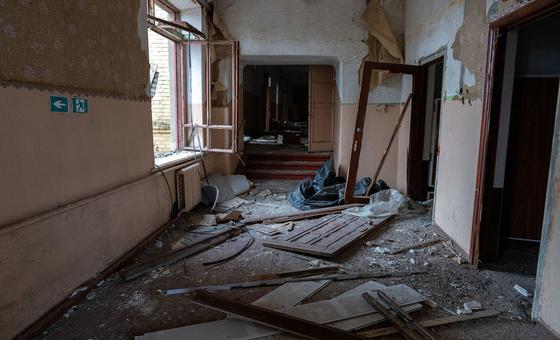
  • Ukraine in grip of third winter of escalating Russian attacks

    In a scheduled update mandated by the Council in Geneva, Nada Al-Nashif said that these attacks had led to the deaths of 574 civilians – an increase of 30 per cent over the previous year.

    She noted that Russian bombardment had also damaged key infrastructure such as water, heating and transport services, with several major attacks on Ukraine’s energy infrastructure.

    Russia accuses Ukraine of ‘terrorist acts’

    The Russian delegation at the Council rejected the Deputy High Commissioner’s allegations and accused Ukrainian forces of carrying out “terrorist acts on homes in various Russian regions”.

    The Ukrainian representative condemned ongoing deadly attacks by Russian forces; one on New Year’s Eve involved 100 drones that left two dead and seven injured, including two pregnant women in the capital, Kyiv.

    Ms. Al Nashif also warned of “increasing, gross violations of international human rights law and serious violations of humanitarian law, including possible war crimes”.

    And she said that Ukrainian prisoners of war, “both men and women, described widespread and systematic torture … severe beatings, electric shocks, strangulation and prolonged solitary confinement. Most reported being subjected to sexual violence, including rape and forced nudity”.

    Credible allegations of executions

    “I am deeply concerned by a significant increase in credible allegations of executions of Ukrainian military personnel captured by Russian armed forces. Summary executions constitute a war crime. The Office recorded 62 such executions in 19 separate incidents during the reporting period and verified 5 of these incidents…”

    Ms. Al Nashif also noted that Russian prisoners of war held by Ukraine reported being subjected to torture, severe beatings, sexual violence and dog attacks, mostly in places of transit before reaching official places of internment.

    According to the UN monitoring mission in Ukraine, since February 2022, conflict there has killed more than 12,300 civilians, including more than 650 children, with at least 27,800 injured.

    Over 700 medical facilities and 1,500 schools and colleges have also been damaged or destroyed.

    Source link

  • UN Commission notes renewed sense of optimism in Syria during first-ever visit

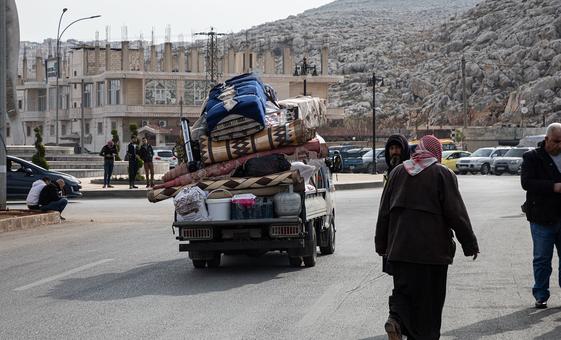
    Commissioner Hanny Megally led the team, which met with officials, including in the Ministries of Justice and Foreign Affairs.

    Discussions covered justice for victims and families, the protection of mass graves and evidence, and continued engagement with the Commission, which was established by the UN Human Rights Council in August 2011.

    Willingness to engage

    Mr. Megally welcomed the willingness of the new authorities to continue engaging with the Commission on future visits.

    This marks a significant shift as the former government had denied the Commission access since the start of its mandate.

    “We commend the new authorities for improving the protection of mass graves and evidence in detention centres, and encourage them to pursue these efforts further, also by utilizing relevant Syrian civil society organizations and international actors,” he said.

    Accountability for abuses

    The Commission visited Damascus and surrounding areas, including detention centres that have been a focus of its investigations, as well as mass grave sites.

    “Standing in tiny, windowless cells, still filled with stench and marked by unimaginable suffering, was a stark reminder of the harrowing accounts we have documented over nearly 14 years of investigations,” said Mr. Megally.

    “These abuses must never be repeated again and those responsible must be held accountable.”

    Renewed sense of optimism

    In meetings with Syrians, including those returning after years of exile, Mr. Megally noted a renewed sense of optimism and eagerness to participate in a new Syria built on respecting human rights.

    The Commission was informed that barriers to civil society engagement, such as the registration of organizations, have eased and it looks forward to the expansion of civic space, which is much needed.

    Moreover, discussions with civil society and humanitarian organisations underscored the urgent need for international support to ensure a successful transition. 

    In this regard, Mr. Megally emphasized the importance of facilitating efforts toward rebuilding, including the suspension of sectoral sanctions imposed on the former authorities.

    Relief and hope

    “There is a clear sense of relief among Syrians. After decades of oppressive rule, fear has been lifted, and a new sense of freedom is palpable,” he said, noting that people spoke about holding their heads high for the first time in decades. 

    “As someone who investigated massacres in Syria in the 1980’s, I deeply understand how long Syrians have waited for this moment,” he continued.

    “Though the time ahead is filled with challenges, we are hopeful that Syrians will come together to build the country to which they have always aspired.”

    About the Commission

    The Independent International Commission of Inquiry on the Syrian Arab Republic was established to investigate all alleged violations of international human rights law in the country since March 2011, when conflict erupted following a brutal crackdown on pro-democracy protests.

    It consists of three Commissioners who are not UN staff and do not receive payment for their work. 

    Source link

  • US: Rights experts urge Senate to reject bill sanctioning the International Criminal Court

    The ICC issued arrest warrants in November for Israeli Prime Minister Benjamin Netanyahu and former defence minister Yoav Gallant for alleged war crimes and crimes against humanity in Gaza.

    Go here to read our analysis of the decision and the likely next steps, and here for our ICC explainer

    Asked by reporters at the regular noon briefing if the UN chief had a view on the Congressional bill, Spokesperson Stéphane Dujarric said that although he would not comment on individual laws, “we do have a principled position…And that is, while it is independent from the Secretariat, the Secretary-General has great respect for the Court and for the work of the International Criminal Court, which is in itself a very important pillar of international justice.”

    The experts – Margaret Satterthwaite, Special Rapporteur on the independence of judges and lawyers; Francesca Albanese, Special Rapporteur on the situation of human rights in the Occupied Palestinian Territory, and George Katrougalos, Independent Expert on the promotion of a democratic and equitable international order – outlined their concerns in a statement.

    A ‘shocking’ move

    They are dismayed by the passage of an Act in the US House of Representatives on Thursday which sanctions the ICC for its decision. The Court also issued an arrest warrant for a former Hamas commander alongside the others.

    It is shocking to see a country that considers itself a champion of the rule of law trying to stymie the actions of an independent and impartial tribunal set up by the international community, to thwart accountability,” the experts said.

    “Threats against the ICC promote a culture of impunity. They make a mockery of the decades-long quest to place law above force and atrocity,” they warned.

    The experts have written to the US authorities about their concerns.

    ICC promotes accountability 

    The ICC was established under a 1998 treaty known as the Rome Statute. The US is not a party to the statute, along with dozens of other nations, but 125 countries are members of the Court.

    It has the mandate to investigate and prosecute individuals for the grave international crimes of genocide, war crimes, and crimes against humanity. It is based in the Hague, in the Netherlands.

    The experts recalled that the ICC is the legacy of the Nuremberg trials which brought Nazi leaders to account ​and the commitment ​to never allow ​heinous ​crimes, such as those committed during the Second World War, to go ​​unpunished. 

    “The tireless work of brave legal professionals at the ICC is the main driver for accountability. The work of its prosecutors becomes the foundation upon which our efforts to uphold the integrity of the system of international law is resting,” they said.

    ICC Prosecutor Karim Khan visits the landfill site in Tarhunah, Libya, where over 250 have been identified across a number of mass graves. (file)

    ICC Prosecutor Karim Khan visits the landfill site in Tarhunah, Libya, where over 250 have been identified across a number of mass graves. (file)

    Respect for legal professionals

    They called upon all State Parties to the ICC, and all UN Member States in General, to observe and respect international standards as it relates to legal professionals working towards accountability for the most grave international crimes.

    International standards provide that lawyers and justice personnel should be able to perform all of their professional functions without intimidation, hindrance, harassment or improper interference; and should not suffer, or be threatened with, prosecution or administrative, economic or other sanctions ​​for any action taken in accordance with recognised professional duties, standards and ethics,” they explained.

    ‘A blind spot for justice’

    They said the bill, titled the ‘Illegitimate Court Counteraction Act’, would take effect 60 days after enactment.

    It would sanction any individual working to investigate, arrest, detain or prosecute American citizens or an official from an allied US country, including Israel. Any US funds designated for the ICC would also be rescinded, and any future money for the Court would be prohibited. 

    The experts said imposing sanctions on justice personnel for fulfilling their professional responsibilities is “a blatant violation of human rights” that strikes at the core of judicial independence and the rule of law.

    “The passage of a bill that creates a blind spot for justice regarding certain countries not only legalises double standards and impunity but irreparably undermines the spirit of universality that the international justice system is built upon,” they said. 

    “Such actions erode public trust in the impartiality and integrity of justice and set a dangerous precedent, politicising judicial functions and weakening the global commitment to accountability and fairness,” they added. 

    Uphold judicial independence

    They warned that if carried out, the sanctions would appear to amount to offences against the administration of justice under Article 70 of the Rome Statute, which punishes efforts to impede or intimidate an official of the Court or to retaliate against them on account of their official duties.  

    We urge US lawmakers to uphold the rule of law and the independence of judges and lawyers, and we call on States to respect the Court’s independence as a judicial institution and protect the independence and impartiality of those who work within the Court,” they said.

    About UN experts

    Special Rapporteurs and Independent Experts receive their mandates from the UN Human Rights Council, which is based in Geneva.

    They work on a voluntary basis, are not UN staff and do not receive a salary for their work.

    The experts are independent of any government or organisation and serve in their individual capacity. 

    Source link

  • It’s not censorship to stop hateful online content, insists UN rights chief

    “Allowing hate speech and harmful content online has real world consequences. Regulating this content is not censorship,” Volker Türk wrote on X.

    In a longer LinkedIn post on the same theme, Mr. Türk maintained that labelling efforts to create safe online spaces as “censorship…ignore[s] the fact that unregulated space means some people are silenced – in particular those whose voices are often marginalized. At the same time, allowing hatred online limits free expression and may result in real world harms.”

    Meta chief Mark Zuckerberg announced last Tuesday that the company would cease its fact-checking programme in the United States, stating that fact-checkers ran the risk of appearing politically biased, with self-regulation resulting in too much censorship. He called for a return to freer speech on Meta’s platforms, adding that user’s trust had been eroded.

    The International Fact-Checking Network (IFCN) has reportedly rejected Mr. Zuckerberg’s “false” argument and warned it could cause harm.

    Digital potential

    Mr. Türk highlighted that social media platforms have a tremendous ability to shape society positively by connecting people. But they can also fuel conflict, incite hate and threaten people’s safety.

    At its best, social media is a place where people with divergent views can exchange, if not always agree,” he said.

    The UN human rights chief noted that he would continue to call for “accountability and governance in the digital space, in line with human rights. This safeguards public discourse, builds trust, and protects the dignity of all.”

    When asked about the impact of Meta’s recent decisions on the social media policy of the United Nations, a UN spokesperson in Geneva emphasized that the global organization continually monitors and evaluates the online space.

    It remains crucial for us to be present with fact-based information,” said Michele Zaccheo, Chief of TV, Radio and Webcast. He added that the UN remained committed to providing evidence-based information on social media platforms.

    The World Health Organization (WHO) also reaffirmed its commitment to providing quality, science-based health information, maintaining a presence across various online platforms.

    In response to the growing crisis fueled by digital misinformation, the UN Department of Global Communications (DCG) has been actively working to combat false narratives.

    This includes developing a code of conduct for information integrity, known as the UN Global Principles for Information Integrity.

    Source link

  • Ukraine: Zaporizhzhia attack marks highest civilian casualties in nearly two years

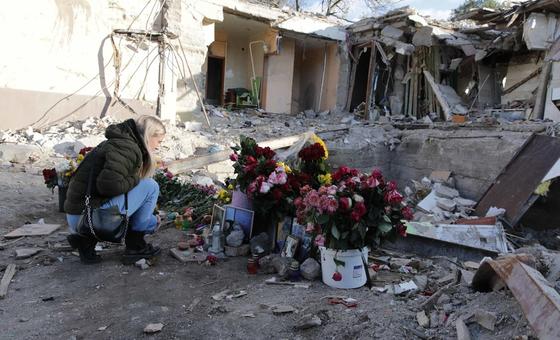
    Thirteen civilians were killed, and 110 injured, when two aerial bombs struck an industrial facility in the southern city.

    This marks the largest number of casualties HRMMU has recorded since a residential building in Dnipro city was struck on 14 January 2023, and the deadliest since a supermarket in Kostiantynivka, Donetsk region, was hit on 9 August 2024. 

    Killed leaving work

    Monitors visited the site of the Zaporizhzhia attack, documenting the damage and interviewing victims and witnesses. They observed damage to the industrial facility and to buildings, vehicles and the road outside. 

    The attack took place in the afternoon when many workers at the facility were leaving at the end of their shift. Many of the victims, both workers at the plant and passersby, were killed or injured in the street or on public transportation.

    A rising threat

    The HRMMU is underscoring the danger posed to civilians from the use of aerial bombs in populated areas in Ukraine.

    Mission chief Danielle Bell said aerial glide bombs have become one of the greatest threats to people in cities along the frontline. 

    “They are also one of the main reasons why the number of killed and injured in 2024 increased by 30 per cent compared with 2023,” she added.

    Spike in deaths

    Latest HRMMU verified data, published on Thursday, reveals that at least 2,064 civilians were killed and 9,089 injured in 2024.

    The numbers are up from 2023, when 1,971 people were killed and 6,626 injured – a rise in large part due to Russia’s increased use of aerial glide bombs.

    Aerial bombs accounted for 360 of those killed and 1,861 of the injured last year, representing a threefold increase in fatalities and sixfold increase in injuries compared to 2023.

    Aerial bomb modifications

    The HRMMU explained that the increase in the number of civilian casualties from aerial bombs in 2024 is the result of modifications that allow these weapons to glide instead of falling, thus extending their range to include cities further from the frontline such as Kharkiv, Sumy and Zaporizhzhia.

    The Mission documented civilian casualties from such glide bombs for the first time in Kharkiv city in early 2024, in Sumy city and region that August, and in Zaporizhzhia city the following month.

    Furthermore, since 22 September, aerial glide bombs have killed at least 35 civilians and injured 308 in Zaporizhzhia city, accounting for 78 per cent of casualties there. 

    Other significant attacks with aerial glide bombs in the city include one on 6 December 2024, when 10 civilians were killed and 27 injured, including three children, and on 7 November 2024 when nine civilians were killed and 42 injured.

    Foreseeable consequences

    The HRMMU recalled that under international humanitarian law, an attacking party must take all feasible precautions to minimize civilian harm, and Wednesday’s attack has raised serious concerns in this regard.

    “It was entirely foreseeable that using such weapons in a city during the day would result in significant civilian casualties,” said Ms. Bell. “It is hard to see how this attack could be in compliance with the obligation to minimize civilian harm.” 

    Source link

  • Human Trafficking Under the Spotlight

    KINGNEWSWIRE // In its efforts to uphold rights worldwide the Church of Scientology plays a significant role in the fight, against human trafficking by raising awareness through campaigns and educational programs and collaborating internationally. Scientologists are actively involved in preventing exploitation and aiding survivors by advocating for the values outlined in the Universal Declaration of Human Rights (UDHR) as well as partnering with organizations that address trafficking from its core. The commitment to this cause was showcased during a town hall event at the Church of Scientology in Seattle where both local and global professionals discussed the importance of education and laws in combating human trafficking while supporting those at risk.

    A Multi-Faceted Approach to Combat Trafficking

    The recent community event held by the Church of Scientology in Seattle brought attention to the concerning problem of trafficking with a specific emphasis on child sex trafficking, in Washington state. The gathering coincided with UN International Human Rights Day and centred around the theme “Our Rights, Our Future, Right Now.” Notable speakers shared insights. Rallied for immediate action to combat this widespread issue.

    Butch Yarnell captivated the audience with a speech during his keynote address as the Eastern Washington & Idaho Regional Coordinator, for Shared Hope International. He shed light on the mission of Shared Hope International to combat sex trafficking through prevention efforts and interventions and highlighted the truth of trafficking in Washington. Yarnell stressed the importance of taking steps and garnering legislative support to disrupt trafficking operations and provide aid to those who have survived such ordeals.

    In 2024 in Washington state there have been new laws passed with Senate Bill 6006 making a strong impact on empowering survivors by providing civil protection orders and victim compensation without time limits while also getting rid of the statute of limitations for prosecuting sex trafficking cases. The mention of Seattle as a point in a trafficking network that reaches as wide as Honolulu and Canada highlights the ongoing need for vigilance and support, for this issue as noted by Yarnell.

    Youth Education as a Preventative Tool

    Dave Scattergood from Youth for Human Rights presented materials designed to educate young individuals about their essential human rights inspired by the Universal Declaration of Human Rights (UDHR). These resources consist of brochures, videos and a complimentary online program accessible on the website of this international organization. 

    Scattergood emphasized the importance of education in stopping exploitation by saying; “It is vital that our youth are educated on their basic human rights to help prevent them becoming victims of human trafficking crimes”.

    European Perspectives

    On 24 January 2024, EUROSTAT published the 2022 statistics for trafficking in human beings. The newly released data showed that 10,093 victims of trafficking in human beings were registered in the EU in 2022, representing a 41% increase compared to 2021.

    Despite the rising number of registered victims, the number of convicted traffickers remains significantly lower. In 2022, there were 2,097 convicted traffickers in the EU, reflecting a 16.7% decrease compared to 2021. This disparity underscores the challenges in effectively prosecuting and convicting individuals involved in human trafficking.

    In Europe’s sphere of influence Ivan ArjonaScientology representative to the European Union and the UN, has spoken numerous times urging authorities and civil society for a unified strategy to tackle human trafficking throughout the continent. Through different conversations and meetings, Arjona has highlighted the importance of international partnerships and extensive educational initiatives. “Human trafficking represents an unforgivable infringement on fundamental human rights. In Europe it is imperative that we enhance collaboration across borders, safeguard victims of trafficking, prosecute offenders and hold perpetrators accountable with the full force of the law” he emphasizes. 

    Arjona suggests boosting funding for community outreach efforts in areas at risk and advises governments to take a tough stance on those involved in trafficking activities, while calling for empowering civil society organizations to engage youth in educational programs to fight against human trafficking.

    A Global Crisis with Local Impact

    The International Labor Organization estimates that 27.6 million individuals are trapped in forced labor worldwide, generating $236 billion annually in illegal profits. In Washington state alone, the National Human Trafficking Hotline identified 202 cases last year, involving 367 victims. These stark figures highlight the urgency of addressing this crisis on both local and global scales.

    Scientology founder L. Ronald Hubbard‘s aims for human rights to become a reality and not just an idealistic dream, has been a driving force for the Church of Scientology’s dedication to promoting education and activism around human rights issues. Every church worldwide plays a role in engaging with the community and providing support for initiatives like United for Human Rights and Youth for Human Rights, establishing chapters wherever possible. The original series Voices for Humanity on the Scientology Network documents the remarkable results achieved by the program.

    The Seattle forum, like many initiatives by the Church of Scientology worldwide, reinforces the importance of collective action in eradicating human trafficking. From legislative advocacy to education and community engagement, the path forward requires collaboration among governments, NGOs, and civil society. As Ivan Arjona well summarizes, “Only through awareness, action, and accountability can we hope to turn the tide against this modern-day slavery.

  • 31 women executed in Iran in 2024

    Iranian authorities executed at least 31 women in 2024, according to a report by Iran Human Rights (IHR) published on Monday, January 6. This is the highest number since the non-governmental organization began recording the use of the death penalty in the Islamic Republic of Iran in 2008.

    This was warned by AFP.

    “The execution of women in Iran reveals the brutal and inhumane nature of the death penalty and shows the extent to which gender discrimination and inequality are entrenched in the Iranian justice system,” said Mahmoud Amiri-Moghaddam, director of IHR.

    The IHR, which is based in Norway, recorded 241 women executed between 2010 and 2024, including 114 for murder and 107 for drug-related crimes. “Many of the women executed for murder were victims of domestic violence or sexual abuse, acting out of desperation,” IHR said.

    The Islamic law of revenge practiced in Iran, known as qisas, states that a murder must be “paid for” by the loss of another life, unless the victim’s family forgives or accepts compensation.

    This rule means that “the Iranian judicial system rarely considers the presence of domestic violence as a mitigating circumstance,” according to Iran Human Rights.

    Human rights activists are generally concerned about the rising number of executions in Iran, suspecting that Islamic authorities are using the death penalty to instill fear in society, especially after the protests of 2022-2023.

    Illustrative Photo by Peyvand Pezeshki : https://www.pexels.com/photo/ghazvin-grand-bazaar-27309612/

  • Syria: Children’s rights at the heart of the issues after the fall of the Assad regime

    The fall of Bashar al-Assad’s regime on 8 December 2024 after fourteen years of civil war marks a major turning point for Syria. However, it also highlights the serious violations of children’s rights during the conflict. In the light of this particularly worrying information, based on data from international reports and first-hand accounts, I have submitted a dossier to the United Nations to draw attention to these injustices and make concrete recommendations.

    Systemic violations of children’s rights

    Since 2011, Syrian children have been exposed to extreme violence. Nearly 6.8 million them were dependent on humanitarian aid in 2023. Some have been recruited by armed groups or exploited in logistical support roles. The data also reveals arbitrary detentions and cases of torture in centres such as Saydnaya prison, where children have been used as tools to put pressure on their families. According to a report by the Association des Détenus et Disparus de Saydnaya (ADMSP, 2022), conditions of detention include deprivation of food, physical and psychological abuse, and degrading treatment.

    Civilian infrastructures targeted

    Schools and hospitals, which are supposed to offer refuge, have been prime targets in the conflict. The Syrian Observatory for Human Rights (OSDH) reports that more than 500 schools were attacked between 2011 and 2023, depriving thousands children of their right to education. A survey by the United Nations Commission of Inquiry (2022) indicates that 70% of medical infrastructures in conflict zones were out of order, depriving wounded or sick children of vital access to care.

    Precarious living conditions for displaced persons

    The massive displacement caused by the war has driven millions of children into overcrowded camps. In Al-Hol camp, children have died for lack of medical care. According to the OSDH, more than 60 child deaths were recorded there in 2022, as a direct result of preventable diseases and limited access to essential resources. These children, who are often marginalised and stigmatised, face persistent psychological distress.

    A call for international mobilisation

    The dossier submitted to the United Nations calls for greater documentation of violations of children’s rights. Among other things, it stresses the need to lift restrictions humanitarian access in conflict zones, enabling organisations to provide , education and psychosocial support to these children.

    At the same time, the report highlights the importance of setting up appropriate rehabilitation programmes. These initiatives must include psychological support, specialised medical care and access to appropriate education to help children overcome the trauma they have suffered. It also calls for the perpetrators of these violations to be brought before competent courts, whether national or international, to ensure justice.

    Finally, the report stresses the need for greater support from the international community. This involves not only additional funding but also greater logistical coordination to meet the urgent needs of Syrian children.

    A political transition at a crossroads

    As Syria embarks on an uncertain political transition, the international community must seize this opportunity to guarantee a future that respects human rights. “This issue is an urgent call to action: Syrian children, the first victims of the conflict, must be at the heart of reconstruction efforts”,

    By supporting these initiatives, the United Nations and its partners can turn a period of crisis into an opportunity to build a peaceful and inclusive future for Syria and its future generations.

  • Statistics about the harsh repression of Jehovah’s Witnesses in Russia in 2024

    From the point of view of the Russian judicial system, Jehovah’s Witnesses are more dangerous than any other religious group. Over 140 prisoners and record sentences of over 8 years.

    As of December 16, 2024, since the beginning of the year, Russian security forces have conducted at least 96 searches in the homes of Jehovah’s Witnesses — 17 in Crimea being the highest number. The total number of raids since the ban in 2017 reached 2157.

    During 2024, 41 persons were made defendants in new criminal cases, of which 19 went through various types of detention, 15 of them are still behind bars. Last year, criminal cases were initiated against 100 believers.

    Sentences were handed down to 116 believers. 43 of them (37%) were sentenced to imprisonment (It is noteworthy that this year nine people were sent to forced labor as a punishment). Terms of more than five years were given to 24 people (or almost 56% of those sentenced to imprisonment).

    Since 2017, 842 people have already been prosecuted; 450 of them have spent at least 1 day in custody. Currently, 147 prisoners of conscience are behind bars, either already convicted or awaiting sentencing. Of the 27 prisoners released from colonies, 8 were released this year. Although they have served their main sentence, most continue to experience numerous difficulties due to additional restrictions imposed by the court, which can last up to eight years or sometimes even more.

    “The cumulative numbers and severity of custodial sentences are increasing. To put it simply, during this year they imprisoned less, but more severely,” Yaroslav Sivulskiy, a representative of the European Association of Jehovah’s Witnesses, commented on the statistics.

    In 2024, the court handed down record-breaking sentences against three Jehovah’s Witnesses. Khabarovsk residents Nikolay Polevodov, Vitaliy Zhuk and Stanislav Kim received eight years and six months, eight years and four months, eight years and two months in a penal colony, respectively

    After about three months the court of appeal changed the punishment from imprisonment to a suspended sentence for shorter terms. Therefore, the longest term in 2024 was given to Alexander Chagan from Tolyatti — eight years in a penal colony. All in all, six believers have received such a harsh sentence since 2017.

    Over the seven years of mass persecution of Jehovah’s Witnesses, the number of people sentenced has reached 543, and 186 believers have been imprisoned. Almost 61% of them (113 people) received terms of more than five years.

    In 13 regions of Russia, the average term of imprisonment is 6 years or more. This is especially true with the southern territories — the Astrakhan, Rostov, Volgograd Regions, Crimea, and Sevastopol.

    For comparison: according to the official statistics of the Judicial Department at the Supreme Court of Russia for 2023, of the 1297 people convicted for intentional infliction of grievous bodily harm, only 0.85% (11 people) were sentenced to terms of five to eight years. Most were sentenced to terms of two to three years.

    It seems that from the point of view of the Russian judicial system, Jehovah’s Witnesses are more dangerous than those who beat people to the point of disability.

    This is confirmed by a recent report of the US Commission on International Religious Freedom (USCIRF) titled “Religious Freedom Challenges for Jehovah’s Witnesses”:

    Sentences for Jehovah’s Witnesses continue to increase in severity. In June 2024, a court in Khabarovsk sentenced Nikolai Polevodov to eight years and six months, Vitaliy Zhuk to eight years and four months, and Stanislav Kim to eight years and two months in prison, surpassing the record length of eight years’ imprisonment for a Jehovah’s Witness.

    Other punishments for Jehovah’s Witnesses include fines and compulsory labor. In March 2024, a Teykovo court fined four Jehovah’s Witnesses a collective 3,450,000 rubles ($37,048) for their religious activities. And in January 2024, a court in Tolyatti sentenced Sona Olopova to two years of forced labor for having a religious gathering.”

    At the same time, hundreds of trials against Jehovah’s Witnesses accused of extremism have not confirmed a single fact of extremist activity on the part of the believers.

    International Support

    In the summer 2024, the European Court of Human Rights ruled in favor of 16 Jehovah’s Witnesses who were subjected to illegal searches, arrests, and convictions for their religion in Russia. Although Russia withdrew from the European Convention on Human Rights back in 2022, the Russian Federation is still obliged to pay compensation assigned to believers.

    On October 24, 2023, the UN Human Rights Committee issued two opinions in favor of Jehovah’s Witnesses regarding the rulings to liquidate the local religious organizations (LROs) in Abinsk and Elista. In Russia, these rulings became precedent for the beginning of religious persecution, and a former member of the Abinsk LRO, the elderly Aleksandr Ivshin, is serving time for his faith in a penal colony.

    The UN Human Rights Committee emphasizes that there are no calls for violence or other information inciting hatred in the literature of Jehovah’s Witnesses. In both cases, Russia violated the right of Jehovah’s Witnesses to “freedom of thought, conscience and religion” and “the right to freedom of assembly” (Articles 18.1 and 22.1 of the European Convention on Human Rights).

    The Committee ordered Russia to reconsider the decisions on the ban and ordered it to “take all necessary steps to avoid similar violations in the future.” During 2024, hearings were held in Russia on this issue, but the Committee’s orders were never carried out. Moreover, after the publication of the Opinion of the Human Rights Committee on the liquidation of a religious organization in Abinsk, local security forces initiated a criminal case against Valeriy Baylo, 66 at that time, — for participating in the activity of the Abinsk LRO. The court sentenced the believer to two and a half years in a penal colony. Now he is in custody and is awaiting the decision of the court of appeal.

    Noteworthy is that very few media outlets in Europe echo such religious repression and that groups hostile to Jehovah’s Witnesses pretending to defend human rights turn a blind eye to that persecution by Putin’s regime.

  • Supreme Court of Cassation of the Republic of Bulgaria upon the appeal of the “Bulgarian Orthodox Old-style Church”

    DECISION № 214

    Sofia, 16.12.2024

    IN THE NAME OF THE PEOPLE

    SUPREME COURT OF CASSATION of the Republic of Bulgaria, Commercial Chamber, Second Department, in a court session on the twenty-first of November two thousand and twenty-four, composed of:

    CHAIRMAN: BOYAN BALEVSKI

    MEMBERS: ANNA BAEVA

    ANNA NAENOVA

    under the secretary Ivona Moikina, having heard the report of Judge Anna Baeva, case number 563 on the inventory for 2022.3. and in order to pronounce, took into account the following:

    The proceedings are under Art. 290 of the Civil Procedure Code.

    It was established upon a cassation appeal of the “Bulgarian Orthodox Old-style Church”, represented by F. D. S., through attorney N. D. by the Supreme Administrative Court, against decision No. 2 of 07.02.2023 on appeal No. 5/2022 of the Sofia Court of Appeal, which confirmed decision No. 65 of 01.11.2022 on appeal No. 25/22 on the inventory of the Sofia City Court, TO, which refused to enter the same religious institution, established at a constituent assembly on 13.06.2022, in the public register under Art. 18 of the Law on Religions at the court.

    The cassation applicant maintains that the appealed decision is unlawful and unfounded. It challenges the appellate court’s conclusion that a condition for the registration of the religious institution is recognition by the local Eastern Orthodox Church under canon law, by presenting considerations for its contradiction both with the specific instructions of the ECHR on the present case, but also with the repeated interpretation of the ECHR of the positive obligations of the Bulgarian state to guarantee regional pluralism – that the state, represented by the court, should remain neutral and impartial in exercising its regulatory powers and in its relations with different religions, denominations and groups within them, by ensuring that the disputing groups within them are equal and respected. It maintains that recognition by a local church as a condition for registration is not provided for in the law, but was invented by the appellate court, and deprives all citizens of the Republic of Bulgaria who do not wish to be under the jurisdiction of the Bulgarian Orthodox Church – Bulgarian Orthodox Church for one or another religious reason of the right to self-determination as Eastern Orthodox, thus violating their right to free choice of religion and self-government. It finds that Article 37, paragraph 2 of the Constitution and Article 7, paragraphs 1 and 2 of the Civil Code exhaustively list the grounds on which the right to religion may be restricted, and they cannot be interpreted broadly. It points out that the “Bulgarian Orthodox Old-Style Church” has never been a structural division of the BOC – BP and could not have been separated as such, but emerged as an independent religious community at the will of individual individuals, Orthodox Christians, who have no formal commitments to the structures, nor claims to the property of the BOC – BP. Therefore, it requests that the appealed decision be annulled and that the requested entry be granted.

    By Resolution No. 2279 of 16.08.2024. under Case No. 563/2023. of the Supreme Court of Cassation, the TC has admitted a cassation appeal of the appeal decision on the issue of what are the prerequisites for registration of an Eastern Orthodox denomination in Bulgaria and whether a condition for such registration is the recognition of the community as a religious institution by other local Orthodox churches. Cassation review is allowed on the basis of Art. 280, para. 1, item 2 of the Civil Procedure Code to verify whether the resolution of the issue given by the appellate court corresponds to decision No. 5 of 11.07.1992 under case number No. 11/1992 of the Constitutional Court of the Republic of Bulgaria.

    The Supreme Court of Cassation, Chamber of Commerce, Second Department, having assessed the data in the case in view of the stated grounds of cassation and in accordance with its powers under Art. 290, para. 2 of the Civil Procedure Code, adopts the following:

    The Court of Appeal, in order to confirm the decision of the registry court appealed before it, by which the entry of the religious institution “Bulgarian Orthodox Old-style Church” in the register under Art. 18 of the Law on Religions, has set forth considerations based on the general constitutional regulation contained in Articles 13 and 37 of the Constitution of the Republic of Bulgaria on freedom of religion and on the inviolability of this principle, as well as on the limits of the exercise of this right, outlined by the prohibition on the use of religious communities and institutions and religious beliefs for political purposes (Article 13, paragraph 4 of the Constitution), as well as against national security, public order, public health and morality or against the rights and freedoms of other citizens.

    He also analyzed the special legislative framework contained in the Law on Religious Denominations, comparing the legal definitions contained in §1, items 1, 2 and 3 of the PZR of the law, respectively, of the general concept of religion as a set of religious beliefs and principles, the religious community and its religious institution, as well as the concepts of religious community and religious institution, in connection with Art. 5 and Art. 6 of the law. Based on this, he concluded that every individual is free to profess and practice any religious belief, regardless of whether it is registered or recognized by the state, as long as it does not violate the restrictions under Art. 13, para. 4 and Art. 37, para. 2 of the CRB. He pointed out that under the same conditions, a religious belief may also be professed and practiced by a group of individuals, without the need for this religious community to register as a religious institution, and that the registration by which it acquires the status of a legal entity is conditioned by compliance with the minimum requirements established in the Law on Religious Denominations, including regarding its name (in view of the prohibition under Article 15, Paragraph 2, that it repeats that of an already registered one), as well as regarding the compliance of the content of the statute adopted at the constituent assembly with the requirements of Article 17 of the law. He found the appellant’s complaint that an expert opinion of the Directorate of Religious Denominations of the Council of Ministers and the opinion of the Bulgarian Orthodox Church-Bulgarian Orthodox Church attached to it were accepted as evidence in the registration proceedings to be unfounded, on the grounds that the norm of Article 16 of the Law on Religious Denominations expressly provides for the possibility for the court to request such an opinion in connection with the registration of religious communities. It accepted that the law did not prohibit the existence of more than one exponent of the Eastern Orthodox faith, and that the court of first instance had not denied this possibility, but had indicated the necessary facts establishing recognition by other local Orthodox churches under canon law, evidence of which the applicant had not presented. Next, the appellate court set out considerations in connection with compliance with the requirements of Article 17 of the Law on Denominations with regard to the statute of the religious institution submitted to the registration court, holding that it did not constitute valid evidence in the case, since it was not signed and not certified, and that it did not contain data on when and by whom it was adopted. In connection with the requisites of the content of the statute prescribed by the same provision, he indicated that it lacks an indication of the seat of the religious institution applied for registration and a specific and clear statement of the liturgical practice, with which he further justified the final result – confirmation of the decision of the registration court, which refused registration.

    On the relevant legal issue:

    Interpretation of Art. 13, paras. 1 and 2 and Art. 37 of the Constitution in connection with the relationships between religious communities and institutions, on the one hand, and the state, on the other, in the implementation of the constitutionally proclaimed right to religion was made by decision No. 5 of 11.07.1992 under case number No. 11/1992 of the Constitutional Court of the Republic of Bulgaria. Based on the analysis of the aforementioned texts, the Constitutional Court has accepted that the right to religion, as well as the rights of thought and belief, is an absolutely fundamental personal right, directly related to the intimate spiritual peace of the human person, and therefore represents a value of the highest order, which determines not only the possible powers in its exercise, but also outlines the overall legal regime governing this sphere.

    He pointed out that the right to religion encompasses the following more important powers: the right to freely choose one’s religion and the possibility of freely exercising one’s religion through the press, speech, through the creation of religious communities and associations, their activities within the community and outside it as manifestations of society. He explained that the religious community includes all persons who profess a common religious belief, and religious institutions are the elements of the organizational form and structure through which the relevant community carries out its activities within the community and outside it – in society. He pointed out that the right to religion is an absolutely personal, inviolable fundamental human right, which, however, is not limitless from the point of view of its actual exercise, but he emphasized that the limits for this are strictly and comprehensively established in the Constitution and it is inadmissible to expand them either by law or by interpretation. The role of the state in relation to the right to religious belief and the communities and institutions through which it is exercised is explained by way of interpretation, stating that the state is obliged to ensure conditions for the free and unhindered exercise of the personal right to religious belief of every Bulgarian citizen in every respect. It is accepted that the state, through its bodies and institutions, cannot interfere and administer the internal organizational life of religious communities and institutions, and the rights of the state to interfere in the activities of religious communities and institutions are limited to taking the necessary measures only and exclusively in cases where the hypotheses of Art. 13, para. 4 and Art. 37, para. 2 of the Constitution are present, and such an assessment is also made in the event of registration of church communities or institutions.

    For these reasons, the Constitutional Court has accepted that the right to religion cannot be restricted in any way except in the cases of Art. 13, para. 4 and Art. 37, para. 2 of the Constitution, namely when religious communities and institutions are used for political purposes or when freedom of conscience and religion is directed against national security, public order, public health and morality or against the rights and freedoms of other citizens. It has accepted that the specified restrictive grounds are exhaustively listed and cannot be expanded or supplemented by law or by interpretation, and only the specific mechanisms for their implementation can be determined by law. It has accepted that religious communities and institutions are separated from the state and state interference and state administration of the internal organizational life of religious communities and institutions, as well as their public manifestation, is inadmissible, except in the cases already mentioned in Art. 13, para. 4 and Art. 37, para. 2 of the Constitution.

    The interpretation given by the Constitutional Court requires a conclusion that in view of the principle of the secular state, when ruling on a request for registration of a religious institution, the court referred to cannot take into account canon law, but should assess the existence of the prerequisites provided for in the current positive law (the Constitution of the Republic of Bulgaria and the Law on Religions). The present panel, taking into account the reasons for the appeal decision, finds that with regard to the relevant legal issue on which cassation control is allowed, the permission given by the appeal court is in contradiction with the interpretation of the provisions of Art. 13 and Art. 37 of the Constitution adopted in Decision No. 5 of 11.07.1992 under Case No. 11/1992 of the Constitutional Court. Contrary to the Constitutional Court’s acceptance that the restrictive grounds specified in Art. 13, para. 4 and Art. 37, para. 2 of the Constitution are exhaustively listed and cannot be expanded or supplemented by law or by interpretation, the Court of Appeal, sharing the opinion of the court of first instance, took into account the presence of evidence establishing recognition of the religious community by other local Orthodox churches under canon law as a prerequisite for granting the requested entry.

    On the merits of the cassation appeal:

    The minutes of the founding assembly of the “Bulgarian Orthodox Old-Style Church” of 13.06.2022 presented in the case establish that on the specified date the four founders present made a decision to establish a religious denomination with the specified name and with headquarters in [settlement], Buxton district, [street] for the adoption of its statutes, as well as for the election of its governing bodies. The presented statutes meet the requirements of Art. 17 of the Denominations Act, including, contrary to the conclusion of the appellate court, containing the name and headquarters of the religious denomination – “Bulgarian Orthodox Old-Style Church” with headquarters in [settlement] /Art. 1/, as well as a statement of religious belief /Art. 2/ and liturgical practice /Art. 8/ of the statutes. In connection with the assessment of compliance with the requirement of Art. 17, item 2 of the Religious Act, it should be noted that the statute does not need to contain a detailed statement of the text of the services themselves and the calendar of holidays, and in this case the reference made in Art. 8 to the “Jerusalem liturgical statute and the patristic eortology (church calendar) in its authentic form for both the movable holidays related to the Orthodox Paschalia and the Menaion cycle of the immovable holidays”, and indicating the places of the services, is sufficient.

    A notification letter from the “Information Service” was also submitted regarding the uniqueness of the name “Bulgarian Orthodox Old-Style Church”.

    The present panel, taking into account the evidence presented, finds that the requirements provided for in the Law on Religions for registering the religious institution with the name “Bulgarian Orthodox Old-Style Church” are met. In this case, the restrictions on the right to religion under Art. 13, para. 4 and Art. 37, para. 2 of the Constitution and Art. 7, para. 1 and para. 2 of the Religious Freedom Act, related to public/national security, public order, health, morality or the rights and freedoms of other persons and to the use of religious communities and institutions for political purposes, and upon assessment of proportionality – if they are necessary in a democratic society (Art. 9 in conjunction with Art. 11 of the CPRHR), which are exhaustively regulated in the current positive law, are not present. The statute adopted by the founders meets the content requirements provided for in Art. 17 of the Religious Freedom Act. The condition of Art. 15, para. 2 of the Religious Freedom Act that the name of the religious community should not repeat the name of an already registered religious institution is also met. The word “old-style” included in the name sufficiently distinguishes the newly established religious institution, and also expresses the differences of the religious community with regard to religious holidays, the observance of which, according to Art. 6, para. 1, item 9 of the Religious Act, is included in the right to religion.

    There is also no obstacle to the requested registration arising from Art. 13, para. 3 of the Constitution and Art. 10, paras. 1 and para. 2 of the Religious Act, which provide that the traditional religion in the Republic of Bulgaria is Eastern Orthodoxy and its exponent is the “Bulgarian Orthodox Church – Bulgarian Patriarchate”, which is a legal entity by virtue of the law. As adopted in decision No. 12 of 15.07.2003. under case number No. 3/2003. of the Constitutional Court, the recognition of the status of a legal entity of the “Bulgarian Orthodox Church – Bulgarian Patriarchate” does not violate the right of persons to freely associate – both that of Eastern Orthodox Christians and of non-Orthodox Christians and those who profess another faith, with only a difference being provided for in terms of the condition and procedure for acquiring legal personality, without affecting either the freedom of choice of religion or the right to exercise it in community.

    The conclusion of the appellate court that the absence of evidence establishing recognition of the religious community by other local Orthodox churches under canon law constitutes grounds for refusing to register it is also incorrect. This conclusion contradicts the decision No. 5 of 11.07.1992 under case number No. 11/1992. of the Constitutional Court interpretation that outside the cases of Art. 13, para. 4 and Art. 37, para. 2 of the Constitution, which are exhaustively listed and cannot be expanded or supplemented by law or by interpretation, the state cannot restrict the right to religion and cannot interfere in the internal organizational life of religious communities and institutions, as well as in their public manifestation. At the same time, in the reasons for decision No. 12 of 15.07.2003. under case No. 3/2003. of the Constitutional Court it is stated that the provision of Art. 10, para. 1 of the Constitution reflects the traditional character of the Eastern Orthodox religion proclaimed in Art. 13, para. 3 of the Constitution and generally known historical facts related to the main features of the “Bulgarian Orthodox Church”, with which it identifies itself. The reasons for the decision lead to the conclusion that from the aforementioned provisions, confirming the status of the “Bulgarian Orthodox Church – Bulgarian Patriarchate”, it cannot be deduced that its recognition by the BOC is a condition for the registration of another Eastern Orthodox religious institution – BP and the other local Eastern Orthodox churches.

    This conclusion is also supported by the provision of Art. 10, Para. 3 of the Law on Religious Affairs, according to which Para. 1 and Para. 2 cannot be grounds for granting privileges or any advantages by law.

    The conclusion that the prerequisites for registration of the religious institution are present also corresponds to Art. 9 and Art. 11 of the Convention on the Rights of the Child, as well as to the decision of 20.04.2021 of the ECHR in the case “Bulgarian Orthodox Old-Style Church and Others v. Bulgaria” (application 56751/2013), issued on the occasion of a previous refusal to register the same religious institution, which found a violation of Art. 9 in conjunction with Art. 11 of the Convention on the Rights of the Child. This decision accepted that it concerns a small Orthodox community of “old-style” believers, who are not part of the “Bulgarian Orthodox Church – Bulgarian Patriarchate” due to doctrinal differences – regarding the calendar applicable to the services of fixed holidays (non-adoption of the new Julian calendar), without having a formal connection with the structure, nor claims to the property of this church. It was explicitly emphasized that the state, represented by the court, must remain neutral and impartial in exercising its regulatory powers and in its relations with different religions, which would be achieved through registration. This decision and the interpretation given therein of the provisions of the Code of Civil Procedure should be taken into account in the present proceedings, initiated on a new application for registration of the religious institution, insofar as the procedure regulated in Art. 303, para. 1, item 7 of the Civil Procedure Code is inapplicable with respect to the decision issued in the previous registration proceedings.

    The decision of the ECHR is not in contradiction with the constitutional traditions existing in the country, the accepted values ​​and needs of society. There are no objective circumstances on the basis of which it can be assumed that the registration of the cassationist would affect the rights of the “Bulgarian Orthodox Church – Bulgarian Patriarchate” and its members. It is indisputable that this religious institution, having existed for centuries, has participated in the strengthening of the Bulgarian national spirit and statehood, that it currently unites the majority of Orthodox Christians in the country, that it is united, authoritative and enjoys the exceptional respect of the institutions and society. At the same time, the requested registration is for a small religious community that has existed for 30 years and has no claims to the internal organization and property of the “Bulgarian Orthodox Church – Bulgarian Patriarchate”.

    For the reasons stated, the present panel finds that the appealed appellate decision is incorrect and should be annulled, and a decision should be issued allowing the requested registration.

    Thus motivated, the Supreme Court of Cassation, Commercial Chamber, on the basis of Art. 293, para. 1 in connection with para. 2 of the Civil Procedure Code

    DECIDES:

    CANCELS decision No. 2 of 07.02.2023 on appeal No. 5/2022 of the Sofia Court of Appeal, which confirmed decision No. 65 of 01.11.2022 on appeal No. 25/22 on the inventory of the Sofia City Court, TO, which refused entry in the public register under Art. 18 of the Law on Religious Denominations at the Court of a religious institution with the name “Bulgarian Orthodox Old-Style Church”, established at a founding council on 13.06.2022, instead of which DECIDES:

    ENTRIES in the register of religious denominations at the Sofia City Court a religious institution with the name “Bulgarian Orthodox Old-Style Church”;

    Headquarters and management address: [settlement], [neighborhood], [street];

    Governing bodies: Primate; Synod of Bishops; Church Council; Church Court;

    Primate: His Holiness Metropolitan F. D. S. with Personal Identification Number [PIN]

    Synod of Bishops: His Holiness Metropolitan F. D. S. with Personal Identification Number [PIN], Bishop of Sozopol S. (B. Ch. O.) with Personal Identification Number [PIN], temporary member – Archbishop of Moldova and Chisinau G. (V. K.), citizen of Ukraine, with passport FE427792, issued on 26.04.2016 by the Ministry of Internal Affairs of Ukraine;

    Church Council: Bishop of Sozopol S. (B. Ch. O.) with Personal Identification Number [PIN], Priest K. H. D. with Personal Identification Number [PIN], Priest I. K. M. with Personal Identification Number [PIN], S. T. T. with Personal Identification Number [PIN], I. N. G. with Personal Identification Number [PIN] – secretary.

    The religious institution is represented by T. Metropolitan F. D. S. with Personal Identification Number [PIN] – head.

    The decision is final and subject to registration.

    CHAIRMAN: MEMBERS: