Category: News

  • Ukraine: attacks disrupt heating as temperatures fall

    Ukraine: attacks disrupt heating as temperatures fall

    Ukraine: attacks disrupt heating as temperatures fall

    According to the Office for the Coordination of Humanitarian Affairs (OCHA), since December 26, nationwide attacks have also caused significant damage to civilian infrastructure, leaving parts of the country without power, heat and water as temperatures fall below freezing.

    Nationwide, authorities reported nearly 100 civilian casualties during that period.

    The most serious consequences were reported in the city of kyiv, where a large-scale attack on December 27 killed and injured several people. Energy facilities, residential buildings, a kindergarten, a university dormitory, civilian vehicles, shops and other civilian premises were damaged.

    No heating in winter

    OCHA cited an energy company reporting that more than a million homes in and around Kyiv lost electricity as a result of the strikes. Water supplies were disrupted and around a third of the capital’s population was left without heat at the height of winter.

    The same wave of attacks affected the Chernihiv, Dnipro, Donetsk, Kharkiv, Kherson, Sumy and Odessa regions, causing new victims and damaging homes, educational institutions and infrastructure.

    Electricity has since been restored to almost 750,000 homes in Kyiv and almost 350,000 homes in the surrounding Kyivska region. However, heating and electricity remain disrupted by emergency and planned power cuts.

    Humanitarian partners have set up warming tents where residents can seek shelter, receive food, charge their mobile phones and access basic assistance.

    Essential services under threat

    The strikes come against a backdrop of continued pressure on essential services. Ukraine was behind about 42% of all attacks on healthcare recorded worldwide in 2025, according to the World Health Organization (WHO).

    Of more than 1,000 attacks on healthcare facilities worldwide this year, 561 took place in Ukraine, leaving 19 people dead and 201 injured.

    Over the weekend, another health facility was damaged in a strike on the town of Izmail in the Odessa region, highlighting continued risks to civilians and medical services as winter conditions intensify.

    Originally published at Almouwatin.com

  • At a time of war, nations must stop global order from crumbling: UN rights chief

    “Our world is going through a period of turbulence and unpredictability, reflected in growing conflict and divided societies,” Türk told the Human Rights Council.

    “We cannot allow the fundamental global consensus around international norms and institutions, built painstakingly over decades, to crumble before our eyes.”

    The weapons of war

    Presenting his global update covering more than 30 countries, the High Commissioner described as “outrageous” the fact that legal safeguards for non-combatants were being repeatedly ignored.

    “Civilians are deliberately attacked. Sexual violence and famine are used as weapons of war,” Mr. Türk said. “Humanitarian access is denied, while weapons flow across borders and circumvent international sanctions. And humanitarian workers are targeted. In 2024, a record 356 humanitarian workers were killed while providing aid to people in some of the world’s most appalling crises.”

    Unbearable price

    In Sudan, the High Commissioner once again condemned devastating bomb attacks launched in heavily built-up areas with total impunity, by the parties to the conflict.

    All the while, the world’s worst humanitarian catastrophe deepens, threatening regional stability, he maintained: “Civilians are paying an unbearable price, in a naked struggle for power and resources. All countries must use their influence to apply pressure on the parties and their allies, to stop the war, embark on an inclusive dialogue, and transition to a civilian-led Government.”

    Ukraine’s people need peace

    Turning to Ukraine, whose future material support from the United States appeared unclear following televised disagreements between Presidents Trump and Zelensky at a White House meeting on Friday, Mr. Türk opposed any peace deal that excluded Ukraine.

    “Three years since the full-scale Russian invasion, people continue to suffer appallingly…Any discussions about ending the war must include Ukrainians and fully respect their human rights. Sustainable peace must be based on the United Nations Charter and international law.”

    Civilian casualties in Ukraine rose by 30 per cent between 2023 and 2024, the High Commissioner continued, as he accused Russia’s armed forces of systematically targeting Ukraine’s energy infrastructure with coordinated strikes, causing widespread disruptions to essential services.

    “Relentless attacks with aerial glide bombs, long-range missiles and drones have placed civilians in a state of constant insecurity and fear,” Mr. Türk noted.

    Ukrainian prisoners also continue to face summary executions and “widespread and systematic torture” by Russian forces, he continued.

    Gaza ceasefire focus

    In the Occupied Palestinian Territory, the UN rights chief insisted that the fragile ceasefire holds in Gaza “and becomes the basis for peace”.

    He also insisted that aid deliveries into Gaza should resume immediately, just as Israel announced a halt to aid flowing into the shattered enclave, having proposed extending the first phase of the ceasefire which ended at the weekend and which would allow Israeli troops to stay in Gaza.

    UN aid chief Tom Fletcher responded with alarm to the Israeli decision, insisting that the ceasefire “must hold”.

    In an online appeal, he added: “International humanitarian law is clear: We must be allowed access to deliver vital lifesaving aid. We can’t roll back the progress of the past 42 days. We need to get aid in and the hostages out.”

    Back in the Council, Mr. Türk explained that the Gaza had been “razed” by constant Israeli bombardment in response to the “horrific” Hamas-led attacks on Israel that sparked the war in October 2023. “Any solution to the cycles of violence must be rooted in human rights, including the right to self-determination, the rule of law and accountability. All hostages must be freed; all those detained arbitrarily must be released; and humanitarian aid into Gaza must resume immediately.”

    West Bank alert

    Reflecting deep concerns by humanitarians and the human rights community about Israeli military raids on Palestinian settlements in the West Bank, the UN High Commissioner insisted that Israel’s “unilateral actions and threats of annexation in the West Bank, in violation of international law, must stop”.

    Mr. Türk also condemned the use of “military weapons and tactics, including tanks and airstrikes, against Palestinians”. Equally worrying was “the destruction and emptying of refugee camps, the expansion of illegal settlements, the severe restrictions on movement and the displacement of tens of thousands of people”.

    DR Congo devastation

    Turning to the conflict in eastern Democratic Republic of the Congo, the High Commissioner underscored that entire communities in North and South Kivu had been devastated.

    “In the past five weeks, thousands of people have reportedly been killed during attacks by the M23 armed group, backed by the Rwandan Armed Forces, in intense fighting against the Armed Forces of the DRC and their allies,” the UN rights chief said, pointing to reports of rape, sexual slavery and summary executions.

    “More than half a million people have been forced to flee this year, adding to almost 7.8 million people already displaced in the country,” Mr. Türk said. “The violence must stop, violations by all parties must be investigated, and dialogue must resume.”

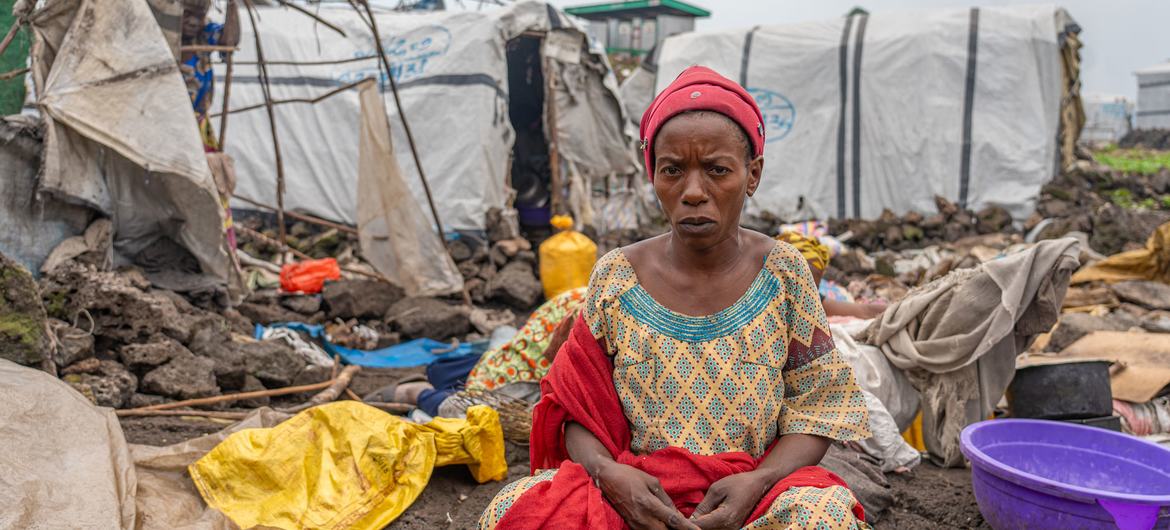
    More than half a million people have been forced to flee DR Congo this year.

    More than half a million people have been forced to flee DR Congo this year.

    Deadliest year in Myanmar

    Moving on to the ongoing escalation of violence in Myanmar sparked by the military coup on 1 February 2021, the UN rights chief noted that 2024 was the deadliest year for civilians since the junta takeover.

    “The military ramped up brutal attacks on civilians as their grip on power eroded, with retaliatory airstrikes and artillery shelling of villages and urban areas…and the forcible conscription of thousands of young people,” he said, before calling for the supply of arms and finance to the country’s military’s to be “cut decisively”.

    Haiti spiral

    The UN rights chief also expressed deep concerns about chronic lawlessness and heavily armed clashes in Haiti involving gangs that humanitarians warned last week recruit children as young as eight. More than 5,600 people were killed last year and thousands more were injured or kidnapped, Mr. Türk told the Human Rights Council.

    “Full implementation of the Security Council‘s arms embargo and support to the Multinational Security Support Mission are crucial to resolving this crisis,” he insisted.

    Yemen

    On Yemen, the High Commissioner noted that amid ongoing hostilities, nearly 20 million Yemenis need humanitarian support. Mr. Türk also expressed his outrage at the death of a UN World Food Programme colleague in detention earlier this month. “All 23 UN staff – including eight colleagues from my own Office – who are arbitrarily detained by the Houthis must be released immediately.”

    In a half-hour address to the Council that traditionally highlights the most worrying emergencies in the world and the need to tackle their root causes, the UN rights chief issued a call for greater global solidarity and accountability for crimes as a way to push back against those who would violate fundamental freedoms.

    “We all have a responsibility to act – through our consumption habits, our social media use, and our political and social engagement,” he told the Council’s 47 Member States.

    “We can trace a clear line between the lack of accountability for airstrikes on hospitals in Syria in the 2010s, attacks on healthcare facilities in Yemen, and the destruction of health systems in Gaza and Sudan,” he continued.

    Toys of tech oligarchs

    Equally alarming is the rise of unelected and unregulated “tech oligarchs” who reflect the new global power dynamic, Mr. Türk warned, before urging governments to fulfil their primary purpose of protecting their people from unchecked power.

    Today’s tech oligarchs “have our data: they know where we live, what we do, our genes and our health conditions, our thoughts, our habits, our desires and our fears…And they know how to manipulate us,” the High Commissioner insisted.

    Electioneering tactics

    “I have followed recent election campaigns in Europe, North America and beyond with increasing trepidation. Single-issue soundbites devoid of substance oversimplify complex issues and are often based on scapegoating, disinformation, and dehumanization,” he continued.

    “Dehumanization is a well-worn step towards treating an entire group as outsiders, unworthy of the basic rights we all enjoy. It is a dangerous precursor to hate and violence and must be called out whenever it occurs.”

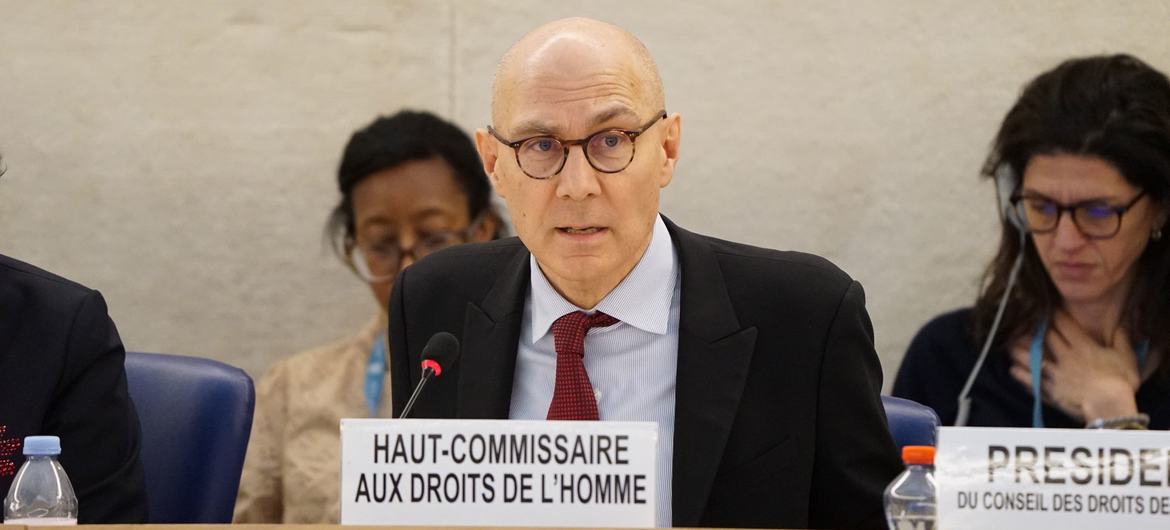
    Volker Türk, UN High Commissioner for Human Rights, presents his latest report on the obligation to ensure accountability and justice in the Occupied Palestinian Territory.

    UN Human Rights Council/Marie Bambi

    Volker Türk, UN High Commissioner for Human Rights, presents his latest report on the obligation to ensure accountability and justice in the Occupied Palestinian Territory.

    Toxic influence on gender equality

    The High Commissioner also voiced his concern about the resurgence of toxic ideas about masculinity and efforts to glorify gender stereotypes, especially among young men.

    To blame for this are “misogynistic influencers” with millions of followers on social media who “are hailed as heroes”, Mr. Türk said.

    Online and offline, their ideas push back against gender equality and result in “violence and hateful rhetoric against women, women’s rights defenders, and women politicians”, the High Commissioner continued. 

    In a message of solidarity with people who have been left “feeling alienated and abandoned” by such malign influences, Mr. Türk insisted that the United Nations was by their side. “Your concerns are our concerns, because they are about human rights: to education, to health, to housing, to free speech, and access to justice. Human rights are about people’s daily concerns for their families and their future. We must cherish the values of respect, unity and solidarity; and work together for a safer, more just, more sustainable world. We can and will persevere,” he concluded.

    Source link

  • EU Welcomes Alignment of 11 Countries on Sanctions Against ISIL and Al-Qaeda, Ensuring Humanitarian Exemptions

    BRUSSELS, The European Union has taken a significant step to strengthen international cooperation against terrorist groups, with 11 partner countries committing to align their policies with EU sanctions targeting ISIL (Da’esh) and Al-Qaeda. The move, formalized through a Council Decision adopted on February 18, underscores efforts to balance counter-terrorism measures with humanitarian considerations.

    Key Details of the Decision
    The Council’s Decision (CFSP) 2025/3361 amends the existing EU sanctions regime outlined in Decision 2016/1693, ensuring it remains consistent with recent United Nations Security Council Resolutions 2664 (2022) and 2761 (2024). A critical element of the update confirms the continued applicability of a humanitarian exemption, which allows for the provision of essential goods such as food, medicine, and medical devices to civilian populations, even in sanctioned areas. This provision aims to prevent unintended harm to vulnerable communities while maintaining pressure on terrorist networks.

    Countries Joining the Effort
    Eleven non-EU countries have pledged to align their national policies with the EU’s updated sanctions framework. These include Albania, Armenia, Bosnia and Herzegovina, Georgia, Iceland, Liechtenstein, Montenegro, North Macedonia, the Republic of Moldova, Serbia, and Ukraine. The group spans a mix of European neighbors, Western Balkan states, and Eastern Partnership countries, reflecting the EU’s broader geopolitical outreach.

    Iceland, a member of the European Economic Area but not the EU, and Liechtenstein, part of the Schengen Area, join alongside nations like Ukraine and Georgia, which have expressed aspirations for closer EU integration. The alignment demonstrates a shared commitment to combating terrorism while adhering to international humanitarian law.

    EU Response and Significance
    The High Representative of the EU for Foreign Affairs and Security Policy welcomed the decision, emphasizing its role in reinforcing global unity against terrorism. In a statement, the EU noted, “This alignment strengthens our collective resolve to disrupt terrorist financing and operations while safeguarding humanitarian access.”

    The move is seen as a diplomatic win for the EU, as it encourages partner nations to adopt standardized measures. By harmonizing policies, the bloc aims to close potential gaps that terrorists might exploit, ensuring a cohesive international response. The inclusion of the humanitarian exemption also aligns with UN principles, reinforcing the EU’s reputation as a rule-based actor in global security.

    Context and Challenges
    Sanctions regimes often face criticism for inadvertently harming civilians, particularly in conflict zones. The humanitarian exemption, first introduced in the UN resolutions, addresses this concern by exempting essential aid from penalties. The EU’s update ensures its sanctions remain in sync with evolving international standards, a priority as counter-terrorism strategies evolve.

    However, implementation challenges persist, including monitoring compliance and distinguishing legitimate aid from illicit activities. The EU has urged aligned countries to enforce strict oversight, balancing vigilance with the imperative to protect civilians.

    Conclusion
    The decision reflects the EU’s ongoing role in shaping global counter-terrorism policies, leveraging its diplomatic influence to unite partners under a common framework. As the international community continues to confront threats from groups like ISIL and Al-Qaeda, such coordinated efforts are vital to both undermining terrorist operations and upholding humanitarian principles.

  • Joint ECDC-WHO Regional Office for Europe Mpox Surveillance Bulletin


    In the last three months, 715 cases have been reported from
    24 countries and areas. Over the past 4 weeks, 246
    cases of mpox have been identified from 20 countries and
    areas.

    Since 7 March 2022, a total of 28 872 cases of mpox (formerly named
    monkeypox) have been identified through IHR mechanisms, official public
    sources and The European Surveillance System (TESSy) up to 14 January
    2025, 14:00, from 47 countries and areas throughout the WHO European
    Region. Case-based data were reported for 28 632
    cases from 42 countries and areas to ECDC and the WHO Regional Office
    for Europe through TESSy, up to 14 January 2025, 10:00. Of the 28 632
    cases reported in TESSy, 28 446 were laboratory confirmed.


    The majority of cases were male
    (98%; n = 28 551) with the
    most affected age group being 31–40 years-old
    (39%; n = 28 588). Of the
    12 872 male cases with known sexual behaviour, 97% were reported as men
    who have sex with men. Among cases with known HIV status, 37%
    (n = 12 149) were HIV-positive.
    The majority of cases presented with a rash
    (91%; n = 10 203). Systemic symptoms
    such as fever, fatigue, muscle pain, chills, or headache were present in
    53% of cases (n = 10 203).
    There were 941 cases hospitalised (7%), of which
    303 cases required clinical care. Nine cases were admitted to ICU, and 9
    cases were reported to have died.

    Since August 2024, 16 cases of clade 1b have been detected in
    5 countries. All these cases either travelled themselves or are close
    contacts of travelers from countries with known local transmission of
    clade Ib.

    An overview of the global situation can be found here: https://worldhealthorg.shinyapps.io/mpx_global/.

    Acknowledgments

    We gratefully acknowledge the Nextstrain team, the authors,
    originating and submitting laboratories of the genetic sequences and
    metadata (NCBI
    Genbank
    ) for sharing their work.


    Source link

  • Remarks by President António Costa following the Leaders’ summit on Ukraine

    First of all, I would like to thank Prime Minister Keir Starmer for gathering all of us here today.

    This consultation was very useful and important, and I will continue to work with all the EU member states’ leaders to prepare our special European Council on next Thursday.

    The European Union is ready to work with all our European partners and other allies on a peace plan to Ukraine that will ensure a just and lasting peace for the Ukrainian people.

    We must learn from the past. We cannot repeat the Minsk experience. We cannot repeat the Afghanistan tragedy. And for that, we need strong security guarantees. Peacemaking goes hand in hand with peacekeeping.

    We will continue to work on ensuring a lasting peace in Ukraine. Thank you.

  • Israel/Palestine: Statement by the Spokesperson on the ceasefire in Gaza

    The EU condemns the refusal of Hamas to accept the extension of the first phase of the ceasefire agreement in Gaza. Israel’s subsequent decision to block the entry of all humanitarian aid into Gaza could potentially result in humanitarian consequences. 

    The EU calls for a rapid resumption of negotiations on the second phase of the ceasefire, and expresses its strong support to the mediators.

    A permanent ceasefire would contribute to the release of all remaining Israeli hostages while ensuring the necessary conditions for recovery and reconstruction in Gaza to begin. All parties have a political responsibility to make this a reality.

    The EU reiterates its calls for full, rapid, safe and unhindered access to humanitarian aid at scale for Palestinians in need and for allowing and facilitating humanitarian workers and international organisations to operate effectively and safely inside Gaza.

    The EU civilian Border Assistance Mission for the Rafah Crossing Point (EUBAM Rafah) is ready to continue its work if requested by the parties. Thanks to its presence, nearly 3,000 people have so far crossed the border into Egypt since 1 February.

  • Coast Guard Evolution: AI and Unmanned Systems Enhancing SAR Operations

    On 25–26 February 2025, the Italian Coast Guard, acting as Chair of the European Coast Guard Functions Forum (ECGFF), together with the European Border and Coast Guard Agency (Frontex) hosted an international workshop on AI and unmanned systems entitled “Coast Guard Evolution: Artificial Intelligence and Unmanned Systems Enhancing SAR Operations”. The event, held in Cagliari, Italy, brought together delegations from EU Member States and leading experts in AI and emerging technologies to discuss the future of maritime safety and the use of cutting-edge technology in optimising Search and Rescue (SAR) operations. 

    As the maritime domain faces increasingly complex challenges, close and effective cooperation between coast guard functions across the EU is now more important than ever. At the same time, if we want to considerably boost Europe’s collective capacity to safeguard its waters and protect lives at sea, prudent adoption of AI-driven technologies is the way to go. 

    In this context, the ECGFF and Frontex play a vital role in fostering cooperation and strengthening interoperability between Member States and EU coast guard agencies, ensuring that national coast guard authorities are equipped with the most effective tools and up-to-date knowledge to address any emerging issues.   

    With a blend of thematic presentations and panel discussions, the ECGFF-Frontex workshop was a platform for sharing knowledge on the latest advancements in SAR technologies and discussing how AI solutions can promote synergies and improve rescue operations.  

    With over 100 participants from 22 Member States, the EU Commission, European Defence Agency, Joint Research Center, and our sister EU agencies — EFCA and EMSA — this strong engagement reflects the growing interest in discussing this crucial topic. 

  • First EUDA work programme 2025–2027 published today

    Today, the European Union Drugs Agency (EUDA) has published its first three-year work programme (Single programming document 2025–2027), outlining strategic objectives and initiatives to strengthen the EU’s preparedness on drugs.

    Europe is facing new and serious drug challenges, and our mission is to boost the EU’s readiness to tackle them. The programme draws on the four strategic functions which guide our services: Anticipate, Alert, Respond and Learn.

    Anticipate

    Building on three decades of drug monitoring, the agency will enhance its situational analysis through new initiatives, including a redesigned annual report on the drug phenomenon and emerging trends. A geostrategic perspective will be integrated through in-depth analyses of the EU drug market and data from third countries. Additionally, increased investment in foresight capacity will enable scenario-building and prospective analyses.

    Alert

    The EU Early Warning System (EWS) on new psychoactive substances, operational since 1997, will continue its role in identifying new synthetic drugs appearing on the market. It will be complemented by two new capabilities: the European Drug Alert System (EDAS) and the European Threat Assessment System (ETAS), both set to become fully operational in 2025. These systems will enhance timely health and security risk communications, with several pilot threat assessment exercises planned for this year.

    Respond

    Based on the drug alerts and new threat assessments, the EUDA will support the EU Member States in assessing their readiness and optimising interventions through timely, accurate and evidence-based responses.

    Learn

    The fourth strategic dimension of our new service delivery model is learning. This spans capacity development activities, which will be diversified and made more accessible to frontline workers in the drug field through the EUDA training platform PLATO. Under the same service category, the agency will also support the design and evaluation of drug policies at both EU and national levels, particularly as the current EU drugs strategy and action plan on drugs (2021–2025) and the EU Security Union Strategy (2020–2025) reach their conclusion.

    Collaboration and transformation

    This year, the EUDA will introduce a new communication strategy designed to reflect the needs of our broader set of stakeholders, partners, networks and tasks. True to our core values, we are positioning ourselves as a trustworthy, modern and forward-looking agency. This will be facilitated via our largest business transformation programme to date, which will result in a more agile, adaptable, customer-centric, digitally-enabled and impactful EUDA.

    Successful delivery of EUDA services will depend on strong collaboration with networks and partners, in particular with the Reitox network of national focal points, and the newly established network of forensic and toxicological laboratories. The agency will also strengthen partnerships at international level, following a strategic approach under the new EUDA international cooperation framework, which will be adopted in 2025.

    To bring this vision to life, the EUDA will work closely with the European Commission, Parliament, and Council — its key institutional partners — to ensure its services meet their needs. Guidance from the new EUDA Management Board and Scientific Committee will help steer this transformation. Together with its partners, the EUDA is committed to strengthening EU preparedness on drugs and delivering real impact.

    Notes

    (1) EUDA Single Programming Document 2025–2027 (available in English). It contains the 2025 work programme.

  • European Union Calls for Restraint Amid Escalating Conflict in the West Bank

    Brussels — The European Union (EU) has voiced deep concern over the ongoing Israeli military operation in the northern West Bank, which has entered its 40th day. The prolonged campaign against armed militants in refugee camps has resulted in significant humanitarian consequences, including scores of casualties, the displacement of approximately 40,000 Palestinians, and widespread destruction of civilian infrastructure.

    In a statement, the EU emphasized Israel’s responsibility to adhere to international humanitarian law during military operations. It urged Israeli forces to prioritize the protection of civilians and facilitate the safe return of displaced persons to their homes. “We call on Israel to address its legitimate security concerns while ensuring compliance with its obligations under international law,” the statement read.

    Simultaneously, the EU highlighted the growing issue of extremist settler violence across the West Bank, including East Jerusalem. This violence, coupled with Israel’s continued expansion of settlements, exacerbates tensions in the region. The EU reiterated its condemnation of settlement policies, calling for an immediate halt to demolitions—particularly those targeting structures funded by the EU and its member states. “Holding perpetrators accountable is essential to restoring trust and stability,” the statement noted.

    The situation has been further complicated by increased restrictions on movement throughout the West Bank. With more checkpoints and tighter controls, economic activity and access to basic services have deteriorated, worsening the already fragile humanitarian conditions. As the holy month of Ramadan approaches, the EU appealed to all parties involved to exercise restraint, urging them to foster an environment conducive to peaceful celebrations.

    Despite these challenges, the EU reaffirmed its commitment to Israel’s security, condemning all acts of terrorism targeting Israeli citizens. At the same time, it stressed the importance of pursuing a just and lasting peace based on the two-state solution. “A comprehensive resolution requires both sides to work toward coexistence, where Israel and Palestine can live side by side in peace and security,” the statement concluded.

    As the crisis unfolds, the international community watches closely, hoping for meaningful steps toward de-escalation and dialogue. The EU’s appeal underscores the urgent need for action to mitigate suffering and pave the way for a brighter future in one of the world’s most enduring conflicts.

  • EU Calls for Ceasefire in Sudan as Ramadan Approaches

    Brussels, 28 February 2025 — As the Holy Month of Ramadan approaches, the European Union (EU) has renewed its urgent appeal for a ceasefire in Sudan. In a statement issued by the EEAS Press Team, the EU emphasized the need for an immediate halt to hostilities, urging all belligerent parties to prioritize the well-being of the Sudanese people.

    The conflict in Sudan, which began during Ramadan two years ago, has left the nation mired in violence and instability. The prolonged war has prevented the Sudanese people from experiencing peace, even during sacred times meant for reflection, unity, and family. “The people of Sudan deserve a respite from this cycle of violence,” the statement read. “They need a sign of hope—a tangible step toward lasting peace.”

    The EU stressed that a temporary ceasefire must serve as more than just a pause in fighting; it should pave the way for a comprehensive political process aimed at achieving enduring stability. Such a process would enable reconciliation and recovery, allowing the Sudanese people to rebuild their lives and communities.

    “Only through inclusive dialogue can Sudan find a sustainable path forward,” the statement noted. The EU underscored its commitment to supporting Sudan’s transition but emphasized that meaningful progress requires the cooperation of all stakeholders.

    In addition to calling for an end to hostilities, the EU highlighted the critical importance of ensuring safe, timely, and unhindered access for humanitarian operations. Despite ongoing efforts to deliver aid, the delivery of assistance remains severely constrained due to insecurity and logistical challenges. “Humanitarian access is not negotiable,” the statement declared. “It must be guaranteed at all times, regardless of whether a formal ceasefire is in place.”

    As the international community looks on with concern, the EU remains steadfast in its support for the people of Sudan. By advocating for a cessation of hostilities and emphasizing the necessity of political dialogue, the EU aims to foster an environment where peace and recovery can take root.

    With Ramadan approaching, the EU’s call resonates deeply, offering a reminder of the shared values of compassion, solidarity, and hope. For the people of Sudan, this moment presents an opportunity for reflection—and perhaps, finally, a chance for peace.