Category: News

  • Rights experts urge United Kingdom to curb hate speech

    The UN Committee on the Elimination of Racism (CERD) voiced concern over persistent hate crimes, hate speech and xenophobic incidents on various platforms, including by politicians and public figures.

    It was particularly concerned about recurring racist acts and violence by extremist far-right and white supremacist individuals and groups targeting ethnic and ethno-religious minorities, migrants, refugees and asylum-seekers.

    Southport stabbing attack

    This includes violent acts committed in late July and early August this year when riots broke out across the UK following a stabbing attack at a dance class in Southport that left three young girls dead and 10 other people injured.

    The unrest was fuelled by disinformation shared on social media about the suspect.

    In calling for action, the UN Committee urged the UK authorities to implement comprehensive measures to curb racist hate speech and xenophobic rhetoric, including on the part of political and public figures. 

    Members emphasized the need for thorough investigations and strict penalties for racist hate crimes, and effective remedies for the victims and their families.

    According to news reports, British courts have handed down hundreds of sentences to those who took part in the unrest, including to some who fueled the disorder through online posts. 

    Police target ethnic minorities

    The Committee also expressed concern about the disproportionate impact of police stop-and-search practices, including strip searches, on ethnic minorities, especially children. 

    It also raised alarm over the use of excessive and deadly force by law enforcement, lack of accountability, and inadequate support for victims’ families, all of which disproportionately affect people of African descent and other ethnic minorities.

    Concerns surrounding institutional racism within policing and the criminal justice system were also highlighted.

    Investigate racial profiling

    The Committee urged the UK to set up an independent complaint mechanism to investigate allegations of racial profiling, stop-and-search practices, strip searches, and excessive use of force by the police. 

    Furthermore, perpetrators should be prosecuted and punished, and victims and their families should have access to effective remedies. 

    Additionally, decisive action to eliminate racial discrimination within policing and the criminal justice system, must be taken.

    About the Committee

    The Committee published its findings on the UK after concluding a four-year review of the country, alongside seven other nations including Iran, Iraq, Pakistan and Venezuela.

    The 18 international experts appointed to the Committee receive their mandates from the UN Human Rights Council, which is located in Geneva.

    They are not UN staff and do not receive payment for their work.  

    Source link

  • UKRAINE The UOC, the historical branch of the Russian Orthodox Church in Ukraine, on the path to be banned

    On Independence Day, President Zelensky signed Law № 8371 banning the activities of the Russian Orthodox Church (ROC) in Ukraine through the Ukrainian Orthodox Church (UOC)

    On 24 August 2024, President Zelensky signed Law No. 8371 “On Protecting the Constitutional Order in the Field of Religious Organizations”, aimed at banning the Ukrainian Orthodox Church (UOC) which had been adopted by the Verkhovna Rada four days earlier.

    The law will come into effect 30 days after its publication. However, with the exception of one provision – according to which UOC communities will have nine months to sever ties with the Russian Orthodox Church (ROC).

    In his address, President Zelensky said “Given that the Russian Orthodox Church is an ideological continuation of the regime of the aggressor state, an accomplice of war crimes and crimes against humanity that are committed in the name of the Russian Federation and the ideology of the ‘Russian world,’ the activities of the Russian Orthodox Church in Ukraine are prohibited.”

    Law No. 8371 says that the activity of religious organizations affiliated with a foreign religious organization which is prohibited in Ukraine is not allowed and such religious organizations are terminated in accordance with the procedure established by law.

    Parliament: 265 votes for Law No 8371, 29 against and 4 abstentions, 24 did not take part in the voting

    The decision was supported by 265 members of Parliament, with 29 voting against and 4 abstaining.

    In the “Servant of the People” (Party of President Zelensky), 173 MPs voted for the law,

    “European Solidarity” gave 25 votes,

    “Batkivschyna” (“Fatherland”) – 17,

    “Platform for Life and Peace” – 1,

    “For the Future” – 9,

    “Holos” (“Voice”) – 18,

    “Dovira” (“Trust”) – 11,

    “Restoration of Ukraine” – 0.

    Independent MPs contributed 11 votes.

    This last law is part of the process of de-russification and cultural de-colonization of Ukraine which started with the political and territorial independence of Ukraine from the late Soviet Union on 24 August 1991 and continued with the imposition of the Ukrainian language as the sole official language of the country, the rewriting of its history, the revision of schoolbooks, the renaming of cities and streets, the removal of public works of art reminding Communism and the Soviet Union.

    The last important stone of Soviet heritage to be removed was the surviving link of the Patriarchate of Moscow and All Rus with its historical branch in Ukraine, the Ukrainian Orthodox Church (UOC-MP) which, with its about 11000 parishes, remains the majority religion in the internationally recognized borders of Ukraine.

    A number of its parishes located in the occupied territory of Crimea (2014) and in the part of Donbas captured by the Russian Federation were annexed de facto by the Russian Orthodox Church and Russian Patriarch Kirill.

    In the sovereign territories of Ukraine, the UOC and the (national) Orthodox Church of Ukraine (OCU) created in December 2018 by the merger of several Churches and soon after affiliated with the Patriarchate of Constantinople now have approximately the same number of parishes.

    Main points of Law No 8371

    Religious scholar Andrii Smyrnov explained in an interview what Bill No 8371 provides for:

    – The activities of the Russian Orthodox Church in Ukraine are prohibited. The UOC-MP cannot be part of the structure of the ROC or be otherwise affiliated with it.

    – The activities of the UOC-MP are not allowed, and its religious organizations will be terminated on the basis of court decisions nine months after the publication of the law.

    – The State Service of Ukraine for Ethnic Policy and Freedom of Conscience studies, approves and publishes a list of religious organizations affiliated with the ROC.

    – The UOC can continue its activities if it breaks administrative ties with the ROC.

    – Simplification of the change of jurisdiction process of UOC-MP parishes and monasteries to the OCU.

    – Contracts for the use of state property concluded with the UOC-MP are terminated ahead of schedule.

    – Free rent of state and municipal property by religious organizations.

    – Propaganda of the neocolonial ideology of the “Russian world” is prohibited.

    The religious scholar predicts that the law will facilitate and accelerate the process of migration of some parishes of the UOC-MP to the OCU.

    In particular, communities that use state-owned churches will decide whether to transfer or look for new premises.

    According to Andrii Smyrnov, the parishes of the UOC-MP (those with their own churches not in state ownership) will continue to function even after court bans. And these are the majority.

    “They are not in danger even after the court terminates the registration of a legal entity. Communities will be able to operate without registration and to register their churches in the names of individuals. Believers of the UOC will continue to be able to gather and pray in them,” the expert noted.

    The UOC-MP and the Russian Orthodox Church: autonomy but no schism

    Due to the support of Patriarch Kirill to Putin’s war on Ukraine, the UOC-MP has progressively distanced itself from the Russian Orthodox Church. In 2022, it revised its statutes to strengthen its complete autonomy and independence from Moscow. The UOC-MP has no representative in the Moscow Patriarchate but it has not seceded from it and will not in order to preserve its canonical status inside the Moscow Patriarchate.

    On 27 May 2022, the Council of the UOC-MP removed all references to such dependence from its statutes, stressing its financial autonomy and the absence of any external interference in the appointment of its clergy. It hereby dissociated itself from the Russian Orthodox Church and stopped commemorating Patriarch Kirill at its divine services because of his blessing Vladimir Putin’s war on Ukraine. This distancing did however not lead to a schism from Moscow Patriarchate and partly preserved the spiritual communion with the Moscow Patriarchate.


  • Researchers Use AI Tools to Uncover Connections Between Radiotherapy for Lung Cancer and Heart Complications

    Researchers from Brigham and Women’s Hospital, a founding member of the Mass General Brigham healthcare system, have used artificial intelligence tools to accelerate the understanding of the risk of specific cardiac arrhythmias when various parts of the heart are exposed to different thresholds of radiation as part of a treatment plan for lung cancer. Their results are published in JACC: CardioOncology.

    “Radiation exposure to the heart during lung cancer treatment can have very serious and immediate effects on a patient’s cardiovascular health,” said corresponding author Raymond Mak, MD, of the Department of Radiation Oncology at Brigham and Women’s Hospital. “We are hoping to inform not only oncologists and cardiologists, but also patients receiving radiation treatment, about the risks to the heart when treating lung cancer tumors with radiation.”

    The emergence of artificial intelligence tools in health care has been groundbreaking and has the potential to positively reshape the continuum of care, including informing treatment plans for patients with cancer. Mass General Brigham, as one of the nation’s top integrated academic health systems and largest innovation enterprises, is leading the way in conducting rigorous research on new and emerging technologies to inform the responsible incorporation of AI into care delivery. 

    For patients receiving radiation therapy to treat non-small cell lung cancer (NSCLC), arrhythmias or irregular rhythms of the heart can be common. Because of the close proximity of the heart to the lungs and with NSCLC tumors being near or around the heart, the heart can receive collateral damage from radiation dose spillage meant to target the cancer tumors. Prior studies have found that this type of exposure to the heart is associated with general cardiac issues. However, this nuanced study demonstrated that the risk for different types of arrhythmias can vary significantly based on the pathophysiology and cardiac structures that are exposed to different levels of radiation.

    In order to classify the types of arrhythmias that are associated with cardiac substructures receiving radiation, researchers conducted a retrospective analysis on 748 patients in Massachusetts, who were treated with radiation for locally advanced NSCLC. The arrhythmia subtypes cataloged included atrial fibrillation, atrial flutter, other supraventricular tachycardia, bradyarrhythmia, and ventricular tachyarrhythmia or asystole. 

    The team’s statistical analyses indicated that about one out of every six patients experienced at least one grade 3 arrhythmia with a median time of 2.0 years until the first arrhythmia. Grade 3 classifications are considered serious events that likely need intervention or require hospitalization. They also found that almost one-third of patients who experienced arrhythmias also suffered from major adverse cardiac events.

    The arrhythmia classes outlined in the study did not entirely encompass the range of heart rhythm issues that are possible, but the authors note that these observations still create a better understanding of the possible pathophysiology pathways and potential avenues for minimizing cardiac toxicity after receiving radiation treatment. Their work also offers a predictive model for dose exposure and the type of expected arrhythmia.

    For the future, the researchers believe that radiation oncologists should collaborate with cardiology experts to better understand the mechanisms of heart injuries and their connection to radiation treatment. In addition, they should take advantage of modern radiation treatment to actively sculpt radiation exposure away from the specific cardiac regions that are at high risk for causing arrhythmias. According to Mak, this study, alongside previous research, will help with surveillance, screening, and informing radiation oncologists on which parts of the heart to limit radiation exposure to, and in turn, mitigate complications.

    “An interesting part of what we did was leverage artificial intelligence algorithms to segment structures like the pulmonary vein and parts of the conduction system to measure the radiation dose exposure in over 700 patients. This saved us many months of manual work,” said Mak. “So, not only does this work have potential clinical impact, but it also opens the door for using AI in radiation oncology research to streamline discovery and create larger datasets.”

    Source: BWH

    Source link

  • World News in Brief: Sudan aid breakthrough, rights in Afghanistan, Myanmar displacement continues

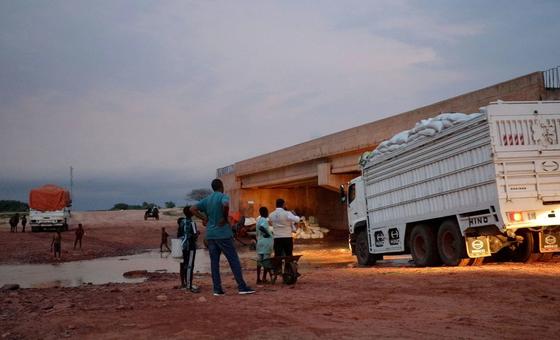
    World Food Programme (WFP) trucks carrying sorghum, pulses, oil and rice destined for 13,000 people at risk of famine in Kereneik, West Darfur, made the crossing on Tuesday evening local time.

    WFP reports that it has food and nutrition supplies for around 500,000 people ready to move swiftly through the newly re-opened route.  

    “The re-opening of the Adre crossing is critical for the effort to prevent famine from spreading across Sudan, and it must now stay in use”, said WFP Executive Director Cindy McCain.

    Race to avoid starvation

    “I want to acknowledge all parties for taking this vital step to help WFP get lifesaving aid to millions of people in desperate need”.

    She said agencies urgently need to reach every corner of Sudan with food assistance through humanitarian corridors as well as border crossings: “This is the only way to avoid widespread starvation.”

    The Adre crossing from Chad is the most effective and shortest route to deliver humanitarian assistance into Sudan – and particularly the Darfur region – at the scale and speed required to respond to the huge hunger crisis.

    Since Adre’s official closure in February, WFP was able to operate just two convoys via the Adre crossing – one in March and one in April and since then needs have only grown, as the rival militaries battle for control of the devastated nation.

    UN expert vows to advocate for Afghan human rights following ban on entry

    The UN independent human rights expert for Afghanistan has expressed concern over the Taliban’s commitment to end its clampdown on basic rights there, following their announcement that they will not permit his entry into the country.

    Special Rapporteur, Richard Bennett, said he has always engaged with the de facto authorities transparently and has been effective in assessing the country’s human rights situation and providing recommendations for improvement where needed.

    “As an UN-appointed independent expert, I take my responsibilities very seriously,” Mr. Bennett said. “I urge the Taliban to reverse their decision and reiterate my willingness and availability to travel to Afghanistan.”

    Committed to the people

    The UN expert says he will continue to engage with the people of Afghanistan “both inside and outside the country, as well as other relevant stakeholders, noting that I have not travelled to Afghanistan for over a year.”

    Mr. Bennett also committed to further documenting human rights violations and providing suggestions for improvement.

    “I remain committed to the people of Afghanistan and to supporting a stable, inclusive and prosperous country at peace with itself and its neighbours,” he said.

    Special Rapporteurs are appointed by the Human Rights Council to serve in their individual capacity, independent of the UN system and national governments. They are not UN employees and do not receive a salary.

    Displacement rife across Myanmar

    The deteriorating situation in three regions of Myanmar where fighting between military government forces and opposition rebels is intensifying is driving up displacement, the UN Spokesperson warned on Wednesday.

    “Reports we are receiving show intensifying hostilities in Rakhine have caused casualties and new displacement, notably in Maungdaw Township, on the border with Bangladesh”, said Stéphane Dujarric.

    An estimated 20,000 people were reportedly displaced from three downtown Maungdaw areas on 5 August while more people are reportedly fleeing across the border now.

    In northern Shan state, there has been a resurgence of fighting since late June, with an estimated 33,000 people displaced from four townships, he added.

    “There are also reports of civilian casualties; homes and other structures have also been destroyed according to the information we’re getting.”

    Funding falling short

    Torrential monsoon rains since the end of June are aggravating the already dire humanitarian situation with around 393,000 impacted.

    The 2024 Humanitarian Needs and Response Plan, which aims to reach some 5.3 million people across the country has only received 23 per cent of the amount requested – just over $225 million.  

    “Despite the challenges, some 2.1 million people across Myanmar were reached by UN and other humanitarian partners during the first half of this year. They received assistance such as food, health, nutrition, and water and sanitation support”, Mr. Dujarric concluded. 

    Source link

  • OSCE Urges Immediate Action Amid Surge in Religious Hate Crimes Across Europe

    Vienna, August 22, 2024 – Religious Hate Crimes – On the occasion of the International Day Commemorating the Victims of Acts of Violence Based on Religion or Belief, there is a significant focus on the rising number of hate crimes in the OSCE region. This issue was emphasized in a statement by the Personal Representatives of the OSCE Chair in Office, stressing the immediate action required to address growing religious intolerance and discrimination.

    In their pointed message, the representatives expressed “deep concern at the alarming level of hate crime and acts of violence based on religion or belief across the OSCE region.” This assertion is not without basis. The statement highlighted a disturbing increase in intolerance towards Muslims, noting that “the high and increasing number of reported incidents of intolerance, violence, and discrimination against Muslims” is a testament to the deep-seated roots of anti-Muslim hatred exacerbated by xenophobia in several countries.

    Since the series of Hamas terror attacks in October 2023, there has been an increase in anti-Semitic sentiments. The repercussions of these incidents, combined with the persisting tensions in the Middle East have instilled a sense of fear, among communities residing in various OSCE nations. The representatives noted that these conditions have forced individuals to “hide their Jewish identity in public,” a stark indicator of the present threats to personal freedom and security.

    It’s evident that religious hate crimes aren’t limited to any group. “Acts of intolerance against Christians and members of other religions or beliefs continue unabated,” the statement claims, emphasizing the connection between these actions and extreme nationalism, racism and prejudice. These intersections present dangers to various social groups, such, as women, immigrants, Roma and Sinti communities.

    A significant contributor to this worrying religious hate crimes trend is the role of social media. The representatives warned that social media platforms are instrumental in “promoting and amplifying these acts and expressions of intolerance and xenophobia,” often inciting violence through the dissemination of false information. They emphasized that while freedom of expression is foundational to democracy, it should not serve as a shield for unchecked hatred that targets individuals’ physical and emotional well-being.

    The consequences of unchecked violence based on religion or belief extend beyond immediate physical threats. These acts “risk the erosion of our basic democratic values and principles,” posing a long-term threat to social cohesion, peaceful coexistence, and societal security.

    In their closing remarks, the OSCE representatives made a resounding call to action. They encouraged participating States to fortify efforts in safeguarding freedom of religion and belief, urging the implementation of “comprehensive measures enabling the effective reporting, recording, and prosecution of hate crime.” Moreover, they emphasized the necessity of legislative and enforcement measures alongside appropriate victim support, when suffering religious hate crimes.

    The statement underscored that “freedom of religion or belief is specifically acknowledged as an integral aspect of the OSCE’s comprehensive concept of security,” reinforcing its vital role in countering discrimination and prejudice. The representatives expressed readiness to assist participating States with the OSCE Office for Democratic Institutions and Human Rights (ODIHR) in fostering respect for freedom of thought, conscience, religion, or belief.

    The joint call was echoed by Rabbi Andrew Baker, Ambassador Evren Dağdelen Akgün, and Dr. Regina Polak, each representing a focus on combating various facets of intolerance and discrimination. Their unified stance serves as a crucial reminder of the ongoing efforts required to ensure a secure, inclusive future for all religions and beliefs within the OSCE region.

  • Council of Europe pays respects to the victims of terrorism

    Terrorism and violent extremism continue to injure and kill thousands of innocent people each year. Terrorist attacks, and the violent and hateful ideologies that drive them, are contrary to the fundamental values of our societies and an affront to democracy, human rights, and the rule of law.

    On the International Day of Remembrance and Tribute to the Victims of Terrorism, the Council of Europe pays respects to the victims, survivors and families who have been injured, traumatised or lost their lives by heinous acts of terrorism worldwide.

    We also pay tribute to those who help support the victims of terrorism, from first responders to law enforcement and the dedicated institutions,  professionals, and associations, who provide long-term assistance and care.

    The Council of Europe Network of single contact points for the exchange of procedural information regarding the legal standing of victims of terrorism makes it possible for countries to exchange procedural information concerning the legal standing of its citizens who are victims of a terrorist attack. Our guidelines for public and private sector authorities on preparedness and emergency responses to the immediate aftermath of terrorist attacks,  provide practical advice on core aspects of national emergency responses.


     Find out more about the Council of Europe’s counter-terrorism work.


     More on the International Day of Remembrance and Tribute to the Victims of Terrorism | United Nations

  • Belgium’s Battle Against Drugs and Alcohol Abuse: A New Hope Emerges

    KingNewsWire. Belgium’s fight against alcohol and drugs abuse, has been highlighted by an article at the Freedom Magazine, the Voice of the Church of Scientology. The Foundation for a Drug-Free World, supported by Scientology, leads educational initiatives to expose substance abuse dangers. Central to that story is Julie Delvaux’s inspiring journey from someone surrounding the milieu to a compelling advocate, propelled by L. Ron Hubbard’s insights on drug threats.

    Brussels, Belgium, 22nd Aug 2024 – Freedom Magazine, has just published a compelling article about the pervasive grip of alcohol and drug abuse on Belgium, which is likened to the mythical monster Bullebak(1), an analogy that intentioned to underscore the country’s struggle with substance dependency. 

    This journalistic piece highlights the extensive impact of these issues on Belgian society, introducing the inspiring and transformative actions led by the Foundation for a Drug-Free World and its volunteers to combat them.

    An important but small country, Belgium has a population of 11.7 million, and yet faces a significant challenge with 1.1 million individuals consuming alcohol daily, and a staggering number grappling with alcohol abuse. This is a situation that grows bigger and bigger as substance use bridges to illicit drugs, contributing to over 60,000 drug-related crimes annually. In such an environment of widespread addiction, “I really saw how bad the drug problem was in my country and how ‘normal’ drugs are,” said Julie Delvaux, the protagonist of today’s story.

    The original article draws attention to how Julie Delvaux, a Belgian young woman who, after a personal encounter with drugs being used among her friends, became a pivotal figure in the fight against this societal menace. Her journey to activism illuminates a path of awareness and education as vital tools in curbing drug abuse and even getting out of such a world before it is too late.

    Julie’s activism with the activities and materials proposed and produced by the Foundation for a Drug-Free World marked a turning point in her life. Emphasizing education without judgment, the Truth About Drugs booklets provide factual insights about the effects of drugs, empowering individuals to make informed choices. Julie, alongside her peers, leverages Belgium’s cultural affinity for biking, music, and magic to disseminate these educational materials across the nation, reaching numerous cities through engaging events that merge entertainment with advocacy.

    drugs
    Photo by Myriam Zilles on Unsplash

    A significant highlight of their campaign was the strategic focus on Antwerp, Europe’s drug trafficking nexus. Here, Julie’s efforts were bolstered by collaboration with the Church of Scientology, amplifying her initiative’s impact through open houses and public events.

    Throughout the campaign, the teachings of Scientology founder L. Ron Hubbard resonate, particularly his assertion:

    The planet has hit a barrier which prevents any widespread social progress—drugs and other biochemical substances. These can put people into a condition which not only prohibits and destroys physical health, but which can prevent any stable advancement in mental or spiritual well-being“.

    L. Ron Hubbard

    This quote encapsulates the profound societal implications of drug abuse, echoing the urgency and necessity of initiatives like Julie’s.

    According to the report by Freedom and her very own episode at “Voices for Humanity” of the Scientology Network, Julie and her team’s unwavering commitment has touched 14% of the population in Belgium, sparking awareness and fuelling a movement to promote a drug-free lifestyle among young people. Her journey symbolizes a beacon of optimism, highlighting the impact achievable through community-driven initiatives.

    The piece from Freedom Magazine goes beyond recounting Belgium’s challenges; it celebrates the power of education and grassroots efforts in addressing societal issues. Julie Delvaux’s narrative advocates for a shift towards prevention and transparency in combating substance abuse, offering hope for a future free from drugs, in Belgium.

    First published through KingNewsWire.

    *(1) Bullebak is a mythical monster:

    The Bullebak is a mythical monster from Dutch folklore. It is often described as a terrifying creature used by parents to frighten children into good behavior, much like the boogeyman in other cultures. The specific appearance and characteristics of the Bullebak can vary, as it is more of a legendary creature than one with a standardized description. The term is generally used to refer to a menacing or fearsome being that lurks in the shadows, ready to pounce on misbehaving children.

  • Why are we bookmarking things and never checking back?

    Without a doubt, many of us, upon opening our Facebook, Instagram, Tiktok, or any other social media account and looking at the saved files section, would find dozens of saved but forgotten links to articles, videos, and other materials. This action can be called “bookmarking”— a process during which we can save various online content and then easily find it in one place. But how does it happen that we save and accumulate so much, yet never return to it?

    Do we know the purpose behind saving these links?

    When examining the act of bookmarking within the context of consciously choosing to save information seen online, it can be linked to a deliberate decision and intention to use the saved link in the future. This indicates that the user wants to systematize and organize information so that it can be easily found and used according to their needs.

    However, today, there is a growing risk and trend of accumulating large amounts of information: various social content, website links, or emails that are often stored in an unorganized manner and without a specific purpose. This behavior has already been given a term by psychologists and researchers — “digital hoarding”.

    Hoarding as an action is not new to researchers, as there have always been people who hoard books, receipts, and many other physical items. However, these habits are gradually shifting into the digital realm and becoming a new challenge. The constant saving of emails, reels, and articles may seem harmless, but it can lead to uncontrollable behavior and more serious consequences than might appear at first glance.

    What drives the hoarding of digital material?

    The act of saving certain content and never returning to it is a familiar experience for many, but this is usually not a serious problem. However, the increasingly uncontrollable desire—or the emerging compulsion—to constantly save everything you see online that piques your interest may appears from underlying psychological issues.

    Firstly, when a person encounters certain material, they often do not control their decision and choose to save the content. They frequently feel that not saving it will cause anxiety, a sense of discomfort, and doubt that they will need the material in the future, but when the time comes, they may not have access to the necessary information.

    The second reason why digital content is often hoarded is emotional attachment. This reason is more closely related to personal files, such as emails or photos, where it is difficult to let go because the person feels a sense of loss.

    How to tell if you are a digital hoarder?

    Dr. Richard Brown outlines five signs that can help determine whether any of us are digital hoarders. Firstly, it’s the constant accumulation of digital material, such as a full email inbox or disorganized saved files, with the thought that they might be needed. Secondly, you don’t delete unused material that was saved but never reviewed. Thirdly, it’s difficult to find what you need among the abundance of saved files. Fourthly, there is an emotional attachment, making it hard to delete unused files. Fifthly, you save files across multiple platforms or devices to ensure access.

    Final Word

    While hoarding physical or digital materials may seem harmless and almost a universal behaviour, everyone should carefully consider whether the saved information is necessary and if it will be useful and needed in the future.

    Written by Agnė Vaišnoraitė

    Sources: UCLA Health, Psychology Today


    [ad_2]

    Source link

  • World Humanitarian Day: EU provides aid globally and protects local aid workers

    August 19 marked World Humanitarian Day, which is an opportunity to celebrate the indispensable and tireless life-saving efforts of aid workers worldwide. When crises erupt and conflicts arise, humanitarians are among the first ones on the spot delivering emergency assistance to those affected. Recent world crises like Russia’s war of aggression in Ukraine and the conflict in the Middle East have sadly shown that all too often it is aid workers who pay the highest price for their efforts. 2023 was the deadliest year on record for aid workers, and 2024 is likely to follow the same tragic trend.

    Aid workers deployed

    Many aid workers are deployed under the EU’s commitment to provide humanitarian assistance to people hit by human-induced disasters and natural hazards around the globe. It has been delivering on this humanitarian aid commitment for over 30 years, in over 110 countries, reaching millions of people across the globe each year. Indeed, the EU – EU countries and institutions collectively – is among the leading donors of humanitarian aid in the world, with an initial humanitarian budget for 2024 of €1.8 billion. 

    EU humanitarian aid covers intervention areas such as  food  and  nutrition,  shelter,  healthcare,  water and sanitation, and education in emergencies. It is channelled impartially to affected populations, regardless of their race, ethnic group, religion, gender, age, nationality or political affiliation and focuses on the most vulnerable. A network of EU humanitarian experts in over 40 countries worldwide enables close monitoring of crisis situations and relief operations. 

    Recent major EU humanitarian aid initiatives include:    

    • Launching EU Humanitarian Aid Bridge flights to channel aid to the most difficult to reach areas. These Air Bridge flights have proven a lifeline to channel aid to Ethiopia during the Tigray crisis, to the Democratic Republic of Congo, as well as to delivering assistance to the people of Gaza more recently.  
    • Developing global stockpiles of aid – the European Humanitarian Response Capacity – hosted in Latin America, the Middle East, Asia, and Europe to be able to send aid faster to crises zones, such as in the aftermath of the earthquake in Türkiye and Syria in 2023.  

    Moreover, through the biggest ever operation under the Civil Protection Mechanism, the EU has provided Ukraine with 149 000 tonnes of humanitarian aid and coordinated the evacuation of over 3 500 Ukrainian patients to hospitals across Europe. 

    To help protect local aid workers around the globe, the EU has established the Protect Aid Workers initiative that assists those who have fallen victim to attacks or other security incidents while on duty with legal aid and rapid financial grants. The first of its kind, the mechanism has distributed 25 grants to humanitarian workers in need of support, worth over €240,000, since February 2024. Through the initiative, the EU aims to create a safety net for local aid workers who often have limited resources and cannot rely on the protection of large international organisations. 

    For more information

    EU humanitarian aid

    Statement by the High Representative/Vice-President Josep Borrell and Commissioner Janez Lenarčič on 2024 World Humanitarian Day

    Protect Aid Workers 

    EU Humanitarian Aid Bridge

  • Poland’s Former Prime Minister Mateusz Morawiecki Eyes Leadership of European Conservatives and Reformists

    Warsaw, Poland – In a significant political maneuver, Poland’s former Prime Minister, Mateusz Morawiecki, is reportedly in contention for the leadership of the European Conservatives and Reformists (ECR) party, as published today by EURACTIV. This coveted role is currently held by Italy’s Prime Minister Giorgia Meloni. The news, initially reported by Euractiv based on insights from Polish media, underscores the shifting dynamics within the European right-wing political landscape.

    Earlier reports from the Polish magazine Wprost, as highlighted by Euractiv, suggested that Morawiecki might reach an agreement with Meloni to succeed her as ECR president. However, the latest updates from the Fakt tabloid, as reported by Euractiv, indicate that no definitive decision has been made. A source close to Morawiecki revealed to Fakt, “Negotiations are ongoing. The chances are 50/50. Nothing is settled yet.” The source also noted Meloni’s reluctance to relinquish her position, while the Polish side is actively working to persuade her.

    As Euractiv pointed out, neither the ECR nor Morawiecki’s Law and Justice (PiS) party has responded to requests for comments, leaving the political community in anticipation.

    Should Morawiecki secure the ECR presidency, it would mark a strategic victory for his party, bolstering its influence on the European right. This move follows PiS’s electoral defeat to a broad centre-left coalition led by former European Council President Donald Tusk (Civic Platform, EPP) last year. For Morawiecki, the ECR leadership could serve as a political refuge if he is not chosen as PiS’s candidate for the Polish presidential election next year.

    With Euractiv noting President Andrzej Duda’s completion of his second term in 2025 and his constitutional bar from seeking re-election, PiS is scouting for a new candidate. Morawiecki is reportedly among the contenders, alongside other prominent figures such as MEPs Patryk Jaki and Tobiasz Bocheński, former defense minister Mariusz Błaszczak, and former education minister Przemysław Czarnek. Each potential candidate brings unique political strengths and challenges, with Bocheński emerging as a new favorite of PiS leader Jarosław Kaczyński, while Jaki, Błaszczak, and Czarnek remain polarizing yet popular among PiS supporters.

    The announcement of PiS’s presidential candidate is expected at the party congress in September or early October. Meanwhile, the ruling coalition has yet to reveal its candidate, and Prime Minister Donald Tusk has publicly ruled out a presidential bid. Tusk, as highlighted by Euractiv, lost the 2005 presidential election to Lech Kaczyński, the late twin brother of PiS leader Jarosław Kaczyński, and remains a pivotal figure in Poland’s political arena.

    As the political chessboard in Europe continues to evolve, Morawiecki’s potential ascension to the ECR presidency could redefine alliances and power dynamics, not only within Poland but across the broader European conservative movement. As reported by Euractiv, the coming months will be crucial in determining the future trajectory of both Morawiecki’s political career and the ECR’s leadership.