Category: News

  • After a grand and historic ceremony, the Paris 2024 Games are officially open

    Paris 2024 GamesOn Friday 26 July, the Opening Ceremony of the Olympic Games Paris 2024 broke out of the stadium to take over the heart of the city for the first time in history. Participating delegations paraded along the Seine in front of hundreds of thousands of people gathered along the banks. Athletes, spectators and TV viewers were treated to a grandiose show, lit up by the performances of Lady Gaga, Aya Nakamura and Céline Dion. At the end of what was of an immersive spectacle conceived by Artistic Director Thomas Jolly, and following a final ‘team relay’ segment, featuring French and global sports legends, Marie-José Pérec and Teddy Riner set the Cauldron ablaze before it took off to light up the skies over Paris. The Paris 2024 Games are officially open! 

    AN OPENING CEREMONY OF FIRSTS 

    For the first time ever, the Opening Ceremony of the Olympic Games broke out of the stadium, taking over the heart of the host city to the delight of hundreds of thousands of people. With hundreds of thousands of spectators in attendance, never before has an opening ceremony been so open to the public. 

    Paris, its iconic monuments and the Seine presented an extraordinary setting and aesthetics for what was a 360-degree show conceived by Thomas Jolly. On the quays, the bridges, and even under the Seine, spectators had to keep more than one eye out. As promised, the show, the athletes’ parade and protocol speeches merged together. During the ceremony, a mysterious masked torchbearer led the entire world through this amazing voyage along the river Seine. 

    Before they turn their attention to competing for Olympic medals, 6,800 athletes had the opportunity to experience an unprecedented Opening Ceremony, filled with excitement, humour and audacity. They will undoubtedly take away a few highlights from this historic evening. 

    JAMEL DEBBOUZE TAKES THE TORCH TO THE STADE DE FRANCE, ZINEDINE ZIDANE BRINGS IT BACK TOWARDS THE SEINE   

    In the first touch of humour to set the tone for the evening, Jamel Debbouze initially thought it was a bad joke when he discovered the Stade de France was completely empty. Carrying the Flame, he thought he was launching the Opening Ceremony of the Olympic Games Paris 2024 with great fanfare before his idol made him realise his mistake.  

    Zinédine Zidane, a legend of French and world football, had returned to his home field in Saint-Denis, where he set the stadium on fire scoring twice in the 1998 World Cup final. A key figure in French sport’s greatest home victory, this evening, he became the saviour of the opening ceremony of the Olympic Games Paris 2024. Taking the Torch from the hands of his accomplice, he dashed off to take the Flame and the ceremony out of the stadium and down to the banks of the Seine. 

    A few moments later, the athletes’ much-coveted medals were presented to them by two of their own, and not just any two: the two most decorated athletes in the history of the Olympic Games in the world and in France, Michael Phelps and Martin Fourcade. Having spent their careers collecting them, these two legends unveiled the gold, silver and bronze medals, set with an original piece of the Eiffel Tower. 

    THE (WATER) CURTAIN OPENS ON PARADING ATHLETES 

    As tradition dictates, the Greek delegation is the first to greet the public gathered on the quays of the river Seine. In a theatrical staging, a water curtain opened to let this first boat through under the Austerlitz Bridge. The athletes made their grand entrance on the Seine. 

    On the bridge, a beautiful fresco celebrated the reunion between the Olympic Games and the city of Paris with the Olympic motto, Faster, higher, stronger, together, and that of Paris, Fluctuat Nec Mergitur .  

    Amidst a beautifully choreographed ballet of water shows, athletes boarded their boats for a 6km parade, stretching the length of 15 athletics tracks found in a traditional stadium. The athletes were both the privileged spectators and main characters of this 12-act show, and the true stars of the Games received a welcome ovation from the public. Enchanté!   

    LADY GAGA EMBODIES CABARET, MUSIC-HALL AND FRENCH REVUE 

    Lady Gaga appeared in the Place Barye to launch the artistic part of the Opening Ceremony with a nod to the tradition of French music hall. From a majestic staircase resembling that of the nave of the Grand Palais, Lady Gaga reinterpreted the classic Mon truc en plume by Zizi Jeanmaire, an icon of French revue. 

    Chosen for her unique talent, multifaceted performances and love of Parisian culture, Lady Gaga’s performance highlighted the ongoing influence of French culture on the world, and the bond between two icons of two different eras. With her personal touch, Lady Gaga showed how the world has drawn on French culture to reinvent and augment it. 

    A GRANDIOSE ENCOUNTER BETWEEN AYA NAKAMURA AND THE REPUBLICAN GUARD 

    On the aptly named Pont des Arts, Thomas Jolly highlighted the equality between eras and between cultures, both academic and pop, with a grandiose encounter: Aya Nakamura and the Republican Guard. In a piece of theatre full of symbolism, the doors of the Institut de France opened to the world’s most listened-to French-speaking artist. 

    Accompanied by the French Army Choir, Aya Nakamura chose to sing her contemporary hits Pookie and Djadja, as well as the iconic songs by Charles Aznavour For me formidable and La bohème. A joyous ode to the richness and modernity of the French language. 

    To the rhythm of the notes played by the Republican Guard, a bridge was created between generations, music genres and languages. 

    A REORCHESTRATED VERSION OF LA MARSEILLAISE FROM THE ROOF OF THE GRAND PALAIS 

    At the Grand Palais, the spectacular staging of a traditionally formal moment surprised spectators and viewers, French people in particular. On the building’s roof, the opera singer Axelle Saint-Cirel appeared clad in a bleu-blanc-rouge dress adorned with an impressive 6-metre long train. To the powerful notes of new version of La Marseillaise by Victor Le Masne, composer and Music Director of the Paris 2024 Ceremonies, the French spectators gathered on the quays joined in a spine-tingling choir of their national anthem. 

    At the same moment near the National Assembly, gilded statues of heroines of French history emerged from the depths of the Seine: Olympe de Gouges, Alice Milliat, Gisèle Halimi, Simone de Beauvoir, Paulette Nardal, Jeanne Barret, Louise Michel, Christine de Pizan, Alice Guy and Simone Veil. Through them and their key role in this ceremony, Thomas Jolly paid tribute to all women. 

    A GIANT BANQUET ON THE DEBILLY FOOTBRIDGE TO WELCOME TEAM FRANCE 

    The Debilly Footbridge, a typically Parisian bridge, was transformed into the venue for a gigantic banquet for the evening. The table was turned into a catwalk on which an XXL fashion show put fashion and young French designers in the spotlight. The Debilly footbridge then turned into a huge dancefloor to the electronic set of DJ Barbara Butch.  

    The final 69 delegations were given a fitting welcome to this huge celebration and electric atmosphere. At the end of the parade, the French boat made a triumphant entry, cheered on by a fan zone of close to 2,300 people. The smiling athletes of Team France got a glimpse of what is in store for them: unwavering support. This is what hosting the Games is all about! 

    A HORSERIDER CLAD IN THE OLYMPIC FLAG GALLOPS DOWN THE SEINE 

    Thomas Jolly turned the protocol of the Opening Ceremony on its head and transformed it into a show. Galloping on a metal horse, a rider rode down the Seine and the course of the ceremony, draped in a cape emblazoned with the Olympic rings. As the Olympic flag passed by, the spirit of Olympism, marked by friendship and solidarity, expanded throughout the world. 

    As she passed under the Parisian bridges, the rider unfurled dove wings, a symbolic reminder of the dove release that used to take place to represent the ideal of peace between nations during the Olympic Truce.   

    The rider concluded her ride at the Trocadéro, giving the Olympic flag a majestic entrance before it was hoisted. Alongside it, the flags of the 205 National Olympic Committees (NOCs) were carried by Games Volunteers. 

    TONY ESTANGUET DECLARES FRANCE’S LOVE FOR THE GAMES 

    On the podium in the shape of an Eiffel Tower at the Trocadéro, Tony Estanguet stepped forward to tell the great love story between France and the Games. Born 130 years ago, “when Pierre de Coubertin proposed the rebirth of the ancient Olympic Games, this love story grew with the Games of Paris, of Chamonix, Grenoble and Albertville.” Today, on Friday 26 July 2024, after waiting, after longing for a century, he reminded us of the “great honour” and “huge responsibility” of hosting the Games again. 

    Welcoming the world to Paris and France, Tony Estanguet told how much of its heart Paris poured into the organisation of the next two weeks by offering athletes “everything that is most precious for us”: “you will find a piece of the Eiffel tower, at the heart of each medal” and “the richest treasures of our national heritage will be the stages on which we compete.”  

    He highlighted that the Games reminded France that the country is capable of “coming together in the moments that count,” and of “doing things that have never been done before, like having this Opening Ceremony in the city, for the first time in the history of the Olympic Games”. 

    After thanking those who contributed to making the dream of the Paris 2024 Games come true, above all Bernard Lapasset, Tony Estanguet, three-time Olympic champion, addressed the athletes: “For the next 16 days, you will be the best version of humanity. You’ll remind us that the emotions of sport form a universal language that we all share.” 

    He also had a special word for French athletes, highlighting their capacity to come together and make a whole country proud. ”With each of your victories, France will come together, with each of your victories, France will show its collective pride.” 

    Thomas Bach, President of the International Olympic Committee, followed by Emmanuel Macron, President of the French Republic, the took their turns at the lectern, the latter officially declaring the Olympic and Paralympic Games open.   

    RAFAEL NADAL, NADIA COMANECI, CARL LEWIS AND SERENA WILLIAMS JOIN FRENCH SPORTING LEGENDS FOR ONE FINAL TEAM RELAY 

    Having guided us through this fabulous Opening Ceremony journey, the mysterious flame bearer arrived at the Trocadero for the return of sport. Zinédine Zidane was back to collect and hand the Torch to Rafael Nadal, the most Parisian of international athletes with 14 victories at Roland Garros and. The two-time Olympic champion ran along the Seine together with other sporting legends: Nadia Comaneci, five-time Olympic champion and holder of the first perfect 10 in the history of gymnastics at the Olympic Games; Carl Lewis, considered by some to be the greatest athlete with his 9 Olympic titles in athletics; and Serena Williams the icon of women’s sport and the most successful Grand Slam champion. Together, they returned to the quays of the Seine to launch the grand finale of this ceremony. 

    Arriving at the Jardin des Tuileries in the Louvre, these four legends of international sport joined twenty others, this time from French sport. Four and twenty make twenty-four, the key number of these Games.  

    Continuing this relay of champions, Serena Williams passed on the Torch to a woman she often encountered on the courts: Amélie Mauresmo, the first and only French tennis player of the Open era to have been world number 1. Then it was Tony Parker’s turn, the man who made it big with the Americans, 4-time NBA champion and who paved the way for an entire generation.  

    The Torch was then passed into the hands of Marie-Amélie Le Fur, President of the French Paralympic and Sports Committee and three-time Paralympic champion, followed by the two future flag-bearers of the French Paralympic delegation, Nantenin Keïta and her four Paralympic medals and Alexis Hanquinquant, reigning Paralympic Para Triathlon champion, forming a link between the Olympic and Paralympic movements.  

    Michaël Guigou, three-time Olympic champion with the French men’s team, and Allison Pineau, member of the first French women’s team to become Olympic champion, highlighted the success of the French handball teams at the Games.. 

    As the only Frenchman since 1928 to be double individual Olympic champion in sabre fencing, Jean-François Lamour was a representative of the sport that has brought France the most medals at the Games. 

    Félicia Ballanger and Florian Rousseau, both members of the exclusive group of three-time Olympic Champions, followed each other, recognising their magnificent track cycling careers. 

    Emilie Le Pennec, France’s first Olympic gymnastics champion, was followed by judoka David Douillet, France’s first double Olympic champion, and Clarisse Agbegnenou, the most successful international judoka with 6 world titles, 2 Olympic titles and 1 silver medal.  

    French swimming, with Alain Bernard, France’s first and only Olympic champion in the 100 m freestyle, and Laure Manaudou, France’s first Olympic swimming champion at just 17 years of age, also had its moment with these two champions.  

    Renaud Lavillenie, Olympic champion in London in 2012, who broke Sergei Bubka’s legendary record by clearing 6.16m in 2014, and Laura Flessel, France’s first Olympic epee champion and two-time Olympic champion, preceded the ‘doyen’ Charles Coste, France’s oldest living Olympic champion, 100 years old in 2024 and Olympic cycling champion in 1948.  

    The final team relay, an innovation of Paris 2024 that featured throughout the Olympic Torch Relay, was therefore a relay of exceptional champions, both international and French, embodying the excellence of the Games.  

    THE EIFFEL TOWER ILLUMINATES PIERRE DE COUBERTIN’S DESIGN OF THE OLYMPIC RINGS  

    As the last torchbearers made their way up the Seine towards the Cauldron, the Opening Ceremony of the Olympic Games Paris 2024 continued to amaze at the Trocadéro. For the first time ever, the beacon of the Eiffel Tower stopped sweeping across the Paris sky and stood still. Hitherto hidden beneath the stage in the shape of the Eiffel Tower on the Place du Trocadéro, the original design of the Olympic rings, created by Pierre de Coubertin himself in 1913, surfaced under the projected lights of the Iron Lady. In the eyes of the man who invented the modern Olympic Games, these five interlaced rings represented ‘the five continents united by Olympism and the colours of all the nations’.  

    MARIE-JOSE PEREC AND TEDDY RINER LIGHT THE CAULDRON BEFORE IT TAKES OFF TO SHINE IN THE SKIES OF PARIS  

    The lighting of the cauldron was one of most eagerly expected moments of this opening ceremony. Installed at the heart of the city, in the Tuileries gardens of the Louvre, the Paris 2024 Cauldron is in the centre of one of the most beautiful views of the capital, aligned with the Palais du Louvre and its Pyramid, of the Obelisk of the Place de la Concorde and the Champs-Elysées with the Arc de Triomphe and the Paralympic Agitos at the end. 

    After the final group relay, Marie-José Perec and Teddy Riner stepped forward above the great fountain of the garden to light up this unexpected and unprecedented Cauldron. Created by French designer Mathieu Lehanneur, a giant ring of fire was crowned with a great hot air balloon, creating one of the most memorable images of this ceremony: once lit and freed of its ties, the Cauldron took to the skies to shine in the skies of Paris. With this gesture, Riner kicked off the Paris 2024 Olympic Games and brought an end to the Olympic Torch Relay, which has spread excitement for these Games throughout the whole of France. 

    The flying, puncture-proof Cauldron disrupts tradition. Thanks to great technological prowess, the Olympic Flame shines with electricity: a light haze is illuminated by a beam of light. Flying in the skies of Paris tonight and every night during the Games, the Cauldron will lcome to ground every day for the public to come and admire it. From July 27, everyone will be able to get up close to the Olympic Flame via a programme of free tickets.

    CELINE DION MAKES AN EMOTIONAL COMEBACK FROM THE BALCONY OF THE EIFFEL TOWER  

    Her return to the stage was awaited by the whole world, and it was grandiose. When Céline Dion appeared on the balcony of the Eiffel Tower to round off this exceptional evening, the quays of the Seine and the Trocadero erupted in cheers.  

    Céline Dion’s interpretation of ‘L’Hymne à l’amour’, her tribute to Edith Piaf’s masterpiece, brought the whole of Paris to its feet. This irresistible artistic choice celebrated the power and emotion of a timeless classic, the extraordinary career of two of the greatest singers of all time, and finally Paris, and all the most beautiful things that France symbolizes. 

    In this sublime, emotion-filled finale, Céline Dion brought this most extraordinary of opening ceremonies to a close, creating another moment, suspended in time, for the world to remember. Maybe, in 100 years, the world will still be talking about it. But now it’s time for the sport and the athletes to take over. Let the Games begin. 

  • 2024 Rule of Law Report: EU better equipped to face rule of law challenges

    The Commission has published its fifth annual Rule of Law Report which monitors significant developments and takes stock of the rule of law situation in all EU countries. It shows that the EU is much better prepared to detect, prevent and address emerging challenges than 5 years ago. This means more resilient European democracies, mutual trust in the EU, good functioning of the single market and a business environment that fosters competitiveness and sustainable growth.

    Each year, the report includes new recommendations for EU countries68% of the 2023 recommendations have been, fully or partiallyaddressed, showing that the report has become a true driver of positive reforms. However, in some EU countries systematic concerns remain and the situation has further deteriorated. 

    This year’s edition also introduces chapters on Albania, Montenegro, North Macedonia, and Serbia, to support their reform efforts and ensure continued work on the rule of law to further progress towards EU membership. 

    Key findings and recommendations of the 2024 report:

    1. Justice reforms: Important reforms to strengthen judicial independence have been initiated. However, systemic concerns regarding judicial independence persist and specific cases of deterioration have been observed. There is a need for safeguards in judicial appointment procedures, autonomy of the prosecution service and adequate resources.
    2. Anti-corruption frameworks: Corruption remains a serious concern, however, the EU countries are better at fighting it – they have increased resources on the capacity of law enforcement services, prosecution authorities and the judiciary. Further action is needed to strengthen preventive frameworks and ensure the effective investigation and prosecution of corruption cases.
    3. Media freedom and pluralism: Concrete steps were made to improve journalists’ safety and working environment, and the tasks and competences of several national media regulators have been expanded. Concerns about the independent governance or financial stability of public service media, transparency of media ownership, the right of access to public documents and the transparent and fair allocation of state advertising persist. Recommendations focus on these areas to ensure a free and pluralistic media landscape.
    4. Institutional checks and balances: Efforts to improve legislative processes have been noted. However, challenges remain, including the excessive use of accelerated procedures, the quality of law-making, and restrictions faced by civil society and human rights defenders. Recommendations aim to strengthen legislative processes and support the functioning of independent authorities.

    The rule of law is an integral part of the very identity of the EU and a precondition for the respect of other values. According to the latest Special Eurobarometer survey, more than 7 in 10 EU citizens agree that the EU plays an important role in helping to uphold the rule of law in their country. Close to 9 in 10 EU citizens think it’s important that all EU countries respect the core values of the EU.

  • One year after the Russian shelling of Odesa and its Cathedral, still no financial assistance from UNESCO

    The world community strongly condemned Russia’s shelling of the historical center of Odesa which damaged and disfigured the Orthodox Transfiguration Cathedral. Many Western delegations visited Odesa but only two Western states promised their assistance.

    By Willy Fautré, director of Human Rights Without Frontiers with Dr Ievgeniia Gidulianova from Odesa

    Father Miroslav (Miroslav Vdodovitch), the rector of the Cathedral of Odesa

    HRWF (24.07.2024) – On the night of 23 July 2023, the Transfiguration Cathedral was seriously damaged and disfigured during a massive Russian missile attack on the historical center of Odesa which is part of UNESCO World Heritage. The world community strongly condemned Russia’s act of aggression while Patriarch Kirill of the Russian Orthodox Church (ROC) kept silent about it and about President Putin’s responsibility. One year later, Father Miroslav (Miroslav Vdodovitch), the rector of the Cathedral, has still not seen the first Euros that were promised by UNESCO.

    Italy’s Prime Minister Giorgia Meloni and the Consul General of the Hellenic Republic in Odesa, Dimitrios Dohtsis were first on the line to quickly announce their support in the media.

    On the first anniversary of this cultural tragedy, the Brussels-based NGO, Human Rights Without Frontiers, published a damning report (in English and in Ukrainian) about UNESCO’s blocking the transfer of 500,000 EUR donated by Italy to Odesa for the restoration of the Cathedral.

    Italy, Odesa and the Cathedral, a love story

    Italy has some historical links with Odesa and the Transfiguration Cathedral as the first architects of Odesa were mainly Italians.

    The Cathedral started to be built in 1795 but construction lagged several years behind schedule. Thanks to the intervention of the famous Duke of Richelieu, who was appointed as governor of the city in 1803, the Italian architect Francesco Frappoli was employed to complete the edifice. He is well-known in Odesa for making in 1810 the original design of the first luxurious Opera House, where Italian opera prevailed. Unfortunately, in 1873 the building was completely destroyed by fire and other historical buildings in the city as well.

    In the period from the 1820s to the 1850s, the city of Odessa had a very significant and important Italian colony among its inhabitants. The euphonious language of “Golden Italy” was constantly heard on the streets.

    Talented Italian architects then created the image of young Odessa, gave the city an extraordinary flavor, forever inscribing it among the most beautiful cities in Europe. It was the Italians who built the key buildings in the city center in the first half of the 19th century, which adorn Odessa to this day.

    The heart of Odesa, World Heritage, heavily damaged by Russian missiles

    Four days after Russia’s shelling, President of Ukraine Volodymyr Zelenskyy arrived in Odesa to visit the rehabilitation departments where Ukrainian defenders were recovering and to inspect the damage caused to the Orthodox Cathedral of Transfiguration. He quickly discovered that in July 2023, more than 30 cultural heritage sites were damaged, including:

    • Odessa Transfiguration Cathedral (missile strike on July 23, 2023).
    • House of Scientists (palace of Count Tolstoy) (missile strike on July 23, 2023).
    • Odessa Art Museum  (missile strike on July 23, 2023 – on November 5, 2023, it was hit again by a missile strike, which caused a lot of destruction)
    • Odessa Archaeological Museum (missile strike on July 20, 2023).
    • Odessa Maritime Museum (missile strike on July 20, 2023).
    • Odessa Literary Museum (missile strike on July 20, 2023).
    • Museum of Western and Oriental Art (missile strike on July 20, 2023). 
    • St. Nicholas Church (missile strike on July 18, 2023).
    • Residential building of Chizhevych (mid-nineteenth century, architectural monument of local importance) (missile strike on July 23, 2023).
    • Residential development of Solomos (early 20th century, architectural monument of local importance) (missile strike on July 23, 2023).
    • Manuk Bey’s mansion, where a kindergarten for visually impaired children was located (missile strike on July 23, 2023).
    • Tolstoy’s mansion, where the kindergarten is located (missile strike on July 20, 2023).

    In the last twelve months, many foreign delegations have visited these damaged sites.

    A non-exhaustive list of foreign visitors on the sites of the Russian shelling

    On 21 August 2023, a delegation led by a professor from the University of Cambridge with photographers from different countries went to Odesa to record the destruction.

    On 7 September 2023, the Ambassador of Italy to Ukraine, the Consul of Italy in Odesa, representatives of the Italian government, Italian specialists in the restoration of cultural heritage and the entire UNESCO apparatus present in Ukraine, headed by Chiara Bardeschi visited the places to be restored.

    On 30 September 2023, the EU High Representative for Foreign Affairs and Security Policy Josep Borrell visited the places hit by Russian missiles in Odesa.

    On 6 October 2023, the new Extraordinary and Plenipotentiary Ambassador of Germany to Ukraine, Martin Jäger, went to Odesa and declared “I came to Odesa immediately after my appointment. We have a special interest in the preservation of cultural heritage, which is under the protection of UNESCO.”

    On 13 October 2023, during a working trip to the Odesa region, President of Ukraine Volodymyr Zelenskyy held a meeting with Prime Minister of the Kingdom of the Netherlands Mark Rutte, who was on a visit to the country. Mark Rutte who will be appointed NATO Secretary General on 1 October 2024 then promised military assistance such as Patriot systems meant to protect Ukrainian cities against Russian missiles.

    On 13 November 2023, a delegation of representatives of 11 African countries visited Odesa.

    On 16 November 2023, British Foreign Secretary David Cameron went to Odesa with Ukrainian Foreign Minister Dmytro Kuleba and visited the cathedral as part of the review of evidence of Russian terrorism. The meeting was mainly devoted to assistance to Ukraine.

    On 20 January 2024, UN High Commissioner for Refugees Filippo Grandi visited the Cathedral during a visit to Odesa region to discuss strengthening assistance to residents of the city and displaced persons affected by Russian aggression.

    On 25 February 2024, the Minister of Foreign Affairs of Germany, the Minister of Foreign Affairs of Ukraine and Ambassador of Germany to Ukraine visited Odesa as part of a delegation of 40 people meeting to talk about cooperation and assistance to Ukraine.

    On 6 March 2024, President of Ukraine Volodymyr Zelenskyy accompanied Prime Minister of Greece Kyriakos Mitsotakis in a visit to Odesa taking place within the framework of a cooperation meeting between the two countries. During their visit, there was an air alarm and Russian shelling.

    On 25 March 2024, Chief Ombusman of Ukraine Dmytro Luninets and Chief Ombusman of Turkey Seref Malkoç visited the Cathedral during a meeting on cooperation with Turkey to protect the rights of Ukrainian prisoners of war and illegally detained civilians, as well as to find missing persons.

    On 30 March 2024, the Chairman of the Verkhovna Rada of Ukraine Ruslan Stefanchuk and the Head of the National Assembly of France Yael Braun-Pivet visited the Cathedral during their meeting in Odesa on issues of military assistance to Ukraine. The chairman of the Verkhovna Rada asked for France’s assistance to protect the sky over Odesa so that other tragedies can be avoided.

    On 8 April 2024, an American delegation consisting of six congressmen and Senator Joni Ernst visited the Cathedral during a visit to Odessa.

    Many visits of European delegations but only pledges of two Western states

    In the aftermath of these official visits, few Western states have spontaneously pledged to take part in the speedy restauration or reconstruction of the Cathedral.

    Concerning the European Union, the EU High Representative for Foreign Affairs and Security Policy Josep Borrell did not make any promise that the EU would contribute to the reconstruction of the destroyed parts of the Cathedral and other historical sites. He just said that the strike on the city was another Russian war crime and he tweeted: “Russia’s relentless missile terror against UNESCO-protected Odessa is yet another war crime by the Kremlin, which has also destroyed the main Orthodox cathedral, a World Heritage Site. Russia has already damaged hundreds of cultural sites in an attempt to destroy Ukraine.”

    The contribution of 500,000 EUR promised by PM Giorgia Meloni in Italy for urgent repair of the Cathedral which has been channeled through UNESCO has still not been transferred by this international institution to Odesa…

    Last year, the Consul General of Greece in Odessa, Dimitrios Dohtsis, announced that his country also intended to contribute to the restoration of architectural monuments that were damaged during the Russian missile attack, including the Cathedral, but as of today nothing has been made public about concrete initiatives and no financial assistance has reached Odesa.

  • European Commission Probes Delivery Hero and Glovo for Potential Anticompetitive Practices

    In a bold move to safeguard competition in the burgeoning online food delivery market, the European Commission has launched a formal antitrust investigation into two of Europe’s largest food delivery companies, Delivery Hero and Glovo. This investigation could have significant implications for consumers and workers across the European Economic Area (EEA).

    What’s happening?

    The European Commission is scrutinizing whether Delivery Hero and Glovo have engaged in cartel-like behavior, which includes potentially dividing up geographic markets and sharing sensitive commercial information such as pricing strategies and operational capacities. Additionally, there are concerns that the two companies may have agreed not to poach each other’s employees, a practice that could stifle job opportunities and wage growth for workers in the sector.

    The Companies in Question

    • Delivery Hero: Headquartered in Germany, this company operates in over 70 countries and partners with more than 500,000 restaurants. It is listed on the Frankfurt Stock Exchange.
    • Glovo: Based in Spain, Glovo is active in more than 1,300 cities across 25 countries. In July 2022, Delivery Hero acquired a majority stake in Glovo, making it a subsidiary.

    Why It Matters

    The online food delivery market is rapidly growing, and ensuring fair competition is crucial for maintaining reasonable prices and diverse choices for consumers. Margrethe Vestager, the European Commission’s Executive Vice-President in charge of competition policy, emphasized the importance of this investigation:

    “Online food delivery is a fast-growing sector, where we must protect competition. This is why we are investigating whether Delivery Hero and Glovo agreed to share markets and not to poach each other’s employees. If confirmed, such conduct may amount to a breach of EU competition rules, with potential negative effects on prices and choice for consumers and on opportunities for workers.”

    Background and Next Steps

    The Commission’s concerns stem from Delivery Hero’s minority shareholding in Glovo from July 2018 until its full acquisition in July 2022. During this period, the companies might have engaged in practices that violate EU competition rules, specifically Article 101 of the Treaty on the Functioning of the European Union (TFEU) and Article 53 of the EEA Agreement.

    The investigation follows unannounced inspections at the companies’ premises in June 2022 and November 2023. These inspections were part of a broader inquiry into potential collusion in the food delivery sector.

    Implications for the Market

    This investigation is particularly significant as it marks the Commission’s first formal probe into no-poach agreements and anticompetitive practices involving minority shareholdings. If the allegations are proven, it could lead to substantial changes in how companies operate within the online food delivery market, ensuring a more competitive environment that benefits both consumers and workers.

    What’s Next?

    The Commission will conduct an in-depth investigation, which will be prioritized but has no set deadline. The duration will depend on various factors, including the complexity of the case and the level of cooperation from the companies involved.

    For those interested in the nitty-gritty details of the Commission’s actions against cartels and how to report suspicious behavior, more information is available on the Commission’s dedicated cartels website. Updates on this investigation will be posted on the Commission’s competition website under case number AT.40795.

    As this investigation unfolds, it will be crucial to monitor its impact on the online food delivery market and the broader implications for competition policy in Europe. This case could set a precedent for how similar issues are handled in the future, ensuring a fair and competitive market for all.

  • EU Intensifies Pressure: Six-Month Extension of Russia Sanctions

    Brussels, [Current Date] – The European Council has chosen to extend its ranging sanctions, against Russia, for an additional six months due to the ongoing aggression and destabilizing actions by Russia in Ukraine. These measures, which were initiated in 2014 and amplified after Russia’s aggression in February 2022, will remain effective until January 31, 2025.

    These sanctions are among the responses ever crafted by the EU. They cover sectors such as trade, finance, technology, dual use goods, industry, transport and luxury items. A key measure involves prohibiting the import or transfer of oil and specific petroleum products from Russia to the EU. This significantly impacts the revenue for funding military activities.

    Financial Isolation and Media Restrictions

    An aspect of the sanctions is isolating the economy financially. Several major Russian banks have been disconnected from the SWIFT payment system to disrupt transactions and economic stability, in Russia.
    In addition, the European Union has taken action, against media outlets supported by the Kremlin that play a role in spreading information, suspending their broadcast licenses to limit the circulation of misleading narratives across Europe.

    Moreover, the sanctions are crafted to be flexible and resilient against any attempts to evade them. Specific strategies have been implemented to detect and prevent any endeavors to work around the imposed limitations, ensuring that the sanctions remain effective over a period.

    Continued Violations and International Law

    The European Council has stressed that it is justifiable to uphold these sanctions as Russia persists in actions that violate international law, particularly regarding the prohibition on using force. These actions represent a breach of standards and responsibilities warranting an ongoing and possibly escalated response from the global community.

    Historical. Broadening Measures

    The initial set of sanctions began with Decision 2014/512/CFSP approved on July 31, 2014 in response to Russia’s actions in Ukraine, such as the annexation of Crimea. Over time, these measures have expanded to encompass a range. In addition to sector sanctions, the EU has imposed controls on economic dealings with Crimea, Sevastopol and areas in Ukraine’s Donetsk, Kherson, Luhansk and Zaporizhzhia regions not, under government control.

    Sanctions, like freezing assets and imposing travel restrictions, have been enforced on various individuals and organizations connected to the actions.

    Since February 24, 2022, the EU has implemented 14 sets of sanctions in response to Russia’s full-scale invasion of Ukraine. These actions are notably extensive and intense, reflecting the seriousness of the situation and the EU’s dedication to countering aggression.

    EU’s Support for Ukraine

    In its conclusions from June 27, 2024, the European Council reaffirmed its backing for Ukraine‘s independence, sovereignty and territorial integrity within recognized boundaries. The EU’s support encompasses financial, economic, humanitarian aid along with diplomatic assistance. The Council strongly condemned Russia’s escalated attacks targeting civilians and critical infrastructure like energy facilities.

    The European Union’s choice to extend sanctions highlights its position against activities that threaten global peace and security. By prolonging these measures, the EU aims to maintain pressure on Russia while advocating for a resolution in line, with law.

  • Joe Biden Exits 2024 Presidential Race, Shaking Up U.S. Political Landscape

    In a turn of events in American politics, President Joe Biden has announced that he will not seek re-election in 2024. His announcement, shared on the media this Sunday afternoon, gives Donald Trump a significant edge in the upcoming presidential race.

    Concerns about Biden’s ability to lead another campaign at the age of 81 came to a head after a televised debate with Trump on June 27 during which Biden displayed signs of cognitive fatigue. Following this, prominent Democrats, including former President Barack Obama, openly called for Biden to step aside.

    In a message posted online, Biden stated:

    “Serving as your president has been the greatest honor of my life. And while it has been my intention to run for re-election, I believe that the best course of action for my party and the country is for me to step aside and focus solely on fulfilling my duties as President for the remainder of my term.”

    Biden’s choice was also influenced by recent public blunders during events and appearances, such as at the NATO summit marking its 75th anniversary where he mistakenly referred to Ukrainian President Volodymyr Zelenskyy as “President Putin” and his own Vice President Kamala Harris, as “Vice President Trump.”

    The pressure reached its peak when a notable opinion piece by George Clooney, a supporter of the Democratic Party was published in the ‘New York Times’ suggesting that Biden might face challenges in his race against time.

    The situation became more complex when Biden tested positive for COVID-19, leading to his recovery at his home in Delaware. Despite plans by the Democratic Party to secure his nomination through a virtual vote before the Chicago convention, Biden eventually decided to step back.

    Biden’s withdrawal has triggered discussions about who will succeed him. Vice President Kamala Harris appears to be a contender and could potentially make history as the first female President of the United States. Nonetheless, other notable Democrats like California Governor Gavin Newsom and Michigan Governor Gretchen Whitmer have also emerged as candidates.

    This turn of events marks a moment in American politics as the Democratic Party faces uncertainty just months before the 2024 elections. The repercussions of this withdrawal could have far-reaching effects, on both the domestic political landscape and global power dynamics.

  • Israel/Palestine: Statement by the High Representative on the Advisory Opinion of the International Court of Justice

    The European Union takes good note of the Advisory Opinion of the International Court of Justice in respect of the “Legal Consequences arising from the Policies and Practices of Israel in the Occupied Palestinian Territory, including East Jerusalem”, reaching the following conclusions:

    • the State of Israel’s continued presence in the Occupied Palestinian Territory is unlawful and needs to be brought to an end as rapidly as possible;
    • the State of Israel is under an obligation to cease immediately all new settlement activities, and to evacuate all settlers from the Occupied Palestinian Territory;
    • all States are under an obligation not to recognise as legal this situation and not to render aid or assistance in maintaining the situation created by this unlawful presence.

    These conclusions are largely consistent with EU positions, which are themselves fully aligned on UN resolutions regarding the status of the Occupied Palestinian Territory.

    In a world of constant and increasing violations of international law, it is our moral duty to reafirm our unwavering commitment to all ICJ decisions in a consistent manner, irrespective of the subject in question.

    The ICJ Advisory Opinion will need to be analysed more thoroughly, including in view of its implications for EU policy.

  • EU Calls for Renewed Commitment to a Unified Cyprus Amid 50th Anniversary of 1974 Division

    This week marks the solemn commemoration of the tragic events of 1974, a pivotal moment in Cyprus’s history that continues to reverberate half a century later. The European External Action Service (EEAS) has issued a poignant statement, underscoring the enduring need for a fair, comprehensive, and viable settlement to the Cyprus problem.

    The Republic of Cyprus, an EU Member State, remains divided to this day—a division that has profound implications for its people. The EEAS emphasizes that this forced separation cannot be a lasting solution and that the hope for a unified Cyprus persists.

    The statement calls for a renewed and genuine commitment from all parties involved in the United Nations-led efforts to resolve the Cyprus issue. This includes the two Cypriot communities and, notably, Türkiye. The EEAS stresses that a peaceful settlement must be based on the relevant UN Security Council resolutions, which provide a framework for negotiations.

    In light of the broad geopolitical shifts and ongoing crises, the EEAS highlights the importance of collective effort to achieve a settlement. The goal is not only to benefit the people of Cyprus but also to ensure stability and security in the Eastern Mediterranean region.

    The statement serves as a reminder of the urgency of the situation and the necessity for all stakeholders to engage constructively in the peace process. As the world commemorates the events of 1974, the call for unity and resolution is more pressing than ever.

    The EEAS’s message is clear: too much time has been lost, and the time for action is now. The path to a unified Cyprus requires unwavering dedication and cooperation, promising a better future for all Cypriots and contributing to regional stability.

  • Victory in the Supreme Court: CCHR’s criticism of psychiatric abuse not without factual basis

    SALUDMENTAL Original in Spanish ) The Plenary Session of the Civil Division of the Supreme Court, in its ruling STS 960/2024 of July 9th and published on the 12th in response to the appeal after its defeat in the Provincial Court of the Spanish Society of Psychiatry (SEP), admits that the opinions and harsh criticism that the Citizens’ Commission on Human Rights (CCDH and CCHR) makes of psychiatric abuses such as those made with the use of psychotropic drugs, involuntary institutionalisation, electroshock, psychosurgery and others, “are not devoid of a sufficient factual basis”, and therefore decides to protect the right to express them, even in a harsh manner, as they are of “undoubted general interest”, as transcribed in this extract from the judgment:

    “The publications in question deal with a matter of undoubted general interest: the debate on certain practices in the field of psychiatry. The extensive documentation submitted by the defendants clearly shows the existence of this debate. The reports of the UN rapporteurs submitted by the defendants (specifically, the 2017 ‘Report of the Special Rapporteur on the right of everyone to the enjoyment of the highest attainable standard of physical and mental health’ and the 2018  ‘Annual Report of the United Nations High Commissioner for Human Rights’ on ‘Mental Health and Human Rights’) are a good illustration of the important social, political and scientific debate on the issues covered by the questioned publications.

    The debate on certain psychiatric practices and, in particular, on involuntary institutionalization, the use of psychotropic drugs, especially when the patients are children or adolescents, or surgical or electroconvulsive treatments, is of particular importance in today’s society.”

    Furthermore, the high court affirms, “despite the crudeness of some of its expressions (…), its content is directly connected to the public debate in a democratic society (…) And is part of the conduct observed by CCDH of actively intervening in the social debate on psychiatry through its publications.”

    On this basis, the Supreme Court has ruled that the Spanish Society of Psychiatry (SEP) must bear the criticism of the Citizens Commission on Human Rights. (CCHR) and Comisión Ciudadana de Derechos Humanos de España (CCDH).

    Salvador Fernández, President of the Spanish Citizens’ Commission on Human Rights, after learning of the sentence declared that:

    “it is important that there be protection so that the innumerable abuses that are committed in the field of psychiatry are made known, and the time has come to carry out the drastic reforms called for by the WHO, the UN, and above all the victims, of a century-old system that has brought more pain than glory, we thank all those who work in one way or another to expose and put an end to psychiatric abuse, and from our team we encourage society to not remain silent and to denounce through www.saludmentalyderechos.org any and all abuses in the field of psychiatry, whether it be the labelling and administration of dangerous psychotropic drugs to children, forced treatment, lack of informed consent, involuntary institutionalization or the use of electroshock, which has been described as torture on numerous occasions by doctors and human rights experts.”

    CCHR was co-founded in 1969 by the Church of Scientology and Professor Emeritus of Psychiatry Dr. Thomas Szasz as an independent mental health watchdog at a time when patients were institutionalized, mistreated, stripped of their constitutional, civil and human rights, and left to fend for themselves.

    As stated by CCHR co-founder Thomas Szasz:

    “They were then the only organization, and they still are the only organization, who were active in trying to free mental patients who were incarcerated in mental hospitals with whom there was nothing wrong, who had committed no crimes, who wanted to get out of the hospital. And that to me was a very worthwhile cause; it’s still a very worthwhile cause. We should honor CCHR because it is really the organization that for the first time in human history has organized a politically, socially, internationally significant voice to combat psychiatry. This has never happened in human history before.”

    CCHR and national and local affiliates around the world have long fought to restore basic inalienable human rights in the field of mental health, including, among others, full informed consent to the medical legitimacy of psychiatric diagnosis, the risks of psychiatric treatments, the right to all available medical alternatives, and the right to refuse any treatment deemed harmful.

    In the judgement of the Provincial Court of Madrid 64/2024 of February 10th, appealed by SEP, the courts explained that CCHR and CCDH:

     “aims to fight against abuse in psychiatry and especially against the prescription by these professionals of drugs for the treatment of mental illnesses and diseases and its work has been recognised by the Special Rapporteur of the UN Commission on Human Rights who in 1986 stated that it had helped to pass numerous laws in the field of mental health in defence and preservation of the rights of individuals according to the Universal Declaration of Human Rights, members of the Committee on the Rights of the Child at the United Nations and various members of the US House of Representatives and the California State Congress and Senate.”

    In its text, the Supreme Court’s judgement includes, on the one hand, the video documentaries where CCHR shows its evidence and strong statements, opinions and concerns:

    “On the other hand, the website www.cchr.org.es, whose content is owned and managed by CCHR (Citizens Commission on Human Rights), provides access to 8 documentaries that explain what they consider ‘psychiatric abuse’.”

    And also, the “informative material” found on the website https://www.ccdh.es of the Comisión Ciudadana de Derechos Humanos de España (CCDH) where there are 19 leaflets with very strong titles, such as “Child Drugging. Psychiatry destroying lives. Report and recommendations on fraudulent psychiatric diagnosis and enforced drugging of youth”; “Deadly restraints. Psychiatric ‘therapeutic’ assault. Report and recommendations on the violent and dangerous use of restraints in mental health facilities”; “Brutal Therapies. Harmful Psychiatric ‘Treatments’. Report and recommendations on the destructive practices of electroshock and psychosurgery”; or “Psychiatric Malpractice, the subversion of medicine. Report and recommendations on psychiatry’s destructive impact on health care», among others.

    The Spanish Society of Psychiatry complained about demonstrations in which CCDH and others claimed that  “psychiatrists are criminals, precursors of genocides, responsible for the erosion of education and justice, inciters of drug addiction, drug traffickers, fraudulent practitioners or managers of violence and terrorism, that some psychiatrists sexually abused their patients and even that ‘[t]here are an undetermined number of coercive abortions in Spain by psychiatrists’, involvement of German psychiatrists in the Nazi holocaust [for which the German Psychiatric Association has publicly apologised], racial discrimination” and other descriptions and statements of fact.

    The First Civil Chamber of the Supreme Court concluded that the judgment appealed by SEP had correctly applied the case-law criteria to resolve the conflict between freedom of expression and the right to honour.

    And with regard to the context in which the statements in question were made, despite the fact that some of them could be considered serious, says the ruling, CCDH’s conduct in making these publications is part of a public debate of great importance in today’s society, so that agreeing to remove such publications would be an excessive restriction on freedom of expression that would not be justified by an imperative social need.

    The SEP also complained about statements, such as that of psychiatrist Dr. Thomas Szasz when he says “Psychiatry is probably the most destructive force that has affected society in the last 60 years’, or ‘Psychiatry serves as a social control machine that sometimes becomes an agent of social and political revenge”, among other imputations.

    The SEP argued that freedom of expression should not cover such statements, which the Supreme Court has contradicted, finding that the statements and criticisms of CCDH and CCHR are disseminated in a public debate on psychiatry.

    The Supreme Court’s ruling reiterates the importance of freedom of expression in the context of debates of public interest, even when criticism may be offensive to certain entities or professionals, in line with what was said by the court of appeal. And it is here that the Supreme Court states that:

    “This prevalence of freedom of expression over the right to honour when expressing opinions on matters of general interest occurs even when the expression of opinion is made in a rude, unkind or hurtful manner and may annoy, disturb or upset the person affected by the statements in question, as this is required by pluralism, tolerance and a spirit of openness, without which there is no democratic society.

    As the judgments of the ECHR of 8 November 2016, Magyar Helsinki Bizottság v. Hungary, 13 March 2018, Stern Taulats and Roura Capellera v. Spain, 20 November 2018, Toranzo Gómez v. Spain, and 11 May 2021, Halet v. Luxembourg state, freedom of expression does not only protect ideas that are favourably received or considered inoffensive or indifferent, ‘but also those that offend, shock or disturb’. And Constitutional Court judgment 226/2016, of 22 December, citing previous judgments, states that ‘within the broad framework granted to freedom of expression are protected, according to our doctrine, “those manifestations which, although they affect the honour of others, are revealed as necessary for the presentation of ideas or opinions of public interest”’.

  • Empower. Unite. Transform 2024: Youth Ambassadors Unite for Human Rights, Justice and Peace at UN in New York

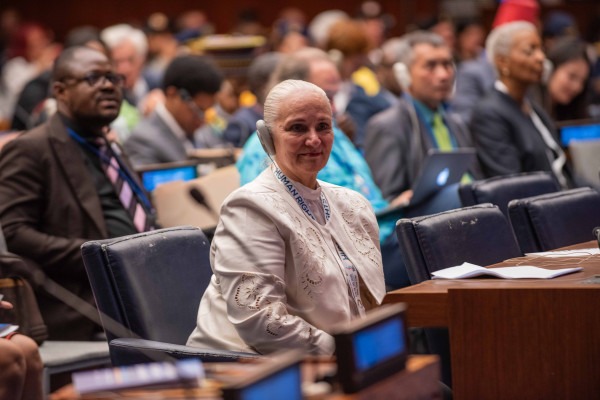
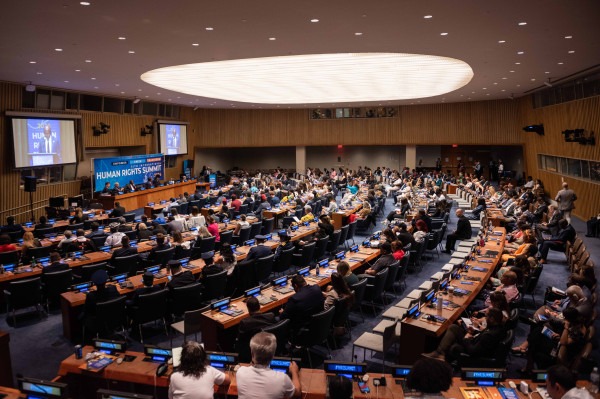
    KingNewsWire. 52 young representatives from 35 nations joined by over 400 government officials, educators, and human rights advocates from around the world convened at the United Nations Headquarters in New York for the 18th International Human Rights Summit. They came together with a shared goal of promoting human rights education and advocacy. The event hosted by Timor-Leste’s Permanent Mission to the UN was designed to address issues of injustice and work, towards fostering peace, through education and activism.


    With the motto Empower-Unite-Transform, the 18th International Human Rights Summit kicked off with a display of youthful passion and advocacy as 52 young delegates and ambassadors from 35 nations, joined by over 400 government officials, educators, and human rights advocates from around the world, gathered in Conference Room 4 at the United Nations Headquarters in New York. Their arrival was met with a standing ovation from the attendees, reflecting the collective respect for their commitment to human rights.

    These exceptional delegates, selected from a large pool of applicants based on their stellar track records in advocating for human rights, didn’t just come for praise. Their main goal was to expand their knowledge and skills to advance their goals.

    Dr. Mary Shuttleworth, the president and founder of Youth for Human Rights International has been leading the organization of these summits since they began in 2004. She praised the delegates for their accomplishments and future potential underscoring the significance of their ongoing work.

    Diplomats and representatives from countries permanent missions to the UN, like Australia, the Bahamas, Bolivia, Democratic Republic of Congo, Sri Lanka, Timor Leste and United States of America also conveyed their greetings and best wishes. 

    The summit for this year was organized once again by the Permanent Mission of Timor Leste at the United Nations. It was also broadcast live via UN Web TV.

    During the event, Beth Akiyama from the Church of Scientology National Affairs Office in Washington, D.C., and who spoke on behalf of Church of Scientology International, emphasized the significance of starting the summit on July 18th, which coincides with Nelson Mandela Day as designated by the United Nations. Mandela’s legacy as a champion of rights is remarkable, especially his belief that “education is the most powerful weapon you can use to change the world.” Akiyama pointed out how this aligns with Youth for Human Rights mission, which focuses on global transformation through education, about the Universal Declaration of Human Rights.

    As the summit progresses a group of young advocates united by their shared dedication and backed by various international missions and organizations aims to advance human rights education and spark a movement to eliminate injustice and promote peace worldwide.

    The first two days of the Summit feature panels on human rights topics: 

    YOUTH ON HUMAN RIGHTS: A discussion on the critical role of young people in promoting human rights and setting an example for their peers.

    HUMAN RIGHTS EDUCATION: The importance of integrating human rights into educational curricula to instill values of dignity and unity among future leaders.

    HUMAN RIGHTS APPLIED THROUGH LAW:  A discussion of the integration of human rights in legal frameworks and the role of institutions such as courts, law enforcement and legislatures in upholding these rights.

    UPHOLDING HUMAN RIGHTS IN THE ARTS & MEDIA: The role of journalists, filmmakers, artists, and influencers, and the need for freedom of expression and the support of creative initiatives that champion human rights.

    HUMAN RIGHTS IN ACTION: The importance of nonprofit human rights organizations, the vital role of active participation in forwarding human rights, and creative ways to do so.

    The last day of the Summit concludes with a celebration at the Church of Scientology Harlem Community Center followed by community outreach in Times Square, New York. During this outreach participants apply their knowledge by educating individuals about the 30 human rights.

    The annual International Human Rights Summit serves as a platform for human rights advocates, officials, dignitaries and young people to exchange ideas and collaborate on implementing initiatives.

    The primary objective of the Summit is to advocate for the inclusion of education on the Universal Declaration of Human Rights in school curricula and ensure that these rights are legally protected.

    The Church of Scientology and its members firmly believe, as inspired by Scientology founder L. Ron Hubbard, knowledge is the key to freedom, and therefore actively support United for Human Rights and its Youth for Human Rights program by offering their resources and programs free of charge. 

    For information, please visit the United, for Human Rights website:

     humanrights.com.

    #YouthForHumanRights #YHRISUMMIT 

    United for Human Rights FB: @UFHumanRights 

    Youth for Human Rights International FB @YouthForHumanRights   and X (formerly Twitter: @YFHumanRights