
Category: News

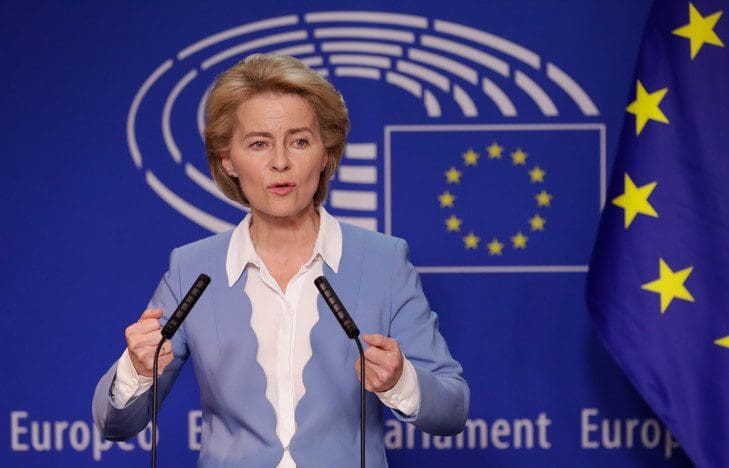
  • Statement by President von der Leyen at the joint press conference with President Metsola following the European Parliament Plenary vote

    Statement by President von der Leyen at the joint press conference with President Metsola following the European Parliament Plenary vote

    Statement by President von der Leyen at the joint press conference with President Metsola following the European Parliament Plenary vote

    On the eve of a critical European summit, European Commission President Ursula von der Leyen delivered a pivotal speech addressing the continent’s pressing challenges and future direction. Speaking to an audience of policymakers, diplomats, and industry leaders, von der Leyen laid out the European Union’s strategic priorities, ranging from economic recovery post-pandemic to the urgent need for a unified stance on climate change and digital transformation. Her remarks, coming at a time of significant geopolitical upheaval, underscore the EU’s commitment to solidarity, innovation, and resilience in an increasingly complex global landscape.

    Here it is:

    Thank you very much, dear Roberta,

    Good afternoon to everyone,

    I guess you have heard my speech, and you might have read the Political Guidelines. So you can imagine that this is a very emotional and special moment for me now. I just want to make three very short remarks before moving on to your questions.

    The first one is a more personal remark. I cannot begin without expressing how grateful I am for the trust and the confidence of the majority of the European Parliament. 401 votes in favour – you will recall that last time, it was 8 votes above the necessary majority. This time it is 41, so this is much better. This sends a strong message of confidence. I think it is also recognition for the hard work that we carried out together in the last five years in the last mandate. We have spared no effort. We have navigated the most troubled waters that our Union has ever faced. And we have kept the course on our long-term European goals. I also want to thank you, Roberta, the Group leaders of the democratic forces in the Parliament and all the MEPs for the excellent cooperation including during the last mandate but also for the very substantial exchanges we have had over the past two weeks – after the elections and over the past two weeks. I think this is a very good foundation for the next five years. And I think this was tangible in the debate today.

    Second, I want to highlight that I was very happy to have the opportunity to carry out a real, pan-European electoral campaign. As you know, it brought me from Helsinki to Lisbon, from Bucharest to Rome and many different places. I engaged with people from all walks of life. And I enjoyed taking part in the series of TV debates that we had with the other candidates. I think this makes our European democracy much more vibrant.

    And finally, let me walk you briefly through the next steps. I will now focus on building my team of Commissioners for the next five years. In the coming weeks, I will ask Leaders to put forward their candidates. I will – as I did last time – write a letter and ask for the proposal of a man and a woman as candidate. The only exception is, like last time, when there is an incumbent Commissioner who stays. And then, I will interview the candidates as of mid-August, and I want to pick the best-prepared candidates who share the European commitment. Once again, I will aim for an equal share of men and women at the College table. The new team will get ready to successfully pass the Parliament hearings. And then I will again seek the confirmation of this House.

    Thank you very much.

  • Codependency, a problem for faith-based organizations (Part 1)

    In 1996, I was publishing a report entitled AP, a disease for the 21st century. I was working as a press officer in an office for an addiction clinic when, doing a television series called Group Therapy, I interviewed a nurse who was Addicted to people. She could not understand her long-lasting or troubled relationships without the attachment she got from being psychologically and physically attached to a person. On that occasion we talked about the phenomenon of Gender Violence and the recurrent abuse she had been subjected to all her life, with an abusive father and life partners with identical characteristics.

    At that time I was involved, nothing has changed, in the study of new beliefs and new religious movements, and it was clear to me that this attachment or addiction to people, which to a greater extent we could all suffer at some point in our lives, would be a question, not so much of the manipulation to which we could be subjected by people belonging to a particular credential group, but rather to our emotional deficiencies or self-esteem. That made me wonder if we ourselves are to a large extent to blame or partly to blame for falling into the jaws of certain modern predators who are only trying to manipulate us for their own benefit.

    In this approach to the phenomenon of Codependence and the new religious movements, I have thought of delving into some cases that happened to me, how I acted and above all in what leads me, after years, to be clear that in the end we are the architects (guilty) of our own attachment to any type of group, rite or manipulative environment of those around us, whether religious, social, cultural or political. During this journey we will see how my way of observing groups and the perception of them evolved in the 80’s and 90’s and the one we have now.

    I was fortunate to study in a fairly liberal religious seminary in the late 70’s and therefore I never maintained a fanatical attitude about concepts of truth, god or radical spiritual feelings and beliefs, which always helped me a lot to analyze with a certain rigor and totalitarian distance any belief that the other has.

    One of my first contacts was in the late 70’s in an uncrowded train station. It was late at night and I was waiting to catch one of those slow and heavy night trains to go home. I had three days off after having been studying for almost a couple of months without a break. That’s what I was doing when a young man sat next to me, a little older than me, who from the first moment showed interest in establishing contact with me, and it was clear to me when he approached me and said: –Hello, can I sit here with you? I saw you alone and I thought, why not chat with him? That made annoyed me and made me be alert, it was, let’s remember, the end of the 80’s (1980) and I immediately thought he wanted to flirt with me. However, a small observation of his clothes, his attitude and above all the strangeness I felt when I saw him with a toupee, alerted me that I was being approached by a member of the then known as dangerous cult, Hare Krishna.

    In those years, everything that distanced us from our Holy Mother Church was sinful and sectarian, we lived in a society still impregnated with confused ideas about the power of God and the malignities of the devil. Everything that moved away from the shadow of the angels’ wings moved closer to the redoubt of the most absolute darkness. Those were convulsive years for all the religious groups or movements that tried to advance. Without forgetting others that in times of Francoism, dragged the stigma of terrorists (Jehovah’s Witnesses) or communists (the Hermandades Obreras de Acción Católica, among other groups, including all evangelicals).

    Of course I accepted to let him sit next to me, I talked to him and let myself be seduced while he was doing time. Perhaps I would have liked it better if he had worn his saffron robe, drums and bells, so that I could sing with him Hare Krishna, Hare Krishna, Krishna Krishna, Hare Hare. He tried to manipulate me into buying him a book about his faith, written by Bhaktivedanta Swami Prabhupada, a very exotic character for the time, although with thousands of followers all over the world. Let us not forget, from a distance, that in the 1990s, George Harrison himself, a member of the Beatles, embraced these beliefs after having been, in childhood, baptized as a Catholic or Protestant, and was the best representative of Prabhupada in the West. He never felt trapped or manipulated, based on his many public appearances in saffron robes and worshipping his religious leader.

    Of course I let myself be seduced, and although my meager economy suffered a small setback, I bought the book. It was very late and that boy looked exhausted. Besides, I remembered things about the evils that were said about them, that if they trafficked in arms, that if white slave trade, that if child exploitation, etc. They were never prosecuted for any of this, although it is clear that when you remove the pipes from the toilets of the houses, you can always find a smell of shit.

    However, that night I learned that for someone in need of affection, with affective deficiencies and even prone to addiction to people that situation would have been a good way to get hooked, first to the boy and then to the group. In the end, in my case, that young man shut me up well, and I even felt sorry for him (I empathized) and possibly I would have taken the contact further, always controlling the times, the forms and the spaces (at that time I did not let a moment pass to devour knowledge), if it had not been for his refusal to facilitate a form of contact outside the group.

    As the years went by I was in some of their headquarters, and I saw that they had never danced with the devil, that they had no horns or weapons, and I understood that each one tries to live his religion as he can or as he wants. I loved that George Harrison became Hare Krishna and I recognize that I have hummed some of his mantras on drunken nights. Today they have headquarters located in every country where their followers are and from time to time they go out on the street with their saffron robes, drums and bells to collect a few coins, selling books or vegetables. Their carbon footprint is very small and today they are a very colorful group.

    However, there are still some snooty investigators who still handle lists from the 80’s and 90’s that accuse them of being sectarian, arms dealers and a whole string of bickering from the past.

    In the next article I will tell you some anecdotes about Jehovah’s Witnesses, also in those years. Oh, and let’s not forget to let people live in peace, as long as they do not want to impose their ideas by force.

  • German MEP Dennis Radtke takes on influential role in the European Parliament

    STRASBOURG/BRUSSELS/BERLIN/DÜSSELDORF/BOCHUM. Yesterday, Wednesday (17 July 2024), Dennis Radtke MEP from North Rhine-Westphalia (NRW) in Germany was confirmed as social policy spokesperson for the EPP Group in Strasbourg, where the European Parliament is being constituted this week.

    “I am delighted to be able to continue to lead the EPP Group in the European Parliament’s Committee on Employment and Social Affairs (EMPL) and promote social policy issues,” said Dennis Radtke shortly after his election.

    He also immediately formulated his clear ambition: “There is still a lot to do on the road to a more social Europe and we as the EPP Group want to play a leading role in this.”

    According to the CDU politician, many projects have already been implemented: a European Minimum Wage, strengthening the rights of platform workers, social and climate funds and a European care strategy. “The great trust placed in me by my colleagues in the EPP Group motivates me strongly to continue actively working for a socially just Europe,” continued Radtke.

    In his role as so-called coordinator of his political group, Dennis Radtke decides, for example, on the distribution of legislative and non-legislative reports and basically steers the work in the EMPL Committee.

    One of Radtke’s next important projects for the new 10th parliamentary term of the European Parliament is to improve the protection of workers. “In its new mandate, the European Labour Authority (ELA) must be given every opportunity to enforce worker protection in the European Union, including across borders,” says the CDU politician.

    Dennis Radtke is 45 years old, married and the father of two children. He comes from Wattenscheid (Bochum, Germany) and has been a member of the European Parliament since 2017. Radtke is a member of the Committees on Employment and Social Affairs (EMPL) and on the Environment, Public Health and Food Safety (ENVI).

    The German CDU politician is President of the European Union of Christian Democratic Workers (EUCDW), Deputy Federal Chairman and North Rhine-Westphalian State Chairman of the Christian Democratic Workers’ Union (CDA), the CDU’s labour wing. At the CDA national conference on 14 and 15 September 2024 in Weimar (Thuringia), Dennis Radtke will run for the federal chairmanship of the CDA Germany in succession to Minister Karl-Josef Laumann MdL.

  • Infomaniak bets on AI and launches an Artificial Intelligence as a Trust Service as powerful as ChatGPT

    Infomaniak // Companies handling sensitive data can now integrate a generative AI into their applications, hosted entirely in Switzerland and guaranteeing data control. More competitive than Mistral and OpenAI, Infomaniak’s AI as a Service is currently based on the Mixtral model, the most powerful open-source alternative to ChatGPT. Available on-demand as an API for developers, the AI interprets up to 32,000 tokens per prompt at launch, and can model, classify and analyze complex data, as well as synthesize, reformulate, correct, translate and generate complex texts.

    100% hosted in Switzerland, 100% open source

    Unlike ChatGPT, the language model marketed by Infomaniak is based on Mixtral 8x7B, an open-source technology whose algorithm and operation can be verified by engineers worldwide. This feature also makes it possible to make specific adaptations to design new services and restrict the use of AI for malicious actions such as spam generation.

    The information processed and sent to the AI is not stored by Infomaniak and is used exclusively for the customer’s needs. Exclusively hosted in Switzerland on Infomaniak’s infrastructure, this generative AI guarantees companies total data control and full compliance with Swiss and European legislation.

    As powerful as ChatGPT 3.5

    The AI made available by Infomaniak is capable of processing texts in French, German, Spanish, Italian and English to rapidly execute complex programming and data analysis tasks.

    “It’s only a matter of time before open source AI outperforms today’s best proprietary solutions for everyday use. It’s important to bear in mind that cloud computing today is essentially based on open technologies such as OpenStack, Kubernetes and Linux-based operating systems,” explains Marc Oehler, CEO of Infomaniak.

    On the operational side, the documentation provided enables developers to easily integrate AI into corporate work environments to create virtual assistants, answer questions, summarize, classify, correct, generate, translate or perform content sentiment analysis, for example.

    As eco-friendly as possible

    Artificial intelligence consumes a lot of electricity. Infomaniak’s activities are powered exclusively by renewable energy. The energy efficiency ratio (PUE) of Infomaniak’s data centers in production is 1.09 on average, compared with 1.8 in Europe, because they are cooled exclusively with filtered natural air, without air conditioning. Currently undergoing intensive testing, Infomaniak’s new data center, where the most powerful GPUs will be installed, will fully recover the energy it consumes to heat up to 6,000 households in winter and over 100,000 in summer.

    What’s more, Mixtral is more energy-efficient than its proprietary alternatives: its architecture manages a total of 45 billion parameters, but uses only 12 billion per token, considerably reducing energy consumption while delivering results superior to Llama 2 and ChatGPT 3.5, according to the French startup.

    Low-cost pricing with 1 M free tokens

    Users pay only for what they use, on a monthly basis. Billing for the service is based on a token system, which is a unit of measurement corresponding to around 4 characters.

    At launch, Infomaniak’s AI as a service offers a total of 1 million tokens, and rates are lower than those of Mistral or OpenAI:

    Infomaniak LLM API

    Incoming tokens* (CHF): 0.0005/1000 tokens
    Outgoing tokens* (CHF): 0.0015/1000 tokens
    Mistral small

    Incoming tokens* (CHF) : 0.00056/1000 tokens
    Outgoing chips* (CHF) : 0.0017/1000 chips
    GPT-3.5 Turbo

    Incoming chips* (CHF) : 0.0013/1000 chips
    Outgoing chips* (CHF): 0.0018/1000 chips
    After creating an account, the service is available immediately, and a dashboard allows you to track your consumption in real time.

    *Incoming tokens refer to requests made to the AI, and outgoing tokens refer to responses generated by the AI.

    Constantly evolving

    With its AI as a Service, Infomaniak is committed to constantly offering the best open-source AI technology. Initially launched with Falcon LLM, the service is now marketed with Mixtral 8x7B, and will continue to evolve in line with advances in this field.

    Already implemented as an editorial assistant in its Mail Service and as a personal assistant in its kChat instant messaging, Infomaniak is actively deploying AI in its ecosystem.

    “The next step is to enable users to connect our AI as a service with their data to provide 100% personalized responses. Our AI R&D team is currently running successful tests in this direction, and we look forward to offering this to businesses, with the same guarantees of confidentiality.” announces Boris Siegenthaler, strategic director at Infomaniak

    Resources

    Infomaniak is Switzerland’s leading developer of web technologies. With 2023 sales of over CHF 40 million and 21% growth in German-speaking Switzerland, the company employs over 220 people in Geneva and Winterthur.

    Committed to privacy, the local economy and a more sustainable digital future, the company develops a suite of online collaborative tools and solutions for cloud hosting, streaming, marketing and events. As an independent company, it is partly owned by its employees and solely dependent on its customers.

    Infomaniak uses only renewable energy, builds its own data centers and develops its solutions in Switzerland, without relocating. An ICANN-accredited registrar, Infomaniak’s solutions are used by millions of users. The company powers the Belgian Radio and Television (RTBF) website and provides streaming for over 3,000 radio and TV stations in Europe.

    In 2023, Infomaniak won the Prix Suisse de l’Ethique and the Prix du développement durable du canton de Genève for its new data center, which will fully recover the energy it consumes to heat households.

  • Roberta Metsola re-elected as President of the European Parliament

    On Tuesday, MEPs re-elected Roberta Metsola (EPP, MT) as President of the European Parliament until 2027, with 562 votes in the first round.

    Roberta Metsola won the election in the first round of voting, where she received an absolute majority of 562 votes cast out of 699 by secret paper ballot, among two candidates. She will continue to lead Parliament for the first two and a half years of the 10th legislative term.

    Voting results

    1. Roberta Metsola (EPP, MT) 562
    2. Irene Montero (The Left, ES) 61

    Total votes cast: 699

    Blank or invalid votes: 76

    Absolute majority needed: 312

    Who is Roberta Metsola

    Born in Malta in 1979, Roberta Metsola has been an MEP since 2013. She was elected First Vice-President in November 2020, and was Parliament’s acting President after President Sassoli passed away on 11 January 2022. On 18 January 2022, she was elected President for the second half of the 9th legislative term. She is the third female President of the European Parliament, after Simone Veil (1979-1982) and Nicole Fontaine (1999-2002).

    Addressing the House after she was elected, President Metsola said: “Together, we must stand up for the politics of hope, for the dream that is Europe. I want people to recapture a sense of belief and enthusiasm for our project. A belief to make our shared space safer, fairer, more just and more equal. A belief that together we are stronger and we are better. A belief that ours is a Europe for all.”

    A full version of the President’s address will soon be available on Parliament’s website.

  • European Parliament begins its 10th term

    European Parliament Convenes in Strasbourg: New President to be Elected amid Growing Diversity

    On a momentous Tuesday in Strasbourg, the European Parliament, following the recent European elections held on 6-9 June, officially commenced its proceedings. The session, presided over by the outgoing EP President, Roberta Metsola of the EPP from Malta, commenced with a musical interlude before Pina Picierno, the second Vice-President in the outgoing Parliament from Italy’s S&D, announced the contenders for the coveted Presidency of the Parliament.

    The highly anticipated vote, conducted through a secret paper ballot, is set to occur immediately after the inaugural session. To ensure a fair process, eight MEPs, selected by lot, will oversee the election proceedings.

    The distinguished candidates vying for the Presidency are Roberta Metsola representing EPP from Malta and Irene Montero from The Left in Spain. Ahead of the crucial vote, both candidates delivered succinct statements to the plenary, outlining their visions for the future of the European Parliament.

    To attain victory, a candidate must secure an absolute majority of valid votes cast, which equates to 50% plus one. In the event of no clear winner in the initial round of voting, subsequent rounds may follow with the possibility of new or existing candidates being nominated under the same stipulations. If needed, a third round could ensue with the same regulations. Should no candidate emerge victorious after the third round, the two candidates with the highest votes in this round will advance to a decisive fourth and final round, with the majority winner emerging triumphant.

    Upon the election of the new President, the distinguished individual will assume the leadership position and deliver a notable opening address, setting the tone for the parliamentary term ahead.

    In this landmark tenth term, the European Parliament boasts 720 seats, an increase of 15 from the previous legislature. Notably, 54% of MEPs are fresh faces, marking a slight decrease from the 2019 intake of 61%, with the representation of women comprising 39%, down marginally from the 40% mark in 2019.

    Among the diverse MEP cohort, Lena Schilling, a 23-year-old from Austria representing Greens/EFA, stands as the youngest member, while the seasoned Leoluca Orlando from Italy, a Green/EFA representative aged 77, holds the distinction of the oldest MEP. The average age of MEPs stands at 50, reflecting a diverse range of experiences and perspectives within the parliamentary body.

    As the tenth term commences, the European Parliament encompasses eight political groups, an increase from the previous session. Additionally, 32 MEPs remain non-attached, underscoring the dynamic landscape of political affiliations within the Parliament and highlighting the vibrant tapestry of representation in the European legislative body.

  • Unsilenced: Psychiatric-abuses Watchdog Wins Supreme Court Battle in Spain

    The Supreme Court of Spain asserts in its ruling 960/2024 pf the Plenary of the Civil Chamber, that the public debate in which CCHR International and CCHR Spain are participating are of “undoubted general interest” and therefore It has rejected Spanish Society of Psychiatry (SEP)’s claims to muzzle this mental health watchdog group, stating the Supreme Court that:

    The challenged publications deal with a matter of undoubted general interest: the debate on certain practices in the field of psychiatry. The extensive documentation submitted by the defendants clearly shows the existence of this debate. The UN rapporteurs’ reports submitted (specifically, the 2017 “Report of the Special Rapporteur on the right of everyone to the enjoyment of the highest attainable standard of physical and mental health” and the 2018 “Annual Report of the United Nations High Commissioner for Human Rights” on “Mental Health and Human Rights“) are a good illustration of the important existing social, political and scientific debate on the issues that are the subject of the challenged publications. The debate on certain psychiatric practices and, in particular, on involuntary institutionalization, use of psychotropic drugs, especially when the patients are children or adolescents, or surgical or electroconvulsive treatments, is of particular importance in today’s society.

    The litigation, which has a long history, stemmed from the SEP’s indignation over CCHR’s websites harshly criticizing abusive psychiatric treatments and practices. The websites of CCHR Spain and CCHR Int in the United States contained strong language against psychiatrists, accusing some of criminal behavior, abuse, and unethical practices. Some headlines in Spanish media like the Medical Journal were Supreme Court finds again in favour of Scientology on its attacks to psychiatrists, Supreme Court dismisses psychiatrists’ ‘defense of honor’ claim, Psychiatric Society’s lawsuit over criticism received from associations dismissed and more.

    Accused of being criminals, drug traffickers, genocide preachers, and more

    The Spanish Society of Psychiatry and Mental Health (SEPSM / formerly SEP) found another resounding slamming of the door of justice, which has once again ruled in favor of the associations linked to the Church of Scientology and their right to criticize the abuses, thus confirming the judgment of the Provincial Court of Madrid.

    The litigation goes back a long way to just before COVID-19 when a series of psychiatrists decided they could not allow any more criticism of the abuses that take place in their ranks, as shown on the websites of the Citizens Commission on Human Rights of Spain (CCDH) and Citizens Commission on Human Rights International (CCHR), harshly attacking the abuses.  

    The litany of harsh and crude words against psychiatrists cannot be wasted and has been collected in the successive rulings on this case. According to the original complaint from the SEP, on the websites of the associations linked to the Church of Scientology it was stated that:

    “psychiatrists are criminals, precursors of genocides, responsible for the erosion of education and justice, inciters of drug addiction, drug traffickers, fraudulent practitioners or managers of violence and terrorism, that there was sexual abuse by some psychiatrists of their patients and even that there was an undetermined number of coercive abortions in Spain at the hands of psychiatrists”.

    The ruling in its texts covers on the one side the video materials where CCHR shows their evidences and bold statements, opinions and worries:

    On the other hand, from the website www.cchr.org.es, whose content is owned and managed by CCHR (Citizens Commission on Human Rights), you can access 8 documentaries that explain what they consider “psychiatric abuse” and are entitled (I) “Psychiatry, an industry of death“,
    (II) “Prescription for violence“, (III) “The age of fear. Psychiatry’s reign of terror“, (IV) “DSM. The Diagnostic and Statistical Manual“, (V) “The Hidden Enemy. Inside the hidden agenda of psychiatry”, (VI) “The marketing of madness. Are we all mad?“, (VII) “Making a Killing. The untold story of psychotropic drugging” and (VIII) “Dead Wrong. How psychiatric drugs can kill your child.”

    And also the “informative material” found at the website https://www.ccdh.es) of the Spanish Citizens’ Commission on Human Rights (CCDH) where there are 19 booklets with very hard hitting titles, like for example Drugging Children. Psychiatry destroying lives; Deadly restraints. Psychiatric “therapeutic” assault; The Brutal Reality. Harmful Psychiatric ‘Treatments’. Report and Recommendations on the Destructive Practices of Electroshock and Psychosurgery, and many others that you can read at the end of the article (*).

    Despite all the above, and few others documented cases, analysis and opinions, the Spanish Society of Psychiatry did not hesitate to file a lawsuit against the associations so as to shut the capability of documenting and expressing their worries on the abuses, for unlawful interference with the right to honor of its associates for the dissemination through its (CCHR) web pages of the aforementioned statements. However, in this battle between the right to honor and the right to freedom of expression, psychiatrists have lost.

    On Friday, the Plenary of the Civil Chamber of the Supreme Court dismissed the claim for protection of the right to honor and considered that the Provincial Court of Madrid had correctly weighed the jurisprudential criteria to resolve the conflict between freedom of expression and the right to honor.

    There are also some Psychiatrists who denounce the abuses of their colleagues

    The ruling of the Supreme Court stated that:

    “The publications on the CCDH website challenged in the complaint express very critical opinions regarding certain psychiatric practices (abuse of drug treatment, especially with children and young people, forced internment, coercive treatment, etc.), which they claim constitute a violation of the human rights of psychiatric patients, and question the scientific basis of psychiatry. They also refer to the existence of sexual abuse by some psychiatrists of their patients and even that “[t]here are an undetermined number of coercive abortions in Spain at the hands of psychiatrists”. – In making such criticisms, they make certainly serious assertions about the professionals who carry out these practices. They do not single out specific individuals or all psychiatric professionals (in fact, some of the opinions expressed in their publications are formulated by psychiatrists).”

    It acknowledges that “the publications deal with a matter of undoubted general interest“, such as “certain practices in the field of Psychiatry, and, specifically, on involuntary hospitalizations, use of psychotropic drugs, especially when the patients are children or adolescents, or surgical or electroconvulsive treatments“.

    The Plenary ruling admits that the opinions and value judgments for which they are brought to court “are not devoid of a sufficient factual basis”. They consider it “relevant” that such practices “do not refer to specific persons, identifiable with their personal data”. And they state that, “despite the severity of the criticisms and the crudeness of the expressions, its content is directly connected to the public debate in a democratic society and is part of the defendant’s conduct of actively intervening in the social debate on Psychiatry through its publications”.

    The ruling also states that:

    As the judgments of the ECtHR of November 8, 2016, Magyar Helsinki Bizottság v. Hungary, March 13, 2018, Stern Taulats and Roura Capellera v. Spain, November 20, 2018, Toranzo Gómez v. Spain, and May 11, 2021, Halet v. Luxembourg state, freedom of expression does not only protect ideas favorably received or considered inoffensive or indifferent, “but also those that offend, shock or disturb”. And the judgment of the Constitutional Court 226/2016, of December 22, citing previous judgments, states that “within the broad framework granted to freedom of expression are protected, according to our doctrine, “those manifestations that, although affecting the honor of others, are revealed as necessary for the exposition of ideas or opinions of public interest”.

    In accordance with the jurisprudence of the ECHR, which is included in the Supreme Court decision, the questioned statements can only affect the honour or reputation of the members if a certain “threshold of severity” or “level of severity” is exceeded, which in this case “is not reached because, although there is homogeneity in the social group affected by the publications in question (the professionals of Psychiatry), the notes of vulnerability, history of stigmatization or unfavorable social situation do not concur.

    Publications address a debate of “undoubted general interest” the Supreme Court says

    In regards to the context in which the questioned statements are made and, although “some could be considered excessive”, the Court recognizes, the conduct of CCDH in making these publications “is part of a public debate of great importance in today’s society”, and so, “agreeing to the elimination of such publications would imply an excessive restriction of freedom of expression that would not be justified by an imperative social need”.

    The challenged publications deal with a matter of undoubted general interest: the debate on certain practices in the field of psychiatry. The extensive documentation submitted by the defendants [Over 15.000 pages reportedly] clearly shows the existence of this debate. The UN rapporteurs’ reports submitted (specifically, the 2017 “Report of the Special Rapporteur on the right of everyone to the enjoyment of the highest attainable standard of physical and mental health” and the 2018 “Annual Report of the United Nations High Commissioner for Human Rights” on “Mental Health and Human Rights”) are a good illustration of the important existing social, political and scientific debate on the issues that are the subject of the challenged publications. The debate on certain psychiatric practices and, in particular, on involuntary institutionalization, use of psychotropic drugs, especially when the patients are children or adolescents, or surgical or electroconvulsive treatments, is of particular importance in today’s society.

    David vs Goliath and the objective reality that prevails in the courts

    Celso Arango, former President of the Spanish Society of Psychiatry, and one of the main instigators of the attempted muzzling, portrayed themselves as a victorious victim such as David vs Goliath in a letter to their members of February 2022, accessible through a public interview he gave, paraphrasing Samuel 17:49-50:

    “And David put his hand in his bag and took out a stone and slung it and struck the Philistine on his forehead. The stone sank into his forehead, and he fell on his face to the ground. So David prevailed over the Philistine with a sling and with a stone, and struck the Philistine and killed him. There was no sword in the hand of David”. […] I [Celso Arango] began this letter with the verse about David and Goliath. It is clear that a modest Society such as ours was facing an economic giant known for its lobbying capacity […] . However, David’s secret weapons were, in this case, a sling called science and a stone called evidence. No matter how much the giant shouts, loud and strong, lies intended to injure our honor and, much worse, to confuse mentally disturbed people as a form of business, objective reality prevails in the courts. As psychiatrists, we should be proud […] of a justice system that guarantees our rights and ensures that Goliath cannot beat David just because he is bigger and has more money.

    It seems that Arango would have wanted to turn it into a religious war, feeling as if psychiatrists were the Chosen People of God, and Scientology members (who founded the CCHR to expose abuses in the mental health field) were the philistines, biblically portrayed as opponents of God’s people. Fortunately, it is believed in society that God is not with those who impose psycho-pharmaceuticals, nor with those who impose electroshock, lobotomies, or even with those who involuntarily commit people to psychiatric hospitals, in complete violation of the directives of the WHO and the Office of the High Commissioner for Human Rights.

    However, there is one thing that Arango prophesied rightfully in his letter of February 2022: “objective reality prevails in the courts“.

    The Supreme Court in its ruling has a) confirmed that psychiatrists have “possibilities of intervening in the public debate and replicating the unfavorable opinions” and b) confirmed and protected CCHR’s right to participate in a public debate of such importance, as it is the respect of dignity and human rights of those who whole visiting psychiatrists to get help, in too many occasions are betrayed either with failing treatments, and more than any acceptable number of times suffer (when they are lucky) abuses and torture, as opposed to the silent death from side effects of barbaric treatments with which some others end.

    Titles of some of the publications

    1) “Pseudo Science. The false diagnoses of psychiatry. Reports and Recommendations on the Unscientific Fraud Perpetrated by Psychiatry”, 2) “Elder Abuse, Cruel Mental Health Programs. Report and recommendations on psychiatry’s abusive treatment of the elderly”, 3) “Psychiatry’s Manufactured Chaos and Terror. Report and recommendations on psychiatry’s role in international terrorism”, 4) “Drugging Children. Psychiatry destroying lives. Report and recommendations on fraudulent psychiatric diagnosis and forced drugging of youth”, 5) “Psychiatric Rape. Assault on women and children. Report and recommendations on widespread sex crimes against patients within the mental health system”, 6) “Psychiatric Deception, the subversion of medicine. Report and recommendations on psychiatry’s destructive impact on health care”, 7) “Creating Racism. Psychiatry’s Betrayal. Report and recommendations on psychiatry causing racial conflict and genocide”, 8) “Causing Harm to Artists. Psychiatry ruining creativity. Report and recommendations on psychiatry’s assault on the arts”, 9) “Deadly restraints. Psychiatric “therapeutic” assault. Report and recommendations on the violent and dangerous use of restraints in mental health facilities,” 10) “The Real Crisis in Mental Health Today. Report and Recommendations on the Lack of Science and Results within the Mental Health Industry,” 11) “Harming Youth. Psychiatry Destroying Young Minds. Report and recommendations on harmful mental health determinations, evaluations and programs within our schools”, 12) “Eroding Justice, Psychiatry’s Corruption of the Law. Report and Recommendations on Destructive Psychiatric Influence in the Courts and Correctional Services,” 13) “Schizophrenia, Psychiatry’s Disease for Profit. Report and recommendations on psychiatric lies and their diagnoses”, 14) “Psychiatry, trapping your world in drugs. Report and Recommendations on Psychiatry’s Creation of the Current Drug Crisis,” 15) “Rehab Fraud. Psychiatry’s Drug Scam. Report and Recommendations on Methadone and Other Disastrous Psychiatric Drug “Rehab” Programs,” 16) “The Brutal Reality. Harmful Psychiatric ‘Treatments’. Report and Recommendations on the Destructive Practices of Electroshock and Psychosurgery,” 17) “Profane Assault. Psychiatry versus religion. Report and recommendations on psychiatry’s subversion of religious beliefs and practices,” 18) “Mass Fraud. The corrupt psychiatry industry. Report and recommendations on a criminal monopoly on mental health”, and 19) “Community Ruin: Psychiatry’s coercive “care”. Report and recommendations on the failure of community mental health and other coercive psychiatric programs.”

  • The intoxicated society

    In modern societies, it has become fashionable to go to the family doctor and leave his office with a prescription for medicine. That makes us live the day with peace of mind. But what we do not know is that, with that small gesture of going to the pharmacy, giving the prescription to the person who attends us in that establishment and fully trusting the product they give us, without being interested, even one iota in knowing the indications of the medicine may be putting us in danger.

    We are told by doctors or pharmacy clerks that reading the notebook, the leaflet, is not necessary. What’s more, if you are a consumer of a certain age, or if your eyesight is no longer what it used to be, or do not try, although perhaps with a magnifying glass you will achieve it. An old global marketing strategy, to discourage locals and strangers.

    Do you think it is clear to the doctor or pharmacist that this medicine can cure them?

    To get an answer I have gone to a book that fell into my hands a few days ago, published by Peninsula, in Spain: Chronicle of an intoxicated society.  Its author Joan-Ramón Laporte. Born in Barcelona in 1948, he was 76 years old at the time, now dedicated to research, he was a professor of Therapeutics and Clinical Pharmacology at the University of Barcelona and head of the clinical pharmacology service at the Vall d’Hebron Hospital in Barcelona. In addition, throughout his career he founded the Catalan Institute of Pharmacology, a school for great professionals and promoted the creation of various scientific societies and research networks of national and international scope in Europe and Latin America, among many other things. Therefore, it seems to me an expert voice to be able to answer the previous question.

    Without going into the book, which I must still confess that I have not “gutted”, “underlined” and studied as it deserves, I think that taking advantage of the generosity of its years of experience they will allow me to reproduce part of the first two paragraphs of the introduction to the same book, which by the way leaves many doors open for us to continue investigating.

    “… In 2022, Spanish doctors wrote 1,100 million prescriptions for medicines. Out of 10 people, three take a drug for sleep or depression, two or three take omeprazole, and two take a cholesterol medication. Consumption is concentrated among the elderly and the poorest. Women receive twice as many psychotropic drugs as men. The poorest eight times more than the richest. Older people seven times more than younger adults.”

    1,100 million prescriptions in 2022! Only in Spain.

    According to the words of Joan-Ramón Laporte, it is clear that there are medications that, used at a specific time, will relieve pain, “cure” a disease and alleviate its symptoms…But they can also cause a new disease.

    The series about doctors and hospitals, especially in the USA, permanently keep an eye on this question. How many times has an efficient, upright doctor whose commissions for prescribing according to which treatments should not be excessively high, discovered overmedication in a patient and tried to remedy it? How many times has the health system based on consumption allowed you to do it? 

    We are more profitable for the pharmaceutical industry as long as we take more drugs. Regardless of whether we are cured or not. What’s more, the home pharmacies hidden in the drawers of bedside tables or in cupboards full of pills, syrups, etc., are a current account where the State puts our tax money. The curious and unhealthy feeling that everything is free in the medical field is absurdly a lie. Someone pays and if the State does it, we do it.

    Joan-Ramón Laporte, in his aforementioned book comments: In fact, we are suffering from a silent epidemic of adverse effects of medicines, which in Spain are the cause of more than half a million hospital admissions and at least 16,000 deaths a year, as well as dozens of cases of diseases as varied as severe bleeding, femur fractures, etc.  pneumonia, cancer, violence and aggression, suicide, myocardial infarction and other heart diseases, stroke, dementia and Alzheimer’s disease,…

    All of the above is written among the contraindications of many of the medications we take. And if we listen to the written words of the expert, who should we blame for the half a million hospital admissions due to the mismanagement (concern) that doctors make of the drugs they prescribe to us? And about the 16,000 deaths, deaths per year, who are responsible?

    If we were talking about criminality in the field of police security and we were given a figure like this, data like these, with five hundred thousand injured and a scandalous number of deaths, we would be talking about the negligent attitude of our state security forces and bodies. Why not do the same with our doctors?

    I sincerely believe that honest doctors should be the first to question the health system that surrounds us, and try to modify their attitude, comfortable, both personally and unionically, with the industrial network that exists behind the pill that the final consumer takes. The pharmaceutical industries are not charity angels as demonstrated every day in the hundreds of millions that pay for negligence around the world and by the profit and loss accounts they present at the same time, where they have earned billions at the expense of making consumers addicted.

    Review the medications you take and don’t hesitate to talk to your doctor about their contraindications. And if you see that you take a lot of pills, seek a second opinion and lower your doses little by little, with the help of experts, in order to try to get out of a wheel that, as they tell you, leaves 16,000 deaths a year and half a million hospital admissions, according to the words of an expert such as Pharmacologist Joan-Ramón Laporte.    

  • Europeans over 30 understand climate change better than younger generations, EIB survey finds

    EIB // The fight against climate change requires collective action — from governments, institutions, businesses and individuals. A good understanding of the climate challenge is essential for people to make informed choices. To assess the public’s understanding of climate change, the sixth edition of the EIB Climate Survey focuses on people’s knowledge of climate change in three key areas: definitions and causes, consequences, and solutions. Participants answered 12 questions and were ranked on a scale of 0 to 10, with 10 indicating the highest level of knowledge. With over 30 000 respondents across 35 countries, including the EU Member States, the United Kingdom, the United States, China, Japan, India and Canada, the EIB Climate Survey provides valuable insights into people’s overall understanding of climate change.


    Key findings

    • Scores: The European Union (score: 6.37/10) has come ahead of the United States (score: 5.38/10) in the latest EIB survey on knowledge about the causes and consequences of climate change and solutions to address it.
    >@EIB
    • Generational gap: Respondents over 30 in the European Union demonstrated greater knowledge of the causes and consequences of climate change compared to younger generations.
    • Overall knowledge gaps: Respondents generally demonstrated a solid understanding of the causes and consequences of climate change. Meanwhile, awareness of solutions often lags behind. A significant share of respondents in the European Union (74%) and the United States (77%) were unaware of the benefits of reducing speed limits on roads. Additionally, 56% of European respondents and 60% of American respondents did not know that better insulating buildings can help combat climate change.

    Generational divide in the European Union

    Climate change knowledge varies by age. Respondents over 30 in the European Union scored higher overall (6.47/10) than those under 30 (5.99/10).

    For example, 74% of respondents over 30 recognise the importance of recycling products, compared to 66% of younger respondents. There is a notable disparity in knowledge about the benefits of insulating buildings to combat climate change, with 48% of over 30s being aware of this, compared to only 30% of under 30s. 27% of those over 30 understand the climate benefits of reducing speed limits on roads, compared to just 20% of their younger counterparts.

    Definitions and causes of climate change

    On the definition and causes of climate change, respondents in the European Union (7.21/10) scored well above people in the United States (5.95/10).

    >@EIB
    • Most respondents (EU27: 71%; United States: 58%) correctly defined climate change as a long-term shift in global climate patterns, although Europeans displayed a 13-point advantage over Americans.
    • Most respondents (EU27: 74%; United States: 64%) recognise human activities such as deforestation, agriculture, industry and transport as the primary drivers of climate change. The rest attribute it to natural phenomena such as volcanic eruptions and heatwaves (25%), or to the ozone hole (11%).
    • Most respondents (EU27: 72%; United States: 58%) correctly identified the United States, China and India as the top greenhouse gas emitters worldwide, with European respondents leading by a 14-point margin over Americans. However, four in ten Americans excluded China from their answers, indicating a lack of awareness about its position as one of the top three emitters worldwide and the primary contributor to global CO2 emissions.

    Consequences of climate change

    When asked about the consequences of climate change, respondents in the European Union scored 7.65/10. This is significantly higher than the score of Americans, which averaged 6.13/10.

    >@EIB
    • The most widely recognised consequence of climate change across all surveyed countries is its impact on world hunger. 85% of Europeans and 68% of Americans correctly associated climate change with worsening world hunger due to the impact of extreme weather on crops.
    • 82% of Europeans and 71% of Americans understand the negative impacts on human health, including that climate change can lead to an increase in air pollutants.
    • When it comes to understanding the effects of climate change on sea levels, a significant share of American respondents (45%, compared to 29% of Europeans) have misconceptions. While sea level rise is recognised by most Europeans (71%), nearly half of Americans (45%) believe either that sea levels are falling (22%) or that climate change does not have a specific impact on sea levels (23%).
    • 69% of respondents in the European Union and 52% in the United States are aware that climate change fuels global migration due to forced displacement.

    Solutions to climate change

    Respondents scored lower on their awareness of climate change solutions (4.25/10 in the European Union; 4.07/10 in the United States) than in the other two areas (causes and consequences of climate change).

    >@EIB
    • While most respondents are aware of solutions such as recycling (EU27: 72%; United States: 63%), knowledge gaps remain, with over a third of Americans (37%) unaware that recycling can help.
    • Only four in ten European and American respondents (44% and 40%, respectively) are aware of the positive impact of building insulation.
    • There is also limited knowledge among respondents of the benefits of reducing speed limits (EU27: 26%; United States: 23%)

    The European Investment Bank plays a key role in financing solutions for climate change and in raising awareness of this critical issue. 
    As the financing arm of the European Union, the EIB invests in major projects globally, such as climate adaptation in Jordan, sustainable transport in India, small-scale solar energy in Brazil, green steel production in Sweden and Europe’s biggest solar gigafactory in Italy. Projects like these highlight our commitment to sustainable development and lower carbon emissions.
    The European Investment Bank also supports educational and academic climate programmes, such as the European Chair for Sustainable Development and Climate Transition at Sciences Po, Paris. These programmes equip younger generations with the knowledge to address climate change. The EIB’s educational work is an investment in the human capital essential to long-term environmental sustainability.

    President of the European Investment Bank Nadia Calviño said: “Climate action is the defining challenge of our generation.  As the financial arm of the European Union, the EIB Group is committed to financing effective projects that tackle climate change and to raising awareness about this pressing issue. We are working closely with public institutions, cities, the private sector and civil society to support climate solutions and to ensure that the green transition is affordable and that it offers new opportunities.”

  • Foundation for a Drug-Free World Achieves United Nations Consultative Status

    KingNewsWire // The year 2024 marked a memorable moment for the International Day Against Drugs as it celebrated a noteworthy achievement on June 25th. A day before the UN’s Day Against Drug Abuse, the Foundation for a Drug Free World was officially recognized by the UN Department of Economic and Social Affairs in granting the foundation with the NGO Special Consultative Status to the UN Economic and Social Council (ECOSOC) marking a new chapter in the battle against drug abuse.

    “The importance of this milestone cannot be emphasized enough” said Ivan Arjona, President of the Foundation MEJORA and Scientology representative to the EU and United Nations. “With years of experience and expertise in drug prevention the Foundation for a Drug Free World is now ready to share its wealth of knowledge on drug education and prevention” he continued. This newfound status allows the foundation to actively engage in events and conferences at UN offices in Geneva, Vienna and New York, while empowering them to host conferences at UN premises focused on sharing their expertise gained through drug education and prevention efforts across various nations for decades.

    Olivia McDuff, from the Church of Scientology International Public Affairs Office extended congratulations to the Foundation for a Drug Free World International recognizing the role played by volunteers, partners and supporters worldwide. McDuff highlighted the achievements while also acknowledging ongoing challenges, in addressing the global drug epidemic. She encouraged people who want to make a difference in this cause to check out the resources on the Foundation for a Drug Free World website or reach out for help at their local Church of Scientology, where people can find these materials for free.

    It is at least since 30 years that members of the Scientology community have been actively involved in educating and preventing drug abuse in their neighborhoods. Their passion for this mission stems from the teachings of L. Ron Hubbard, humanitarian and the founder of Scientology, who understood the negative impact of drugs on society. Mr. Hubbard’s statement that “Research has demonstrated that the single most destructive element present in our current culture is drugs” strongly aligns with the goals of the Foundation for a Drug Free World.

    Attaining this Special Consultative Status with the UN ECOSOC signifies a impinging advancement in combating drug abuse worldwide. “With their knowledge and experience the Foundation for a Drug Free World is well positioned to have an impact on global initiatives for drug prevention and education” stated Ivan Arjona-Pelado.

    This acknowledgment not only confirms the foundation’s dedication to creating a world free from drugs but also emphasizes the importance of collaborative endeavors, in addressing the complex issues surrounding drug abuse globally. “Every effort to end with the drug epidemic, regardless of which religion supports it, is necessary and well received by those who want a Drug Free World, where children’s rights to live in drug free environments is actually produced” concluded Arjona-Pelado.