Category: News

  • UN rights chief calls for end to Ukraine war following latest airstrikes

    Mr. Türk said these “relentless” attacks were deepening the humanitarian crisis in the country, tearing apart infrastructure, and creating a host of socioeconomic challenges.  

    Between March and May, 436 civilians were killed and 1,760 injured, High Commissioner Türk said.

    “These high civilian casualties are largely the result of the ground offensive and aerial attacks, including with powerful air-dropped bombs, that took place in Kharkiv region,” the rights chief said.

    Such attacks must stop immediately.”

    An attack on energy

    The head of OHCHR said Russian forces had been targeting power-generating and distribution systems which has limited Ukraine’s electricity capacity.

    Millions of civilians experience power cuts, often for hours at a time, decreasing access to water, internet and public transportation, he said. This was impacting jobs, tax revenues and weakening social protection.  

    But the worst is possibly yet to come,” Mr. Türk said, “as energy companies and the Ukrainian authorities caution that repeated strikes have reduced the ability to make the necessary repairs to heat homes during winter.”

    Russian citizenship  

    Mr. Türk said OHCHR has documented a rise in pressure to obtain Russian passports in the occupied territories of Ukraine.

    Without Russian citizenship, many older people are reportedly experiencing difficulty accessing healthcare. For parents, they are having challenges sending their children to school without them obtaining a Russian passport.

    This, the rights chief said, violates international humanitarian law.

    Call for a ceasefire

    The High Commissioner for Human Rights said the escalation of war in Ukraine “cannot become the new normal.”

    Mr. Türk calls on the Russian Federation to immediately end its use of force against Ukraine and to withdraw troops from occupied territories in the country.

    He also calls for the federation to end the use of explosive weapons with wide area effects in populated areas.

    War is the worst enemy of human rights”, he said. “It has to be shunned and peace must be found in line with the UN Charter and international law.”

    That is the most fervent wish of Ukrainians.

    Source link

  • Argentina – BAYS Yoga School, Nullity of elevation to trial confirmed by the Cassation Court

    Controversial accusations of criminal activities and prosecutions rejected for the second time.

    A setback for the prosecutors

    On 5 June last, the National Chamber of Cassation for Criminal and Correctional Matters confirmed the nullity of the elevation to trial of the defendants in the case known as the “Buenos Aires Yoga School” (BAYS), accused of “criminal activities.” The decision of the Cassation Court is not the end of the case as it is returned to the judge of first instance but it is clearly a setback for the prosecutors who were twice clearly disavowed.

    In August 2022, about 50 spectacular police raids, “mysteriously” leaked to the media, were simultaneously conducted against members of the yoga school on the sole basis of unfounded accusations by one single person, Pablo Salum, that the Office of the Prosecutor for Human Trafficking and Exploitation (PROTEX) instrumentalized to support its controversial concepts of victims of trafficking and abuse of vulnerability. After that, hundreds of media outlets in Argentina and abroad had presented the yoga group headed by Juan Percowicz, now 86, as a “horror cult.”

    Salum is a bizarre and megalomaniac anti-cult individual, who sees cults everywhere, even regarding the Catholic Carmelite Order. He publicly said on social media and YouTube that he had lodged a complaint against BAYS. He also inspired PROTEX massive raids against 38 centers of the Evangelical humanitarian organization REMAR, a respected NGO specialized in the rehabilitation of drug addicts and (paradoxically) women victims of real trafficking.

    The key facts

    In September 2022, judge Ariel Lijo tried to prosecute nineteen BAYS members, including Juan Percowicz, for crimes of illegal association, human trafficking for sexual exploitation and money laundering, following a request made by federal prosecutor Carlos Stornelli and his colleagues from the PROTEX, Alejandra Mangano and Marcelo Colombo.

    From the beginning of the case, all the alleged victims denied the accusations and denounced that they were being stigmatized as “brainwashed prostitutes” when they had never prostituted themselves, and have never been forced into anything by BAYS. To dispel any doubts, they asked to be examined by forensic experts to confirm their statements.

    After that, on November 2022, the Federal Chamber of Appeal ruled the lack of merit of two defendants and, although confirming the prosecutions of the remaining, ruled that scientific psychological and psychiatric examinations be carried out on all the alleged victims in order to investigate whether there are any signs that their wills were unduly influenced or coerced.

    On 4 July 2023, without addressing the results of those examinations –which with no exception determined total lack of any characteristics of submission, emotional dependence, lability, manipulation, or the assumption of a merely passive role in the interpersonal relationships of the alleged victims– Judge Ariel Lijo and prosecutors Carlos Stornelli, Marcelo Colombo and Alejandra Mángano tried to elevate the case to trial. However, on 7 December of the same year, the National Court of Appeals for Criminal and Correctional Matters, composed of judges Martin Irurzun, Roberto Boico and Eduardo Farah, annulled that order and commanded Judge Lijo to review that forensic results and to let the defense intervene in the evaluation. This is the decision confirmed by the National Chamber of Cassation.

    The fabrication of “victims” of trafficking and the “rescue industry”

    Until 2012, trafficking in persons for sexual exploitation was punishable by Law 26.364 on Prevention and Punishment of Human Traficking and Assistance to Victims but on 19 December 2012, this law was amended in such a way that it opened the door to controversial interpretation and implementation. It is now identified as Law 26.842.

    In this context, cases of alleged human trafficking linked to spiritual minorities have emerged in Argentina along with the use of anti-cult language in the narratives of anti-trafficking agents in the media, legal and judicial settings. In this regard, decried and obsolete concepts such as “cults”, “brainwashing”, “coercive organization” and “coercive persuasion” are coming back to the front stage and are getting a new life. So, when presumed victims of trafficking deny they are victims, anti-trafficking operators now disqualify their statements because in their eyes, they do not perceive themselves as such as their adhesion to an “ideological or spiritual system” prevents them from recognizing their exploitative situation.

    This creates a “victimization paradigm” and leads to a vicious circle according to which they are vulnerable per se and, therefore, victims, who are denied the capacity and the right to intervene in the narrative of events. Their only status is “to be rescued”.

    Scholars understand this phenomenon as a “rescue industry” that allows anti-trafficking agencies to generate a large number of cases in order to increase their public visibility and authority. This also makes possible to consider a wide range of legal activities –such as volunteering and donation– as “trafficking.”

    Controversies inside and outside the courts

    Judge Lijo and PROTEX resolutions raised numerous criticisms in the Chamber of Appeal. Judge Farah has reiterated in his last vote that the alleged victims must be heard, and that not doing so means an act of paternalism alien to the due behavior of a democratic justice sensitive to gender equality. In his opinion, after listening to the personal testimonies of these women, it is clear that none of them is a victim of human trafficking, which is confirmed by the results of the forensic examinations. In Farah’s opinion, the defendants should be acquitted.

    Judges Irurzun and Boico consider that these expert opinions are essential to evaluate a change in the procedural status of the defendants. Ultimately, it was the Chamber of Appeal itself that requested their performance and now urges Judge Lijo to evaluate them. Failure to do so is contrary to the right to legitimate defense.

    But not only the court has spoken. Numerous researchers, after interviewing BAYS members and studying the legal documents, have questioned the anti-cultist arguments of PROTEX and Judge Lijo. These research results were published in scientific journals and conferences –such as the one held in Bordeaux between June 12 and 16, 2024, by the Center for the Study of New Religions (CESNUR)– as well as at the 53rd session of the United Nations Human Rights Council.

    The message is clear: denying the credibility of clinically healthy adult women through pseudoscientific arguments is a direct attack on individual liberties protected by the Universal Declaration of Human Rights and the Argentine Constitution.

  • World News in Brief: UN responds to Bangladesh floods, sports and human rights, polio vaccination in Angola

    About 1.4 million people are estimated to have been left in dire straits, as heavy rains lashed Sylhet and Sunamganj districts, as well as areas upstream, in India.

    “Our priority is to ensure that the most vulnerable families, who were already facing hardships and are now having their lives and livelihoods upended again by the floods, can meet their essential food and nutritional needs,” said Simone Parchment, UN World Food Programme (WFP) Bangladesh Deputy Country Director.

    The agency’s field office in Sylhet, is supporting Government-led relief efforts, distributing fortified biscuits to over 23,000 families to help them meet their immediate needs.

    WFP also plans to provide cash assistance to these 23,000 and an additional 48,000 households it pre-identified as part of its preparedness efforts.

    Further heavy rains are forecast in the affected regions and adjoining catchment areas over the coming days, which could worsen the flood situation, according to reports.

    World of sports is not immune from human rights challenges: UN rights chief

    Despite the sporting ideal of equality and fair opportunities, athletes encounter many forms of rights violations and abuses, the UN High Commissioner for Human Rights, Volker Türk warned on Monday.  

    Speaking at the UN Human Rights Council in Geneva, just weeks from the beginning of the Paris 2024 Olympics, Mr. Türk insisted that “mega sporting events” with “enormous” reach such as the football World Cup, and the Olympic and Paralympic games should serve as platforms to advocate against inequalities.

    “The world of sports is not immune from human rights challenges, including when mega events are organized. And some worrying issues are more visible than others,” Mr. Türk said.

    Among these issues, Mr. Türk highlighted racist or sexist incidents, abuse, violence against women, corruption, discrimination on the basis of religion or religious attire, disability, nationality, or sexual orientation and gender identity.

    Mr. Türk welcomed the decision of some businesses in the sports world to align their practices with the UN Guiding Principles on Business and Human Rights.

    He said that human rights policies and grievance mechanisms are increasingly being included in large-scale sport events, referring to a case in Spain where football fans were punished for racially abusing the Brazilian forward Vinicius Junior.

    WHO supports vaccination campaign in Angola

    In health news, authorities in Angola, supported by UN agencies, have initiated a vaccination campaign to curb the spread of polio and protect children from childhood paralysis.

    Polio is a highly infectious disease caused by a virus that invades the nervous system and can cause total paralysis within hours. While there is no cure for polio, it can be prevented through vaccination.

    According to the UN World Health Organization (WHO), which is supporting the Government, the central objective of the campaign is to increase the immunity of children under five to quickly interrupt the virus’s transmission in the country.

    The programme aims to achieve at least 95 percent vaccination coverage in all districts, identify suspected cases, and raise awareness of routine vaccination.

    Vaccination teams will go from house to house to ensure that no child is left unvaccinated, and fixed posts will be available in highly populated areas.

    The first round of the vaccination campaign in May 2024 successfully vaccinated over 5.5 million children across the country, covering the entire target group at risk.

    In the second round of the vaccination campaign, as in previous initiatives, vaccination teams will continue their house-to-house efforts, and fixed posts will be available in health facilities, markets, churches, schools, nurseries, and other places of high population concentration, WHO said.
     

    Source link

  • Boost the Potential of Your Retail Store: Best Ways to Consider

    When it comes to maximizing your retail store’s potential, you need to blend several factors – such as innovation, strategy, and customer-centric techniques. 

    As technological advancement is on the rise, wide-ranging strategies can contribute to enhanced operational efficiency and customer satisfaction to the maximum extent.

    If you own a retail store and want to make the most out of your efforts, look nowhere else. Below in this informative blog post, you can check out some of the best ways that will help you stand out as a successful retail store owner.

    1.      Improve Your In-Store & Online Customer Experiences

    Providing an excellent shopping experience across all channels is highly significant in the present omni-channel retail setting. You need to improve your store’s physical layout and environment to make it more inviting and conducive to browsing.

    Different latest technologies, such as interactive displays or digital signage, provide product details and promotions more effectively.

    When we talk about running a retail business online, make sure your website is user-friendly, mobile-responsive, and supports several features such as live chat or AI-powered customer service bots.

    So, you can accommodate your customers (both existing and new) instantly, resulting in strengthened brand loyalty and encouraging repeat business.

    2.      Leverage the Power of AI Technology

    Taking advantage of AI solutions can transform the way how you manage inventory, analyze customer behavior, and optimize business processes and other retail operations more efficiently.

    Suppose you are using retail ai solutions for demand forecasting purposes. In that case, they can assist in preventing stock-outs and overstocking so that your retail store’s shelves will remain stocked with the right products and goods.

    It not only streamlines business operations but also skyrockets sales and customer loyalty, ensuring promising future success for your retail store.

    3.      Invest Your Time and Efforts in Personalized Marketing

    Personalization not only improves conversion rates but also enhances customer satisfaction by showing that you understand and value their needs.

    Want to deliver targeted promotions and recommendations through email marketing, personalized ads, or loyalty programs? You need to leverage AI-driven analytics that can segment your customer base more effectively.

    Customer data contributes to creating and executing personalized marketing campaigns, resulting in more brand exposure and boosted sales and revenue.

    4.      Optimize Inventory Management with Automation

    Another significant aspect of retail business is optimized inventory management, which can help reduce costs and improve cash flow. Different inventory management tools can analyze historical sales, seasonal trends, and external factors to predict demand accurately.

    If you maintain the correct stock levels, you can reduce stock-outs, minimize excessive inventory, and enhance turnover rates. Numerous automated inventory replenishment processes can help ensure your retail store always has the right products on its shelves. Hence, your customer satisfaction and sales opportunities will be enhanced and skyrocket.

    5.      Prioritize Data-Driven Decision Making

    Data-driven analytics are subject to offer significant information about customer preferences, market trends, and operational efficiencies of your retail business. Once you gather and analyze data from different valuable sources, which involves sales records, social media interactions, and website traffic, you can discover actionable insights.

    What’s more, AI and machine learning algorithms have the potential to identify patterns and predict upcoming trends. Therefore, you can make well-informed, strategic decisions in terms of inventory management, pricing strategies, and marketing campaigns.

    Be sure that this data-driven approach can minimize the chances of risks and elevate new opportunities, resulting in your retail store’s continuous growth.

    [ad_2]

    Source link

  • World News in Brief: Doha talks on Afghanistan, human rights in Belarus, Rohingya refugees in India, global trade rises

    “This morning, we heard views from members of Afghan civil society, women and men, who provided us – the special envoys and the UN – with valuable insights on the rights of women and minorities in the country, girls’ education, the media, business and many other issues,” Rosemary DiCarlo, UN Under-Secretary-General for political affairs, told the media in Doha, emerging from the Third Meeting of Special Envoys on Afghanistan.

    “They shared their views and perspectives on the Doha process, as well as on engagement between Afghanistan and the international community generally … our exchange was extremely important and useful,” she added.

    The ongoing talks in Doha was the first instance the Taliban de facto authorities attended the discussions. They did not participate in the first and second rounds, held in May 2023 and February 2024.

    The consultations build upon the proposals outlined in an independent review on an integrated and coherent approach conducted by Feridun Sinirlioğlu, in line with Security Council resolution 2679.

    Dialogue built on honesty

    Ms. DiCarlo underscored that this is still the beginning of this process, and it will take time and patience.

    She added that there is a need to build trust on all sides, emphasizing that the dialogue must built on honesty and on principles – those of the UN Charter and the various human rights treaties that Afghanistan is a party to.

    However, helping all the people of Afghanistan remains the main objective, she said.

    Answering questions on whether she thinks that human rights and civil rights is an internal issue in Afghanistan, Ms. DiCarlo stressed that she made it clear during the talks that Afghanistan has signed on to a number of treaties and international agreements that focused on human and civil rights, and Afghanistan, as a country, is bound by these agreements, therefore it is not an internal issue.

    Rights experts call on Belarus to pardon older persons in prison

    UN independent human rights experts called on Belarusian authorities to pardon or remit the sentences of older persons imprisoned on political charges.

    In a news release, the experts – including the Special Rapporteur on the situation of human rights in Belarus – said they received a list of 63 persons aged over 60, including 15 women, imprisoned for “real or suspected political opposition.”

    Most are serving sentences up to 25 years, some are in pretrial detention and others face compulsory psychiatric care. Several detainees suffer from chronic diseases, acute illnesses, or disabilities.

    “According to various sources, inmates who have been included in these lists are submitted to various forms of ill-treatment, including incommunicado detentions and denial of prompt and adequate medical care, as well as to restrictions on correspondence and money transfers,” the experts said.

    Last month, the Belarusian parliament proposed amnesty for those of pension age, but it would not apply to prisoners convicted of offences like gross violation of public order, harming national security, slander against the President or discrediting Belarus.

    “Which are frequently misused for politically motivated prosecutions,” the experts noted.

    They also pointed to the incompatibility of Belarusian counter terrorism and extremism laws with international human rights law and reiterated their call for Belarus to comply with its international obligations and release all persons unfairly convicted for exercising their human rights.

    Appointed by the Geneva-based Human Rights Council and forming part of its Special Procedures, the Special Rapporteurs are mandated to monitor and report on country or thematic human rights situations. They are not UN staff and do not draw a salary.

    Rights committee urges India to halt detention of Rohingya refugees  

    The Committee on the Elimination of Racial Discrimination called on India to cease the arbitrary mass detention of Rohingya refugees and refrain from forcible deportation and returns to Myanmar, where they could face serious human rights violations and abuses.

    The Committee said it was “concerned about reports of arbitrary mass detention of the Rohingya, including children, in inadequate conditions and in some cases without due process or access to legal representation.”  

    It expressed alarm about reports of “several cases of forcible deportation and returns to Myanmar between 2018 and 2022 as well as the ongoing risk of deportation of the remaining Rohingya in India, in violation of the principle of non-refoulement.”

    It also urged India to end the arbitrary mass detention of the Rohingya, and only apply immigration detention as a measure of last resort – for the shortest possible period – and to provide detained Rohingya with legal safeguards and access to legal counsel.

    The Committee further called on India to “end racial discrimination against Rohingya and to remove restrictions preventing them from enjoying their rights without discrimination, in particular with regard to access to employment, health and education, especially by ensuring the issuance of long-term visas and other identity document.”

    The Committee is a body composed of 18 independent experts that monitors implementation of the Convention on the Elimination of All Forms of Racial Discrimination by its States parties.  

    Its members are elected by the States parties to the Convention and serve in their personal capacity, independent of the UN and governments.

    Global trade rises in early 2024, adding $350 billion in goods and services

    Global trade trends turned positive in the first quarter of 2024, with the value of trade in goods increasing by around 1 per cent quarter-over-quarter and services by about 1.5 per cent, the UN trade and development body (UNCTAD) reported.

    The surge was fuelled by positive trade dynamics for the United States and developing countries, particularly large Asian developing economies, according to UNCTAD’s Global Trade Update for July 2024.

    “This is expected to add approximately $250 billion to goods trade and $100 billion to services trade in the first half of 2024 compared to the second half of 2023,” it said.

    UNCTAD also reported that global forecasts for gross domestic product (GDP) growth remain at around 3 per cent for 2024, “with the short-term trade outlook being cautiously optimistic.”

    “If positive trends persist, global trade in 2024 could reach almost $32 trillion, yet it is unlikely to surpass its record level seen in 2022,” it added.

    Challenges persist

    The report also voiced concern over the impact of geopolitical and policy challenges.

    Despite these positive trends, “the outlook for 2024 is tempered by potential geopolitical issues and industrial policy impacts”, UNCTAD said.

    Geopolitical tensions, rising shipping costs, and emerging industrial policies could reshape global trade patterns, it added, warning that an increasing focus on domestic industries and trade restrictions could hinder international trade growth.


    Source link

  • More effective cancer treatment with iontronic pump

    When low doses of cancer drugs are administered continuously near malignant brain tumours using so-called iontronic technology, cancer cell growth drastically decreases.

    Researchers at Linköping University and the Medical University of Graz demonstrated this in experiments with bird embryos. The results is one step closer to new types of effective treatments for severe cancer forms.

    Malignant brain tumours often recur despite surgery and post-treatment with chemotherapy and radiation. This is because cancer cells can “hide” deep within tissue and then regrow. The most effective drugs cannot pass through the so-called blood-brain barrier – a tight network surrounding blood vessels in the brain that prevents many substances in the blood from entering it. Consequently, there are very few available options for treating aggressive brain tumours.

    In 2021, a research group from Linköping University and the Medical University of Graz demonstrated how an iontronic pump could be used to locally administer drugs and inhibit cell growth for a particularly malignant and aggressive form of brain cancer – glioblastoma. At that time, experiments were conducted on tumour cells in a petri dish.

    Proven concept

    Now, the same research group has taken the next step towards using this technology in clinical cancer treatment. By allowing glioblastoma cells to grow using undeveloped bird embryos, new treatment methods can be tested on living tumours. The researchers showed that the growth of cancer cells decreased when low doses of strong drugs (gemcitabine) were continuously administered using an iontronic pump directly adjacent to the brain tumour.

    “We have previously shown that the concept works. Now we use a model with a living tumour, and we can see that the pump administers the drug very effectively. So even though it is a simplified model of a human, we can say with greater certainty that it works,” says Daniel Simon, professor of organic electronics at Linköping University.

    The concept behind a future treatment for glioblastoma involves surgically implanting an iontronic device directly into the brain, close to the tumour. This approach allows for the use of low doses of potent drugs while bypassing the blood-brain barrier. Precise dosing, both in terms of location and timing, is crucial for effective treatment. Additionally, this method can minimize side effects since the chemotherapy doesn’t need to circulate throughout the entire body.

    Treatment for various cancer forms

    Beyond brain tumours, researchers hope that iontronics can be applied to many types of difficult-to-treat cancer forms.

    “It becomes a very persistent treatment that the tumour cannot hide from. Even though the tumour and surrounding tissue try remove the drug, the materials and control systems we use in iontronics can continuously deliver a locally high concentration of medication to the tissue adjacent to the tumour,” explains Theresia Arbring Sjöström, a researcher at the Laboratory for Organic Electronics at Linköping University.

    The researchers compared the continuous drug delivery of the pump with once-daily dosing, which more closely resembles how chemotherapy is administered to patients today. They observed that tumour growth decreased with the ionic treatment but not with the daily-dose approach, even though the latter was twice as strong.

    More research required

    These experiments were conducted using bird embryos at an early developmental stage. According to Linda Waldherr, a researcher at the Medical University of Graz and a guest researcher at LiU, this model serves as a good bridge to larger animal experiments:

    “In bird embryos, certain biological systems function similarly to those in living animals, such as the formation of blood vessels. However, we don’t need to surgically implant any devices in them yet. This demonstrates that the concept works, although there are still many challenges to address,” she says.

    The researchers believe that human trials could be feasible within the next five to ten years. The next steps involve further developing materials to allow for the surgical implantation of iontronic pumps. Subsequent experiments will also be conducted on rats and larger animals to further evaluate this treatment method.

    The study was mainly funded by the Austrian Science Fund, the European Union’s Horizon Europe program, the Swedish Foundation for Strategic Research, the Knut and Alice Wallenberg Foundation and the European Research Council. Theresia Arbring Sjöström, Tobias Abrahamsson, Magnus Berggren and Daniel Simon are shareholders in the company OBOE IPR AB which owns the patents related to the iontronic technology.

    Article: Continuous Iontronic Chemotherapy Reduces Brain Tumor Growth in Embryonic Avian in vivo Models, Verena Handl, Linda Waldherr, Theresia Arbring Sjöström, Tobias Abrahamsson, Maria Seitanidou, Sabine Erschen, Astrid Gorischek, Iwona Bernacka Wojcik, Helena Saarela, Tamara Tomin, Sophie Elisabeth Honeder, Joachim Distl, Waltraud Huber, Martin Asslaber, Ruth Birner-Grünberger, Ute Schäfer, Magnus Berggren, Rainer Schindl, Silke Patz, Daniel T. Simon, Nassim Ghaffari-Tabrizi-Wizsy; Journal of Controlled Release; published online 11 April 2024. DOI: 10.1016/j.jconrel.2024.03.044

    Written by Anders Törneholm 

  • UN rights chief urges free and open space for debate in Venezuela

    UN High Commissioner for Human Rights Volker Türk reported increasing restrictions on civic spaces, urging stakeholders to reverse course.

    “My Office (OHCHR) continues to receive reports of detentions as election day approaches, including of supporters and members of the opposition,” he said, addressing the Geneva-based Human Rights Council.  

    “This does not augur well, and I urge a change to such practices.”

    Key opportunities

    Venezuelan Presidential elections are scheduled for 28 July, while local, regional and legislative polls are planned for 2025.

    These are “key opportunities to respect the people’s will”, Mr. Türk emphasized.

    “Now, more than ever, a constructive and open dialogue among the people and with the institutions of the State is crucial to overcome the deep divisions and rebuild the social contract among Venezuelans,” he said.  

    Economic worries

    In his briefing, the UN rights chief also expressed concerns over economic conditions.

    He said that despite official figures indicating a 5 per cent growth in gross domestic product (GDP) last year, Venezuelans “still face serious obstacles” accessing food, health and education.  

    Women, people in rural areas and indigenous peoples are disproportionately affected.

    He also cited reports indicating that almost three quarters of the country’s health centres lacked medical or nursing staff between July and August last year, while abortion continues to be criminalized, leading to unsafe procedures and resulting in maternal mortality and morbidity.

    “I urge the authorities to take steps to address all of these concerns – on health, education, food, and dignified remuneration – in line with the State’s international obligations,” he said, calling also for lifting of sectoral sanctions that have exacerbated pre-existing human rights challenges.

    Alarming numbers of femicide

    High Commissioner Türk voiced concern over cases of femicide, noting that between January and November last year, 186 such cases were reported.

    “Investigation into these killings is essential, as are much stronger prevention and response efforts. A protocol developed by the Office of the Attorney General is a first step but much more is needed,” he said.

    Source link

  • UK general election: Labour wins an absolute majority in Parliament

    Following Labour’s victory, the Conservatives suffered their worst defeat since the beginning of the 20th century.

    Labour has won the general election by a large margin. Labour secured 412 of the 650 seats in the House of Commons, more than the 326 seats needed to obtain an absolute majority and form the future British government on its own.

    The Conservatives suffered their worst result since the beginning of the twentieth century. The centrist Liberal Democrats appear to be gaining strength, while the anti-immigration party Reform UK has scored its first electoral success. Its leader, Nigel Farage, a fervent supporter of Brexit, was elected to the British Parliament.
    On the other hand, the Scottish separatists suffered a serious setback, winning only nine seats out of the 57 representing Scotland, compared with 48 previously.

    Labour’s comeback

    Keir Starmer, the leader of the Labour Party, is set to take office at Downing Street, ending 14 years of opposition for Labour following a resounding victory over the Conservatives in the general election. The election was also marked by a significant surge from the hard right. The 61-year-old former human rights lawyer is expected to be tasked by King Charles III on Friday to form a new government.

    The incoming British Prime Minister has promised a “national renewal” for the United Kingdom. “Our task is nothing less than to renew the ideas that hold our country together,” he stated in a speech as his party secured an absolute majority in the next Parliament. “I do not promise you that it will be easy,” he added.

    Starmer has vowed to transform the country as he did with the Labour Party, focusing on economic re-centering methodically and pragmatically. He aims to boost growth, revitalize public services, strengthen workers’ rights, reduce immigration, and bring the UK closer to the European Union without reversing Brexit, a campaign taboo.

    “Our national renewal is a task that we must undertake with determination and unity,” Starmer said, emphasizing his commitment to tackling the significant challenges facing the country. His approach, characterized by careful planning and steady progress, promises to address the key issues that have plagued the UK for years, offering a hopeful vision for the future.

    Conservative Ministers Ousted in UK Elections

    In a stunning series of defeats, several key Conservative ministers lost their seats in the latest UK general elections. Leading the fall was Defence Secretary Grant Shapps, who lost his North London constituency to a Labour candidate. This was soon followed by Penny Mordaunt, the minister for parliamentary relations and a 2022 contender to succeed former Prime Minister Boris Johnson, who also lost her seat.

    In an unexpected turn, former Prime Minister Liz Truss, who spent 49 days at Downing Street, lost her South West Norfolk seat. This constituency, a Conservative stronghold since 1959, has now flipped to Labour.

    Dozens of incumbent MPs had chosen not to run for re-election, including notable figures such as former Prime Minister Theresa May. Conversely, several prominent Conservatives managed to retain their seats, including Finance Minister Jeremy Hunt, former Home Secretary Suella Braverman, and Trade Minister Kemi Badenoch. Badenoch, often mentioned as a potential future leader of the Tories, is considered a strong contender to succeed Rishi Sunak after the party’s defeat.

    Unsurprisingly, Rishi Sunak announced his resignation as leader of the Conservative Party. “The Labour Party has won this general election,” Sunak conceded. “The British people have delivered a clear verdict tonight (…) and I take responsibility for this defeat,” added the Prime Minister after being re-elected in his Richmond constituency in Yorkshire.

  • Electronic medicine – at the intersection of technology and medicine

    [ad_1]

    Imagine a future where your doctor can inject a gel into your tissue and the gel forms a soft current-conducting electrode. This can then be used to treat your nervous system disease. After a while, the electrode has dissolved and vanished. Swedish researchers have already developed the gel and over time they want to be able to connect electronics to biological tissue – such as the brain.

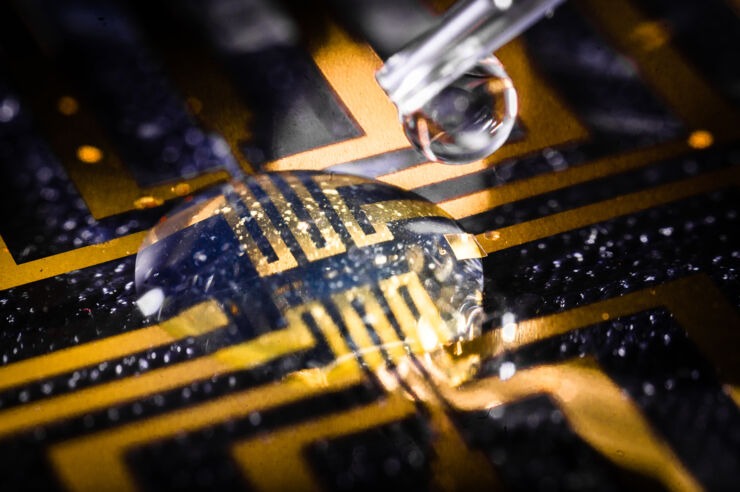
    The conductivity of the injectable gel is tested on a microfabricated circuit.The conductivity of the injectable gel is tested on a microfabricated circuit.

    The conductivity of the injectable gel is tested on a microfabricated circuit. Image credit: Thor Balkhed/Linköping University

    Electronic medicine is a field of research that does not neatly fit into an existing field.

    “Right now you’re talking to a physicist, a chemist and me, who has a background in biomedicine. We work together along with material scientists and electrical engineers to integrate the knowledge from our different fields. For this to work, you need to understand the brain and you need to understand chemistry and physics,” says Hanne Biesmans, PhD student at the Laboratory of Organic Electronics, LOE, at Linköping University.

    The research she refers to is about so-called organic electronics that can be connected to living tissue. The long-term goal is to be able to treat various nervous system and brain diseases. Her colleague Tobias Abrahamsson is a chemist.

    “The interdisciplinary nature of our research, where we combine different aspects and fields of knowledge, is very exciting. You could also say that I have a more personal motivation, as in my family there are diseases that affect the nervous system,” he says.

    Translates between biology and electronics

    But what is organic electronics? And how could it be used to treat diseases – such as epilepsy, depression or Alzheimer’s and Parkinson’s – that are difficult to treat nowadays?

    “In the body, communication takes place through lots of small molecules, such as neurotransmitters and ions. Neural signalling is for example also a wave of ions that gives rise to an electric impulse. So we want something that can take all that information and act as a translator between ions and electrons,” says Xenofon Strakosas, assistant professor with a background in physics.

    In 2023 they managed, together with other researchers at Linköping University, Lund University and the University of Gothenburg, to grow gel electrodes in living tissue.

    “Instead of using metals and other inorganic materials to conduct current, electronics can be created using different materials based on carbon and hydrogen atoms – in other words, organic materials – which are conductive. These are more compatible with biological tissues and therefore better suited to integrate with, for example, the body,” says Tobias Abrahamsson.

    The organic electronic materials are very useful for conducting biological signals, as they can conduct ions as well as electrons. Also, they are soft, unlike metals.
    Electrical brain stimulation is already used to treat some diseases. Electrodes are implanted in the brain, for example to treat Parkinson’s disease.

    “But the implants used clinically today are quite rudimentary; they are based on hard or rigid materials such as metals. And our body is soft. So there’s friction, which could lead to inflammation and the formation of scar tissue. Our materials are softer and more compatible with the body,” says Hanne Biesmans.

    Electrodes inside plants

    As early as some ten years ago, their colleagues at LOE showed that they could make plants suck up a water-soluble substance, which inside the stem of the plant formed a structure that conducts electricity. A kind of electrode, in other words, inside a plant.

    The substance in question is a so-called polymer – a substance that consists of many small similar units that together can form long chains through a process called polymerisation. That time, roses were used and the researchers were able to show that they had created organic electrodes. This opened the door to a new field of research.

    “But a piece was missing. We didn’t know how to make the polymers form inside mammals and in the brain, for example. But then we realised that we could have enzymes in the gel and use the body’s own substances to start polymerisation,” says Xenofon Strakosas.

    The idea led to the researchers now being able to inject the mildly viscous gel-like solution into the tissue. When it comes into contact with the body’s own substances, such as glucose, the properties of the gel changes. And the Swedish researchers were the first in the world to succeed with the method used to activate the formation of electrodes in the tissue.

    “The gel self-polymerises in the tissue and becomes electrically conductive. We let biology do it for us,” says Xenofon Strakosas.

    Also, it remains in the place where it was injected. This is important because the researchers want to be able to control where in the tissue the gel is located. The research team has shown that they can grow electrodes in the brain of zebrafish and around the nervous system of leeches in this way. They are now investigating whether it also works in mice.

    But there is a long way to go before treating diseases with the gel becomes a reality. First, the research team will explore how stable the gel is inside the tissue. Does it break down after a while and what happens then? Another important question is how the conductive gel can be connected to electronics outside the body.

    “It’s not the easiest thing to do, but I hope that over time the method can be used to monitor what happens inside the body, down to the cellular level. Then perhaps we can understand more about what triggers or leads to different diseases in the nervous system,” says Tobias Abrahamsson.

    “There’s a lot left to solve, but we’re making progress,” says Xenofon Strakosas. It would be awesome if we could eventually use the electrodes to read signals inside the body and use them for research or in healthcare.”

    Written by Karin Söderlund Leifler 

    Source: Linköping University


    [ad_2]

    Source link

  • Extra-Time Elation: Spain’s La Roja Edges Past Hosts Germany in EURO 2024 Nail-Biter

    Spain secured a spot in the EURO 2024 semi-finals by defeating Germany with a late header from Mikel Merino. The intense quarter-final match was full of excitement and last minute heroics keeping fans on the edge of their seats until the end.

    The game started with both teams displaying attacking skills, highlighted by Pedri‘s early shot that tested Neuer. Unfortunately, Pedri had to leave the field due to an injury, allowing Dani Olmo to step in and make an impact.

    Throughout the half Spain dominated possession and created scoring chances with Yamal and Olmo getting close to scoring. Germany also showed strength through Havertz‘s header well saved by Unai Simón. The deadlock was broken in the half when Olmo calmly scored a low shot giving Spain the lead and prompting strategic changes, from the German side.

    Julian Nagelsmann‘s tactical changes brought a dynamic to the German offense as Niclas Füllkrug and Florian Wirtz posed challenges for the Spanish defense. Füllkrug’s header and Wirtz’s late equalizer heightened the tension of the game pushing it into time with both teams tied at 1-1.

    The extra period saw opportunities on both sides with Oyarzabal and Wirtz coming to scoring before the crucial moment unfolded. Merinos powerful header from Olmos cross sparked jubilation among Spanish fans while breaking German hearts. Despite Carvajal‘s red card Spain managed to secure a hard earned victory solidifying their spot in the semi-finals.

    Dani Olmo’s outstanding performance earned him the Vivo Player of the Match title, with his goal, assist and defensive contributions playing a role in Spain’s triumph. Post game reactions from coaches and players underscored the intensity and spirit of the match, with Luis de la Fuente commending his team’s determination and Nagelsmann acknowledging Germany’s display despite defeat.

    The showdown between Spain and Germany, at EURO 2024 will go down in history as a quarter-final clash that epitomized European football at its finest. The game displayed flashes of brilliance, exciting moments and a strong sense of determination, highlighting the beauty and unpredictability of soccer.