
In a coordinated effort to combat human trafficking, Europol hosted an international operational action between 25 and 28 February 2025, bringing together analytical, OSINT and investigative experts from 12 countries, including Ukraine*. The action took place at Europol’s headquarters in The Hague, coinciding with the third anniversary of the start of the Russian war of aggression against Ukraine.The operational action…
Category: News
-
‘A litany of human suffering’ in Myanmar, warns UN rights chief
Addressing the Human Rights Council on Friday, he detailed the devastating toll of the ongoing conflict and economic collapse on civilians – many of whom have been displaced by the fighting.
Earlier in the day the Council discussed the deteriorating situation in South Sudan, having heard a report from rights investigators serving on the Commission on Human Rights in the country.
“Conflict, displacement and economic collapse have combined to cause pain and misery across Myanmar and civilians are paying a terrible price,” Mr. Türk said.
The number killed in violence last year was the highest since the military coup in 2021. Over 1,800 civilians were killed in 2024, many in indiscriminate airstrikes and artillery shelling, with attacks on schools, places of worship and healthcare facilities having become routine.
Mr. Türk condemned the military’s brutal tactics, including beheadings, burnings, mutilations, and the use of human shields. He also noted that nearly 2,000 people have died in custody since the coup, most due to summary executions and torture.
Deepening humanitarian crisis
Fighting between the junta forces and opposition armed groups has fuelled a humanitarian catastrophe, with more than 3.5 million people displaced and 15 million facing hunger – two million of whom are at risk of famine.
In Rakhine state, clashes between the military and the Arakan Army have intensified, with thousands of civilians killed and Rohingya communities caught in the crossfire.
Tens of thousands of Rohingya fled to Bangladesh in 2024, despite border restrictions. More than 8,000 fled by sea – an 80 per cent increase over 2023 – but at least 650 people, nearly half of them children, perished on the dangerous journey.
Economic collapse
Myanmar’s economic collapse has fuelled corruption and crime, with one global tracker ranking it the world’s biggest nexus of organized crime. It remains the top producer of opium and a major manufacturer of synthetic drugs.
Furthermore, scam centres in eastern Myanmar have become notorious for human trafficking, where victims are coerced into cybercrime and subjected to torture, sexual violence, and forced labour.
Military conscription
Mr. Türk also condemned the junta’s activation of military conscription laws, which have led to arbitrary arrests and forced recruitment, particularly targeting young men and women. Fear of conscription has driven many to flee the country, exposing them to trafficking and exploitation.
“Given the humanitarian, political and economic impacts fuelling instability across the region, the international community must do more,” Mr. Türk underscored.
He reiterated his call for an arms embargo, coupled with targeted sanctions – including on jet fuel and dual-use goods – to better protect the people of Myanmar.
He also stressed the need for accountability, citing efforts at the International Criminal Court (ICC) and the International Court of Justice (ICJ) to hold Myanmar’s military leaders accountable for atrocities.
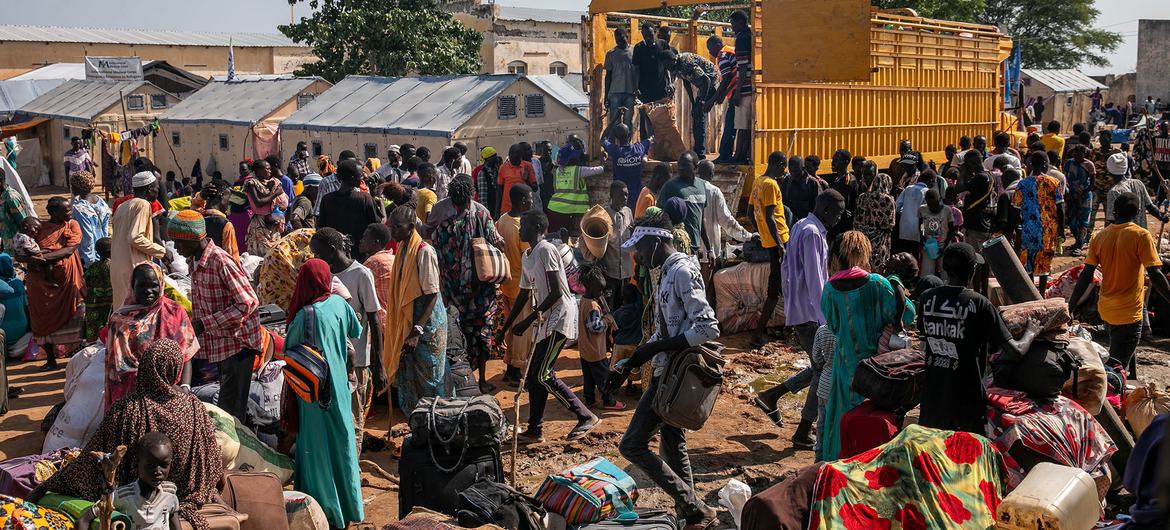
Displaced South Sudanese people arrive at a camp in Upper Nile State. (file)
South Sudan: Leaders failing their own people
The UN Commission on Human Rights in South Sudan presented its latest report to the Human Rights Council earlier in Geneva, detailing widespread violations, including extrajudicial killings, forced recruitment of children and systematic sexual violence.
Despite South Sudan winning independence over a decade ago and repeated commitments to peace during years of civil war, the Commission found that the same patterns of abuses persist, often implicating high-ranking officials.
“It is unconscionable that so many years after its independence, political leaders continue their violent contestations across the country and are abjectly failing the people of South Sudan,” said Yasmin Sooka, Chair of the Commission.
Extreme ethnic violence
The report described the situation in Tambura, where armed forces and militias inflicted extreme violence along ethnic lines in 2024, reigniting tensions from the 2021 conflict.
Political elites at both local and national levels have actively fuelled this violence while remaining in power despite past crimes.
The Commission also raised alarms over the “Green Book” law introduced in Warrap State in 2024, which authorizes extrajudicial executions for suspected cattle raiding and communal violence.
Address corruption
South Sudan’s leaders agreed in September 2024 to extend the transitional political arrangements by two years, citing funding constraints.
The Commission’s report noted that the government generated $3.5 billion in revenue between September 2022 and August 2024, while essential institutions – such as courts, schools, and hospitals – remain underfunded and civil servants go unpaid.
“Financing essential services and rule of law institutions requires an end to the corruption. The theft of national wealth robs citizens of justice, education, and healthcare,” said Commissioner Carlos Castresana Fernández.
“Without addressing this systemic looting, no peace agreement will ever translate into meaningful change,” he added.
The Commission on Human Rights in South Sudan is an independent body mandated by the UN Human Rights Council. First established in March 2016, it has been renewed annually since. Its three Commissioners are not UN staff, they are not paid for their work and serve in an independent capacity.
-
ESMA publishes the results of the annual transparency calculations for equity and equity-like instruments
The European Securities and Markets Authority (ESMA), the EU’s financial markets regulator and supervisor, has today published the results of the annual transparency calculations for equity and equity-like instruments, which will apply from 7 April 2025.
The calculations made available include:
- the liquidity assessment as per Articles 1 to 5 of CDR 2017/567;
- the determination of the most relevant market in terms of liquidity as per Article 4 of CDR 2017/587 (RTS 1);
- the determination of the average daily turnover relevant for the determination of the pre-trade and post-trade large in scale thresholds;
- the determination of the average value of the transactions and the related the standard market size; and
- the determination of the average daily number of transactions on the most relevant market in terms of liquidity relevant for the determination of the tick-size regime.
Currently, there are 1,283 liquid shares and 1,003 liquid equity-like instruments other than shares, subject to MiFID II/MiFIR transparency requirements.
Market participants are invited to monitor the release of the transparency calculations for equity and equity-like instruments on a daily basis to obtain the estimated calculations for newly traded instruments and the four-weeks calculations applicable to newly traded instruments after the first six-weeks of trading.
ESMA’s annual transparency calculations are based on the data provided to Financial Instruments Transparency System (FITRS) by trading venues and approved publication arrangements in relation to the calendar year 2024.
The full list of assessed equity and equity-like instruments will be available through ESMA’s FITRS in the XML files with publication date from 28 February 2025 and through the Register web interface.
Next steps
The transparency requirements based on the results of the annual transparency calculations published from 1 March 2025 for equity and equity-like instruments will apply from 7 April 2025 until 5 April 2026. From 6 April 2027 the next annual transparency calculations for equity and equity-like instruments, to be published by 1 March 2026, will become applicable.
-
Rare Disease Day: an in-depth look at how the European Reference Networks (ERNs) are tackling rare diseases
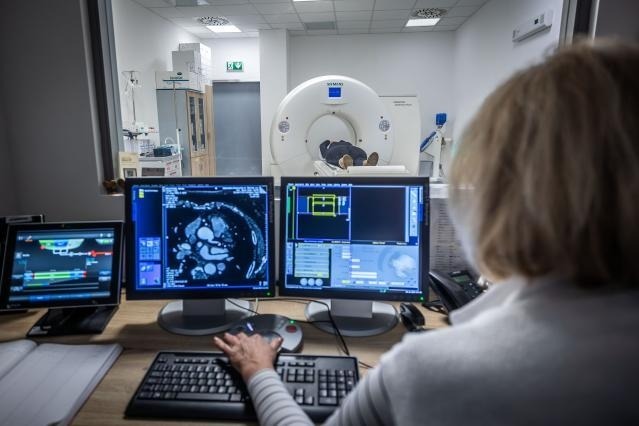
Rare diseases represent a major health challenge for healthcare systems due to the limited knowledge available to diagnose them, the limited number of treatment options (95% of the known rare diseases still lack an approved treatment) and their low prevalence*. That is why rare diseases have been a priority for the European Union over the past two decades, resulting in collective action to facilitate knowledge sharing and access to specialised care for patients.
The EU’s strategic objective for rare diseases is to improve patient access to diagnosis, information and care. It assists in pooling scarce resources spread across the EU, enabling patients and professionals to share expertise and information.
The European response can be characterised by a combination of key elements:
- Setting up and supporting European Reference Networks (ERNs);
- Supporting the definition, codification and inventory of rare diseases;
- Supporting the designation and authorisation of orphan medicinal products;
- Building and broadening the knowledge base, also through research;
- Empowering patient organisations.
ERNs are cross-border networks that bring together European centres of expertise and hospitals to tackle rare, low prevalence and complex diseases and conditions requiring highly specialised healthcare.
ERNs enable specialists in Europe to discuss cases of patients affected by rare, low-prevalence and complex diseases, providing advice on the most appropriate diagnosis and the best treatment available.
On Rare Disease Day, HaDEA interviewed Professor Luca Sangiorgi, Coordinator of ERN BOND, the European Reference Network of Rare Bone Disorders, and Chair of the ERN Coordinators Group, which is the governing board of the 24 ERNs.
- Can you explain the relevance of ERNs in the field of rare diseases?
ERNs gather over 1600 European centres of expertise dealing with rare, low prevalence and complex diseases and conditions which require highly specialised healthcare. Their relevance in the rare disease field resides in the possibility of enabling knowledge exchange and creating common patient pathways and guidelines, which will then be shared with the entire healthcare community. Patient representatives are involved and engaged in all ERNs’ processes, to ensure that their perspective is taken into account in the work of the ERNs.
- The ERNs have been funded by the EU since 2017. What do you consider their main successes?
The main success of ERNs is that they allow patients with a rare disease to have a proper harmonised pathway for diagnosis and treatment. Moreover, ERNs are favouring more homogeneous treatment of patients across participating countries. This is done, for instance, through the ERNs’ virtual discussion tool (CPMS) that allows clinicians to discuss the most challenging cases.
Furthermore, ERN registries, which collect pseudo-anonymised data on patients with rare diseases, are helping to develop a clear picture of the natural history of the various disorders treated by the ERNs. This may one day make it possible to find new treatments for disorders that are currently untreatable. Very few rare diseases have a therapeutic option available and the ERNs registries make a real contribution to the discovery of new treatments.
ERNs have also helped the EU respond to different crises in recent years, such as the COVID-19 pandemic and the Russian’s war of aggression against Ukraine. A framework has been put in place by the Commission for Ukrainian healthcare providers to seek advice from members of the European Reference Networks on Ukrainian rare or complex disease patients. Moreover, the ERNs undertake collaboration activities, capacity building and best practice sharing for competent Ukrainian authorities and healthcare units.
- What are the main objectives and expectations for the ongoing grants?
The main objectives are to stabilise and further increase the opportunities that ERNs are creating for the treatment of patients. We also expect to explore future possibilities for better therapeutic and better care options, such as the use of artificial intelligence.
- What are the main challenges to cross-border cooperation for rare diseases in Europe, and how do the ERN grants help to face these?
There are still some obstacles which hinder effective cross-border cooperation. To face these limits, the ERN coordinators’ group has recently set up specific working groups. At the same time, support to Ukrainian patients has given us a clear example that cross-border cooperation is working. ERNs are not only providing treatments to those patients in countries where they are not available, but are also training referral doctors in order to facilitate knowledge transfer and the implementation of new procedures.
For instance, my hospital, which is part of ERN BOND and is located in Italy, will operate on a patient from another country where the surgical expertise is not currently available. Surgeons from the clinical centre which referred the patient will participate in the surgery after following a specific training. This will allow them to repeat this therapeutic strategy in their home country.
- How important is the support of EU funding for ERNs?
EU funding is essential: without this support, many of the activities I have mentioned would not be feasible. ERNs have received EU funding since their creation in 2017 and a direct grant of more than €77 million is covering their activities for the period 2023-2027.
There are ongoing actions aimed to raise awareness in EU countries of the importance of ERNs as a strategic initiative to support rare diseases patients. This is one of the main objectives of the Joint Action on integration of ERNs into national healthcare systems (JARDIN). The support of the EU to ERNs, by facilitating interaction between EU countries, is essential for the existence of ERNs and for the rare disease community.
* Prevalence: the proportion of a particular population found to be affected by a medical condition at a specific time
Background
HaDEA manages the 24 ERN grants running from 2023 to 2027 with a total EU contribution of €77.4 million. HaDEA also manages the Joint Action on integration of ERNs into national healthcare systems (JARDIN), for a total EU contribution of €15 million.
HaDEA has also managed the contract on the independent evaluation of ERNs: ERNs evaluation results report – Independent Evaluations of European Reference Networks and of Healthcare Providers – European Commission
EU4Health is the fourth and largest of the EU health programmes. The programme provides funding to national authorities, health organisations and other bodies through grants and public procurement, contributing to a healthier Europe.
HaDEA manages the vast majority of the total EU4Health budget and implements the programme by managing calls for proposals and tenders from 2021 to 2027.
-
The Tirana Framework: A New Era in Combating Hate Speech and Promoting Inclusivity
In a landmark initiative to confront the rising tide of intolerance and hate speech globally, The HR30 Forum and The Tirana Framework and Platform have unveiled the Tirana Framework for Confronting Intolerance . This document emerged from the inaugural HR30 conference, Empower Talk! , held in January 2025 in Tirana, Albania. It represents a collective effort by policymakers, civil society leaders, scholars, educators, legal experts, and technological innovators to address one of the most pressing challenges of our time: the spread of hate speech and its impact on democratic norms and human rights.
The Growing Threat of Hate Speech
The Tirana Framework begins with a sobering assessment of the current global landscape. Hate speech, fueled by entrenched biases, misinformation, and divisive rhetoric, poses a significant threat to decades of progress in safeguarding human dignity, protecting human rights, and upholding democratic principles. Anti-rights movements have gained momentum worldwide, exploiting fears about identity, culture, and security to dehumanize marginalized communities. By framing certain groups as “others” or casting human rights issues as threats, these movements distract from complex societal challenges and reduce them to oversimplified narratives that justify discrimination and authoritarian agendas.
This dangerous rhetoric not only deepens societal divides but also undermines trust in democratic institutions, paving the way for authoritarianism and jeopardizing freedoms for all. As noted in the framework, hate speech silences marginalized voices, exacerbates polarization, and erodes social cohesion—issues that require urgent and thoughtful responses grounded in international human rights standards.
Key Goals of the Tirana Framework
The Tirana Framework outlines five key goals designed to mitigate hate speech while safeguarding freedom of expression:
- Adopting a Human-Rights-Centered Approach : Efforts to combat hate speech must adhere to international human rights standards. Policymakers, private organizations, and civil society must work together to ensure that interventions protect free expression while prioritizing the rights of those most affected.
- Understanding the Costs of Hate Speech : Stakeholders are urged to assess and highlight the far-reaching impacts of hate speech on fundamental rights, including freedom of expression, peaceful assembly, equality before the law, and civic participation. Intersectional analyses will help measure the full scope of harm caused by hate speech.
- Investing in Research and Proven Solutions : Resources should be allocated to scaling research into effective interventions addressing hate speech and its root causes, such as systemic discrimination, economic inequality, and historical legacies of exclusion. Education programs, legal reforms, and institutional changes can play critical roles in this process.
- Tackling Structural Inequities and Promoting Belonging : Combatting hate speech requires addressing broader societal inequalities. Fostering a sense of belonging through policies that promote inclusivity and equity is essential to countering the narratives of division.
- Challenging Hate with Targeted Efforts : Governments, civil society, and other sectors must unite to identify, challenge, and reduce the spread of hate directed at individuals or groups based on their identity. Specific attention is given to combating antisemitism, Islamophobia, prejudice against Christian minorities, xenophobia, racism, sexism, and other forms of discriminatory intolerance.
Recommended Actions
To achieve these goals, the Tirana Framework proposes several actionable steps for governments, private sector actors, and civil society organizations:
- Demonstrating Political Commitment : Active political engagement is crucial. Governments are encouraged to implement existing frameworks like UN Human Rights Council Resolution 16/18, the Rabat Plan of Action, and the UN Strategy and Action Plan on Hate Speech. Local authorities must champion these efforts at the grassroots level.
- Building Multi-Sector Alliances : Collaboration across sectors—including public officials, multilateral bodies, community leaders, corporations, media organizations, and civic groups—is vital to reducing hate and promoting inclusion.
- Enhancing Monitoring and Reporting Systems : Effective systems must document the immediate and long-term consequences of hate speech on victims and communities, tracking its effects on democratic engagement, free expression, and social cohesion.
- Expanding Research and Education Efforts : Investment in research is needed to determine which tools and responses are most effective in addressing hate speech. Educational initiatives, counter-speech strategies, emerging technologies, and legal mechanisms should all be assessed within existing frameworks like the Beirut Declaration on Faith for Rights.
- Supporting Victims and Advocating for Accountability : Accessible reporting systems, protection for victims, and meaningful accountability for perpetrators are essential components of any comprehensive strategy against hate speech.
- Increasing Accountability of Technology Platforms : Social media companies must establish transparent mechanisms to identify and address hate speech while respecting free expression. User-friendly reporting tools, clear content moderation policies, and ethical AI systems are necessary to balance safety and freedom online.
- Taking a Proactive Stand Against Hate : States should develop national action plans in consultation with stakeholders, appoint dedicated coordinators, and ensure consistent funding to reduce systemic hate.
A Call for Long-Term Commitment
The Tirana Framework emphasizes the importance of sustained collaboration and capacity-building for grassroots organizations and communities. Providing resources, training, and platforms for dialogue enables local groups to challenge harmful narratives, promote inclusivity, and build resilient, cohesive communities rooted in mutual respect and equality. Establishing a global network to share knowledge, provide training, and engage in collaborative actions will further strengthen these efforts.
By focusing on inclusive leadership and coordinated strategies, the Tirana Framework seeks to protect marginalized groups, strengthen social cohesion, and counter the divisive impacts of hate speech on a global scale. Its publication today by The HR30 Forum and The Tirana Framework and Platform marks an important milestone in the fight against intolerance and a reaffirmation of the universal values of human rights and dignity.
The Tirana Framework serves as both a symbol and a tool for uniting diverse stakeholders under a shared vision of equality, mutual respect, and societal harmony. As we navigate an increasingly polarized world, it offers a roadmap for constructive approaches to address the root causes of discrimination and foster inclusive progress. Through collective action and unwavering commitment, we can create societies where freedom of expression strengthens democracy rather than undermining it—a future where every voice is heard, respected, and valued.
-
Be ready for the next DiscoverEU application round!
Are you 18 years old and a resident of one of the EU Member States or third countries associated to Erasmus+?
Then get ready to explore Europe!
Applications will open on the European Youth Portal on 2 April 2025 at 12:00:00 (midday Brussels time) for two weeks!
Check the European Youth Portal for more info!
-
25 arrested in global hit against AI-generated child sexual abuse material
Most of the arrests were carried out simultaneously on 26 February 2025 during a global operation (Operation Cumberland) led by Danish law enforcement. More arrests are expected in the coming weeks, as the operation is still ongoing.
Results of the operation, so far:
- 273 suspects identified
- 25 suspects arrested
- 33 house searches
- 173 electronic devices seized
The main suspect, a Danish national who was arrested in November 2024, ran an online platform where he distributed the AI-generated material he produced. Following a symbolic online payment, users from around the world were able to obtain a password to access the platform and watch children being abused.
During the course of the investigation, Europol and the Joint Cybercrime Action Taskforce (J-CAT), hosted by Europol, provided operational coordination to the law enforcement agencies involved in the case. Experts from Europol’s European Cybercrime Centre also facilitated information exchanges and provided intelligence and operational analysis to national investigators.
Operation Cumberland has been one of the first cases involving AI-generated child sexual abuse material (CSAM), making it exceptionally challenging for investigators, especially due to the lack of national legislation addressing these crimes. In this regard, EU Member States are currently discussing a common regulation proposed by the European Commission to tackle this new situation and protect children from being sexually abused and exploited.
These artificially generated images are so easily created that they can be produced by individuals with criminal intent, even without substantial technical knowledge. This contributes to the growing prevalence of child sexual abuse material, and as the volume increases, it becomes progressively more challenging for investigators to identify offenders or victims. Law enforcement will need to develop new investigative methods and tools to address these emerging challenges.
Catherine De Bolle
Europol’s Executive DirectorAI-generated CSAM: a serious crime
Online child sexual exploitation remains one of the most threatening manifestations of cybercrime in the European Union and continues to be one of the top priorities for law enforcement agencies, which are dealing with an ever-growing volume of illegal content.
Self-generated child sexual material constitutes a significant share of the CSAM that is detected. AI models able to generate or alter images are being abused by offenders to produce CSAM and for sexual extorsion. Such models are widely available and have developed quickly, with output that now increasingly resembles genuine material, making it harder to identify as artificially generated.
This poses significant challenges to authorities in identifying the real victims. Even in cases when the content is fully artificial and there is no real victim depicted, such as Operation Cumberland, AI-generated CSAM still contributes to the objectification and sexualisation of children.
Europol’s fight against child sexual exploitation
The fight against child sexual exploitation is a priority for Europol. Since 2017, the Agency has led the Stop Child Abuse – Trace An Object initiative, which enables citizens to provide information by recognising objects to help solve a child sexual abuse case. To date, the general public has shared almost 28 000 tips, 30 children have been removed from harm and 6 offenders have been identified and prosecuted.
At the request of EU Member States and other partners, Europol also hosts a Victim Identification Taskforce, a further initiative that allows law enforcement to work together to localise investigations and identify victims. Children in Germany and Australia have already been made safe as a result of this initiative.
Next step: preventing future crimes
Operation Cumberland not only focuses on stopping perpetrators, but also takes proactive steps to prevent further incidents. Europol and its partners will launch an online campaign in the coming days highlighting the consequences of using AI for illegal purposes and targeting potential offenders where they are most active: online. The campaign will use online messages to reach buyers of illegal content, as well as other methods such as knock-and-talks, social media messages and warning letters.
Operation Cumberland demonstrates an ongoing coordinated effort by law enforcement to tackle this threat comprehensively, from arresting criminals to preventing future crimes through education, deterrence and providing support to those who want to seek support or help.
-
Thailand: Statement by the Spokesperson on the deportation of Uyghurs to China
Thailand: Statement by the Spokesperson on the deportation of Uyghurs to China
-
UN agencies condemn Thailand’s deportation of Uyghurs to China
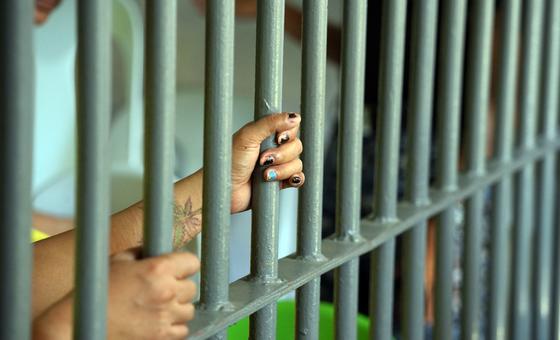
Volker Türk, UN High Commissioner for Human Rights said the forced return of the Uyghurs, who had been detained in Thailand for over 11 years, was deeply troubling.
“This violates the principle of non-refoulement for which there is a complete prohibition in cases where there is a real risk of torture, ill-treatment, or other irreparable harm upon their return,” he said.
Contained in Article 3 of the Convention against Torture, the principle prohibits returning individuals to a country where they face a risk of persecution, torture or ill-treatment. It is also referred to in Article 7 of the International Covenant on Civil and Political Rights, and Article 14 of the Universal Declaration of Human Rights.
The right to seek asylum and of non-refoulement are also enshrined in Article 13 of Thailand’s Prevention and Suppression of Torture and Enforced Disappearance Act, and Article 16 of the ASEAN Human Rights Declaration.
Detained since 2014
The deported men were part of a larger group of Uyghurs who were detained in Thailand in March 2014, after leaving China, bound for Türkiye.
For over a decade, they were held in immigration detention centres under poor conditions.
According to OHCHR, five members of the group have died in custody, while eight others remain detained in Thailand.
Halt further deportations
The UN rights chief also urged the Thai Government to halt any further deportations and ensure the protection of the remaining Uyghurs in detention.
“The Thai authorities must ensure there are no further deportations and the remaining members of the group, including potential refugees and asylum-seekers, being held in Thailand are fully protected in accordance with their obligations under international law,” he added.
UNHCR decries forced returns
UNHCR also condemned the deportation, saying it had repeatedly sought access to the detained Uyghurs and assurances they would not be forcibly returned – a request that has so far been denied.
Ruvendrini Menikdiwela, Assistant High Commissioner for Protection, reiterated that it is a “clear violation” of the non-refoulement principle and the Government’s obligations under international law.
“UNHCR calls on the Royal Thai Government to put an end to the forced return of individuals from Thailand,” she said.
Call for transparency
High Commissioner Türk also urged the Chinese authorities to reveal the whereabouts of the deported Uyghurs.
“It is now important for the Chinese authorities to disclose their whereabouts, and to ensure that they are treated in accordance with international human rights standards,” he said.
-
Human Rights Council: Türk calls out ‘dehumanizing’ narratives on Gaza
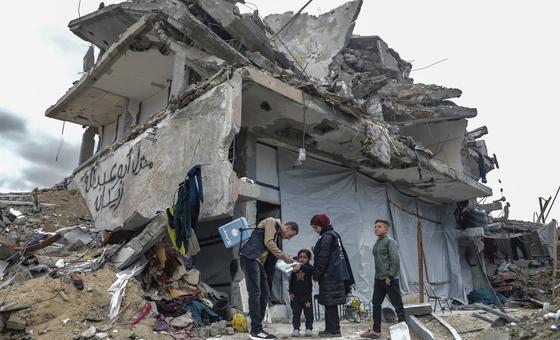
Mr. Türk – making his closing remarks during the session reporting on the Occupied Palestinian Territory at the Human Rights Council – said he was deeply troubled by the “dangerous manipulation of language” and disinformation that surrounds discussions over the Palestine-Israel conflict.
“We need to make sure that we resist all efforts to spread fear or incite hatred, including abhorrent, dehumanizing narratives, whether they’re insidious or explicit,” he said.
“My Office will continue to work for justice for every victim and survivor by establishing and documenting the facts and standing firmly for accountability and the rule of law without exception.”
Eritrean troops continue grave violations in Ethiopia
The rights body then turned its focus to Eritrea on Thursday, where despite some long-awaited progress in improving the lives of ordinary Eritreans, the country’s authorities remain responsible for widespread alleged serious crimes including inside neighbouring Ethiopia, the forum heard.
Ilze Brands Kehris, UN Assistant Secretary-General for Human Rights, said that the Eritrean Defence Forces have continued to carry out grave crimes in Ethiopia’s Tigray region and elsewhere with total impunity.
“Our Office (OHCHR) has credible information that Eritrean Defence Forces remain in Tigray and are committing violations, including abductions, rape, property looting, and arbitrary arrests,” she told the Council, before calling for the immediate withdrawal of Eritrean soldiers.
After a rapprochement between former enemies Eritrea and Ethiopia in 2018, Asmara sent troops to fight alongside Ethiopian federal troops against separatist rebels during the two-year conflict in Tigray, Amhara, Afar and Oromia.
No justice in sight
“In the current context, there is no likely prospect that the domestic judicial system will hold perpetrators accountable for the violations committed in the context of the Tigray conflict and in other cases,” the UN official told the Council, the world’s foremost human rights body.
In a debate seeking to address the Council’s longstanding concerns about Eritrea’s human rights record, Ms. Brands Kehris acknowledged the efforts being made by the authorities in boosting essential health services to more than one million newborns, children and women last year with the help of the UN – and in ratifying the Convention on the Rights of Persons with Disabilities in December.
Conscription abuses continue
However, “serious concerns remain” about Eritrea’s system of indefinite forced military conscription, the UN official continued.
The practice has long been linked to abusive labour, torture and sexual violence which continues to compel young people to escape from the country, Ms. Brands-Kehris insisted.
Furthermore, “the punishment of families of draft deserters remains very common – an inhumane practice, against which no steps have been taken”, she said.
Echoing previous disturbing reports requested by the Human Rights on Eritrea’s rights record, the UN official said that detention without trial “remains the norm” – with many politicians, journalists, religious believers and draft deserters held incommunicado.
There is no evidence that impunity will be tackled for well-documented past human rights violations, the senior UN official said.
In response for Eritrea, Habtom Zerai Ghirmai, Chargé d’affaires a.i. to the UN in Geneva, denied the accusations, calling them exaggerated and misleading.
Sudan: We are looking into the abyss, Türk warns
Next in the spotlight was the plight of Sudan’s war-ravaged people who have been subjected to appalling crimes by all parties to the conflict – some possibly constituting war crimes and other atrocity crimes.
Today, more than 600,000 Sudanese “are on the brink of starvation”, said rights chief Volker Türk. “Famine is reported to have taken hold in five areas, including Zamzam displacement camp in North Darfur, where the World Food Programme has just been forced to suspend its lifesaving operations due to intense fighting.”
Another five areas could face famine in the next three months and 17 more are at risk, he said, calling on all Member States to push urgently for a ceasefire and to ease the suffering of the Sudanese people.
Presenting his Office’s annual report on the situation in Sudan, Mr. Türk noted that the armed conflict between rival militaries that erupted in April 2023 following the breakdown in a transfer to civilian rule had generated “the world’s largest humanitarian catastrophe”.
The High Commissioner’s report details myriad violations and abuses committed in Sudan and underscores the need for accountability.
‘Utter impunity’
“We are looking into the abyss. Humanitarian agencies warn that without action to end the war, deliver emergency aid, and get agriculture back on its feet, hundreds of thousands of people could die,” Mr. Türk insisted.
He added that the spiralling situation in Sudan was “the result of grave and flagrant violations of international humanitarian and human rights law, and a culture of utter impunity”.
“As the fighting has spread across the country, appalling levels of sexual violence have followed. More than half of reported rape incidents took the form of gang rape – an indication that sexual violence is being used as a weapon of war,” Mr. Türk explained.
“Sudan is a powder keg, on the verge of a further explosion into chaos,” said the UN’s top human rights official.
Responding on behalf of Sudan, Minister of Justice Moawia Osman Mohamed Khair Mohamed Ahmed, rejected allegations that the Sudanese Armed Forces (SAF) were responsible for any of the rights violations detailed in the High Commissioner’s report.
Indifferent to suffering
Sudanese civil society representative Hanaa Eltigani described multiple mass killings of civilians attributed to the Rapid Support Forces paramilitaries including in Geneina, their shelling of Zamzan displacement camp in North Darfur and other extreme rights abuses including gang rape and the forced recruitment of children, including South Sudanese refugees.
In addition, the SAF “launched airstrikes and ground assaults, attacking Meneigo and Al-Igibesh villages in West Kordofan, bombing civilian areas in Nyala, South Darfur,” continued Ms Eltigani, Assistant Secretary-General of Youth Citizens Observers Network (YCON), insisting that while the suffering of her country’s people was “met with indifference, the flow of weapons [from abroad] continues unchecked”.
The SAF also carried out executions in Al-Jazira, Ms. Eltigani maintained, “where victims were slaughtered or thrown alive into the Nile”.
Taliban oppression deepens in Afghanistan
Turning to Afghanistan, the Council then heard that the de facto authorities’ oppression and persecution of women, girls and minorities has worsened, with no signs of improvement.
“Some 23 million people, almost half the population, are in need of humanitarian assistance, a situation drastically worsened by the pauses and cuts to international aid,” said Special Rapporteur on Afghanistan Richard Bennett.
The independent rights expert, who is not a UN staff member, warned that left unchecked, the Taliban was likely to “intensify, expand and further entrench its rights-violating measures on the people of Afghanistan, in particular women and girls and likely religious and ethnic minorities”.
“The lack of a strong, unified response from the international community has already emboldened the Taliban. We owe it to the people of Afghanistan to not embolden them still further through continued inaction.”
The Taliban seized power in 2021 and since then have passed a raft of laws that have severely stifled the freedoms of women and girls.
These include banning women and girls from most classrooms, singing or speaking outside their homes, as well as from travelling without a male guardian.
Institutionalised oppression
Women were also barred from studying medicine in December. Windows in residential buildings have also been banned on the grounds that women could be seen through them.
“Afghanistan is now the epicentre of an institutionalised system of gender-based discrimination, oppression, and domination which amounts to crimes against humanity, including the crime of gender persecution,” Mr. Bennett said, presenting his report.
Mr. Bennett urged States to ensure that any normalization of diplomatic ties with the Taliban should be dependent on demonstrated improvements in human rights.
“We must not allow history to repeat itself,” Mr. Bennett said. “Doing so will have catastrophic consequences in and beyond Afghanistan.”
Independent rights experts are not UN staff, receive no salary for their work and are independent of any organisation or government.