
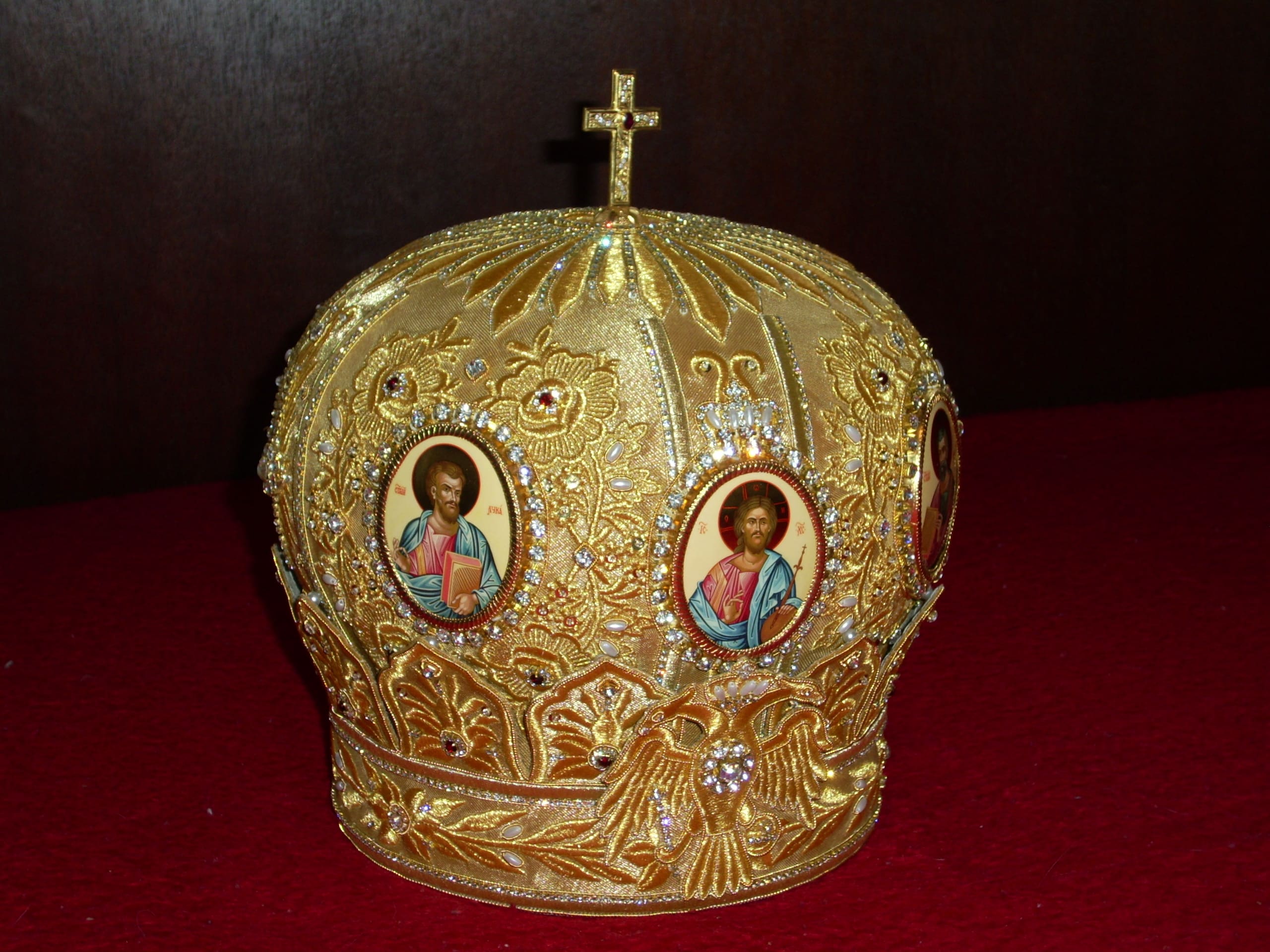
Category: Security and Defense

  • Ecumenical Patriarchate Responds to Russian Services: We Do Not Comment on Insults

    Ecumenical Patriarchate Responds to Russian Services: We Do Not Comment on Insults

    Ecumenical Patriarchate Responds to Russian Services: We Do Not Comment on Insults

    The Ecumenical Patriarchate responded to Russian services that a few days ago publicly accused Ecumenical Patriarch Bartholomew of using “church jargon.” They called the head of the Patriarchate “the devil in the flesh” and “the antichrist” who works against the interests of Moscow and its allies.

    In particular, the Foreign Intelligence Service accused Patriarch Bartholomew of Constantinople of “schismatic activity in the Orthodox church space.” The agency issued a press release on January 12, calling Bartholomew “the antichrist in a cassock” and “the devil in the flesh, obsessed with the idea of ​​pushing Russian Orthodoxy out of the territory of the Baltic states.” Relying on ideological allies in the form of local nationalists and neo-Nazis, he is trying to tear the Lithuanian, Latvian and Estonian Orthodox Churches away from the Moscow Patriarchate, luring their priests and flocks into puppet religious structures artificially created by Constantinople. Russian services claim that he is assisted in this by British special services, which “feed Russophobic sentiments in the countries of Europe.” According to them, the “aggressive appetites” of the Patriarch of Constantinople extend to other European countries. Thus, in the press release, he is also accused of intending to grant autocephaly to the Montenegrin Orthodox Church in order to “deal a blow to the ‘particularly rebellious’ Serbian Orthodox Church” (Source: Press Bureau of the Foreign Intelligence Service of Russia, 12.01.2026).

    The Ecumenical Patriarchate responded to the scandalous characteristics of the Russian services with a statement and indicated that it is aware that the origin of all these attacks is rooted in its interference in the Ukrainian church situation and the granting of autocephaly to the Orthodox Church of Ukraine.

    The response of the Ecumenical Patriarchate states that the mother church expresses its deep sorrow over the targeted attack of the Russian state services against the Ecumenical Patriarch Bartholomew, while at the same time choosing not to take the path of direct confrontation. Fener reminds that it is also the mother church for Russia and connects the escalation of the attacks with the historic decision of 2018 to grant autocephaly to Ukraine.

    “The mother church of Constantinople, which is also the mother of the Russian Church, expresses its deep sorrow over the new Russian attack on the person of His Holiness the Ecumenical Patriarch Bartholomew, which this time was undertaken by the state services of the country”.

    The Ecumenical Patriarchate has consciously taken a position of silence in the face of the countless insults coming from both ecclesiastical and political centers in Moscow – a line it has decided to follow in the present case: “Since 2018, when the Ecumenical Patriarchate took the decision to grant autocephalous status to the Church in Ukraine, the mother church has avoided commenting on the countless similar attacks coming from both ecclesiastical and political centers and individuals in Russia. It holds the same position today.”

    The response of Constantinople focuses on challenging the credibility of the accusations attributed to propaganda mechanisms. At the same time, they send a message in all directions that such practices and insults are not able to discourage the Ecumenical Patriarchate: “Fantastic scenarios, fake news, insults and fabricated information from all kinds of propagandists do not discourage the Ecumenical Patriarchate from continuing its ministry and its ecumenical mission.”

    In Bulgaria, there are also clearly defined political and church circles whose main goal is to always and unconditionally present the Ecumenical Patriarch in a negative light, striving in this way to instill sympathy and support among religious people for Moscow and its policy as the “healthy alternative to Fener”. Their activity increased especially much after the visit of the Bulgarian Patriarch Daniil and metropolitans to Fener and their concelebration with the Ecumenical Patriarch Bartholomew, during which the diptych was the name of the primate of the autocephalous OCU, Metropolitan of Kiev Epiphanius, who is not recognized by the Bulgarian Orthodox Church, is also mentioned.

  • Russian State Arms Trading Company Announces Orders for $60 Billion

    The order portfolio of the Russian state-owned company “Rosoboronexport”, a specialized exporter of Russian weapons, has exceeded 60 billion dollars. This was stated by the CEO of “Rostec” Sergey Chemezov during the opening of the IDEX (International Defence Exhibition & Conference) 2025 arms exhibition in Abu Dhabi National Exhibition Centre (17-21.02.2025).

    Chemezov clarified that he was referring to orders within the framework of “Rosoboroneksport”, and not those of private Russian arms companies.

    Joint Stock Company “Rosoboronexport” (part of the state corporation “Rostec”) is the only state intermediary in Russia for the export and import of the full range of military products, including dual-use ones, technologies and services. The company actively participates in the implementation of the state policy of the Russian Federation in the field of military-technical cooperation with foreign countries.

    The official status of an exclusive state special exporter ensures that “Rosoboroneksport” implements large-scale projects to improve the defense capabilities of foreign partners in the field of international cooperation, as well as the innovative development of enterprises and organizations of the Russian military-industrial complex.

    Photo: The area of the Russian display exceeds 2,000 square metres at the International Defence Exhibition IDEX 2025 in Abu Dhabi, http://government.ru/en/news/54259/

  • Psychotherapist and deacon arrested in Ukraine

    The suspects tried to gather information about the concentration points of Ukrainian military personnel and equipment in Kharkiv

    Kharkov The Security Service of Ukraine (SBU) has detained a psychotherapist and a deacon from the Kharkiv diocese of the Ukrainian Orthodox Church (Moscow Patriarchate), who were spying on the Armed Forces of Ukraine on the orders of Russian intelligence services, Ukrinform reported.

    The suspects tried to gather information about the concentration points of Ukrainian military personnel and equipment in Kharkiv. They also collected personal data of Ukrainian defenders, as well as their travel routes within the city.

    The psychotherapist used his patients, including servicemen undergoing psychological rehabilitation after participating in combat operations, to gather intelligence.

    He enlisted the help of a close acquaintance, a deacon from the Kharkiv diocese, who discreetly tried to obtain information from parishioners. The deacon then passed the information on to the psychotherapist, who compiled the reports and sent them to his Russian courier via messaging apps.

    To communicate with the FSB, the agent used a separate phone and SIM card, which he hid in his mailbox.

    According to the SSU counterintelligence officers, the detained doctor had been a “sleeper agent” of the FSB for some time. In the spring of 2024, the Russian intelligence service activated him to carry out subversive activities in Kharkiv.

    During the searches, mobile phones and computer equipment containing evidence of cooperation with the Russian intelligence service were seized from the detainee.

    The two were held in custody without the right to be released on bail. They face a life sentence with confiscation of property.

    Illustrative Photo by Matti Karstedt: https://www.pexels.com/photo/child-holding-a-placard-11284548/

  • Munich Security Conference: Speech by the High Representative Kaja Kallas receiving the Ewald von Kleist Award

    Munich Security Conference: Kaja Kallas Receives Ewald von Kleist Award for 2025

    Munich, Germany – February 16, 2025 – At the Munich Security Conference (MSC), Estonian Prime Minister and High Representative Kaja Kallas was honored with the prestigious Ewald von Kleist Award for her unwavering commitment to European security and solidarity. The ceremony took place following two days of intensive discussions on global security challenges, with a significant focus on the ongoing conflict in Ukraine.

    Acknowledging Efforts Amidst Ongoing Conflict

    In her acceptance speech, Kallas expressed both gratitude and humility, acknowledging the gravity of the situation in Ukraine. “I’m truly honored and humbled to receive this award,” she stated. “But on the other hand, I can’t help but feel that I don’t deserve it because the war is still going on.” Her remarks highlighted the continued suffering of Ukrainians as the conflict enters its fourth year, emphasizing the urgent need for action.

    The MSC has long served as a platform for addressing critical international security issues, bringing together leaders from around the world. This year’s conference featured key addresses by Ukrainian President Volodymyr Zelenskyy, U.S. Vice President JD Vance, and European Commission President Ursula von der Leyen, underscoring the importance of unity among Western allies.

    Drawing Historical Parallels

    Kallas drew parallels between the current crisis and historical precedents, warning against repeating past mistakes. She referenced the annexation of Czechoslovakia in 1938 as a cautionary tale, stressing the dangers of appeasement. “We have an aggressor at our door intent on taking the land that isn’t his,” she said, adding that negotiators must avoid conceding too early. Observers noted her call for vigilance in protecting sovereignty, not just for Ukraine but globally.

    Kallas emphasized Europe‘s resolve in supporting Ukraine, praising the collective efforts made so far. However, she urged greater urgency, questioning whether enough was being done to end the conflict swiftly. “This war is not just about Ukraine‘s sovereignty; it is about ours, our sovereignty,” she asserted, calling for increased pressure on Russia to withdraw its troops and cease hostilities. Attendees recognized her appeal as a reminder of the broader implications of the conflict for global security.

    Dedication to the People of Ukraine

    Concluding her speech, Kallas dedicated the award to the people of Ukraine, whose resilience has inspired many worldwide. “With your permission, I humbly dedicate this award to the Ukrainians,” she declared, drawing applause from the audience. Her words resonated deeply, reflecting the shared commitment of conference participants to finding effective solutions for peace.

    The Munich Security Conference continues to provide a vital forum for fostering dialogue and collaboration among global leaders. As discussions proceed through February 16th, there is hope that concrete steps will emerge to address pressing concerns, including the enduring crisis in Ukraine.

  • Europe’s New Reality: President Costa Declares Ukraine Key to Lasting Peace

    Europe’s New Reality: President Costa Declares Ukraine Key to Lasting Peace‘No lasting peace without Ukraine and without the EU’: Speech by President Costa at the Munich Security Conference 2025

    At the 2025 Munich Security Conference, European Council President António Costa delivered a compelling speech emphasizing the European Union’s unwavering commitment to Ukraine amidst ongoing geopolitical tensions. Reflecting on the transformative events since Russia’s invasion of Ukraine in February 2022, Costa highlighted the EU’s immediate and robust response, which included humanitarian aid, economic assistance, stringent sanctions against Russia, and unprecedented military support for Ukraine. He underscored that Ukraine’s future lies within the European Union, a sentiment that has only strengthened over the past three years as Ukraine continues its heroic resistance.

    Costa articulated a clear stance on peace negotiations, asserting that only Ukraine can determine the appropriate conditions for such discussions. He cautioned against premature concessions, stating, “Assuming concessions before any negotiations is a huge mistake.” The EU‘s position aligns with Ukraine’s: steadfast support through negotiations, security guarantees, reconstruction efforts, and eventual EU membership. Costa declared, “There will be no credible and successful negotiations, no lasting peace without Ukraine and without the European Union.”

    The President also addressed the broader security implications of Russia’s aggression, noting its influence extends beyond Ukraine to Belarus, Moldova, Georgia, and casts a shadow over the Baltic States and the EU’s eastern borders. He emphasized that a comprehensive peace cannot merely be a ceasefire but must ensure Russia ceases to be a threat to Ukraine, Europe, and international security.

    In response to the evolving security landscape, Costa outlined significant shifts within the EU since 2022: accelerated enlargement to include the Western Balkans, initiation of membership negotiations with Ukraine and Moldova, efforts to strengthen energy security by reducing dependence on Russian energy, and a collective move towards bolstering European defense capabilities. He highlighted that EU countries in NATO now spend, on average, 2% of their GDP on defense, meeting established targets. Costa affirmed, “The European Union is a peace project by design. But we know that peace without defense is an illusion.”

    The speech underscored the EU’s evolution into a more assertive geopolitical entity, prepared to take decisive action to ensure peace and stability in Europe. Costa’s remarks reinforced the EU’s role as a reliable partner committed to supporting Ukraine and upholding the principles of sovereignty and international law.

  • EU Condemns So-Called Presidential Elections in Georgia’s Breakaway Region of Abkhazia

    Georgia: Statement by the Spokesperson on the so-called presidential elections in the Georgian occupied breakaway region of Abkhazia

    Brussels, February 15, 2025 – The European Union has reaffirmed its unwavering support for Georgia’s territorial integrity following the so-called presidential elections held in the occupied breakaway region of Abkhazia on February 15.

    In a statement issued by the European External Action Service (EEAS), the EU reiterated that it does not recognize the legitimacy of the electoral process in Abkhazia, stressing that the elections were conducted outside the framework of Georgia’s constitutional and legal order.

    “The European Union supports the territorial integrity and sovereignty of Georgia, as recognised by international law. Regarding the so-called presidential elections that took place in the Georgian occupied breakaway region of Abkhazia on 15 February 2025, we recall that the European Union does not recognise the constitutional and legal framework in which they took place,” the statement read.

    The contested region of Abkhazia has remained under Russian influence since the early 1990s, with Moscow recognizing it as an independent state following the 2008 Russia-Georgia war. However, the international community, including the EU, continues to view Abkhazia as an integral part of Georgia.

    The EU has pledged to continue its policy of non-recognition and engagement, which involves diplomatic efforts to maintain dialogue and support Georgia’s sovereignty.

    This latest electoral event is expected to further strain relations between the EU and Russia, with Brussels likely to increase its calls for conflict resolution through peaceful negotiations and respect for international law.

    As tensions persist in the South Caucasus, Georgia continues to seek greater integration with Western institutions, including the EU and NATO, while Moscow maintains its military and political backing of Abkhazia and South Ossetia, another breakaway region.