Category: United Nations

  • World News in Brief: Winter attacks in Ukraine, looming food aid cuts in Nigeria, drought in Kenya

    World News in Brief: Winter attacks in Ukraine, looming food aid cuts in Nigeria, drought in Kenya

    World News in Brief: Winter attacks in Ukraine, looming food aid cuts in Nigeria, drought in Kenya

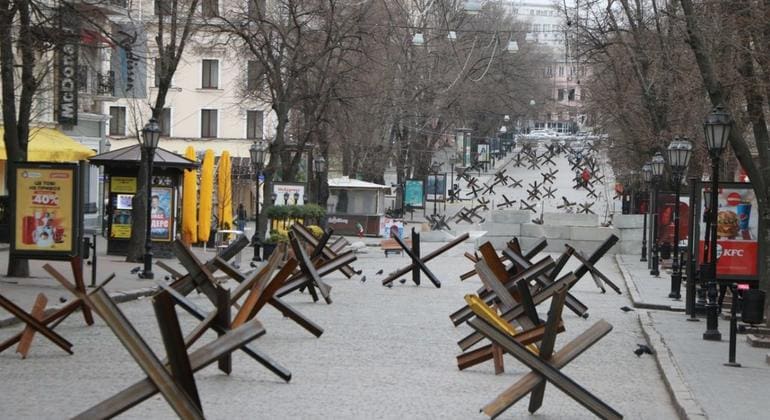
    They include attacks in Odesa region on Wednesday that killed a 17-year-old boy, according to UN child rights agency UNICEF which called for an “end to attacks on civilian areas and the infrastructure children rely on.” 

    The UN Office for the Coordination of Humanitarian Affairs (OCHA) reported that attacks on the southeastern city of Kryvyi Rih on Wednesday had recommenced on Thursday. 

    Aid deliveries 

    “Teams delivered shelter materials to cover damaged homes and provided protection services to the affected residents,” OCHA said in a tweet, stressing that “the cold weather is worsening the needs, requiring urgent aid.” 

    Russia continues to target energy infrastructure in Ukraine, knocking  out heat, electricity and water supply, UN human rights chief Volker Türk said on Tuesday. 

    “Civilians are bearing the brunt of these attacks. They can only be described as cruel. They must stop,” he said. 

    Nigeria: Looming food aid cuts put one million at risk 

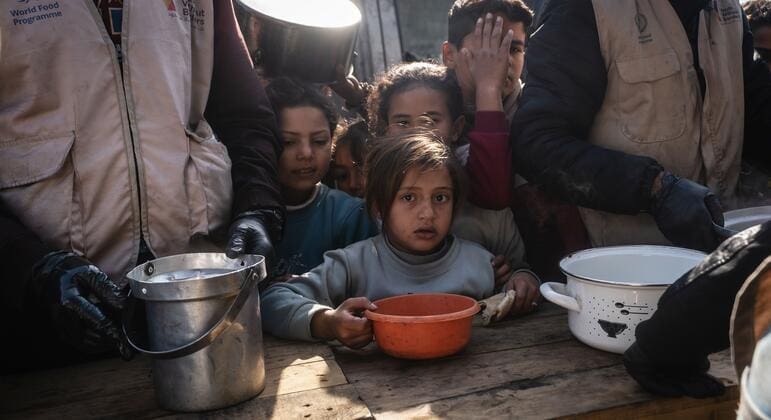
    More than a million people in northeast Nigeria could lose emergency food and nutrition assistance unless funding can be found “within weeks”, the World Food Programme (WFPwarned on Thursday. 

    Nigeria is facing one of the worst hunger crises in recent times, with nearly 35 million people projected to face acute and severe food insecurity during the lean season. 

    They include roughly 15,000 people in Borno state who risk falling into catastrophic hunger, which is one step away from famine. These are the worst levels of hunger recorded in a decade, WFP said.  

    The crisis is unfolding amid renewed violence in the north which has devastated rural communities, displaced families and destroyed food reserves. 

    ‘Catastrophic’ consequences 

    “Now is not the time to stop food assistance,” said David Stevenson, WFP’s Nigeria Country Director.  

    He warned of “catastrophic humanitarian, security and economic consequences” for Nigeria’s most vulnerable people, who had been forced to flee their homes in search of food and shelter.   

    WFP is urgently seeking $129 million to sustain its operations in the northeast over the next six months, warning that this work could shut down unless funds are received.   

    People living in Turkana in northern Kenya are dealing with the impact of drought.

    People living in Turkana in northern Kenya are dealing with the impact of drought.

    Kenya drought impacts over two million people 

    More than two million people in Kenya are facing worsening food insecurity in the wake of the October to December 2025 rainy season – among the driest on record, the World Health Organization (WHOsaid on Thursday. 

    The prolonged drought has led to rising malnutrition rates, increased risk of disease outbreaks and disrupted access to essential health services. 

    Regional drought 

    The impacts are also being felt in neighbouring Somalia, Tanzania and Uganda, where millions more people are at risk due to similar weather patterns and water shortages. 

    In Kenya, 10 counties are currently experiencing drought conditions, one of which is in the “alarm” phase. Furthermore, another 13 counties in the Arid and Semi-Arid Lands (ASAL) regions are showing signs of drought stress. 

    While severe, the emergency was part of a known seasonal risk, WHO said.  The UN agency has supported the Kenyan authorities including by providing cholera kits, pneumonia kits and essential supplies, as well as pre-positioning equipment in high-risk counties before the drought intensified. 

    WHO stressed the need to mobilize urgently to ensure both people and livestock have access to adequate food supply and safe water, and to prevent the situation from worsening. 


    Source link

  • Cold kills another infant in Gaza as West Bank displacement intensifies

    Cold kills another infant in Gaza as West Bank displacement intensifies

    Cold kills another infant in Gaza as West Bank displacement intensifies

    The baby girl – just three months old – was found frozen to death on Tuesday morning at her home in Gaza City, according to media reports. 

    This brings the total number of cold weather deaths this season to nine, UN Deputy Spokesperson Farhan Haq told journalists in New York. 

    In response, the UN aid coordination office OCHA, again called for urgent solutions “including allowing the entry of batteries, solar panels and other energy sources that are needed to set up communal heating spaces.”  

    Thousands receive food aid 

    Humanitarians continue to support Gaza’s population more than three months into the ceasefire and amid ongoing aid restrictions. 

    Since the start of the year, more than 860,000 people have received food packages distributed through 50 distribution points, said Mr. Haq. 

    We also continue to provide some 1.6 million hot meals every day to people in need,” he added. 

    Vaccines, medical evacuations 

    UN partners working in the health sector have vaccinated 3,000 children under three in the first two days of a 10-day routine immunization campaign that began on Sunday.  

    The aim is to further protect young lives from vaccine-preventable diseases.   

    The World Health Organization (WHO) also facilitated another medical evacuation on Monday, transporting 21 patients and their companions to Jordan.  

    However, more than 18,000 patients, including 4,000 children, are still waiting to be evacuated to receive medical care that is not available in Gaza.  

    WHO called for more UN Member States to accept these patients and for the re-opening of the medical evacuation route to the West Bank, including East Jerusalem.    

    West Bank update  

    In other developments: 

    OCHA published its latest West Bank monthly update, which showed that 14 Palestinians were killed and 231 injured there in December. 

    Israeli settlers also carried out 132 attacks during this period that resulted in casualties or property damage, while 246 Palestinians were displaced. 

    Seven Israelis were wounded in the territory, though no fatalities were recorded.   

    The report further documented record-high displacement and settler attacks in 2025. 

    Ammunition, airstrikes and attacks 

    There were 240 Palestinian fatalities, including 55 children, in the West Bank last year. Most deaths, 225, were at the hands of Israeli forces, and nine by settlers.  The remainder were by either of these groups. 

    Three quarters of all fatalities (181) were caused by live ammunition and 17 per cent (41) occurred in air strikes.  Use of other weapons accounted for 18 deaths, or eight per cent. 

    Last year, 3,982 Palestinians were injured, including nearly 700 children, and 37,135 were displaced.  Attacks by Israeli settlers numbered 1,828 resulting in casualties and/or property damage. 

    During the same period, 17 Israelis were killed, including a child and six force members. Another 101 Israelis suffered injuries, with five children and 32 soldiers among them. 

    Palestinian neighborhoods ‘systematically emptied’ 

    Separately, the UN human rights office, OHCHR, warned that the pace of forced displacement of Palestinians in East Jerusalem is accelerating and historic neighbourhoods are being “systematically emptied”. 

    Ajith Sunghay, head of OHCHR’s office in the Occupied Palestinian Territory (OPT), highlighted demolitions and evictions in Silwan neighbourhood south of the Old City. 

    Settlements have also expanded unlawfully in the heart of three of the most significant Palestinian urban centres: East Jerusalem, Ramallah and Bethlehem. 

    Homes taken over 

    Evictions typically result in the transfer of Palestinian homes to Israeli settlers, further eroding Palestinian presence immediately adjacent to the Old City,” he told UN News

    “Some homes are taken over by Israeli authorities to make way for settlement projects which currently include a tourist park with a cable car line that would connect West Jerusalem to the Old City.” 

    A ruling by the International Court of Justice (ICJ) in July 2024 found that Israel’s forced evictions and extensive house demolitions ran contrary to the prohibition of forcible transfer under the Fourth Geneva Convention

    The ICJ – the UN’s principal judicial body – called on Israel to bring to an end its unlawful presence in the Occupied Palestinian Territory. 

    Source link

  • Mozambique floods heighten disease, malnutrition risks – UN agencies

    Mozambique floods heighten disease, malnutrition risks – UN agencies

    Mozambique floods heighten disease, malnutrition risks – UN agencies

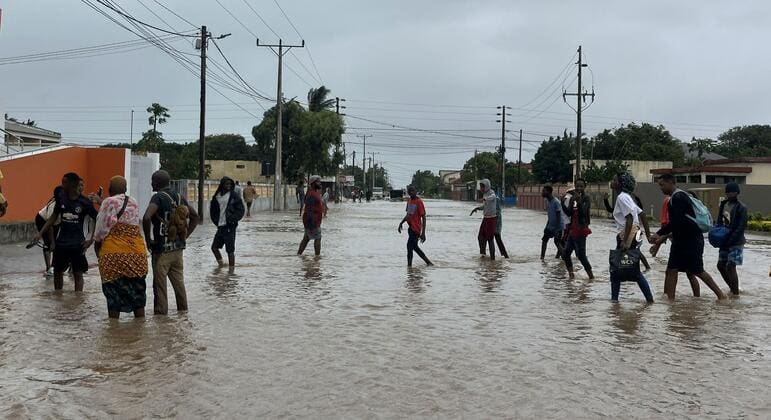
    The head of aid coordination office, OCHA, in the country, Paola Emerson, told reporters in Geneva that more than half a million people have been impacted by the floods, triggered by heavy rains in the first weeks of the new year.

    “The numbers keep rising as extensive flooding continues and dams keep releasing water to avoid bursting,” she said.

    Mozambique’s Gaza province is most affected along with Maputo and Sofala provinces.

    ‘Melting’ houses

    Speaking from Xai-Xai, Gaza’s capital city, Ms. Emerson stressed that 90 per cent of the country’s people live in adobe houses, which are earth-based structures “that basically melt after a few days’ rains”.

    Health facilities, roads and critical infrastructure are also heavily impacted. Ms. Emerson said that some 5,000 kilometres of roads have been damaged across nine provinces, including the main road linking the capital Maputo to the rest of the country, which is currently inaccessible, resulting in major supply chain disruptions.

    Meanwhile, dams continue to release water even as heavy rains subside.

    “From just one dam, up to 10,000 cubic metres-worth of water were being discharged. That is approximately 25 times the amount of water that could be held in the press briefing room you are in today, every second,” Ms. Emerson told journalists, seated in a room with capacity for more than 100 people.

    You cannot imagine the strength of this water and the impact it has on people and the infrastructure.

    National emergency

    The Government of Mozambique has declared a national emergency and has established an emergency operations centre in Gaza province. Xai-Xai, which is near the Limpopo River, has been inundated, prompting evacuations. Ms. Emerson said that authorities have issued alerts for downtown Xai-Xai, “including warnings of crocodile risks in flooded areas”.

    “River levels are rising and are reaching urban areas or heavily populated areas,” she said. “The crocodiles that are in the Limpopo River…are able to get into urban or populated areas that are now submerged underwater.

    Also speaking from Xai-Xai, the UN Children’s Fund (UNICEF)’s Chief of Communication in Mozambique, Guy Taylor, warned that flooding is “turning unsafe water, disease outbreaks and malnutrition into a deadly threat for children”.

    Lethal combination

    The combination of waterborne diseases and malnutrition “can often prove lethal,” he said, stressing that even before the floods, four out of every 10 children in Mozambique experienced chronic malnutrition.

    “This renewed disruption to food supplies, to health services and to care practices threatens to push the most vulnerable children into a dangerous spiral,” he insisted.

    Mr. Taylor added that Mozambique is now entering into its annual cyclone season, creating the risk of a double crisis. “We can prevent disease, deaths and irreversible losses to children, but we need to act fast,” he said.

    The UNICEF spokesperson described Mozambique as “a country of children and young people”, with an average age of 17.

    “When floods and cyclones strike, as they have repeatedly and with increasing frequency over recent years, it’s the youngest and children who are hit hardest,” he concluded.

    Source link

  • Rising hunger and displacement pose growing economic risk, UN tells Davos

    Rising hunger and displacement pose growing economic risk, UN tells Davos

    Rising hunger and displacement pose growing economic risk, UN tells Davos

    The UN World Food Programme (WFP) has reported that an estimated 318 million people worldwide now face crisis levels of hunger or worse, with hundreds of thousands already experiencing famine-like conditions.

    It cautioned that deep funding shortfalls are forcing it to cut rations and scale back assistance at a time of surging needs.

    Current forecasts put WFP’s funding at just under half of its required $13 billion budget for 2026, leaving the agency able to reach about 110 million people – a third of those in need.

    Combatting hunger yields dividends

    “Hunger drives displacement, conflict, and instability and these not only threaten lives, but disrupt the very markets that businesses depend on,” said Rania Dagash-Kamara, WFP Assistant Executive Director for Partnerships and Innovation.

    “The world cannot build stable markets on a foundation of 318 million hungry people.”

    Ms. Dagash-Kamara, who is attending the forum, said the private sector has a direct stake in addressing food insecurity, calling on companies to invest in supply chains, technology and innovation that can help stabilize fragile markets and protect workforces.

    WFP is urging business leaders in Davos to keep hunger and food security among their top priorities, invest in supply chain systems that strengthen fragile markets, and support food-related technologies that improve efficiency and resilience.

    A woman in Sange, Uvira Territory, Democratic Republic of the Congo, carries a box of WFP's High Energy Biscuits on her head after receiving emergency food aid for displaced families.

    Displaced families in South Kivu, Democratic Republic of the Congo, receive food aid. (file photo)

    Migration powers growth and development

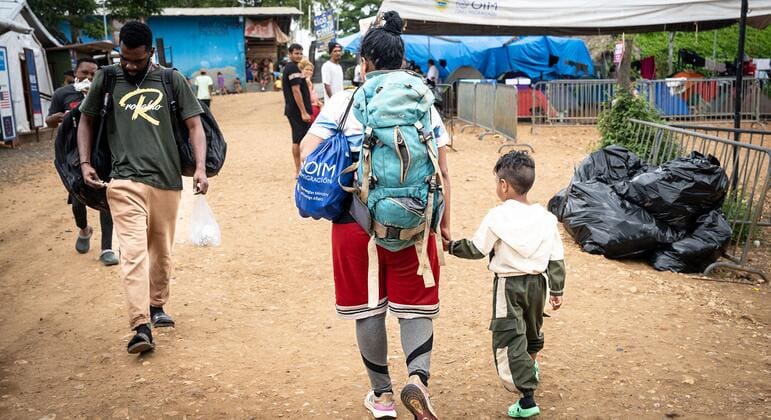
    The UN International Organization for Migration (IOM) is also taking its case to the annual forum in Switzerland, calling on political and business leaders to rethink migration as a driver of growth rather than a burden.

    Migration is one of the most powerful drivers of development when managed responsibly,said IOM Director General Amy Pope.

    “Mobility can unlock economic potential, help communities thrive independently, and provide lasting solutions to displacement, while respecting national sovereignty and human rights.”

    Partnerships and innovation

    IOM said partnerships with private companies and foundations are already helping realise that approach.  

    This includes using artificial intelligence to improve health screening and labour market policies, and programmes that support vocational training, entrepreneurship and durable solutions for displaced people.

    At Davos, the agency is also highlighting the role of diaspora communities as investors and innovators.

    “By using remittances and diaspora capital to support business creation and digital financial access, IOM aims to open new markets and create jobs, while helping communities become more self-reliant,” the agency said.

    Other senior UN officials attending the forum include President of the General Assembly Annalena Baerbock; WHO chief Tedros Adhanom Ghebreyesus; Alexander De Croo, Administrator of the UN Development Programme; UN High Commissioner for Refugees Barham Salih; and Rafael Mariano Grossi, Director-General of the International Atomic Energy Agency.

    Source link

  • UNRWA headquarters bulldozed in East Jerusalem

    UNRWA headquarters bulldozed in East Jerusalem

    UNRWA headquarters bulldozed in East Jerusalem

    Responding to the dramatic development, head of the UN agency for Palestine refugees Philippe Lazzarini described it as an “unprecedented attack” against the UN, whose premises are protected under international law.

    The move represents “a new level of open and deliberate defiance of international law, including of the privileges and immunities of the United Nations, by the State of Israel”, the UNRWA Commissioner-General said on X.

    The same thing could happen to any other organization or diplomatic mission “anywhere around the world”, Mr. Lazzarini warned. “This must be a wake-up call,” he stressed.   

    Human rights chief’s ‘outrage’

    Echoing those concerns, UN High Commissioner for Human Rights Volker Türk expressed his “outrage” at the incident, which marks a sharp escalation of tensions between the Israeli authorities and UNRWA.

    “It compounds what we’ve been seeing for a while; attacking aid groups and UN actors who are trying to help,” said Ravina Shamdasani, spokesperson for the High Commissioner.

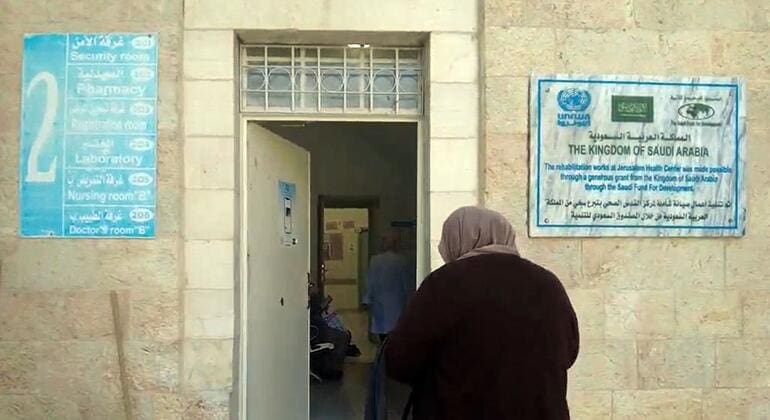
    On 14 January, Israeli forces entered an UNRWA health centre in East Jerusalem and ordered it to close. At the time of the incident, the agency said its workers were “terrified”. In the coming weeks, water and power supplies to UNRWA facilities are scheduled to be cut, including to buildings used for health care and education.

    “This is a direct result of legislation passed by the Israeli parliament in December, which stepped up existing anti-UNRWA laws adopted in 2024,” Mr. Lazzarini said.

    Previously, UNRWA premises have been targeted by arsonists amid a “large-scale disinformation campaign” against it by Israel, the agency’s Commissioner-General maintained.

    This was despite a ruling last October by the UN’s top court, the International Court of Justice, which restated that Israel was obliged “to facilitate UNRWA’s operations, not hinder or prevent them. The court also stressed that Israel has no jurisdiction over East Jerusalem,” Mr. Lazzarini noted.

    “What happens today to UNRWA will happen tomorrow to any other international organisation or diplomatic mission, whether in the Occupied Palestinian Territory or anywhere around the world,” he continued. “International law has come under increasing attack for too long and is risking irrelevancy in the absence of response by Member States.”

    Source link

  • Yemen: Children are dying and it’s going to get worse, warns aid veteran

    Yemen: Children are dying and it’s going to get worse, warns aid veteran

    Yemen: Children are dying and it’s going to get worse, warns aid veteran

    “The simple narrative is, children are dying and it’s going to get worse,” said Julien Harneis, UN Resident and Humanitarian Coordinator in Yemen. “My fear is that we won’t hear about it until the mortality and the morbidity significantly increases in this next year.”

    The alert follows an attempt by forces affiliated with the Southern Transitional Council (STC) to expand their presence in the resource-rich and strategically important eastern governorates of Hadramout and Al Mahra, a move reportedly reversed earlier this month by Government-aligned forces backed by Saudi Arabia.

    The latest crisis comes after well over a decade of fighting between Houthi-led forces – who control the capital, Sana’a – and the internationally recognized government in Aden, backed by a Saudi-led military coalition. 

    Complex operating environment

    “It’s an extraordinarily complicated situation,” Mr. Harneis told journalists in Geneva. “Just in the last month in Aden, we went through a situation where you have the Government of Yemen in charge, then over 48 hours, the Southern Transitional [Council] situation took over the whole of the Government of Yemen areas, including areas they’ve never been in.”

    Just four weeks later, however, a delegation from the STC released a statement while in Riyadh, Saudi Arabia, announcing that they had in fact “dissolved” their movement, allowing the Government in Yemen to retake the recently captured areas. “But at the same time, we’ve got demonstrations in Aden saying that, ‘No, we’re not [disbanded], we’re still there,’” Mr. Harneis explained.

    Last week, UN Special Envoy for Yemen Hans Grundberg told the Security Council that this latest political and security upheaval underscored how quickly stability could unravel without a credible, inclusive political process to bring a negotiated end to the debilitating war.

    Securing a peaceful future for the people of Yemen and providing lifesaving help has also been complicated by the ongoing detention of UN staff and diplomatic workers, among others, by Houthi rebels, who are backed by Iran and control Sana’a. 

    Mr. Harneis described the torment for the families of the 69 staff members still being held: “It’s terrible for them; some families haven’t seen their loved ones in five years. They don’t know the conditions of their detention, they don’t know where they are, they don’t know if they’re going to be sentenced to death in the coming days.”

    Millions going hungry

    Latest UN data shows that more than 20 million Yemenis – about half the population – will face acute food insecurity next month, while tens of thousands could face famine-like conditions.

    “We are expecting things to be much worse in 2026,” Mr. Harneis said.

    A young boy is carried by his mother thorough their neighbourhood in Al Hawtah, Lahj Governate in Yemen.

    A young boy is carried by his mother thorough a neighbourhood in Al Hawtah, Lahj Governate in Yemen.

    The country’s health system is also collapsing. More than 450 facilities have already closed and thousands more are at risk of losing funding. Vaccination programmes are also under threat and only two-thirds of Yemen’s children are fully immunised, largely owing to a lack of access in the north.

    “The way that economic and political decisions are playing out…food insecurity is only getting worse across all parts of the country”, the UN aid official maintained.

    “We’re going to see a major change where the health system is not going to be supported in the way it has been in the past.”

    Despite access restrictions, UN partners reached 3.4 million people with food assistance last year, along with emergency support during floods and disease outbreaks. 

    The UN has been working in Yemen since the 1960s, helping to make development gains and protect the country’s most vulnerable people. “And then suddenly in the last couple of years this breakdown…inexplicably,” Mr. Harneis said. “That has a terrifying effect on the humanitarian workers.”

    Source link

  • World News in Brief: Food insecurity in Lebanon, Libya migrants freed, UNHCR tackles multiple emergencies – despite cuts

    World News in Brief: Food insecurity in Lebanon, Libya migrants freed, UNHCR tackles multiple emergencies – despite cuts

    World News in Brief: Food insecurity in Lebanon, Libya migrants freed, UNHCR tackles multiple emergencies – despite cuts

    According to the latest UN-backed IPC Food Security Phase Classification report, around 874,000 people are facing crisis or emergency levels of acute food insecurity between November 2025 and March 2026. 

    Certain districts and areas have been more severely affected, particularly parts of Baalbek and El Hermel, Akkar, Baabda, Zahle, Saida, Bint Jbeil, Marjayoun, El Nabatieh, Tyre, and refugee communities.

    This is the first assessment to include people who arrived from Syria after December 2024, recognising shifting displacement patterns and new vulnerabilities. 

    Assistance is essential 

    Looking ahead, the situation is expected to worsen rapidly due to a combination of factors, including reduced food assistance, economic pressures, and rising living costs.

    Between April and July 2026, food insecurity will rise to 961,000 people, nearly 18 per cent of the population, according to the IPC report. 

    “People’s needs remain high, and predictable assistance will be essential to help people meet basic food needs and prevent further deterioration.” said Anne Valand, WFP representative and country director in Lebanon. 

    Migrants freed from abusive detention sites in eastern Libya

    The UN migration agency (IOM) has deployed emergency teams to eastern Libya to assist hundreds of migrants released from illegal detention sites where they were held in appalling conditions.

    Libyan authorities last week closed an unlawful detention facility in Ajdabiya, leading to the release of 195 migrants and the recovery of 21 bodies from a nearby burial site. 

    Initial investigations indicate the victims had been held captive and subjected to torture to extort ransom payments from their families.

    Buried underground

    In a separate operation in Kufra, security forces uncovered an underground detention site three metres below ground. 

    A total of 221 migrants and refugees were freed, including women and children, among them a one-month-old baby. At least ten people were transferred to hospital for urgent treatment after being held for prolonged periods in grossly inhumane conditions.

    “These shocking cases highlight the severe risks faced by migrants who fall prey to criminal networks operating along migration routes,” said Nicoletta Giordano, IOM’s Chief of Mission in Libya.

    IOM teams are providing medical screenings, referring urgent cases to hospitals and distributing warm clothing to survivors. 

    The agency welcomed efforts by Libyan authorities to rescue victims and launch investigations, while stressing the need to strengthen protection systems, dismantle trafficking networks and ensure accountability for perpetrators.

    UNHCR responds to mounting crises despite funding shortfalls

    Despite severe funding shortfalls, the UN refugee agency, UNHCR, responded to a surge of complex emergencies and deepening long-running crises last year, according to its newly released 2025 Impact Report: Response to New Emergencies and Protracted Crises.

    Throughout 2025, agency teams provided protection and assistance in some of the world’s most volatile settings. 

    They supported people fleeing renewed violence in eastern Democratic Republic of the Congo into Burundi and Uganda, assisted those escaping fresh fighting in and beyond South Sudan, and helped millions of Afghans returning or being forced back from Iran and Pakistan.

    Protracted crises also worsened. Ongoing conflict in Sudan, intensified attacks on Ukraine and escalating violence in Colombia triggered repeated displacement, further eroding already fragile living conditions.

    Positive response

    “In 2025, displacement occurred amid protracted conflict, recurrent disasters, and new outbreaks of violence,” said Ayaki Ito, UNHCR’s Director of Emergency and Programme Support.

    “In this environment, UNHCR teams continued to respond to the needs of people forced to flee, even as severe resource constraints limited our capacity.”

    Emergency support included clean water for half a million people in Sudan, cash assistance for Afghan and Syrian returnees, and more than a million services for displaced people inside Ukraine and in neighbouring host countries.

    UNHCR warned that humanitarian needs are set to rise further in 2026 as conflicts continue to drive displacement affecting nearly 52 million people.

    You can find additional background on UNHCR’s emergency response work, here.
     

    Source link

  • US Withdrawal from 66 International Organizations Threatens Civil Society and United Nations Operations

    US Withdrawal from 66 International Organizations Threatens Civil Society and United Nations Operations

    US Withdrawal from 66 International Organizations Threatens Civil Society and United Nations Operations

    By :

    Bashy Quraishy :Secretary General – EMISCO -European Muslim Initiative for Social Cohesion – Strasbourg

    Thierry Valle :Coordination des Associations et des Particuliers pour la Liberté de Conscience 

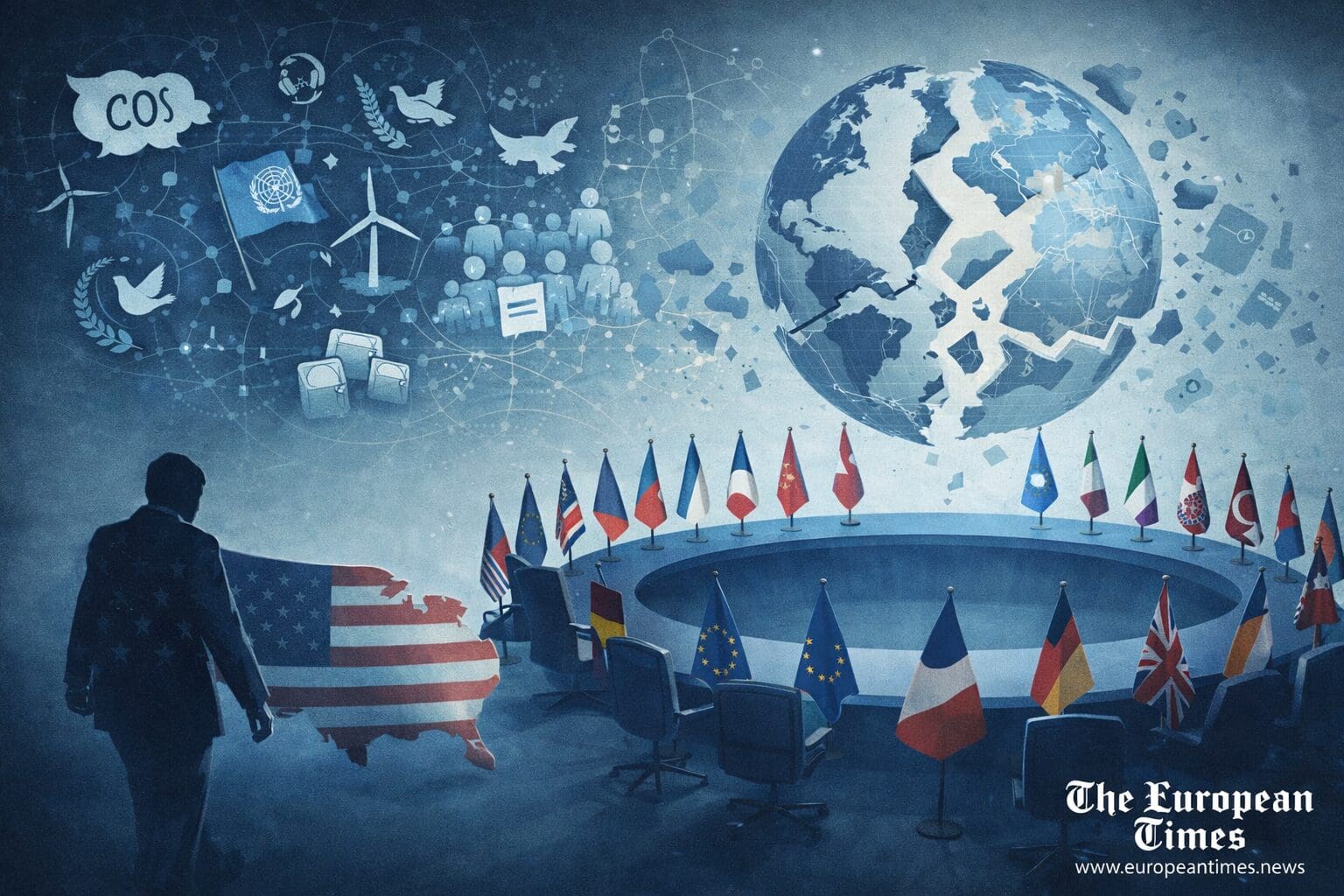
    On January 7, 2026, US President Donald Trump signed a presidential memorandum directing the immediate withdrawal of the United States from 66 international organizations, including 31 United Nations entities and 35 non-UN organizations. This decision represents one of the largest rollbacks of US participation in multilateral institutions in modern history, raising concerns about the future of international cooperation at a time when global stability faces unprecedented threats.

    The Scope of American Disengagement

    According to the White House memorandum titled “Withdrawing the United States from International Organizations, Conventions, and Treaties that Are Contrary to the Interests of the United States,” the withdrawal encompasses organizations that the administration deems “contrary to the interests of the United States.” The directive orders all executive departments and agencies to “take immediate steps to effectuate the withdrawal” as soon as possible. For United Nations entities, this means ceasing both participation and funding to the extent permitted by law.

    The 31 UN entities targeted for withdrawal include critical operational bodies such as the UN Population Fund, UN Entity for Gender Equality, and the Empowerment of Women (UN Women), the Office of the Special Representative of the Secretary-General for Children in Armed Conflict, the Peacebuilding Commission, and the UN Framework Convention on Climate Change. The list also encompasses five regional economic commissions under the Economic and Social Council, covering Africa, Latin America and the Caribbean, Asia and the Pacific, and Western Asia.

    Among the 35 non-UN organizations, the withdrawal affects the Intergovernmental Panel on Climate Change, the International Renewable Energy Agency, the International Solar Alliance, the Global Counterterrorism Forum, the Science and Technology Center in Ukraine, and the International Institute for Democracy and Electoral Assistance. These organizations address issues ranging from climate change and renewable energy to counterterrorism, democracy promotion, and scientific cooperation.

    United Nations Response: Legal Obligations Remain Binding

    In response to the White House announcement, UN Secretary-General António Guterres issued a statement on January 8, 2026, expressing regret over the decision. UN Spokesman Stéphane Dujarric conveyed the Secretary-General’s position during the daily press briefing, emphasizing that “assessed contributions to the United Nations regular budget and the peacekeeping budget, as approved by the General Assembly, are a legal obligation under the UN Charter for all Member States, including the United States.”

    The UN’s response underscored a fundamental legal principle: treaty obligations cannot be unilaterally discarded. Dujarric clearly stated that “contributions to the budget, the regular budget, and the peacekeeping budget are treaty obligations.

    The operative word being obligations; it’s in the Charter. So, Member States who signed, who’ve joined this club have to pay the dues.”

    The United Nations confirmed that the US did not pay its assessed contributions throughout 2025, creating significant financial strain on the organization. Despite this, Dujarric emphasized that “all United Nations entities will go on with the implementation of their mandates as given to us by Member States” and that “the United Nations has a responsibility to deliver for all those who depend on us, and we will continue to carry out our mandates with determination.”

    When pressed about the implications of a permanent Security Council member disregarding legal obligations, Dujarric noted that UN Article 19 stipulates that those countries failing to pay dues for a certain period may lose voting rights in the General Assembly, though this provision does not extend to Security Council participation.

    Financial and Operational Implications

    The withdrawal creates immediate financial pressure on organizations that depend on US contributions. The UN Spokesman acknowledged that the organization has been managing under financial pressure for some time, noting that “the US didn’t pay last year. Other Member States paid later than they had we had expected.” He described the Secretary-General’s financial management responsibilities as requiring him to “juggle financial cash flow, that I think would make the head spin of any CEO or Head of Government.”

    Beyond immediate funding concerns, the withdrawal threatens the operational capacity of entities focused on peacebuilding, humanitarian assistance, gender equality, and protection of vulnerable populations. The Peacebuilding Commission and Peacebuilding Fund, both on the withdrawal list, play essential roles in post-conflict recovery efforts. The Office of the Special Representative of the Secretary-General for Children in Armed Conflict and the Office of the Special Representative on Sexual Violence in Conflict address protection needs in war zones, including current conflicts in Ukraine, Gaza, and Syria.

    The withdrawal from climate-related entities is particularly significant, given the global nature of climate change. The decision affects not only the Paris Agreement—from which the US previously withdrew and rejoined—but the foundational 1992 UN Framework Convention on Climate Change itself. By targeting this Senate-ratified treaty, the administration’s move is expected to face legal challenges regarding the president’s authority to unilaterally withdraw from such agreements.

    Dangers to Peace in an Unstable World

    The timing of this withdrawal raises acute concerns about international stability. The current global landscape is marked by active conflicts in Ukraine and Gaza, tensions surrounding Taiwan, ongoing instability in Syria, humanitarian crises in South Sudan and Yemen, and escalating climate emergencies. In this context, withdrawing from organizations designed to facilitate cooperation, prevent conflicts, and coordinate humanitarian responses potentially undermines the fragile balance that international institutions help maintain.

    The Science and Technology Center in Ukraine appears on the withdrawal list at a moment when Ukraine faces continued attacks on its energy infrastructure. According to UN reports from January 8, 2026, recent strikes across Ukraine left nearly 2 million people without electricity in temperatures near freezing, with attacks described by Dnipro’s mayor as “among the largest combined attacks since the start of the full-scale war.” The center, which facilitates scientific cooperation related to non-proliferation and security, was established specifically to redirect former Soviet weapons scientists toward civilian research.

    Similarly, the withdrawal from peacebuilding mechanisms occurs as the UN documents escalating conflicts. In South Sudan, renewed fighting since December 29, 2025, has displaced approximately 100,000 people, mostly women, children, and elderly individuals. In Syria, the UN Secretary-General expressed grave alarm about escalating hostilities in Aleppo, with tens of thousands displaced and mounting civilian casualties. These situations exemplify the contexts where UN peacebuilding entities work to prevent conflict escalation and support stabilization efforts.

    The UN Democracy Fund and the International Institute for Democracy and Electoral Assistance, both targeted for withdrawal, support democratic institutions and electoral processes globally. Their absence from US support may weaken democratic resilience in countries facing authoritarian pressures or attempting post-conflict transitions.

    International Reactions and Broader Context

    International media coverage has highlighted the unprecedented scale of the withdrawal. Al Jazeera reported that many of the targeted organizations focus on climate, labor, migration, and other issues, the Trump administration has categorized as catering to diversity and “woke” initiatives. The Bulletin of the Atomic Scientists characterized the decision as turning “his back on science, facts, reason,” noting that the administration is moving beyond individual agreements to exit “the entire international framework for climate negotiations.”

    The Press Pad analysis emphasized that the significant changes would lead the US to withdraw from key forums focused on climate change, peace, and democracy. Le Monde covered the decision as part of a broader pattern of American disengagement from multilateral frameworks, placing it in the context of previous withdrawals from the Paris Agreement, the Iran nuclear deal, and the World Health Organization.

    During the UN press briefing, journalists questioned, whether this decision signals the death of multilateralism. Secretary-General Guterres, through his spokesperson refused to write such an obituary, stating that “António Guterres will not write it.” Instead, the UN emphasized that the Secretary-General “strongly believes that the challenges that we face today can only be solved through international cooperation.”

    When asked whether the UN itself has become “à la carte,” Dujarric responded that “the UN is an organization of 193 Member States and two observer States. It is in the interest of all these Member States and the two observers to defend the principles that they themselves have created.”

    Civil Society Under Pressure

    The withdrawal directly impacts civil society organizations that partner with or receive support through UN entities. UN Women, which appears on the withdrawal list, coordinates with thousands of civil society organizations globally to advance gender equality and women’s empowerment. The UN Population Fund works with civil society partners on reproductive health, maternal health, and population data collection. The UN Democracy Fund provides direct grants to civil society organizations working on democratic governance, human rights, and civic participation.

    The Office of the Special Representative on Violence Against Children collaborates with civil society networks to document abuse, advocate for protective policies, and support rehabilitation programs. Its removal from US support may reduce capacity to address child protection in conflict zones and humanitarian emergencies.

    Environmental civil society organizations similarly face challenges with the US withdrawal from entities such as the Intergovernmental Science-Policy Platform on Biodiversity and Ecosystem Services, the International Union for Conservation of Nature, and the UN Collaborative Program on Reducing Emissions from Deforestation. These organizations facilitate scientific research, advocacy, and community-based conservation efforts that depend on international coordination and funding.

    The Role of International Law and Treaty Obligations

    A fundamental question raised by the withdrawal concerns the relationship between national sovereignty and international legal obligations. The UN Charter, which the United States signed and ratified in 1945, establishes specific financial obligations for member states. Article 19 of the Charter states that members in arrears may lose voting privileges in the General Assembly if arrears equal or exceed contributions due for the preceding two full years, unless the failure to pay is due to conditions beyond the member’s control.

    The UN’s legal position is unambiguous: assessed contributions are not voluntary donations but legally binding obligations. The Secretary-General, as the chief administrative officer, lacks authority to waive these obligations or negotiate their reduction. Only the General Assembly, acting collectively, can modify the assessment scale or address non-payment issues.

    The withdrawal from the UN Framework Convention on Climate Change presents additional legal complexity because it is a Senate-ratified treaty. Constitutional questions arise regarding whether the executive branch can unilaterally withdraw from treaties that received Senate advice and consent. Legal scholars note that while some treaties contain explicit withdrawal provisions, the constitutional distribution of treaty-making powers between the executive and legislative branches remains contested.

    Implications for Global Governance

    The withdrawal challenges the post-1945 international order built on multilateral institutions and shared governance frameworks. The United Nations system was designed to prevent the kind of unilateral action that led to World War II, creating mechanisms for collective decision-making, dispute resolution, and coordinated responses to transnational challenges.

    By withdrawing from 31 UN entities, the United States signals a preference for bilateral relationships and ad hoc coalitions over standing multilateral institutions. This approach may offer flexibility but risks fragmenting global responses to problems that transcend national borders, including pandemics, climate change, nuclear proliferation, terrorism, and mass migration.

    The withdrawal from regional economic commissions under ECOSOC affects technical cooperation on trade, infrastructure, and sustainable development. These commissions facilitate regional integration and coordinate development strategies among neighboring countries. The Economic and Social Commission for Western Asia, for instance, addresses reconstruction and development challenges in a region experiencing multiple conflicts and humanitarian crises.

    The International Trade Centre, jointly operated with the World Trade Organization, supports developing countries’ integration into the global trading system. Its presence on the withdrawal list may reduce capacity-building assistance to small and medium enterprises in developing economies, potentially affecting trade diversification and economic resilience.

    Alternative Paths and Future Scenarios

    The UN has emphasized that its work will continue despite the US withdrawal. Secretary-General Guterres, according to his spokesman, “is determined as ever to continue his work and continuing to defend the Charter and continuing to defend this international institution.” The organization is exploring mechanisms to offset funding shortfalls, including increased contributions from other member states, expanded private sector partnerships, and efficiency improvements.

    Several countries have indicated willingness to increase their support for affected UN entities. The European Union, China, and other major economies may expand their financial commitments to maintain operational capacity of programs deemed essential to international stability. However, the scale of US contributions means that full replacement would require substantial collective effort.

    Civil society organizations are mobilizing to defend multilateral institutions and advocate for sustained funding. Amnesty International characterized the withdrawals as “a vindictive effort to tear apart global cooperation,” calling on other countries to strengthen their commitments to international organizations. Networks of environmental, human rights, and development organizations are working to maintain programmatic continuity through alternative funding sources and partnerships.

    The withdrawal also creates opportunities for other countries to assume leadership roles in areas where the US has stepped back. India and France, as co-leaders of the International Solar Alliance, may deepen their engagement to sustain momentum on renewable energy deployment. Regional organizations may expand their mandates to address gaps left by reduced US participation in UN entities.

    Conclusion: A Precarious Balance at Risk

    The decision to withdraw from 66 international organizations represents a fundamental shift in US engagement with multilateral institutions at a moment of acute global instability. With active conflicts in Ukraine, Gaza, and multiple other regions, climate emergencies intensifying, and democratic institutions under pressure worldwide, the reduction of US support for coordinating mechanisms threatens to weaken international capacity to prevent conflicts, respond to humanitarian crises, and address transnational challenges.

    The United Nations’ response—emphasizing legal obligations and determination to continue its mandates—reflects institutional resilience but also highlights the vulnerability of international cooperation to unilateral action by major powers. The organization’s ability to maintain operations depends on other member states fulfilling their commitments and, potentially, expanding their support to compensate for US withdrawal.

    For civil society organizations worldwide, the withdrawal creates immediate challenges in funding, coordination, and political support. Organizations working on gender equality, child protection, peacebuilding, democratic governance, and environmental conservation face reduced resources and diminished international backing for their efforts.

    The coming months will test whether the international community can maintain effective cooperation in the absence of full US participation, whether alternative leadership arrangements can emerge, and whether the multilateral system created after World War II can adapt to a more fragmented global landscape. What remains clear is that the challenges facing humanity—from climate change to armed conflict to humanitarian emergencies—require coordinated responses that transcend national borders and partisan politics. The withdrawal from 66 organizations makes such coordination more difficult precisely when it is most needed.


    Sources

    White House. (2026, January 7). Withdrawing the United States from International Organizations, Conventions, and Treaties that Are Contrary to the Interests of the United States. Presidential Memorandum. https://www.whitehouse.gov/presidential-actions/2026/01/withdrawing-the-united-states-from-international-organizations-conventions-and-treaties-that-are-contrary-to-the-interests-of-the-united-states/

    United Nations. (2026, January 8). Daily Press Briefing by the Office of the Spokesperson for the Secretary-General. https://press.un.org/en/2026/db260108.doc.htm

    Al Jazeera. (2026, January 8). Which are the 66 global organisations the US is leaving under Trump? https://www.aljazeera.com/news/2026/1/8/which-are-the-66-global-organisations-the-us-is-leaving-under-trump

    The Press Pad. (2026, January 8). Why Has the US Withdrawn from 66 International Organisations? https://www.thepresspad.com/post/why-has-the-us-withdrawn-from-66-international-organisations

  • Gaza humanitarian crisis ‘far from being over,’ UN aid coordination office warns

    Gaza humanitarian crisis ‘far from being over,’ UN aid coordination office warns

    Gaza humanitarian crisis ‘far from being over,’ UN aid coordination office warns

    “The humanitarian situation and crisis in Gaza is far from being over,” Olga Cherevko from the UN aid coordination office OCHA said on Friday in an update to journalists in Jerusalem.

    “For the Palestinians in Gaza, their lives continue to be defined by displacement, trauma, uncertainty, and deprivation.”

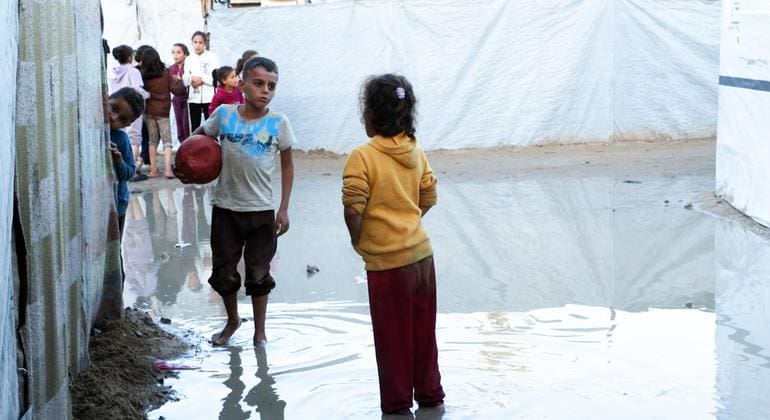
    This has been further compounded by “severe recurrent storms that not only destroy people’s meagre belongings, but they’re also deadly – whether through crumbling buildings or by taking the lives of children who are highly susceptible to the cold”.

    Repairing roads, clearing rubble

    Since the ceasefire between Israel and Hamas, humanitarians have brought in over 165,000 metric tonnes of assistance into Gaza. They also repaired roads, rehabilitated hospitals, cleared rubble, and re-opened aid distribution points.  

    “We celebrated our gains and showed once again that when we’re enabled to do so, we deliver,” Ms. Cherevko said, adding that “the results speak for themselves.”

    During the first two months of the truce alone, over 1.3 million people received food packages, and over 1.5 million hot meals were prepared and delivered to people in need across Gaza, thus improving food security.

    Progress remains fragile

    When torrential floods hit Gaza, putting thousands of families at risk, humanitarians worked with municipalities to find safer options. They also distributed tents, tarpaulins, mattresses and warm clothes.

    “But while this progress is clear, it remains fragile and could be reversed overnight,” she said. “Because airstrikes, shelling, and armed clashes continue with civilian casualties being reported daily. Most of Gaza lies in ruins and the needs far outpace our efforts to meet them.”

    Ms. Cherevko said that “due to various impediments and restrictions placed on organizations operating in Gaza and specific types of supplies that could enter, we could basically only apply Band-Aids to a wound that can only be closed with proper care.”

    The harsh winter storms have also reversed gains made on the humanitarian front “because no amount of tents or tarpaulins can replace repairing people’s homes”.

    Additionally, despite humanitarians re-opening or establishing dozens of health service points, less than 40 per cent of healthcare facilities in Gaza are operational, while educational supplies critical for children who have not gone to school for two consecutive years continue to be barred from entry.

    She also pointed to delays at border crossings, limited humanitarian corridors, delays, and other impediments, as well as restrictions on the operations of UN entities and international NGOs which “are putting lives at risk.”

    A ceasefire ‘is not a recovery plan’

    Ms. Cherevko stressed that “emergency response and its transition to early recovery cannot wait for political solutions. And a ceasefire in itself is not a recovery plan.”

    What humanitarians working in Gaza need “remains very simple,” she said, calling for parties to the conflict to respect the ceasefire, ensure civilians are protected and that humanitarian access remains predictable, sustained and unimpeded.

    Furthermore, restrictions on both aid agencies and critical supplies must be lifted, early recovery must be funded and enabled, and donor support must continue.

    “The choices that are made today, both by the parties to the conflict and the donors will shape whether the pause to this fighting will translate to a path to stability or becomes just another quiet before the next storm,” she said.
     

    Source link

  • Ukraine: Families in ‘survival mode’ amid Russian strikes and deadly cold

    Ukraine: Families in ‘survival mode’ amid Russian strikes and deadly cold

    Ukraine: Families in ‘survival mode’ amid Russian strikes and deadly cold

    “Families have actually reverted to stuffing even soft toys to their windows to block some of the freezing cold,” said Munir Mammadzade, UNICEF Country Representative in Ukraine.

    The alert follows another night of reported attacks against power infrastructure in Zaporizhzhia oblast in the south and Kharkiv oblast in the east which have left many residential areas without electricity and heating.

    The deadly threat of cold caused by attacks on energy networks is becoming a “national-scale emergency…on top of the war”, Mr. Mammadzade told journalists in Geneva during a scheduled briefing.

    Pointing to temperatures of -15°C (5°F) in Kyiv on Friday, the UNICEF official warned that next week could be even colder, while millions of families across the country live without heating, electricity and water supplies

    “Children and families are in constant survival mode because of that,” he said.

    Aid shift

    While the humanitarian focus until now has been on frontline areas, the constant Russian strikes on urban infrastructure including residential areas have highlighted a far more complicated set of needs among people living in apartment blocks. 

    These include Kyiv resident Svitlana “who is doing what she can to care for her three-year-old daughter, Adina”, on the 10th floor of her building. “She told us that she had no heating or electricity for more than three days, and that was in the first week of disruption – we’re already on the second or almost third week – and many families continue to go without,” Mr. Mammadzade said.

    Echoing those concerns from Kyiv, Jaime Wah from the International Federation of Red Cross and Red Crescent Societies (IFRC) noted that although power has been restored “in a matter of days” following previous attacks on Kharkiv and Odesa, the situation appeared more difficult in the capital, where she rubbed her hands to keep warm while talking via video to journalists in Geneva. “In Kyiv, we’re facing a situation for sustained outages and also higher populations affected because of it,” she said.

    Nearly four years since the full-scale Russian invasion of Ukraine, “children’s lives are still consumed by thoughts of survival and not childhood”, UNICEF’s Mr. Mammadzade warned, noting an 11 per cent increase in verified child casualties during 2025, compared to the previous year.

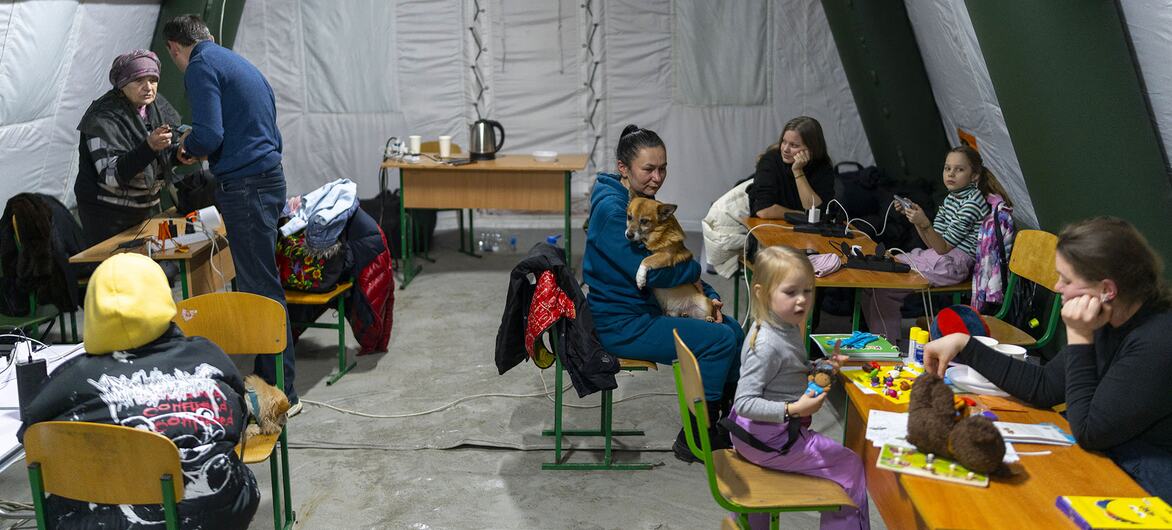
    The agency helps vulnerable people in Ukrainian cities by supporting large communal tents where they can get warm and find games and toys to play with. 

    Families with children gather inside a heated mobile 'Point of Invincibility' tent in Kyiv, Ukraine, during a winter power outage. Parents charge devices and prepare hot drinks while children play with toys and modelling clay, supported by UNICEF Psychological First Aid kits and psychosocial services.

    Families seek warmth and support inside a mobile tent during a winter power outage in Kyiv, Ukraine.

    “Svitlana can’t bathe Arina or prepare hot food, so she wraps her child in multiple layers and navigates 10 floors of the dark stairwell to reach a tent set up outside by Ukraine’s State Emergency Services,” explained Mr. Mammadzade. “There, they can warm up, get hot food, charge devices and speak with a psychologist – or simply sit in the warmth.”  

    The UN Children’s Fund warns that children are especially vulnerable to the physical and mental impact of living in the dark and coping with freezing temperatures which it says can intensify fear and stress “and can lead to, or exacerbate respiratory and other health conditions”.  

    “The youngest are the most vulnerable,” Mr. Mammadzade explained. “Newborns and infants lose body heat rapidly and are at heightened risk of hypothermia and respiratory illness, conditions that can quickly become life-threatening without adequate warmth and medical care.” 

    Source link