Category: United Nations

  • Somalia faces escalating crisis amid drought, conflict and price hikes

    New food security assessments indicate that 4.4 million people – nearly a quarter of the population – could face “crisis” levels of food insecurity (IPC Phase 3 or higher) between April and June 2025, marking a sharp increase from 3.4 million people currently experiencing acute hunger.

    Worsening drought, erratic rainfall and ongoing conflict are eroding livelihoods, pushing families deeper into crisis,” said Etienne Peterschmitt, head of the UN Food and Agriculture Organization (FAO) in Somalia.

    The hunger crisis is expected to be most severe among internally displaced persons (IDPs), pastoralists with limited livestock and farming households that have exhausted their food supplies.

    Consecutive climate shocks

    Somalia has suffered consecutive climate shocks, with below-average rainfall in late 2024 severely reducing crop yields, depleting water sources and leading to livestock losses. The effects of erratic rainfall and riverine flooding in key agricultural areas – such as Hiraan, Middle Shabelle and Middle Juba –further devastated crops.

    As a result, food prices remain high, worsening food insecurity for millions of Somalis already struggling with poverty and conflict-driven displacement.

    According to the latest report by the global food security tracker, IPC, 1.7 million children under five are expected to suffer from acute malnutrition in 2025, including 466,000 with severe acute malnutrition – an increase of 9 per cent compared to last year.

    Nearly two-thirds of these cases are concentrated in southern Somalia, where food insecurity is most extreme.

    Children most at risk

    “Past climate events demonstrate that children are the most affected, facing severe malnourishment and diseases that increase their risk of death and long-term developmental issues,” said Nisar Syed, Officer-in-Charge for the UN Children’s Fund (UNICEF) in Somalia.

    He underscored the need to urgently implement better prevention measures, emphasising a multi-sector approach.

    This must combine immediate humanitarian response with long-term investments in resilience and health systems, he added.

    Multiple pressures

    Somalia’s food crisis is driven by multiple, overlapping factors: the 2024 Deyr rainy season (October–December) brought below-average rainfall, impacting both agropastoral communities and urban dwellers reliant on local food markets.

    The upcoming Gu season (April–June) is also forecast to be drier than normal, raising fears of further crop failures.

    At the same time, conflict and insecurity continue to displace families and disrupt livelihoods. Fighting in central and southern Somalia has hindered access to markets and aid, making it harder for affected communities to access food and basic services.

    Recurrent climate shocks, protracted conflict, disease outbreaks and widespread poverty, among other factors, have aggravated the humanitarian crisis in Somalia,” said Crispen Rukasha, Head of the UN Office for the Coordination of Humanitarian Affairs (OCHA) in Somalia.

    “Aid agencies are doing their best to save lives, but they urgently need adequate funding to meet the most critical needs at this juncture in Somalia,” he stressed.
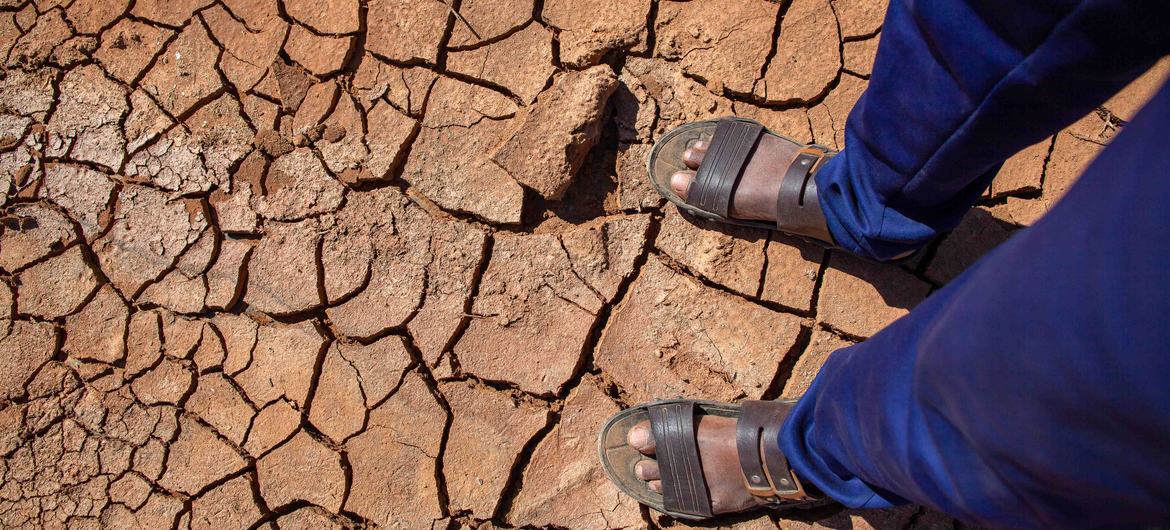
    Droughts are a constant threat in Somalia, in the horn of Africa.

    Droughts are a constant threat in Somalia, in the horn of Africa.

    Action stations

    The agencies warned that without swift intervention, the situation could deteriorate to catastrophic levels.

    Though they are working to scale up food assistance, nutrition and livelihood support, programmes could be forced to scale down or stop altogether amid “critically low” funding.

    The 2025 Somalia Humanitarian Needs and Response Plan, which requires $1.42 billion, is currently only 12.4 per cent funded.

    “Famine was narrowly avoided in 2022 due to large-scale humanitarian support, which is needed again to provide immediate assistance while implementing longer-term solutions,” said El-Khidir Daloum, UN World Food Programme (WFP) Country Director in Somalia.

    “However, funding shortfalls are forcing us to prioritize and reduce assistance at the worst possible time,” he added, urging greater international support.
    Source link

  • Conflict has turned parts of Sudan ‘into a hellscape,’ Security Council hears

    Now more than ever, two years on, the people of Sudan need your action,” Edem Wosornu of the UN humanitarian affairs office, OCHA, said in a briefing to ambassadors on Wednesday.

    “Nearly two years of relentless conflict in Sudan have inflicted immense suffering and turned parts of the country into a hellscape,” she added, listing some of the impacts.

    Fighting between the Sudanese Armed Forces (SAF) and the paramilitary Rapid Support Forces (RSF) has left more than half the country, 24.6 million people, experiencing acute hunger.

    Additionally, more than 12 million are now displaced, including 3.4 million who have fled across the border. Health services have collapsed, millions of children are out of school and relentless patterns of sexual violence have occurred.

    Recent alarming developments

    Ms. Wosornu focused on the latest alarming developments in North Darfur state, including the Zamzam displacement camp, and in Khartoum as well as the south of the country.

    She said eight months after the Council adopted Resolution 2739 (2024), civilians in North Darfur remain under attack. The resolution demanded the RSF stop besieging the state capital, El Fasher.

    Meanwhile, violence in and around Zamzam camp has further intensified. It is estimated that hundreds of thousands of civilians are living there, where famine conditions have been confirmed. 

    She said satellite imagery confirms the use of heavy weaponry in and around Zamzam in recent weeks, and the destruction of the main market facilities there. 

    Terrified civilians, including humanitarian workers, were unable to leave the area when the fighting was most intense. Many were killed, including at least two humanitarian workers,” she added.

    The deteriorating security situation forced the medical humanitarian organization MSF – the main provider of health and nutrition services in Zamzam camp – to halt its operations there, while the World Food Programme (WFP) confirmed suspension of the voucher-based food assistance system.

    Famine conditions were confirmed in Zamzam last August and since then, WFP has managed to transport just one convoy of humanitarian supplies into the camp despite repeated attempts to deliver more.        

    The UN agency warned that without immediate assistance, thousands could starve in the coming weeks. 

    Fierce fighting elsewhere

    Civilians also continue to be directly impacted by ongoing fierce fighting in parts of Khartoum, where the UN human rights office, OHCHR, has verified reports of summary executions of civilians in areas that have changed hands.

    “We remain deeply concerned about the very serious risks faced by local responders and community volunteers, in Khartoum and elsewhere,” she said.

    Ms. Wosornu noted that in southern Sudan, there are reports of fighting spreading into new areas in North Kordofan and South Kordofan states, increasing risks for civilians and further complicating movements of humanitarian personnel and supplies.

    Shocking reports of further atrocities in White Nile state have also emerged, including a wave of attacks earlier this month reported to have killed scores of civilians.

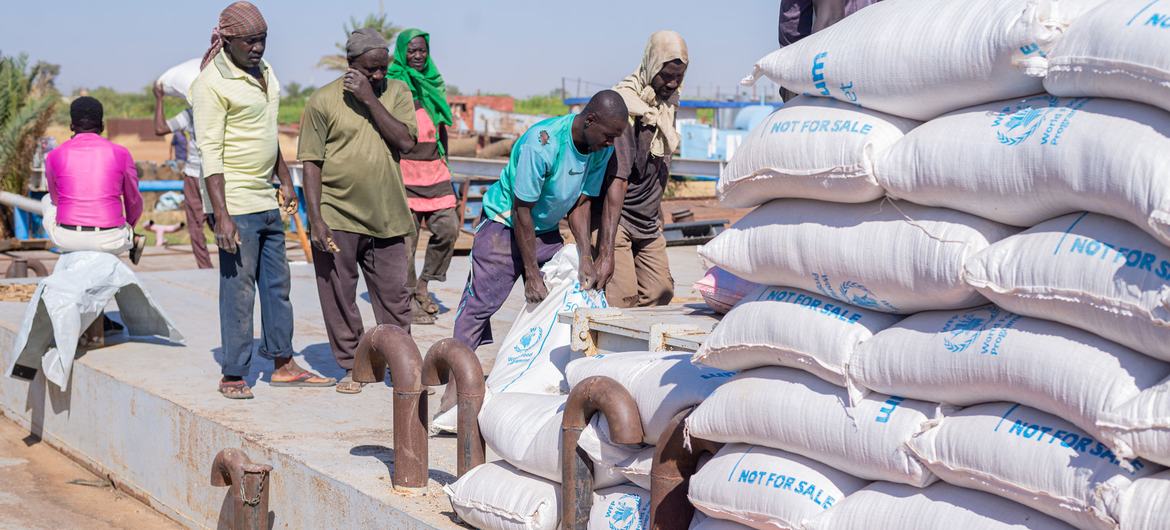
    Sudan. Offloading of barge transported food aid

    Sudan. Offloading of barge transported food aid

    Support humanitarian response

    She recalled that last week saw the launch of the 2025 humanitarian response plans for Sudan and the region. Together they call for $6 billion to support nearly 25 million people in Sudan and up to five million others, mainly refugees, in neighbouring countries.

    She said the international community, particularly Security Council members, must spare no effort to mitigate the crisis.

    Ms. Wosornu concluded her remarks by presenting three “key asks”. 

    “We call on the Security Council – and all Member States with influence – to take immediate action to ensure all actors comply with international humanitarian law and protect civilians and the infrastructure and services they rely on,” she said. 

    Her second request highlighted the importance of access, as “we need real implementation of the repeated commitments to facilitate and enable unhindered, unfettered humanitarian access to civilians in need.”

    Finally, she highlighted the funding shortfall. 

    “The scale of Sudan’s needs is unprecedented and requires an equally unprecedented mobilization of international support, including flexible funding,” she said. 

    Source link

  • Bulgaria hosts of the session of the UNESCO World Heritage Committee

    The Bulgarian government approved funding in the amount of up to 1,890,000 leva to ensure activities related to the organization of the 47th session of the UNESCO World Heritage Committee in the summer of this year. At a cabinet meeting, it was decided that the funds are earmarked for the Ministry of Culture, which will have to coordinate all actions related to the prestigious, but also difficult in terms of organization, event.

    We recall that by a decision taken on July 31, 2024, within the framework of the 46th session of UNESCO in Delhi (India), Sofia was chosen to host the 47th session of the organization from July 6 to 16, 2025, and Prof. Nikolay Nenkov was appointed as the Chairman of the World Heritage Committee. His mandate is until the end of the event in the capital of Bulgaria. His vice-chairmen are representatives of the countries of Belgium, Mexico, the Republic of Korea, Zambia and Qatar. Joel Busuana (Rwanda) was appointed rapporteur.

    The decision for Bulgaria to undertake this extremely serious commitment was made by the caretaker government of Dimitar Glavchev with a decision of 30 July 2024 and was supported by a declaration of all parliamentary groups in the National Assembly.

    Illustrative Photo by Gizem B: https://www.pexels.com/photo/church-of-christ-pantocrator-in-nesebar-bulgaria-16283124/

  • Syria: UN scales up aid deliveries as regional fighting continues

    UN Spokesperson Stéphane Dujarric told journalists at a regular news briefing in New York that aid trucks from Türkiye to Idlib via Bab Al-Hawa are continuing to get through with vital assistance to communities in need.

    “Yesterday, 43 trucks carrying more than 1,000 metric tonnes of food from the World Food Programme (WFP), as well as blankets, solar lamps and other items provided by the International Organization for Migration (IOM) crossed the border,” he said.

    Since the start of the year, nearly 400 trucks have crossed from Türkiye into Syria – five times the number recorded during the same period last year.

    Rehabilitation efforts underway

    Across Syria, humanitarian organizations are working to rebuild infrastructure and restore essential services.

    In northwest Syria, 350 homes have been rehabilitated since last month, while in Damascus and surrounding rural areas, more than 700 people have received support to repair their damaged homes.

    Over the past two weeks, three water stations in Latakia have been restored, providing much-needed access to clean water.

    “We and our partners continue to provide this assistance as security, logistical and funding conditions permit,” Mr. Dujarric added.

    Despite these efforts, “the toll of destruction remains overwhelming”, he added.

    In Aleppo, 34 facilities in former frontline areas have sustained severe damage or complete destruction, requiring urgent rehabilitation to restore healthcare, education, and other essential services.

    Hostilities continue

    While humanitarian assistance is reaching many communities, the fighting continues to take a toll on civilians and restrict aid access in various regions.

    “In eastern Aleppo – including in the vicinity of the Tishreen Dam and the Al-Khafsa water pumping station – and in the south of the country, hostilities have resulted in casualties, as well as restrictions in humanitarian access and movements of people,” Mr. Dujarric said.

    Returns top a million

    Meanwhile, more than one million displaced Syrians have returned home since the fall of the Assad regime in early December last year, according to a recent update from the Office of the UN High Commissioner for Refugees (UNHCR).

    The number includes approximately 292,150 Syrian refugees returning from neighbouring countries, including Türkiye, Lebanon, Jordan, Iraq and Egypt as of 20 February. An additional 829,490 internally displaced persons (IDPs) have also returned to their places of origin.

    UNHCR continues to monitor voluntary returns, offering legal counselling, as well as support with transportation, particularly in Jordan.

    Inside Syria, the agency is delivering protection and humanitarian assistance to refugees moving home and IDPs, including early recovery interventions.

    “In view of the cold winter months and continued electricity shortages, distributions of core relief items and warm winter clothing, as well as urgent shelter repairs, such as new windows and doors, continued to be priority interventions,” UNHCR said.

    Source link

  • West Bank security situation remains alarming, warn UN aid agencies

    The violence has seen exchanges of fire between Israeli troops and Palestinian militants – and the use of bulldozers in refugee camps for the first time in 20 years which have destroyed public services, including vital electricity and water networks.

    Israel’s defence minister said on Sunday forces could remain in the camps for the “coming year”. 

    Philippe Lazzarini, head of the UN’s Palestine refugee agency, UNRWA, said that “fear, uncertainty, and grief once again prevail. Affected camps lie in ruins…Destruction of public infrastructure, bulldozing roads and access restrictions are common place.” 

    More than 50 people including children have been killed since Israeli military raids started five weeks ago, the UN agency said, warning that the West Bank “is becoming a battlefield” where ordinary Palestinians are the first and worst to suffer.

    Lethal force

    Meanwhile, UN aid coordinating office, OCHA, also condemned the “lethal, war-like tactics” being employed by the Israeli military against Palestinian communities in the occupied West Bank.

    OCHA confirmed further civilian casualties and mass displacement after a two-day Israeli military raid in the northern town of Qabatiya in Jenin governorate that ended on Monday.

    Palestinians were detained in the operation, OCHA noted, before reiterating deep concerns about the use of excessive force against civilians and the additional humanitarian needs among people left homeless.

    Responding to needs

    UN partners on the ground are doing their utmost to help people uprooted by the violence despite growing “physical and administrative” challenges, OCHA said.

    According to the UN World Food Programme (WFP), it reached 190,000 people in January with cash assistance and has provided one-off cash assistance to more than 5,000 displaced people from the Jenin refugee camp.

    Gaza cold kills six children

    In neighbouring Gaza, UN and its humanitarian partners have continued to scale up food security and livelihood support, while six children reportedly died from the cold.

    Needs remain enormous amid desperate humanitarian conditions caused by 15 months of constant Israeli bombardment sparked by Hamas-led terror attacks on Israel that left 1,200 dead and some 250 people captured as hostages.

    Citing the Gazan health authorities, OCHA said that six children from the Gaza Strip have died in recent days because to the severe cold, bringing to 15 the total number of youngsters killed by the winter conditions.

    Meanwhile, more than 800 trucks entered the Gaza Strip on Tuesday alone, OCHA said. Since the start of the ceasefire on 19 January, WFP has brought more than 30,000 tonnes of food into Gaza. More than 60 kitchens supported by the UN agency across the Strip have handed out nearly 10 million meals, including in North Gaza and Rafah in the south.

    The biggest aid provider in Gaza, UNRWA, has reached nearly 1.3 million people with flour and reached about two million people with food parcels since the start of the ceasefire.

    The UN Food and Agriculture Organization (FAO) also reported that it has delivered animal feed to northern Gaza for the first time since the escalation of hostilities.

    The aid delivery last week has helped 146 families with livestock in Gaza City alongside another 980 in Deir al Balah.

    Between the start of the ceasefire and 21 February, FAO distributed more than 570 metric tonnes of animal feed across the Gaza Strip to some 2,300 families with livestock.

    OCHA noted in addition that aid partners working in education have identified additional schools in Rafah, Khan Younis and Deir al Balah that were used as shelters for displaced people. “These schools will be assessed and repaired to prepare for their reopening,” it said. 

    Source link

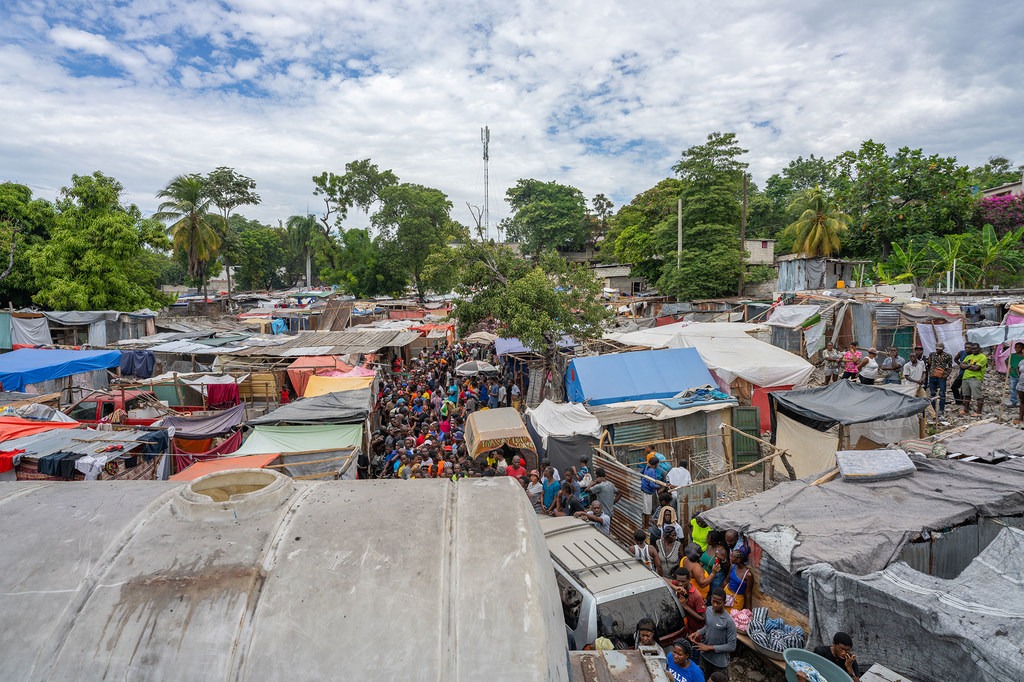
  • Haiti: Gang violence displaces 6,000 people in one month

    Since the end of January, a wave of extreme brutality has led to widespread loss of life and the displacement of over 6,000 people in the capital, Port-au-Prince.

    “We are deeply alarmed and appalled by the unacceptable and inhumane intensity of violence in Haiti,” the Haiti Humanitarian Country Team, which is made up of UN agencies, national and international NGOs and donors, said in a statement.

    Entire families were killed in their homes, while others, including children and babies, were shot dead as they tried to escape.

    The killings follow a massacre last December, when an outbreak of violence in the commune of Cité Soleil in Port-au-Prince led to the execution of more than 200 people by the Wharf Jérémie gang.

    UN condemns attacks on civilian population

    According to the UN, the daily life of many Haitians is marked by violence, fear, exhaustion, hunger, disease and an uncertain future. Women, girls and children are increasingly at risk, particularly that of sexual violence.

    By the end of 2024, violence had claimed the lives of at least 5,600 Haitians and displaced more than a million.

    “We condemn in the strongest possible terms any attack against the civilian population and infrastructure, in this case the one that targeted the hospital of the State University of Haiti on February 13. These acts violate human rights and deprive the most vulnerable of essential vital services,” said Humanitarian Coordinator Ulrika Richardson.

    On the ground, the humanitarian community is showing its determination to continue providing life-saving assistance to millions of children, women and men in vulnerable situations.

    Beyond immediate humanitarian assistance, the agencies are also committed to coordinating efforts with development and peacebuilding actors, so that these collective efforts contribute to sustainable solutions that build community resilience.

    “The mobilization actions of the international community in favour of Haiti will continue in order to guarantee the necessary funding to meet urgent needs and restore the dignity of the affected people,” the Humanitarian Country Team stressed.

    The UN continues to support people who have been displaced by ongoing violence in Haiti.

    The UN continues to support people who have been displaced by ongoing violence in Haiti.

    Humanitarian response plan: Over $900 million to save Haitians on the brink

    An appeal for $908 million to help some 3.9 million Haitians facing food insecurity, in a country where basic services are nearing collapse, has been launched by the UN.

    The Office for the Coordination of Humanitarian Affairs (OCHAreleased the 2025 humanitarian response plan on 19 February, which focuses on addressing acute needs caused by recent events, including armed violence, forced displacement, epidemics, and the consequences of natural disasters.

    The funding is earmarked to tackle Haiti’s profound challenges, including mobile teams to help humanitarians deliver aid, protection against sexual exploitation and abuse, and programmes aimed at supporting the country’s long-term development.

    Source link

  • Success for polio campaign in Gaza while West Bank tensions continue

    The campaign has been extended until Wednesday to ensure full coverage, UN Spokesperson Stéphane Dujarric told journalists at the regular news briefing in New York, citing UN humanitarian coordinators.  

    As of Monday, the third day of the campaign, some 548,000 children had been inoculated, or 93 per cent of the target population.

    Aid efforts continue

    Humanitarian partners have been working to expand aid distribution since the fragile ceasefire began last month.  

    According to latest news reports, the Israeli Government is seeking to extend the first stage of the agreement, threatening to resume fighting without progress in talks this week on phase two.  

    The World Food Programme (WFP) has delivered over 30,000 metric tonnes of food, with more than 60 community kitchens across the Strip distributing nearly 10 million meals.

    Similarly, the UN relief agency for Palestine refugees (UNRWA) has provided food parcels to two million people and flour to 1.3 million.

    The UN Food and Agriculture Organization (FAO) also delivered animal feed in northern Gaza for the first time since the ceasefire, benefiting livestock-owning families in Gaza City and Deir al Balah.

    Efforts are also underway by partner organizations to repair and reopen schools that had been used as shelters for displaced families in Rafah, Khan Younis, and Deir al Balah.

    Biting cold claims lives

    Despite the steady flow of aid, children in Gaza continue to suffer.

    The head of Gaza’s Ministry of Health reported on Tuesday that six children died from the severe cold in recent days, bringing the total number of cold-related child deaths to 15, Mr. Dujarric said.

    Ongoing military operations in the West Bank

    In the West Bank the security situation remains volatile, with Israeli military operations in the north leading to further casualties, mass displacement and destruction of essential infrastructure.

    A two-day military operation in Qabatiya, Jenin governorate, ended Monday, Mr. Dujarric said.

    The operation involved bulldozers and exchanges of fire between Israeli forces and Palestinians, as well as detentions, disruption to electricity lines, water lines, and school closures.

    We once again warn that lethal, war-like tactics are being applied, raising concerns over use of force that exceeds law enforcement standards,” Mr. Dujarric emphasised.

    Source link

  • Ukraine three years on: Pain, loss, solidarity and hope for a better future

    “I’m trying not to cry, but I can’t help it. I’m glad I have tissues on hand,” admits Natalia Datchenko, a Ukrainian staff member of the UN children’s agency, UNICEF, struggling to hold back her tears as she recounts the explosions that awoke many Ukrainians three years ago, heralding the start of the conflict.

    Natalia Datchenko, employee of UNICEF-Ukraine

    Courtesy of Natalia Datchenko

    Natalia Datchenko, employee of UNICEF-Ukraine

    Alongside feelings of shock and anger, Ms. Datchenko also felt a surge of energy. “I knew, with absolute clarity, that I wanted to help others, to protect people. I knew I had to do something,” she recalls.

    UNICEF leadership instructed staff to prioritise their own safety and that of their families before resuming their work. Ms. Datchenko evacuated to Lviv, a city in the west of Ukraine, with her family.

    “There were 12 of us crammed into a small train compartment,” she says. “I held someone else’s child in my arms because there was no place for them to sit. The train moved slowly to avoid being targeted. When we finally arrived, we saw families with children sitting directly on the cold stone floor of the Lviv station. It was February, and it was freezing.”

    Life goes on

    Lyudmyla Kovalchuk, a staff member of the UN Women office in Ukraine, lived near Kyiv International Airport, one of the war’s first targets.

    “We woke up at five in the morning to the sound of explosions,” she explains. “It was shocking. Even though we had heard warnings of an impending invasion, we couldn’t believe it was actually happening.”

    Lyudmyla Kovalchuk, UN-Women Ukraine staff member

    Photo provided by Ludmila Kovalchuk

    Lyudmyla Kovalchuk, UN-Women Ukraine staff member

    After three years, exhaustion has set in but life and work continue. Women in Ukraine need the UN’s support – psychological, legal, logistical and financial. Many Ukrainian women are raising children alone, searching for jobs to support them and constantly moving to keep them safe from the war. Ms. Kovalchuk says that about 75,000 Ukrainian women are serving in the military and represent a group with unique needs that require specific support.

    “We have adapted to working under new conditions,” Ms. Kovalchuk says. “Whenever we arrange to meet somewhere, we check if there is a shelter nearby in case of an attack. We don’t plan long events as the risk of shelling increases the longer we stay in one place. During the pandemic, we learned to work in a hybrid format, and that experience has been invaluable.”

    ‘Hardest part was hearing their stories’

    Anastasia Kalashnyk, another UN Women staff member, used to live in Zaporizhzhia. Two years ago, she relocated to Kyiv with her family. “After 24 February 2022, my children stopped attending daycare and school, and my husband lost his job – the foreign company he worked for immediately shut down operations and left the country,” she says.

    However, Ms. Kalashnyk’s workload increased significantly. Since 2017, she has been responsible for emergency aid provided by UN Women in Ukraine, focusing on women in Luhansk and Donetsk regions. After 2022, many of these women were forced to flee their homes.

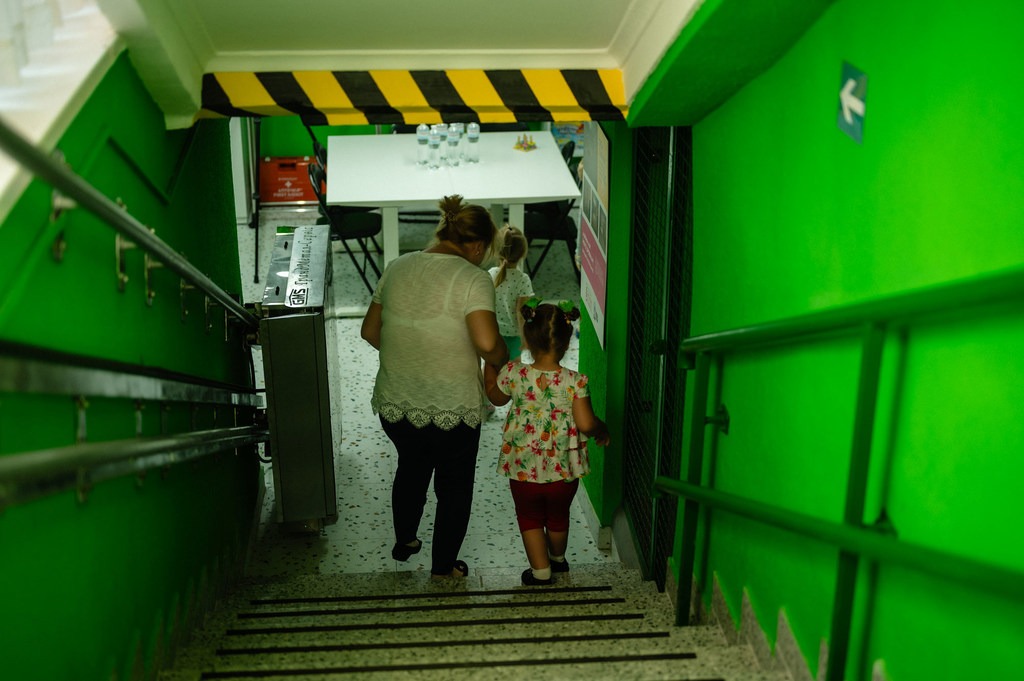
    In a town in Mykolaivska Oblast, a reconstructed kindergarten shelter now provides 200 children with a safe, fully equipped space for learning during frequent air alerts.

    © DRC Ukraine/Svitlana Koval

    In a town in Mykolaivska Oblast, a reconstructed kindergarten shelter now provides 200 children with a safe, fully equipped space for learning during frequent air alerts.

    “Looking back, the hardest part was hearing their stories – women I had known for years – about how they escaped occupied territories and what happened to their husbands who had gone to fight,” she says.

    For these and other Ukrainian women in need, UN Women, in collaboration with local non-governmental organizations (NGOs), established so-called “safe spaces”. These centres provide essential support, allowing women to connect, share experiences and heal.

    “I watched as Olga, one of the women who came to the centre, quite literally come back to life after experiencing trauma,” a UN worker recalls. “She started smiling again. Now, Olga is one of the centre’s activists, helping others.”

    The cost of war

    According to the UN Office for the Coordination of Humanitarian Affairs (OCHA), more than 12,600 civilians have been confirmed killed and over 29,000 injured over the last three years. At least 2,400 children are among the casualties.

    Millions live in constant fear, while those in occupied territories face severe restrictions and limited access to humanitarian aid. An entire generation of Ukrainians is growing up in wartime.

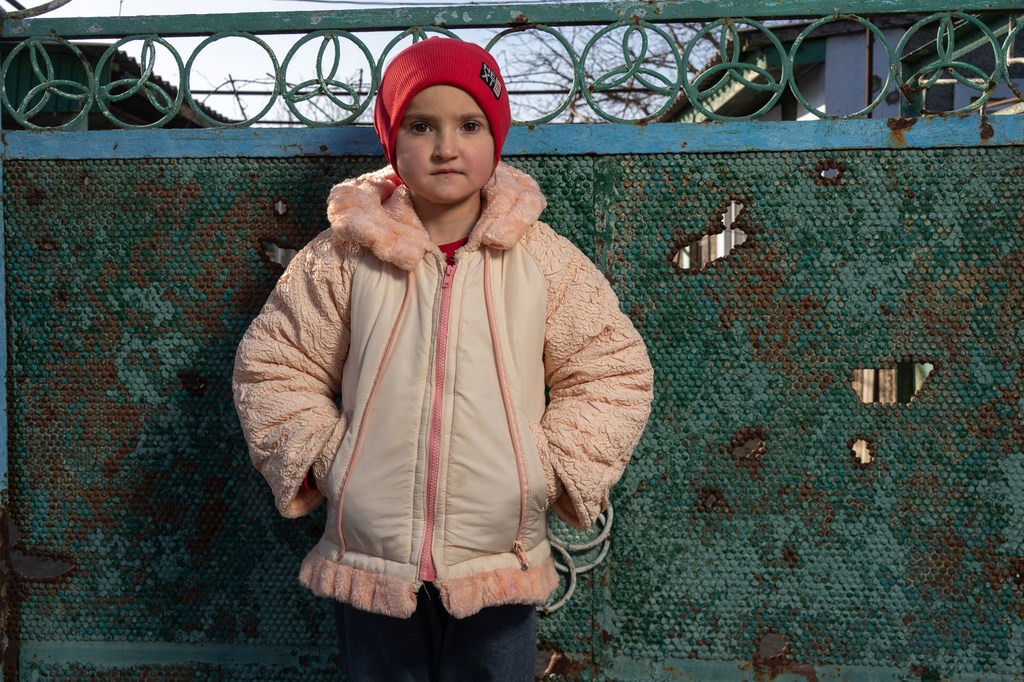
    Alina, 12, stands next to her damaged home in Kobzartsi, Mykolaiv region.

    © UNICEF/Oleksii Filippov

    Alina, 12, stands next to her damaged home in Kobzartsi, Mykolaiv region.

    Relentless attacks on infrastructure are deepening the crisis. Over 10 per cent of Ukraine’s housing stock has been damaged or destroyed, leaving at least two million families without adequate shelter. More than 3,600 schools and universities have been hit, forcing hundreds of thousands of children into remote learning.

    Repeated strikes on the energy system – three winters in a row – have left towns without electricity, heating and essential services in freezing conditions. A total of 12.7 million people require humanitarian aid.

    Hopes for the future

    “Of course, everything that has happened is exhausting,” Ms. Kalashnyk says. “But my children give me hope for a better future. What they are going through now is unfair. I have to be strong, not just for them but for all Ukrainian families.”

    She adds that she also finds hope in the solidarity shown by the UN and other organizations. “They didn’t abandon Ukraine,” she explains. “They stayed. They continue to help. They didn’t come just for a month or two. They’ve been here for years. And now, they’re talking about rebuilding. These discussions about the future give me confidence that we have one.”

    Ms. Datchenko from UNICEF also speaks of unity and solidarity. “At first, we were all united by anger,” she recalls. “We shared our burdens. We shared our pain. We were furious together. But anger is no longer the driving force. Now, we are united by the desire to rebuild what has been destroyed. We want to restore our communities, support families and rebuild our country, not as it was, but better, to leave behind the Soviet legacy and create a truly new nation, built on human rights.”

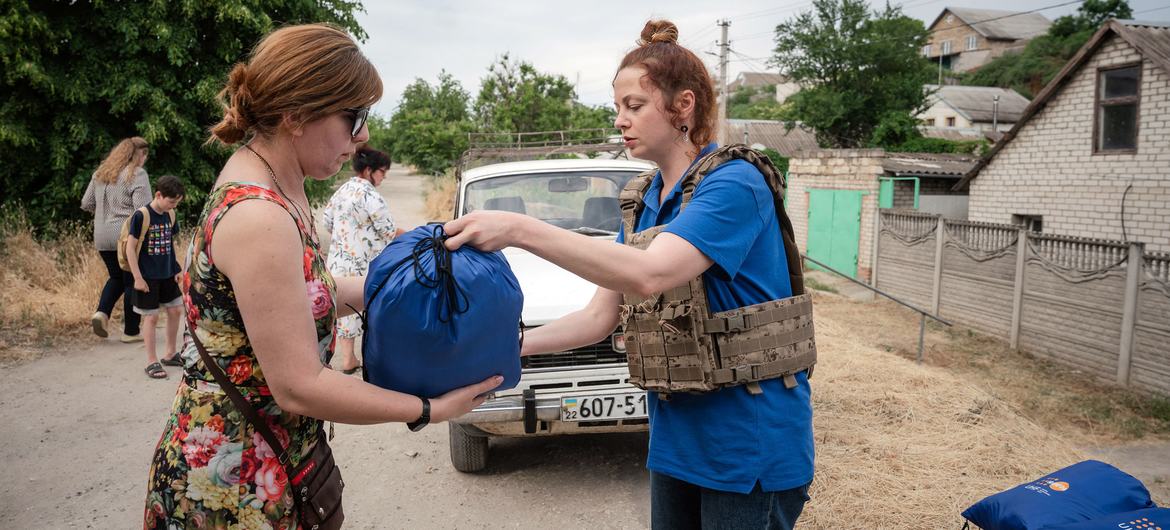
    Supplies are distributed by UNFPA at a centre for survivors of gender-based violence in Kherson, Ukraine.

    Supplies are distributed by UNFPA at a centre for survivors of gender-based violence in Kherson, Ukraine.

    She says her work gives her hope. “I have a unique opportunity to reassess old programmes, create new ones, listen to the voices of the most vulnerable, direct resources where they are truly needed and bridge different sectors to bring together the best for those in need. I believe that working for UNICEF has helped me survive—it’s still my survival strategy.”

    ‘We have to become stronger’

    Ms. Datchenko also finds solace in culture. “I seek inspiration and motivation in the beauty that still exists in Ukraine. Our museums are open, concerts are happening, music is playing. For many, culture is a survival strategy.”

    Today, many Ukrainians are searching for their own survival strategies. “One of the biggest challenges we face in our work is the psychological toll, not only in supporting ourselves, but also our colleagues,” Ms. Kovalchuk says. “Recently, one of our colleague’s brothers went missing. Sometimes, it’s incredibly difficult to find the right words of comfort, yet we work with people – women and girls affected by war – who need our support.”

    “But, on the other hand, when you face one tragedy after another, one crisis after another, you start to feel stronger and more experienced. What doesn’t kill us makes us stronger.”

    Then, with a sad smile, she adds that “maybe it’s true, but I always say I wish I didn’t have the experience I have now. But I have no choice. This experience is mine to bear.”

    Source link

  • UN in Ukraine prepares for the worst, hopes for the best

    Ukrainians continue to face near daily attacks, with air strikes consistently targeting civilian infrastructure, leaving families without homes, security and electricity. More than 10 million people have been uprooted from their homes, making Ukraine the largest displacement crisis in Europe since the Second World War.

    Some 12,600 civilians have been killed and more than 29,000 injured. Thousands of attacks on health facilities have left doctors working under near impossible conditions. Throughout the fighting, the UN has remained an ever-present support, helping to deliver aid, providing emergency healthcare and reconnecting damaged power supplies.

    The future for Ukraine remains unclear but, as Matthias Schmale, the UN Resident and Humanitarian coordinator for the country, told UN News, the United Nations has been planning for a range of post-conflict scenarios.

    This interview has been edited for clarity and length

    The general sense within the diplomatic community is that we are closing in on a ceasefire, and that this may happen sooner rather than later. That’s one scenario that we are preparing for by intensifying our ongoing recovery and development efforts.

    The UN is already doing incredible work helping to restore energy facilities that have been hit, and without that work the people of this country would be much worse off, especially in these cold conditions.

    The World Health Organization (WHO) has reopened or rebuilt primary healthcare facilities along the frontline that were at one point closed or destroyed. If the guns stay silent, we can obviously do much more to help.

    A heavy toll on mental health

    Our partners, which include governments, appreciate that the UN is all about leaving no one behind, so we are looking at the groups that are likely to be vulnerable once the war ends.

    Seven-year-old Milana and her family fled Myrnohrad in Ukraine’s Donetsk region.

    © UNICEF/Oleksii Filippov

    Seven-year-old Milana and her family fled Myrnohrad in Ukraine’s Donetsk region.

    War veterans are one such group. I have been frequently told that around a million people are involved in the fighting, many of them heavily armed. Hundreds of thousands of people will return traumatised from the frontline, after some two to three years away from their families. This could cause tension, including an increase in gender-based violence.

    The country will continue to suffer from the impacts of this horrible war for some time, particularly in terms of mental health issues.

    Again, the UN System is providing support. For example, the UN Development Programme has helped to develop a digital app specially aimed at veterans, to help them to access the services they might need, and we are running over 80 “safe spaces” where vulnerable people, such as survivors of gender-based violence and children of those internally displaced, can talk about their experiences and receive counselling.

    There’s also a lot of speculation that refugees will start to come back, and a few months ago our colleagues in the UN refugee agency (UNHCR), in collaboration with the government, launched a website that gives refugees abroad information about what services they can access when they return, to help them find housing or jobs. We’re trying to be ready to significantly scale up this work.

    UNICEF supplies arrive in Shevchenkove village, Kharkiv region, Ukraine (January 2025)

    UNICEF supplies arrive in Shevchenkove village, Kharkiv region, Ukraine (January 2025)

    Ready to deal with any scenario

    The big open question is what the ceasefire deal will look like, in particular with regard to the occupied territories in eastern and southern Ukraine. Around a million Ukrainians are living in these regions, and we don’t know what will happen to them. Will there be a demilitarised zone? Will an international peacekeeping force maintain the ceasefire deal? And what are the opportunities for the provision of humanitarian aid?

    On the other hand, whilst everyone hopes the guns will be silenced, the opposite could happen. There are several nuclear power plants in Ukraine, and if one of them takes a direct hit, we could all of a sudden be facing a major nuclear catastrophe. Government officials are extremely concerned about this [on 15 February, the UN atomic energy agency, IAEAreported that a drone strike had pierced a hole in the structure built to prevent radioactive material leaking from the damaged Chernobyl reactor. Despite significant damage, the IAEA recorded no change in radiation levels at the site].

    Whatever happens, we are trying to ensure that the UN is as agile and as mentally prepared as possible for any scenario.”

    Source link

  • Urgent appeal launched as DR Congo crisis fuels mass displacement to Burundi

    As fighting escalates in eastern DRC, more than 40,000 Congolese refugees – primarily women and children – have crossed into Burundi since February, with over 9,000 arrivals recorded in a single day this week.

    Many are using makeshift boats to traverse the Rusizi River, a perilous crossing at the border shared by Burundi, DRC and Rwanda.

    “The escalating security situation in the DR Congo has been having a serious impact on the Burundi side. Over the past few weeks, we have observed a large number of Congolese who have been crossing into Burundi,” said Brigitte Mukanga-Eno, UNHCR’s Representative in Burundi, at a press briefing in Geneva. 

    The situation is set to worsen as hostilities move closer to Uvira, a key town near Burundi’s main official border crossing.

    A surge in displacement 

    UNHCR has welcomed the Burundian government’s decision to grant prima facie refugee status to those fleeing the conflict, ensuring immediate protection. However, the unprecedented influx is straining local resources. 

    “This is the very first time that Burundi is receiving this large number of people in a matter of a few days”, Ms. Mukanga-Eno noted. “The last one was in the early 2000s, so everyone is overwhelmed: the government, but also the humanitarian actors in the country.”

    While around 6,000 refugees have entered through Bujumbura’s official border post, the vast majority – more than 36,000 – have arrived via the Rusizi River, often in critical condition after long journeys on foot.  

    Some have walked for days. “The other day, we had a case of a woman who was transporting her children and not knowing that they were already dead”, Ms. Mukanga-Eno shared.  

    Dire conditions at reception sites 

    The government has permitted refugees to shelter temporarily at the Rugombo Stadium in open-air conditions, as well as in schools and churches. However, these sites are overcrowded and dangerously close to the border.

    “Unfortunately, the conditions for receptions are very limited,” Ms. Mukanga-Eno said. The government has allocated land to create a more sustainable settlement, but for now, people are still in schools and stadiums without adequate shelter, she explained.

    UNHCR teams on the ground report severe shortages of food, water and sanitation facilities. Cases of measles have already been detected, prompting an emergency vaccination campaign targeting children under 15. 

    She said the UN Children’s Fund (UNICEF) has put water tanks in place, while the World Food Programme (WFP) “has also been able to deploy some food for us to make sure that we can provide hot meals to the people who are coming.”  

    Medical services are also stretched, with Médecins Sans Frontières (MSF) running a mobile clinic to treat refugees suffering from malnutrition, disease and trauma.

    Many people have endured extreme violence before reaching Burundi, with psychosocial support urgently needed.

    Regional displacement  

    Beyond Burundi, smaller but significant numbers of displaced people have reached other neighbouring countries.

    Since January, Uganda has registered over 13,000 arrivals, mostly through the Nyakabande transit centre. 

    In Tanzania, 53 Congolese refugees sought asylum in Kigoma on 19 February, marking the highest daily arrival figure this year. 

    UNHCR’s $40.4 million appeal aims to provide life-saving assistance to 275,000 internally displaced people in the DR Congo, as well as support a projected influx of 258,000 refugees and returnees across Burundi, Rwanda, Tanzania, Uganda, and Zambia.

    “We were targeting about 58,000 people. We have already received more than 40,000,” Ms. Mukanga-Eno said, calling for urgent support from donors to prevent further suffering. 

    Source link