Category: Volunteering

  • Yellow Tent in Milan as Volunteer Ministers Mark 50 Years Worldwide, 20+ in Italy

    Yellow Tent in Milan as Volunteer Ministers Mark 50 Years Worldwide, 20+ in Italy

    Yellow Tent in Milan as Volunteer Ministers Mark 50 Years Worldwide, 20+ in Italy

    KINGNEWSWIRE // Press Release // Scientology Volunteer Ministers Bring the Yellow Tent to Milan, Highlighting Practical Help and More Than Two Decades of Italian Relief Work

    Pop-up “Yellow Tent” initiative expands community support in Lombardy while celebrating nearly five decades of international outreach since the programme’s creation in the mid‑1970s.

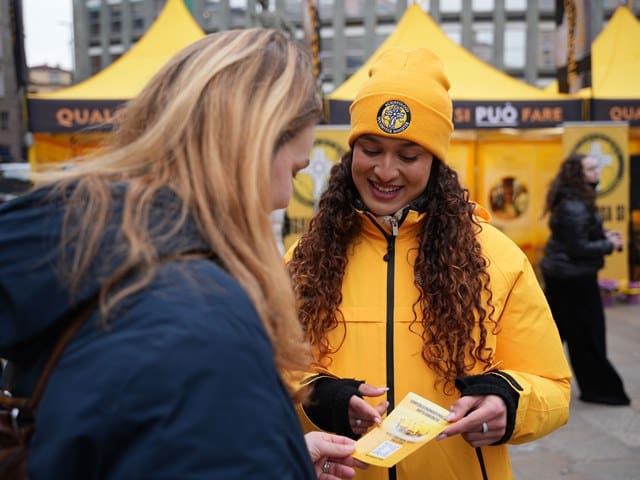
    MILAN, Italy — 22 January 2026 — Scientology Volunteer Ministers have brought their distinctive Yellow Tent to Milan as a public point of practical support—offering listening, proven problem-solving tools and guidance for everyday challenges, from communication difficulties to conflict resolution and personal emergencies, as reported by Gazzetta della Lombardia. Deployed internationally in major cities and in the aftermath of crises, the Yellow Tent provides an approachable space where residents speak directly with trained volunteers and learn simple, structured methods that work immediately in daily life.

    Training with Proven “Tools for Life”

    Volunteer Ministers receive training through “Tools for Life” modules drawn from The Scientology Handbook, covering communication, study methods, assisting those in stress or trauma, and practical steps for resolving disputes and organizing effectively. These tools provide volunteers with a clear pathway for helping both neighbors and disaster survivors through the global Volunteer Ministers disaster response network.

    The Church of Scientology created the Volunteer Ministers programme as a religious social service in the mid‑1970s. Since then, Volunteer Ministers have brought practical help to hundreds of disaster sites worldwide, working alongside government agencies, NGOs and community partners.

    More Than Two Decades Serving Italy

    As evidenced in many media reports and their own websited, Scientology Volunteer Ministers have served Italy for more than two decades through major emergencies and community recovery—working alongside civil-protection teams and municipal services. Our Italian Volunteer Ministers formed Pro.Civi.Co.S (Civil Protection Volunteers of the Scientology Community) after 9/11 as the programme expanded internationally, entering Italy’s National Civil Protection registry very shortly after.

    Ivan Arjona-Pelado, Scientology’s representative to the EU and UN explained that “Italian Volunteer Ministers also joined international relief for the 2004 South Asian tsunami, demonstrating our established capacity well before 2006. This strong foundation continues through our earthquake, flood and recovery efforts across Italy”:

    • Abruzzo (L’Aquila), 2009 earthquake: Extended support after the 6 April 2009 earthquake, assisting displaced residents alongside other relief groups during this major national emergency.
    • Emilia-Romagna, 2012 earthquakes: Operations in affected areas like Medolla during the May 2012 sequence, providing shelter assistance, logistics and aid distribution.
    • Sardinia, 2013 floods (Cyclone Cleopatra): Coordinated relief through our Churches and Missions after the severe November 2013 flooding.
    • Central Italy, 2016 earthquake: Rapid response teams from Pro.Civi.Co.S after the 24 August 2016 earthquake.
    • COVID-19 civic support (2020 onward): Sanitisation, local assistance and our multi-year blood donation partnership with AVIS, featured alongside WHO’s Italian blood donor stories.
    • Marche, 2022 floods: Support for communities hit by the September 2022 Marche floods.
    • Emilia-Romagna, 2023 floods: Deployments clearing mud and debris after the May 2023 Emilia-Romagna disaster.
    • Tuscany, 2023 (Campi Bisenzio): Responding at civil-protection request, removing debris and helping residents salvage belongings, earning thanks from the mayor.

    Milan: Emergency Readiness Meets Neighborhood Support

    In Milan, Volunteer Ministers combine emergency readiness with regular community service—from pandemic assistance to weekly clean-ups and neighborhood improvements. Our northern Italy teams, including those honored in Verona (“Scientology Volunteer Ministers of Verona Honored”), maintain these ongoing public service efforts.

    Sandro Oneda, president of our Italian Volunteer Ministers coordinating association, emphasizes: helping through regular blood donation is “a civic duty that aligns perfectly with our mission“.

    Strengthening Europe Through Practical Help

    Ivan Arjona, Scientology’s representative to the European Union, OSCE, Council of Europe and United Nations, explains the Milan Yellow Tent’s importance:

    “Across Europe, social cohesion grows when citizens deliver practical help—especially where institutions face pressure and daily problems feel overwhelming. Volunteer Ministers embody this: community resilience builds when people have tools to help each other with competence, respect and human dignity.”

    The Volunteer Ministers Mission

    L. Ron Hubbard created the Volunteer Ministers programme in the mid-1970s with a clear purpose: practical assistance and the conviction that “Something can be done about it.” Today we serve hundreds of nations, delivering help at hundreds of disaster sites alongside government agencies, civil protection and NGOs through Scientology.org and VolunteerMinisters.org.

    The Milan Yellow Tent continues this mission—celebrating over five decades worldwide and more than two decades strengthening Italian communities through emergency response and everyday support.

    The Church of Scientology, its churches, missions, groups and members are present across the European continent. Scientology Europe reports a continent-wide presence through more than 140 churches, missions and affiliated groups in at least 27 European nations, alongside thousands of community-based social betterment and reform initiatives focused on education, prevention and neighbourhood-level support, inspired by the work of Scientology founder L. Ron Hubbard.

    Within Europe’s diverse national frameworks for religion, the Church’s recognitions continue to expand, with administrative and judicial authorities in Spain, Portugal, Sweden, the Netherlands, Italy, Germany Slovakia and others, as well as the European Court of Human Rights, having addressed and acknowledged Scientology communities as protected by the national and international provisions of Freedom of Religion or belief.
  • Floods Strike Valencia, and Scientology Volunteer Ministers Respond with Compassion

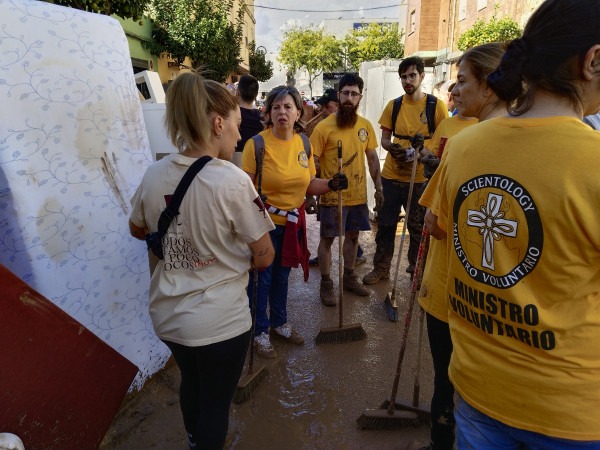
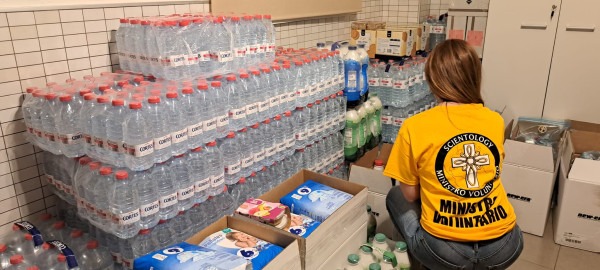
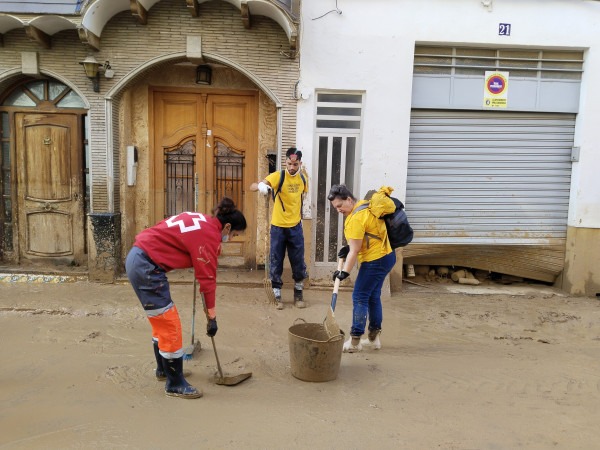
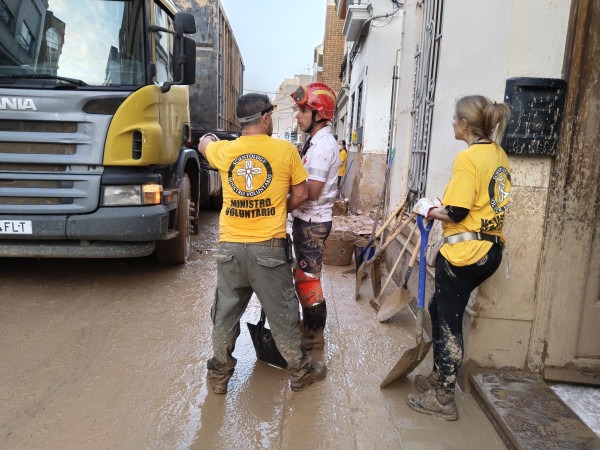
    KINGNEWSWIRE // Valencia, Spain – Scientology Volunteer Ministers (VMs) have coordinated over 3000 hours of volunteer work so far in Valencia and the applications of volunteers keep growing, while still much more is needed. VMs in Valencia are cleaning streets, houses, garages, delivering food, clothes, and tools, all thanks to the solidarity of the Scientology network in Spain, joined by friends and relatives, and the generous support of the International Association of Scientologists, thanks to whom more volunteers are arriving to contribute in the rescue and rebuilding of “normal life” as much as possible.

    On October 29, 2024, Spain faced a catastrophic hydrological disaster as a cold drop, or DANA, unleashed torrential rains across the region, particularly devastating upto 65 villages of the province of Valencia and surroundings. This isolated high-level depression, classified as a “mesoscale convective system”, resulted in staggering rainfall totals, with some areas recording over 600 liters per square meter. The AVAMET observatory in Turís (Valencia) registered a staggering 640.8 l/m², while Chiva logged 600.2 l/m², leading to the overflow of rivers and ravines along the Mediterranean coast. The aftermath has been tragic; at least 217 lives have been lost—211 in Valencia, along with casualties in Castilla-La Mancha and Andalusia—while the material damage is expected to be extensive. This event ranks among the worst hydrological disasters in Spain‘s history, reminiscent of previous calamitous events such as those in Vallés and Biescas.

    Video of Agencia EFE, broadcasted by Spanish newspaper ABC.

    But as the waters raised and the challenges mounted, so too did a profound show of humanity and resilience with thousands and thousands of volunteers. Among the frontline responders that include Red Cross, Caritas, Civil Protection and others, are the Scientology Volunteer Ministers, whose vibrant yellow shirts have become synonymous with hope and support in disaster-stricken areas around the world. These volunteers have mobilized tirelessly, offering essential assistance, logistical support, and emotional solace to those whose lives have been upended.

    In the face of crisis, the courage of the human spirit becomes a powerful force—and in Valencia (SPAIN), that spirit is shared and strengthened through community efforts, international aid, and dedicated volunteerism.

    The Floods of Valencia: Scale of the Disaster

    While the very capital seems to be physically untouched by the disaster, residential areas and businesses of circa 65 villages of the province are now unrecognizable, buried under the murky waters that continue to hinder the passing of people and cars. Media reports estimates of over 200 people dead, and thousands disappeared, and thousands more that have been forced to evacuate, many of who are now living in precarious conditions as emergency shelters reach capacity and many new improvised shelters appear thanks to the goodwill of neighboring cities and villages.

    For many, the journey to safety has been fraught with obstacles. Families have been separated, elderly residents are stranded, and with roads heavily hindered, some have had no choice but to start pulling out the waters themselves from the garages and underground rooms. Yet, amid these scenes of despair, a concerted effort by local authorities, humanitarian groups, improvised volunteers and Scientology Volunteers Ministers has given the city a glimmer of hope.

    The Scientology Volunteer Ministers: A History of Service

    The Volunteer Ministers program, an outreach initiative by the Church of Scientology, was established in the early 1970s by Scientology founder L. Ron Hubbard. Designed to provide humanitarian relief in areas of crisis, the Volunteer Ministers have served as a bridge of help and solace for decades. Their motto, as established by Scientology founder L. Ron Hubbard is “Something can be done about it,” and it captures the very essence of their mission: a belief that in the face of adversity, proactive assistance can always offer a path forward.

    These yellow-shirted volunteers have been present in some of the most challenging disaster scenarios worldwide, from Hurricane Katrina, earthquakes in Haiti, the 2011 Fukushima disaster, and many others, including Turkey, Morroco, Italy, Czeck Republic and many others. Equipped with both specialized training in emergency response and a compassionate ethos, the VMs have gained a reputation as dependable responders. They work in collaboration with other humanitarian groups, adapting their efforts to fit the particular needs of each crisis.

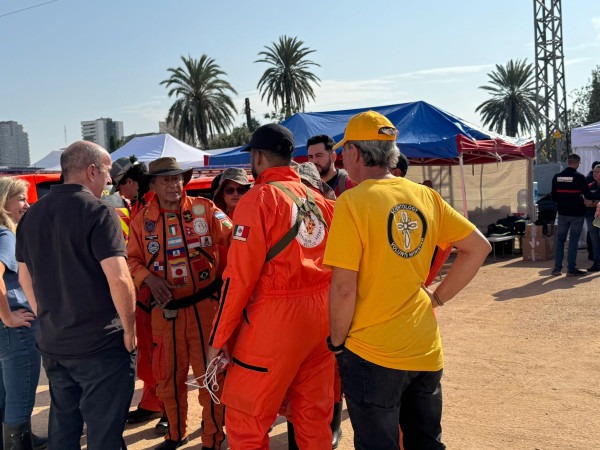
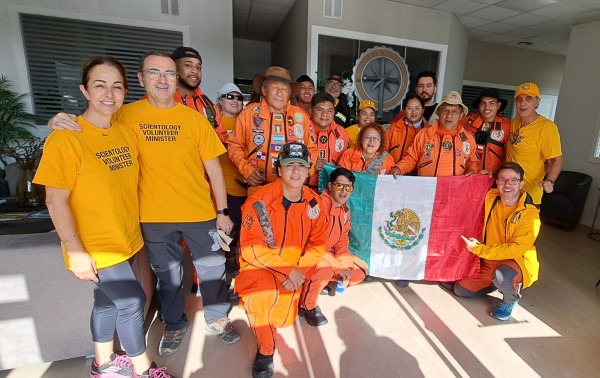
    In Valencia, the VMs have been among the first to respond, coordinating their efforts with Civil Protection, local emergency services, and have provided the needed shelter and support to the internationally known Mexican rescue team of “Los Topos.” Their contributions range from distributing essential supplies—food, water, blankets, boots, clothers, heavy machinery and even toys—to providing emotional support for those grappling with the loss of homes, livelihoods, and a sense of security.

    Coordinating with “Los Topos”: An International Alliance of Aid

    Alongside the Scientology Volunteer Ministers, the arrival of “Los Topos” (the Moles), an elite Mexican rescue team, has bolstered relief efforts. Known for their exceptional skills in urban search and rescue, especially under collapsed buildings and rubble, Los Topos have coordinated with the VMs, regional authorities and rescue workers, to maximize the reach of their support. In Valencia, their expertise gives invaluable hope, especially in evacuating residents trapped in partially submerged structures or reaching isolated communities.

    The bond between the Volunteer Ministers and Los Topos dates back years, and their shared history of disaster response has allowed them to develop a seamless working relationship. Los Topos, named for their ability to “tunnel” through debris and difficult terrain, are widely recognized for their bravery and commitment in some of the world’s most daunting rescue scenarios. In Valencia, their arrival has brought a renewed sense of hope for those still waiting to be rescued, as well as for families anxiously awaiting news of loved ones.

    Stories of Resilience and Hope

    In the flood-ravaged neighborhoods, survivors speak of the warmth and dedication shown by the Volunteer Ministers.

    The VMs have set up coordination hub and storage place plus a relief station to receive and distributed donated materials. They are also helping coordinate spaces for those affected to rest, receive supplies, and find comfort, as well as helping improvised volunteers from around the country and the world, so that they have spaces to sleep. VMs are providing information and networking for families to learn about their options, find temporary shelter, and meet volunteers who lend a compassionate ear. Many are deeply moved by the genuine care and support they receive from the Volunteer Ministers.

    “These people gave me hope when I thought there was none left,” shared one of the victims of the flooding. “They didn’t just hand me a blanket and food—they stayed and listened to me. It made all the difference.”

    A United Front Against Adversity

    The strength of Valencia’s response lies in its people—the local residents and international allies who stand side by side in the face of immense hardship. The Volunteer Ministers and Los Topos exemplify the powerful synergy that can emerge when individuals, communities, and humanitarian groups work together. The volunteers come from diverse backgrounds but share a common purpose: to be there for others, regardless of circumstance.

    While Valencia’s road to recovery will be a long one, the support pouring in from all corners of the world is a reminder of our collective humanity. And as the city confronts the daunting task of rebuilding, it does so with the knowledge that it is not alone.

    Looking Ahead: Rebuilding with Hope

    As mud and water slowly recede, the focus shifts from rescue to rebuilding. The Volunteer Ministers have pledged to stay in Valencia for as long as they are needed, committing not only to immediate disaster relief but also to long-term recovery efforts. Their presence will be instrumental as residents return to salvage their homes and attempt to rebuild their lives.

    For now, in the midst of uncertainty, there is hope. It’s a hope carried by each volunteer who extends a hand, each rescuer who pulls someone from danger, and each community member who remains steadfast. The people of Valencia are not facing this disaster alone—they are bolstered by a global network of compassion, resilience, and unwavering support.

  • Interview with Eric Roux, new elected Chair of the United Religions Initiative (URI)

    URI is known as the largest international grassroots interfaith cooperation organization in the world. It brings people of all faiths together in more than 100 countries on all continents. We had the opportunity to interview Eric Roux, its newly elected Chair.

    In a world like ours, where conflicts are increasingly covering the face of the earth, and where religions have failed to prevent it, if not contributed to it, why would interfaith matter?

    I wouldn’t say that “religions failed” more than “governments failed” or “the UN failed”, “the OSCE failed”, etc. In fact, if you want to put the blame on someone, you should say that we, as humanity, have failed until now to prevent wars and conflicts. None of us can exclude ourselves from the responsibility of our world. But blame does not solve anything. Many people think of interfaith as an activity where some people from two or three mainstream religions meet and come out with a wishy-washy statement calling for world peace. That’s not what it is.

    We, at URI, do interfaith cooperation. That means that we bring people together, from different faiths, the more inclusive the better, and we make sure that we work together toward a specific purpose. So let’s say that your interfaith cooperation group is working on environmental issues. Their primary focus will be to be efficient in that field. But one immediate side effect will be that they will have to share the space with their fellows from other religions, to share the same reality of their mission, and to communicate together to accomplish their goals. The result will be that they will understand each other, will become friends, and that itself contribute to a more peaceful world. Of course, it’s all about the scope and size of these activities. It requires a lot, a huge lot of cooperation to have a noticeable effect at global level.

    So, how does it work, concretely?

    In URI, it’s the grassroots which leads the effort. We have more than 1,200 groups on the ground, all over the world, which we call “cooperation circles”. They are composed of people of different religions or spiritual traditions, who have decided to work together to create a positive impact in specific fields. Some are engaged in the restoration of the environment and the preservation of the Earth from the consequences of the climate change. Some will focus on the prevention of religiously motivated violence and organize healing sessions between communities at odd to create communication between them. Some are focusing on artistic performances that bring together people who otherwise would never learn from each other. Some are working against the proliferation of nuclear weapons, along with the UN. Others will dedicate themselves to protect the rights of indigenous communities when their spiritual traditions are endangered by bigotry and vested interests. As well as dozens of other topics or sub-topics. But at the end of the day they all contribute to the purpose of URI, which is to promote enduring, daily interfaith cooperation, to end religiously motivated violence and to create cultures of peace, justice, and healing for the Earth and all living beings.

    At a lunch organized by the Sikh community, Parliament of the World Religions 2023
    At a lunch organized by the Sikh community, Parliament of the World Religions 2023

    And how would you describe the difference between URI and other interfaith organizations?

    It’s the grassroots component which really makes the difference. Several big interfaith organizations put the stress on religious leaders, mainly from the big religious organizations. While bringing aboard religious leaders is important, we believe that to really create a broad impact, you need to give a chance to everyone to contribute. And you can be surprised by some people of faith or not who don’t hold any title, and are not religious leaders, and can in fact be leaders in their community when it comes to advancing the good. It’s not that we criticize other international interfaith organizations, as we are partners and they do a great and crucial job, but ours is a vital complement to it. Both is necessary: religious leaders, and individuals who want to dedicate their life, or part of their life, to bring about a better world where people of all faiths or none can live together in harmony. I am not saying we are the only ones to do that, but that’s what makes us special, as an large international organization.

    In fact, the board of trustees in URI is made of people who are grassroots interfaith activists, from all regions of the globe. They are elected by the cooperation circles themselves, among themselves. It’s not top-down, it’s bottom-up, and finally circling in a virtuous way. Those who know the difficulties on the ground are those who will help URI defining its strategy to overcome the challenges. They are helped and supported by a staff made of people who are super-dedicated to interfaith and to the purpose of URI. Being a staff in URI, whether you are the Executive Director, a Senior Director, a regional coordinator or any other post, is not a normal job. It’s a mission, a peace-making mission which is led by people who are heart and soul for fostering understanding and collaboration between people of all faiths and spiritual traditions.  

    Sorry to ask a provocative question, but do you really believe that an organization like URI is able to bring peace on Earth, end religiously motivated violence and bring justice to all living beings?

    You know, the bad behaviors behind wars and violence are contagious. But so are positive behaviors. Most of the people are interested in living their life in harmony with others. Very few are those who really love war. When they see examples of good behaviors between people who have different backgrounds, they find hope again.

    Few days ago, I received a message from one of our cooperation circles in Sri Lanka, as they had started a project to restore the mangrove ecosystems in a lagoon in Puttalam District. That may sound minor, but it’s not. First of all, when they do that, they bring together members of the surrounding villages who come to participate to the action, and all of them mingle with people who don’t have the same faith than them, sharing a joyful experience of doing something positive for their society. That’s much more powerful than bad behavior, as that will stay in their soul as a sunny truth. Those people will be much more difficult to convert to violence, as they have tasted the good of living together in peace and cooperating toward positive goals. That will not stop the war in the Middle East, you can tell me. Well, I guess not, unless you believe in the butterfly effect. But let’s say that around the lagoon, only 1,000 people noticed it. Their lives are changed by it. You multiply this by 1,200 (the number of cooperation circles) and 365 days in a year, and you start having quite a better number of people touched by positive interfaith cooperation. But even if it was just that 1,000 people in Sri Lanka, it would be worth it. Not to mention the positive effect on the mangrove, which will enable future generations to survive better.

    Eric Roux with a Druze leader, Brussels
    URI volunteers in the mangrove, Sri Lanka

    I’m not saying it’s enough. We are very aware of the need to grow and increase the cooperation, everywhere, anytime, if we want to have a chance to counterbalance the chaos created by a few. But we know by experience that this is the way: bringing people together and have them work toward a common positive goal, where all have a chance to help, contribute, and create.

    I would add this little thing: yes, the world is not doing well, and yes there are wars and conflicts, religious persecutions, injustice, bigotry, hate speech, terrorism as well as a tremendous environmental challenge nowadays. Nevertheless, we should never forget that beautiful things exist too, and that many things in the world are doing well. A lot of people are working for the good, a lot of initiatives are bringing about a better world, most of the people like each other, miracles of life happen every day, and that is the most important thing in humanity, as well as in the creation as a whole. We, the people, know how to do magic. It’s just a matter of doing more in favor of a better world, and not accepting anymore the bad things as a fatality.

    So yes, we believe we can do something, and we also believe we can fulfill our mission to a complete success. Are we dreamers? Certainly, but who says a dream can’t come true?

    Eric Roux with a Druze leader, Brussels
    Eric Roux with a Druze leader, Brussels

    Thank you. And finally, do you think URI made a good choice in electing you as the Chair?

    I hope so. Honestly, in URI, the role of the Chair is to serve. The former Chair, Preeta Bansal, was fantastic and brought URI to new heights in terms of setting its innovative organizational form and bringing a renewed grassroots vision. And behind URI, you have the vision of a giant, its founder Bishop Bill Swing, who dreamed it and made it a reality, bringing the vision of a few to a movement that touches millions in only two decades. So I just see myself as a servant of the 1,200 cooperation circles that do the job every day, of my fellow trustees who have a long experience of serving their communities, and a partner of the Executive Director Jerry White, and the staff who dedicate their time to help cooperation circles to grow and act. I love URI, I love the people in it, I love the people in general, and I believe that it has the true potential of bringing about a better world. So why should I save my energy on it?